- Home/
- Guides/
- Garden Maintenance/
- Gardening for the Elderly
Grow old, grow green: Practical tips on gardening for the elderly
Making gardening a fun and fulfilling pastime for seniors
Last Updated on

Written by Ana K.
Contributor
Read more about our contributor
Key Takeaways
Older people can reap various benefits from gardening, including physical and mental stimulation, a feeling of calm and contentment, and a sense of purpose and fulfilment.
A senior-friendly garden should have a comfortable layout, ergonomic tools, and safety aids to minimise the risk of strain, exhaustion, and injury.
Choosing low-maintenance and inspiring plants, sharing the hobby with family and neighbours, and celebrating the process can make gardening a fruitful and fun endeavour for the elderly.
Gardening is a fun hobby that can be tailored for different lifestyles, making it perfect for seniors looking for ways to spend their free time. It allows them to be physically active and relaxed while being productive and fulfilled.
Nevertheless, seniors planning to build their own gardens will need to learn about age-specific safety precautions, strategies, routines, and solutions for common horticultural challenges—all of which are discussed in this guide on gardening for the elderly.
Why gardening is good for the elderly
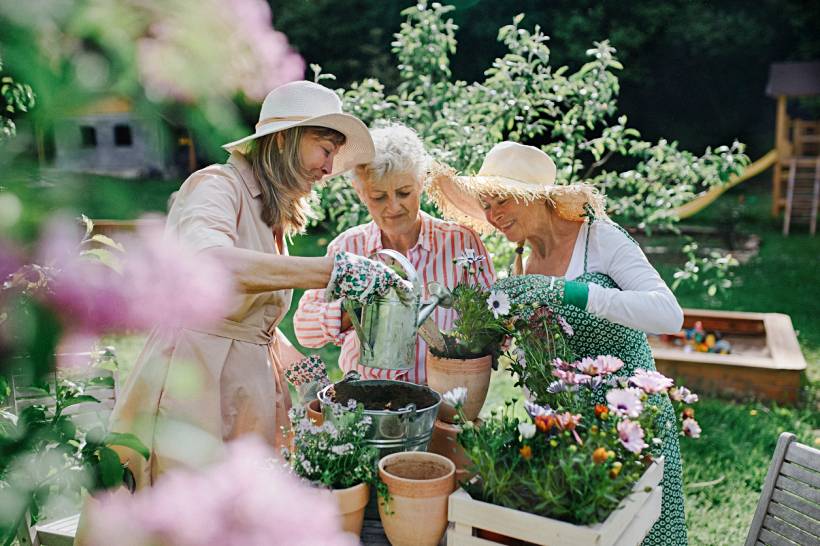 Three senior women gardening together in a backyard surrounded by blooming flowers (Source: iStock)
Why is gardening good for elderly people? This pastime brings a range of benefits for the holistic well-being of older individuals, covering their physical, mental, and emotional needs.
A workout for the body
One of the health benefits of gardening for the elderly is that it enables them to stay active regularly. Tasks that are not too exhausting, such as watering plants, removing weeds, monitoring pests, and carrying light pots, can help them maintain and improve their flexibility, strength, balance, and overall physical health.
A calm for the mind
Studies have shown that spending time in nature is good for one’s mental health. This means you will likely feel relaxed, content, less stressed, and more mentally fit if you habitually tend to your garden and enjoy the calm and beauty that it brings.
Everyday fulfillment
You can feel motivated and fulfilled every time you master a new gardening skill, accomplish a chore, and witness the gradual growth of your plants and the fruits of your labour.
Smart gardening strategies for seniors
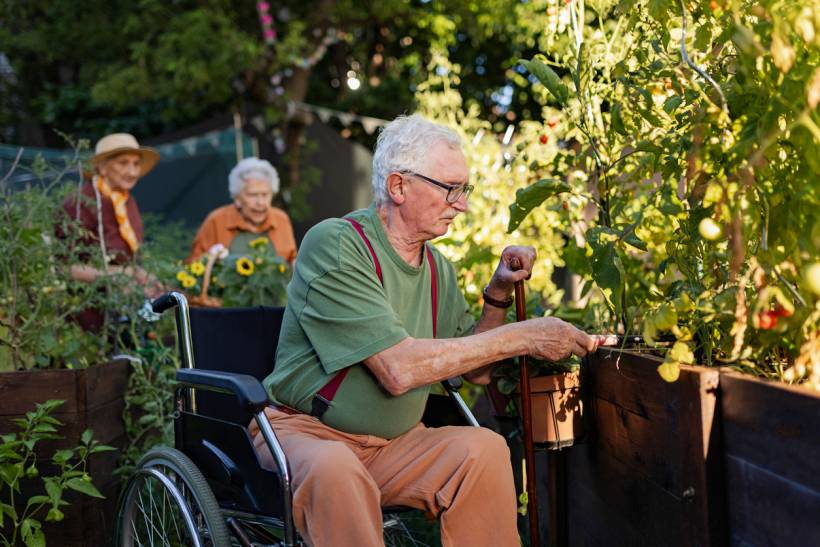 Senior man trimming plants while others tend to flowers in a peaceful garden (Source: iStock)
Here are various pointers on how to make gardening easier for elderly individuals who are just starting the hobby and how to make it safe for them.
Plan a senior-friendly garden
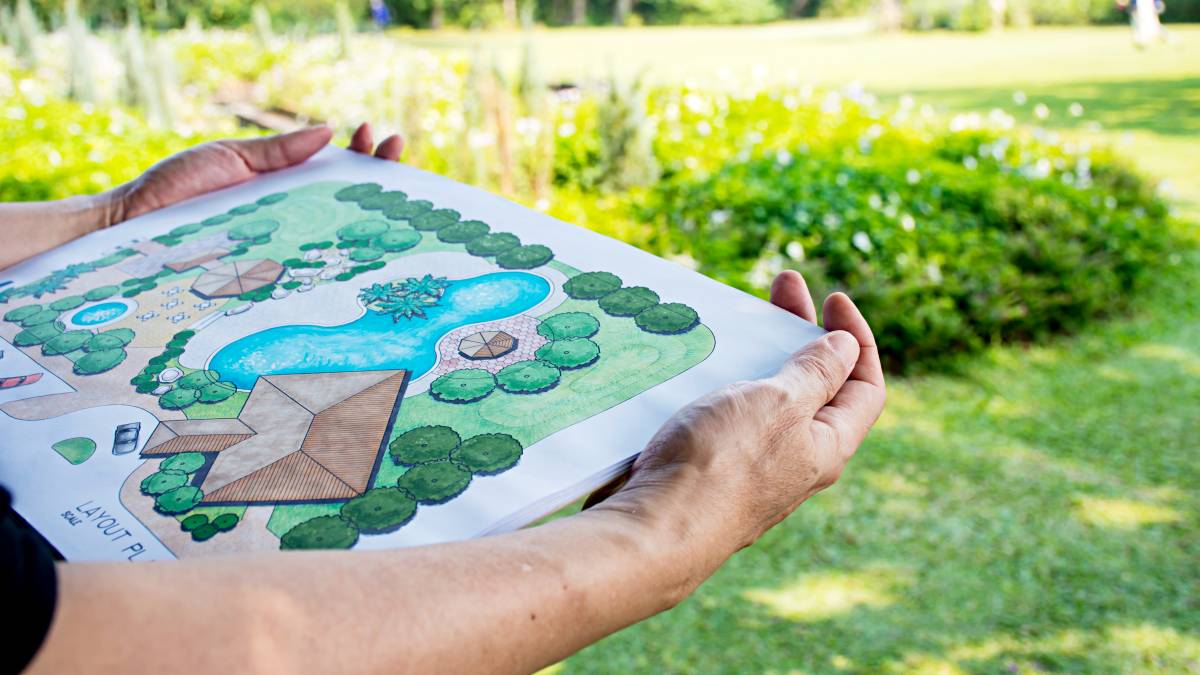
A senior-friendly garden design integrates elements that reduce strain and promote comfort, including raised garden beds or boxes, seating edges and spaces for rest, shade against harsh sunlight, and non-slip walkways. The garden layout should also make space for wide paths where seniors in wheelchairs and those with limited mobility can pass through with ease.
Use different tools of the trade
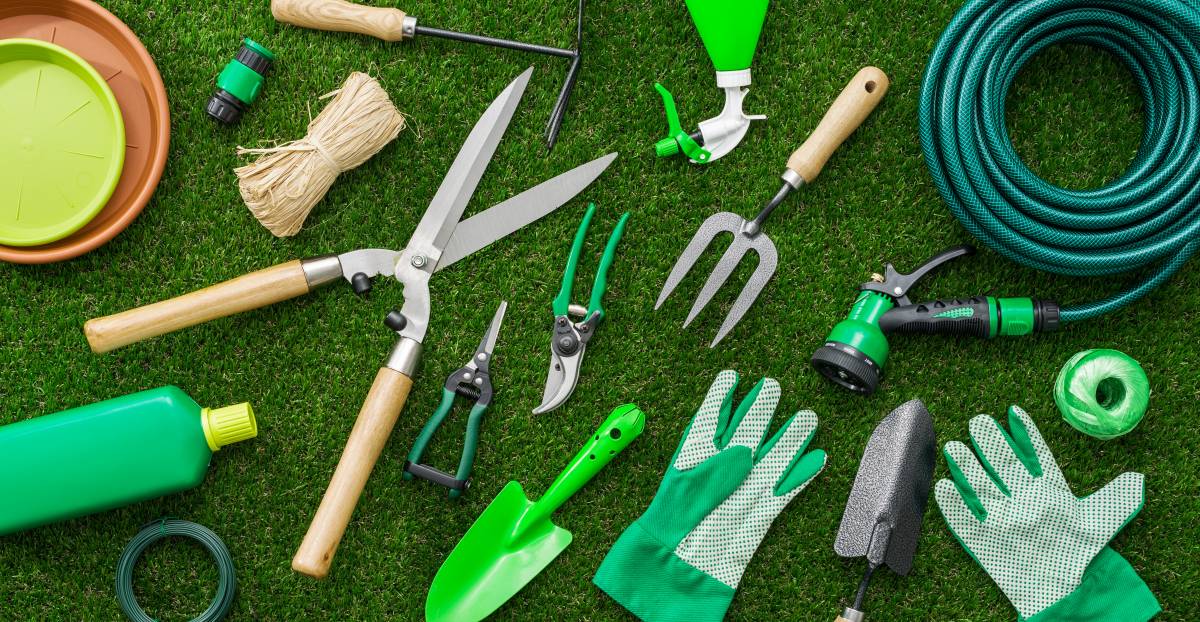
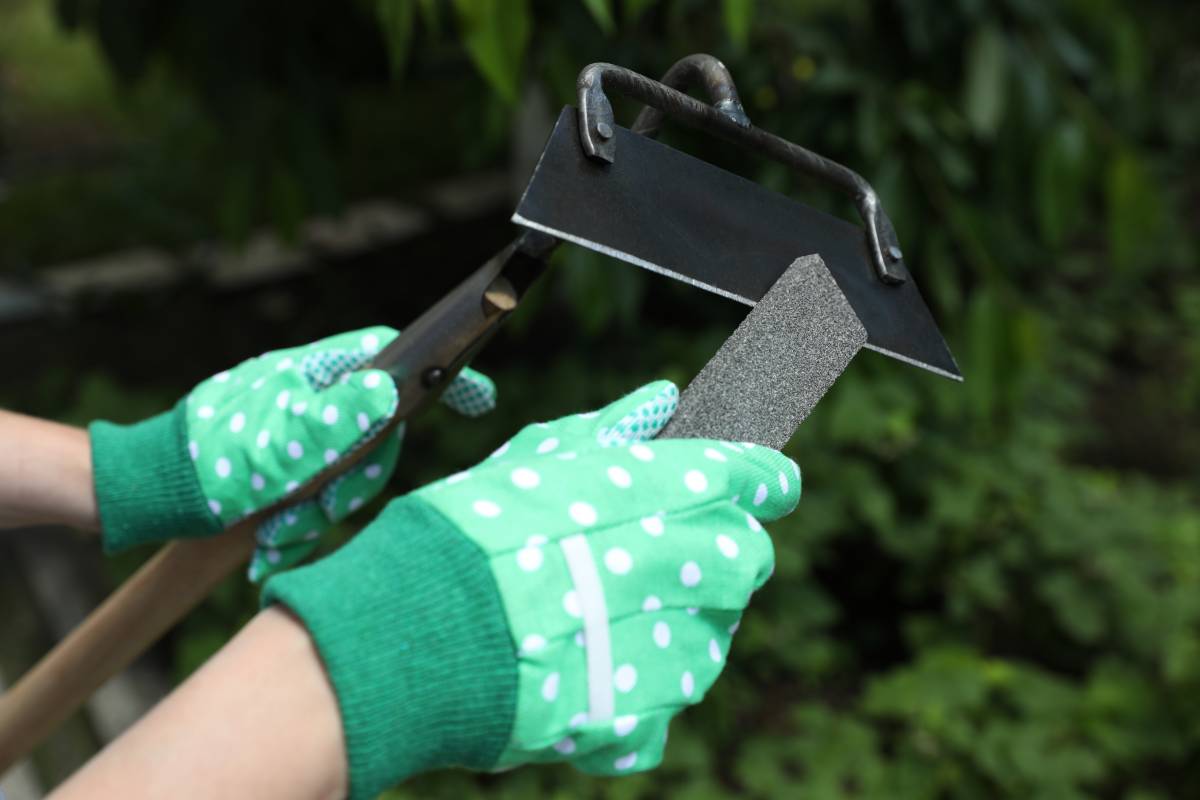
Some gardening equipment that can make all the difference in terms of comfort and ease of use are long-handled garden tools for the elderly (such as telescopic pruners), which can reduce strain and improve reach. Lightweight and ergonomic options, such as hand trowels with rubberised handles, can also improve grip and efficiency.
Make small touches count
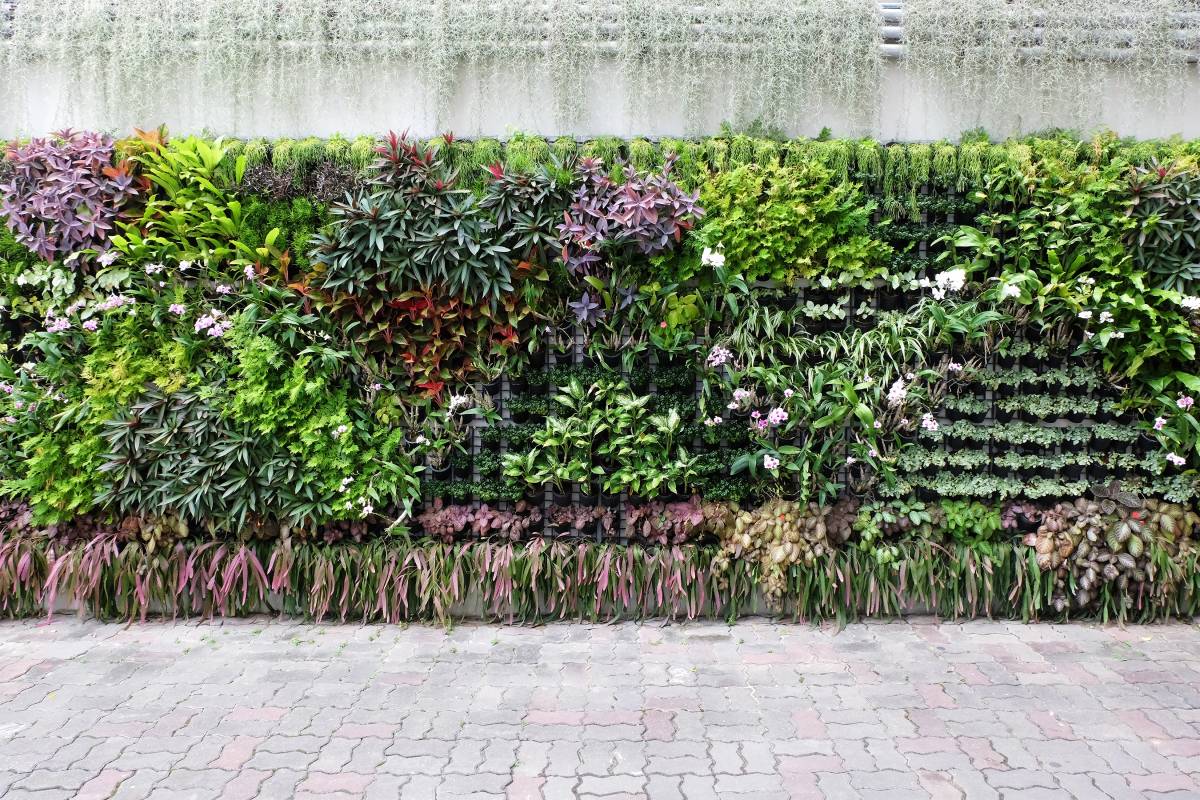
Thinking of adding gardening aids for seniors? You can incorporate lighting along pathways, add wheeled tool carts, install vertical gardens, and set up self-watering pots to make gardening more accessible.
Another way to make gardening easier is to choose the right type of soil and to pick plants that are easy to cultivate and maintain.
Choosing the best plants for seniors
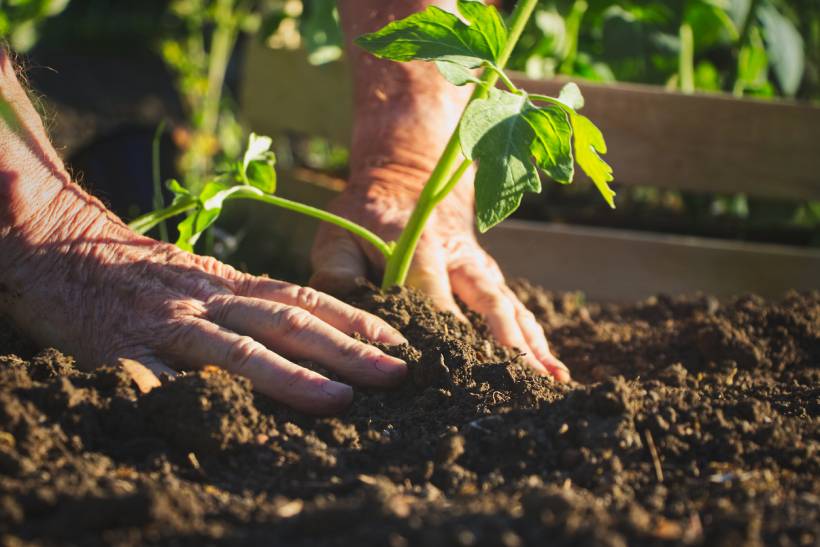 Close-up view of a tomato plant being planted by an elderly gardener (Source: iStock)
Discover more gardening tips for seniors by reading these lists of the best plants to grow.
Low-care, high-reward plants
Building low-maintenance gardens for the elderly entails knowing which types of plants are easy to propagate, such as the following:
| Plant |
Growth Requirements |
|---|---|
Hardy geranium |
Full sun or partial shade, well-drained but moist soil, regular watering |
Forsythia |
Full sun or partial shade, moist soil, regular watering |
Bearded iris |
Full sun, well-drained or sandy soil, infrequent watering |
Daffodil |
Full sun or partial shade, well-drained soil, regular watering |
Periwinkle |
Partial shade, well-drained soil, once-a-week watering (more during hotter months) |
Camellia |
Partial shade, well-drained soil, regular watering |
Rhododendron |
Partial shade, well-drained but moist soil, regular watering |
Plants that spark joy
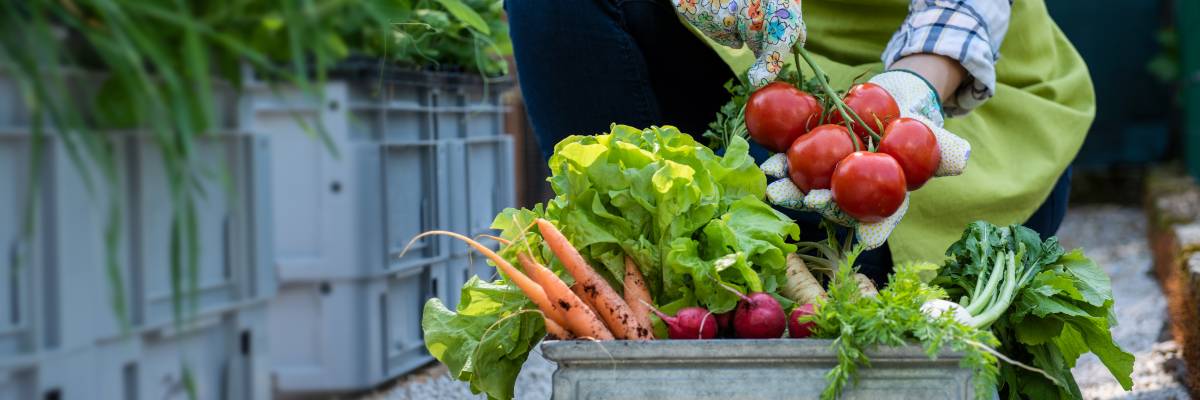
Planting vegetables, fruits, and herbs like the ones below can definitely add sensory delight and lead to a healthier diet.
| Plant |
Appealing Features |
|---|---|
Tomato |
Vibrant in colour, nutritious |
Rosemary |
Fragrant, edible |
Thyme |
Versatile as a cooking ingredient, aromatic |
Strawberry |
Tasty, has a striking colour, low-maintenance |
Courgette |
Healthy, delicious |
Rhubarb |
Edible, easy to grow |
Mint |
Can be used as a food and drink ingredient |
Seasonal inspiration
Here are plants you can cultivate at different times of year to keep your garden thriving all year round:
| Plant |
Best Time/Season to Grow |
|---|---|
Laurentia |
Winter |
Snapdragons |
Winter |
Ornamental grass |
Spring or autumn (depending on variety) |
Begonia |
Spring |
Blueberry |
From mid-autumn to early spring |
Carrot |
Summer |
Cabbage |
Summer |
Simplifying garden routines
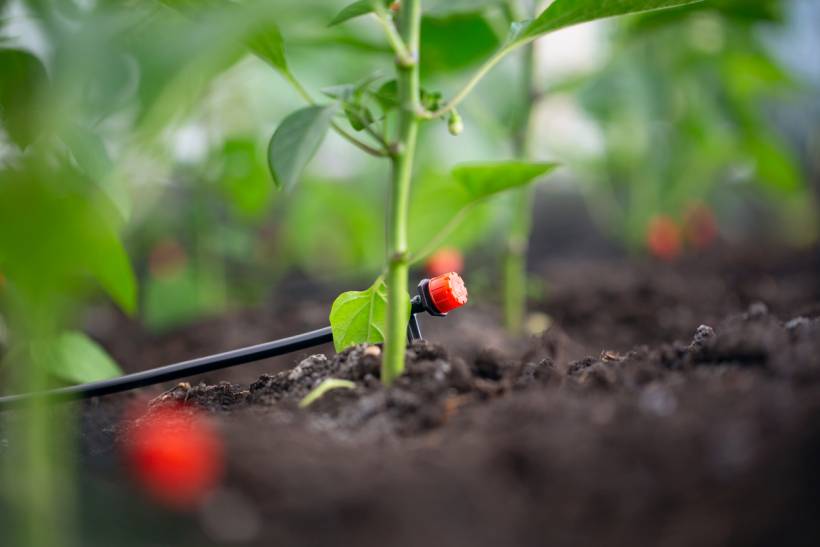 Sustainable gardening using drip irrigation for bell pepper cultivation (Source: iStock)
It’s important to adapt garden routines for elderly gardeners to maximise their benefits and reduce their risks.
Start small, think big
If you don’t have an existing garden yet, you can start small with a few raised beds or potted plants and choose low-maintenance varieties that won’t leave you feeling overworked and overwhelmed.
Maximise efficiency
Work smart and not too hard through strategies that maximise efficiency. These include planting in batches to ensure a continuous harvest, automating your drip irrigation system to conserve water, and using organic mulch to fertilise the soil and prevent weed growth.
Create a schedule that works
To keep this hobby fun and relaxing, you should not aim to complete all gardening tasks in the same day. Moreover, don’t take too long trimming bushes or watering plants without taking breaks; limit each session to 30 minutes at most to prevent exhaustion.
Gardening safely and confidently
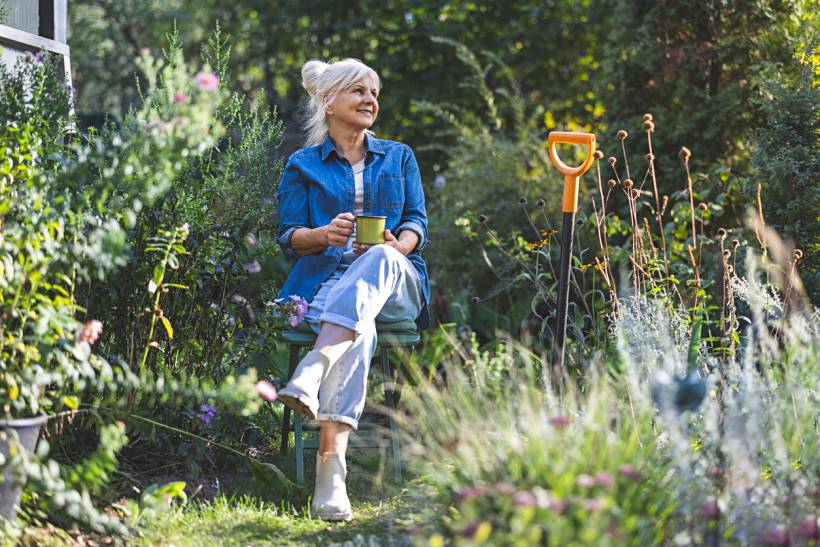 Senior woman sitting on a garden stool, holding a mug and enjoying the greenery (Source: iStock)
Here are more ways to ensure that gardening is not just an enjoyable pursuit for older people but also a risk-free one:
Guard against strain
There are various devices you can use to protect your joints and muscles while gardening. These range from using kneeling pads and stools to warming up and cooling down before and after each session. Additionally, it’s not advisable to keep using broken tools since they can cause discomfort, unnecessary strain, and even injury.
Be mindful of the sun and weather
Being exposed to the brutal sun for a long time is an easy way to tire out. Because of this, it’s wise to do garden work at a cooler time of the day and wear suitable sun protection, such as a wide-brimmed hat and lightweight clothing that covers the whole body.
Additionally, don’t forget to stay hydrated with water and take breaks in the shade of a small tree or under a canopy.
Stay balanced
Apart from having a supply of gardening tools for elderly people, it’s also crucial to install stabilisers like safety handrails (where necessary) and to level uneven ground (if possible) to prevent slips and falls.
Gardening as a social endeavour
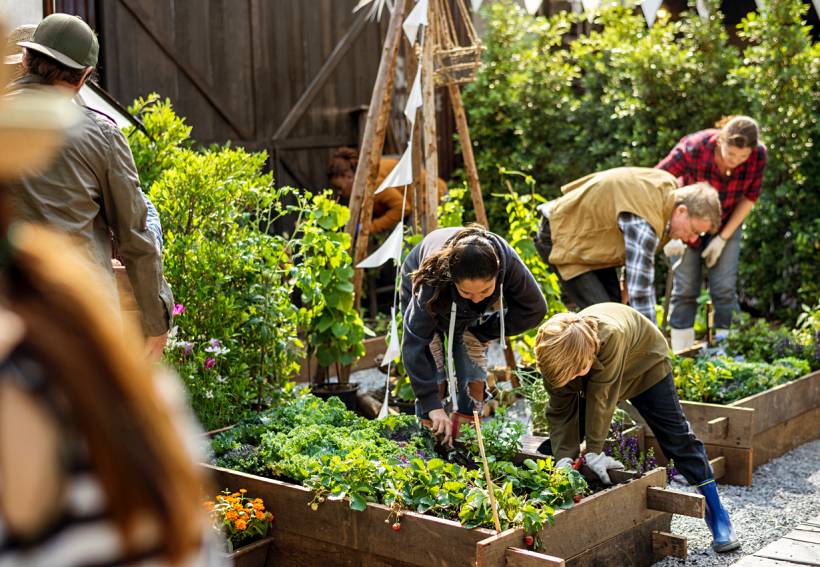 Community members of different ages working in a shared garden space (Source: iStock)
Gardening with others can greatly benefit elderly individuals, as socialising is an excellent way to stave off loneliness and boredom and to improve one’s overall health and well-being.
Build a gardening network
Why not invite fellow seniors in your area to form a gardening club where you can share horticultural tips and tricks? You can also join or help create a community garden where vegetables and other kinds of produce are grown.
Share the gardening bug
There are different ways to create precious memories with your family through gardening. These include teaching your grandkids how to sow seeds or trading flowering plants with your children.
You can also bond with your neighbours by introducing them to this form of recreation and working on gardening projects together.
Expert tips for elderly gardeners
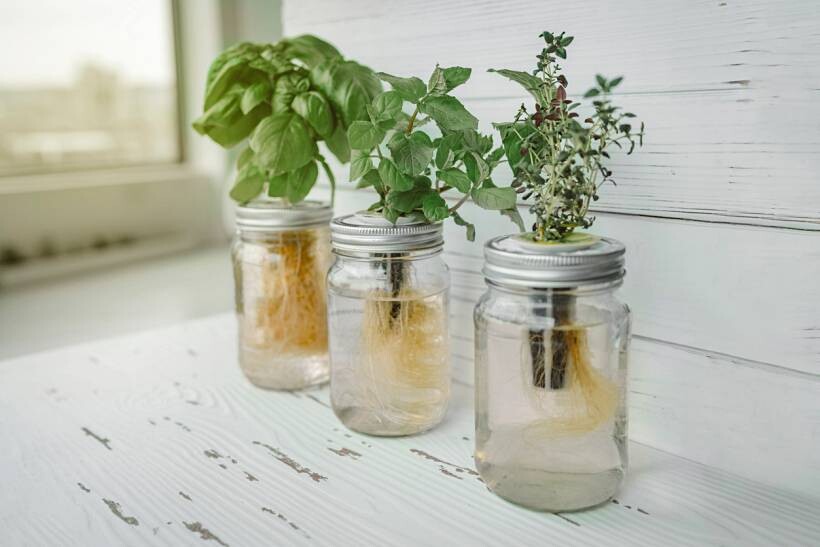 Indoor hydroponics setup using glass jars to grow basil, mint, and thyme (Source: iStock)
Discussed below are more tips for senior gardeners to help them flourish and find fulfilment in this hobby.
Go with the flow
Forcing yourself to follow strict schedules and self-imposed deadlines can take out the fun of gardening. Always listen to what your body tells you and work at a speed you are comfortable with to avoid turning a relaxing pastime into a stress-inducing one.
Discover new techniques
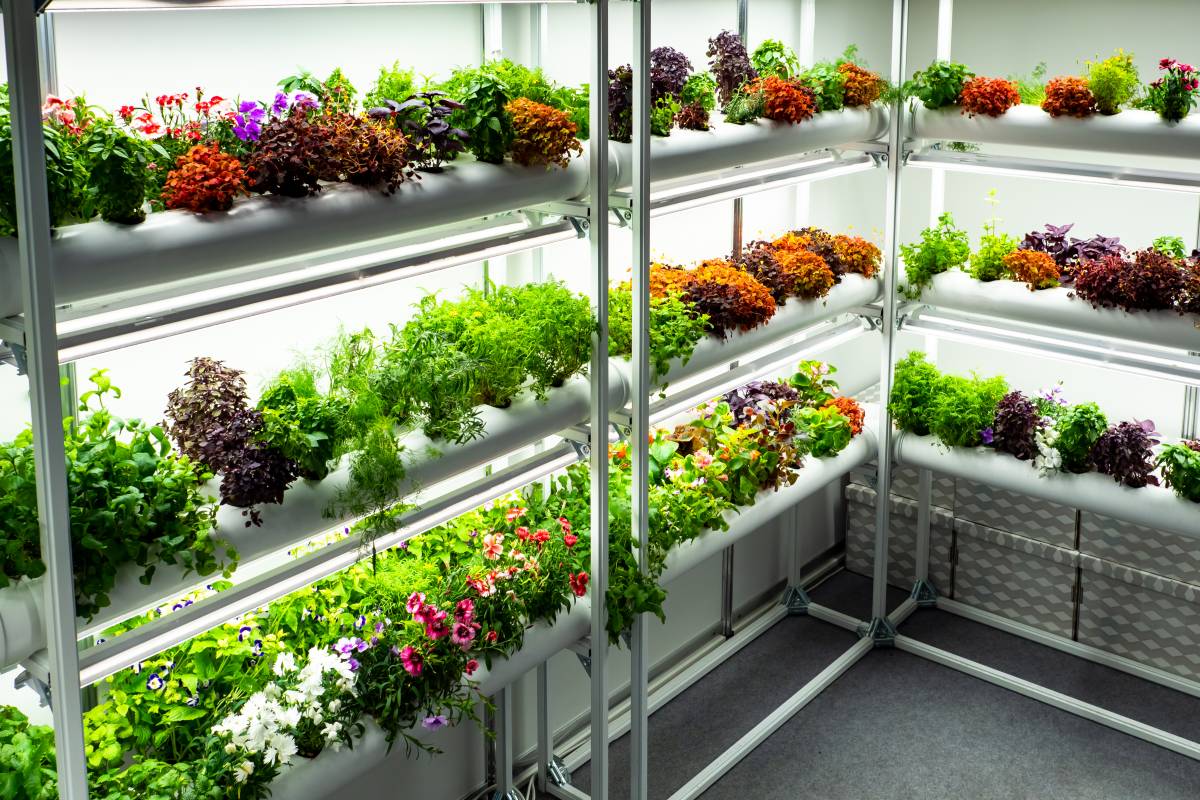
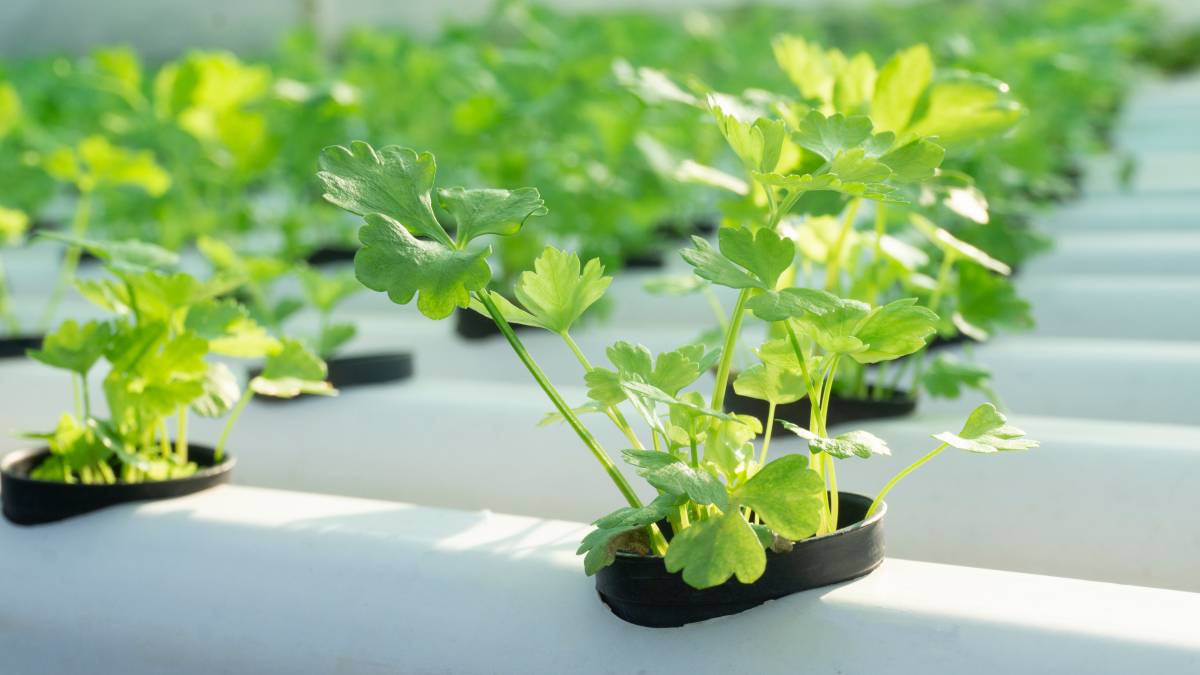
One tried-and-tested technique that can make gardening more convenient and accessible for you is hydroponics, which eliminates the need to handle soil and do yardwork. Another option is container gardening, which involves growing plants in pots, hanging baskets, planters, buckets, or other containers rather than in the ground.
Celebrate the process
Getting too hung up on your garden’s natural imperfections can take away the joy from this endeavour. Instead, choose to focus on the process while celebrating your small and big wins.
Addressing common gardening challenges
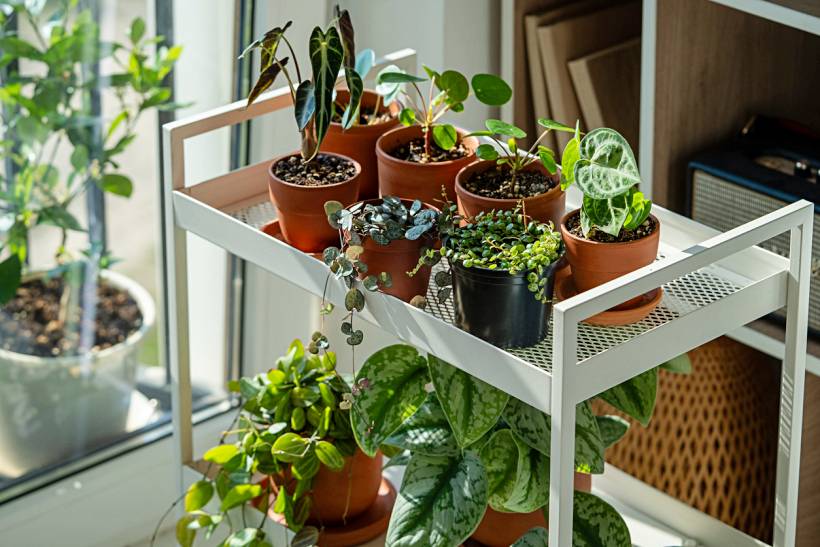 Various indoor houseplants in terracotta and plastic pots arranged on a shelf (Source: iStock)
Gardening presents some challenges that elderly people can easily work around through the right strategies and ways of thinking.
Can elders garden without a yard?
If you don’t have an outdoor space suitable for growing plants, there are still several indoor gardening options available. For instance, you can collect greenery on your balcony and windows or build a vertical garden in your living room.
What if gardening feels too overwhelming?
Being new to gardening and reading about all the things you must learn and do can be rather daunting. To avoid feeling overwhelmed before you even start this hobby, start small by trying low-maintenance plants and container gardening, attending hands-on workshops, and setting feasible goals.
Finding and getting gardening help
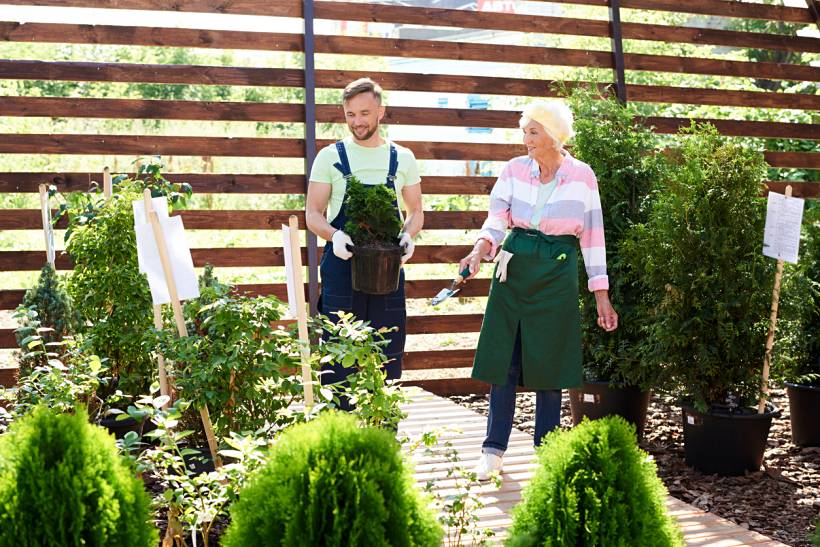 Senior woman holding gardening tools while a young man carries a potted plant (Source: iStock)
If you need guidance and assistance with gardening-related matters, why not check out the resources available in your community and seek out gardeners for hire near you?
Explore community resources
The Royal Horticultural Society’s website contains an array of resources that older gardeners may find useful and interesting. These include a list of upcoming courses and workshops and free comprehensive guides. You can also search for local gardening groups through the charity’s Britain in Bloom and It’s Your Neighbourhood programmes.
Can the elderly get help with gardening at no cost? If you’re looking for free gardening services for the elderly, you can contact your local council to see if they can provide garden maintenance for you.
Reach out to gardeners on Airtasker
If you’re in need of gardening help for the elderly—whether it involves planting, weeding, watering, or repotting—you can turn to professional gardeners with the right experience and skills for the job. Apart from dealing with garden maintenance, they can also share tips to elevate your greenery game.
With Airtasker, it won’t be difficult to find gardening experts in your area who can make the hobby less demanding and more delightful for you. Start your search for a pro by signing up on the platform and posting a detailed task.
Learn more about our contributors
Written by Ana K.
Contributor
Ana always puts a premium on accuracy, clarity, and style when writing—a practice that her English degree has instilled in her. She excels at covering topics related to pet care, home and interior design, and food, which count among her varied interests. She also enjoys nature and street photography, as well as travelling. Overall, Ana uses her love for research to engage Airtasker readers with fun, practical content.
FAQs on gardening for the elderly
Seniors can safely deal with pests in their garden by installing cages, fences, or other types of barriers; introducing predators into the ecosystem (such as pets and ladybugs); rotating crops; and pruning old leaves.
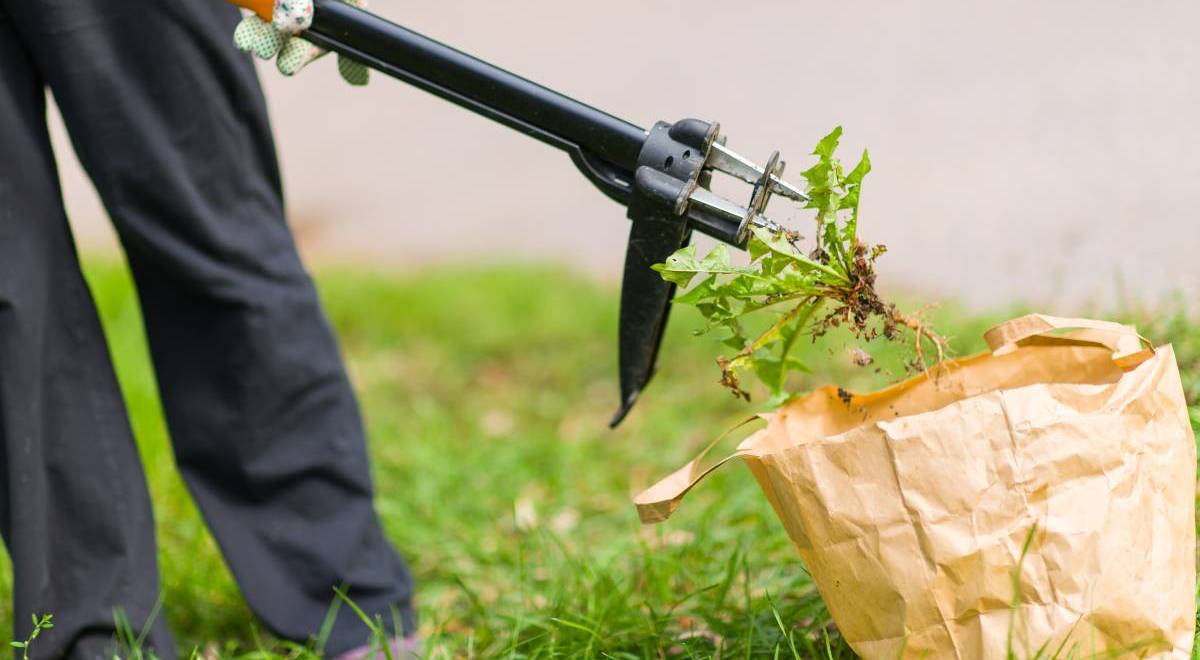
Some steps seniors can take to prevent weed overgrowth include regularly mulching the soil, using natural herbicides, trimming garden corners and edges, and manually pulling weeds (if the soil is wet) or hoeing them (if the soil is dry).
Older adults can handle excessive rainfall and flooding by asking someone to drain water from their garden. This can involve aerating the soil, using a pump, and removing debris like leaves and trash. To prevent the problem from recurring, seniors can also hire an expert to install soakaways, gutters, and drains.
Seniors can start gardening on a minimal budget by reusing old pots, opting for seeds instead of seedlings, and DIY-ing the compost (using organic wastes like dried leaves, coffee grounds, and shredded paper).
Find garden maintenance experts, fast
Find a garden maintenance expert
Related price guides
How much does weeding cost?
Read more
How much does mulch cost?
Read more
How much does garden clearance cost?
Read more
How much does hedge removal cost?
Read more

How much does a garden room cost?
Read more
Related articles
How to prune roses the right way
Read more
8 steps to build a DIY pond filter
Read more
How to build garden steps
Read more
How to trim bushes the right way
Read more
13 Best Spring Gardening Tips
Read more
How to clean garden stones
Read more
36 Quirky plant pot ideas you’ll love
Read more
Your garden maintenance checklist
Read more