- Home/
- Comparisons/
- Gardening/
- Wisteria vs Lilac
Wisteria vs lilac: Which should you pick for your garden?
Comparing wisteria and lilac based on appearance, care difficulty, and more
Published on

Written by Ana K.
Contributor
Read more about our contributor
Key Facts
Wisteria is a kind of vine that climbs up on walls, fences, trellises, and similar structures. It has clusters of flowers in either purple, blue, pink, or white.
Lilac is a type of flowering plant that is classified as a shrub. Its blooms come in seven colours, including blue, purple, pink, and magenta.
Want to add a vibrant element to your garden? Propagating colourful plants is probably the most popular way to do so. You can choose between two kinds of flora—wisteria vs lilac—to make a distinct impact during the blooming season.
And to help you determine which one is apt for your outdoor space, this article discusses each flowering plant’s unique traits, including appearance, care difficulty, and market value.
What is a wisteria plant?
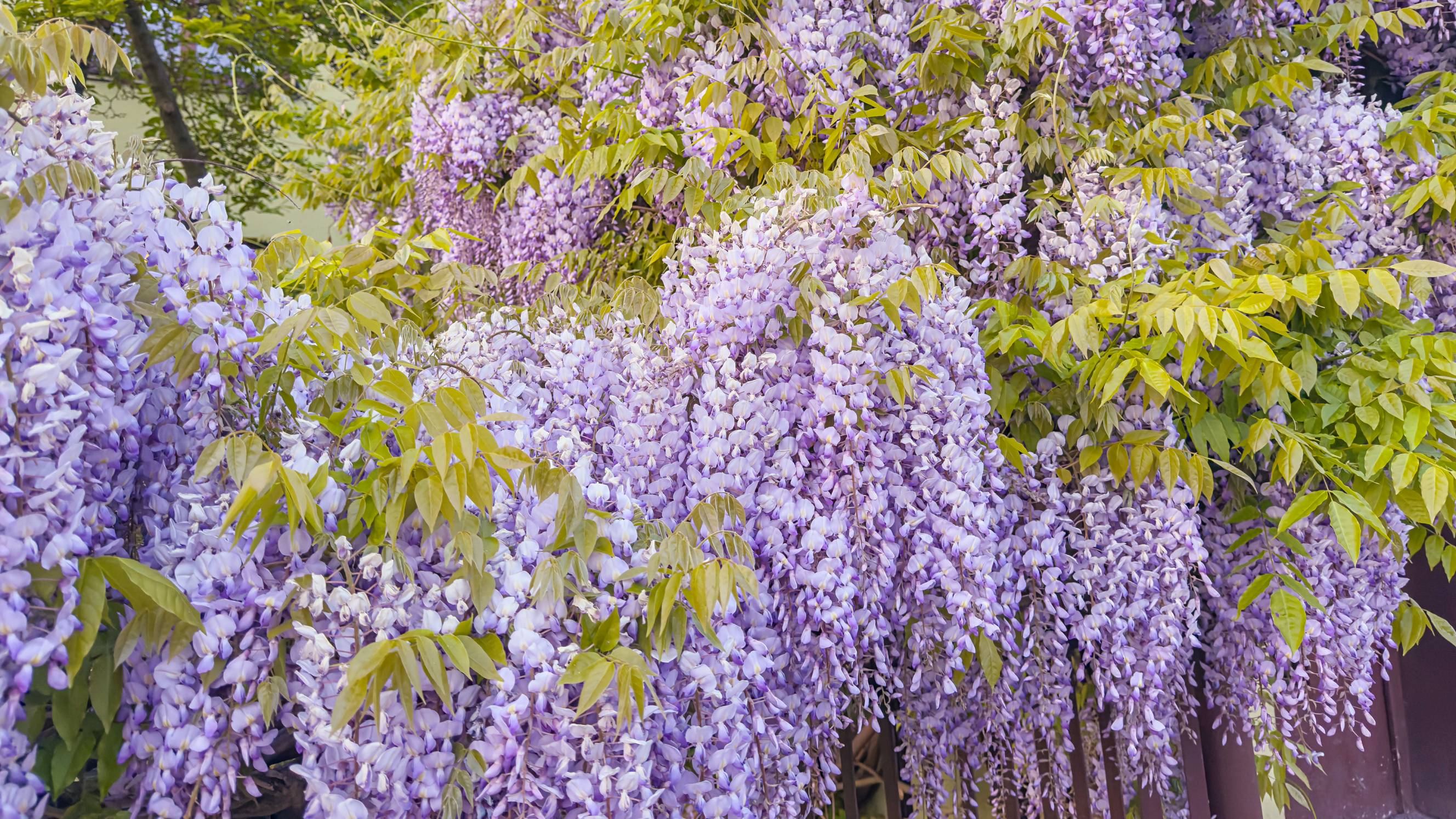
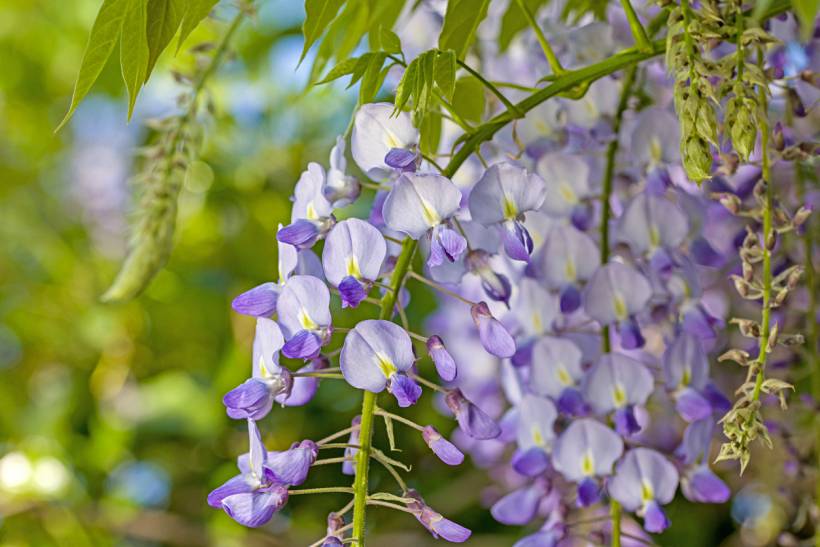 Purple wisteria flowers hanging in a sunlit garden (Source: iStock)
Wisteria refers to a genus of woody vines that can climb vertically and grow aggressively. Its aromatic flowers hang on its stems, displaying a waterfall of purple, blue, pink, or white. Named after Caspar Wistar (American physician and anatomist), it has three species from East Asia and one from the eastern US.
What is a lilac bush?
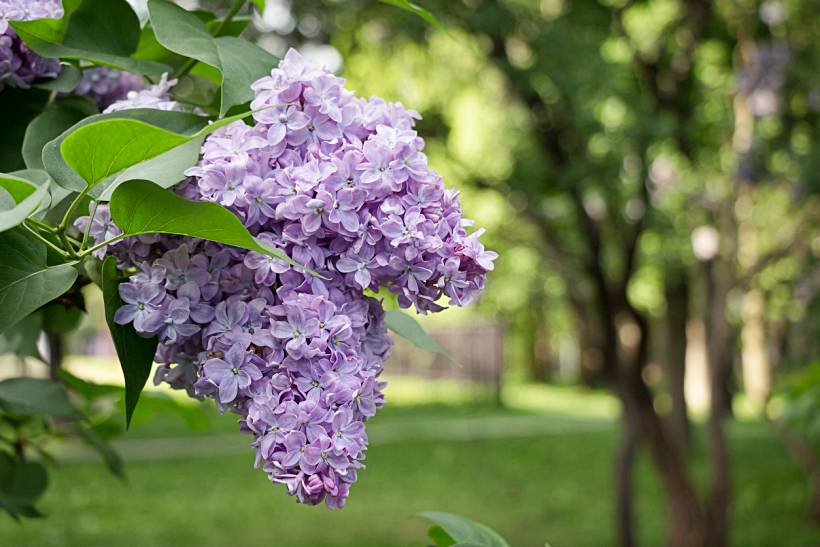 Purple lilac flower clusters beside green foliage (Source: iStock)
Lilac is a plant in the olive family, with medium- to large-sized shrubs. It takes its name from the Persian word for ‘bluish’ due to the colour of its fragrant blooms, which can come in blue, purple, violet, lilac, pink, magenta, or white. It has over 20 species, with two originating in Europe and the rest in Asia.
Lilac vs wisteria: What are their key differences?
In this section, let’s spell out the major wisteria and lilac differences in terms of appearance, care difficulty, growth rate, toxicity, market value, and other attributes.
In terms of appearance
 Purple wisteria vines covering a brick house exterior (Source: iStock)
People can mistake a lilac for a wisteria (and vice versa) due to their physical traits. But where do their features diverge when it comes to flower, leaf, and stem characteristics?
Flower characteristics
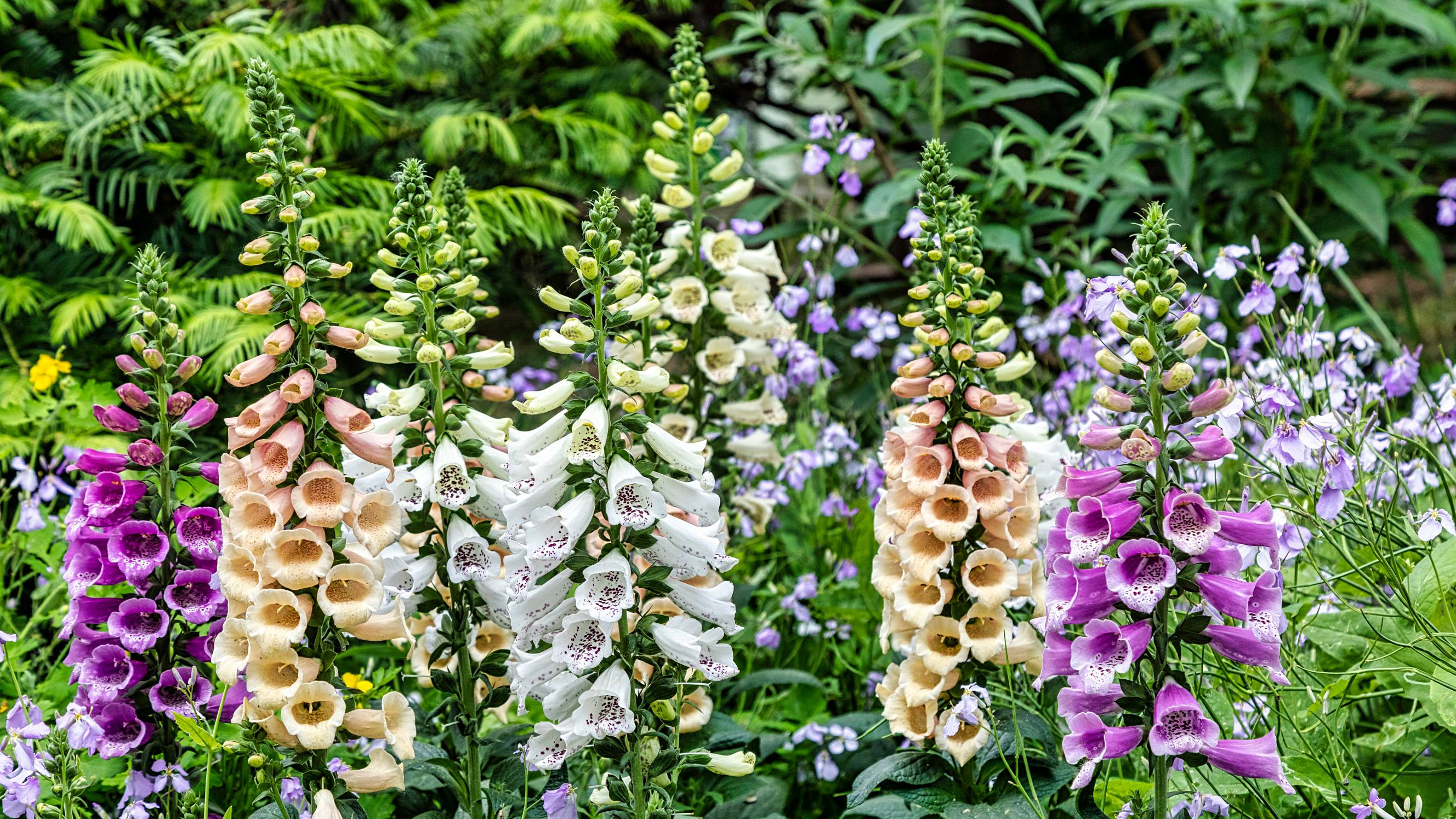
Both wisterias and lilacs are known for their fragrant florals and, similar to the foxglove plant, their purple hues. But one difference between wisteria vs lilac colour is that the former also comes in blue, white, and pink, while the latter has blue, violet, lilac, pink, magenta, and white varieties.
Additionally, the cone-shaped lilac flowers are grouped into clumps called panicles that can grow from 15 to 20 cm long. On the other hand, wisterias cascade into hanging blooms whose clusters or racemes range from 10 cm to 90 cm in length.
Leaf characteristics
The difference between the lilac bush vs wisteria in terms of their leaves is that the former’s are broad and heart-shaped, while the latter’s are oval and pinnately compound, which means they are composed of tinier leaflets.
Stem characteristics
Another prime lilac and wisteria difference concerns their stems. The multi-stemmed structure of a lilac comprises smooth, stout, copper-colored stems. Meanwhile, a wisteria has green, hairy twining stems that can get thick and heavy, requiring support in the form of sturdy pergolas, trellises, walls, or fences.
In terms of care difficulty
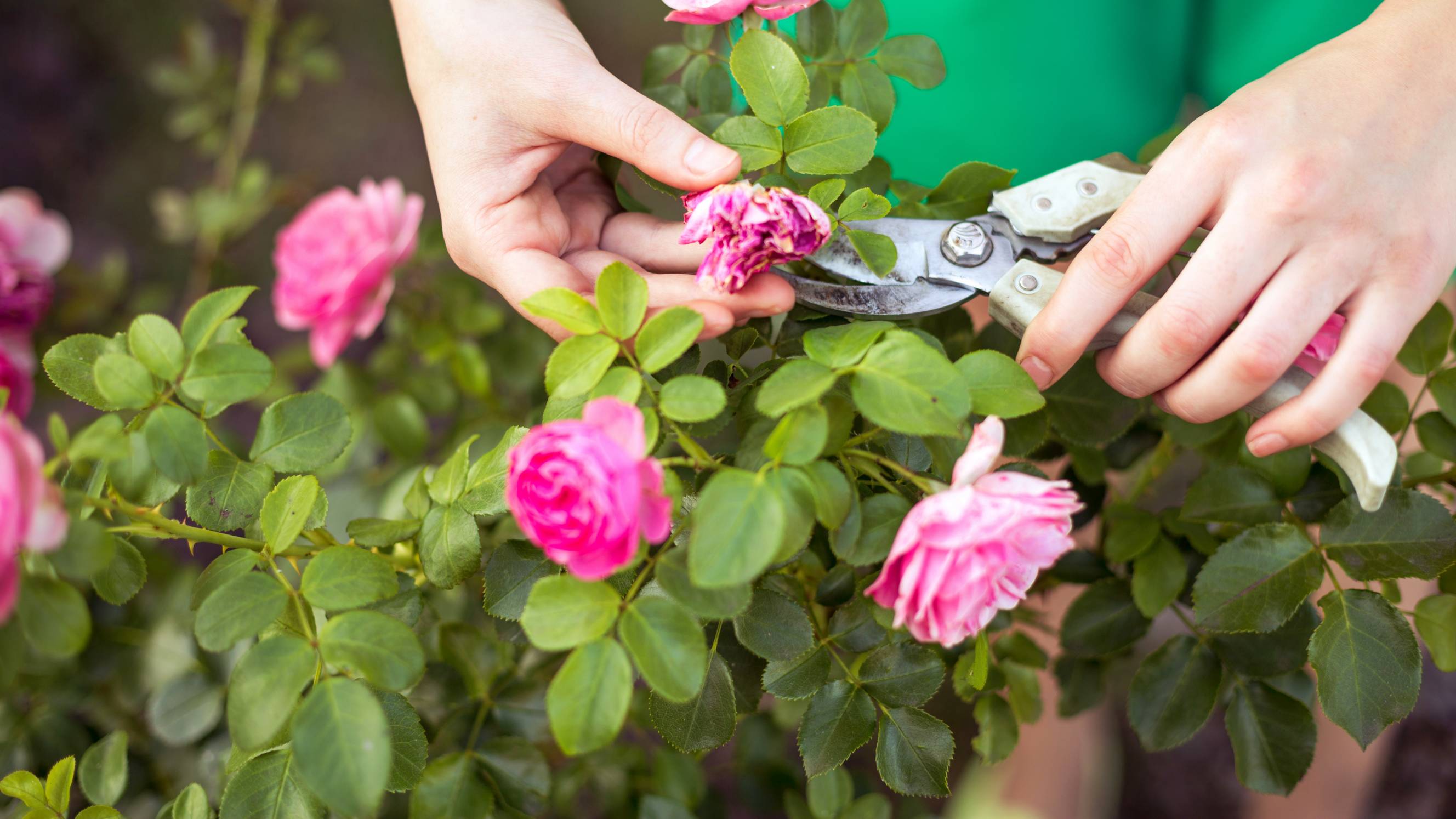
 Pruning purple wisteria vines with garden shears (Source: iStock)
Find out which plant is more finicky when it comes to soil type, pest control, and watering, shade, and temperature requirements.
Best soil type
Lilacs prefer neutral and alkaline soil, but they are fairly resilient and can grow even in clay soil. In contrast, wisterias thrive in acidic to neutral soil and are likely to experience yellowing when planted in soil with a very high pH.
Watering amount and frequency
Unlike wisterias, which benefit greatly from regular watering, lilacs are more tolerant of underwatering once they are well-established. But in general, both plants require a steady supply of water during dry spells.
Shade requirements
There’s not much difference between lilac and wisteria when it comes to shade requirements. While partial shade is enough to raise both flowering plants, daily exposure to full sun is an excellent way to ensure a bevy of blooms come blossom season.
Ideal temperature
Most wisteria and lilac varieties are considered hardy plants that fare well in mild winter areas and places with cooler climates. Kentucky wisteria (Wisteria macrostachya) and late lilac (Syringa villosa), for instance, are highly cold-tolerant species that are ideally planted after the last frost date.
Pest control
While wisterias are mostly pest-resistant, insects like leaf miners, scales, and aphids can still cause damage and should be managed through pruning and using insecticidal soap. On the other hand, lilacs are prone to pests, particularly the lilac borer, which means pruning and mulching should be done properly and regularly.
In terms of growth rate
Are lilac and wisteria the same in terms of their growth rate? Another thing that distinguishes these perennial plants is that wisteria grows significantly faster than lilac, reaching up to 3 m in height in just a year, compared to 0.3 to 0.6 m for lilac.
In terms of bloom time
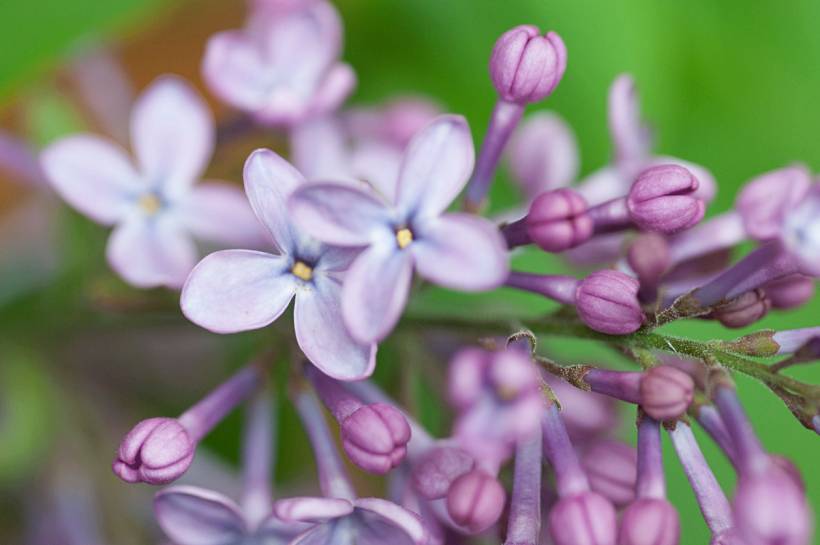 Lavender lilac blossoms with unopened buds (Source: iStock)
When is wisteria blooming time, and when do lilacs bloom in the UK? Both wisteria’s and lilac’s flower buds usually open up during spring to early summer.
In terms of fragrance
Both are known for their fragrant flowers, but there are some differences between wisteria vs lilac smell. Lilacs usually emit a sweet, powdery fragrance, while wisterias have a more powerful saccharine scent with a sometimes musky quality.
In terms of toxicity
 Brown dog sitting among blooming lilac bushes (Source: iStock)
Overall, lilacs are non-toxic to both humans and animals. Their flowers are even edible and incorporated into various dishes. However, wisterias can be harmful if ingested, so avoid planting them if there is a risk that a child or pet might accidentally eat them.
In terms of propagation ease
If you’re new to growing plants, one essential piece of information to know is that wisteria can be propagated in many ways. While it’s possible to see fast results via softwood cuttings or layering, it can take up to 20 years to witness the fruits of your labour if you choose to cultivate through seeds.
Lilac, similarly, is considerably easier to propagate through suckers or cuttings but can take up to five years via seeds.
In terms of market value
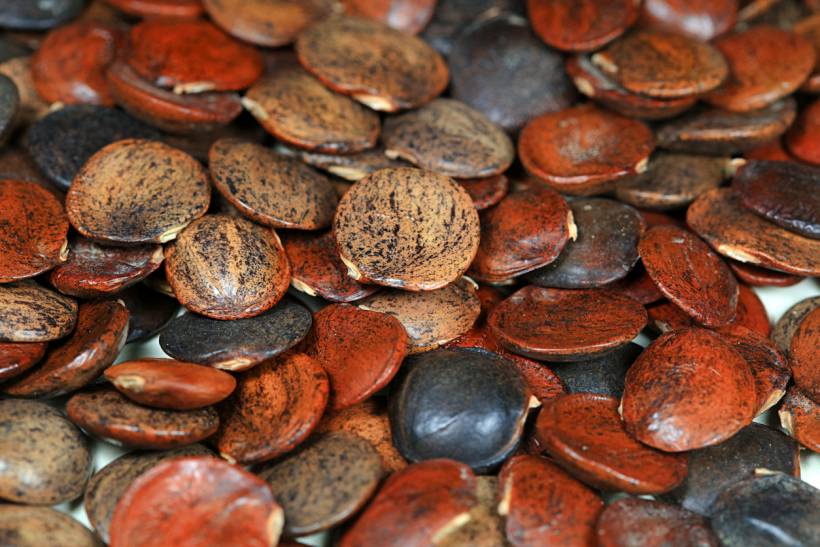 Flat reddish-brown wisteria seeds in a pile (Source: iStock)
Before getting lilac or wisteria delivered to your place, it’s important to know how much they cost so you can budget accordingly.
Flower prices
In general, lilac (starting at £10 for a 2 L pot) is significantly cheaper than wisteria (at least £20 for the same volume).
Seed prices
Wisteria seeds usually cost £6 for a 40-piece packet. Meanwhile, you can get the same amount of lilac seeds for only £2.
Achieve a lush flower garden with Airtasker
 Gardener tending purple wisteria flowers in a leafy garden (Source: iStock)
Want an outdoor space with a bounty of wisteria and lilac blooms? Through Airtasker, you can find experts who have mastered the art of planning and building a landscaped garden.
Just sign up and post a task on the platform to start connecting with gardening pros in your area. After Taskers start responding, it’s time to pick the right team by reviewing their experience and customer ratings.
Learn more about our contributors
Written by Ana K.
Contributor
Ana always puts a premium on accuracy, clarity, and style when writing—a practice that her English degree has instilled in her. She excels at covering topics related to pet care, home and interior design, and food, which count among her varied interests. She also enjoys nature and street photography, as well as travelling. Overall, Ana uses her love for research to engage Airtasker readers with fun, practical content.
Wisteria vs lilac
Wisteria |
Lilac |
|
|---|---|---|
Appearance |
Comes in purple, blue, white, and pink; has racemes that can grow up to 90 cm in length; has pinnately compound and oval leaves; has hairy stems |
Comes in seven colours; has panicles that can grow up to 20 cm in length; has heart-shaped and broad leaves; has a multi-stemmed structure |
Care Difficulty |
More fussy when it comes to soil type, favouring acidic to neutral soil; requires regular watering and full sun; most varieties are cold-hardy; mostly pest-resistant |
Thrives in neutral to alkaline soil and tolerates clay soil; can be underwatered; needs full sun; cold-hardy; prone to pests and requires regular pruning and mulching |
Growth Rate |
Can reach up to 3 m in a year |
Can grow to 0.3 to 0.6 m within the same period |
Bloom Time |
Spring until early summer |
Also spring until early summer |
Fragrance |
Has an overpowering sweet scent |
Has a powdery quality to its sweet fragrance |
Toxicity |
Toxic when ingested by humans and animals |
Non-toxic |
Propagation Ease |
Easily propagated when done via softwood cuttings or layering; can take up to 20 years to bloom when propagated through seeds |
Can also get swift results when propagation is done through cuttings/suckers; can take up to five years via seeds |
Market Value |
At least £20 for a 2 L pot; a 40-seed packet starts at around £6 |
At least £10 for the same pot size; seeds are only £2 for the same amount |
FAQs on wisteria and lilac
Yes. Compared to the common lilac, certain wisteria species are typically more invasive. This is particularly true of nonnative species, such as Japanese wisteria (Wisteria floribunda) and Chinese wisteria (Wisteria sinensis).
Wisteria, a climbing vine, is generally more apt for fences, pergolas, and walls than the lilac shrub.
Definitely! There are several kinds of wisteria and lilac, including American wisteria (Wisteria frutescens) and Josee lilac (Syringa vulgaris’ Josee'), that can be successfully grown in pots and other types of containers.
Unlike annual plants, wisteria and lilac can live for an incredibly long time, sometimes even up to a hundred years.
Lilacs have an advantage as cut flowers since they have a longer vase life (two weeks versus one week).
Lilac, which belongs to the olive family, is not related to wisteria, which is a genus under the legume family.
Find gardening services, fast
Post a task