- Home/
- Comparisons/
- Cleaning/
- Isopropyl Alcohol vs. Ethanol
Isopropyl alcohol vs ethanol: Which is better for cleaning?
Comparing isopropyl alcohol and ethanol based on effectiveness in cleaning, disinfection, and more
Last Updated on

Written by Cielo B.
Staff Writer
Read more about our contributor
Key Facts
Isopropyl alcohol or isopropanol is a sanitizing solution used for surface cleaning and electronic devices.
Ethanol or ethyl alcohol is a potent ingredient in hand sanitizers against germs and is safe for the skin.
Keeping your home clean, not just tidy, means choosing effective products. Now more than ever, sanitizing and disinfecting are necessary to keep your family safe from illness.
When it comes to disinfecting and sanitizing, isopropyl alcohol vs. ethanol come up again and again. In this guide, take note of their differences and similarities, as one may have the edge to be the right cleaning solution for your next home cleaning project!
What is an isopropyl alcohol?
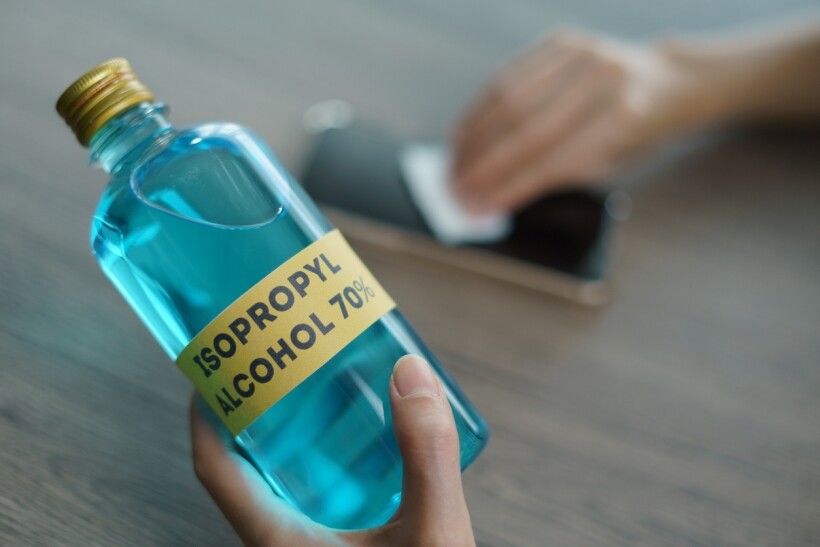 Sanitizing a mobile phone screen with isopropyl alcohol. (Source: iStock)
Isopropyl alcohol (also commonly known as rubbing alcohol) is used as a disinfectant and sanitizing agent, from hospital settings down to the walls of your own house or apartment. It's also a key ingredient in daily household essentials like hand sanitizers, lotions, and cleaning products.
While it’s an effective cleaning agent, isopropyl alcohol has disadvantages: it can damage sensitive plastics (such as acrylics and polycarbonates) and cause skin dryness with prolonged or repeated contact. Plus, isopropyl alcohol can be toxic even in amounts as small as 0.5 mL/kg, so it should never be ingested and should be used with caution.
Isopropyl alcohol is also called isopropanol, and pure (99%) versions are less effective disinfectants than the diluted 70% kind. Without enough water, it evaporates too fast and can seal germs behind a protective layer before killing them, which is why 70% is the standard for sanitizing.
What is ethanol?
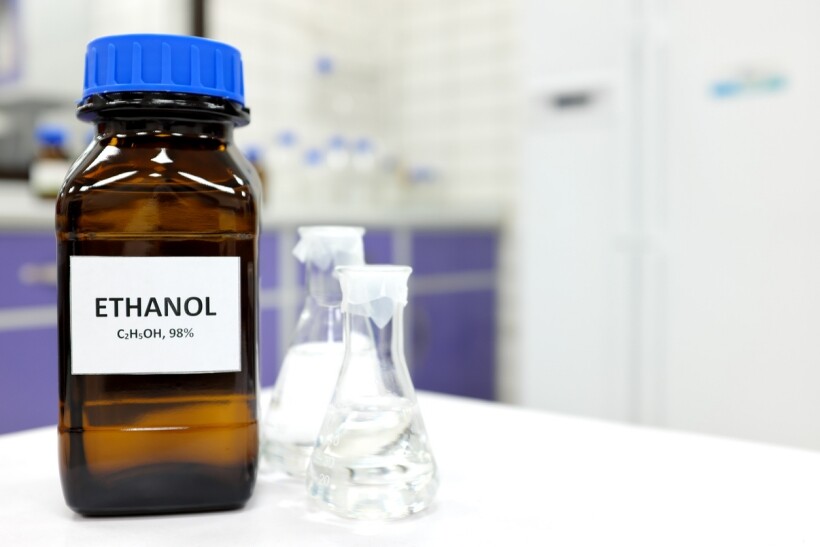 High-purity ethanol solution prepared in a laboratory setting. (Source: iStock)
Ethanol, also known as ethyl alcohol, is another readily available sanitizer used as a disinfectant for cleaning. It also has the nice quirk of being a natural by-product of yeast, making it an important component in drinking alcohol, strong spirits, and even fuel ethanol.
Here's the caveat: manufacturers often add specific toxic chemicals and additives, like methanol, methyl ethyl ketone (MEK), and isopropyl alcohol, to "denature" ethanol. That's because pure ethanol is considered suitable for human consumption, so it's regulated and subject to heavy federal excise taxes.
Denaturing it makes it more affordable for industrial or household cleaning, though the added chemicals can leave a residue or faint odor on surfaces.
Ethanol-based hand sanitizers are required to contain a bittering agent (a denaturant) because small amounts of ethanol can be dangerous if swallowed by young children.
Ethanol vs isopropyl alcohol: How do they differ?
Ethanol and isopropyl alcohol have particular differences that set them apart quite significantly. However, a good question for anyone looking to sanitize their home is if the differences actually matter.
Let’s now dive a little deeper into the science behind ethyl and isopropyl alcohol and discover if they’re more than just ingredients in a bottle of hand sanitizer
In terms of chemical composition
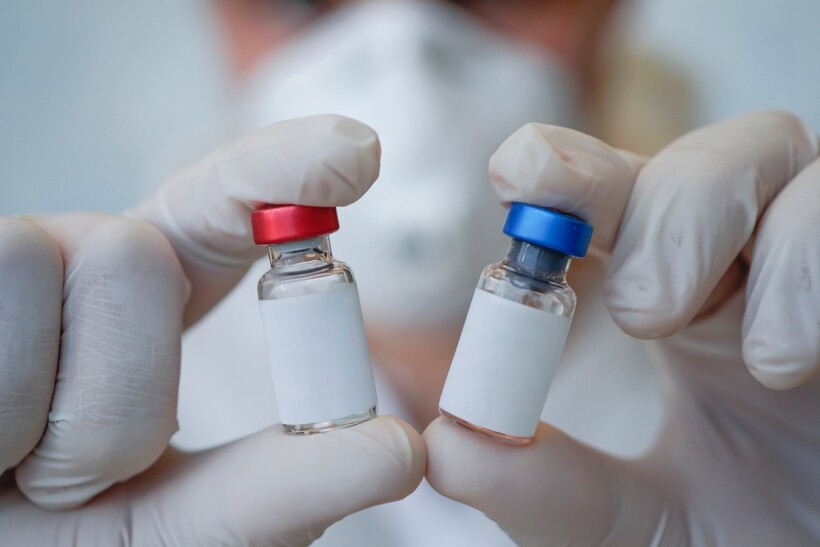 Comparing two chemical alcohol solution vials in a laboratory. (Source: iStock)
Isopropyl alcohol has the chemical composition of C3H8OH, whereas ethanol is C2H5OH. Among the two alcohols, isopropyl has one more carbon atom and three more hydrogen atoms. Both have a hydroxyl (OH) group, which is why we know them as alcohols.
The boiling point of ethanol is 78°C while isopropyl alcohol boils at 82°C. The temperature difference isn't much, but isopropyl is more easily combustible than ethanol.
In terms of their effectiveness in cleaning and disinfection
Can I use ethanol instead of isopropyl alcohol for disinfecting? When it comes to ethanol vs. isopropyl alcohol for disinfectant use, the key indicators for both cleaning and disinfection are the range of germs they can kill and how effectively they do so. It is common to create aqueous solutions for cleaning with alcohol. Simply put, this is a water mixture using alcohol and pure water.
So, which is a better disinfectant: isopropyl alcohol or ethanol? Both are effective in disinfecting surfaces, whether you're working through a kitchen cleaning checklist or just wiping down countertops. As detailed in a medical study, both alcohols eliminated germs by more than 92%.
In another relevant study comparing ethanol and isopropyl alcohol, both were capable of sanitizing hard surfaces post-COVID; however, the study stresses the importance of an alcohol concentration of 62 to 80%.
Ultimately, ethanol edges out isopropyl alcohol in effectiveness. According to the World Health Organization (WHO), ethyl alcohol (ethanol) at 70% concentration is more effective than isopropyl alcohol because it kills a broader range of viruses, bacteria, and other germs.
This is also supported by the Centers for Disease Control and Prevention (CDC), which stated that Ethyl alcohol (at 60%–80%) can better eliminate tough-to-kill viruses than isopropyl alcohol. Disinfecting is only half the job, though — if lingering smells are still an issue, a professional odor removal service can finish the clean.
In terms of household cleaning applications
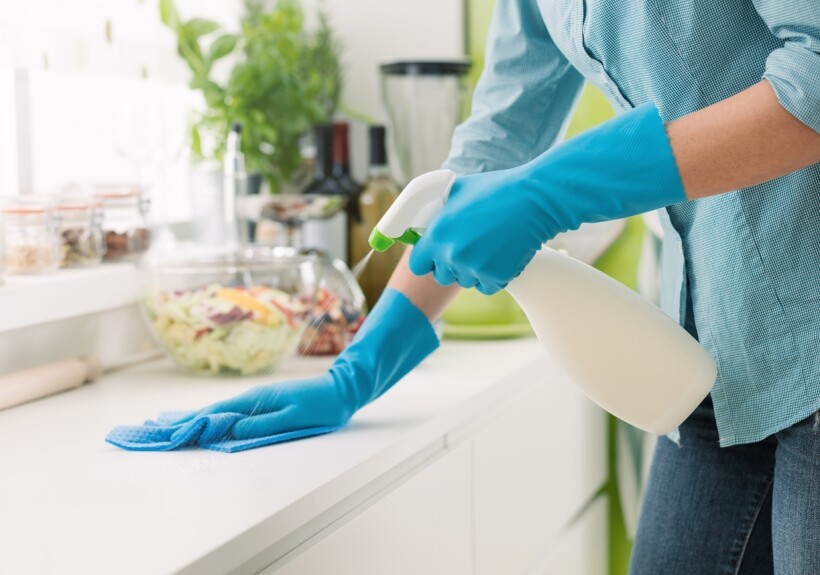 Spraying alcohol to sanitize kitchen surfaces. (Source: iStock)
When it comes to ethyl vs. isopropyl alcohol, both are good for cleaning and disinfecting surfaces, such as granite or quartz worktops and metallic or chrome surfaces. If you'd rather leave routine disinfecting to a pro, a housekeeping service can take care of it for you.
Careful cleaning using 60% to 90% ethanol or isopropyl alcohol can also work on disinfecting hard surfaces such as glass, stainless steel, doorknobs, countertops, and kitchen fixtures (for degreasing). A quick dusting pass over these surfaces first helps the alcohol actually reach the germs instead of just pushing dust around.
What you're cleaning |
Best pick |
Why |
|---|---|---|
Your laptop, phone, or camera lens |
Isopropyl alcohol |
Low polarity means it evaporates fast and leaves next to no residue |
Countertops and everyday surfaces |
Ethanol (70%) |
Disinfects effectively without being too harsh on finishes |
Your hands |
Ethanol |
Gentler on skin with repeated use |
Medical or clinical spaces |
Ethanol (70%) |
Meets the concentration recommended by the CDC and WHO for broad germicidal activity |
Grease, oils, or sticky adhesive gunk |
Isopropyl alcohol |
Stronger solvency cuts right through it |
However, both types are known to harden, crack, and stiffen rubber products. They may also crack and discolor certain types of plastic, with isopropyl having a stronger effect.
Pro tip: Always spot-test first, and for tougher marks alcohol alone won't lift, a stain removal service is worth hiring. If you'd rather not risk it yourself, hiring a professional is the safer route. Check typical house cleaning costs to compare doing it yourself versus booking a pro.
In terms of safety and toxicity
Both are highly flammable and should not be used or placed near a fire. Avoid storing either in places where heat accumulates, such as a car or in direct sunlight. Also, refrain from leaving isopropyl and ethyl alcohols in direct sunlight.
So, can you use both isopropyl alcohol and ethanol on human skin? Both are commonly used as skin antiseptics, but a study discovered that ethanol is more tolerated by the skin with repeated use, while isopropyl alcohol may lead to damaged and cracked skin with prolonged use.
When it comes to toxicity, ethanol in cleaning products can be hazardous to your health, even though it is a component of drinking spirits. By contrast, human consumption of isopropyl alcohol is fatal, even in small amounts.
In terms of purity
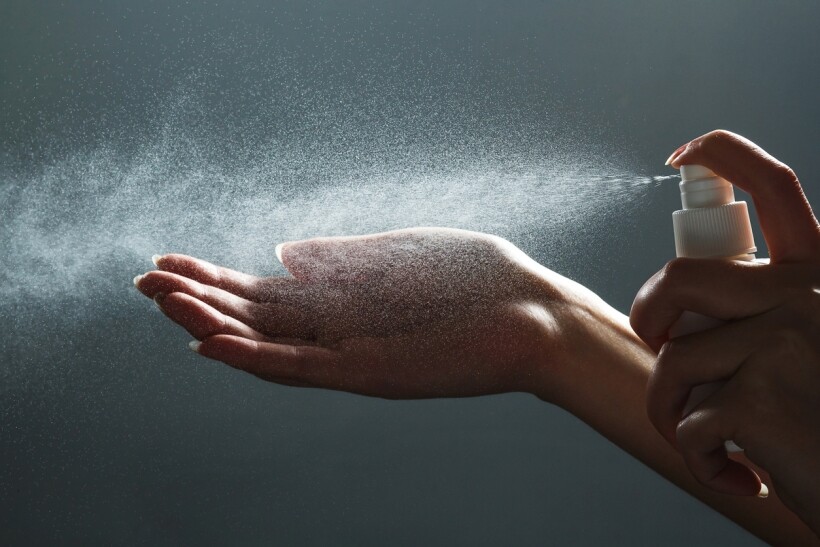 Sanitizing hands using a portable alcohol spray bottle. (Source: iStock)
Both alcohols are effective at killing microbes, but must be at concentrations of at least 62 to 80%. When it comes to 70% isopropyl vs. ethanol, the WHO recommends ethanol at that concentration over isopropyl alcohol for sanitizing germs, thanks to its broad germicidal activity.
Some cases do exist where isopropyl alcohol is more potent, but those are for specific cases. For instance, alcohol can only handle mold on hard, non-porous surfaces like tile or glass, and even then, it won't stop regrowth if moisture is still present.
For mold on porous materials like drywall or carpet, or for anything beyond a small spot, it's worth checking the cost of mold removal before tackling it yourself.
In terms of solvency
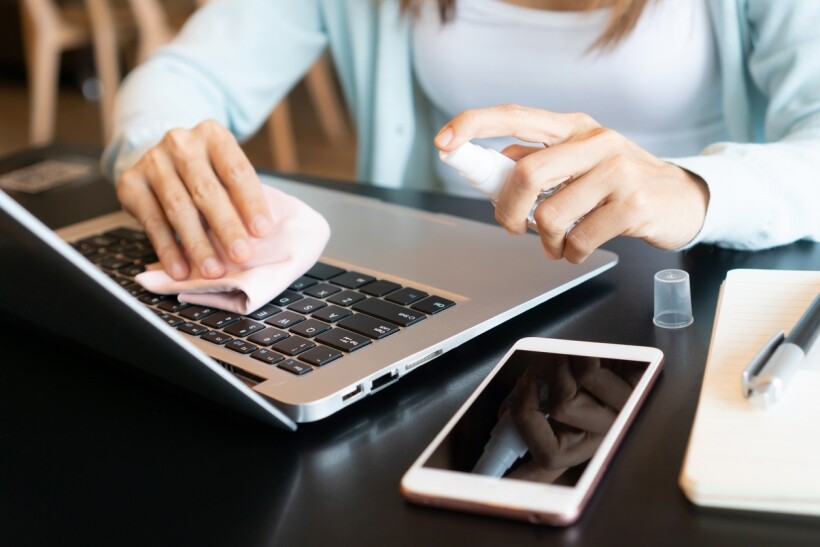 Cleaning a laptop keyboard with alcohol disinfectant spray. (Source: iStock)
Both alcohol types are organic solvents, but isopropyl alcohol is less polar due to its chemical composition. Its lower polarity means it dissolves oils and adhesives more effectively, so isopropyl alcohol is safe for electronics.
Meanwhile, ethanol is considered one of the best organic solvents and has higher polarity. It does retain water, which is dangerous for electronics. A higher concentration of lab-grade ethanol would be needed for cleaning electronics, but it would be more expensive than regular isopropyl alcohol.
Ultimately, between isopropyl alcohol vs. ethanol for cleaning electronics, isopropyl's lower polarity and stronger solvency for oils and adhesives make it the more practical choice for the job.
Which is better for your needs: Isopropyl alcohol or ethanol?
By now, you've probably noticed that between isopropyl alcohol vs. ethanol for cleaning, neither alcohol wins across the board. The best choice really comes down to what you're cleaning.
Use isopropyl alcohol for cleaning electronics, camera lenses, and anything with oils or adhesives you need to break down. Its lower polarity and quick evaporation make it the practical choice when moisture and residue are a concern.
Use ethanol for everyday surface disinfection and skin or hand sanitizing. It's the gentler option for repeated skin contact, and at 70% strength, it's the level health experts recommend for effective disinfection.
Get expert cleaning and disinfection with Airtasker
Isopropyl alcohol uses for your home are definitely great for cleaning and sanitizing, while ethanol is safer for your skin as well as in fighting viruses and germs.
But there's no need to fuss about which alcohol is better or safer with the help of Taskers! Post a task and connect with expert cleaners who know can take on your next cleaning project according to your budget and schedule.
Learn more about our contributors
Written by Cielo B.
Staff Writer
Cielo is an experienced content writer who has explored various industries throughout her career. Her expertise, founded on a degree in journalism, includes writing about automotive and home maintenance. Cielo also covers topics like dressmaking, tailoring, and photography since she is a passionate cosplayer who enjoys dressing up as her beloved anime characters.
Isopropyl alcohol vs. ethanol
Factor |
Isopropyl Alcohol |
Ethanol |
|---|---|---|
Chemical Composition |
Higher boiling point at 82°C and is more combustible |
Lower boiling point at 78°C |
Effectiveness in Cleaning and Disinfection |
Effective disinfectant, optimal at 62–80% concentration |
More effective germicidal activity; WHO and CDC recommend 60–80% concentration for best results |
Cleaning Application |
Can melt or degrade sensitive plastics and rubber seals with repeated heavy use |
Suitable for most surfaces, though denatured versions may leave a faint smell or residue |
Safety and Toxicity |
Toxic even in small amounts (as little as 0.5 mL/kg); prolonged skin contact can cause dryness and cracking |
Most over-the-counter ethanol is denatured with added toxic chemicals to prevent ingestion, but is gentler on skin with repeated use |
Purity |
More potent in specialized applications |
Has a broader germicidal ability |
Solvency |
Low polarity, suitable for gadgets and electronics |
High polarity, retains water; denatured ethanol can leave residue on electronics or optical lenses |
FAQs on ethanol vs. isopropyl alcohol
There is no difference between isopropyl vs isopropanol. Rather, isopropanol is just the proper or chemical name for isopropyl alcohol.
Yes, both are the broad terms used for both ethanol and isopropyl alcohol.
Yes, both are considered hazardous, mainly because they're highly flammable liquids and vapors. That’s why you should keep them in cool, dry, well-ventilated spots, well away from heat sources, sparks, open flames, and direct sunlight.
Moreover, always keep containers tightly sealed so flammable vapors don't escape into the air. If you're storing larger quantities, use approved flammable liquid storage cabinets.
Ethyl alcohol or ethanol is a good substitute for isopropyl alcohol for cleaning. However, isopropyl alcohol is a key ingredient in many cleaning products, so you may actually have isopropyl alcohol, but it should be in a different name and concentration.
It depends on what you're cleaning. Rubbing alcohol is usually the safer choice for acrylic and plastic, since ethanol can start damaging these once it's used at a higher strength. For painted surfaces, a lighter, diluted ethanol mix tends to leave paint unharmed, while rubbing alcohol is more likely to cause damage.
Commercially sold rubbing alcohol is generally isopropyl alcohol (often 70% solution diluted with water). However, it can also be made using ethanol. While both work as disinfectants, isopropyl is gentler and less drying on skin, making it the more common choice for hand sanitizers.
Find cleaning services, fast
Post a task
Related price pages
How much does brick cleaning cost?
Read more
How much does a cleaner cost?
Read more
How much does attic cleaning cost?
Read more
How much does floor cleaning cost?
Read more
Average price of move out cleaning
Read more
How much does tile cleaning cost?
Read more
How much does office cleaning cost?
Read more
Related articles
How to get rid of dust in your home
Read more
How to clean a garage floor
Read more
Move out cleaning checklist
Read more
How to get rid of mold at home
Read more
How to become a housekeeper
Read more
How to clean a duster
Read more
How to price pressure washing jobs
Read more
How to price cleaning jobs
Read more
How to get cleaning jobs
Read more

How to get cleaning certification
Read more
The ultimate spring cleaning checklist
Read more