The Big Move South: Your starter guide to moving to Croydon
A realistic look at moving to Croydon from central London and beyond
Published on

Written by Andrea H.
Staff Writer
Read more about our contributor
Moving to Croydon Highlights
Croydon has a large, working-age population and strong transport links, making it a major employment hub outside central London.
Living costs average around £786 per month (excluding rent), with housing 33% cheaper than in central London.
Expect to pay about £1,713 per bedroom for UK removals, while smaller local moves typically range from £75 to £151 per hour. Booking in winter can help reduce costs.
Croydon, in South London, has steadily built a reputation as one of the capital’s more interesting places to land. More affordable housing, vibrant communities, and strong transport links make it a practical choice for anyone looking to escape the high rents of central London.
While moving to Croydon stacks up well on paper, it’s worth knowing what you’re actually getting into before committing. This guide covers jobs, living costs, neighbourhoods, and a few practical details to help you find your feet.
Why are people moving to Croydon?
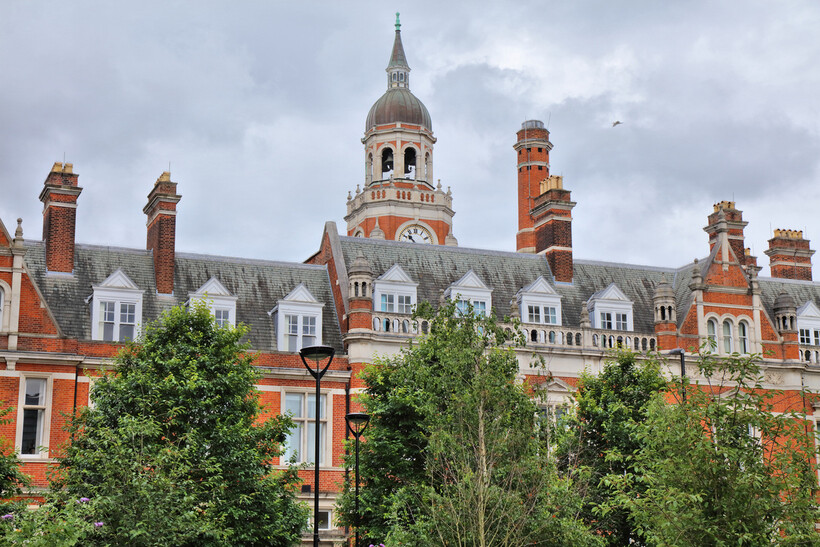 The historic facade of Croydon Old Town Hall (Source: iStock)
Croydon’s appeal comes down largely to affordability and solid infrastructure. Rents are roughly 33% lower than the London average, and most people relocating from inner London boroughs find they’re not giving up much in return. Urban convenience is still very much there, and there’s a fair bit of green space, too.
Lifestyle and culture
So, what is Croydon like day to day? Life here tends to orbit around a few key spots. East Croydon Station, in particular, sets the pace for morning commutes.
The breakfast scene is well covered, with places like Ellie’s Café and Crushed Bean as popular options. Meanwhile, the wider food offering reflects the borough’s diversity. Foodies can expect a mix of local pubs and a range of international cuisines.
The same diversity carries into the arts. Street art is scattered across town, and music is a big part of Croydon’s identity. The area is home to The BRIT School, which has produced artists like Amy Winehouse, Adele, and RAYE, and continues to nurture new talent.
Career and job opportunities
In terms of career growth, Croydon is a solid option. It has the largest concentration of office space in England outside of central London, making it a hub for business and legal firms.
Much of the local economy is driven by small and medium-sized enterprises, particularly in the Wholesale, Retail, and Motor Trades—Croydon’s biggest employer sector. Major organisations based here include Superdrug, the Home Office, and HM Revenue and Customs (HMRC).
Healthcare is another area on the rise. Croydon’s regeneration ties into the National Health Service (NHS)’s wider shift toward community-based care, creating more opportunities across the sector. Roles like advanced nurse practitioners (ANPs) and pharmacists are in demand, with salaries ranging from £48,000 to £70,000+.
Weather and climate
Areas in Croydon don’t get extremes. Summers are short and mild, while winters are chilly and grey. There’s no real dry season to speak of, but there are varying degrees of overcast. Light showers can occur at any time of year, so keep a waterproof jacket handy.
Here’s the lowdown on weather in Croydon:
Climate Element |
What to Expect |
|---|---|
Average Temperature |
Summer highs around 20°C; winter lows around 3–5°C. |
Rainfall and Rain Pattern |
Light to moderate most months; slightly heavier in autumn and early winter. |
Sunshine Hours |
Up to 16.5 hours of daylight in summer; as few as seven to eight in December. |
Cloud Cover |
Overcast days are the norm in winter; summer is brighter but still mixed. |
Wind |
Breezy year-round, stronger in autumn and winter. January averages around 12–13 mph. |
What should you research before moving to Croydon?
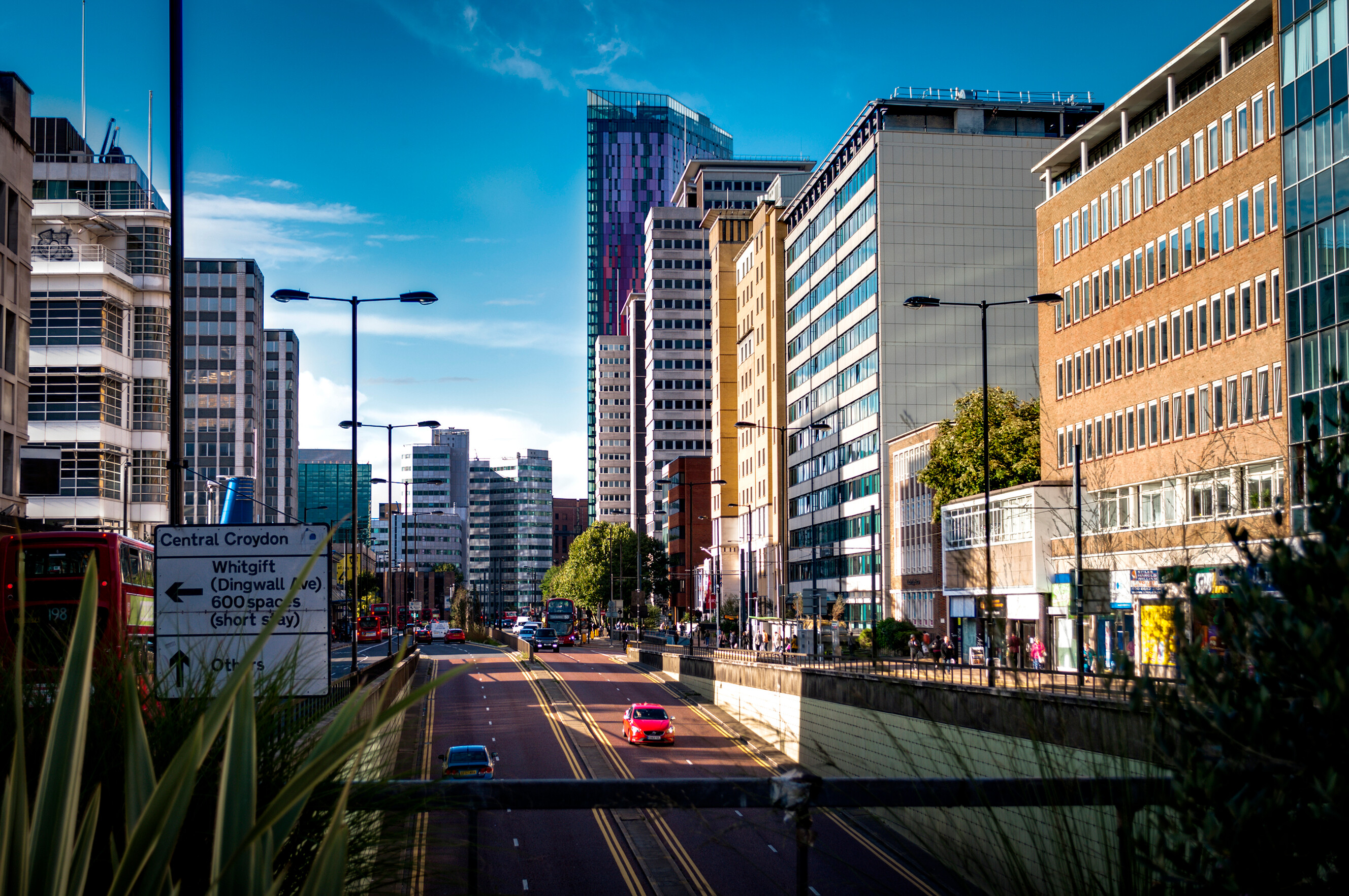
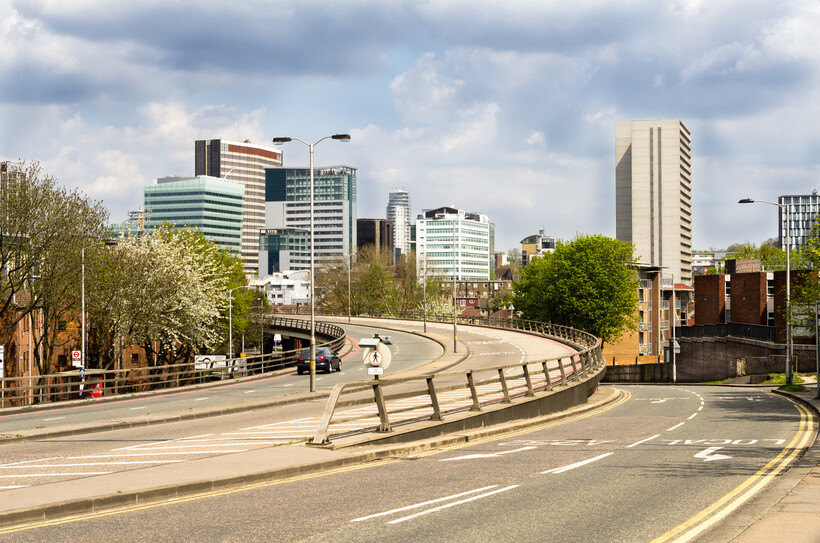 Curved roads and high-rise buildings in Croydon (Source: iStock)
Living in Croydon calls for thorough preparation and extensive research. Know the basics before you arrive to make the transition a lot smoother.
Cost of living
The estimated monthly cost for a single adult in Croydon is around £786 (excluding rent). That’s roughly 5% below the UK average and 30% cheaper than central London.
Your actual costs will vary depending on lifestyle and housing. You also need to factor in Croydon Council Tax, which is over £2,500 annually for a Band D property. If you’re renting, this is often shared.
Typical monthly expenses look like this:
Area of Expense |
Estimated Cost |
|---|---|
Rent |
£1,560 |
Groceries |
~£250 to £350 |
Utilities |
~£298 |
Transportation |
£94.90 to £300+ |
Entertainment and Dining Out |
~£8.50 to ~£150 |
Healthcare |
~£50 to £200+ |
Neighbourhood options
Compared to living in London, Croydon offers a mix of suburban, urban, and leafy residential areas, often at more affordable prices and with strong transport links.
South Croydon
South Croydon is a fairly suburban area with Victorian homes and newer flats. It’s close to central Croydon’s shops and restaurants, but still has its own quieter character.
There are direct trains to London Bridge and London Victoria via South Croydon Station. Rents often range from £1,400 to £1,900 per month.
East Croydon
East Croydon has a ‘mini-city’ feel and is home to one of Britain’s busiest railway stations, with quick links into central London and Gatwick Airport. Rents average around £1,910 per month.
Sanderstead
Sanderstead is one of the more affluent and family-focused areas in Croydon. It has good schools, local shops, a Waitrose, and its own library.
The rail network offers direct services to London Bridge and the airport. Rentals range from £1,200 to £3,750 monthly.
Addiscombe
Addiscombe is often suggested to those looking into Croydon crime rates, as it tends to feel quieter and more residential. The area has a strong local high street with independent shops and cafés, and it’s also well connected via Tramlink.
Rent is typically £1,500 to £1,650 per month.
Purley
This neighbourhood is slightly more accessible than Sanderstead and less dense than central Croydon, offering a mix of cafés, restaurants, and local amenities.
Average monthly rent in Purley is around £1,708.
Best time to move
Still figuring out when to book Croydon removals? Timing your move can help keep costs down while balancing decent weather and service availability.
The trends below reflect London-wide demand, which Croydon generally follows. Expect a peak in late summer and a dip in mid-winter.
Season |
Pros |
Cons |
|---|---|---|
Winter (December to February) |
Off-peak season, with demand at its lowest in February (around 27% below the yearly peak). Rates are lower, with some companies offering discounts to fill quieter schedules. |
December may see a surge due to people moving before Christmas. |
Spring (March to May) |
Demand remains steady but moderate. |
Availability tightens, and prices begin to rise as bookings increase ahead of summer. |
Summer (June to August) |
Peak moving season, with August as the busiest period. |
Higher prices and competition for bookings. |
Autumn (September to November) |
Demand eases after summer, with a brief uptick in November. |
Weather can turn cold, wet, and unpredictable. |
Moving costs
The average house removals cost in the UK is £1,713 per bedroom, though the final price depends on the volume of items, distance, and any added services.
For smaller, local moves, such as studios or one-bedroom flats, a man with a van is often the most cost-effective option, typically costing £75 to £151 per hour.
Distance is usually the biggest cost driver. For longer moves, hourly rates range from £135 to £299. Additional services, like fragile item handling (for antiques and artwork) or moving to storage services, can increase the overall cost.
What should you do on your Croydon moving day?
 Local vendors at historic Surrey Street Market (Source: iStock)
Relocating to Croydon comes with a lot of moving parts. Sorting the key details early helps you avoid moving mistakes and unnecessary costs.
Strategically coordinate movers and services
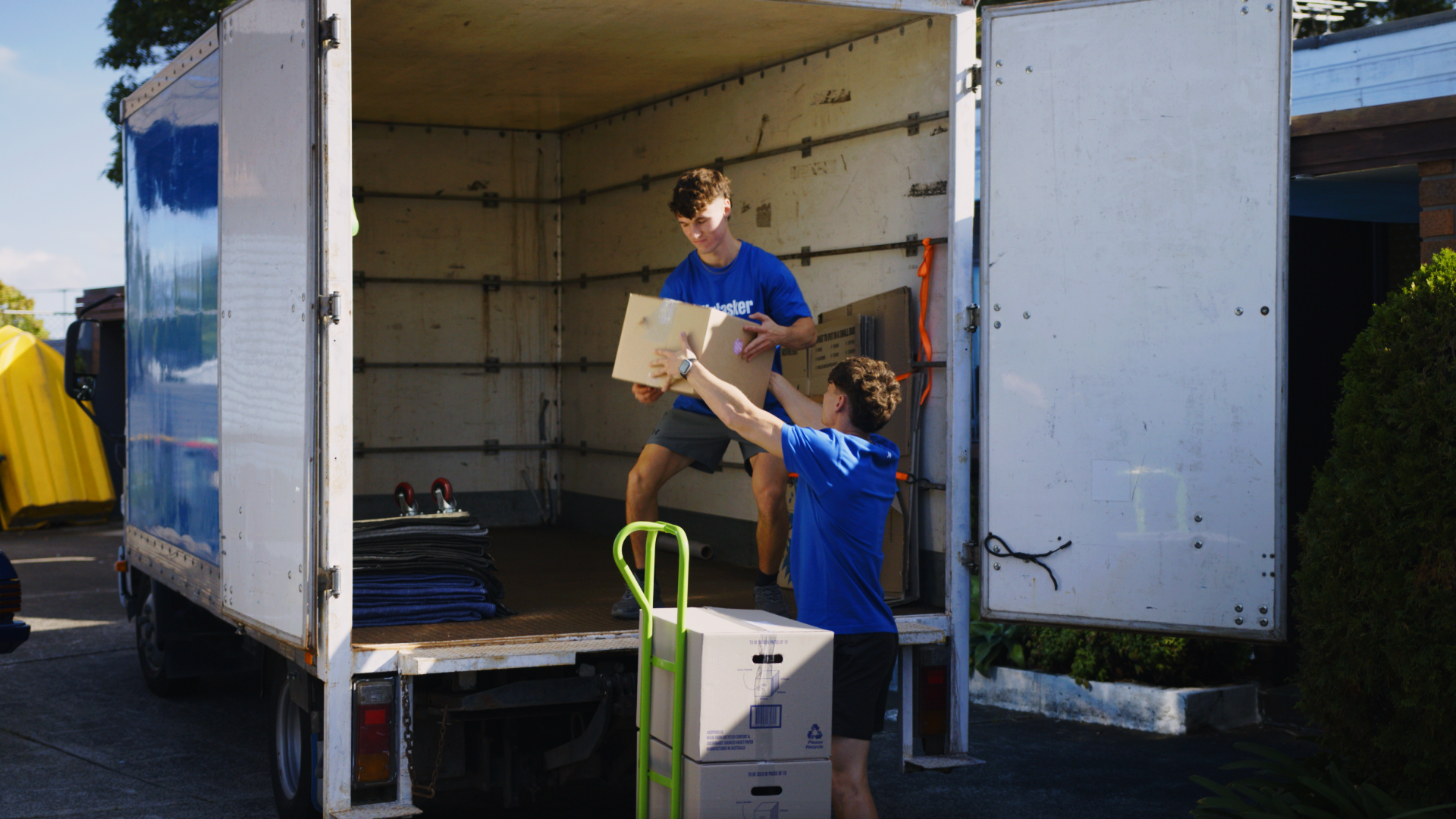
Book removals experts in Croydon four to six weeks in advance. Confirm exact arrival times, crew size, and any special requirements a few days before and on the morning of the move.
If you need space for a large vehicle, apply to the local council for a temporary parking suspension. For shorter stops, a parking dispensation may be enough to use restricted areas for loading and unloading.
It’s also worth checking insurance when using furniture removal services. Ask about goods-in-transit cover, request proof, and review any conditions, especially those related to packing requirements.
Carefully transport your belongings
If you’re moving into a flat near the town centre, access can be tricky. Consider furniture disassembly and assembly services, so you can navigate stairs, basements, or tight layouts more easily.
Given Croydon’s frequent rain, it’s also worth preparing for wet conditions. Use waterproof containers whenever possible, and keep moisture-sensitive items (like electronics) in your own vehicle.
When it comes to student removals, the focus should be on keeping things simple. Decluttering reduces both cost and effort, and a removals service can help manage tight move-in windows.
For more detailed guidance on packing, check out the following:
Critically double-check everything
Finally, be present for your check-out inspection, so you can address any disputes on the spot. Take final utility readings to avoid being charged for usage after you leave.
At your new place, unpack electronics early to prevent moisture build-up. Bring in larger items first, so you can position them before smaller boxes get in the way. If space is tight, unload room by room and stack boxes vertically to keep walkways clear.
How do you get settled in Croydon after moving?
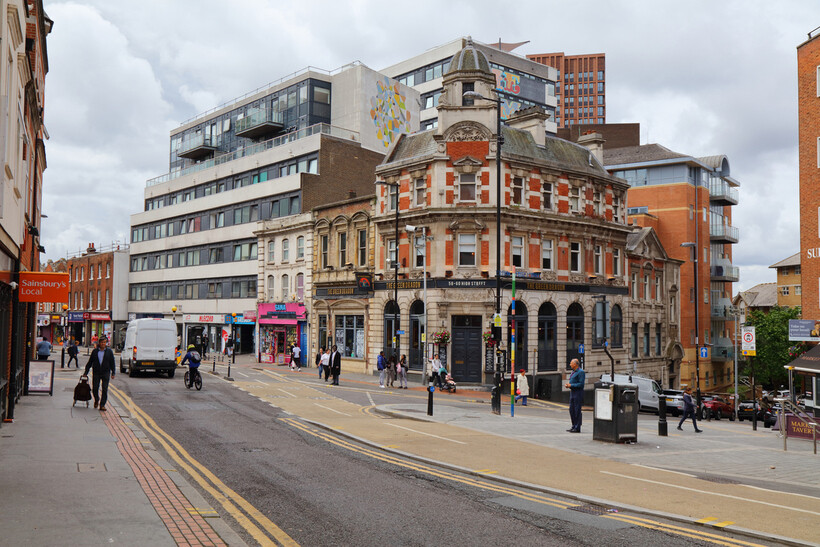 Local shops and amenities in downtown Croydon (Source: iStock)
Getting through moving day is only part of the process. Next comes the practical admin and ensuring everything is set up for daily life.
Connect your utilities
If you’re renting in Croydon, most basic utilities like electricity, gas, and water will already be running when you move in. You’ll just need to set up accounts with the relevant providers. In new-build properties, suppliers may already be assigned, though you can still switch after moving in.
Other services are either arranged independently or managed by the council. Common providers include:
Utility Type |
Example Providers |
|---|---|
Electricity and Natural Gas |
Octopus Energy, British Gas, OVO Energy, E.ON Next |
Water and Wastewater |
Thames Water |
Waste Collection |
Croydon Council |
Internet |
Hyperoptic, Virgin Media, BT |
Update your licences and documents
Once you’ve moved, update your driving licence with the Driver and Vehicle Licensing Agency (DVLA) as soon as possible. While there’s no formal ‘grace period,’ failure to update your address can result in a fine of up to £1,000.
It’s also worth setting up Royal Mail redirection early, as it can take at least five working days to activate. After that, update your address with your bank, insurance providers, and HMRC.
Don’t forget to update the electoral register as well. It’s important for voting, but it also helps with credit checks. You can register online through the official GOV.UK website.
Secure council-related permits
If you live within a controlled parking zone (CPZ), you’ll need a resident parking permit, which can be applied for or renewed online via Croydon Council. Outside CPZs, parking restrictions may still apply, so keep an eye on yellow lines and kerb markings.
Croydon Council also provides weekly and fortnightly recycling collections, but larger items are often taken to designated disposal sites that require a free permit (issued upon presentation of valid ID).
As for home renovations, you may need planning permission for extensions or major alterations. You’ll also need approval if placing scaffolding or building materials on the public highway.
Ensure your family’s welfare
So, is Croydon a good place to live for families? Certainly—there’s access to support services, green spaces, and plenty of activities.
If you’re moving with kids, securing schools or childcare should be a priority. Applications are handled through the national eAdmissions system, and local directories can help you compare schools in different Croydon areas.
For early years services, healthcare, and activities for children under five, Croydon’s Best Start children’s centres and family hubs offer integrated support. You’ll also need to register with a local General Practitioner (GP) to ensure continuity of NHS care. Registration is free and usually takes around five working days.
Once you’re ready to unwind, head over to Coombe Wood in South Croydon for a calm woodland escape. Littleheath Woods is another hidden gem that’s ideal for quiet walks and wildlife spotting.
Also think of your pet
Moving with pets? Keep in mind that microchipping is required for dogs over eight weeks of age and for cats by 20 weeks of age. Owners who fail to comply can face fines of up to £500.
For long-distance moves, a professional pet transport service can help ensure safe and comfortable travel. Once you’ve settled in, register your pet with a local vet to keep vaccinations up to date and access services like grooming and dog boarding. Croydon also has dog wardens who can assist with lost or stray dogs.
In public spaces, dogs aren’t required to be on a lead but must be kept under control. Leads are required in designated children’s play areas, and the Highway Code recommends using one near roads.
How do you get around in Croydon?
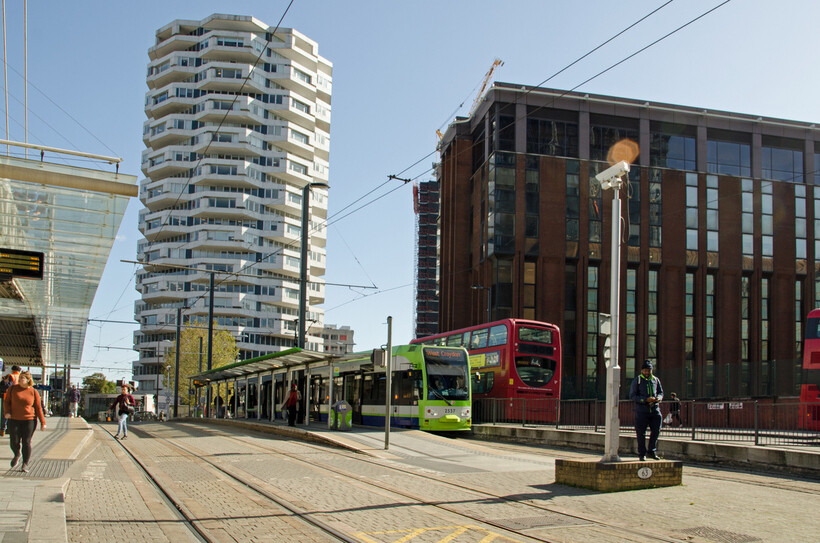 Trams and travellers outside East Croydon station (Source: iStock)
Croydon is one of the best-connected areas in South London, with over 60,000 daily visits. If you’ve been asking, ‘Should I live in Croydon even without a car?’ The answer is still yes.
As a resident, you get easy access to a combination of heavy rail, Overground, Tramlink, and 50+ bus routes linking you to central London and beyond.
For people with disabilities, the Tramlink offers low-floor boarding throughout, while buses are fitted with ramps and dedicated wheelchair spaces.
By train (Overground and National Rail)
Croydon is served by both National Rail and London Overground. National Rail provides faster routes into central London and longer journeys to Gatwick and Brighton, while the Overground is better for orbital travel.
Here are the key stations:
Station |
Rail Services |
Key Uses |
|---|---|---|
East Croydon |
National Rail |
The main transport hub; ideal for fast commutes to central London, with direct trains to London Victoria taking around 15 to 20 minutes. |
West Croydon |
National Rail + Overground |
Best for local and cross-London travel, with easy interchange to the Overground and direct access to Tramlink. |
South Croydon |
National Rail |
Serves Sanderstead and Purley, with direct services to the London core and routes towards Surrey. |
Trains run frequently from early morning until around 1:00 am or 2:00 am, particularly to London and Gatwick Airport.
Fares vary by distance, route, and time of travel. Most passengers use an Oyster card or a contactless device for payment, though paper tickets are still available at major hubs like West Croydon Station.
By bus
Croydon has over 900 stops—the highest of any London borough. Transport for London (TfL) runs the network, with key hubs at East and West Croydon.
Bus demand is highest in areas like Thornton Heath, Selhurst, and Broad Green, as well as South Croydon and Purley, for access to rail stations and the town centre.
Here are the key bus routes:
Route |
Corridor |
Key Uses |
|---|---|---|
109 |
Croydon → Thornton Heath → Norbury → Streatham → Brixton |
A busy corridor through dense areas, widely used for commuting into inner London. |
60 |
Old Coulsdon → Purley → South Croydon → Croydon → Thornton Heath → Streatham |
A long spine linking suburbs and town centres. Popular with students and commuters travelling north. |
466 |
Caterham → Coulsdon → Purley → Croydon |
Connects semi-rural areas to Purley and Croydon’s rail hubs. |
SL7 (Superloop) |
Croydon → Sutton → Kingston → Heathrow |
An express service linking West Croydon and Heathrow Airport, bypassing central London. |
Riding a bus costs £1.75 per journey, with the Mayor’s Hopper fare allowing unlimited bus and tram journeys within one hour. Buses are cashless, so you’ll need to pay using contactless, an Oyster card, or a Zone 1-6 Travelcard.
Buses typically run from around 5:00 am until midnight or later, with many 24-hour routes. On key corridors, services run every eight to 12 minutes during peak hours.
By tram (Tramlink)
Tramlink connects Wimbledon, Beckenham, and New Addington via central Croydon, with stops near East Croydon Station. It’s especially useful where buses are busy or rail access is limited.
Like buses, trams are cashless. Croydon residents pay using Oyster, contactless, and Travelcards. You can hop on a tram for £1.75 per journey, and the Hopper fare system applies, too.
Trams generally run from around 5:30 am to midnight on weekdays, with slightly later starts on weekends. During peak times, services run every five to eight minutes and are a bit less frequent in the early morning and late evening.
By car
Driving is most practical outside central Croydon. While the area is well connected, congestion remains common, particularly on major routes such as A23 and A232. Both are considered red routes, with strict ‘no-stopping’ rules.
For longer journeys, the M25 allows you to bypass central London, though getting to it still involves busy local roads. Peak congestion happens around 7:30 am to 9:30 am and 4:30 pm to 6:30 pm.
Parking varies by area. In central Croydon, bays are marked in white and usually require payment via RingGo or a permit during controlled hours (typically 8:00 am to 8:00 pm). Prices depend on emission bands, starting at £6.15 for two hours in the central area.
By taxi or ride-share
Taxis and ride-shares are useful for specific journeys: door-to-door trips, early airport runs, and late nights. You can hail black cabs on the street or find one at ranks near stations. Fares range from £2.60 to £3.50 per mile.
Minicabs are also widely used for airport transfers and courier services. These must be pre-booked and usually offer fixed fares. For on-demand options, apps like Uber, Bolt, and FREENOW operate across the Croydon area and beyond.
By London Underground
Croydon doesn’t have its own Underground station, but connections are straightforward via nearby interchanges.
Brixton (Victoria line) is a key access point, reachable by bus or rail from East Croydon. Alternatively, Wimbledon, which is connected via Tramlink, provides access to the District line and the wider Underground network.
By bike or bike-share
Cycling infrastructure in Croydon is also improving, with a mix of protected lanes, quieter routes, and shared paths through parks.
The Wandle Trail is a key route linking Croydon with Sutton and Wandsworth. A town centre cycle loop is also planned to improve access from East Croydon.
Cycle parking is available at stations, tram stops, and key locations, including around 30 on-street cycle hangars. As a rule, bikes shouldn’t be parked in ways that block pavements or damage green spaces.
What are the best things to do as a new Croydonian?
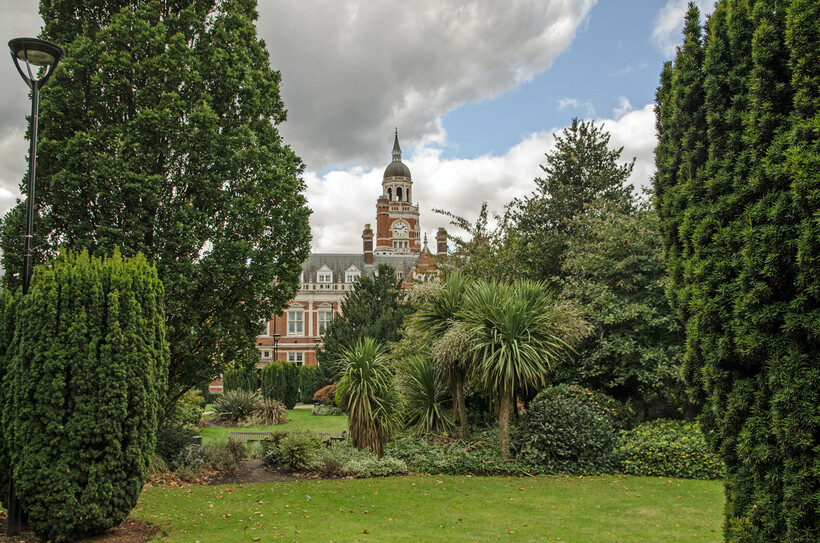 Queen’s Gardens and Croydon Town Hall in the town centre (Source: iStock)
If you’re looking for fun things to do in Croydon, you won’t be short on options. There’s plenty to explore, from historic landmarks and buzzing food spots to creative venues and open green spaces.
Explore your new neighbourhoods
Just west of the town centre, the Old Town has a distinct historic feel, with Victorian streets, heritage sites, and a traditional street market. The atmosphere becomes more vibrant around Boxpark, where foodies head for diverse street food and events like Hip Hop Karaoke and weekend parties.
For something more relaxed, head to South End. This walkable dining street is packed with restaurants, bars, and cafés, making it ideal for an easy wander and spontaneous stops.
If you’re after a quieter, suburban contrast, Purley and Coulsdon offer local high streets and green spaces, while Norwood stands out for its village-like character and independent shops.
Visit cultural landmarks and attractions
Croydon’s layered history shows in its landmarks, blending heritage with modern creative energy. Here are some must-see attractions:
Airport House: The surviving administrative building of London’s first major international airport, now home to offices and event spaces while preserving 20th-century aviation history.
Croydon Clocktower: A well-known local hub with a café, the free Museum of Croydon, and the David Lean Cinema.
Fairfield Halls: A large arts centre with a concert hall, theatre, and studio spaces. Free performances are often held in the Arnhem Foyer.
Croydon Minster: A historic parish church dating back to medieval times, known for its Gothic Revival architecture and notable organ.
Enjoy the outdoors
Some of the best activities in Croydon are outdoors. The borough has around 127 parks and green spaces, including Selsdon Wood Nature Reserve, an ancient woodland of around 200 acres managed as a habitat for birdlife.
Closer to the centre, Lloyd Park is easily reached by tram and offers walking trails, an outdoor gym, a playground, and a small pond. It’s popular for cross-country running or a quieter walk through mature woodland.
For wider views, head to Addington Hills in Upper Shirley. With its woodland, open grassland, and heather-covered hills, the place feels wilder than most urban parks. It also connects to the London LOOP, linking to other areas near Croydon.
Check out the local market scene
These local markets give a quick sense of Croydon’s vibrant food scene and community life:
Surrey Street Market: A historic market dating back to the 13th century, known for affordable fresh produce and varied street food. Open Monday to Saturday, around 8:00 am to 5:00 pm.
Clocktower Market: A monthly market in South Norwood showcasing local arts and crafts, held on the second Saturday of each month.
Crystal Palace Food Market: A weekly Saturday market (10:00 am to 3:00 pm) focused on organic and biodynamic produce, with a diverse range of food stalls including vegan options.
New Addington Market: A local market at Central Parade offering bulk meat deals, handmade goods, and street food options. Open Tuesdays and Fridays, from 7:00 am to 3:00 pm.
Move to Croydon with ease
Living in Croydon means settling into a place with good transport links, relatively affordable housing, plenty of green spaces, and a rich local heritage. The borough has a clear sense of momentum, and if you’re ready to make the move, Airtasker can help simplify the process.
You can connect with trusted removals experts by posting a task, comparing quotes, and choosing the service that best fits your needs.
Helpful resources for those moving to Croydon
Explore these additional resources to make your transition easier:
Croydon Council: The main hub for local services, including housing, Council Tax, planning, and schools.
Ofsted: Publishes school ratings and inspection reports to help families make informed choices, and also covers social care services.
Age UK Croydon: A local organisation supporting Croydon residents (aged 50+) with advice, health services, and community connections.
NHS App: Once registered with a local GP, you can use this app to manage appointments, order prescriptions, and access medical records.
TfL Journey Planner: A useful tool for navigating places in Croydon and across London, comparing routes, travel times, and transport options.
Learn more about our contributors
Written by Andrea H.
Staff Writer
Andrea is a writer with nearly a decade of experience, including five years covering real estate, construction, and neighborhood trends. She’s deeply curious about people, society, and culture, finding stories in the details and helping others navigate big decisions. Off the page, Andrea is drawn to analog routines: running outdoors, taking long walks, and picking up hands-on projects. When she’s not overthinking a paragraph, she’s probably overthinking her next read.
FAQs about moving to Croydon
A single adult earning over £30,000 can cover basic living costs. For a comfortable lifestyle, including savings and leisure, £40,000 to £50,000 is a more realistic range.
Buy if you’re staying long term; rent if you need flexibility. With property prices in Croydon over 50% lower than in central London, buying is more accessible here than in much of the capital.
A single adult should budget around £10,000 to £12,000 to cover at least three months of living costs, including rent, holding deposit, and moving expenses. The final figure will vary depending on the distance and complexity of your move.
Moving from Edinburgh to Croydon covers over 400 miles, so it’s classed as a long-distance move. Costs typically range from £1,500 to £5,000, excluding fuel.
Find removals experts, fast
Find a removals expert
Related articles
 How-to Guide