- Home/
- Guides/
- Packing & Unpacking/
- How to Pack Toiletries for Moving
The art of packing toiletries: Tips and tricks
Learn the best ways to prevent spills and make sure everything arrives safe and sound at your new home.
Last Updated on

Written by Cielo B.
Staff Writer


Reviewed by Alison G.
Packing and Moving Expert
Read more about our contributors
Key Facts
- Toiletries are high-risk for spills and breakage during a move, especially liquid or glass containers, so extra care and wrapping are crucial.
- Everyday essentials like toothbrushes and medication should be packed separately and kept within easy reach during the move.
- Double-bagging liquids and sealing open containers with cling film are smart ways to prevent leaks and damage.
Moving to a new home can be stressful, especially when it comes to packing –– and bathroom essentials like toiletries are no exception. With so many fragile and awkwardly-shaped items, it requires extra care to pack them properly.
How to pack toiletries the right way
Here’s a step-by-step guide on how to pack toiletries properly to prevent messy spills during the move.
Step 1: Gather your supplies
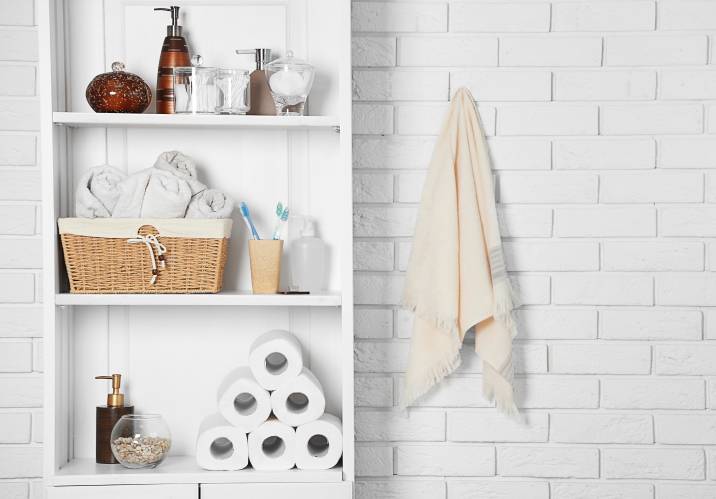 Clean and simple bathroom shelf stocked with toiletries. (Source: iStock)
Below are some of the must-haves when packing toiletries for moving:
Small plastic containers
Leak-proof or plastic bags that can be tied
Cling film or shrink wrap
Bubble wrap
Packing paper
Tape
Marker
Small and medium-sized boxes (optional)
Towels, flannels and bath mats
You might already have some of these essentials at home, but if not, you can find them at local retailers like Argos, The Range, and B&M. Alternatively, you can check out Poundland, Home Bargains, or even local supermarkets for smaller items.
Look for old towels and bath mats and use them to wrap fragile items, line boxes or place them in between items. This will help minimise movement and prevent damage during transit.
Step 2: Empty your shelves
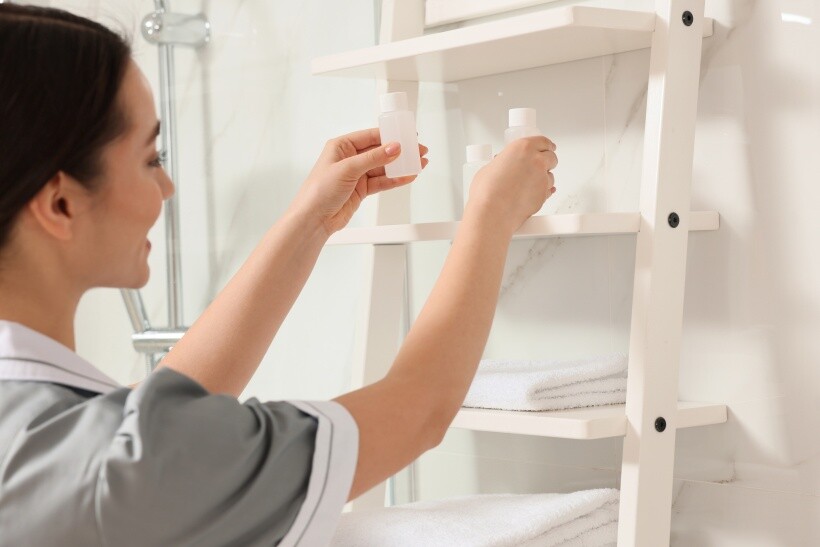 Removing bathroom essentials for moving. (Source: iStock)
The best way to begin is by figuring out what you need to pack. This will help you decide what to keep and what to throw away or donate. Start by emptying your shelves, cabinets, drawers, and bags, then lay out all your items to see everything in one place.
Step 3: Declutter before you pack
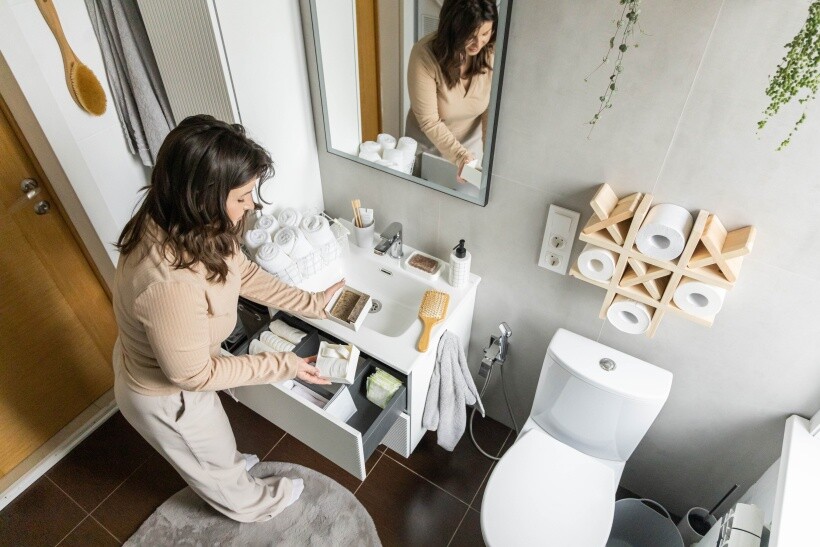 Decluttering toiletries for moving. (Source: iStock)
While toiletries will likely be among the last things you pack, sorting and decluttering them in advance can make the moving process much smoother. Doing so will save you time, space, and even money, especially if your removal company charges by weight or the number of items they move.
That said, deciding what toiletries to pack or discard can be challenging. To help with decluttering, here are some questions to ask yourself.
Has it expired? Dispose of any items that have passed their expiration date as indicated on the packaging. Additionally, note any unusual textures, colours, or smells in the products. Expired or unused medicine should be taken to a pharmacy for proper disposal.
Is it leaking, empty or broken? Discard unnecessary packaging or containers, such as bottles or tubes. Try to use up what you can before packing, and discard anything that’s leaking or broken.
Do I use this regularly? If you have items you no longer use, consider giving them away or selling them at a reduced price instead of taking them with you.
Is it safe to move? In some cases, your movers may not allow items that pose a higher risk of spillage, such as paint or bleach, or flammable items, like nail polish. These items would likely need to be transported separately, so please check with your removal company.
Step 4: Sort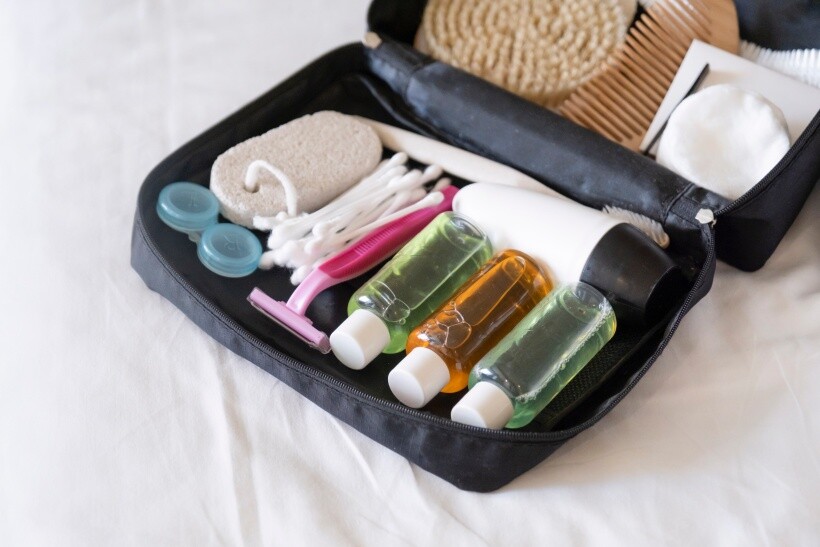 Essentials for hygiene and grooming stored in a travel bag. (Source: iStock)
With all the items you’re keeping laid out, categorising them becomes much easier. Consider building a bathroom and toiletries packing list:
Appliances: hairdryer, curling iron, electric razor
Cosmetics: makeup and other beauty products
Oral care items: toothbrush, toothpaste, mouthwash, dental floss
Skincare items: moisturiser, serum, cleanser, soap, lotion
Medicines and medical products: prescription medication, first aid kit, eye care products (also cotton swabs, cotton pads, etc.)
Period products: pads, tampons, cups
Paper products: toilet paper, paper towels
Hair products: brush, comb, styling products, shampoo, conditioner
Cleaning supplies: cleaning brush, plunger, bleach, soap
Linens: towels, bathrobes
Miscellaneous items: bathroom decor, containers, rugs
Step 5: Decide what to keep accessible
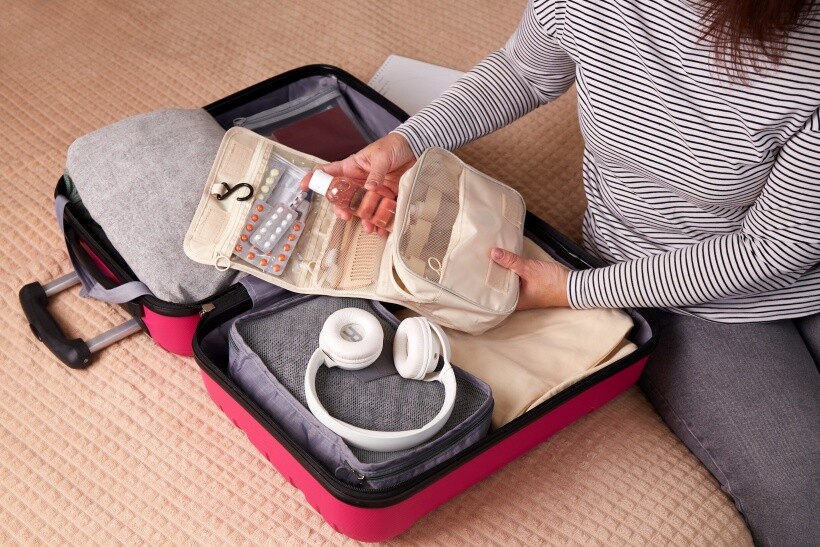 A well-organized suitcase with personal care items. (Source: iStock)
Once everything’s sorted, set aside everyday use items like toothbrushes, toothpaste, soap, shampoo, and deodorant. You’ll also need to pack medication and a first aid kit for emergencies.
It’s best to keep these essentials in a bag rather than packing them in a moving box, as this makes them easily accessible right up until moving day and during the first few days of settling into your new home.
If you’re unsure which items you should include in your everyday travel pack for toiletries, ask yourself, ‘Which toiletries and medicines will I need the first night and morning after moving?’
Step 6: Pack strategically to protect your items
 Refilling personal care items for compact travel storage. (Source: iStock)
Any container with liquid poses a risk during moving, so you want to be sure these are packed as securely as possible. Here are some of the best ways to pack toiletries for moving:
Seal anything that can spill: For any opened containers, unscrew the cap, place a piece of plastic wrap over the opening, then screw the cap back on tightly. You can add a small piece of tape over the lid for additional protection.
Use double-leakproof bags: Double-bag items like liquid soap, mouthwash, nail polish remover, or hair dye. If a bottle does leak, the extra bag will stop it from getting on your other items.
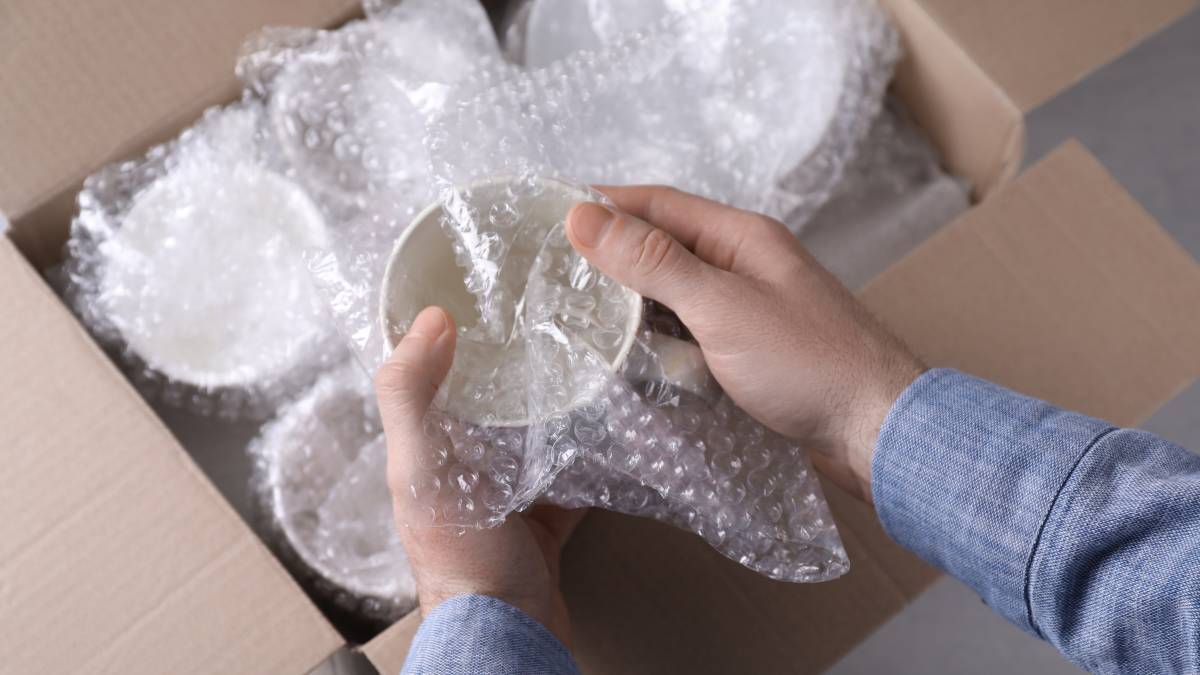
Protect fragile containers: Use the bubble wrap to protect glass or ceramic containers. Pack each item separately, then place it inside another small box or between folded towels for extra cushioning.
Secure makeup and small accessories: Makeup and brushes can be wrapped in bubble wrap and placed in leak-proof bags or your makeup bag. Products like pressed powders can be protected by placing a cotton pad on top of the powder before wrapping.
Position items correctly: Pack toiletries and fragile items upright in a plastic container or cardboard box lined with a towel.
Distribute weight properly: Place heavier items on the bottom of the box and fragile ones on top to avoid crushing.
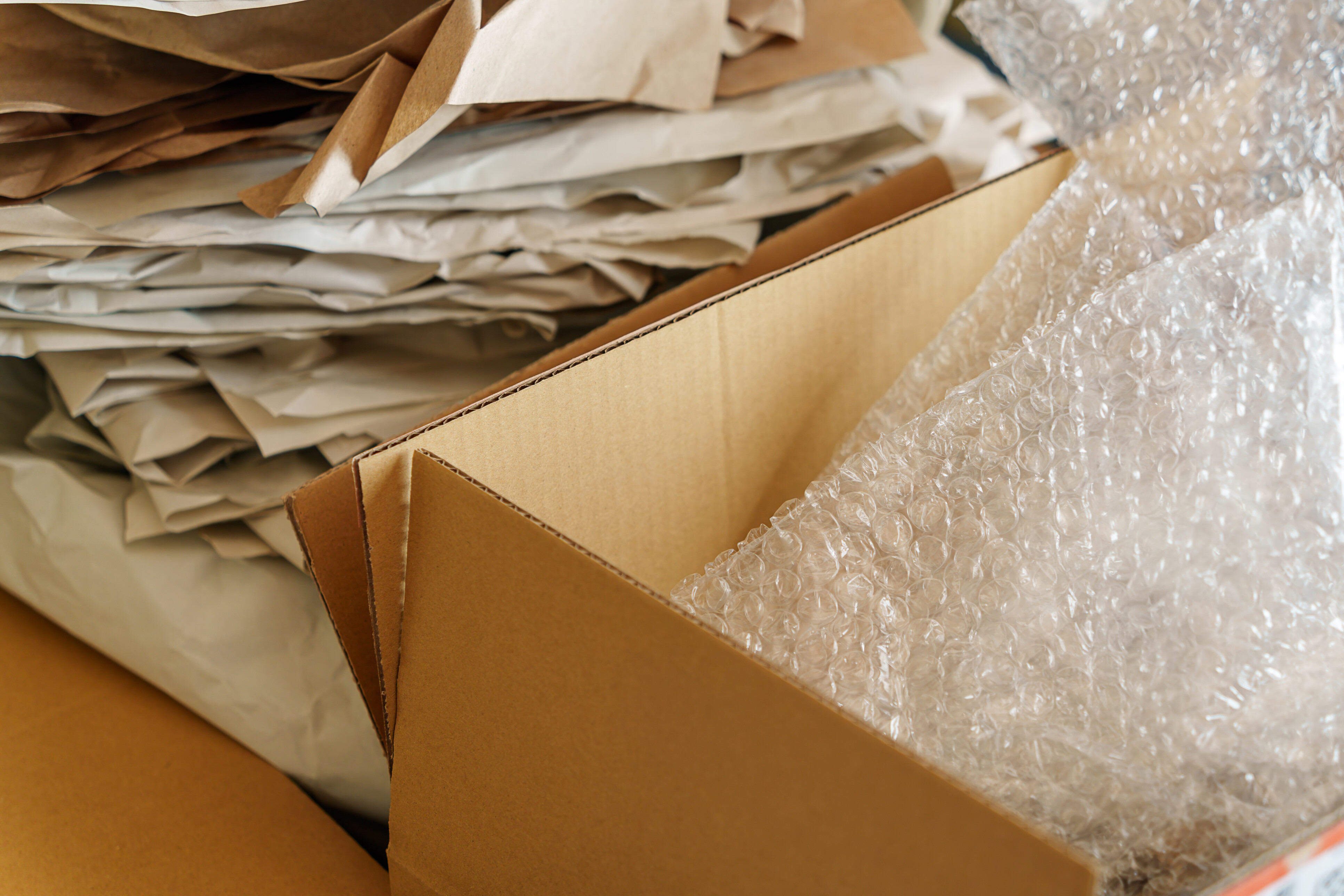
Fill gaps: Use packing paper, towels, or bubble wrap to fill any gaps.
Keep your toiletries and any other liquids separate and ideally in a plastic container. If anything does leak, at least it can be cleaned up quickly and easily.
Step 7: Label and store correctly
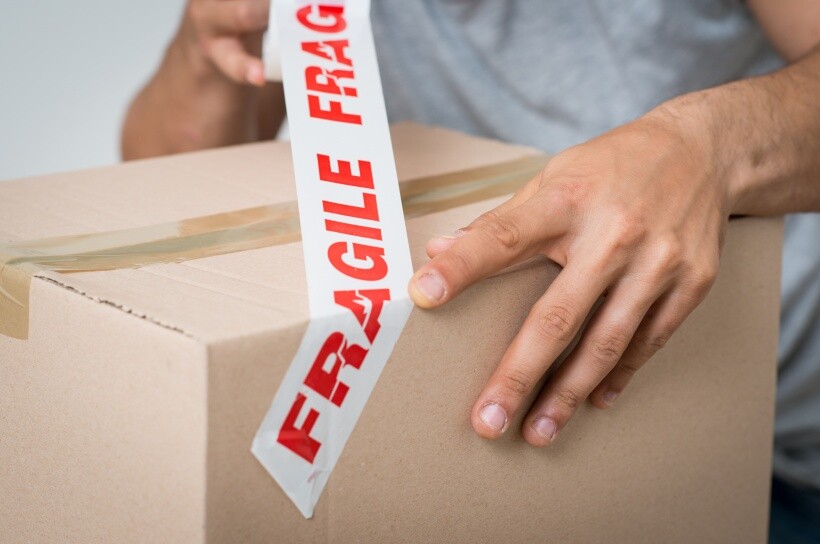 Prepping a box filled with toiletries for moving. (Source: iStock)
Toiletries can be heavy, so pack them into smaller boxes to make them easier to lift and transport. Next, clearly label boxes or bins ‘Toiletries’ and add the words ‘Fragile’ and ‘This Side Up.’ Additionally, you could add an ‘Open First’ label on the bags that contain your everyday essentials and medication/first aid items.
If it’s a long-distance move, keep in mind that items will be in transit for a longer period, and temperature and pressure changes can cause some liquid products to freeze and burst. So, don’t pack aerosols, perfumes or creams as they can explode or spoil.
Alternatively, you can check with your removal company to see if they use temperature-controlled vehicles. If not, keep them informed.
Pack your toiletries the smart way
While you might be tempted to cram all your bathroom essentials into a box to speed up your packing process, the best way to pack toiletries for moving is to take your time. Use the tips above to get your things transported without a hitch.
If you need an extra hand to get it done, consider booking professional movers and packing experts through Airtasker. From small removals to long-distance, find a Tasker near you.
Learn more about our contributors
Written by Cielo B.
Staff Writer
Cielo is an experienced content writer who has explored various industries throughout her career. Her expertise, founded on a degree in journalism, includes writing about automotive and home maintenance. Cielo also covers topics like dressmaking, tailoring, and photography since she is a passionate cosplayer who enjoys dressing up as her beloved anime characters.
Reviewed by Alison G.
Packing and Moving Expert
Alison is a top-rated Tasker with decades of experience working in various sectors, including removals, home organisation, gardening, retail, and event coordination. With her versatility, adaptability, and attention to detail, she’s delivered excellent work in helping clients transform their homes, from packing, moving, and settling in to decluttering and organising. When she is not working, she enjoys circus training and many hand-crafted pursuits.
The Reviewer Badge is awarded to individuals who are experts in their respective fields and evaluate the content to ensure its accuracy and relevance to the task at hand.
FAQs on packing toiletries for moving
As toiletries are used every day, it’s best to pack them last; otherwise, you’ll be constantly unpacking.
Depending on the vehicle and the distance of your move, removalists may not permit products such as aerosols (e.g., deodorants) and other hazardous or flammable items. It’s best to check with your removal company.
Cardboard boxes are ideal for moving most items, but when it comes to toiletries, plastic containers with lids are the safest option. In addition to being durable, they’re water-resistant, and once padded with towels and bubble wrap, will transport your toiletries without leaks or breakage.
If you’re on a tight deadline or feeling overwhelmed, then professional packers can help lighten the load and free up your time. They have the expertise to pack your items safely and securely in the most efficient and time-saving manner possible. Plus, they often use better-quality packing materials.
Find packing and unpacking removalists, fast
Find a packing & unpacking removalist
Related price guides
How much does it cost to move house?
Read more
How much does it cost to move house?
Read more
How much do packers cost?
Read more



Related articles

How to pack mirrors for moving
Read more
How to move gym equipment safely
Read more
Moving to Exeter from within the UK
Read more
A guide to becoming a removalist
Read more
Moving Checklist
Read more
How to pack kitchen items for moving
Read more

How to pack books for moving
Read more
How to pack artwork for moving
Read more
How to move a washing machine
Read more

How to move a pool table
Read more

How to move a shed
Read more
How to move a vending machine
Read more
Moving a fridge: How to do it right
Read more

How to move a pinball machine
Read more

What moving companies won’t move
Read more
How to wrap furniture for moving
Read more

Tips for moving house with kids
Read more