- Home/
- Costs/
- Furniture Movers/
- Furniture Moving Cost Guide
How much does it cost to move furniture in the US?
Post to find a price. It's free and only takes a minute.
Price per hour
$80 - $350
low
$80
median
$150
high
$350

Last Updated on

Written by Cielo B.
Staff Writer
Read more about our contributor
Key Facts
Furniture movers in the US typically charge around $100 to $200 per hour for a standard two-person local moving crew. Depending on the crew size, location, and service level, hourly rates may range from about $80 to $350+.
For interstate moves, movers must offer Released Value Protection at no additional cost, which limits liability to $0.60 per pound per item. Full Value Protection provides broader coverage but may cost extra.
You can save money by preparing and labeling furniture in advance, reserving nearby parking, comparing quotes, and choosing a flexible moving date. Summer is the busiest season for Airtasker moving tasks in the US.
Furniture can be one of the most difficult things to move, as it often has multiple parts and may require specialized equipment. You’ll likely need professional help to move fragile and heavy pieces to ensure everything goes smoothly.
In this guide, you’ll learn how much it costs to move furniture, which will help you budget and prepare for your big move.
What is the average cost of moving furniture in the US?
Furniture moving costs in the US typically range from around $100 to $200 per hour for a standard two-person crew and truck. Smaller or labor-only moving jobs may start at around $80 per hour, while larger crews and movers in high-cost cities can charge $250 to $350+ per hour.
For context, recently completed Airtasker moving tasks had a median total price of $140 and an average of approximately $181. These are completed task prices rather than hourly rates and include many smaller furniture-moving jobs, so they shouldn’t be used as a direct benchmark for a full household move.
As a general reference, here are the typical hourly rates for moving furniture in some cities in the US:
City |
Average Cost of Furniture Moving (per hour) |
|---|---|
New York City (NY) |
$160–$250 |
Los Angeles (CA) |
$150–$240 |
Chicago (IL) |
$120–$200 |
Houston (TX) |
$100–$180 |
Phoenix (AZ) |
$100–$175 |
Philadelphia (PA) |
$120–$200 |
Atlanta (GA) |
$100–$180 |
Denver (CO) |
$110–$190 |
Boston (MA) |
$160–$250 |
Seattle (WA) |
$150–$230 |
Orlando (FL) |
$100–$180 |
Salt Lake City (UT) |
$90–$170 |
What factors affect the costs of moving furniture?
 Tasker wrapping a large sofa in clear plastic for transport
How much does it cost to have furniture moved? The estimated price depends on several factors:
Distance of the move
Distance is a significant factor in the cost of moving furniture. It determines the required labor, fuel costs, and truck size for the job. Below, we’ll break down the different types of moves based on distance.
Local moves
Local moves are usually charged by the hour. A standard two-person crew and truck typically costs $100 to $200 per hour, while larger three- or four-person crews cost $150 to $350 per hour.
A local move may cost roughly $500 to $2,500 in total, depending on the size of the home, the number of movers, the time required, access, and the local market. Smaller studio or one-bedroom moves generally take less time, while larger homes can take most of a day.
Since the distance is short, the extra fuel costs are included in the per-hour rate. Some moving companies charge a flat fuel rate, but it is generally lower than for other long-distance moves.
Regional moves
A regional move means moving within the same or neighboring state (e.g., NYC to Philadelphia). Since regional moves cover longer distances, medium to large trucks (20-26 ft.) are recommended to accommodate more items and handle longer drives.
Regional moves may cost around $1,000 to $4,000, depending on the distance, amount of furniture, truck size, labor time, tolls, and whether the mover charges by the hour or provides a fixed quote.
Interstate moves
How much does it cost to move furniture across states? Since this involves more time, fuel, and legal requirements, moving companies apply a “per-pound” rate, which means they charge by weight and distance. Interstate moves are generally priced based on shipment weight or volume, distance, and required services rather than a simple local hourly rate.
Studio/1-bedroom: $1,500 – $3,500
2–3 bedrooms: $3,000 – $7,000
4+ bedrooms: $5,000 – $10,000+
Long-distance quotes may also include fuel, mileage, tolls, additional labor, and other transportation charges. Ask for an itemized estimate so you can see which costs are already included and which may be added separately.
Here’s a table that outlines the estimated costs for different move types:
Move type |
Distance range |
Truck size |
Estimated cost |
Best for |
Example |
|---|---|---|---|---|---|
Local move |
Up to ~50 miles |
Small/medium (10–26 ft.) |
$500–$2,500 |
Small apartments, offices, and local household moves |
Moving a 1-bedroom apartment across Brooklyn, NY |
Regional move |
~50–400 miles |
Medium/large (20–26 ft.) |
$1,000–$4,000 |
Family homes and moves within a region |
Relocating a 3-bedroom house from Austin to Houston, TX |
Interstate move |
400+ miles |
Large trucks or trailers |
$1,500–$10,000+ |
Long-distance relocations |
Moving a family home from Chicago, IL, to Atlanta, GA |
Number of movers needed
Additional manpower can also affect furniture moving prices. A two-person moving crew and truck typically costs $100 to $200 per hour, while a three-person crew may cost $150 to $280 per hour. Larger four-person crews can cost around $200 to $350 per hour, depending on the city and moving company.
Although hiring a larger crew costs more, it can help complete the job faster, reducing labor costs. Additionally, they can safely lift heavy furniture (like pool tables), preventing damage and reducing the risk of injury.
Type and volume of furniture
Moving several items simultaneously can increase furniture transport costs because it requires larger trucks and more movers. For long-distance and interstate moves, the weight or volume of your shipment can play a major role in the quote because it affects fuel and transportation requirements.
You also need to consider the amount of space available inside the truck. Squeezing multiple pieces of furniture in one truck can be dangerous, especially if you must move large, fragile items like a piano or grandfather clock.
Access and logistics
 Two Taskers working together to lift and move a table
When it comes to moving furniture, time is money—literally. If a single piece of furniture takes hours to move because of a narrow staircase or slow lift, expect to pay a premium. The same applies if there isn’t a close parking spot for the truck. Loading and unloading would take longer because movers would have to carry your furniture farther, resulting in higher labor costs.
Logistics can be challenging when moving into urban areas like New York and Los Angeles since there are many one-way streets and frequent traffic jams. Moving into rural areas isn’t cheap because of the gravel roads and hilly terrain. Due to these logistical challenges, travel time takes longer, resulting in higher furniture moving rates.
Timing of the move
Furniture moving prices can fluctuate at certain times of the month. For instance, there’s a price increase of around 20—30% during summer (May to September) because more families move to avoid interrupting school, and house sales peak during this time. If the moving date falls on a public holiday, companies typically apply a holiday surcharge to cover overtime pay for staff working that day.
Booking on a weekend can be expensive, with moves costing 15-30% more than the normal rate. End-of-month dates aren’t ideal, as some movers may apply a 10–20% premium during these dates. Consider midweek dates for lower furniture moving quotes.
Here’s an overview of how furniture moving costs differ during peak vs. off-peak seasons:
Timing |
Cost Difference |
Notes |
Discount/Promo Availability |
|---|---|---|---|
Weekdays (Mon-Thu) |
Base rate |
Typically the most affordable option |
High – Many movers offer weekday discounts to fill schedules |
Weekends (Fri-Sun) |
+15–30% |
High demand for weekend convenience; slots fill quickly |
Low – Rare discounts; many movers charge premium rates |
Public Holidays |
+20–40% |
Limited labor availability and premium holiday surcharges apply |
Rare – Most movers operate at overtime or premium rates |
End of Month |
+15-25% |
Lease cycles (rent/mortgage closings) spike demand around the 1st/30th |
Low – High demand reduces the need for promotions |
Peak Season (Summer) |
+20-40% |
Busiest time; families relocate during school break |
Rare – Demand outweighs supply; prices stay high |
Insurance and liability
Insurance is a must when moving furniture because accidents can still happen. While it is an additional expense, insurance protects your belongings during the trip.
Released value protection
This is considered the basic, default insurance that furniture movers offer. While it comes at no extra cost, the coverage is limited.
According to the Federal Motor Carrier Safety Administration (FMCSA), the required coverage is $0.60 per pound, per item. For example, if your 20-lb flat-screen TV, worth $500, is damaged, you’ll only receive $12 in compensation. Since the coverage is minimal, it’s not enough for valuable belongings.
Full value protection
Full value protection (FVP) is the most comprehensive insurance option. It covers the full repair, replacement, or reimbursement of damaged or lost items at current market value. It provides maximum protection, making it the most expensive but worthwhile option for those moving high-end furniture and appliances.
The minimum protection for FVP is $6.00 per pound of the total shipment weight. For example, if your shipment weighs 10,000 lbs, the minimum coverage would be $60,000 (10,000 lbs x $6). However, for high-value items (typically worth over $3,000 each), it’s essential to declare them separately on a high-value inventory form to ensure they are fully protected.
Declared value protection
Also known as lump sum value coverage, declared value insurance is considered a more affordable alternative to FVP. The customer declares the total dollar value of their shipment, and the insurer covers that amount if the items are damaged or lost during the move.
Just avoid underdeclaring your items, or you won’t get reimbursed at the full price. Overdeclaring isn’t a good move, either, because you may pay a higher premium for any unnecessary coverage.
Third-party insurance
If the moving company doesn’t offer FVP insurance, third-party insurance can be bought from independent insurers. It’s ideal for DIY or high-value moves because you can customize the coverage range with optional extras, such as additional protection for temperature-sensitive goods and delay compensation.
Check out this table for easier comparison of furniture insurance options:
Insurance Type |
Coverage |
Notes |
|---|---|---|
Released value protection |
$0.60 per pound, per item |
Default, minimal coverage; free but insufficient for valuable items |
Full Value Protection |
Repair, replace, or pay market value |
Covers full repair/replacement; high-value items declared separately. |
Declared Value Protection |
Coverage based on declared shipment value |
More affordable than FVP; risk of under- or over-declaring. |
Third-Party Insurance |
Theft, accidents, weather, and other risks |
Bought separately; customizable coverage for high-value or special shipments. |
No Insurance |
No coverage provided |
Customer assumes full responsibility |
Additional services
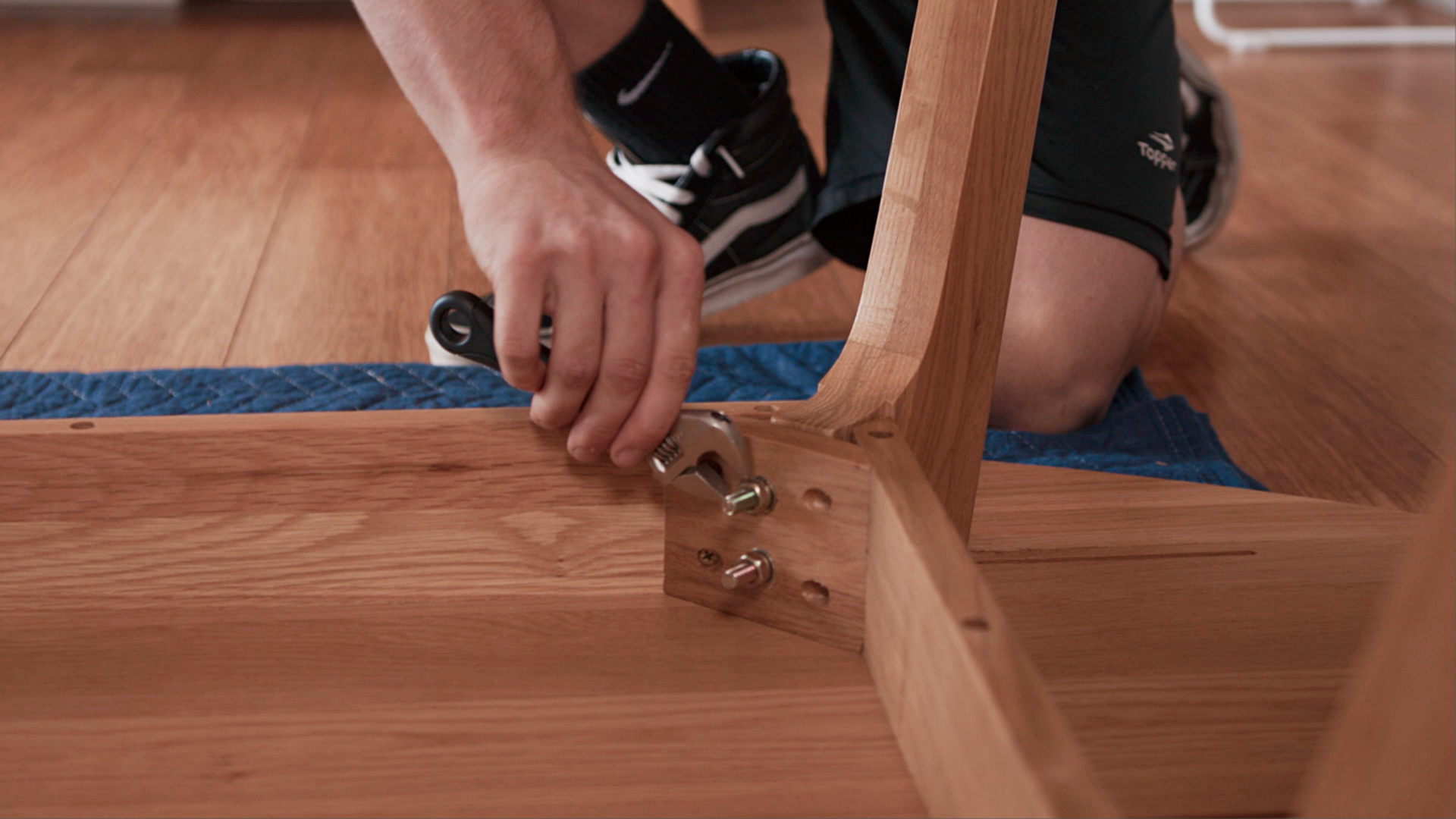 Tasker disassembling a wooden table using a wrench on a hardwood floor
In addition to transportation, services such as assembling and disassembling should be considered. Some furniture pieces can be tricky because they’re incredibly heavy or have confusing hardware. You’ll need an extra pair of hands for a more efficient move, which means additional labor costs.
Storage services can be requested, especially if you plan a long-distance move that requires multiple stops. You might need a place for temporary storage, which will add to the total price of moving furniture.
What are some ways to save on moving furniture?
Now that you already know how much furniture removals cost, you’re probably wondering, ‘Is there a way you can lower your expenses?’ Here’s how:
Prepare well
Start preparing and wrapping your furniture a few weeks before the moving date. You can also place and organize the small parts in a box and then add a label.
On it, write the designated room for each piece of furniture. This will make it easier for the movers to unload and position items in your new home. Being well-organized and having everything ready can reduce the total time of the move, lowering labor costs.
Reserve parking
Moving companies often charge a “long carry” fee if they have to move items over a long distance from the truck to your property. To avoid incurring additional charges, secure a parking space as close as possible to your property’s entrance for the moving truck.
Take advantage of non-peak times
If your schedule is flexible, compare quotes for weekday and mid-month dates, when movers may have more availability than during weekends or month-end periods.
Moving outside the busy summer season may give you more date and mover options. However, recent Airtasker data doesn’t show a consistent off-season price discount, so compare several dates rather than assuming a particular month will automatically be cheaper.
Consider shared transport services
Instead of renting an entire truck, you can share truck space with other customers, which is called backloading. You’ll only pay for the space your belongings occupy, helping you save more than a full-service move.
Keep in mind, though, that the truck needs to be full before it departs; backloading can cause potential delays. It’s best to choose this service only for non-urgent relocations.
What should you look for in a furniture mover?
 Moving day in progress as Taskers handle heavy boxes outdoors
Aside from detailed quotes and clear communication, here are some of the most important things to look for when hiring furniture movers:
Accreditations
When hiring a moving company in the US, always check for proper licensing and accreditation. For interstate moves, choose companies registered with the US Department of Transportation (USDOT) and regulated by the FMCSA. Local resources, like the NYC Department of Transportation, can help you avoid unlicensed operators.
Look for movers accredited by reputable organizations, such as the American Moving and Storage Association or the Better Business Bureau. Choosing properly licensed and insured movers ensures your belongings are in good hands.
Specialized handling
Look for movers who can handle fragile items, especially if you have oddly shaped antique furniture. They should be trained and skilled to handle delicate items during transport, loading, and unloading.
Flexible moving modes and storage solutions
Choosing a furniture mover with flexible moving options helps you find a solution that fits your needs and budget. Some of the most popular choices include:
Full Truck Load (FTL): Hire an entire truck just for your belongings. This offers faster delivery and better security.
Shared transport services: As previously mentioned, this entails sharing truck space with other customers moving along the same route and paying only for the space you use.
Self-pack container: You can pack your furniture into a secure container and have it transported by rail or sea. This is convenient for interstate moves.
Furniture movers should also offer temporary storage, which is especially useful when moving interstate. Short- or long-term storage options can be beneficial if unexpected delays occur during your move.
Move your furniture securely with Airtasker
Is preserving the quality of your furniture during relocation your number one priority? The key is finding the right movers who can handle your furniture.
Post a task to find and connect with reliable Taskers specializing in moving furniture. They have the necessary tools and expertise, reducing the risk of damaging your valuable pieces.
Learn more about our contributors
Written by Cielo B.
Staff Writer
Cielo is an experienced content writer who has explored various industries throughout her career. Her expertise, founded on a degree in journalism, includes writing about automotive and home maintenance. Cielo also covers topics like dressmaking, tailoring, and photography since she is a passionate cosplayer who enjoys dressing up as her beloved anime characters.
FAQs on furniture moving costs
The final quote doesn’t always include boxes, blankets, straps, and other moving supplies. Many moving companies charge separately for these extra supplies, so you’ll have to confirm this with them first.
Choosing independent furniture movers over those from moving companies is often more affordable. You can save 30% to 70% with independent movers, but you will likely have to handle the packing and loading yourself.
While hiring from a moving company may cost more, the extra price can be worth it for the convenience. They handle everything for you and typically provide more protection.
Yes, they may charge extra for waiting time because most furniture moving companies set an hourly rate for moving furniture. So, if there are any delays in packing and loading, expect higher labor costs. Make sure to have everything packed and ready, and clear walkways to avoid extra charges.
Due to the Tax Cuts and Jobs Act of 2017, furniture moving costs are generally not tax-deductible for most US taxpayers.
The deduction is currently only available to active-duty military members who are moving due to a permanent change of station. For everyone else, these are personal expenses and not tax-deductible.
Find furniture movers, fast
Post a task
Related articles
 How-to Guide
 How-to Guide