Moving to Houston: A soft landing in the Space City
Your complete guide to Houston neighborhoods, living costs, and daily life
Published on

Written by Andrea H.
Staff Writer
Read more about our contributor
Moving to Houston Highlights
With a median age of 34, Houston feels young, diverse, and constantly evolving. Many people move in for career growth and stay for the rich cultural scene and lower costs of living.
Financial flexibility is more attainable in Houston, with monthly expenses averaging $1,135, lower home prices, and no state income tax.
Moving in Houston is often cost-effective in the fall and winter when demand drops. Local movers average $54 to $86 per hour, with interstate moves ranging from $2,600 to $8,100.
Moving to Houston is one of the smartest decisions you can make—more space, better job prospects, and a cost of living that actually lets you breathe. Yes, the summers are brutal, and you’ll likely need a car, but for most people, the trade-off is well worth it.
This Houston relocation guide gives you an honest look at what the move is really like, covering jobs, living costs, neighborhoods, and moving preparations.
Why are people moving to Houston?
 Downtown Houston’s elevated skywalk network (Source: iStock)
The strong job market and cost-of-living advantages are among the top reasons to move to Houston. With no state income tax, every paycheck tends to go further.
Houston is also a truly diverse city, and that shows up in food, culture, and the people you’ll meet.
Lifestyle and culture
Houston’s confidence is contagious, and as Beyoncé would put it, “H-Town vicious.” The bold energy blends well with Southern hospitality, making the city feel both electric and welcoming.
As the fourth-largest city in the US, Houston’s diversity shows up most vividly in its food: over 13,000 restaurants representing more than 70 countries. The city is also an arts destination, mixing street art with world-class museums and live music venues. A median age of 34 means the city stays sharp and the vibrant nightlife follows.
Career and job opportunities
Houston’s job market punches well above its weight. As “Space City,” it’s home to NASA’s Johnson Space Center (JSC) and the Houston Spaceport, which together anchor a thriving aerospace and space industry and offer senior engineers annual salaries of more than $100,000.
The energy sector is also a major employer, as Houston processes roughly 14% of US crude oil. Industry salaries range from $75,000 to $84,500.
Healthcare rounds out the big three, led by the Texas Medical Center (TMC). The most in-demand roles include registered nurses, medical assistants, and allied health professionals.
Putting it all together, the numbers make sense. While Houston’s minimum wage is $7.25 an hour, the city’s median household income is close to $65,000, driven by strong salaries across energy, healthcare, and aerospace sectors.
Weather and climate
The weather is worth considering when relocating to Houston, Texas. Summers are hot and humid, but winters are mild and easier to handle than the icy periods of Chicago or New York.
Here’s what to expect year-round:
Winter (December to February): Average highs are around 63°F. Snow is rare, but winters can be wet and overcast.
Spring (March to May): March is the most comfortable month, with highs in the 70s°F. By late April, the heat and humidity start creeping back.
Summer (June to September): Temps range from 75°F to 93°F, with August as the hottest month. Afternoon thunderstorms are common.
Fall (October to November): The warm weather gradually turns mild. The first cold front, usually in mid-October, brings relief from the humidity.
What should you research before moving to Houston?
 Locals at Market Square Park, downtown Houston (Source: iStock)
It’s time to dig deeper. Understanding living costs, neighborhoods, and the relocation process will help you confirm whether Houston life is for you.
Cost of living
So, is Houston expensive to live in? Not exactly when compared to other major US cities. Monthly expenses run around $1,135 (excluding rent)—roughly 4% below the national average. Meanwhile, the median price of Texas homes is almost 22% lower than the national norm. Add in zero state income tax, and the cost of living in Houston, TX starts to look attractive.
Just watch out for a few trade-offs: sales tax at 8.25%, fuel tax at 20 cents per gallon, and property tax ranging from 1.8% to 2% of the property value.
Here’s a breakdown of typical monthly expenses:
Area of Expense |
Estimated Cost |
|---|---|
Rent |
$1,349 |
Groceries |
$250 to $350+ |
Utilities |
$270+ |
Transportation |
$100 to $500+ |
Dining Out and Entertainment |
$20 to $150+ |
Healthcare |
$50 to $200+ |
Thinking about the salary needed to live comfortably in Houston? A single renter typically needs about $48,000 after taxes per year to keep housing costs within the recommended 30% of income. Closer to $70,000 gives you more flexibility for savings, travel, and investments.
Neighborhood options
Houston is informally divided into two areas: neighborhoods inside the 610 Loop and those outside it. Inside the loop offers urban living close to central Houston, while outside the loop is more suburban with larger homes and lower housing costs.
Here are some of the best places to live in Houston:
West University Place
West University Place is a premier inner-loop neighborhood near the TMC, Rice University, and Downtown Houston. It features a mix of luxury homes and renovated bungalows in a quiet, small-town setting. Average rent is around $1,912.
Montrose
Montrose is one of Houston’s most walkable neighborhoods, known for historic homes, arts scene, restaurants, and nightlife. Located just west of Downtown, it also has good access to public transportation. Average rent is around $1,867.
River Oaks
River Oaks is a master-planned community featuring luxury homes, oak-lined streets, and upscale shopping. Housing options include high-rise apartments, condos, and spacious single-family homes, with rents averaging $1,955.
Spring Branch
Often considered one of the safe neighborhoods in Houston, Spring Branch is known for its top-rated schools, diverse food scene, and convenient location. Compared with suburbs like Sugar Land or Katy, it has quicker access to central Houston (around 15 to 20 minutes). Average rent is roughly $1,247.
Clear Lake
Clear Lake offers a quieter lifestyle centered around waterfront living and the nearby NASA’s JSC. Residents enjoy boating, kayaking, and dining near Clear Lake and Galveston Bay. Rents typically range from $832 to $2,000+ monthly.
Best time to move
While summer is the peak moving season across most of the US, major Texas cities follow a slightly different pattern. Houston’s intense summer heat often pushes moving activity into spring instead.
The trends below show statewide moving demand, helping you identify the best and worst times to move to Houston.
Season |
What to Expect |
|---|---|
Winter (December to February) |
Lower demand and cooler weather make moving easier. December can still be busy, and occasional ice may cause delays. |
Spring (March to May) |
Peak season with demand about 17% above average on Airtasker. Higher competition and spring storms can complicate scheduling. |
Summer (June to August) |
High demand means plenty of mover options. Early summer books fast, partly driven by college moves. The heat can also be exhausting. |
Fall (September to November) |
Off-peak season with demand about 19% below average on Airtasker. Less competition for your preferred dates, though the weather can be unpredictable. |
Moving costs
Moving services in Houston typically cost $54 to $86 per hour, though final pricing depends on distance, move size, and add-on services like furniture assembly and disassembly.
Interstate moves are usually the most expensive. For example, moving from California to Texas can cost roughly $2,600 to $8,100, while an intrastate move from Houston to Austin (or vice versa) may range from $1,000 to $4,000.
Out-of-state or international considerations
Moving to Houston, Texas, from another state or country involves paperwork, logistics, and shipping regulations. Planning for these early steps helps ensure a smoother transition.
Interstate moving
Vehicle registration and driver’s license: Register your vehicle within 30 days and get a Texas driver’s license within 90 days. You’ll need a vehicle inspection, proof of insurance, and a visit to the Department of Public Safety (DPS).
Residency rules: There’s no minimum stay requirement. Residency is based on intent, supported by documents like a lease, utility, or bank statement.
Tax updates: File a part-year return for your former state, covering income earned before your move. Once you’re a Texas resident, you won’t pay state income tax.
International moving
If relocating from another country, check the US visa requirements based on your nationality and purpose of stay. Most work visas require a US employer to file a petition on your behalf.
Gather essential documents, such as birth certificates and degrees, and have them apostilled. Keep both physical and digital copies for backup.
Before packing, decide what to ship, sell, or replace locally to reduce shipping costs. Be mindful of customs restrictions and potential taxes on certain items. Ship urgent essentials by air and the rest by sea freight.
What should you do on your Houston moving day?
 Houston residential complex with pond, seen from above (Source: iStock)
A smooth moving day starts with good planning, careful packing, and final checks. These tips will help you stay organized and avoid moving mistakes.
Coordinate movers and services
Confirm movers’ arrival time early, especially in dense areas like Montrose or The Heights, where access can be limited. You may also need a Temporary No Parking sign or a Meter Bagging Permit, depending on the truck’s size and location.
For high-rises, check loading dock reservations and elevator access with your property manager. Furniture moving in tight entryways also means making sure your mover’s insurance coverage is adequate.
Transport your belongings carefully
Keep Houston’s weather in mind on moving day, as heat, rain, and humidity can affect how your belongings hold up in transit. Decluttering before packing can also reduce load size and simplify logistics.
Set aside heat-sensitive items like electronics and medications to travel with you in an air-conditioned vehicle, rather than the moving truck. For the rest, use waterproof covers to guard against sudden rain or humidity.
For more detailed guidance on packing, check these out:
Double-check everything
Do a final walkthrough of your old place to make sure nothing is left behind. Document its condition, including meter readings, to avoid potential disputes.
At your new home, consider unloading based on the layout. In larger homes, furniture can be staged in designated areas before being placed in rooms. In tighter spaces, it’s more efficient to bring in large items first, followed by smaller boxes.
It’s also smart to book a move-in cleaning service in advance, so your new place is clean and ready before you unpack.
How do you get settled in Houston after moving?
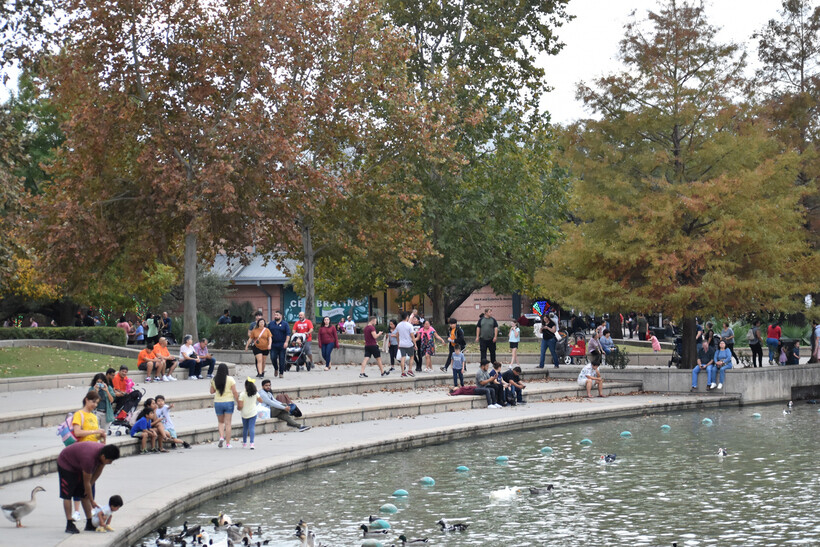 Families enjoying Hermann Park’s scenic lakeside (Source: iStock)
Your life in Houston, Texas truly begins after move-in day. Here’s how to get the essentials in place so you start feeling at home fast.
Connect your utilities
Electricity is the priority, especially during Houston’s hotter months when air conditioning isn’t optional. Arrange water, internet, and gas, as delays can leave you without basic comforts.
Here are some providers to consider:
Utility Type |
Example Providers |
|---|---|
Electricity |
Reliant Energy, TXU Energy, Gexa Energy |
Water and Wastewater |
Houston Water |
Natural Gas |
CenterPoint Energy |
Waste Collection |
City of Houston Solid Waste Management Department |
Internet and Cable |
AT&T, Xfinity, Spectrum, Tachus |
Update your licenses and documents
File a Change of Address (COA) request with the US Postal Service to keep mail flowing. Then, update your address with banks, insurers, and employers to avoid payment issues.
To stay active in elections, update your voter registration through VoteTexas.gov.
Secure local permits
Check for “Resident Permit Only” signs in your new neighborhood, as some streets require parking permits through ParkHouston.
If you’re planning renovations, permits for structural work are obtained through the Houston Permitting Center. Burglar or panic alarms also require registration; otherwise, you risk fines or a delayed emergency response.
Ensure your family’s welfare
Moving with kids? Confirm your assigned school district, since placement is usually based on your home address. You can also explore magnet, charter, and school choice programs for additional options.
Set up care early by locating nearby pediatricians and primary care providers. To verify credentials, use the Texas Medical Board License Lookup tool.
For downtime, explore local parks like Hermann Park near Downtown, or walking trails around The Heights for quieter outdoor spaces.
Sort out your pet essentials
If arranging pet transport to Houston, note that dogs and cats over three months must be microchipped and registered with the city. Dogs must be on a leash in public and secured on private property.
Houston also offers a wide range of pet services, including grooming and dog boarding. Pet-friendly parks are common, with a limit of two dogs per person per visit.
How do you get around in Houston?
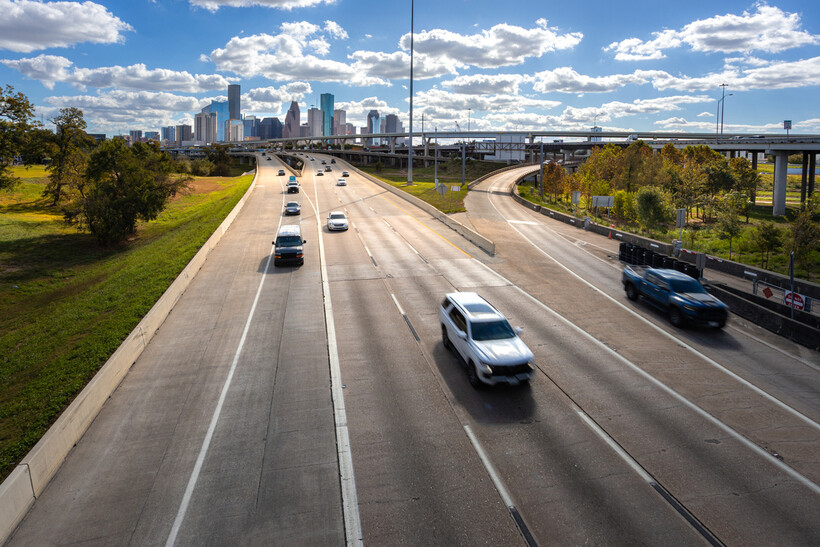 Houston’s urban highway and skyline at dusk (Source: iStock)
Houston is largely car-dependent, but several alternatives exist depending on where you live. Light rail, buses, and Park & Ride services can help reduce reliance on driving.
By car
Houston’s highway network is extensive, with a mix of major interstates, loop roads, and tollways. I-10 (Katy Freeway), considered the widest highway in the US with up to 26 lanes, runs through the city. During peak hours around 7:30 am, commutes to Downtown can exceed 80 minutes.
To avoid traffic congestion, some drivers use High Occupancy Vehicle (HOV) lanes in major corridors like I-10, I-45, and US-59.
Parking is widely available but mostly metered, with time limits of up to 10 hours. Downtown parking rates range from $3 to $17.98, depending on day and time.
By light rail
Is Houston a good place to live without a car? It can be if you live near the METRORail system. This 22.7-mile rail network has three color-coded lines:
Red Line: The busiest route, running north to south through Downtown, the Museum District, and the TMC.
Green Line: A lighter-use line serving East End neighborhoods and connecting to East Downtown (EaDo) entertainment spots.
Purple Line: A moderately busy route, linking Downtown with universities and Southeast Houston; popular with students and Third Ward commuters.
Trains run from around 5:00 am to past midnight, with frequencies as fast as every six minutes. Standard fare is $1.25, payable via cash, RideMETRO Fare Card, or debit or credit card.
By bus
Houston’s bus system complements the rail network, with color-coded routes based on frequency. Red routes run every 15 minutes, while blue and green routes arrive every 16 to 30 minutes. The fare is $1.25 and can be paid with exact cash, RideMETRO Fare Card/app, or debit or credit card.
Another option is the Park & Ride commuter system, which links suburban areas to the city core. Riders can park for free in designated lots and take express buses into central Houston. The bus network serves across Harris County, with fares ranging from $2 to $4.50.
By bike or bike-share
Houston’s bikeway network continues to expand, though protected lanes are still unevenly distributed across the city. Areas like The Heights, Downtown, and Montrose currently have the highest concentration of bike paths.
Most residents use personal bikes or rental services, with costs ranging from $12 to $35. Bikes can be parked at street racks, Downtown garages, or METRO transit facilities.
By taxi or ride-share
Taxis or ride-shares are useful for airport trips, game days, and medical appointments. Downtown taxis typically have a flat $6 rate, while airport trips start around $28.
For convenience and real-time tracking, many residents prefer Uber and Lyft, alongside scheduled taxi services like zTrip.
What are the best things to do as a new Houstonian?
 Golden-hour light on Houston’s Art Deco City Hall (Source: iStock)
To really get to know Houston, start exploring its neighborhoods, landmarks, and local spots right away. It’s the fastest way to experience the real benefits of living in Texas.
Explore your new neighborhoods
Start in Downtown, where a lot of the city’s culture and entertainment come together. Catch a show in the Theater District, relax at the 12-acre Discovery Green, or watch professional sports at the Toyota Center.
Rice Village is another great spot, offering a mix of big-name stores, local boutiques, and global eats. Meanwhile, The Heights has a more laid-back feel with bungalow-lined streets and access to hike-and-bike trails.
Visit cultural landmarks and attractions
Houston’s cultural scene spans museums, space exploration, and historic sites:
The Museum District: Home to 19 world-class museums and galleries, including The Menil Collection and the Museum of Fine Arts, Houston. More than half of them offer free admission.
Space Center Houston: An immersive space exploration center featuring moon rocks, NASA exhibits, and a simulated Martian sunset.
Sam Houston Park: The city’s oldest park, with restored 19th-century homes, a wetland garden, and the USS Houston Memorial Sculpture.
Gerald D. Hines Waterwall Park: A 64-foot semi-circular waterfall and one of Houston’s most photographed landmarks.
Enjoy the outdoors
One of the fun facts about Houston is that despite its highway-heavy reputation, the city has numerous parks. Memorial Park, just west of Downtown, is almost twice the size of New York’s Central Park.
In the Museum District, Hermann Park features scenic walking trails, the Japanese Garden, and free performances at Miller Outdoor Theatre.
For longer outdoor routes, Buffalo Bayou Park and White Oak Bayou Greenway Trail together have more than 30 miles of paved paths for walking, running, and cycling.
Check out the local market scene
For the ultimate way to shop like a local, head to these markets:
Houston Farmers Market: The city’s oldest and largest market, offering fresh produce and artisanal goods daily from 6:00 am to 7:00 pm.
Rice University Farmers Market: A weekly Tuesday market selling local produce, coffee, baked goods, and specialty items from 3:30 pm to 6:30 pm.
Urban Harvest Farmers Market: A Saturday market in the parking lot of Saint John’s School, offering fresh produce and meats from 8:00 am to 12:00 pm.
Traders Village: An open-air flea market featuring bargain shopping, food stalls, and carnival rides. Best visited from 10:00 am to 5:00 pm.
Move to Houston with ease
Houston is an affordable city worth moving to, balancing a manageable cost of living with a thriving job market. Whether you’re relocating for work, family, or a fresh start, Airtasker makes it easy to connect with trusted local movers. Post a task, compare quotes, and hire the team that best fits your needs.
Helpful resources for those moving to Houston
Living in Houston, Texas may feel overwhelming at first, but these resources can make the transition easier:
City of Houston: The official hub for city services, permits, emergency alerts, and local government information.
Visit Houston: A tourism and travel guide for discovering neighborhoods, restaurants, cultural attractions, and major events.
Texas.gov Driver Services: An online resource for driver’s licenses, vehicle registration, address changes, and driving records.
RideMETRO App: A public transit app for planning trips, paying fares, and tracking trains and buses in real time.
Houston Parks Board: Your guide to parks, trails, and Bayou Greenways maps for biking, running, and other outdoor activities.
Learn more about our contributors
Written by Andrea H.
Staff Writer
Andrea is a writer with nearly a decade of experience, including five years covering real estate, construction, and neighborhood trends. She’s deeply curious about people, society, and culture, finding stories in the details and helping others navigate big decisions. Off the page, Andrea is drawn to analog routines: running outdoors, taking long walks, and picking up hands-on projects. When she’s not overthinking a paragraph, she’s probably overthinking her next read.
FAQs about moving to Houston
For a small local move within 50 miles, you’ll need to prepare roughly $400 to $2,800+. It’s also wise to keep at least three months of living expenses (around $12,000) as a financial cushion.
Rent first if you want time to explore Houston neighborhoods. If you plan to stay long term, expect more affordable housing than in many major US cities.
Choose city life for maximum convenience and suburban living for a quieter lifestyle. A nearby suburb like Sugar Land offers more scenic nature trails and numerous golf courses.
Find movers, fast
Find a mover
Related articles
 How-to Guide
 How-to Guide