- Home/
- Comparisons/
- Gardener/
- Foxglove vs. Hollyhock
Foxglove vs. hollyhock: What’s the difference?
Comparing foxglove and hollyhock based on appearance, care difficulty, and more
Published on

Written by Ana K.
Contributor
Read more about our contributor
Key Facts
- Foxglove is a type of herbaceous plant available in several colors. Its flowers are bell-shaped, while its stems are tall and thin.
- Hollyhock is another herbaceous plant with many color varieties. Its flowers are in the shape of a cup, and its stems are straight and long.
A garden can easily look interesting and lively with the addition of colorful flowers. However, knowing which species to plant can be tough if you are choosing between two equally captivating plants, like in the case of foxglove vs. hollyhock.
If this is a dilemma you’re currently facing, you’ve come to the right place, as this article explores their similarities and differences.
What is a foxglove plant?
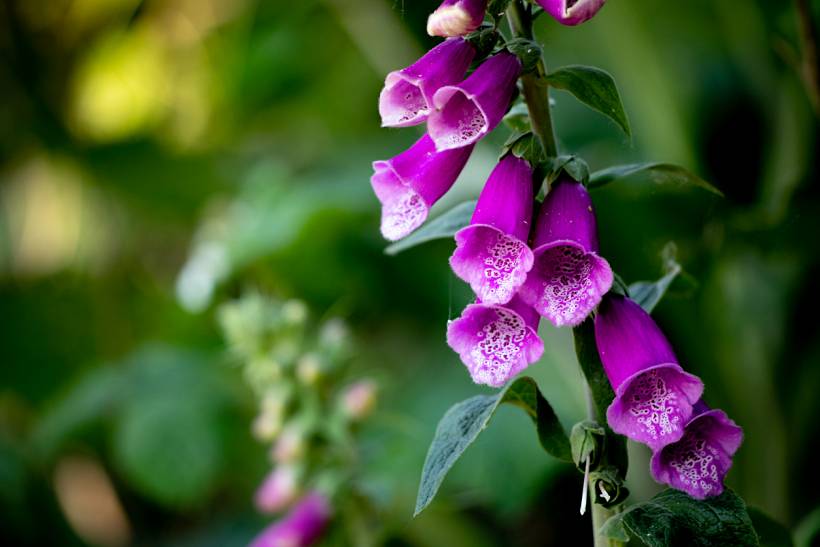 Purple foxglove flower displaying its distinctive bell-shaped blooms (Source: iStock)
Foxglove refers to a type of plant from the snapdragon family with towering spikes from which bell-shaped flowers sprout. Originally from Northwest Africa, Western Europe, and the Mediterranean, foxgloves have spread throughout the world, including in the Americas, Asia, and Oceania.
The most well-known species under this genus is the common foxglove (Digitalis purpurea). The origin of the word digitalis is attributed to how the plant’s flowers are shaped like a thimble and are able to fit a person’s finger.
What is a hollyhock plant?
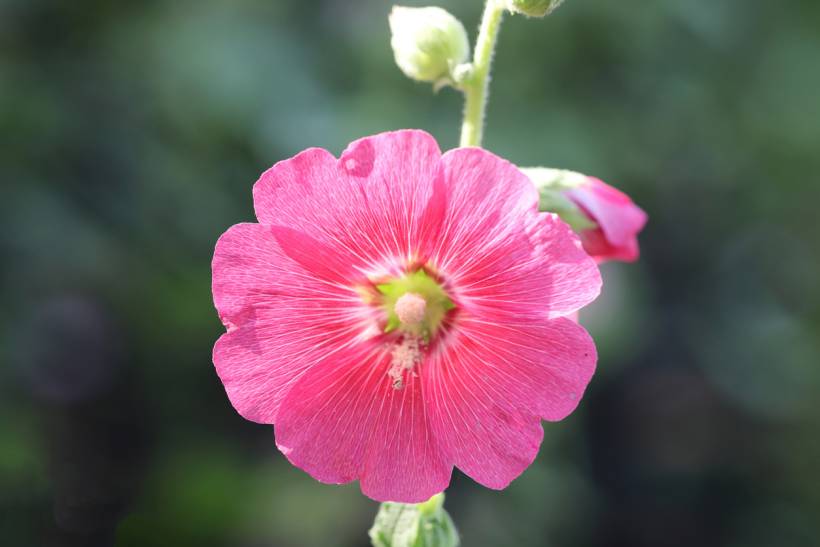 Single hollyhock flower showing layered pink petals and fine texture (Source: iStock)
Hollyhock (Alcea rosea), a species under the mallow family, is a plant with cup-shaped flowers and tall but thin stems. It is native to Central and Southwest Asia, as well as East and South Europe.
The first known usage of the word hollyhock—whose origin can be traced to the Old English terms for holy (holi) and mallow (moc)—dates back to 1548.
Hollyhock vs. foxglove: What are their key differences?
The hollyhock and foxglove, both cheerful-looking flowering plants, share various traits and differ in several ways, as discussed in the sections below:
In terms of appearance
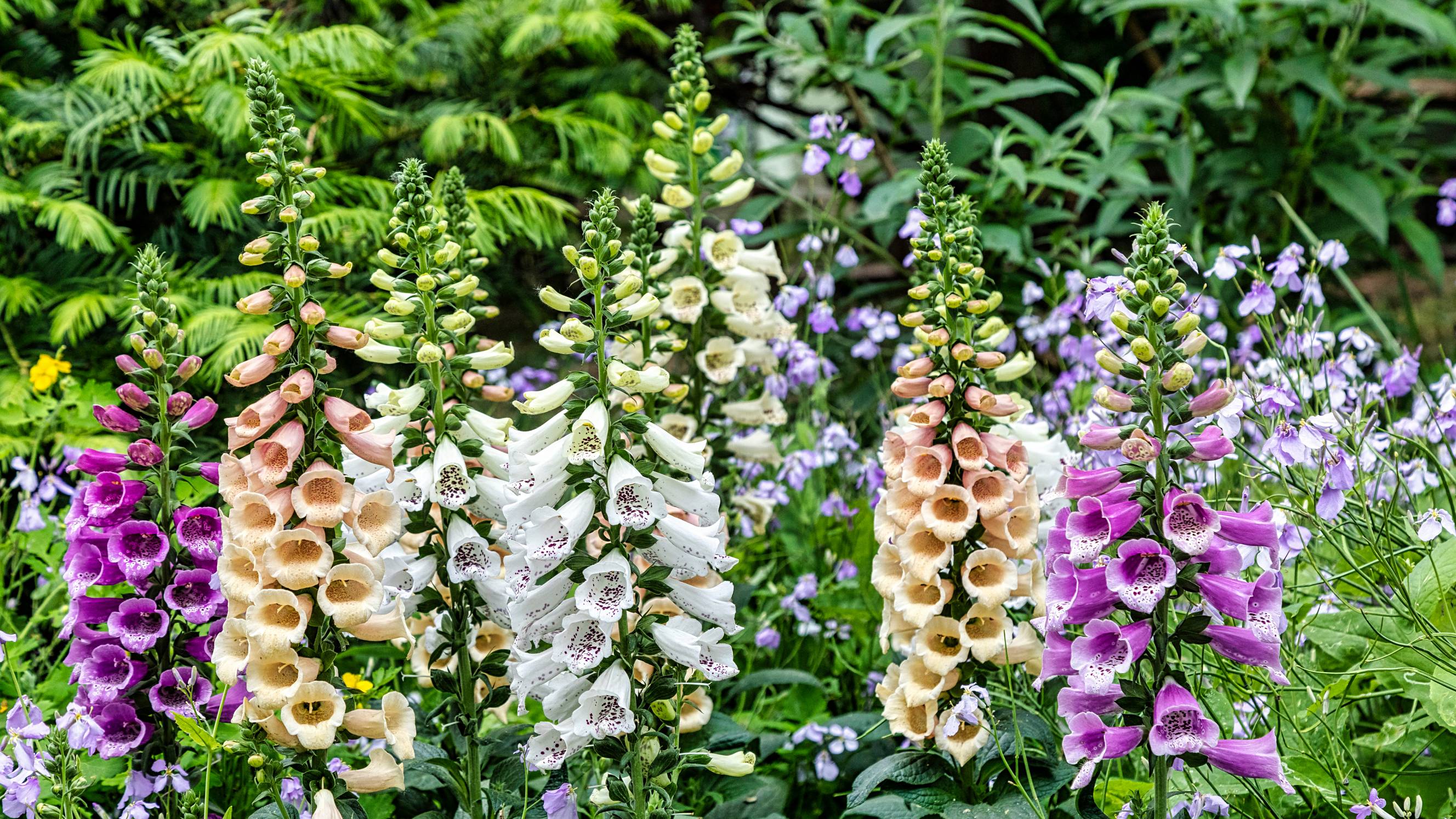
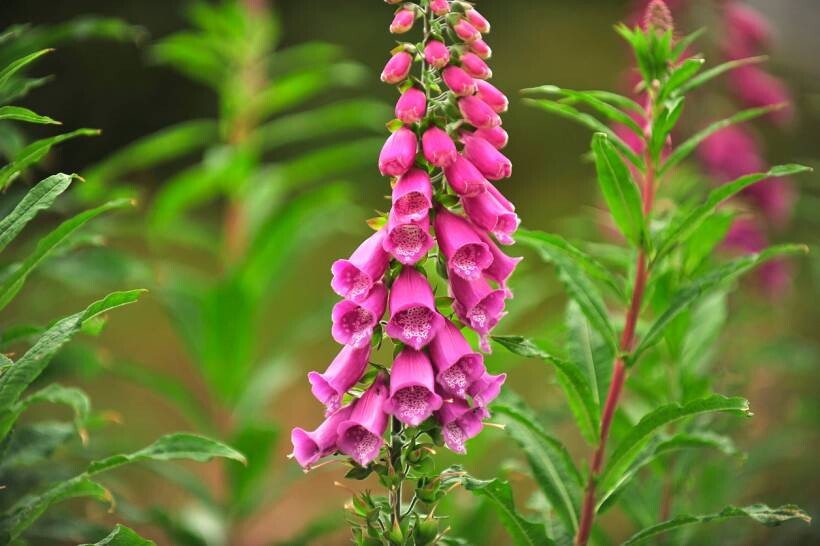 Pink foxglove flower spike with multiple bell-shaped blooms growing upright (Source: iStock)
The difference between foxgloves and hollyhocks in terms of appearance ranges from flower color variety to leaf and stem characteristics.
Flower characteristics
When in bloom, hollyhocks have pure white, red, pink, black, yellow, or purple flowers. On the other hand, foxgloves’ floral colors are more limited—pink, purple, yellow, and white—and dotted with markings.
The cup-shaped hollyhock flowers cover the length of the stems, while the bell-shaped foxglove florals hang along one side of the spikes.
Leaf characteristics
Both the foxglove and hollyhock leaves are large, with the former being soft and oblong, and the latter being rough and palmate.
Stem characteristics
The towering spires of a foxglove can grow from 3 to 6 feet tall. The stems of a hollyhock, on the other hand, can reach 6 to 8 feet in height.
In terms of care difficulty
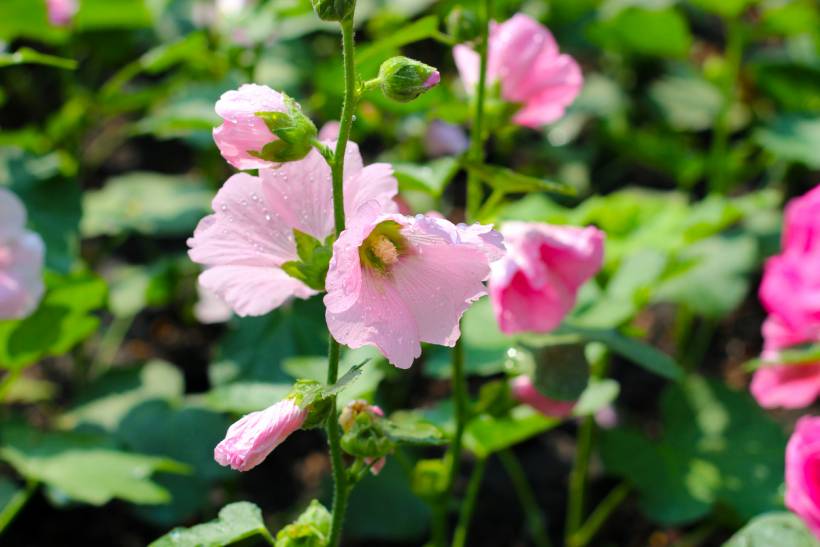 Blooming hollyhock with soft pink flowers and unopened buds on a green stem (Source: iStock)
When handling plants like foxglove and hollyhock, it is important to learn the factors that can help them thrive:
Best soil type
Soil types that have a degree of acidity and are rich in organic matter are the best choice if you want to plant foxgloves. If you are planning to cultivate hollyhocks, you should have well-drained soil—whether sandy, rocky, loam, or clay—that is rich in moisture and nutrients.
Watering amount and frequency
Hollyhocks require a regular supply of water as new plants, but through time, they won’t need as much H2O. In fact, it is not a good idea to sprinkle water on their leaves; watering the soil where they are planted would suffice.
Meanwhile, foxgloves would need regular watering throughout their lifetime, especially during dry spells.
Shade requirements
Locations that are partly shady or with full sun are optimal for growing hollyhocks. In contrast, foxgloves cannot tolerate too much sunlight, so shady or slightly sunny areas are suitable for them.
Ideal temperature
For foxgloves, a temperature range of 70°F to 80°F is ideal, while 65°F to 75°F is ideal for hollyhocks. Both are categorized as hardy plants, which means they can tolerate low temperatures.
Pest control
Slugs love hollyhocks and foxgloves, and you can stop these molluscs from destroying your plants by installing beer traps, organic baits, or spiky barriers.
In terms of growth rate
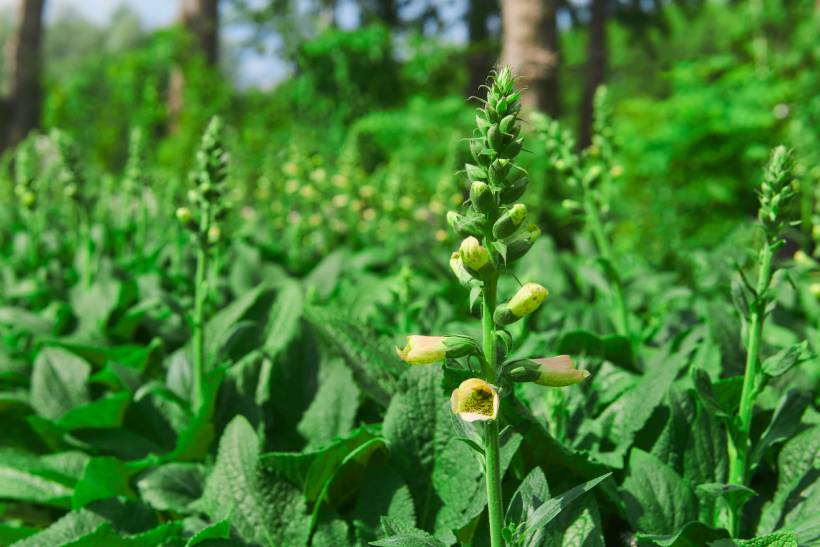 Early growth stage of a budding foxglove surrounded by green leaves (Source: iStock)
Depending on the variety, both foxglove and hollyhock have a moderate to fast growth rate; it typically takes them two to three years to reach their full height and dimensions.
In terms of bloom time
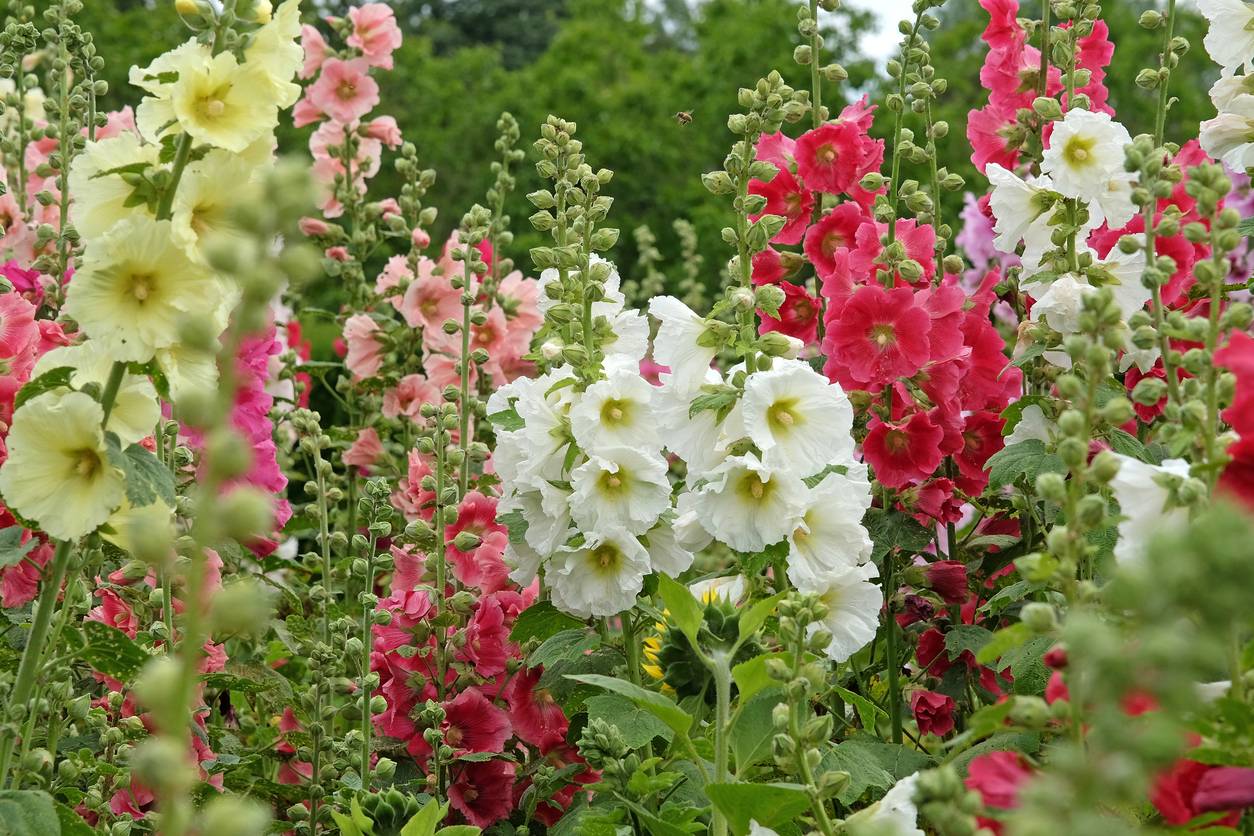 Hollyhock blossoms in white, pink, and red on tall garden stems (Source: iStock)
Most species of foxgloves are classified as biennials (as opposed to perennial or annual). They typically bloom during their second year, from late spring to midsummer. Similarly, biennial hollyhocks also begin to flower in year two, from the height of summer through fall.
Flowers from both plants usually last for a week to 10 days, and they should be cut off once they wither or fade.
In terms of fragrance
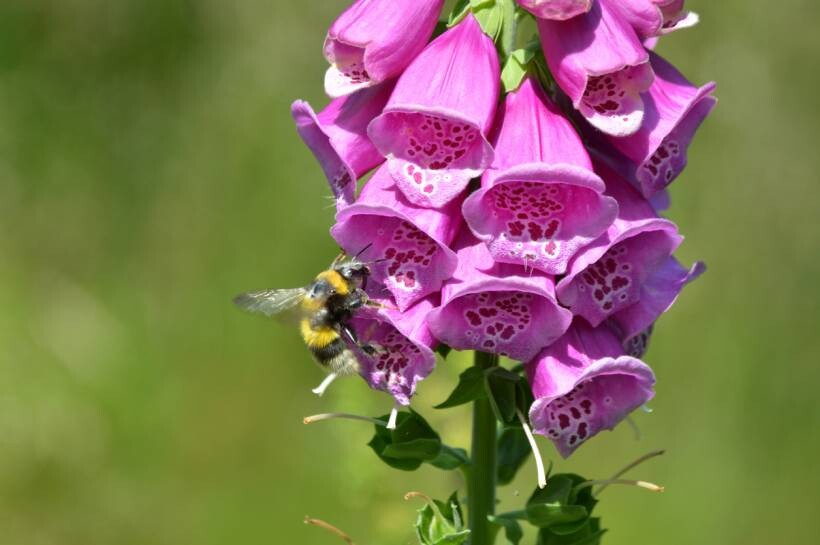 Bumblebee perched on foxglove blossoms during pollination (Source: iStock)
What is the difference between foxglove and hollyhock in terms of their fragrance?
Foxglove leaves are known for their odour, but the flowers have a subtle, nondistinct scent. Hollyhocks, likewise, do not give off a particular smell.
In terms of toxicity
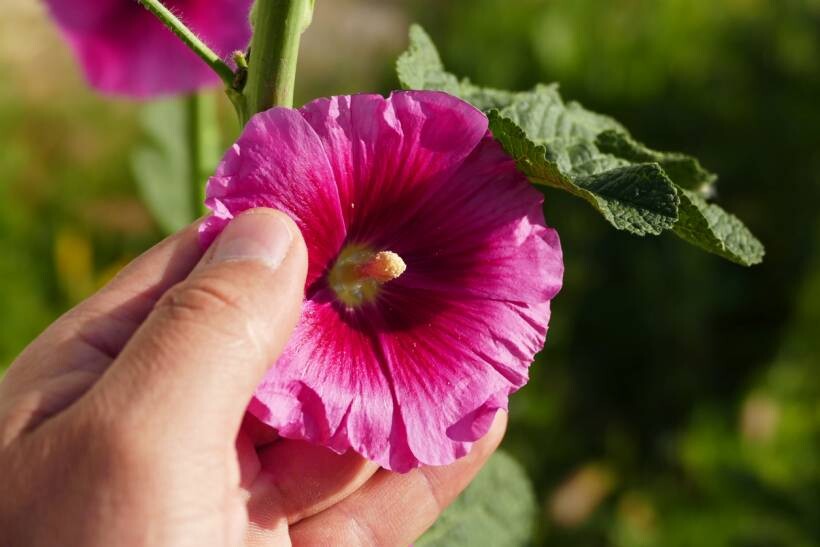 Hand holding a pink hollyhock flower in full bloom (Source: iStock)
What part of foxglove is poisonous? A foxglove’s leaves, stems, flowers, and seeds contain substances that are harmful when ingested. However, touching the plant is completely safe.
Meanwhile, hollyhock is non-toxic to both humans and animals but may cause irritation to those with sensitive skin.
In terms of propagation ease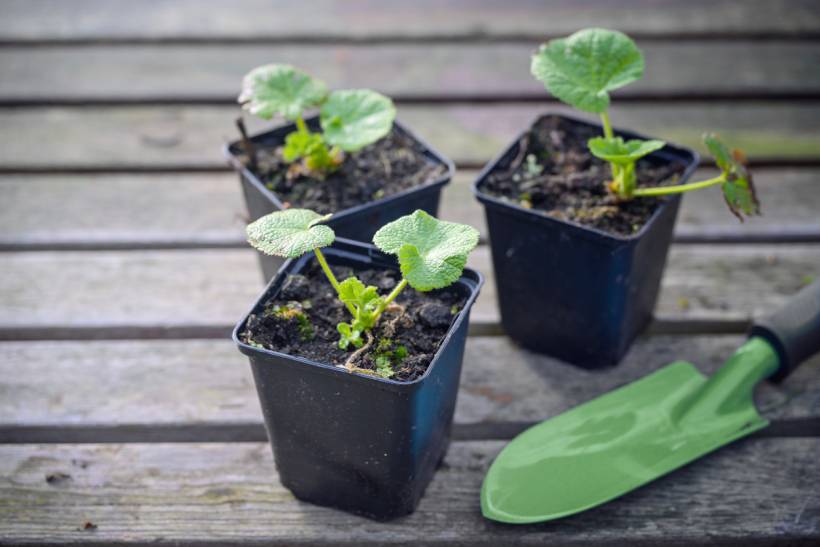 Potted hollyhock seedlings developing healthy green leaves (Source: iStock)
It’s important to know when to plant hollyhocks and foxgloves to ensure that they will flourish throughout their lifespan.
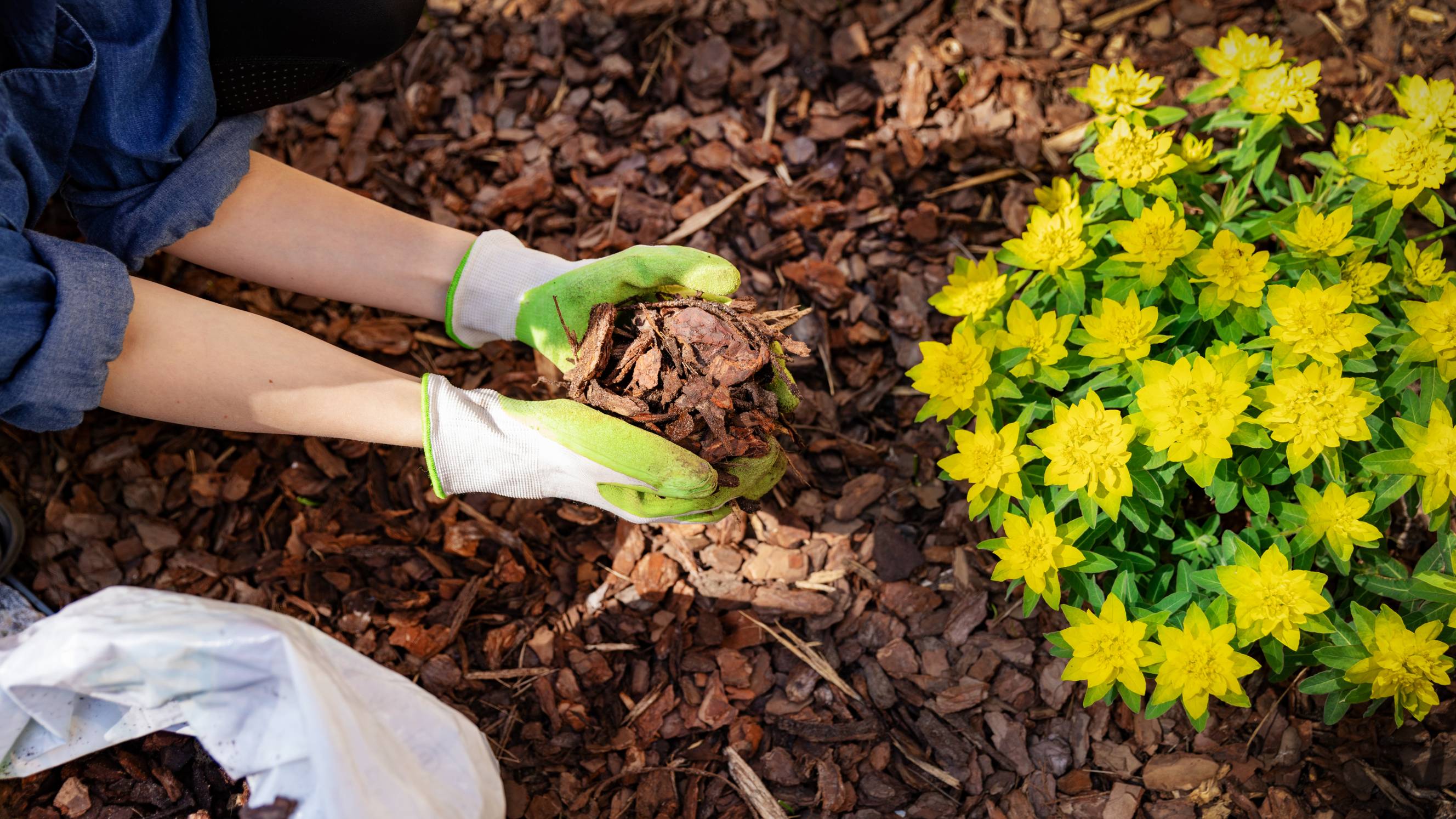
It’s easy to grow hollyhocks from seeds in a new outdoor garden, especially when done after the last frost season. You can also start propagating them indoors nine weeks before the last frost. Sow them one foot or two apart and add mulch to retain moisture and prevent weeds.
Growing foxglove is straightforward as well. You can do it indoors as springtime draws near or in your backyard when the flowering season officially arrives. But be aware that foxglove seeds are not buried in the soil; they should be spread on the surface to promote growth. Light mulching is encouraged.
In terms of market value
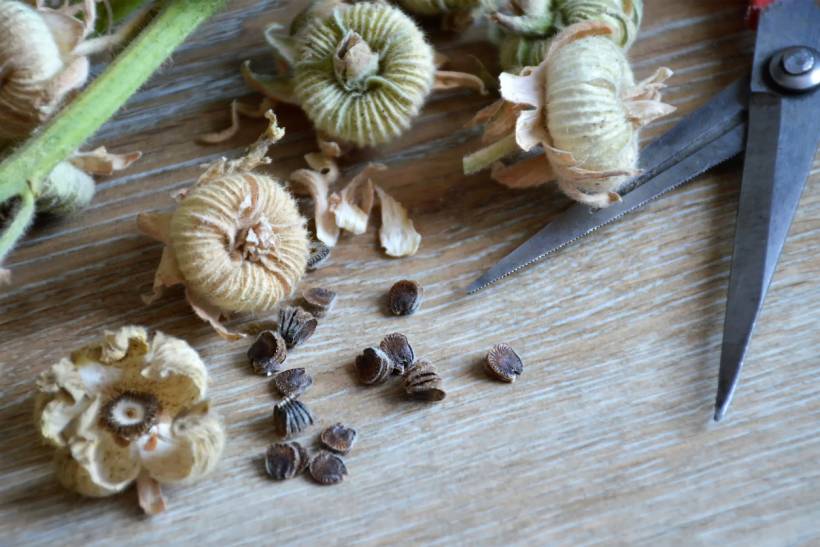 Hollyhock seeds collected from dried seed pods (Source: iStock)
If you are thinking of buying either of these plants, you may have wondered, “Are foxgloves and hollyhocks the same in terms of cost?”
Flower prices
A foxglove plant usually goes for $15 to $20. Meanwhile, the same price range is equivalent to three to five hollyhock plants, showing that the former can be significantly more expensive than the latter.
Seed prices
The price of 1,000 foxglove seeds starts at $2.50. On the other hand, you can buy only around 25 to 80 hollyhock seeds for the same cost. Nevertheless, do know that hollyhock seeds are viable for four years, while foxglove seeds only have a two-year viability.
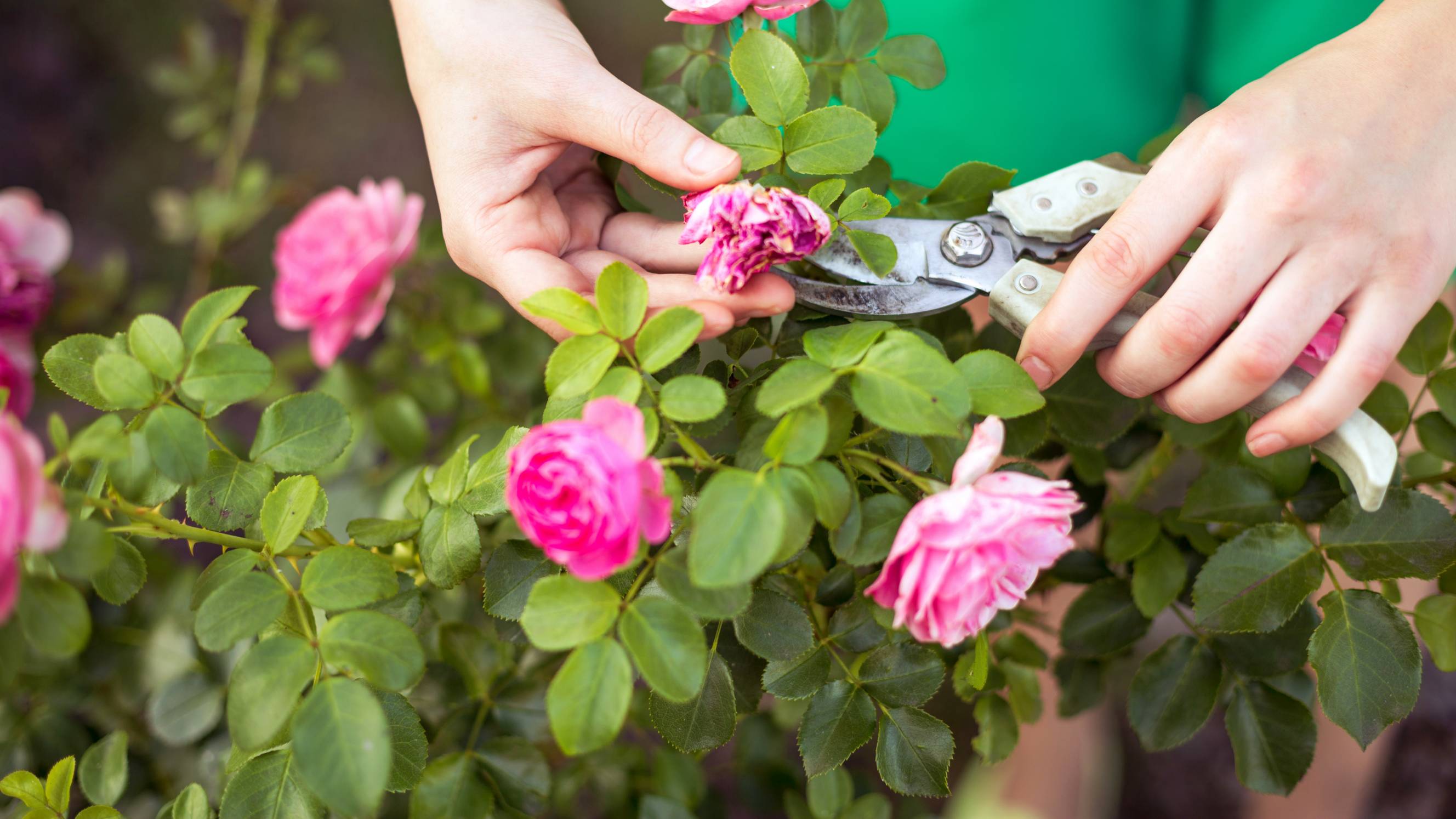
Achieve a lush flower garden with Airtasker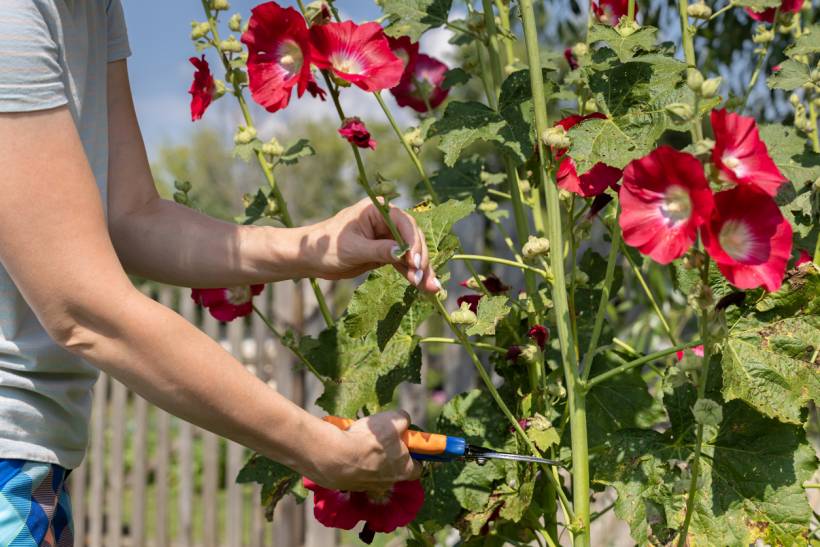 Gardener pruning hollyhock stems with red blossoms (Source: iStock)
Do you need assistance planting hollyhock or foxglove, landscaping your backyard, or performing other gardening chores? Through Airstasker, it’s easy to find the expert you need.
You can reach out to professionals registered on the platform and then hire the right one based on your preferences and needs. The process begins by simply signing up and clicking the “Post a task” button.
Learn more about our contributors
Written by Ana K.
Contributor
Ana always puts a premium on accuracy, clarity, and style when writing—a practice that her English degree has instilled in her. She excels at covering topics related to pet care, home and interior design, and food, which count among her varied interests. She also enjoys nature and street photography, as well as travelling. Overall, Ana uses her love for research to engage Airtasker readers with fun, practical content.
Foxglove vs hollyhock
| Foxglove |
Hollyhock |
|
|---|---|---|
Appearance |
Has bell-shaped flowers in several colors, soft and oblong leaves, and tall stems |
Has cup-shaped flowers with more color varieties, rough and palmate leaves, and towering spires |
Care Difficulty |
Needs a regular water supply in a shady or slightly sunny location |
Doesn’t require regular watering once well-rooted and thrives in fully sunny or partly shady areas |
Growth Rate |
Moderate to fast |
Also moderate to fast |
Bloom Time |
Blooms during its second year, from late spring to midsummer |
Also blooms during its second year, from midsummer to fall |
Fragrance |
Has leaves that smell bad and unscented flowers |
Has flowers with no distinct scent |
Toxicity |
Poisonous when consumed |
Non-toxic to humans and animals |
Propagation Ease |
Easy to grow from seeds |
Also easy to propagate from seeds |
Market Value |
Live plant: $15 to $20 can buy one plant Seeds: $2.50 can buy 1,000 seeds |
Live plant: $15 to $20 can buy three to five plants Seeds: $2.50 can buy 25 to 80 seeds |
FAQs on foxglove and hollyhock
Yes, foxgloves and hollyhocks are good companion plants because of their similar blooming periods and complementary appearance.
Due to their height, foxgloves and hollyhocks may not withstand strong winds. But placing them in strategic areas, such as along fences and with other plants, can help prevent them from toppling.
Yes, you can grow foxgloves in big containers with enough space for their width and height.
Both the foxglove and hollyhock attract different kinds of pollinators, such as bumblebees and hummingbirds.
Find gardeners, fast
Post a task
Related price guides
How much does mulch cost?
Read more
How much does weeding cost?
Read more
How much does hedge removal cost?
Read more

How much does a garden room cost?
Read more



Related articles
How to Start a Vegetable Garden
Read more
How to build a raised garden bed
Read more
How to trim bushes the right way
Read more

25 ways to make money gardening
Read more

13 best spring gardening tips
Read more
How to clean landscape rocks
Read more

36 Quirky plant pot ideas you’ll love
Read more
Your garden maintenance checklist
Read more