How to Clean a Stove Top: A Step-by-Step Guide
Simple cleaning tips for gas, electric, glass, and induction cooktops
Published on

Written by Genine T.
Staff Writer
Read more about our contributor
Key Facts
Wipe your cooktop after every use once it's cool enough, and deep clean monthly or fortnightly if you cook frequently.
Soak suitable grates and burner caps in warm, soapy water for at least 20 minutes to loosen baked-on grease without heavy scrubbing.
Avoid steel wool, harsh cleaners, and abrasive scourers that can scratch glass surfaces or damage protective coatings.
Australians cook at home an average of 5.6 times a week, which means plenty of opportunities for grease splatters, food spills, and burnt-on residue to build up. Before you know it, your cooktop can become a sticky, stained mess that’s a pain to clean. Fortunately, learning how to clean a stovetop properly can help you remove stubborn grime without scratching or damaging the surface.
Ready to get your cooktop looking spotless again? This guide shows you how to clean a stovetop without scratching it, whether you have a gas, electric, glass, or induction model. You’ll also learn how to remove burnt-on food, which cleaning products to avoid, and simple maintenance tips to keep your cooktop in top shape.
What you’ll need to clean a stove top
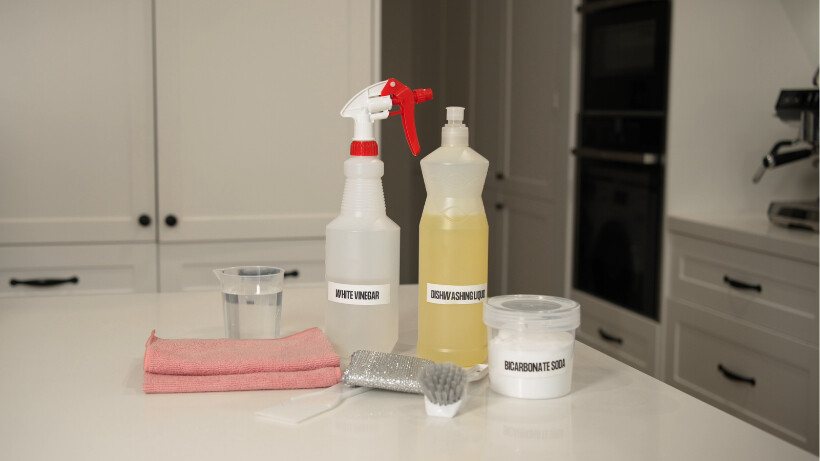 Gather your cleaning supplies before getting started
Before you reach for the scrubbing pad, make sure you’ve got the right tools for the job. Burnt-on food stuck to a glass cooktop needs a gentler approach than grease coating gas burner grates. The good news is that most everyday messes can be cleaned with a few household essentials.
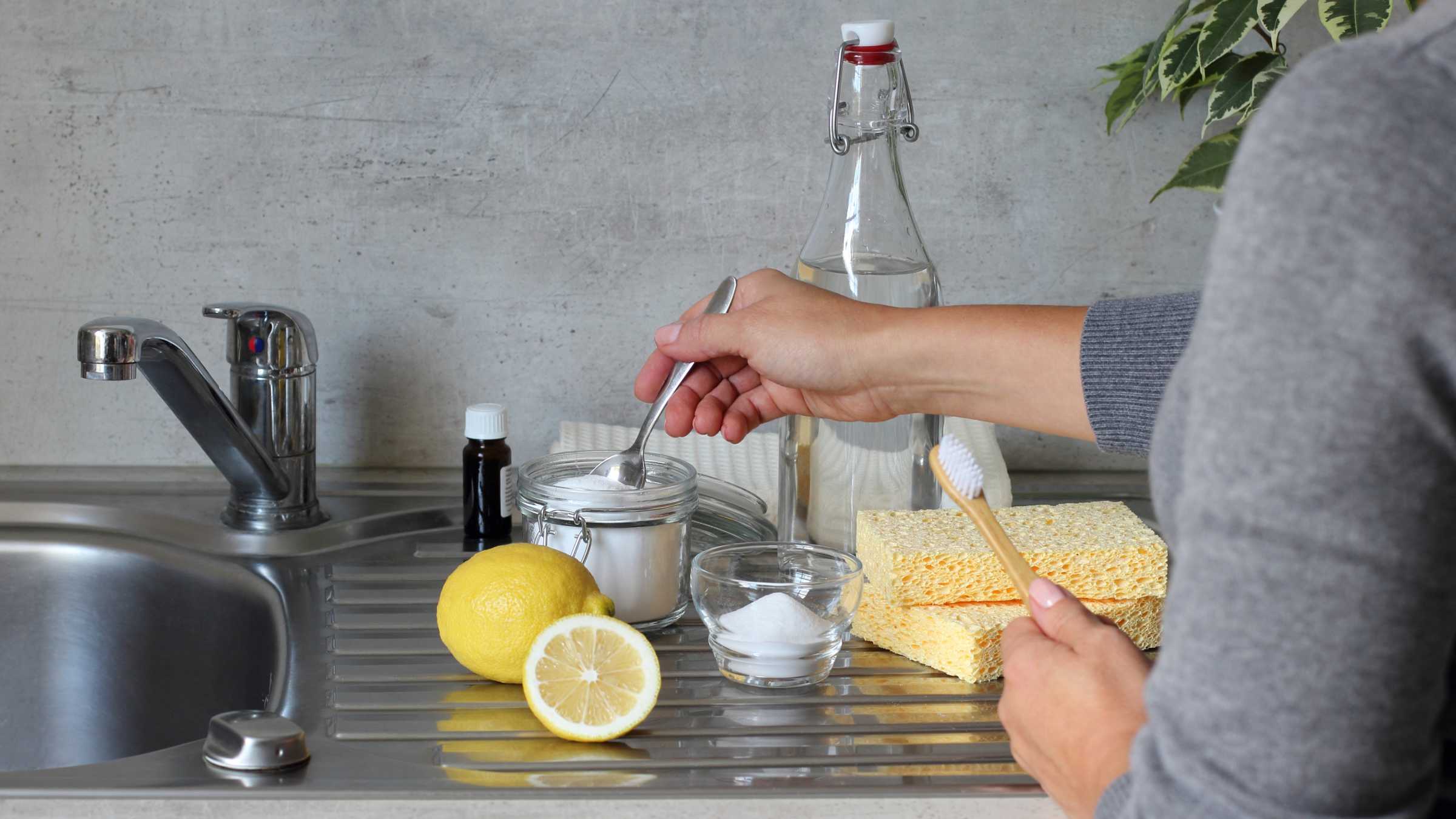
Dishwashing liquid to cut through grease and food residue
Hot water to soften baked-on food and loosen stubborn grime
Baking soda to help loosen stubborn residue on surfaces where it’s safe to use
White vinegar in a spray bottle to remove water spots and mineral deposits
Microfibre cloths to wipe away grease, remove cleaning residue, and buff surfaces
Non-scratch nylon pad to gently scrub stubborn food residue on suitable surfaces
Cooktop-safe scraper to lift burnt-on food from glass and induction cooktops
Soft brush to clear food debris around gas burner ports
Keep steel wool, rough scourers, and abrasive cleaning powders well away from your cooktop, as they can leave permanent scratches. You should also avoid bleach and harsh oven cleaners on glass and induction surfaces, too. For stubborn burnt-on marks, use a cleaner and scraper specifically approved for your cooktop rather than scrubbing harder.
Step-by-step: How to clean a stove top
If it’s your first time giving your cooktop a deep clean, snap a quick photo before removing any parts. It’ll come in handy when it’s time to put the grates, burner caps, or drip pans back in place. You can also take photos as you go so you don’t have to guess where everything belongs later.
Step 1: Turn off the stove and remove detachable parts
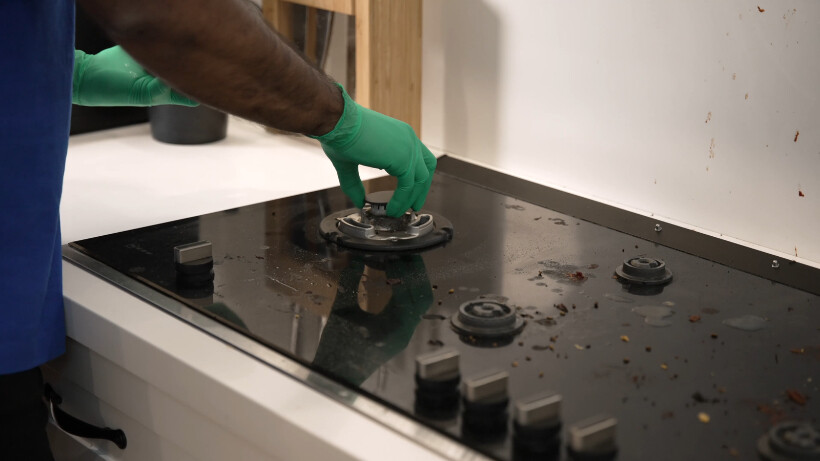 Carefully detach removable parts before cleaning
First, switch off all the controls and give your stove plenty of time to cool. Some electric cooktops can stay hot for 20–30 minutes after use, so don’t rush into cleaning. If your glass or induction model has a residual heat indicator, wait until it goes out before getting started.
For gas cooktops, carefully lift off the grates and burner caps. If you have an electric coil stove, remove the coils and drip pans only if the manufacturer allows it. Glass and induction cooktops generally have smooth surfaces with no removable parts, so you can skip this part.
Step 2: Soak the grates and burner caps
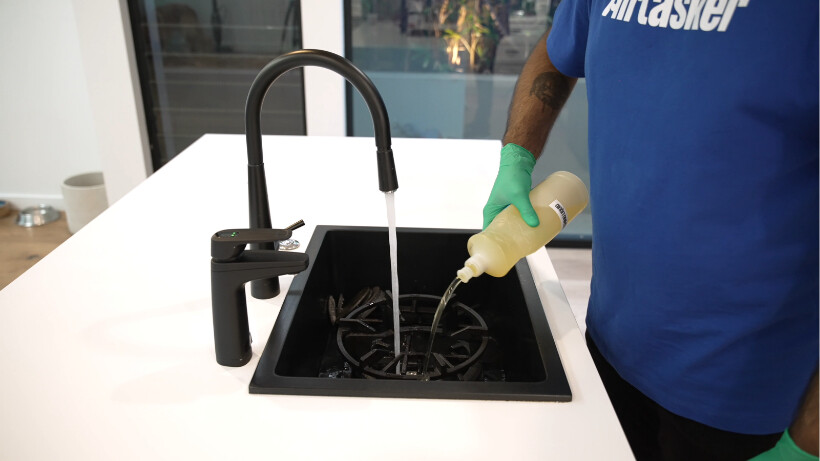 Prepare a soapy solution to loosen grease on stove parts
Fill your kitchen sink or a large tub with hot water and a squirt of dishwashing liquid. Submerge the removable grates and burner caps, provided they’re suitable for soaking, and leave them for at least 20 minutes. The warm, soapy water helps break down grease and soften dried food, making stubborn residue easier to remove without heavy scrubbing.
If there’s still baked-on grime, mix three parts baking soda with one part water to make a paste. Spread it over the stubborn spots and leave it for another 20 minutes, then gently scrub with a non-scratch nylon pad. Rinse thoroughly with clean water and dry everything with a tea towel to prevent rust.
Step 3: Clean the cooktop with baking soda and vinegar
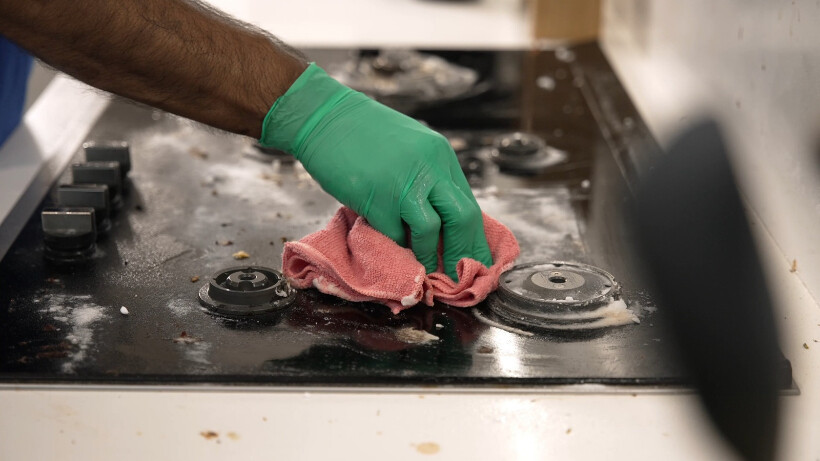
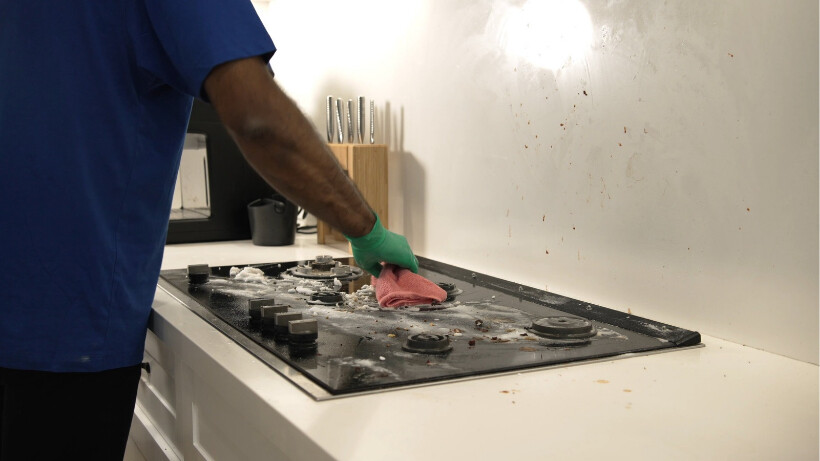 Gently wipe away the cleaning mixture and loosened grime
While the grates are soaking, turn your attention to the cooking surface. Start by wiping away loose crumbs and food scraps with a damp microfibre cloth. For gas and electric cooktops with compatible enamel or stainless steel surfaces, apply a little dishwashing liquid mixed with warm water to loosen grease and food splatters.
For stubborn stains on surfaces where baking soda is approved, mix a small amount with water to make a soft paste. Apply it to the affected areas and leave it for around 10–15 minutes. You can also place a warm, damp cloth over dried-on food to soften it before gently wiping it with a non-scratch pad.
If you have a glass or induction cooktop, stick to a manufacturer-approved glass-ceramic cleaner and a soft microfibre cloth. Avoid using baking soda or vinegar unless the manufacturer recommends it, as unsuitable products can damage the surface. If the damage affects your cooktop’s operation, you may need a professional stove repair service.
Step 4: Remove burnt-on food without scratching
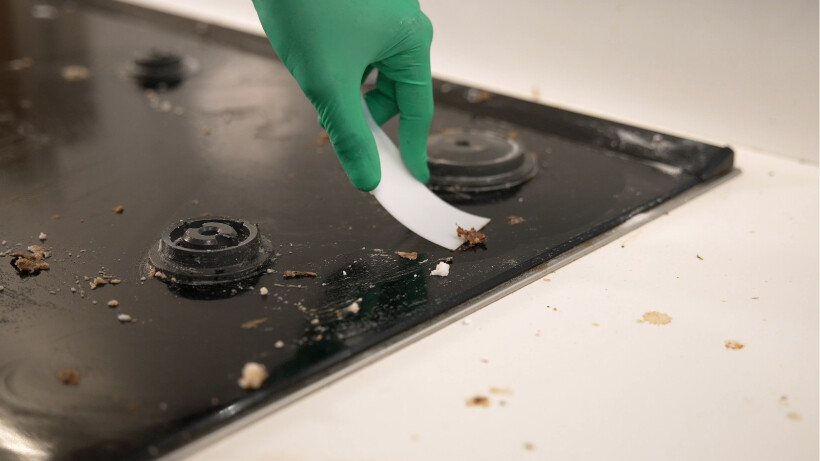 Gently scrape away stubborn residue without scratching the surface
For glass and induction surfaces, use a scraper specifically approved for your model. Hold it at the angle recommended by the manufacturer and gently slide it beneath the burnt-on residue to lift it away. Keep the blade clean to avoid dragging trapped food particles across the glass.
For gas and electric cooktops, use a damp non-scratch nylon pad to gently loosen any remaining grime. Pay attention to the edges and corners where food tends to collect, but avoid scrubbing around gas igniters, burner ports, and electrical connections.
If the residue won’t budge, soften it again with a warm, damp cloth or a suitable cooktop cleaner rather than applying more pressure. Once the grime has loosened, wipe it away with a clean microfibre cloth.
Step 5: Wipe, rinse, and dry the cooktop
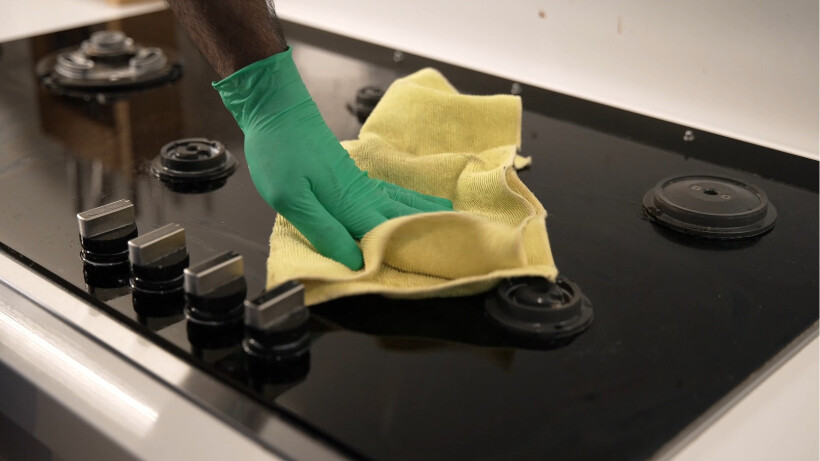 Wipe away cleaning residue and buff the surface dry
Once you’ve removed the stubborn grime, wipe the entire cooking surface with a clean, damp microfibre cloth. Make sure to remove any leftover cleaning products, especially around the edges and corners where residue can collect. You may need to rinse and wring out your cloth a few times to get everything off.
Next, grab a dry microfibre cloth and buff the surface to remove water spots and streaks. Pay extra attention to glass and induction cooktops, as dried water marks can make an otherwise clean surface look cloudy. For stainless steel surfaces, wipe along the grain to help maintain a streak-free finish.
Step 6: Reassemble the parts and check the burners
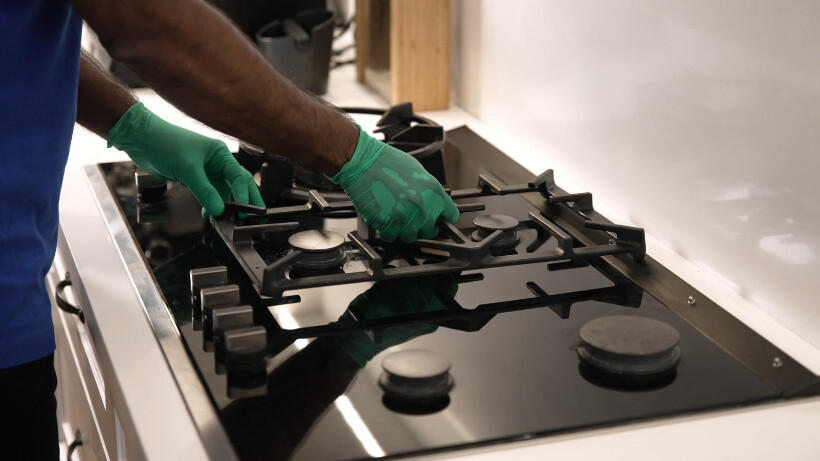 Put the clean, dry stove parts back in place
Once everything is clean and completely dry, put the grates, burner caps, and drip pans back in their original positions. Refer to the photos you took earlier or your stove's manual to make sure each part fits correctly. For electric coil models, reconnect removable elements only as instructed by the manufacturer.
If you have a gas cooktop, turn on each burner briefly to check the flame. It should burn steadily and mostly blue. If you notice yellow or uneven flames, switch it off and let it cool before checking whether the burner cap is sitting flat or the ports are blocked. Use a soft brush to remove any loose debris without poking objects into the openings.
Stove top maintenance tips you should know
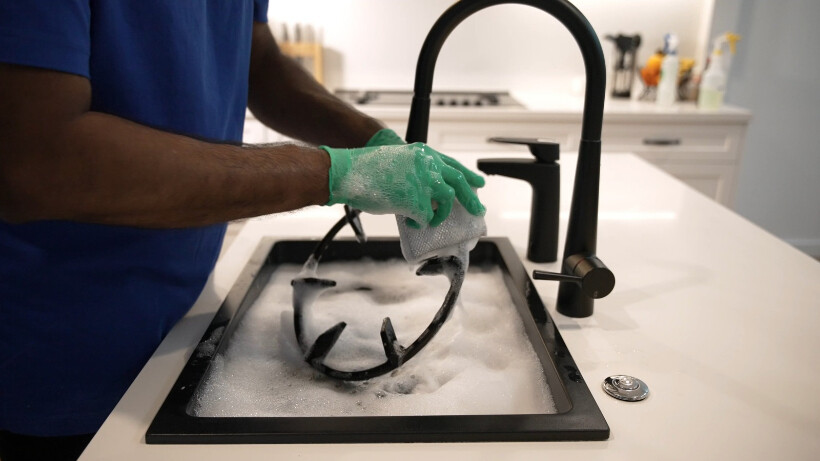 Clean stove grates regularly to prevent grease buildup
To keep your stovetop in tip-top shape, it’s recommended to give it a quick wipe after every cook once the surface has cooled enough to clean safely. If you cook most nights, aim for a deep clean once a month to prevent grease and burnt-on food from building up.
For households that do plenty of frying or cook saucy dishes regularly, a fortnightly deep clean may be more practical. If you rarely use your stove, every two to three months should be enough.
Here are a few more ways to keep your cooktop in good nick:
Clean up splattered oil and sauces before they harden into stubborn stains.
Check gas burners regularly for food scraps and blockages that could affect the flame.
Avoid dragging heavy pots and pans across glass or induction surfaces to prevent scratches.
Wipe around knobs and switches with a slightly damp cloth to remove grease and food residue without soaking the controls.
Stick to soft cloths and manufacturer-approved cleaners instead of steel wool or harsh scourers that can damage the finish.
While you’re giving your cooktop some attention, don’t forget the rest of your kitchen. Your rangehood can collect plenty of cooking grease, while your oven also needs regular cleaning to prevent burnt-on residue. For a more thorough refresh, follow our kitchen cleaning checklist to keep everything looking its best.
Ready for a kitchen deep clean?
Some cooking messes just won’t budge, no matter how much soaking or wiping you do. If your cooktop is still covered in burnt-on food or sticky grease, there’s no need to risk scratching it with more scrubbing. Post a task on Airtasker for professional cleaning help. Share a few photos of the mess, describe what needs cleaning, and compare offers from local Taskers.
Got other kitchen jobs you’ve been putting off? You can also find help with oven cleaning, dishwasher repairs, or even kitchen installation. Get those jobs off your to-do list and spend more time enjoying your next home-cooked meal.
Learn more about our contributors
Written by Genine T.
Staff Writer
Genine is a writer and educator with over seven years of experience. She has published peer-reviewed research papers, worked in academia, and created educational content for thousands of language learners. She discovered her passion for turning complex ideas into practical advice through writing about DIY topics like home improvement, furniture assembly, and household fixes. When she’s not writing, Genine enjoys curling up with her dogs and a good book.
Frequently Asked Questions
A yellow or uneven flame may be caused by a misaligned burner cap, moisture, or blocked burner ports. If the flame stays yellow after the burner is dry and the cap is correctly positioned, stop using the stove and contact a licensed gas fitter.
Find cleaners, fast
Find a cleaner