- Home/
- Guides/
- Shower Cleaning/
- How to Clean a Shower Glass
Cloudy and streaky? Here's how to clean a shower glass screen
A practical guide for hard water homes
Last Updated on

Written by Genine T.
Staff Writer
Read more about our contributor
Key Takeaways
Water hardness varies significantly across Australia, so how often you need to clean your shower screen depends heavily on where you live.
Squeegee the glass after every shower before the water dries and bonds to the surface as soap scum or mineral deposits.
If your bathroom has natural stone floors, rinse thoroughly after using vinegar, as the acid can etch and damage the finish.
If you live in Perth or Adelaide, you’ve probably cleaned your shower screen only for the cloudiness to come back days later. Meanwhile, your mates in Melbourne seem to get away with a quick wipe and crystal-clear glass. Well, the Australian Drinking Water Guidelines might have the answer to that. Water with more than 200 mg/L of calcium carbonate is considered hard, and several Australian cities regularly exceed that level.
In fact, every time hard water dries on your glass, it leaves calcium and magnesium deposits behind that build into a stubborn limescale. Mixed with soap scum and body oils, the build-up becomes even harder to remove and can etch the glass itself. At that point, no amount of research on how to clean a shower screen will undo the damage; replacing the shower screen is often the only real fix.
So in this guide, we’ll give you tried-and-tested tips on how to clean a shower glass screen, which products actually cut through limescale, how often you should be doing it, and the simple habits that keep scale from getting ahead of you between cleans.
Tools and materials you’ll need to clean your shower glass
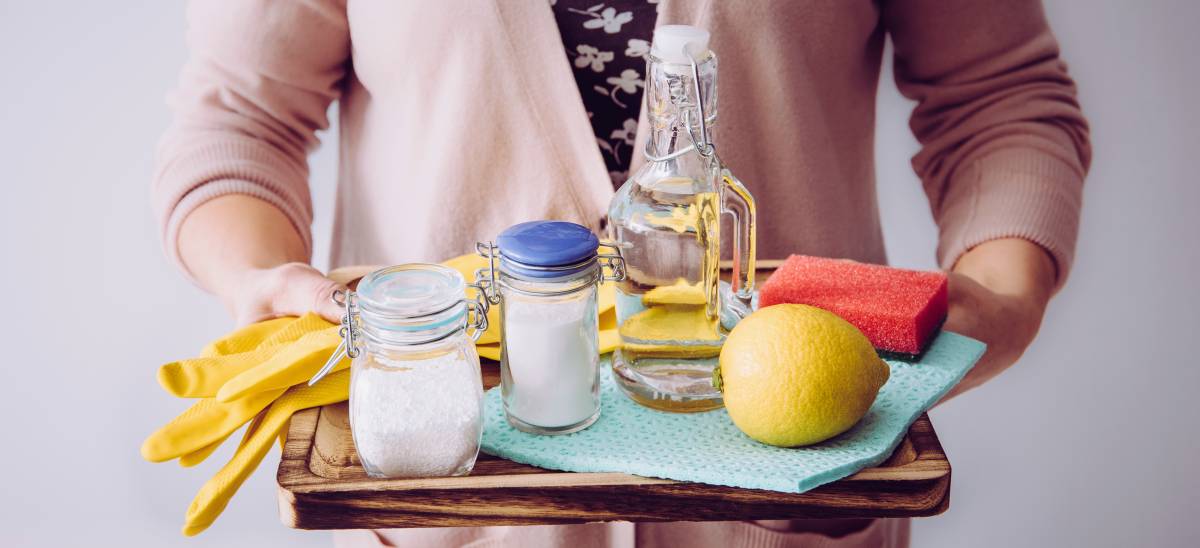
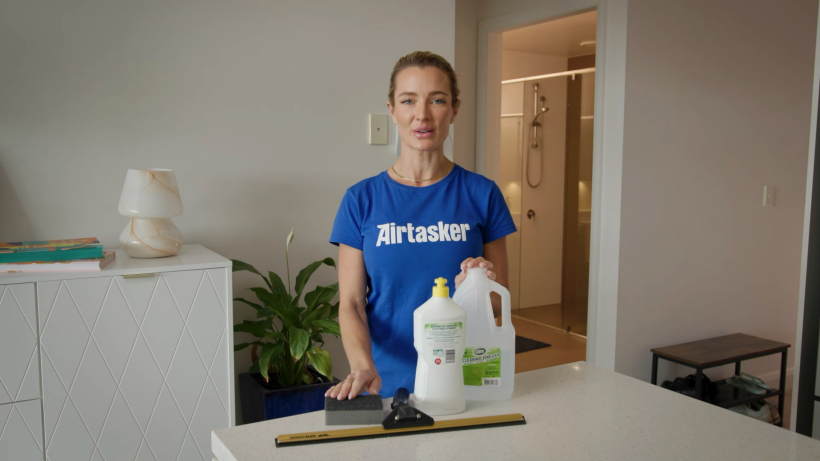 Grab your cleaning supplies to get started.
If you have ever looked up “how do you clean shower screens?” and keep finding conflicting advice, it usually comes down to the coating. Check your manufacturer’s guide before starting, since some treated or tinted glass panels have specific restrictions that change the approach entirely.
Here’s what you’ll need:
Dish soap to cut through soap scum and body oils
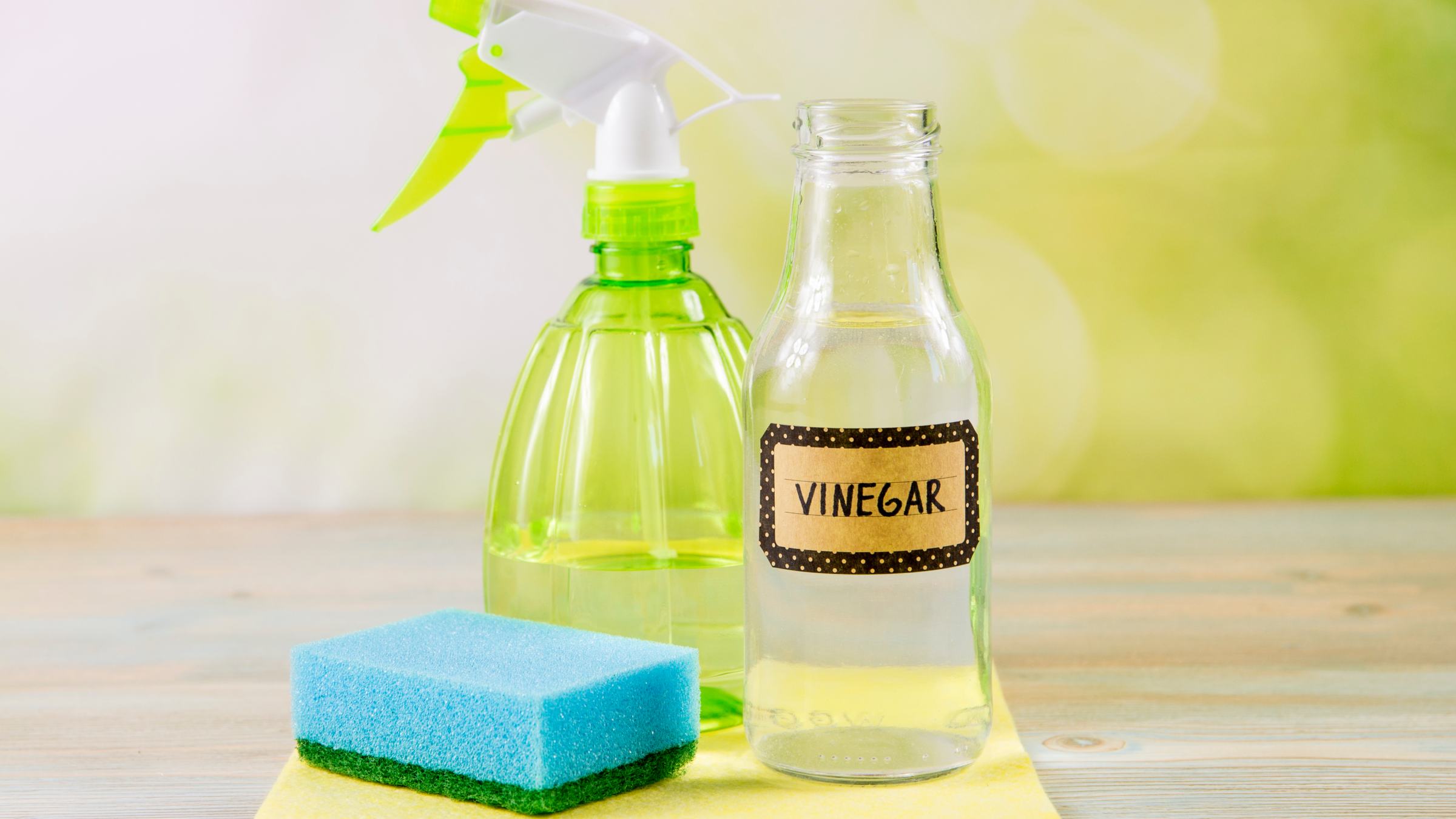
White vinegar to dissolve calcium and mineral deposits
Non-scratch scouring pad to gently scrub the glass surface
Squeegee to pull water off in one clean pass
Dry cloth to wipe the squeegee blade after every stroke
Spray bottle to evenly apply your cleaning solution across the glass surface
Tempted to use a standard green scourer or steel wool for tougher build-up? Sticking to the items above is the best way to clean a shower screen because they lift grime effectively without scratching the glass, stripping protective coatings, or making future buildup even harder to remove.
The 5-step deep cleaning guide for your shower glass
Before you start cleaning a shower screen, dry dust the area to remove loose hair, dust, and surface debris. Don’t forget to also move towels, bath mats, toilet paper, and anything else nearby so you don’t end up with damp fabrics smelling like cleaning solution.
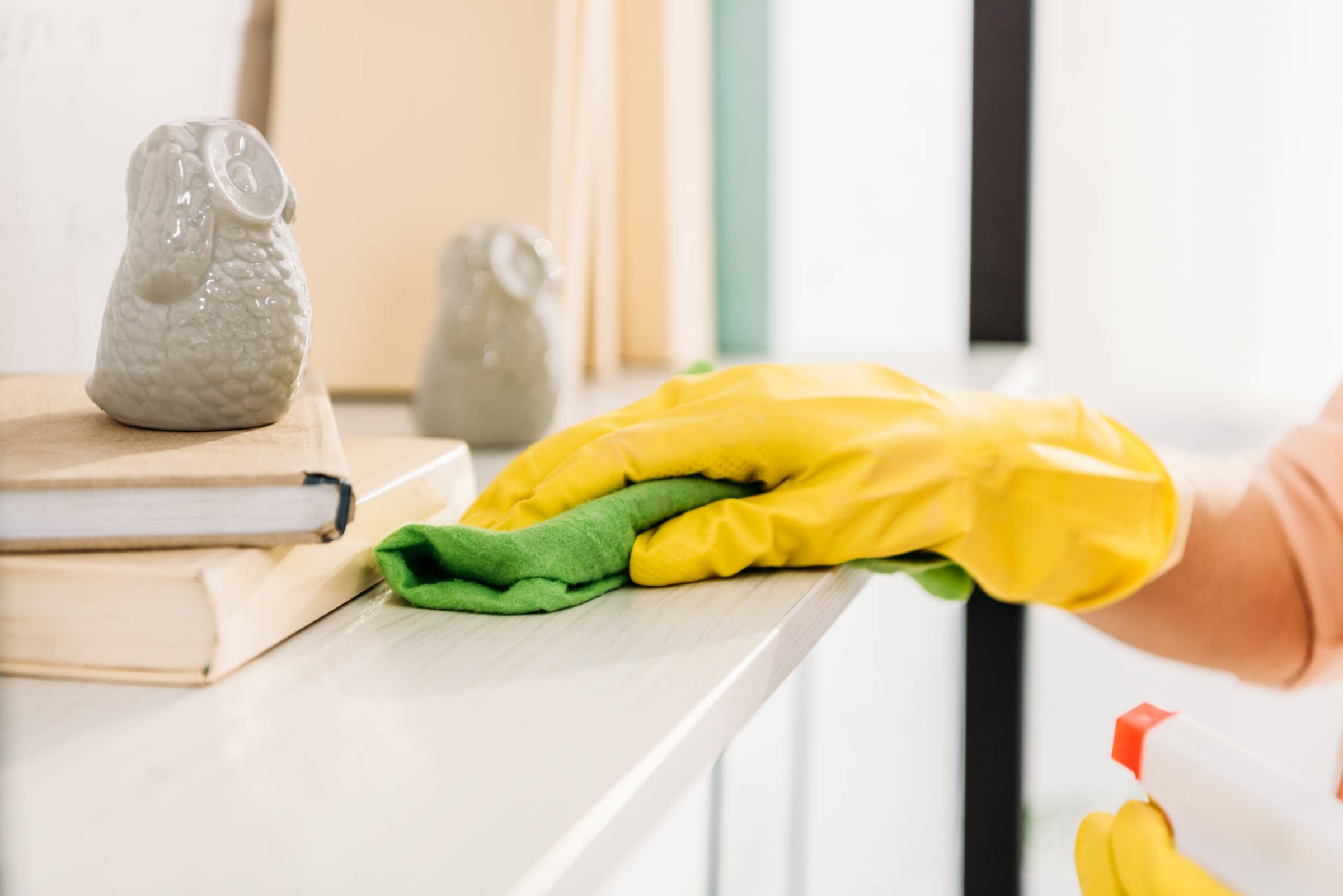
If you have sensitive skin, wear rubber gloves, especially when working with vinegar or stronger shower screen cleaners during longer scrubbing sessions. Open a window or turn on the exhaust fan too, particularly in smaller bathrooms.
Once that’s done, follow the steps below.
Step 1: Mix your cleaning solution
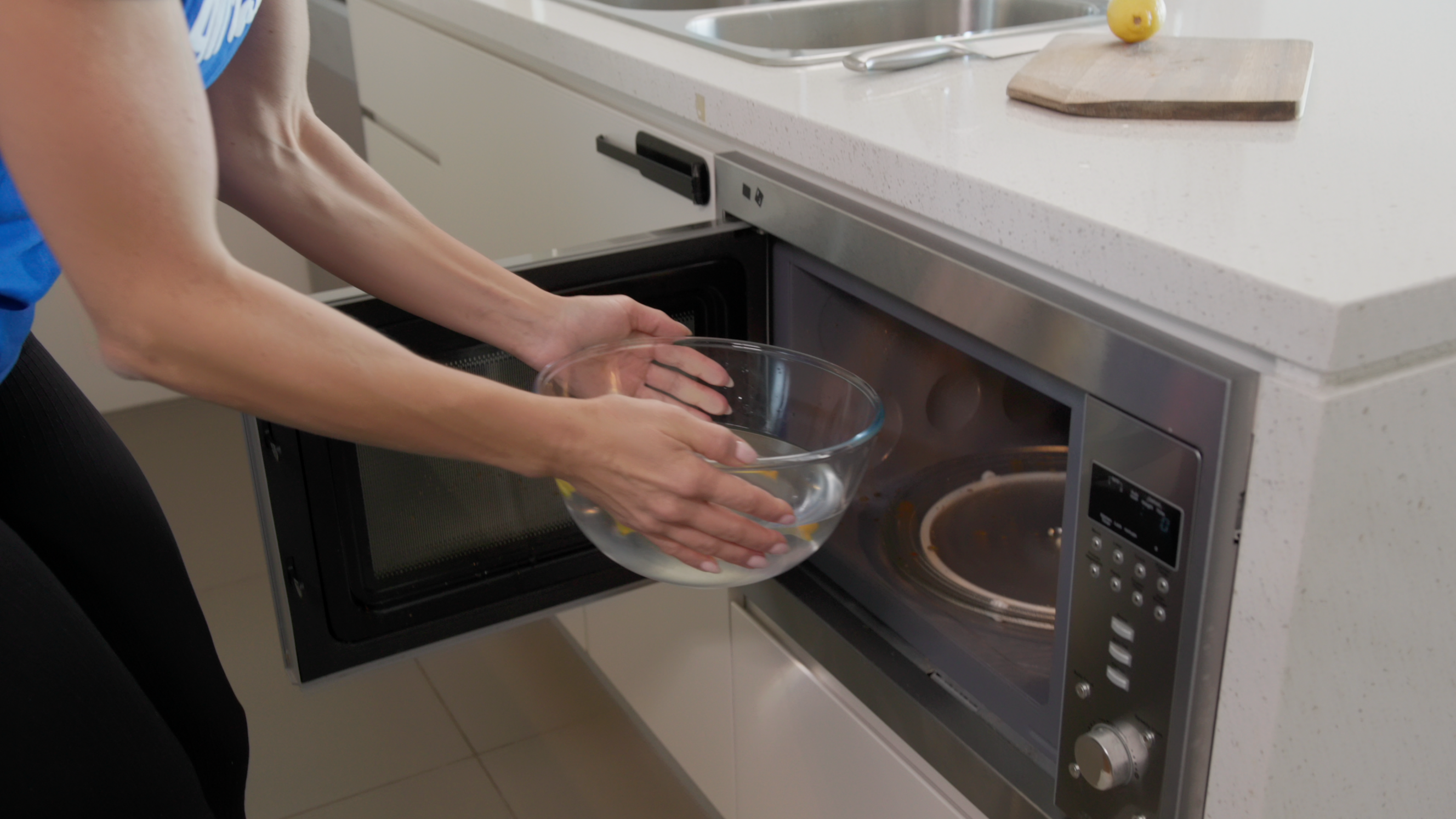
Ever wondered how to clean a shower screen properly? The answer starts with the cleaning solution you’ll use. In a spray bottle, combine equal parts white vinegar and dish soap. The vinegar dissolves hard water deposits and calcium naturally, while the dish soap breaks down body oils and waxy soap scum. For stubborn build-up, heat the vinegar in the microwave for 30 to 60 seconds before mixing.
To determine which ratio of dish soap and vinegar shower cleaner works best for your screen, run your hand across the dry glass first. Check for the following:
If it feels rough or sandpapery, add more vinegar.
If it feels waxy or sticky, add more dish soap.
Step 2: Apply the solution to the glass
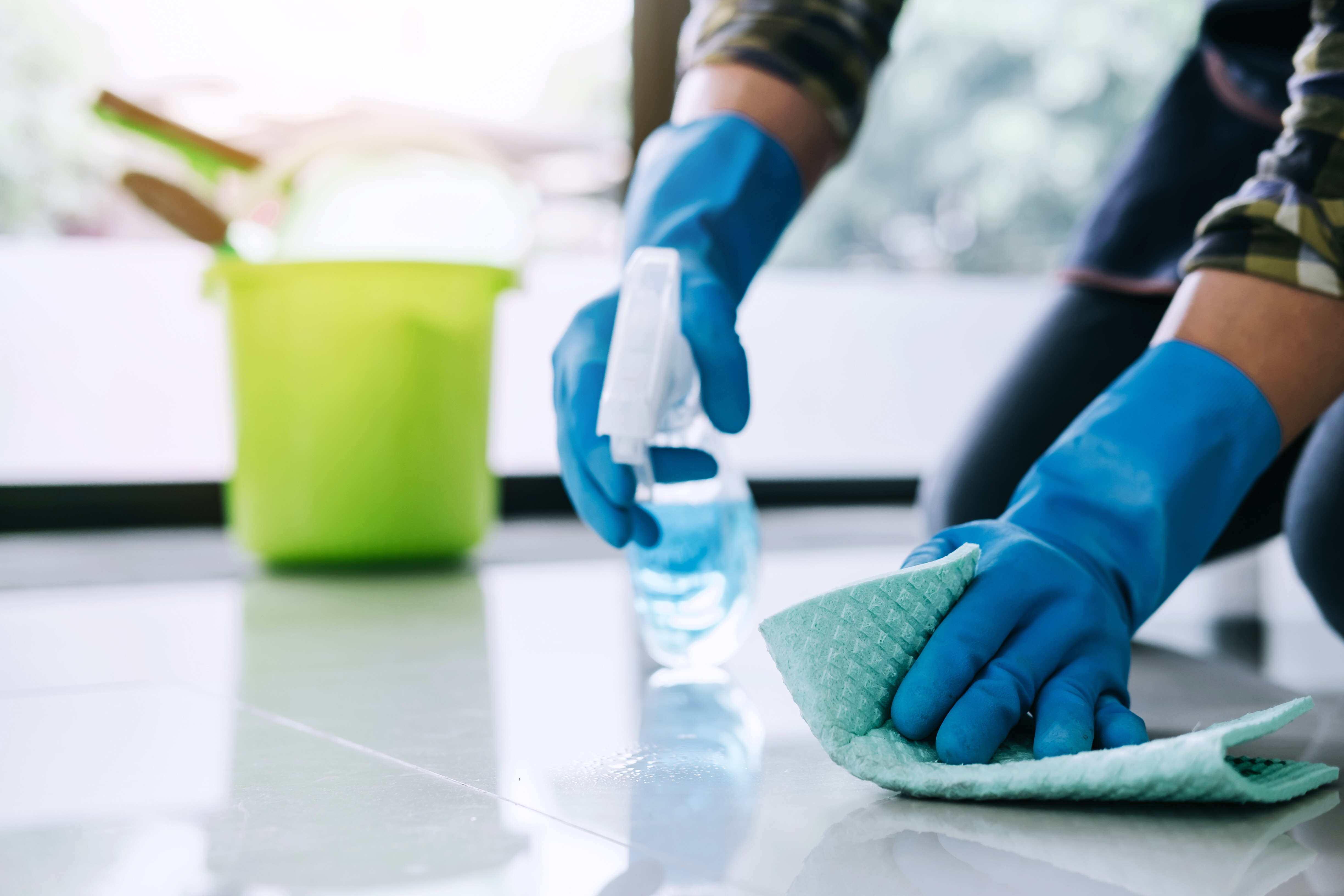
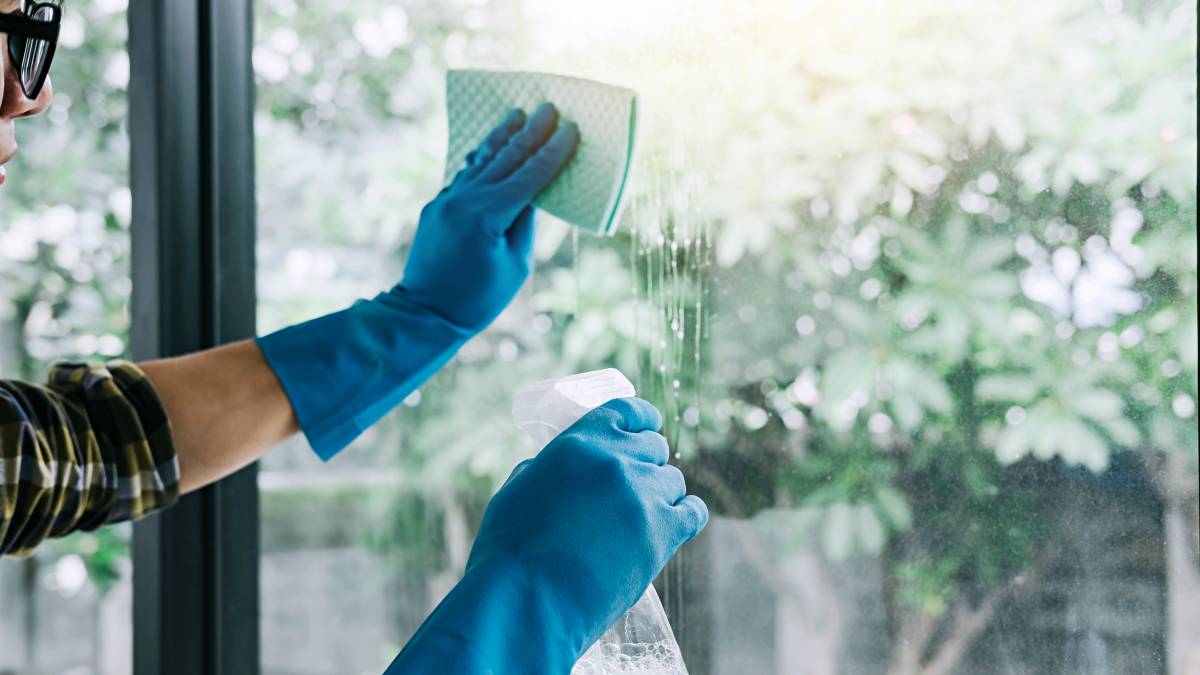
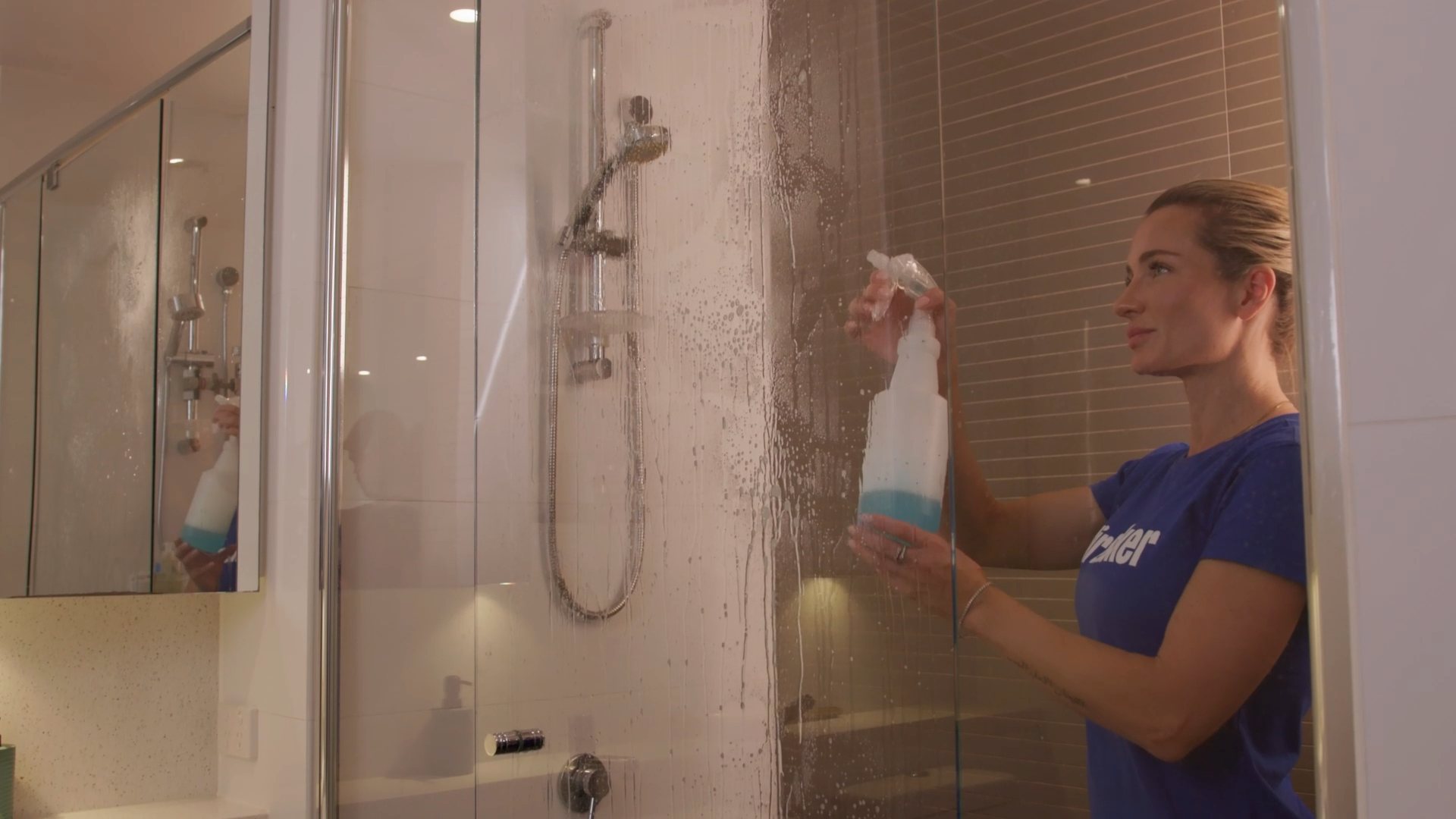
Spray the solution generously across the entire glass surface, covering every panel from top to bottom. Make sure no dry patches are left, as the solution needs full contact with the glass to work. Then leave it for 5 to 10 minutes before touching it.
While the temptation is to wipe immediately, doing so is the most common reason shower screens never look fully clean. The vinegar needs time to physically break down the mineral film bonding grime to the glass. The longer it sits, the less scrubbing you need, and the lower the risk of permanently scratching the surface.
Step 3: Get scrubbing to remove buildup
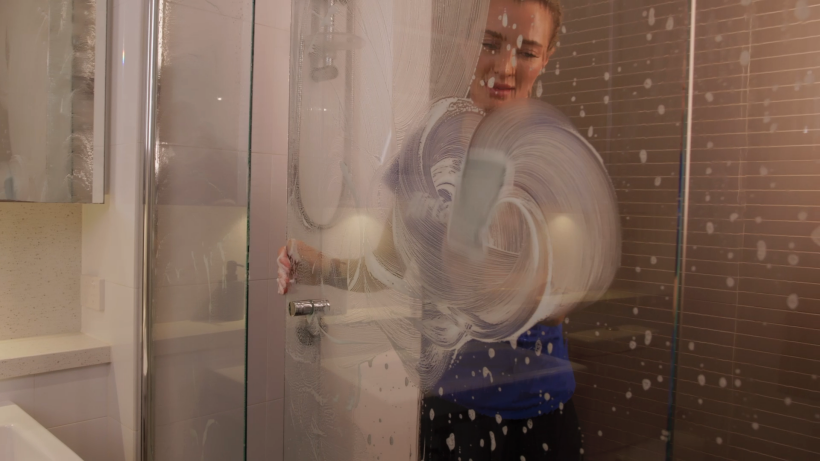
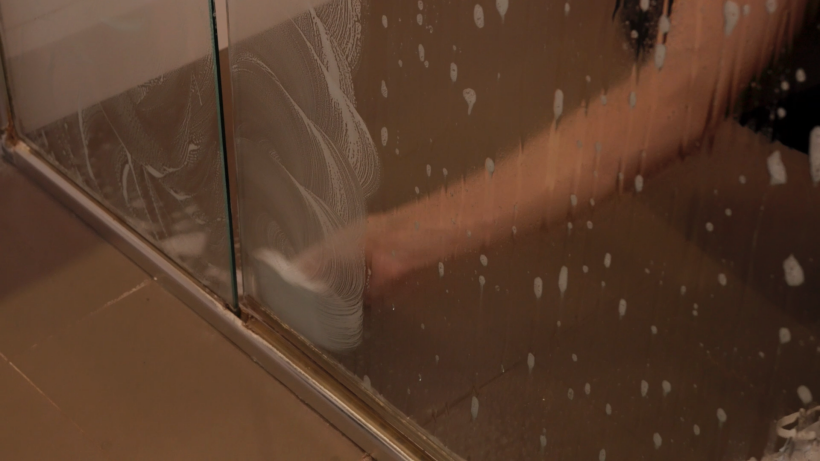 Scrub the glass in circular motions.
The key to learning how to clean shower glass without scratching it is pressure control. Using your non-scratch scouring pad, scrub the glass in circular motions to lift the loosened grime. Pay attention to the bottom third of the screen, the splash zone where water and suds accumulate most heavily. Let the pad do the work rather than forcing it.
If your shower screen has been neglected for months or has opaque patches that won’t budge, it may be worth booking a professional cleaning service to get it sorted properly. At that stage, the buildup has likely hardened into limescale deep enough that basic household products can’t fully dissolve it.
Step 4: Wash it off
Using a detachable shower head or a bucket of warm water, rinse the glass from top to bottom until all residue is completely washed away. Take extra care around the edges, corners, and frame where cleaning solution and loosened grime tend to collect.
A thorough rinse is important because anything left behind on the glass will dry back onto the surface. That includes soap residue, dissolved minerals, loosened limescale, and even leftover vinegar, all of which can leave streaks, haze, or a cloudy film once the screen dries.
Step 5: Grab your squeegee to finish it off
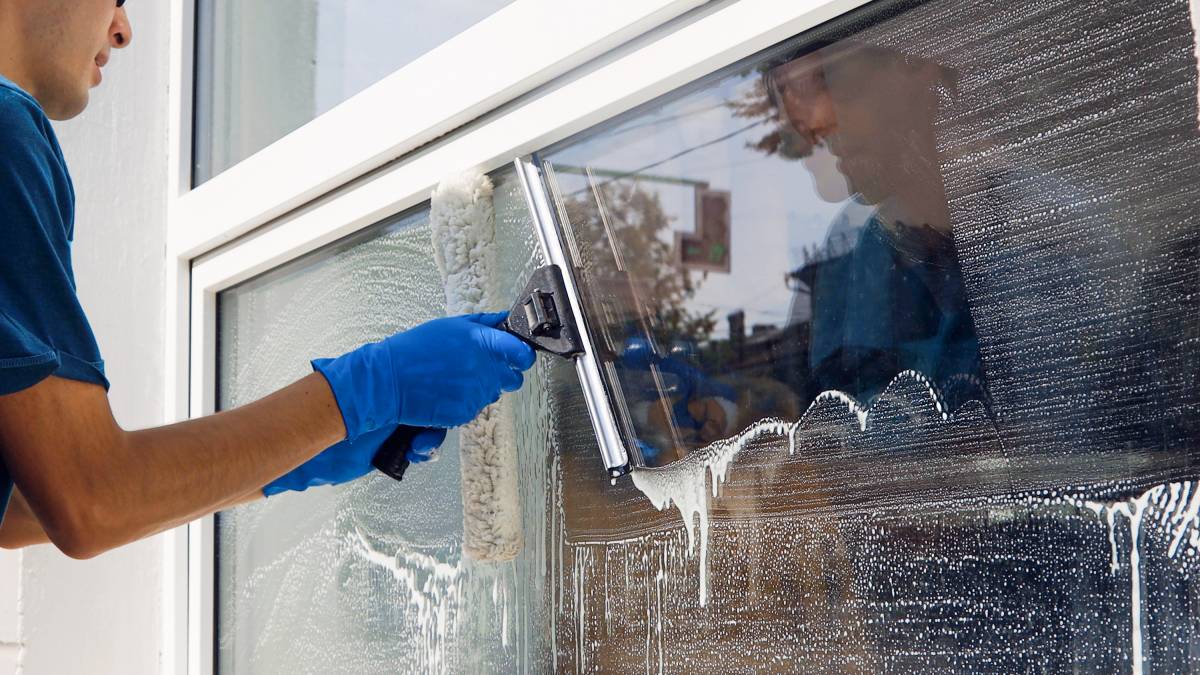
One of the most important steps in learning how to clean a glass shower screen is mastering the squeegee technique. Starting from the top, pull it down in straight strokes, slightly overlapping each pass as you go. After every stroke, wipe the rubber blade with a dry cloth so you’re not dragging water, residue, or loosened minerals back across the glass.
Once you’ve finished the main panels, take a moment to wipe down the metal frame and the rubber seals at the base. Water trapped in these areas can lead to mould or creeping streaks later on.
Additional shower glass cleaning tips
 Pay attention to stubborn water marks.
Now that the hard part is done, a few extra habits can make your next clean even easier. These shower screen cleaning hacks take seconds but keep the glass gleaming and push your next full clean much further out.
Use vinegar and baking soda to clean shower grout and tile edges: Apply a baking soda paste to grout lines, spray with vinegar, let it fizz, then scrub.
Clear the bottom tracks with a toothbrush: Run a toothbrush along the aluminium grooves and wipe out the debris with a damp cloth.
Rinse the floor after cleaning the glass: Vinegar is acidic enough to damage natural stone, so rinse the floor thoroughly once you’re done.
Apply a glass repellent in circular motions: Buff it onto the glass in circular motions so water beads off instead of sitting on the surface.
After every shower, run the exhaust fan and squeegee the glass: It removes water before it has a chance to leave deposits behind.
If your bathroom still smells musty even after a full clean, hidden mould or a drainage issue may be the real cause. Rather than masking it, book an odour-control or mould-removal specialist to get to the root of the problem.
Shower screen installation cost: Frameless, sliding & more explained
How to clean a bathtub the proper and safe way
How to maintain a clean shower glass
Staying on top of your shower screen doesn’t require a full clean every week. A quick squeegee after every shower and a spritz of vinegar and dish soap on weekends is enough to stop buildup before it hardens.
If you want to go a step further, a good glass cleaner spray buffed onto the surface every couple of weeks adds an extra layer of protection.
At the end of the day, moisture and water are the real culprits. Keeping the glass as dry as possible every day is the simplest way to slow buildup and extend the time between full cleans.
Give your shower screen a brand new feel
Once you get into a regular routine, keeping your shower screen clear takes minutes rather than hours. But if hard water stains, soap scum, and mineral buildup have already taken hold, a professional clean is often the faster and more effective option. Post a task on Airtasker, upload a few photos, and compare quotes from local shower cleaning experts near you.
If cleaning has you motivated to refresh the rest of the house, Airtasker can help there too. Get Taskers to handle your domestic cleaning, floor cleaning, and spring cleaning whenever you need.
Learn more about our contributors
Written by Genine T.
Staff Writer
Genine is a writer and educator with over seven years of experience. She has published peer-reviewed research papers, worked in academia, and created educational content for thousands of language learners. She discovered her passion for turning complex ideas into practical advice through writing about DIY topics like home improvement, furniture assembly, and household fixes. When she’s not writing, Genine enjoys curling up with her dogs and a good book.
FAQs on cleaning a shower screen
If your shower glass still looks cloudy after cleaning, the build-up may simply need a second pass to fully break down. But if the haze still won’t lift, the glass has likely been permanently etched by hard water. This is also a good time to think about how to properly disinfect a shower, since cloudy streaks may indicate that bacteria and mould have had time to settle in.
It depends on your water quality and how often the shower gets used, but every 2 to 4 weeks works for most households. Squeegeeing after every shower and a quick wipe-down once a week helps keep buildup under control between cleans.
For most shower screens, leaving vinegar on the glass for 10 to 15 minutes is enough time for it to break down mineral deposits and soap scum effectively. That said, it’s always worth checking your shower screen manufacturer’s guidelines first, as some coatings and treated glass surfaces can be sensitive to acidic cleaners.
Professionals typically use commercial-grade descalers and alkaline cleaners that are far stronger than anything available off the shelf. Combined with specialised tools like steam cleaners for stubborn buildup and soft buffing pads to restore clarity without scratching, the results go well beyond what a standard DIY clean can achieve.
Find shower cleaners, fast
Find a shower cleaner