- Home/
- Guides/
- Rangehood Cleaning/
- How to Clean a Rangehood
How to clean a rangehood and keep your filters grease-free for good
A step-by-step guide to degreasing and keeping your rangehood in tiptop shape.
Last Updated on

Written by Genine T.
Staff Writer
Read more about our contributor
Key Takeaways
Mesh and baffle filters should be cleaned once a month, or more frequently if you cook often.
Carbon and charcoal rangehood filters absorb cooking odours in recirculating rangehoods and should be replaced every three to six months.
No matter how stubborn the grime is, avoid steel wool or abrasive scrubbers, as they’ll scratch the surface and cause permanent damage to your filters.
Most people scrub the stovetop and splashback but leave the rangehood until it becomes faulty. By then, the filters are clogged, airflow is shot, and every cook-up is pushing more smoke into your kitchen than out of it. What many don’t realise is that the grease coating those filters is also a serious fire risk.
In fact, the Country Fire Authority reports that Victoria alone averages 3,000 house fires a year, most of which start in the kitchen. That’s just one state. This highlights the importance of routine maintenance, such as knowing exactly when and how to clean a rangehood filter to keep your kitchen running safely.
So in this post, we’ll give you tried-and-tested tips on how to clean a rangehood and what to do between cleans to keep your kitchen safe, sparkling, and properly ventilated.
What you’ll need to clean your rangehood
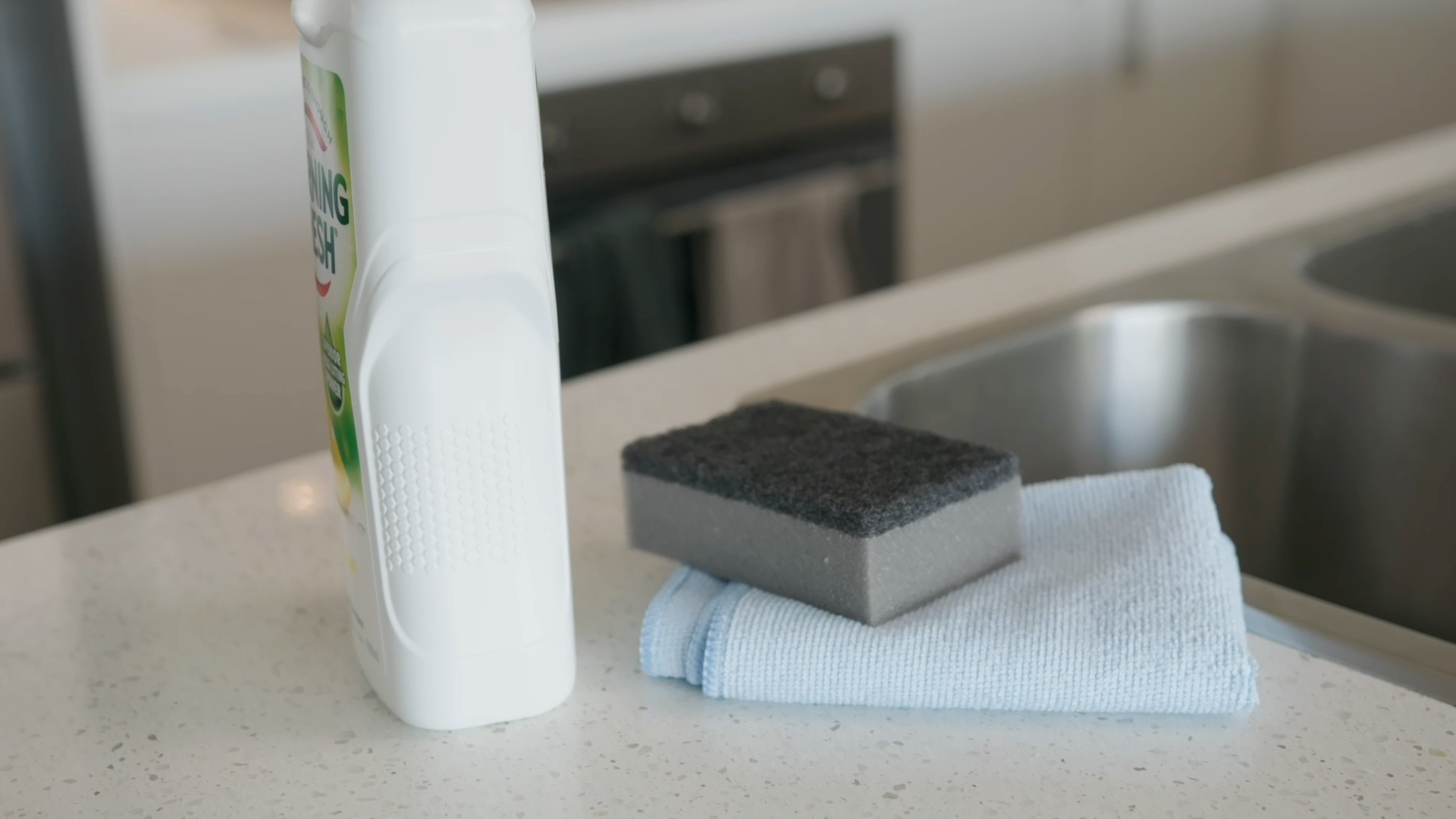 Prepare the cleaning supplies first.
It’s always worth checking your manufacturer’s manual first. Some models have specific requirements, and the best way to clean range hood filters can vary depending on whether yours are mesh or baffle.
Heavy-duty degreaser like Easy-Off Bam and Ajax Professional to break down built-up grease on surfaces and filters
Non-abrasive sponge or soft brush for scrubbing without scratching the surface or damaging the filter mesh
Boiling water to soak the filters and loosen grease before scrubbing
Large baking tray or sink, enough to submerge the filters flat for soaking
Clean microfibre cloth or paper towels for drying surfaces and wiping down after cleaning
If you’re sensitive to strong chemicals or have a respiratory condition, pop on rubber gloves and crack a window first. Some commercial degreasers release volatile organic compounds (VOCs), which studies have linked to asthma and rhinitis.
Step-by-step: How to clean your rangehood safely
If it’s your first time cleaning a rangehood, it’s advisable to lay a tea towel or piece of cardboard over your cooktop before proceeding. Cleaning cooker hood filters puts you directly above the stove, so a heavy filter slipping onto a glass surface can crack it. The covering also catches all the grease and gunk that may come loose in the process.
Step 1: Remove the filters
Before cleaning the stove hood components, make sure the rangehood is switched off and completely cool to the touch. Metal filters stay hot after cooking and may still have runny grease, making them slippery and easy to lose grip on.
Once cool, locate the small latch or tab along the edge or centre of the filter and push or pull to release it. As it comes loose, support it with your free hand so it does not drop onto the cooktop surface.
Step 2: Prep the degreasing bath
Fill your sink or a large baking tray with boiling water. The hotter the water, the better, as heat helps break down the lipids in grease, loosening buildup for easier cleaning. Add a generous squeeze of degreaser, then give it a quick stir.
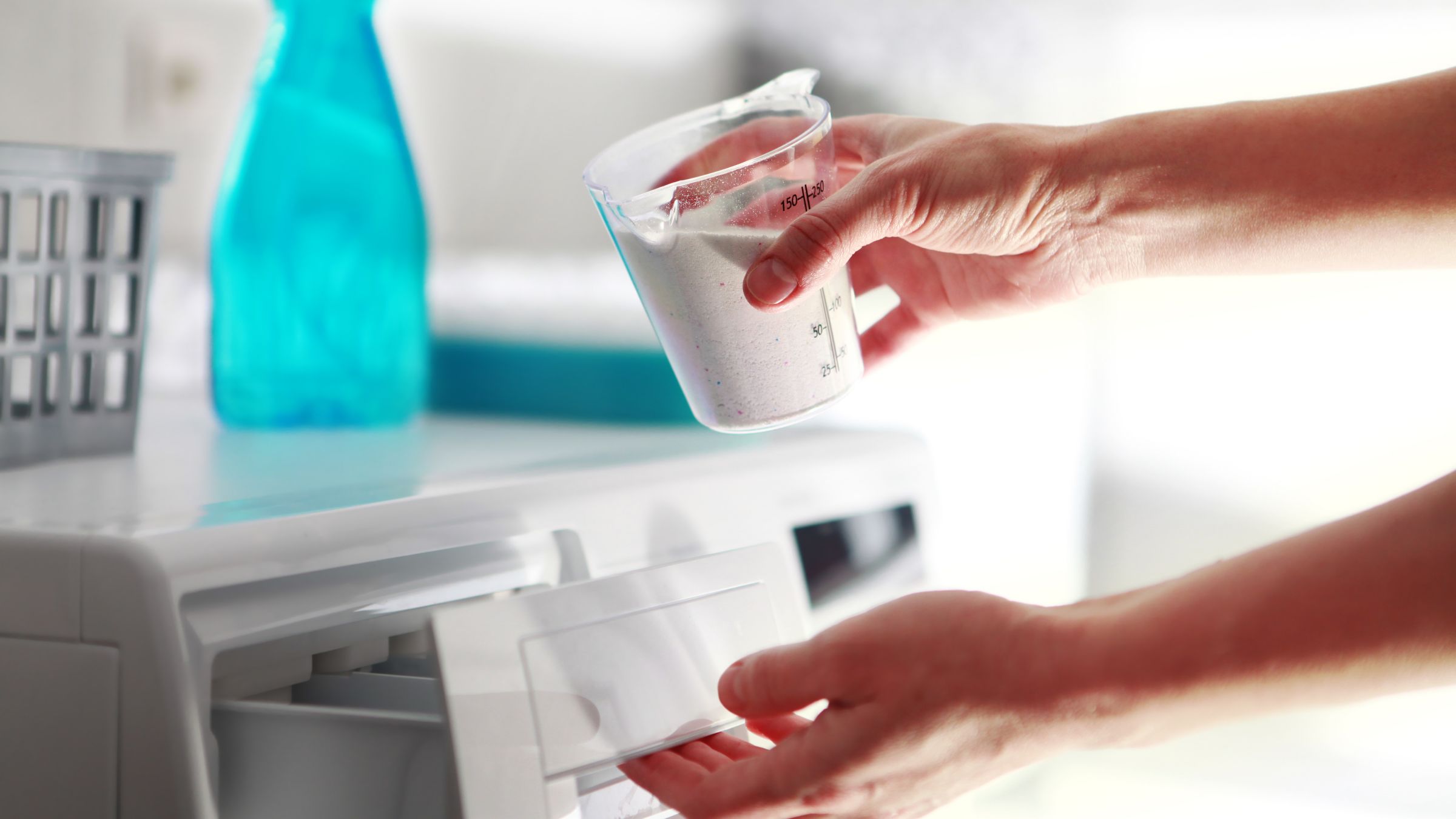
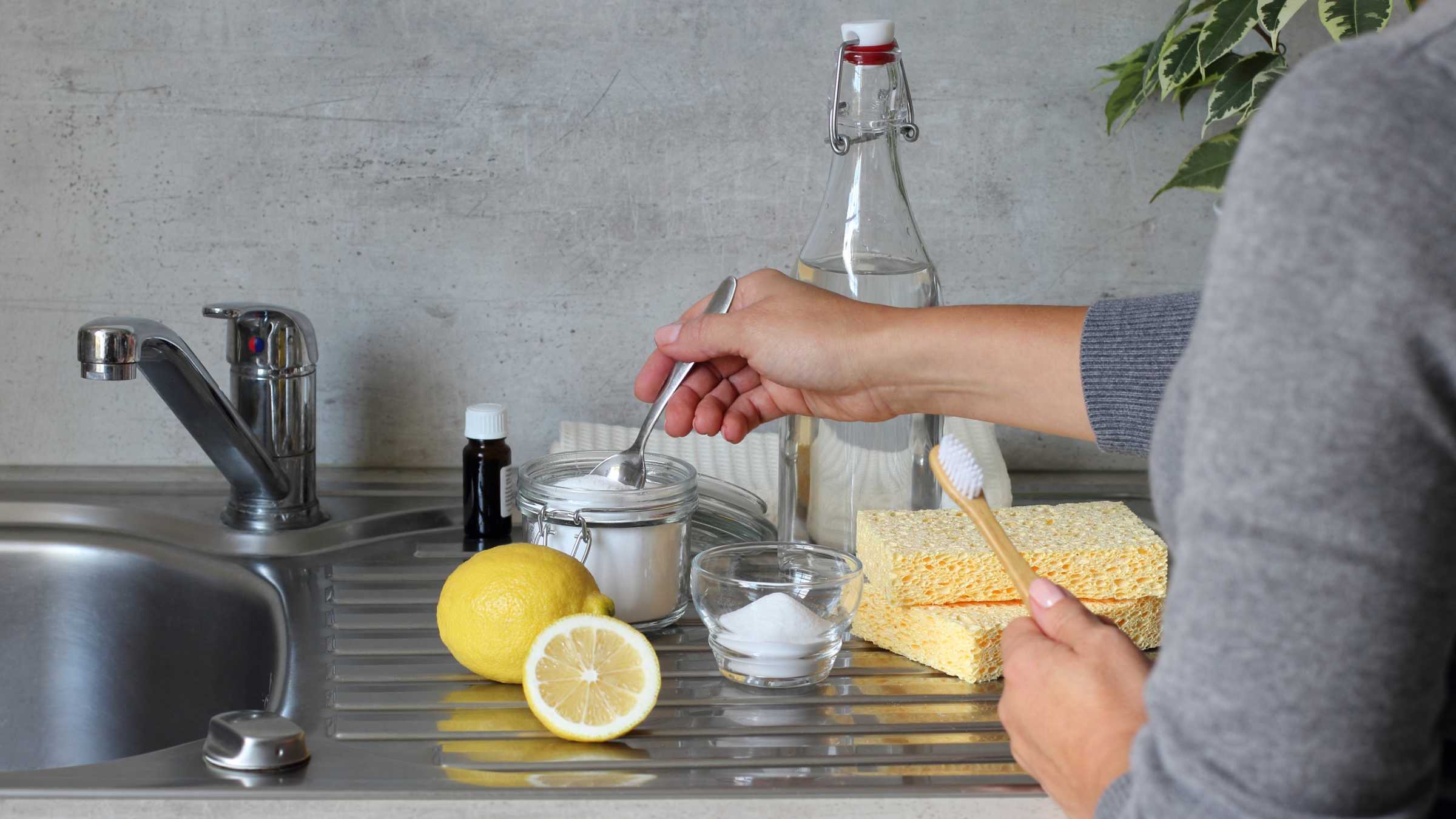
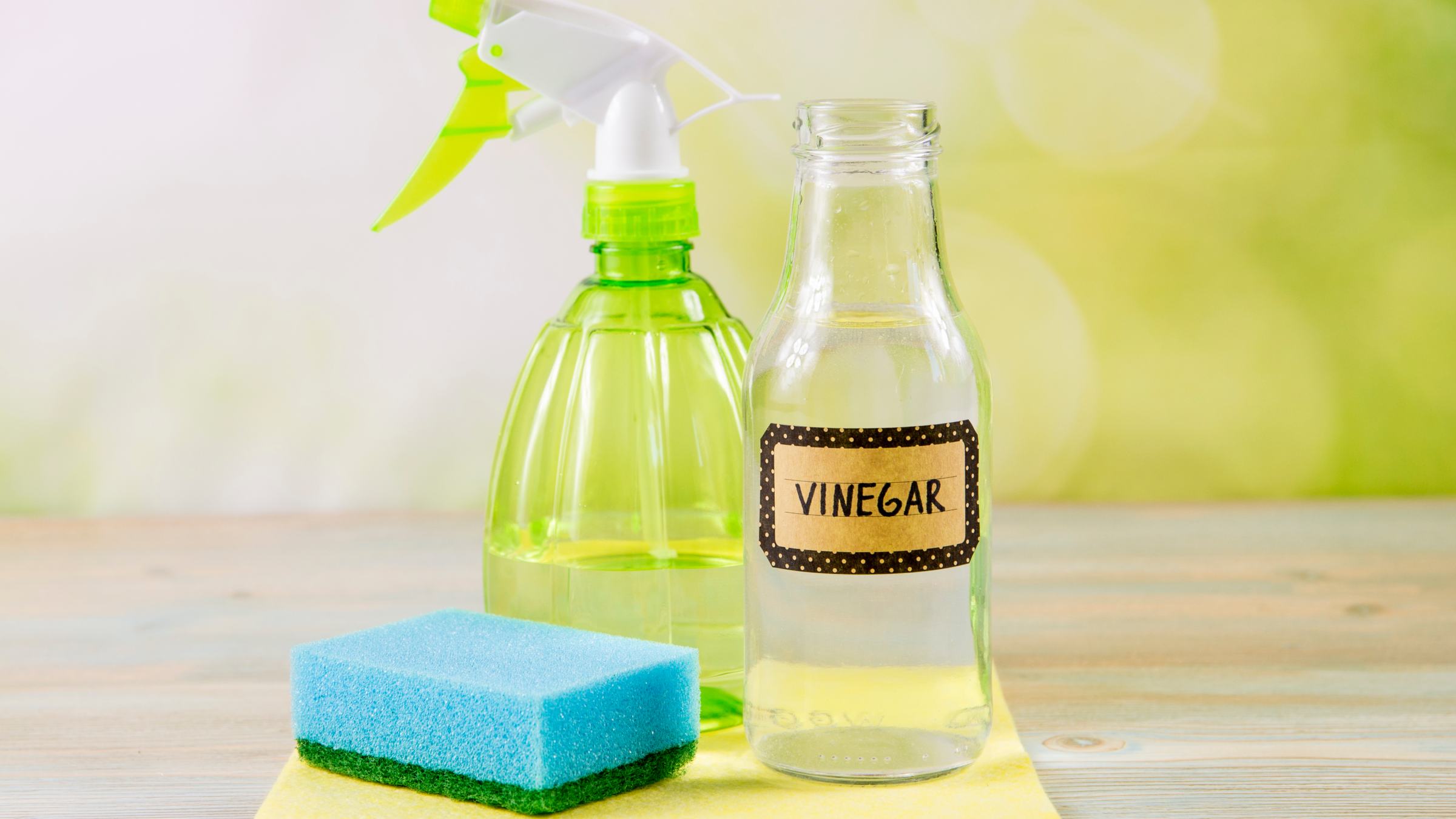
Prefer a DIY cleaning solution? If you want to know how to clean rangehood filters using items you already have, a mix of boiling water, baking soda, dishwasher powder, and white vinegar works well on moderate buildup. It’s also gentler on older filters and helps remove odours.
Step 3: Submerge and soak
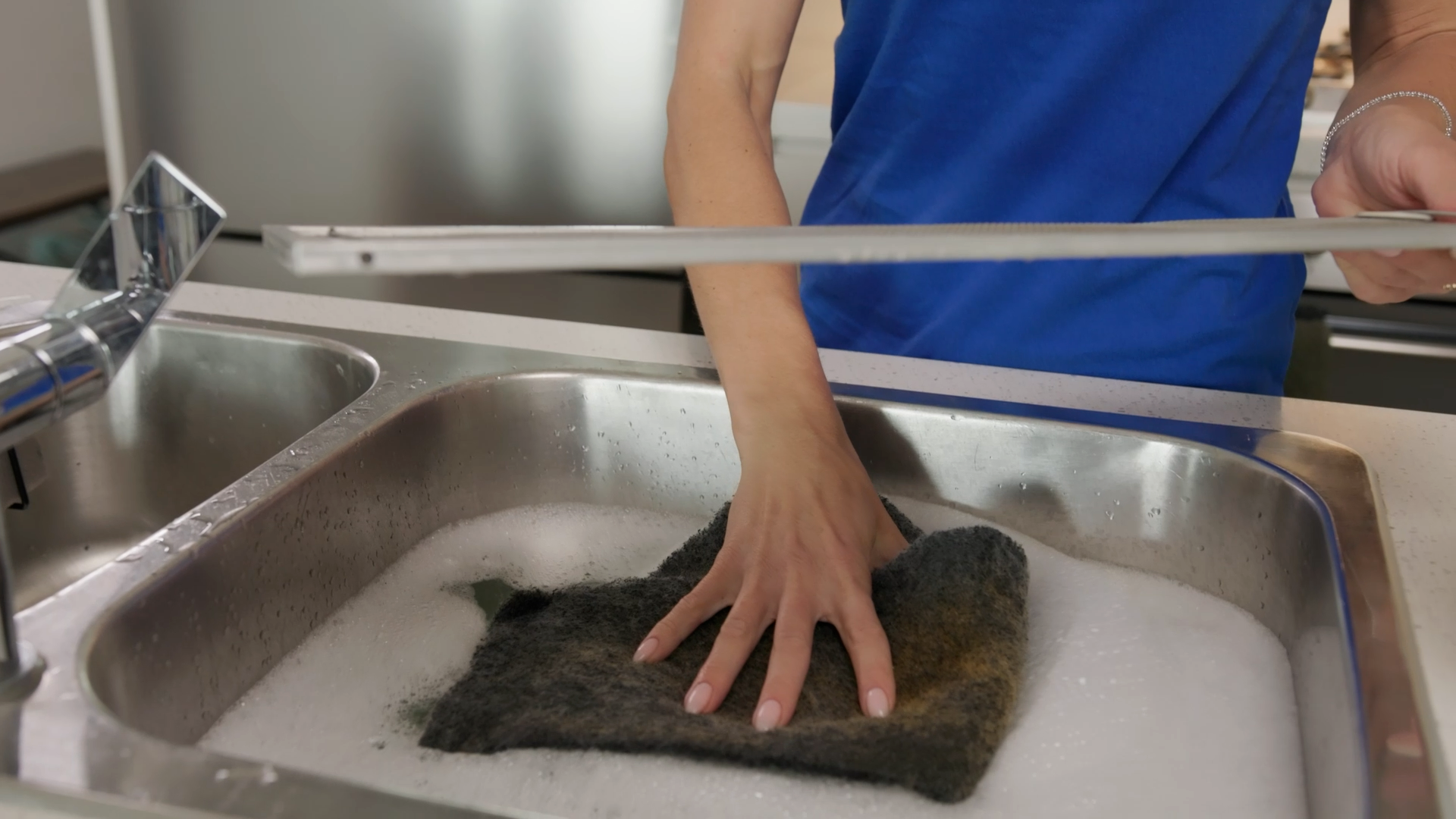 Submerge the filter for a deep clean.
Place the filter into the bath and make sure it’s completely submerged. This is one of the most important steps when learning how to clean a range hood properly, as full submersion ensures the heat and degreaser reach every part of the mesh evenly. Leave it to soak for 15 to 20 minutes.
As it soaks, the grease will loosen and lift away. Just note that you shouldn’t leave it for longer than 20 minutes, as the cooling water can cause it to settle back onto the filter.
Step 4: Perform a gentle scrub
Use a non-abrasive sponge or soft brush to gently clean the mesh in circular motions, removing any remaining grease or food particles. Take care not to bend the mesh or frame, as this can affect airflow and fit.
While you may be tempted to use steel wool or harsh caustic cleaners on aluminium mesh filters, note that these can leave metal splinters and permanent pitting and discolouration. Once that damage is done, you may need to call a cooker hood repair expert to replace it.
Step 5: Rinse and dry
Hold the filter under warm running water to rinse off all the degreaser and loosened grease. This is a key step in how to clean an exhaust hood, as any residue left behind can reduce airflow and performance. Once rinsed, pat the filter dry with a microfibre cloth or paper towel, pressing into the honeycomb structure to draw out trapped moisture.
To check if it’s fully clean, run your thumb across the mesh.
If it squeaks, it’s clean.
If it still feels slippery, give it another scrub.
Lastly, don’t reinstall the filter until it’s completely dry, as moisture near the fan motor or light globes can lead to rust and mould.
Step 6: Wipe it down for a clean finish
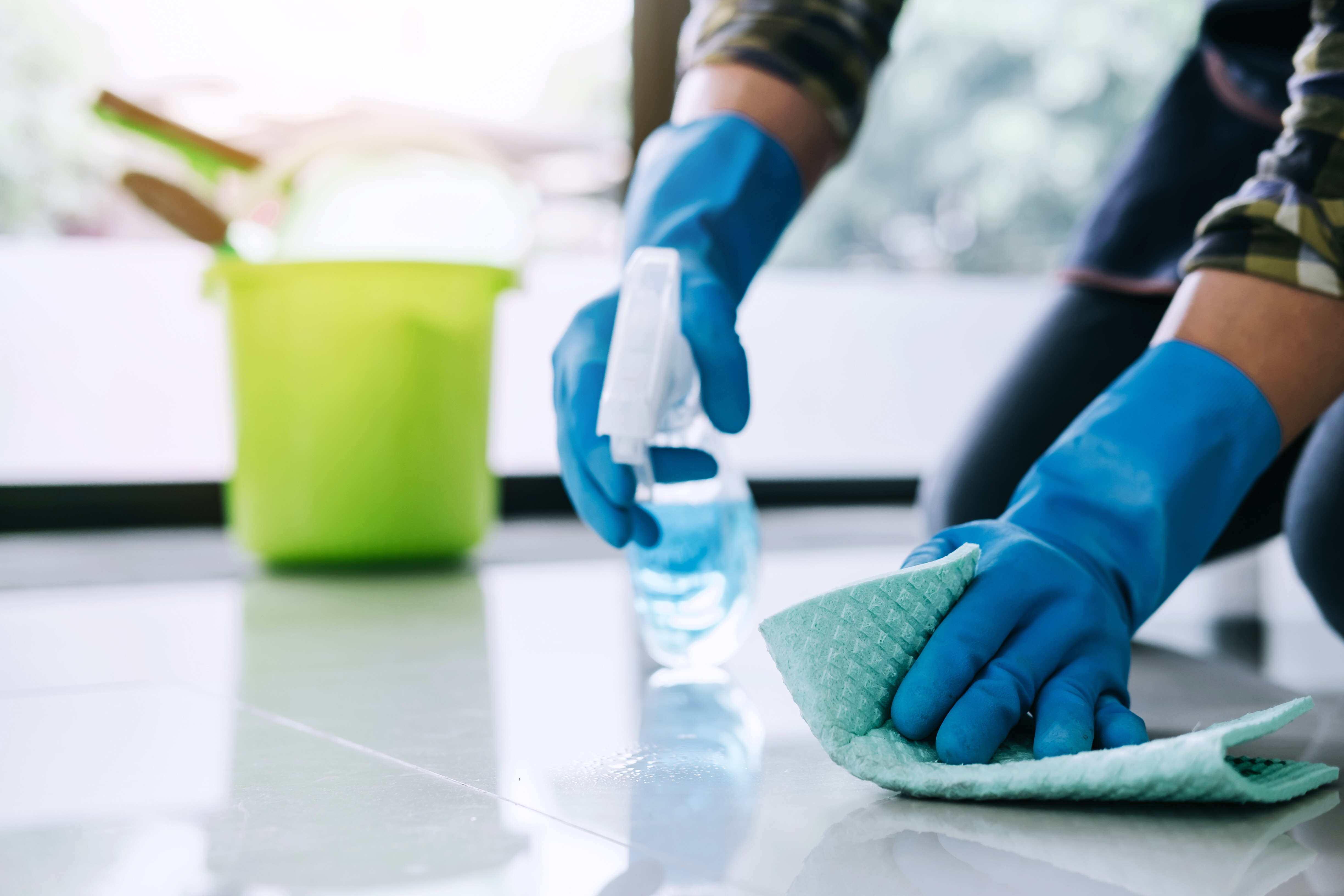
Aside from learning how to clean rangehood filters, it’s also important to clean the unit itself. Use a damp cloth to wipe down both the interior and exterior housing. For stainless steel rangehoods like Westinghouse or Smeg, always wipe with the grain to avoid micro-scratches.
While you are at it, wipe down the light covers. Just be careful not to get water inside the bulb socket.
Still got those lingering kitchen odours after the clean? It’s worth looking into odour-control solutions to keep the space properly fresh.
The rangehood efficiency test
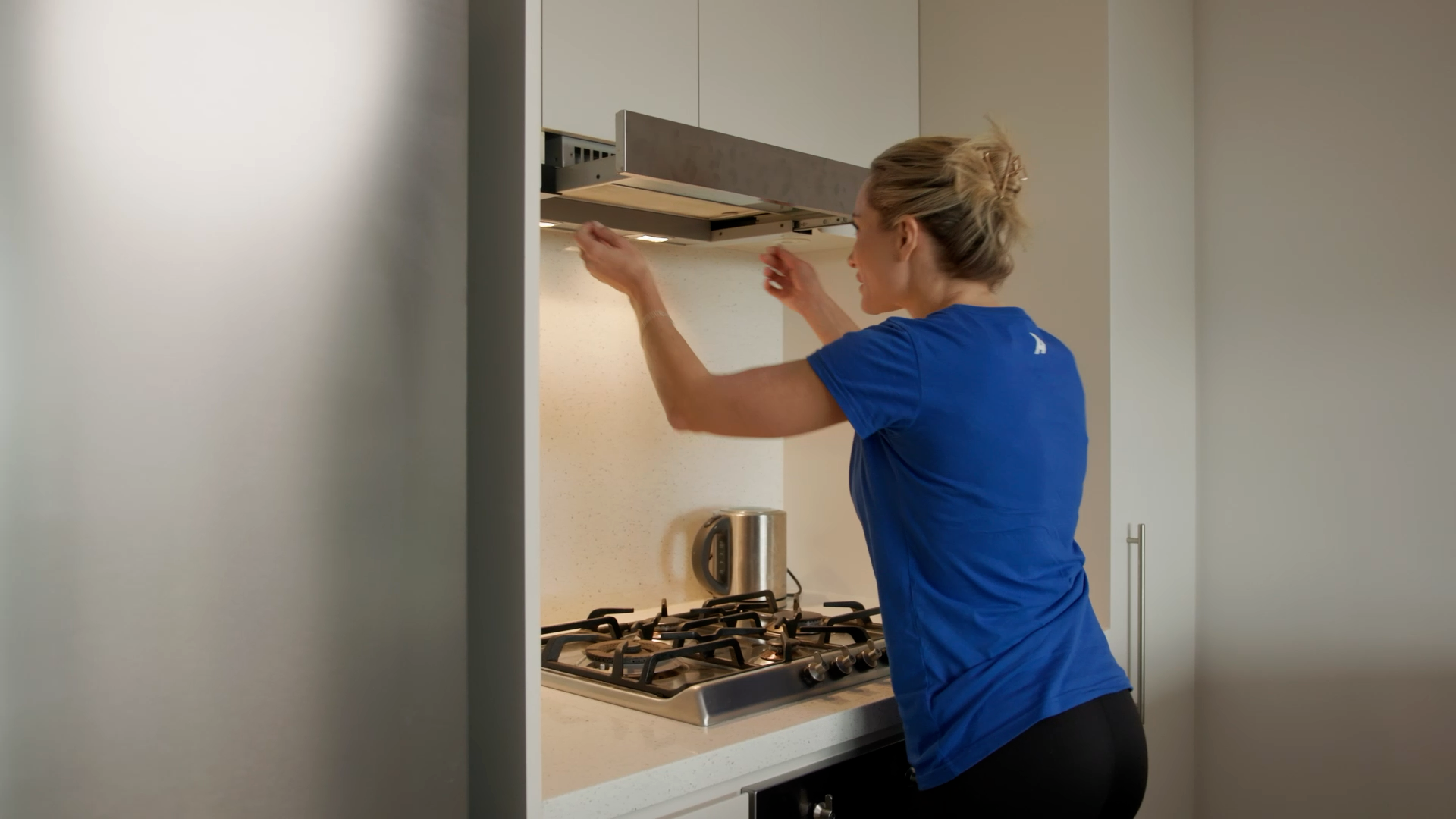
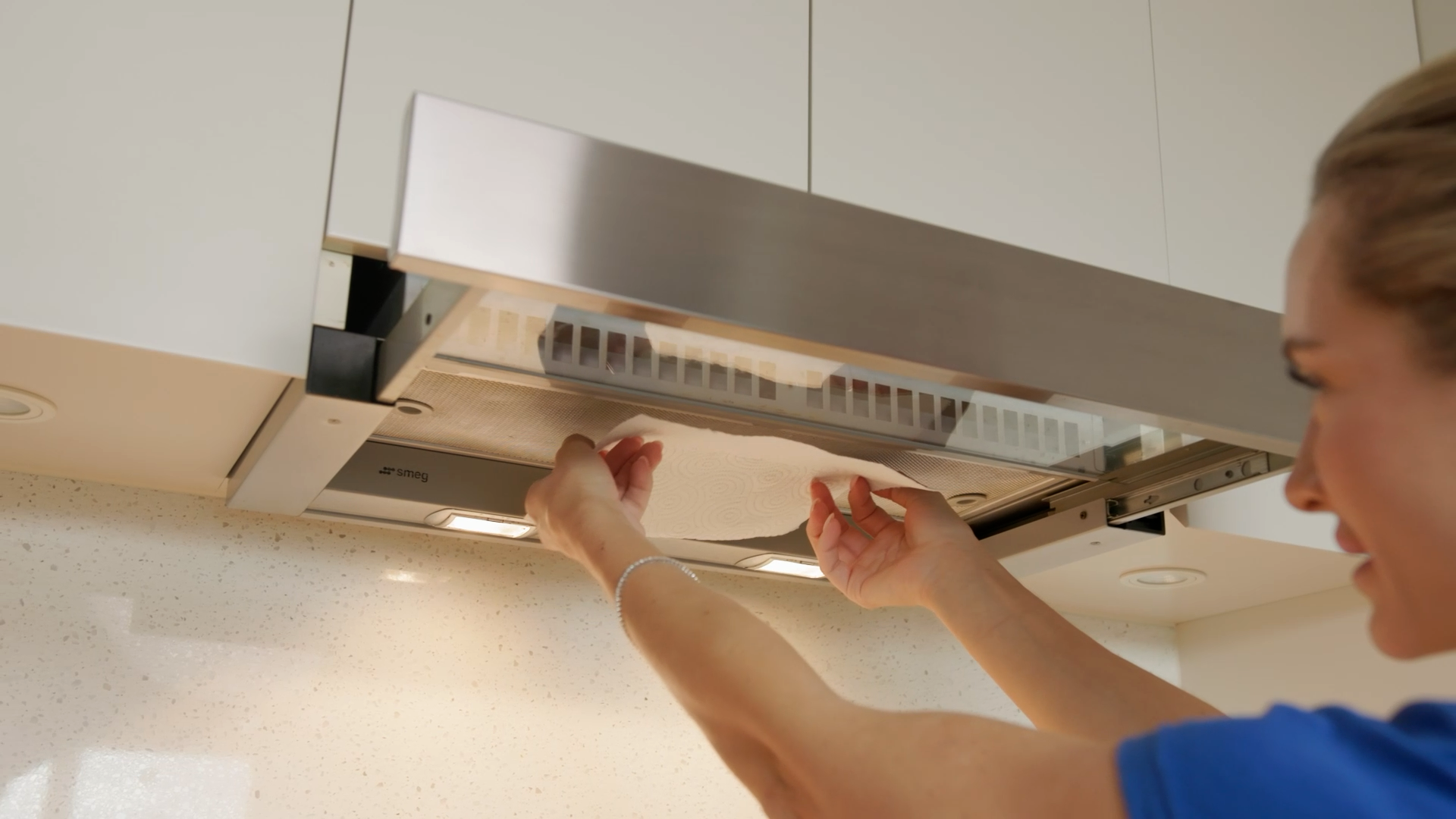 Checking the rangehood after cleaning.
If you’re unsure whether your rangehood needs cleaning or is no longer performing properly, the quickest check is a simple suction test:
Turn the rangehood on full power and hold a piece of paper towel over the vent.
If it sticks and stays in place, suction is working well.
If it droops or falls, airflow is restricted, and the filters likely need cleaning.
Other signs to watch for include a motor that sounds laboured or lingering cooking smells the next morning. In most cases, a thorough clean is enough to restore proper airflow and remove odours.
If problems persist, it may be time to book a housekeeping service to deal with deeper buildup.
Rangehood maintenance tips you should know
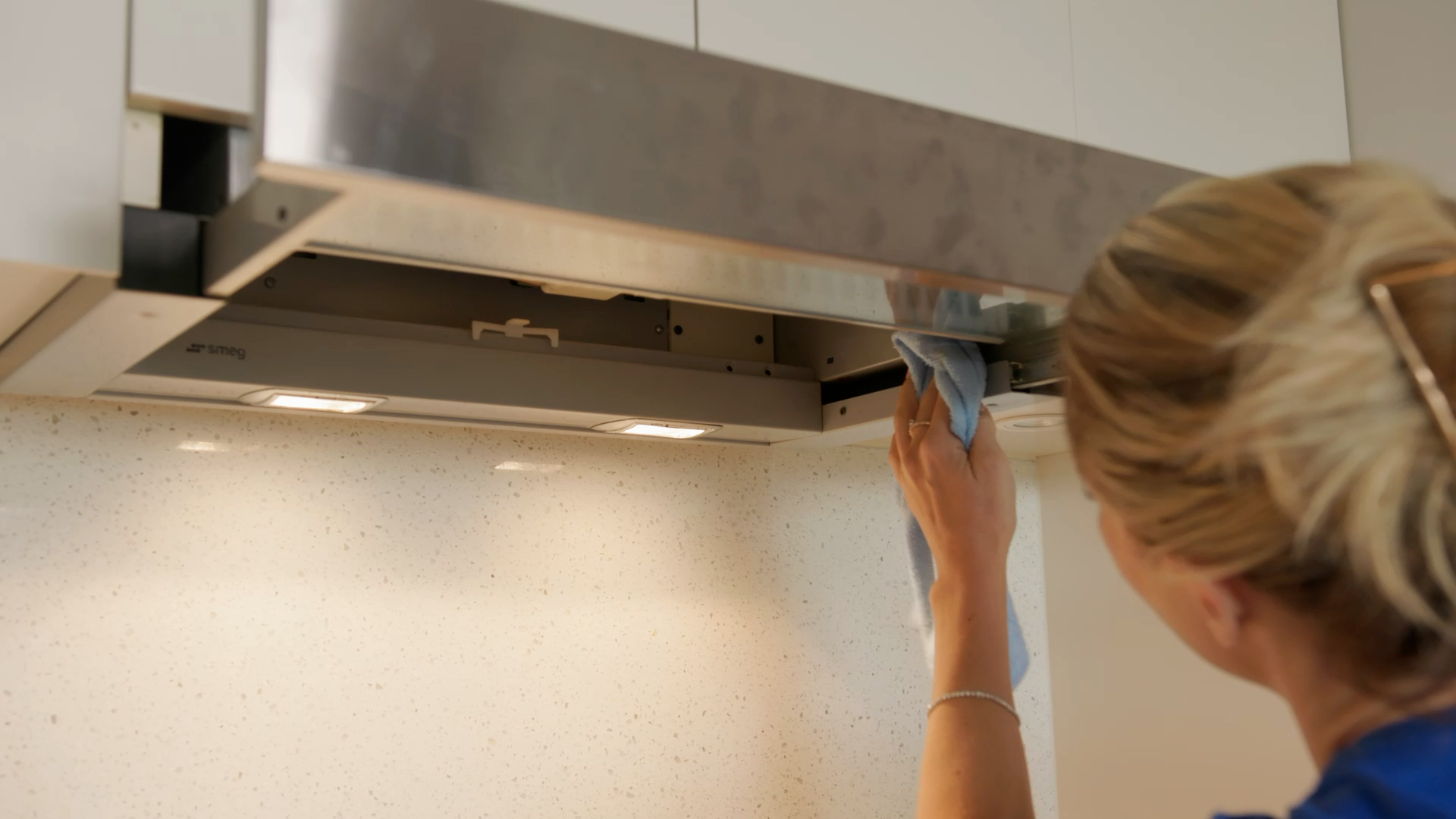 Degreasing the rangehood.
Now that you already know how to clean a rangehood vent, a few simple habits can keep it running efficiently and reduce the need for deep cleans.
Stick to a monthly degreasing routine: Give your filters a proper clean at least once a month, especially if you cook often.
Wipe the underside weekly: A quick wipe with a damp microfibre cloth once a week helps avoid that sticky surface that attracts dust, lint, and hair.
Replace carbon or charcoal filters regularly: For recirculating rangehoods, replace them every 3 to 6 months.
Book occasional professional cleaning: Even with regular upkeep, grease builds up, so an occasional apartment cleaning service helps.
Keeping on top of your rangehood with these tips is a good start, but it’s rarely the only thing in the kitchen that needs attention. If you’re already in the habit, why not extend that routine to your oven, BBQ grill, and even your coffee machine, all of which collect grease and buildup that affect performance over time.
Ready for a kitchen deep clean?
Done right and regularly, cleaning a rangehood is a max 30-minute job. If yours has been neglected for years, no amount of soaking will fix it in one go. Save yourself the hassle and post a task on Airtasker to get help with rangehood cleaning. Simply add job details, take pictures, and get quotes from professionals near you.
Feeling extra motivated? Why not pull double duty and have Taskers handle your BBQ cleaning, stain removal, and steam cleaning in a single visit? Give Airtasker a go and get it all done fast!
Learn more about our contributors
Written by Genine T.
Staff Writer
Genine is a writer and educator with over seven years of experience. She has published peer-reviewed research papers, worked in academia, and created educational content for thousands of language learners. She discovered her passion for turning complex ideas into practical advice through writing about DIY topics like home improvement, furniture assembly, and household fixes. When she’s not writing, Genine enjoys curling up with her dogs and a good book.
FAQs on cleaning a rangehood
It depends on your filter material and rangehood model. Heavy-duty degreasers work well on most modern units, but if you are dealing with older or more delicate mesh filters, baking soda, vinegar, and boiling water are a gentler mix that cuts through grease without the harsh chemicals.
Remove the filters first, then use a soft cloth dampened with dishwashing liquid to wipe down the interior and exterior surfaces. Stainless steel models need a little extra care, so always wipe with the grain to avoid micro-scratches.
Some filters are dishwasher safe, but it’s worth checking your rangehood manual before you try it. High heat and harsh detergents can warp or discolour certain materials. Hand washing in boiling water with dish soap is often just as effective.
Aim for 15 to 20 minutes in boiling water with a good squeeze of dishwashing liquid. Any longer and the water cools down, which means dissolved grease and grime can resettle back onto the mesh.
Find rangehood cleaners, fast
Find a rangehood cleaner