- Home/
- Costs/
- Shed Removals/
- Shed Moving Cost Guide
How much does it cost to move a shed in Australia?
Post to find a price. It's free and only takes a minute.
Price guide
$2,500 - $15,000
low
$2,500
median
$8,750
high
$15,000

Published on

Written by Cielo B.
Staff Writer
Read more about our contributor
Key Takeaways
Shed relocation costs in Australia typically range from $2,500 to $15,000, depending on the city, distance, and shed size.
Permits may be required for regional and interstate shed moves, especially when transporting oversized loads on public roads.
Save money by booking on weekdays or during off-peak months (March to August).
Have you decided to relocate your shed rather than purchase a new one? Moving a structure that weighs over a thousand pounds doesn’t have to be stressful, but you have to set the proper budget.
In this guide, learn how much it costs to move a shed so you can avoid unexpected charges.
What is the average cost of moving a shed in Australia?
Moving portable buildings like sheds often requires a professional flatbed truck transport, costing around $2,500 to $15,000. However, shed moving prices can change, depending on the distance of the move, total labour hours, equipment needed, and other factors that we’ll discuss later.
For now, here’s a rough estimate of the cost of moving a shed in various cities in Australia:
| City |
Average Cost to Move a Shed (flat rate) |
|---|---|
$2,500 — $15,000 |
|
$2,425 — $14,550 |
|
$2,150 — $12,900 |
|
$2,250 — $13,500 |
|
$2,250 — $13,500 |
|
$2,325 — $13,950 |
|
$2,350 — $14,100 |
What factors affect the costs of moving a shed?
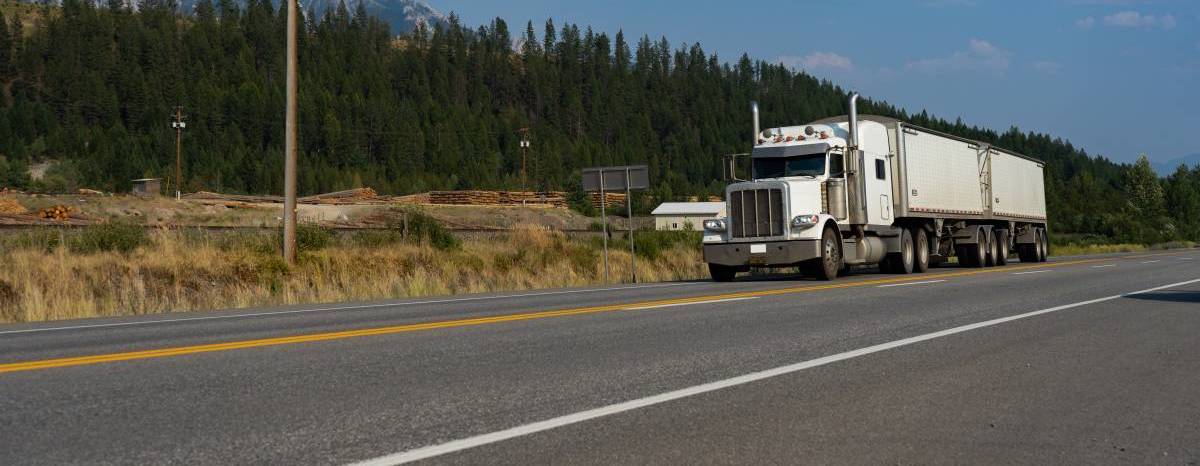
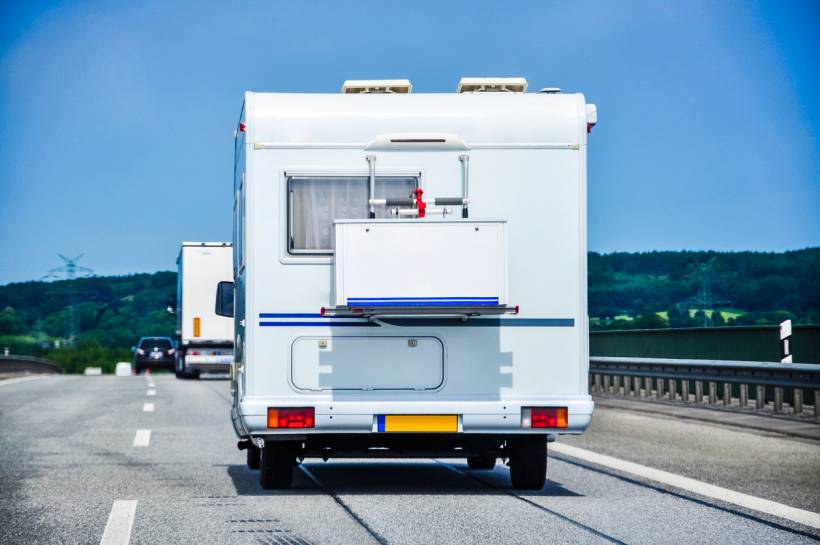 Rear view of a white camper or mobile shed being transported on the highway (Source: iStock)
Understanding these factors helps you know how much it costs to transport a shed and avoid the potential hidden fees.
Distance of the move
The farther the destination is, the higher the shed moving costs. Aside from transport fees, removalists need to obtain permits, use more fuel, hire more people, and drive large trucks over longer distances to move a shed. As a result, prices are higher.
Local moves
If your family plans to move within the same suburb or city, you’ll only need minimal shed-moving equipment, such as a tilt tray tow truck or pick-and-carry crane. Utility vehicles and trailers could be an option, too, if the shed can be disassembled and assembled.
Since local moves involve short distances, fuel costs are minimal, so the total estimated shed moving costs for local moves can be as low as $500. However, prices can rise to $3,000 if a large shed is difficult to access with a crane or forklift.
Regional moves
Moving a 30-60 square metre (sqm.) large shed to a nearby city or regional town requires heavier flatbed trucks or low loaders with a crane and other specialised lifting tools like:
Winch: A motorised steel rope or cable
Hydraulic dolly: A wheeled platform using hydraulic pressure to lift heavy objects.
Cradle lift: A frame that acts as a support to lift the entire base of a shed.
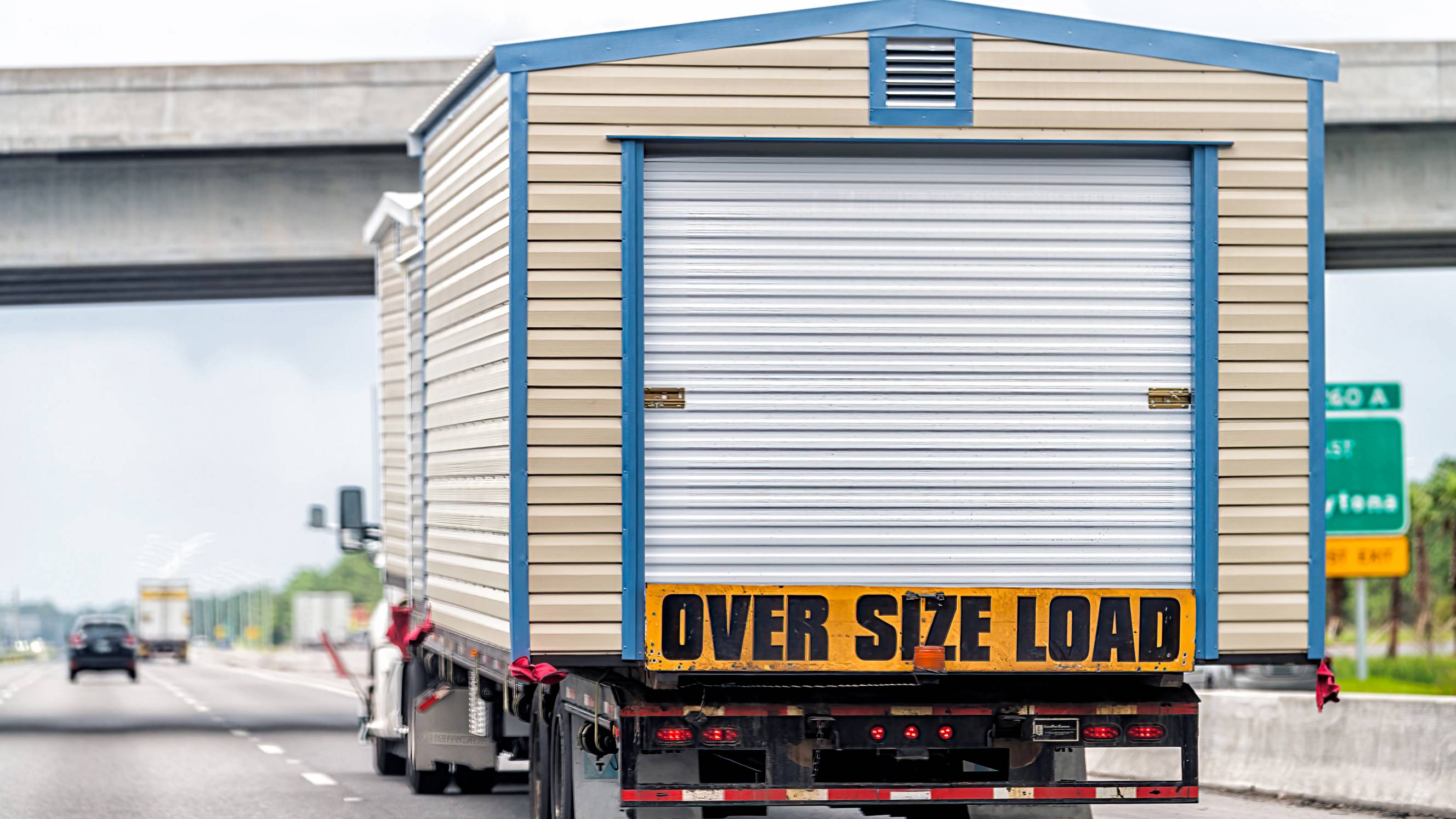
You’ll also have to consider the fuel surcharges and required oversized load permits for moving large sheds in long-distance regional moves, so expect higher costs. For reference, regional moves can range from $2,000 to $10,000 (or more), depending on the shed size, access, and required permits.
Interstate moves
Moving a shed from Melbourne to Sydney requires crossing an interstate border. Since the distance is much longer than local and regional moves, you’ll typically need more equipment (such as heavy-duty low loaders or multi-combo trucks) and removalists, including a driver, a load coordinator, crane and forklift operators, and an escort vehicle driver. Overnight layovers may occur, as removalists need breaks in between, so expect to cover the extra costs for accommodation and meals.
Moreover, interstate moves can incur high fuel usage and require multiple state permits for transporting wide and oversized loads across borders. Based on all these factors, along with the required manpower and equipment, the estimated cost is $7,000 to $20,000 (or more).
Here’s a table of shed moving types and associated costs for easier comparison:
| Move Type |
Distance Range |
Transport Vehicle |
Estimated Cost |
Example |
|---|---|---|---|---|
Move Type |
Distance Range |
Transport Vehicle |
Estimated Cost |
Example |
Local Move |
0-50 km |
Tilt tray truck, pick-and-carry crane, or trailer if disassembled |
$500 – $3,000+ |
Moving a shed within Sydney |
Regional Move |
50-400 km |
Flatbed trucks or low loaders with crane assist; may need pilot vehicle |
$2,000 – $10,000+ |
Relocating a shed from Melbourne to Geelong |
Interstate Move |
200+ km |
Heavy-duty low loaders or multi-combo trucks with pilot vehicles |
$7,000 – $20,000+ |
Moving a shed from Brisbane to Sydney |
Removalists and equipment needed
Moving portable buildings like outdoor sheds requires at least three to five people to disassemble and assemble the structure, guide transport, and manage equipment. However, you may need additional manpower for larger, heavier wooden sheds, leading to higher shed transportation costs.
Equipment is another factor to consider. To move larger sheds, like workshops or extensive storage buildings, you’ll need specialised equipment, such as cranes, forklifts, and custom transport support frames. Pilot vehicles are also necessary, especially for interstate moves, because they usually guide the haulage trucks to find the best routes and help navigate narrow or challenging terrain.
Type, condition, and foundation of the shed
The price to move a shed will depend on its material, size, and design. For instance, if a small shed is made from lightweight timber or resin, moving costs are lower since it’s easy to lift. Portable or prefab sheds are also the simplest and most affordable to move because they are ‘skid-mounted,’ making them easier to move.
Meanwhile, medium storage sheds of wood or metal are heavier and often bolted or attached to a strong base or slab. Also, wooden structures can crack when lifted, requiring removalists to carry and transport them carefully. Since these portable buildings are trickier to move, expect higher labour and equipment costs.
Colorbond steel sheds and custom cabin sheds are among the heavier sheds that are difficult to move. Colorbond steel sheds are anchored to concrete slabs, so removalists must unbolt or dismantle panels, which could be labour-intensive.
On the other hand, custom cabin sheds are fixed to vertical columns or ‘piers’ and flat concrete or ‘slabs’ with internal wiring and plumbing, so moving them can be extra expensive.
Check out this comparison table for different shed types and the difficulty of moving:
| Shed Type |
Condition |
Foundation |
|---|---|---|
Small Garden Shed (Timber/Resin) |
Good → easy to move Poor → may have termite or water damage |
Usually on skids or pavers, can be lifted intact with a trailer |
Colorbond Steel Shed |
Good → stable Poor → rust can weaken panels |
Often anchored to a concrete slab; requires unbolting or partial dismantling |
Medium Storage Shed (Wood/Metal) |
Good → panels intact Poor → warped timber or rust issues |
Commonly fixed to a slab or posts; moderate disassembly needed |
Large Workshop Shed |
Good → sound structure Poor → sagging roof/walls complicate move |
Built on a concrete slab; often dismantled and rebuilt |
Cabin-Style / Custom Shed |
Good → weatherproof Poor → termite or rot damage |
Heavier build, often fixed to piers/slab; crane or specialist gear needed |
Portable / Prefab Shed |
Good → designed for relocation Poor → weakened joints |
Skid-mounted; easiest to move intact |
Access and logistics
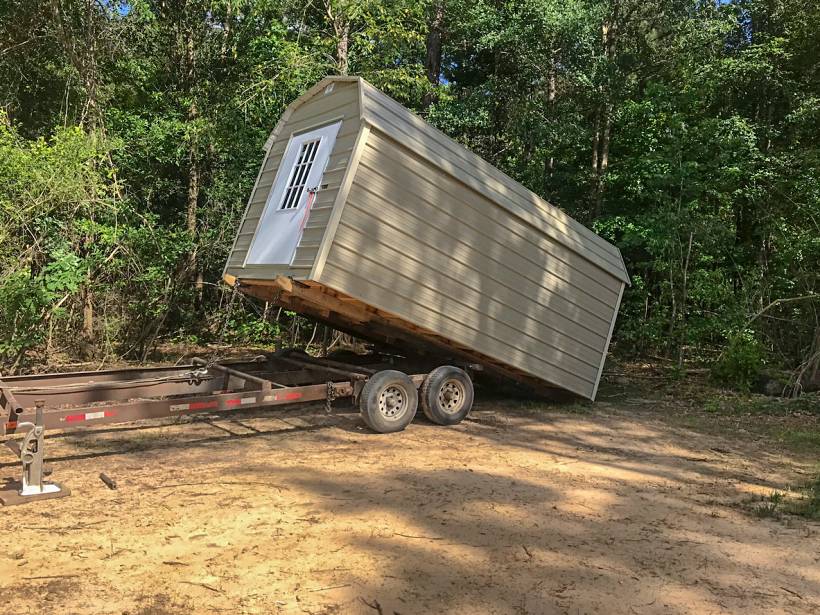 Prefabricated shed in the process of being moved off a trailer (Source: iStock)
Since moving a shed often requires larger haulage trucks and heavier equipment, removalists must find accessible routes for a safe and efficient move. This can take time if the destination requires them to pass through narrow roads and rough or sloped terrain. And remember that the more time spent on the road, the higher the labour fees.
You might also need to obtain permits when moving a shed using large haulage trucks, adding to the total shed relocation cost. Some states require permits when crossing public roads, so be prepared for potential extra charges.
Timing of the move
Prices for shed moving services can fluctuate during the spring and summer months (September to February), typically increasing by around 20-30%.
Most people prefer to schedule their moves during these months because of the warm weather and school holidays, especially around December and January. Availability will be limited, so rates are higher. Some removalist companies would even add premium charges to accommodate tight schedules.
Booking on a weekend is also costlier, with prices increasing to around 15-18%. The same increased rate may apply for end-of-month dates since demand increases as leases often end during these times.
You might want to book well in advance or schedule the move on a weekday. Removalists typically offer discounts and promotions for off-peak dates.
Check out the table below to better understand the price difference during peak and off-peak seasons.
| Timing |
Cost Difference |
Notes |
Discount/Promo Availability |
|---|---|---|---|
Weekdays (Mon-Thu) |
-18% |
Typically the most affordable option |
High – Removalists are less busy, leading to discounted hourly rates and better service |
Weekends (Sat-Sun) |
+15-18% |
Higher demand increases costs |
Low – Discounts are rare due to high demand |
Public Holidays |
+20-30% |
Limited availability and higher demand |
Rare – Premium rates usually apply |
End of Month |
+15-18% |
Popular time for leases ending |
Low – High demand limits discounts |
Peak Season (Spring to summer) |
+20-30% |
High demand during warmer months and school holidays |
Rare – Demand outweighs promo offers |
Insurance and liability
Since sheds are large, heavy, and often complex to move, having insurance gives you extra protection against damage or loss. Although it adds to the overall cost, insurance offers far better coverage than relying solely on the removalist’s liability. Removalists typically limit what they’ll pay (often to a small capped amount), and only if you can prove the damage or loss was due to their negligence.
Consider availing some of these insurance options for moving sheds:
Transit insurance
Choosing transit insurance can add up to 5% to 15% to the total shed moving costs, but it offers wide coverage. Depending on the policy, it can cover damage due to road accidents, removalist mishandling while loading and unloading, and, in some cases, even temporary storage or accommodation delays.
While transit insurance is the most comprehensive option, customers must make accurate declarations (such as the shed’s value and condition) to recover the full amount if a claim is made. They are also usually required to provide an itemised inventory and photographic evidence to support their claim.
Contents Insurance
Some home and contents insurance policies offer transit protection. However, the coverage is limited. Depending on the insurer, it may cover lost or damaged items due to fire, theft, road accidents, and natural disasters. Remember that it’ll only cover sheds in transit, not during loading or unloading.
Moreover, contents insurance doesn’t cover a shed if the removalist isn’t a professional and if the shed is damaged due to mishandling and poor packing. It’s still best to take out standalone transit insurance for maximum protection.
Below is a table to compare the coverage of each insurance type:
| Insurance Type |
Coverage |
Removalist’s Liability |
Customer’s Liability |
Notes |
|---|---|---|---|---|
Transit insurance |
Covers damage from road accidents, removalist mishandling (loading/unloading) |
100% |
0% |
Adds 5–15% to moving cost; requires accurate declarations, inventory, and photos for claims |
Contents insurance |
Limited protection via home/contents policy |
50–70% (limited) |
30–50% |
Excludes damage during loading/unloading; not valid if the removalist is not a professional |
No insurance |
No coverage provided |
0% |
100% |
Customer assumes full responsibility for all damage or loss |
Additional services
Moving a shed involves more than just transportation. You’ll need to account for pre-move preparations, such as emptying the shed to reduce its weight and ensure a safe relocation. While some removalists offer this as an additional service, it often comes at an extra cost.
Other services you might need include:
Shed installation: Once relocated, proper installation ensures the shed is securely set up and ready for use in its new location.
Disassembling and reassembling: Sheds are typically large and heavy, so hiring professionals to disassemble them before transport and reassemble them at the destination is often necessary.
Structural reinforcement: If your shed has rotten wooden parts or damaged floors, it may require reinforcement, partial reconstruction, or new cladding.
Detaching from the foundation: Sheds attached to concrete footings or walls can be hard to disconnect and may require the expertise of a carpenter.
What are some ways to save on shed removals?
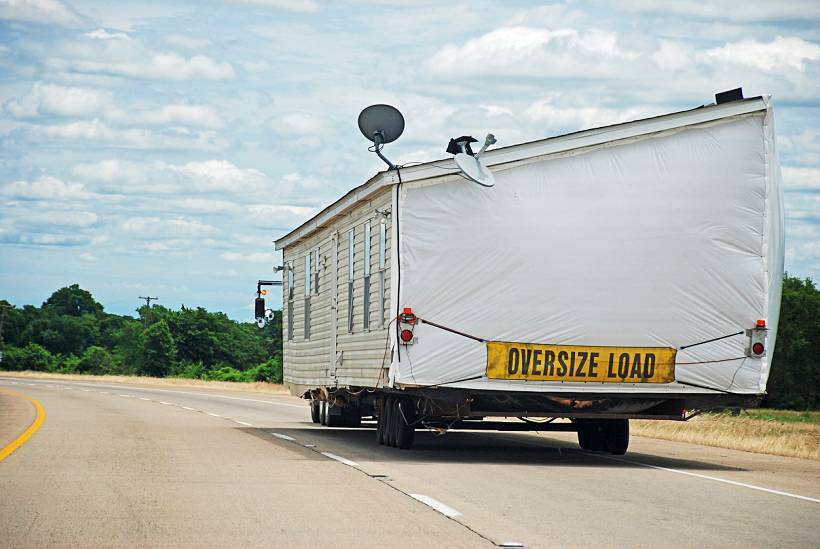 Wide shed or modular building on trailer moving down a rural road (Source: iStock)
Learn how to lower moving shed costs with these practical tips and tricks:
Move during off-peak seasons
Moving during the cooler months (March to August) can help you save money. The cost of moving a shed is lower during these months since demand is lower. You can even negotiate the price, especially if you’re flexible with the dates.
Booking on weekdays, specifically Tuesdays and Wednesdays, is a good idea as they’re typically the cheapest days. Removalists are less busy on these days, so you may get discounted hourly rates.
Choose the right equipment
Although choosing a smaller truck is much cheaper, you’ll compromise service quality and risk the safety of transporting your shed. This is why you should consult a haulage company about the right equipment and vehicle for your specific shed load.
Prepare and empty the shed
Remove all items from your shed before the move. This helps reduce the shed’s overall load, making moving easier and safer. If possible, dismantle your shed so the removalists can proceed with the move right away upon arrival, helping reduce labour charges.
What should you look for in shed removalists?
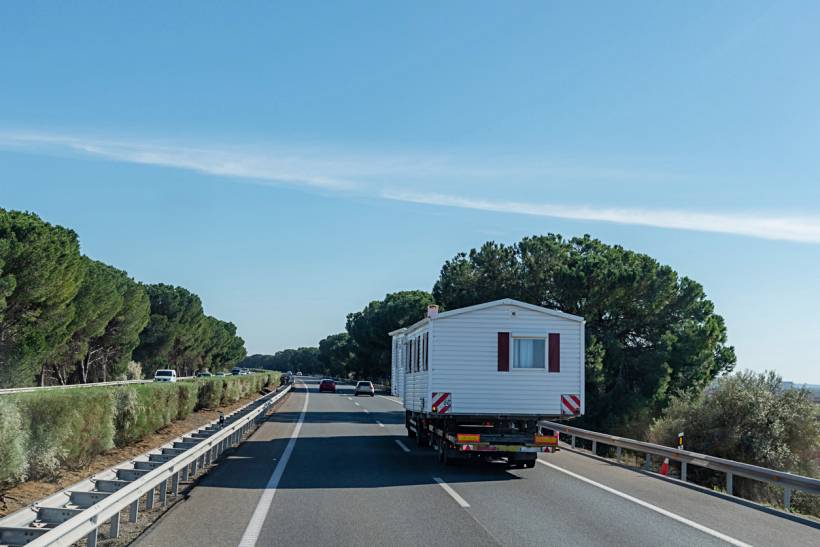 Mobile shed or modular unit on a flatbed trailer in transit (Source: iStock)
Hiring the right people to transport a shed is key to a safe and efficient move. Here are some of the essential things to look for when choosing shed removalists:
Expertise and experience: Each removalist company has its own area of expertise, so look for those specialising in transport services. Specifically, seek out companies with proven experience in handling various shed loads.
Specialised equipment and vehicles: Shed removalists should have the right tools, such as tilt trays and advanced hydraulic systems, to ensure your shed is moved efficiently.
Adequate insurance: Moving portable structures like sheds involves risks, so choose a company that offers insurance to protect your belongings during transit.
Transparent pricing: If possible, request fixed quotes. However, if the company charges by the hour, ask for a detailed written estimate that includes potential extra fees for permits, loading and unloading, fuel, and access challenges.
Have your shed moved with Airtasker
Don’t let your shed sit unused or fall apart when you can have it moved instead. With Airtasker, you can easily connect with skilled Taskers who can handle heavy lifting and transport sheds. The process is simple: Post a task, review offers, and pick the best pro for your needs. Whatever you’re moving, you can make the experience hassle-free with Airtasker.
Learn more about our contributors
Written by Cielo B.
Staff Writer
Cielo is an experienced content writer who has explored various industries throughout her career. Her expertise, founded on a degree in journalism, includes writing about automotive and home maintenance. Cielo also covers topics like dressmaking, tailoring, and photography since she is a passionate cosplayer who enjoys dressing up as her beloved anime characters.
FAQs on shed moving costs
It depends. If you’re moving a small shed locally, it’s typically much cheaper than building a new one. However, buying a new shed is often more cost-effective for interstate moves. These long-distance relocations can cost $10,000 or more due to specialised equipment and complex logistics.
No. While DIY shed moving can save money, it comes with significant risks and safety hazards. Hiring professionals is the better option, as they have the expertise and the proper tools to handle bulky sheds.
Yes, removalists charge extra for sheds with electrical or plumbing connections. These require additional care and involve complex disconnection and reconnection processes. Movers may also need to hire specialists, such as electricians or plumbers, for the job.
Yes, most shed-moving companies charge a call-out fee if the site or shed isn’t ready, as they typically charge by the hour, especially for local moves. Additional travel fees may apply if the move exceeds 50 miles.
Find shed removalists, fast
Post a task
Related price guides

How much does it cost to move house?
Read more

How much do packers cost?
Read more




Related articles
How much do removalists make?
Read more
How to move gym equipment safely
Read more

How to pack books for moving
Read more

How to pack artwork for moving
Read more

How to pack kitchen items
Read more
How to move a washing machine
Read more
How to move a shed
Read more

How to move a pool table
Read more
How to move a vending machine
Read more

How to pack bedding for moving
Read more

How to move a pinball machine
Read more

How to wrap furniture for moving
Read more

Moving interstate checklist
Read more
Moving to Brisbane
Read more

A guide to becoming a removalist
Read more
Moving Checklist
Read more

Tips for moving house with kids
Read more
Moving a fridge: How to do it right
Read more

What removalists won’t move
Read more