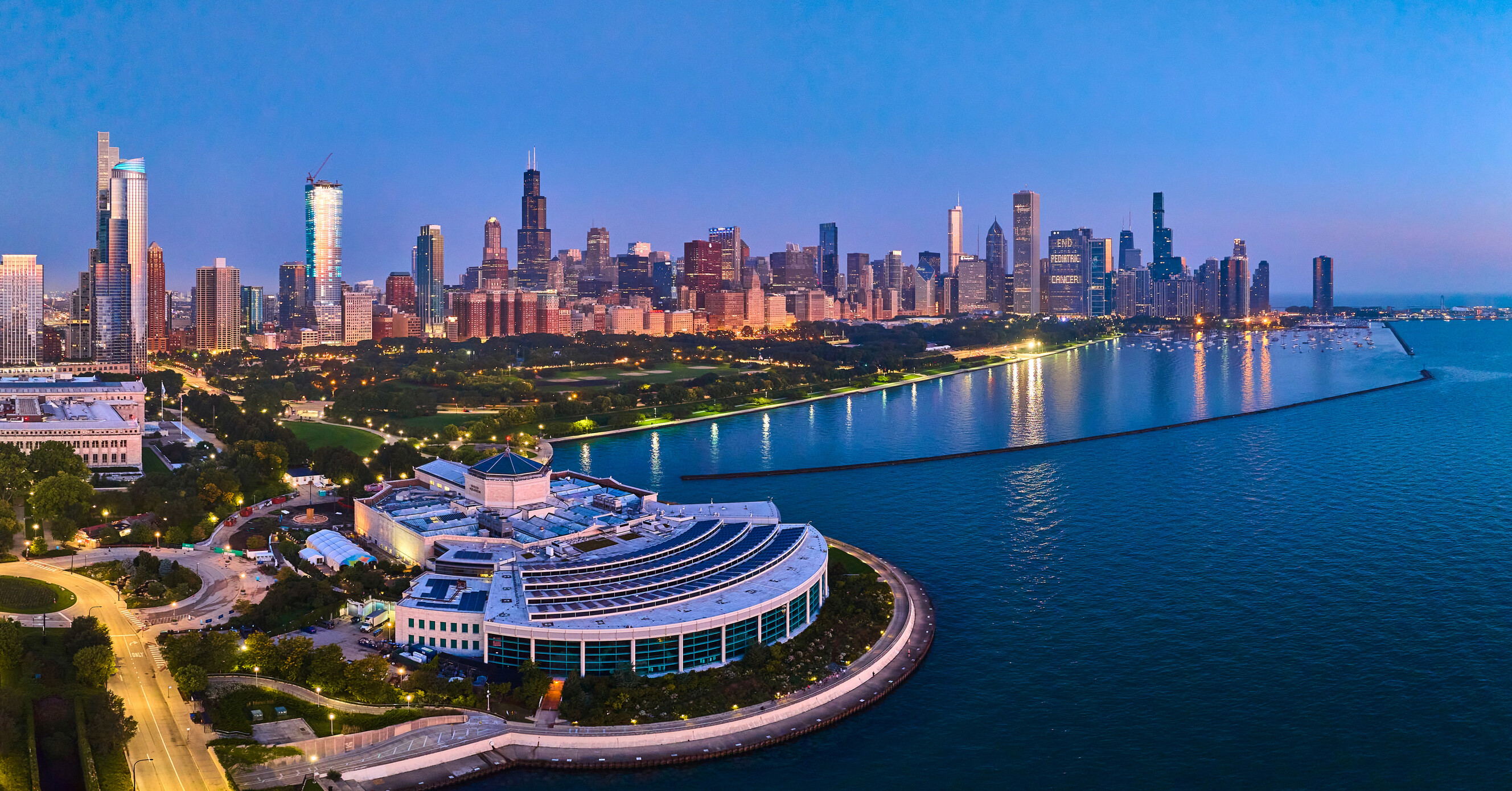
Lifestyle, logistics, and costs when moving to San Diego
Everything you need to start strong in America’s Finest City
Last Updated on

Written by Ma. Donna Dane B.
Contributor
Read more about our contributor
Moving to San Diego Highlights
San Diego has a population of over 1.4 million and a diverse economy anchored by biotech, defense, healthcare, education, and tourism.
The cost of living is well above the national average, with one-bedroom rent typically ranging from $2,600 to $3,800.
Moving demand shifts by season. Winter is usually the least competitive, while summer and early fall tend to book up faster.
If you’ve been daydreaming about ocean breezes and a laid-back coastal lifestyle, you’re in the right place. Every year, thousands of people move to San Diego for the weather, career opportunities, and a better work-life balance. But before packing up your surfboard, it helps to know what you’re really signing up for.
Moving to San Diego comes with incredible perks, but it also has some real costs and logistical challenges that can surprise newcomers. This guide breaks it all down, from jobs and neighborhoods to moving expenses and daily life, so you can decide whether San Diego, California is the right place for your next chapter.
Why are people moving to San Diego?
 Aerial view of the La Jolla coastline (Source: iStock)
Nearly 70 miles of coastline help San Diego consistently rank among the most desirable cities in the US. But beyond the views, many of the reasons to move to San Diego come down to its pace of life, which feels calmer than Los Angeles or San Francisco.
Lifestyle and culture
San Diego’s lifestyle is often described as “California living done right.” It’s casual without being boring, and energetic without feeling chaotic. You’ll find people dress comfortably, meetings are less rigid, and nobody blinks if you leave work early to catch a sunset surf session.
Neighborhoods each have their own personality, too, from the urban buzz of downtown to the village feel of coastal suburbs. There’s a strong emphasis on wellness and community events, which makes life in San Diego feel refreshingly human-paced.
It’s no surprise the city frequently pops up in pop culture as the ultimate beach-town-meets-city destination. Think fewer red carpets, more flip-flops.
Career and job opportunities
While San Diego County may not have Silicon Valley’s scale, it has quietly built a strong and diverse economy. Some of the city’s largest and fastest-growing industries include biotechnology, healthcare, defense, software, tourism, education, and research.
Major employers include UC San Diego, Sharp HealthCare, Qualcomm, Illumina, and the US Navy. Job growth has remained steady, particularly in healthcare, tech, and professional services, making San Diego, California, an attractive option for both early-career professionals and experienced specialists.
Salaries vary by industry, but wages tend to be higher than the national average, which is necessary to offset the city’s living costs.
Weather and climate
Ask locals what they love most, and the weather will almost always top the list. San Diego living features a Mediterranean climate, with mild winters, warm summers, and relatively low humidity.
Temperatures typically range from about 50°F to 77°F throughout the year, which is why the city is often called home to “the best weather in America.” The cool season runs from late November through early April, with December generally the coolest month (around 65°F highs and 51°F lows). Even in winter, freezing temperatures are rare.
That said, microclimates matter. Coastal areas tend to stay cooler, while inland neighborhoods can get significantly hotter in summer. If you’re figuring out how to move to San Diego, it’s worth choosing your neighborhood with climate comfort in mind.
What should you research before moving to San Diego?
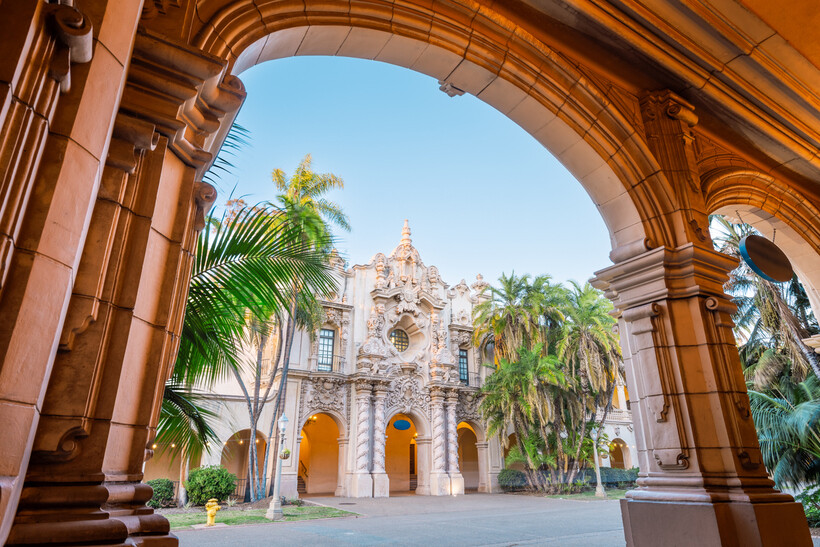 Historic architecture in San Diego, California (Source: iStock)
Before you commit, a little homework goes a long way. Understanding costs, neighborhoods, and logistics ahead of time will make your move to San Diego far less stressful.
Cost of living
The cost of living in San Diego sits 46% above the national average, driven mainly by housing, utilities, and transportation. Groceries, dining out, and healthcare also cost more than what many newcomers are used to.
Here’s a realistic snapshot of typical monthly expenses:
Area of Expense |
Cost |
|---|---|
Rent (One-bedroom apartment) |
$2,600 to $3,800 |
Groceries |
$500 to $1,200 |
Utilities |
$150 to $370 |
Transportation |
$120 to $300 |
Dining Out |
$300 to $600 |
Entertainment |
$150 to $400 |
Healthcare |
$1,000 to $1,300 |
When it comes to income, most estimates suggest you’ll need an annual salary of $93,000 to maintain a reasonable single lifestyle in San Diego, and more if you’re supporting a family.
Neighborhood options
San Diego’s neighborhoods offer something for nearly every lifestyle. Choosing the best place to live in San Diego can shape your entire experience, so take time to understand what each area offers.
La Jolla
La Jolla is one of San Diego’s most prestigious coastal neighborhoods, known for its dramatic ocean cliffs, upscale shopping, and relaxed yet polished atmosphere. It feels more like a seaside village than a busy city, with walkable streets near the coast and easy access to beaches, cafés, and galleries.
Housing here tends to be on the higher end, with average one-bedroom rents typically exceeding $3,400 per month. Commutes to downtown can be longer depending on traffic, though freeway access is generally reliable.
North Park
North Park is a lively, centrally located neighborhood with a strong sense of community and creativity. It’s known for craft breweries, independent shops, live music venues, and a casual dining scene, giving the area a youthful, energetic vibe.
Average rent typically ranges between $2,000 and $3,000, which is often close to the average rent in San Diego for a one-bedroom, depending on the time of year. Its central location also makes commuting to downtown and nearby areas relatively straightforward.
Pacific Beach
Pacific Beach delivers a classic Southern California beach lifestyle, with oceanfront paths, surf culture, and an active social scene. The neighborhood is popular with young renters and students relocating for college, and it tends to be busier and louder than other coastal areas, especially in summer.
Rents generally fall between $2,000 and $3,000. While the beach is right at your doorstep, commuting can be slower during peak hours due to congestion and limited road access.
Chula Vista
Located south of downtown, Chula Vista offers a more suburban feel, with larger homes and better value for the price. It’s popular with families and commuters looking for more space without moving too far from the city.
Average rents range from about $2,500 to $2,900. Residents also benefit from solid freeway connections and access to the trolley system, which can make trips into central San Diego easier.
Downtown San Diego (Gaslamp Quarter/East Village)
Downtown is San Diego’s most urban area, featuring high-rise apartments, walkable streets, and easy access to restaurants, nightlife, sports venues, and cultural events. It’s also one of the most transit-friendly parts of the city, with strong access to major transportation links.
Rent is typically higher, ranging from around $2,400 to $3,700, but many residents find the convenience and lifestyle worth the premium.
Best time to move
While San Diego’s weather stays pretty steady year-round, moving demand tends to follow broader California trends. The table below uses statewide Airtasker moving data and shows how those patterns usually play out in San Diego. Just keep in mind that local factors (like traffic and parking) can still affect move-day logistics.
Moving Season |
Pros |
Cons |
|---|---|---|
Winter (December to February) |
Moving demand across California is usually lowest in January (around 30% below average on Airtasker), which often means lower prices and better availability. Cool weather makes moving physically easier compared to hotter months. |
December can still be moderately busy due to holidays and military relocations. Occasional winter rain may slow loading, though severe weather is uncommon. |
Spring (March to May) |
Pleasant temperatures and longer days create comfortable moving conditions. Pricing is often more stable before peak demand builds. |
Demand begins to rise later in spring as renters and families plan fall moves. Some coastal areas may see morning marine layer and fog. |
Summer (June to August) |
Weather is warm and dry, reducing weather-related disruptions. Families with flexible schedules often choose summer despite rising demand. |
Demand continues to climb statewide, leading to higher prices than earlier in the year. Heat inland and heavy tourist traffic can make move days longer. |
Fall (September to November) |
Fall is typically the busiest moving season in California, with September about 40% above the yearly average on Artasker, and San Diego often feels that peak as well. Weather remains warm and stable, especially in early fall. |
Peak demand means higher prices and limited availability without advance booking. Popular dates can book weeks ahead. |
Moving costs
Once you’ve locked in the best time to move, the next big question is cost. Moving in San Diego can range from fairly affordable to surprisingly expensive, depending on how far you’re coming from and how much help you need.
Move Type |
Estimated Cost |
|---|---|
Local Move |
$400 to $2,800 |
Regional Move |
$1,000 to $4,000 |
Interstate Move |
$2,600 to $8,100 |
These are ballpark figures, so your actual moving cost will still depend on a few key factors:
Home size: More rooms usually mean more labor and time.
Distance: Local vs. interstate moves can change pricing significantly.
Access: Stairs, elevators, long carry distances, or limited parking can add time and fees.
Packing services: Full packing adds convenience, but it also increases the total.
Storage needs: Short-term storage can add hundreds more, depending on the unit size and length of stay.
Out-of-state or international considerations
Relocating to San Diego from another state or country comes with extra boxes to tick. Planning ahead makes the long-distance move much smoother.
Interstate moving
If you’re moving from another US state, there are a few things to know before moving to San Diego, especially when it comes to California requirements:
Residency rules: California considers you a resident once you establish the intent to live here (such as signing a lease or starting a job).
DMV timelines: The state sets relatively short deadlines for new residents to update licenses and vehicle registration. Scheduling and processing can take longer than expected, especially during busy seasons.
State income tax: California has a state income tax, which may be a change if you’re moving from states like Florida or Texas.
It’s a good idea to budget extra time during your first few weeks to handle paperwork, especially if you’re balancing work and family commitments.
International moving
An international San Diego relocation takes more planning, but it’s doable with the right prep. Don’t make the moving mistake of underpreparing, and make sure you’ve got the following things organized:
Visa and work authorization: Make sure your visa allows employment if you plan to work in the US.
Document authentication: Birth certificates, marriage certificates, and professional qualifications may need official copies or verification.
International shipping: Decide whether to ship household goods, store them, or start fresh after arrival.
Many international movers underestimate timelines. Start planning at least three to four months in advance to avoid rushed decisions and higher costs.
What should you do on your San Diego moving day?
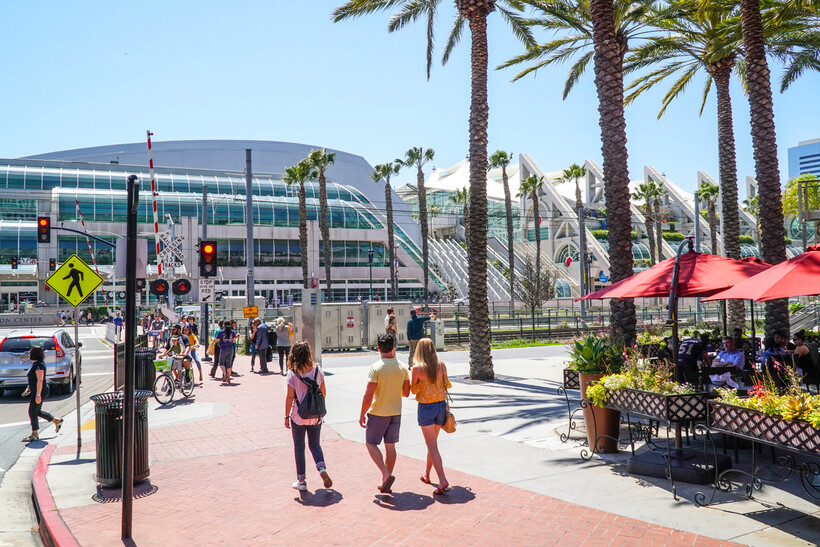 A sunny day at the city’s convention center (Source: iStock)
Moving day can feel chaotic, but a little structure goes a long way. Whether you’re hiring help or handling part of the move yourself, these steps can help everything run smoothly.
Coordinate movers and services
A simple moving checklist can save you from scrambling when something changes at the last minute (which, let’s be honest, happens). Before the truck arrives, quickly confirm arrival times and contact details, and go over any building access rules.
It’s also smart to review your insurance coverage and plan around traffic, since San Diego roads can get busy during weekday rush hours.
Transport your belongings carefully
Label fragile items clearly, keep essentials separate, and dispose of unwanted items responsibly. If you need help with disassembly or packing, reaching out to professionals can take some of the pressure off everything else you have to manage.
Also factor in San Diego’s geography, which can add a few moving-day challenges:
Inland heat: Electronics, fragile items, plants, and perishables may need extra protection.
Beach areas: Narrow streets and limited parking can slow unloading, especially if you’re moving large furniture.
Hills and stairs: Some neighborhoods, like Bay Park and Bankers Hill, have steeper access points or longer carries.
Double-check everything
Before you leave your old place and unload at your new one, take a few extra minutes to go over the basics. Snap a few photos during your final walkthrough and record the utility meter readings. As boxes are unloaded, confirm that everything has arrived and let the movers know where the larger items should go.
How do you get settled in San Diego after moving?
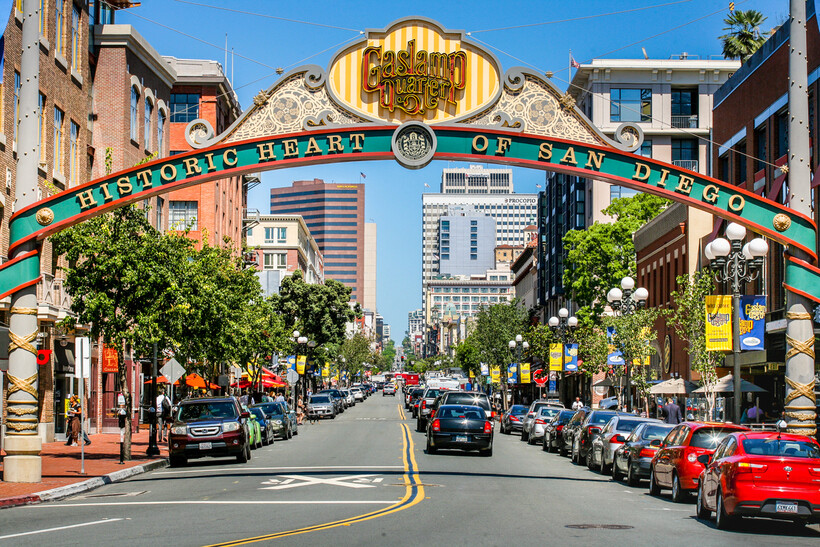 The entrance to the Gaslamp Quarter (Source: iStock)
Once the boxes are in and the door is locked behind you, it’s time to shift from “moving mode” to everyday life. Getting set up quickly helps life in San Diego feel normal faster.
Connect your utilities
Aim to schedule utilities before move-in day whenever possible. Here’s a quick overview of what you’ll need to connect:
Utility Type |
Example Providers |
|---|---|
Electricity |
San Diego Gas & Electric (SDG&E), San Diego Community Power (SDCP) |
Water and Wastewater |
City of San Diego Public Utilities |
Natural Gas |
SDG&E |
Waste Collection |
City of San Diego Environmental Services Department |
Internet and Cable |
AT&T, Spectrum, Cox Communications, EarthLink, Viasat |
Most services allow online scheduling, and many transfers can be completed in under an hour if your details are ready.
Update your licenses and documents
After you move to San Diego, updating paperwork should be one of your first priorities. These are a few updates to knock out in your first couple of weeks:
Submit a US Postal Service (USPS) change of address to start mail forwarding.
Apply for your CA driver’s license once you’ve established residency.
Register your vehicle in California, including any required smog check.
Update your voter registration so you’re set for local and state elections.
Notify banks, insurance providers, and employers of your new address.
Transfer healthcare coverage and update medical records.
Secure local permits
Depending on where you live, you might need permits for temporary use of curb space, bulky item disposal, or minor renovations. San Diego’s parking permit program can help you check whether your street has residential permit restrictions, and in some cases, you may need a traffic control permit if you’re using part of the public right-of-way.
Ensure your family’s welfare
If you’re moving with kids, getting family essentials sorted early can make the transition to living in San Diego far less overwhelming. Start by researching school districts, enrollment timelines, and childcare options, since availability can vary by neighborhood.
San Diego offers a mix of public, charter, and private schools, along with after-school programs and community activities that can help kids settle in faster. It also helps to identify nearby parks, playgrounds, and recreation centers so your family can build routines quickly.
Finally, locate healthcare providers such as pediatricians, family clinics, and hospitals, so you’re prepared for both everyday needs and unexpected situations.
Sort out your pet essentials
San Diego is a pet-friendly city, but there are a few things to organize before and shortly after your pet transport. All dogs four months and older need a license, which you can purchase or renew through the San Diego Humane Society (SDHS).
It’s also a good idea to look up nearby veterinarians, emergency animal hospitals, and pet boarding or grooming services, especially if you travel or work long hours. With plenty of dog-friendly parks and off-leash areas, getting your pet settled can be one of the easier parts of the move.
How do you get around in San Diego?
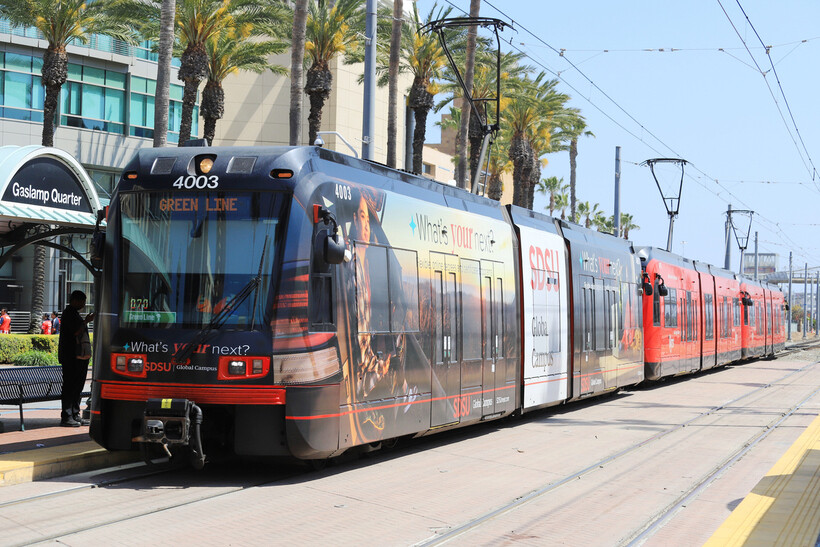 An MTS trolley in downtown San Diego (Source: iStock)
San Diego is spread out, and while it does have public transport options, most residents rely on a mix of driving and selective transit use. Understanding how people actually get around will help set realistic expectations for daily life in San Diego.
In general, major stations, sidewalks, and transit hubs are fairly accessible for older residents and people with disabilities. That said, walkability drops off quickly once you get outside the most central neighborhoods.
By car
For most people, a car is still the easiest way to get around. San Diego’s layout is sprawling, and while coastal and downtown areas are more walkable, many residential neighborhoods aren’t well connected by transit.
Toll roads: San Diego has very limited toll roads compared to other major cities.
Parking: Street parking is usually allowed unless posted otherwise, though downtown and beach areas often require meters.
Peak congestion hours: Weekday traffic is heaviest from 6:00 to 10:00 am and 3:00 to 7:00 pm.
If you don’t own a car yet (or only need one occasionally), car rental can be a flexible short-term option while you settle in or explore different areas before committing to a purchase. When choosing a neighborhood, commute direction matters, too. Living against traffic can save you hours each week.
By trolley
San Diego’s light rail system, operated by the Metropolitan Transit System (MTS), is limited but useful for specific corridors.
Main lines: Blue Line, Green Line, Orange Line
Operating hours: Roughly 4:00 am to midnight (later on weekends)
Fares: Around $2.50 for a one-way trip
Payment method: Compass Card or mobile app
Helpful apps: PRONTO San Diego
Accessibility: Stations and trains are wheelchair accessible
The trolley works best for downtown commutes, border crossings, and events; less so for suburban living.
By bus
MTS buses fill in many of the gaps that the trolley doesn’t reach, though service varies by neighborhood.
Coverage: Citywide, with denser routes near downtown
Common routes: Downtown loops, university routes, coastal connections
Operating hours: Vary by route
Fares: Same pricing system as the trolley
Payment method: PRONTO card or app
Helpful apps: MTS Transit App
Buses can be practical for short trips, but they’re usually slower than driving.
By ferry
Ferries are both scenic and functional, especially for commuters crossing the bay.
Main routes: Downtown San Diego; Coronado
Operating hours: Daily, with frequent crossings
Fares: Around $7 to $9 one way
Payment method: Ticket kiosks or mobile purchase
It’s one of the few commutes where the ride itself feels like a perk.
By bike or bike-share
San Diego continues to improve its bike infrastructure, particularly near the coast and downtown.
Popular routes: Bayshore Bikeway, Mission Bay paths, coastal routes
Where to rent: Local bike shops and bike-share programs
Pricing: Bike-share typically charges per minute or short-term passes
Parking rules: Bike racks are common in central areas
Bike commuting can work well in certain neighborhoods, but it’s not as practical citywide.
By taxi or ride-share
Ride-shares are widely used and reliable across the city.
Services: Uber, Lyft, local taxis
Typical costs: Short trips usually range from $10 to $25, higher during peak demand
They’re especially useful if you’re temporarily car-free after moving to San Diego.
What are the best things to do as a new San Diegan?
 Hand-painted floral bowls at an open market (Source: iStock)
One of the most exciting benefits of moving to San Diego is that exploring the city becomes part of settling in. Life here isn’t just about learning new routes but easing into a lifestyle that’s active and outdoorsy almost by default.
Explore your new neighborhoods
Getting to know San Diego often starts right outside your front door. Neighborhoods like the Gaslamp Quarter offer an energetic mix of restaurants and nightlife, while Little Italy is ideal for relaxed walks and long, easy meals. Along the coast, La Jolla offers scenery that never really gets old.
In North Park, creativity takes center stage through craft breweries, live music, and independent shops. Exploring these areas helps you find your rhythm and quickly feel connected to life in San Diego.
Visit cultural landmarks and attractions
San Diego’s cultural scene adds depth to everyday living. Balboa Park is a local favorite, home to museums, gardens, and performance spaces that many residents return to year after year. Old Town San Diego and the USS Midway Museum offer a look into the city’s history, with plenty of food and shopping nearby.
And while attractions like the San Diego Zoo, SeaWorld San Diego, and Cabrillo National Monument are popular with tourists, they also become easy go-to spots for weekends and visiting friends.
Enjoy the outdoors
Outdoor living is one of the biggest reasons people fall in love with living in San Diego. With easy access to beaches, bays, and parks, it’s common to squeeze in a morning walk by the ocean or catch the sunset after work. If you want something more active, there are plenty of hiking trails in nearby mountains.
Spots like La Jolla Shores and La Jolla Cove are also great for swimming and snorkeling, while Pacific Beach and Ocean Beach offer a more laid-back surf-town vibe. Here, time outside tends to fit naturally into your routine.
Check out the local market scene
Local markets are where San Diego’s community spirit really shows up. Farmers’ markets across the city bring together fresh produce, street food, live music, and a relaxed social atmosphere that makes weekends feel special.
From Little Italy to Hillcrest and Ocean Beach, these markets are an easy way to meet locals, support small businesses, and experience the San Diego lifestyle firsthand. For many newcomers, it’s moments like these that make the city start to feel like home.
Move to San Diego with ease
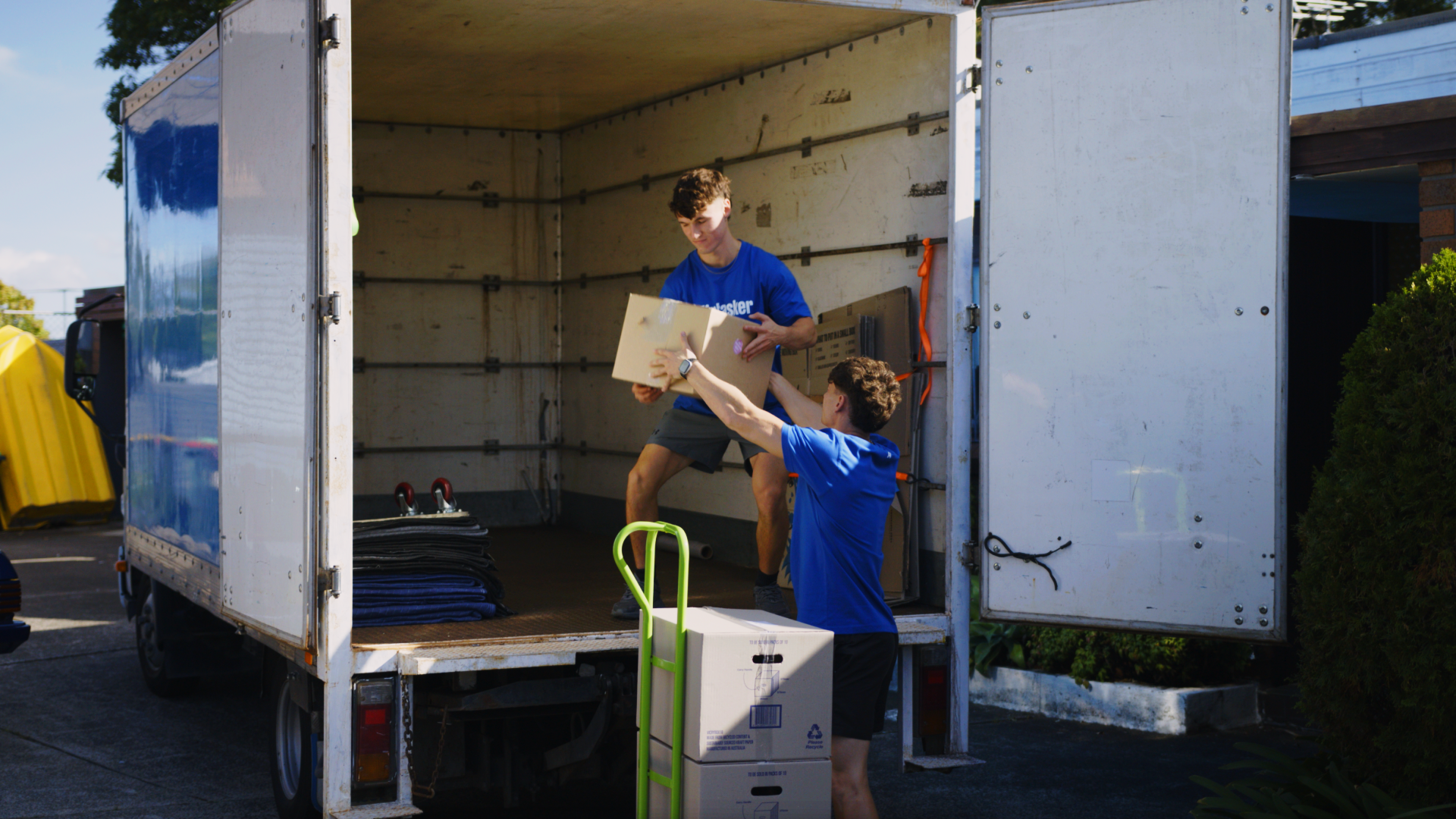
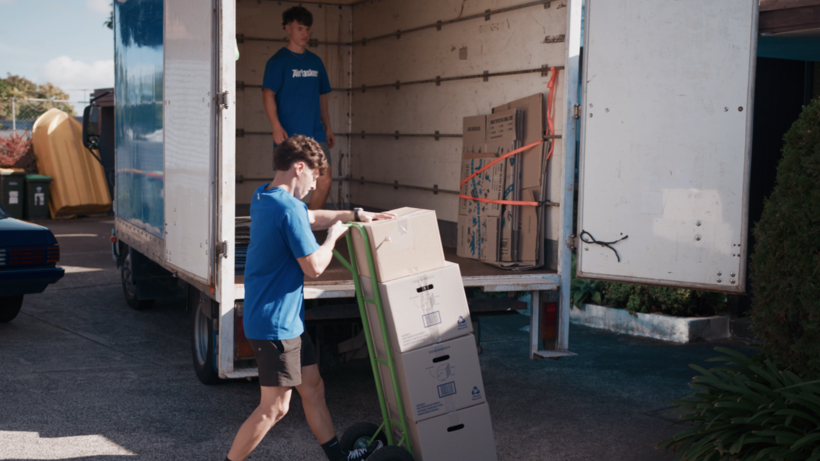 Airtasker movers loading belongings safely onto the truck
So, is San Diego a good place to live? For many people, the answer is yes. The weather, lifestyle, career opportunities, and access to nature create a quality of life that’s hard to replicate elsewhere. While the cost of living in San Diego is undeniably high, many residents feel the day-to-day experience makes it worth it.
If you value outdoor living and a balanced pace of life, moving to San Diego can be a smart and rewarding choice. When you’re ready to make the move, having the right help matters. Airtasker connects you with trusted local movers, declutterers, furniture assemblers, and move-in cleaners.
Helpful resources for those moving to San Diego
Here are a few other handy resources that can make your move to San Diego smoother from day one:
City of San Diego: Official city services, permits, utilities, and local regulations
San Diego Housing Commission: Affordable housing programs and renter resources
San Diego County Office of Education: School districts and enrollment information
San Diego County Health & Human Services: Healthcare and public health resources
San Diego Public Library: Library cards, community programs, events, and online resources
Learn more about our contributors
Written by Ma. Donna Dane B.
Contributor
Donna is an experienced writer and editor with expertise in web content, help guides, documentation, and academic research. She's written professionally for companies and nonprofit organizations in the elearning, agriculture, food, and beauty. Outside of work, Donna explores small business baking, AI governance research, and long-distance running, which influence her writing.
FAQs about moving to San Diego
Overall, San Diego is still slightly less expensive than New York City, especially when it comes to rent. That said, expenses like utilities, gas, and groceries can still run high in San Diego, so the difference may feel smaller than you’d expect.
Most experts recommend having three to six months of living expenses saved before moving to San Diego. For a single person, that often works out to around $10,000 to $15,000, depending on your rent, lifestyle, and whether you’re moving with a job already lined up.
It depends on what you want day to day. Living closer to downtown generally means more walkability and easier access to restaurants and nightlife. Meanwhile, suburban areas often offer more space and slightly lower rent, but you’ll usually rely more on a car. Many newcomers start in a more central neighborhood, then adjust once they learn the city.
Most newcomers rent first. San Diego’s housing market is competitive, and renting gives you time to explore neighborhoods and figure out what you actually want before committing to a purchase.
Find movers, fast
Find a mover
Related price guides

How much do packers cost?
Read more






Related guides
Moving Checklist
Read more

A guide to becoming a mover
Read more

How much do movers make?
Read more

Tips for moving house with kids
Read more

How to move gym equipment safely
Read more

How to pack artwork for moving
Read more

How to pack books for moving
Read more

How to pack kitchen items
Read more
How to move a washing machine
Read more

How to move a shed
Read more

How to move a pool table
Read more
How to move a vending machine
Read more

How to pack bedding for moving
Read more

How to move a refrigerator
Read more

How to move a pinball machine
Read more

Where to get moving boxes for free
Read more

How to wrap furniture for moving
Read more

What movers won’t move
Read more

The ultimate packing and moving list
Read more

Moving interstate checklist
Read more

Moving out of state checklist
Read more