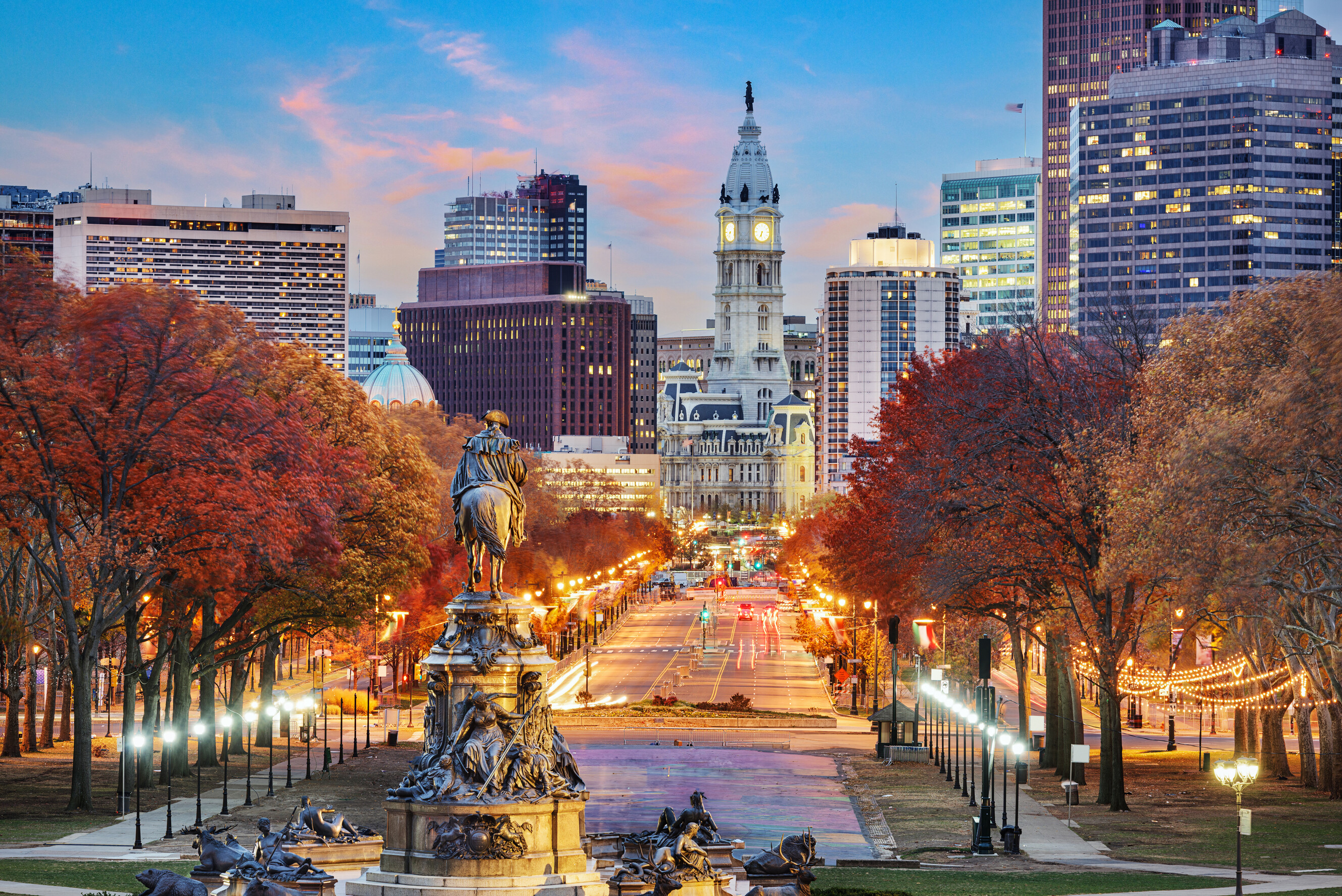
Moving to Philadelphia: All you need to know before you pack
Discover costs, culture, and tips for settling into the City of Brotherly Love
Published on

Written by Ma. Donna Dane B.
Contributor
Read more about our contributor
Moving to Philadelphia Highlights
Philadelphia is home to about 1.6 million people, making it the sixth-largest city in the US. Its diverse population includes students, professionals, artists, and long-time residents.
The cost of living is slightly above the national average, but still lower than New York City and Washington, DC, offering big-city living at a more manageable cost.
Local moves typically take one day, but navigating historic streets, rowhomes, and parking permits can add complexity when moving to Philly.
Whether you’re chasing career opportunities, craving a walkable city lifestyle, or simply ready for a change of scenery, moving to Philadelphia offers a compelling mix of history, culture, and relative affordability. Its prime East Coast location is hard to beat.
This guide covers everything you’ll want to research before making the leap, from neighborhoods and cost of living to what life in Philadelphia actually feels like once you arrive. Consider it your roadmap for turning “maybe someday” into a confident move.
Why are people moving to Philadelphia?
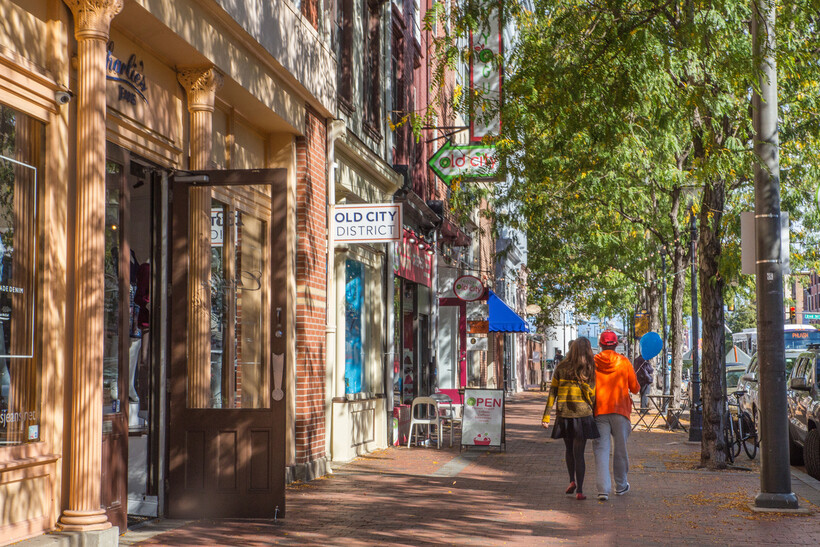 Exploring the historic streets of Old City (Source: iStock)
Located in the northeastern United States between New York City and Washington, DC, Philadelphia sits at the heart of the Mid-Atlantic region. People relocating here often cite a better balance between career prospects and lifestyle as reasons to move to Philadelphia.
Lifestyle and culture
Philadelphia, Pennsylvania is known for its deep American history, iconic food scenes (yes, cheesesteaks are everywhere), and famously passionate sports fans. You’ll spot murals on nearly every block, centuries-old buildings standing beside sleek high-rises, and neighborhoods that feel like small towns tucked inside a major city.
Pop culture immortalized Philly through films like Rocky, and locals still run the steps of the Philadelphia Museum of Art as a rite of passage. But beyond the clichés, living in Philadelphia is largely about community: block parties, corner cafés, farmers’ markets, and a creative scene that punches well above its weight.
Many newcomers say the biggest pros and cons of living in Philadelphia revolve around this intensity. The city is lively, opinionated, and proudly unpolished, which is exactly why people fall in love with living here.
Career opportunities and job market
Philadelphia’s job market is diverse and steadily growing, which leads many professionals to ask, “Is Philadelphia a good place to live?”
Top opportunities in the city include healthcare and education as “eds and meds” dominate the local economy. Finance, technology, manufacturing, government, and public administration are also huge draws.
The average income in Philadelphia varies by field, but the median household income is around $60,000, with higher salaries common in healthcare, tech, and finance. Pennsylvania’s minimum wage follows the federal rate of $7.25 per hour, though many employers pay significantly more due to labor demand.
For professionals moving from NYC to Philadelphia, the biggest surprise is often how far a salary stretches here compared with Manhattan or Brooklyn.
Weather and climate
The weather in Philly brings four distinct seasons. Summers are hot and humid, often reaching the high 80s°F (30°C+), while winters can come with occasional snowstorms. January is typically the coldest month, when temperatures frequently dip below freezing.
Spring and fall are mild and pleasant, which is why many people consider them the best seasons and the best time to move.
If you’re moving to Pennsylvania from a warmer climate, prepare for icy sidewalks, snow shovels, and higher heating bills in winter. On the plus side, you’ll also experience beautiful fall foliage and lively spring festivals that can make the seasonal swings worth it.
What should you research before moving to Philadelphia?
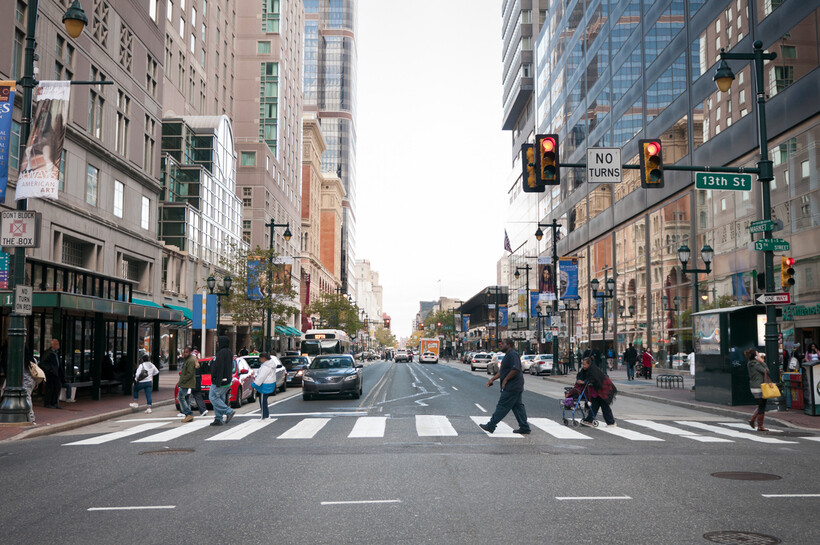 A crosswalk in downtown Philadelphia (Source: iStock)
Before committing to moving to Philly, it pays to do some research. Understanding the cost of living, neighborhood options, and moving logistics can help you avoid unpleasant surprises.
Cost of living
Is it expensive to live in Philly? The answer depends on what you’re comparing it to. Overall, the cost of living in Philadelphia is 7% higher than the national average but much lower than other major East Coast cities.
Housing is the largest expense for most residents. Rent in Center City or other trendy neighborhoods can climb quickly, but more affordable options exist in outer neighborhoods.
Pennsylvania has a flat state income tax of 3.07%, and Philadelphia also charges a city wage tax (one of the highest in the US), which applies to both residents and non-residents who work within the city.
Average monthly expenses in Philadelphia
Expense Category |
Average Monthly Cost |
|---|---|
Rent (One-bedroom) |
$1,700 to $2,200 |
Groceries |
$350 to $1,000 |
Utilities |
$200 to $400 |
Transportation |
$120 to $470 |
Dining Out |
$300 to $900 |
Entertainment |
$120 to $300 |
Healthcare |
$300 to $900 |
A comfortable salary in Philadelphia typically falls between $70,000 and $75,000 per year for a single person, depending on lifestyle and housing choices. For many newcomers, these numbers strike a sweet spot for big-city amenities without the extreme price tags of coastal hubs.
Neighborhood options
Philadelphia is a patchwork of distinctive neighborhoods, each with its own personality and price point. Exploring these neighborhoods ahead of time can help you find the best places to live in Philadelphia for your lifestyle, budget, and long-term plans.
Center City
Center City is the beating heart of downtown living in Philadelphia, where glassy high-rises meet historic architecture and every convenience sits just outside your front door. Many restaurants in this area have earned James Beard recognition, making it a culinary hotspot.
Living here means offices, restaurants, theaters, parks, and shopping are within walking distance, a huge perk for professionals who want to dive straight into city life. Average commute times are minimal thanks to excellent transit access, though rents of $1,500 to $3,000 for a one-bedroom apartment reflect the premium location.
Fishtown
Fishtown has transformed from its industrial roots into one of the coolest neighborhoods in the city, buzzing with creativity and a slightly rebellious edge. Murals splash across brick buildings, live music spills out of venues at night, and craft breweries and experimental restaurants keep the area feeling fresh.
Despite its trendy cultural attractions, it still feels neighborly, with rent averaging $1,400 to $2,300 for a one-bedroom apartment. The quick subway ride to downtown also makes it both practical and fun.
Manayunk
Perched along the Schuylkill River, Manayunk feels like a charming small town folded into the city. Its sloping streets and historic rowhouses lead down to a lively Main Street packed with boutiques, cafés, and restaurants that fill up on weekends. Outdoor lovers gravitate here for easy access to trails and riverfront paths, making it one of the greener pockets of living in Philly.
It’s generally more affordable compared to central neighborhoods in terms of housing. Rent costs about $1,200 to $2,400 per month for a one-bedroom. This makes it especially appealing if you want to keep the cost of living in Philadelphia manageable.
South Philadelphia
South Philadelphia is famous for its tight-knit blocks, family-run businesses, and deep local pride, not to mention its proximity to the city’s sports complex. Rowhomes dominate the landscape, giving the area a classic Philly feel, and daily life often revolves around corner stores, bakeries, and neighborhood gatherings.
This area also offers competitive, low-priced rental options ranging from $1,300 to $2,600 monthly for a one-bedroom apartment, so it’s a good option if you want to save money on rent.
University City
University City pulses with youthful energy thanks to its concentration of major universities and hospitals. Tree-lined streets, research centers, and cozy bookstores create a vibrant academic atmosphere. It’s also one of the most diverse parts of the city, drawing healthcare professionals and college movers such as students and faculty from around the world.
Transit connections to downtown are quick and convenient, making it easy to enjoy both campus life and the broader city. Here, rent varies widely, ranging from $1,000 to $2,900 for a one-bedroom unit.
Moving costs
It’s a common moving mistake to skip budgeting for your move. While actual costs vary, here are some general ranges to keep in mind:
Local moves: Typically $400 to $2,800+ for smaller, in-city moves
Interstate moves: Often $2,600 to $8,100, depending on distance
Key cost factors include home size, distance, packing services, stairs or elevator access, and storage needs. Narrow streets and historic homes can also increase labor time, which may affect final pricing when moving to Philadelphia.
Out-of-state or international considerations
Moving to Philly from another state or from abroad usually involves a few extra steps beyond the standard moving checklist. These often involve paperwork that can take a while to complete, so it helps to start early.
Interstate moving
If you’re moving from another state, take some time to research the state and local requirements that may affect your transition:
Residency-related deadlines: Pennsylvania gives new residents a limited window to complete certain updates after moving.
Required documents: You may need proof of identity, residency, insurance, or vehicle ownership for official updates.
State and local tax obligations: Philadelphia has local tax rules, including the city wage tax, that may affect your budget.
Because timelines and requirements can vary, be sure to check official state and city guidelines as soon as you finalize your cross-country move.
International moving
For international long-distance moving, the process can be more complex as it needs more coordination and lead time than domestic moving. Prepare for:
Visa and work authorization: Make sure your visa type matches your purpose (work, study, etc.), and confirm your employment eligibility.
Shipping timelines and customs clearance: International shipments can take several weeks or longer, and may be delayed during customs processing.
Document authentication: Important documents (such as diplomas, birth certificates, or marriage certificates) may need to be translated or officially authenticated.
What should you do on your Philadelphia moving day?
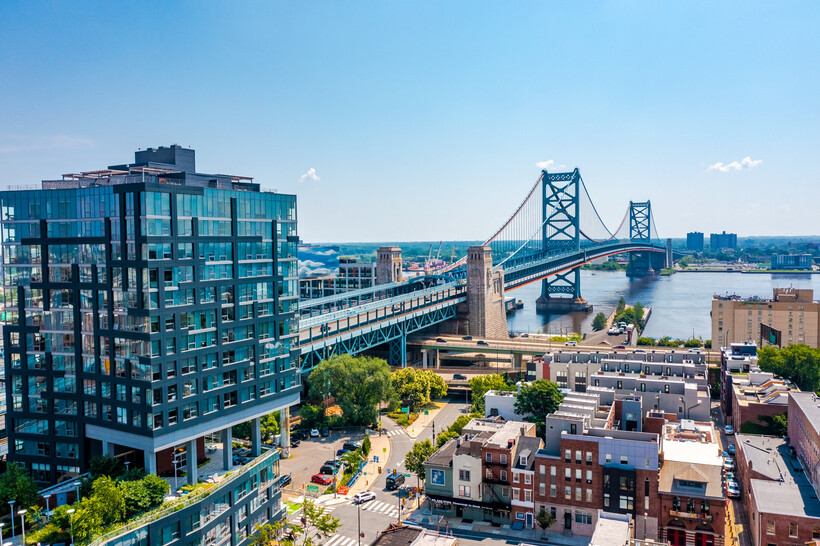 Aerial view of the Ben Franklin Bridge (Source: iStock)
Moving day in Philly can feel like a high-stakes game of Tetris with limited parking and historic buildings that weren’t exactly designed for sectional sofas. A little planning goes a long way toward keeping stress levels low and your move on track.
Coordinate movers and services
Confirm everything 24 to 48 hours before moving day:
Arrival times and contact details
Parking arrangements (many areas, such as Center City and University City, often require temporary permits for moving trucks)
Building access, elevators, or loading zones
Insurance coverage for your belongings
Philadelphia traffic can be unpredictable, especially during rush hours (6:00 to 9:00 am and 4:00 to 7:00 pm). If you’re moving to Philadelphia on a weekday, consider scheduling your move early in the morning or during a midweek time slot to avoid the worst congestion.
If plans change due to weather delays, elevator issues, or last-minute packing, communicate quickly with your movers so they can adjust timing or logistics without derailing the whole day.
Transport your belongings carefully
Moving in Philadelphia often means dealing with charming but challenging architecture. Many rowhomes feature narrow staircases, tight doorways, and limited storage space, so it’s worth planning for awkward corners or entryways.
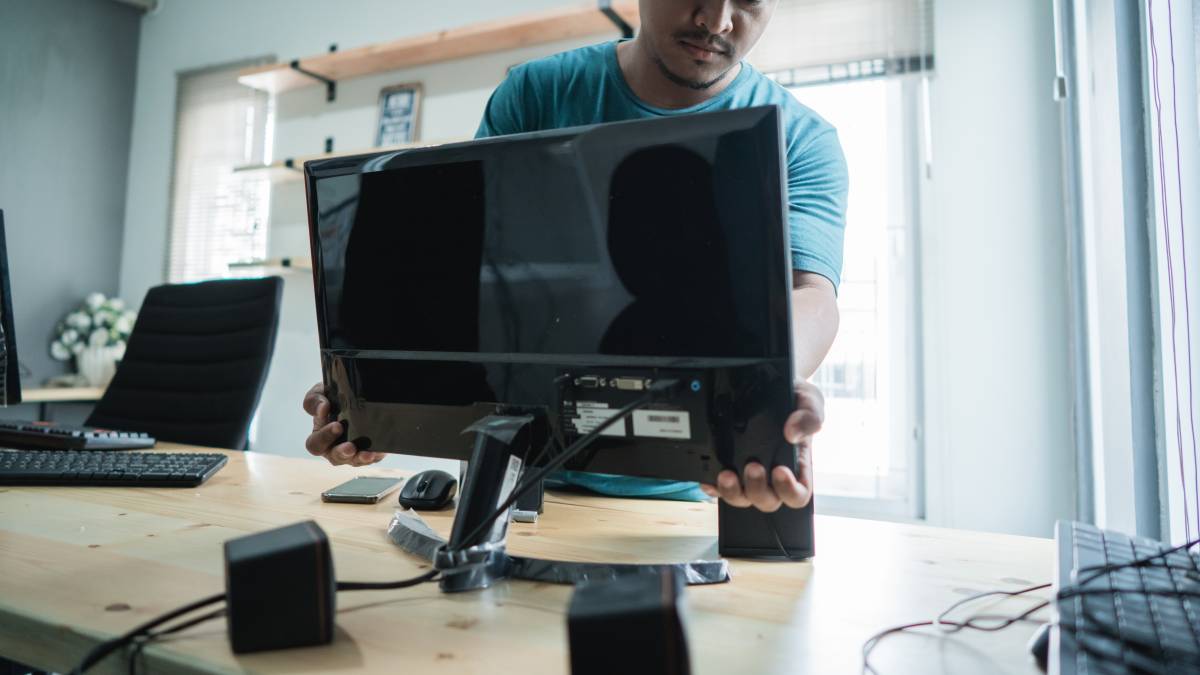
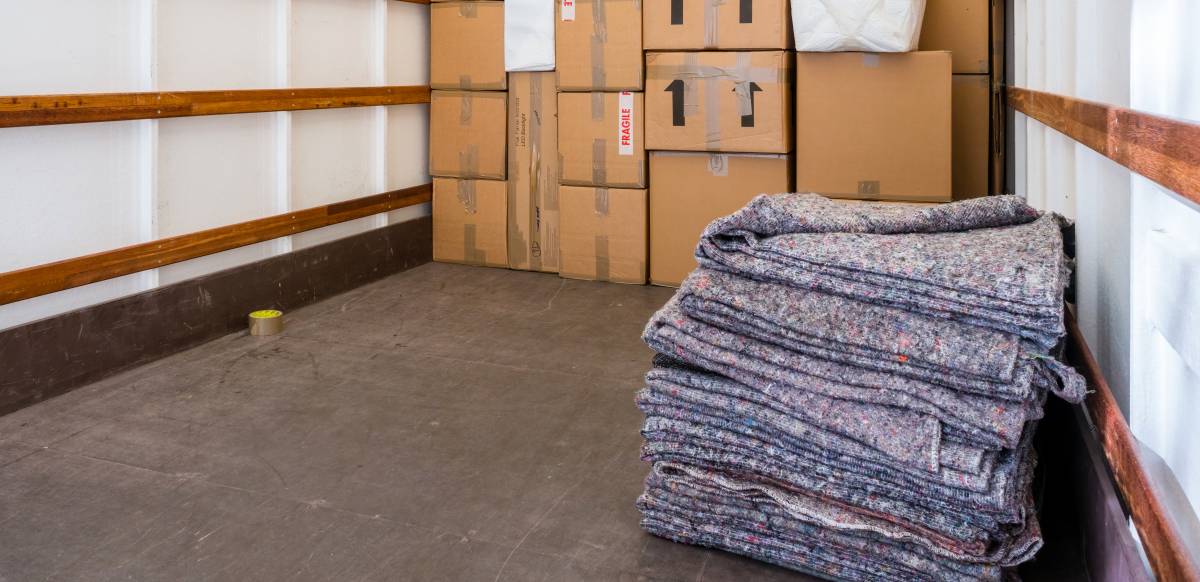
Disassemble bulky furniture ahead of time and protect fragile items with extra padding. For antiques or artwork, specialized handling can prevent costly damage. City streets can also be tight, so movers may need to shuttle items from a larger truck parked nearby. Factor this into your timeline, since it can slow down the move.
Before loading, set aside a “first-night box” for items you’ll need immediately. These will save you from rummaging through dozens of boxes after an exhausting day:
Important documents
Chargers and medications
Basic cleaning supplies
A change of clothes
Double-check everything
Before leaving your old place, do a final walkthrough to make sure nothing is left behind. Check closets, cabinets, and storage areas carefully, and take photos of the property’s condition for your records. It’s also a good idea to record utility meter readings before you go.
At your new home, guide movers on unloading order: furniture first, boxes by room, essentials last. It’ll make unpacking much smoother and help you settle into life in Philadelphia faster.
How do you get settled in Philadelphia after moving?
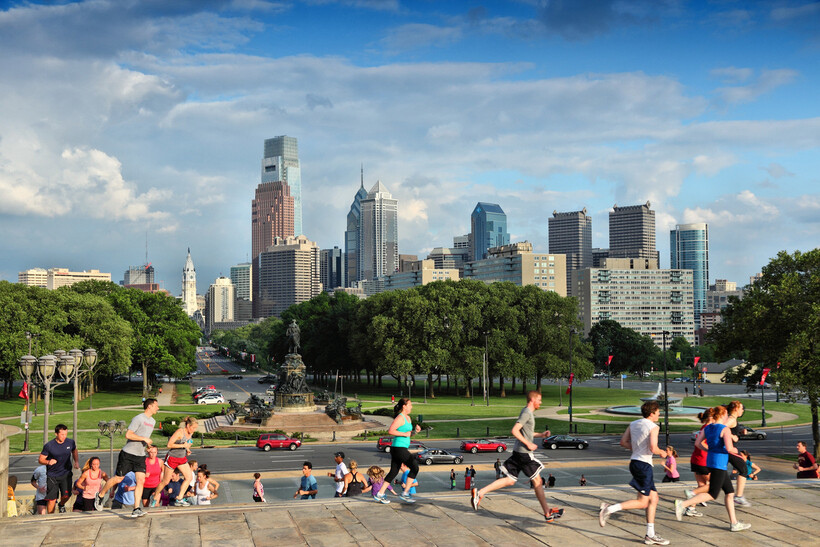 Morning run on the famous Rocky Steps (Source: iStock)
Once the boxes are inside, the real transition begins. Settling into living in Philly involves paperwork, logistics, and building routines, but it’s also when the city starts to feel like home.
Connect your utilities
Arrange utilities at least one to two weeks before move-in day so everything is running when you arrive. Utilities to set up usually include electricity, natural gas, water and wastewater, internet and cable, and waste collection.
Utility Type |
Example Providers |
|---|---|
Electricity |
PECO Energy |
Natural Gas |
PGW (Philadelphia Gas Works) |
Water and Wastewater |
Philadelphia Water Department |
Waste Collection |
City Sanitation Services |
Internet |
Comcast Xfinity, Verizon |
Schedule activation or transfer dates in advance and confirm whether you need to be present for installation, particularly for internet service. If you’re moving from NYC to Philadelphia, note that billing cycles and service arrangements will likely be different.
Update your licenses and documents
After moving to Pennsylvania, you’ll need to update several official records to reflect your new address. Here are some key steps for new Philadelphia residents:
Change your address with the US Postal Service
Transfer your driver’s license
Register your vehicle in Pennsylvania
Update your voter registration
Notify banks, insurers, employers, and healthcare providers
Pennsylvania gives new residents 60 days to get a PA driver’s license and 20 days to register an out-of-state vehicle. Once your PA plates are issued, you’ll have 10 days to get your car through a safety and emissions inspection.
Secure local permits
Depending on your neighborhood and housing type, you may need to arrange a few local permits before or soon after your move. There’s a Residential Parking Permit that allows eligible residents to park on designated blocks beyond the usual two-hour time limits. It doesn’t, however, override temporary “No Parking” signs for things like utility work or street cleaning.
Other permits may cover home renovations and waste disposal rules. Sorting these out early can help prevent fines and headaches, especially in dense city areas.
Ensure your family’s welfare
If you’re moving with kids, prioritizing family needs will help everyone adjust faster. Before settling in, spend some time looking into schools, childcare, doctors, and nearby places where your children can play and spend time after school.
It’s also worth thinking about how your new neighborhood will support family life once the boxes are unpacked. Philadelphia has plenty of parks and family-friendly attractions, which can make weekends easier to plan and give everyone a chance to explore the city together.
Sort out your pet essentials
And if you’re moving with pets, take care of any local requirements early. In Philly, all dogs aged four months or older must be licensed, and you’ve got 30 days once you’ve moved in to get it sorted.
Make sure to also line up the day-to-day essentials, including nearby veterinarians, pet-friendly housing, transportation arrangements, and services like grooming or sitting.
For outdoor time, the biggest thing to remember is the leash law. On Parks & Rec property, dogs must be on a leash no longer than six feet, but the city also has authorized dog runs where they can be off-leash and burn off some steam.
How do you get around in Philadelphia?
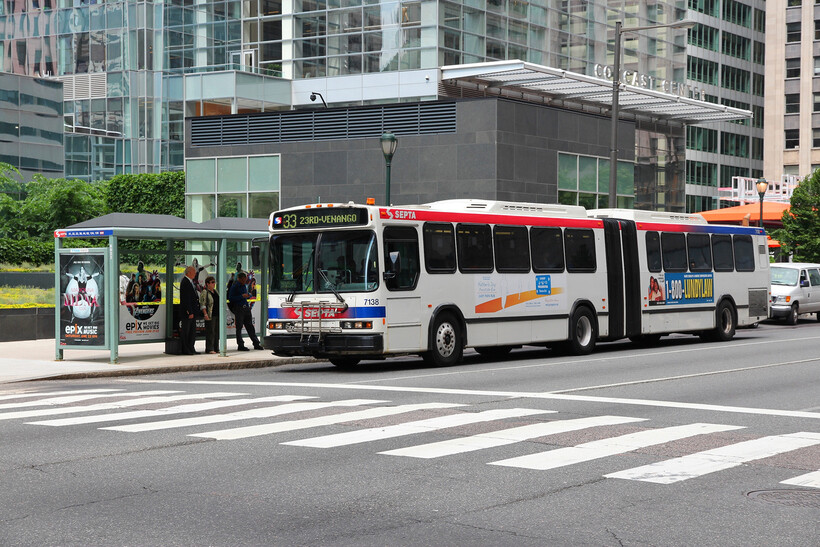 Commuters using SEPTA public transit (Source: iStock)
Philadelphia is one of the most walkable major cities in the US, particularly in central neighborhoods. Public transportation is extensive, and many daily errands can be done on foot, which is a big plus for those adjusting to living in Philly without a car.
By car
Cars are most useful for reaching suburbs or exploring beyond the city. While many residents own cars, you may not need one in central neighborhoods, where transit and walking are often more practical.
If you do drive, keep in mind that nearby highways and bridges may charge tolls, especially when you’re heading into surrounding areas. Parking can also be a challenge depending on the neighborhood.
In central zones, parking garages and metered spaces typically cost around $3 to $5 per hour. Traffic tends to be heaviest during weekday rush hours and event nights.
By subway and elevated lines
Philadelphia’s rapid transit system is operated by Southeastern Pennsylvania Transportation Authority (SEPTA) and is one of the city’s most useful ways to get around quickly. The two main lines are the Market–Frankford Line and the Broad Street Line.
Main Lines |
Coverage |
|---|---|
Market–Frankford Line (east to west) |
Connects West Philadelphia, University City, Center City, and Frankford/Northeast Philadelphia |
Broad Street Line (north to south) |
Connects North Philadelphia, Center City, South Philadelphia, and the stadium district |
Service generally runs from about 5:00 am to midnight. Fares are around $2.90 per ride, and the SEPTA Key card is the standard payment method for regular riders. The SEPTA app and transit trackers are also helpful if you want to check arrival times before heading out.
Major stations are generally accessible, though some older stations offer more limited access. If accessibility matters for your trip, it’s a good idea to check station details in advance.
By regional rail
SEPTA’s Regional Rail connects the city to suburbs across Pennsylvania, New Jersey, and Delaware. This system is invaluable if you live outside the city center but work or study in Philadelphia.
Multiple rail lines radiate from Center City, making it possible for you to travel between downtown and many surrounding communities without driving. It’s also useful for trips to outer neighborhoods and suburban destinations that aren’t as easily reached by subway.
Service usually runs from early morning to late evening, with schedules varying by line and time of day. Fares are zone-based (usually $5 to $13) rather than flat-rate, and payment is commonly made using a SEPTA Key card.
By bus
Buses fill in the gaps where train service doesn’t reach and provide access to nearly every neighborhood in the city. If you live in a neighborhood with fewer rapid transit options, the bus may end up being one of the services you use most often.
SEPTA buses
SEPTA buses are the backbone of surface transit in Philadelphia. They provide extensive citywide coverage, with routes running along major corridors and through residential neighborhoods.
Service usually operates from early morning to late night, though schedules vary by route. Fares are about $2.90, and you can pay using a SEPTA Key card or exact cash.
PHLASH buses
PHLASH buses cater mainly to visitors, but they can also be helpful if you’re still getting familiar with the city. These buses connect major tourist attractions, museum areas, and waterfront destinations.
Service is seasonal, so availability depends on the time of year. Fares are typically offered through low-cost day passes, and you can usually pay with mobile tickets or cash.
By trolley
Philadelphia’s trolleys are historic streetcars serving West Philly and nearby suburbs. Part of the SEPTA network, they’re especially useful along the subway–surface routes, connecting residential neighborhoods in West Philadelphia with Center City.
They generally operate on schedules similar to the subway and offer a convenient option for trips that begin underground and continue at street level. Fares are the same as standard SEPTA transit, and you typically pay with a SEPTA Key card.
By bike or bike-share
Cycling is becoming increasingly popular in Philadelphia, especially if you want a flexible and affordable way to travel short distances. Popular routes include the Schuylkill River Trail and bike lanes throughout Center City. These routes let you move through the city while avoiding some traffic congestion.
Bikes can be rented through bike-share programs or local rental shops, with fares typically available as pay-per-ride or membership options. If you ride, be sure to use designated racks when parking to avoid fines and reduce the risk of theft.
By taxi or ride-share
Ride-share services like Uber and Lyft, as well as local taxi services, are widely available throughout the city. They’re useful for airport trips, late-night travel, or areas with limited transit access. Costs are usually higher during peak hours and major events, but they’re still a great backup option when public transportation is less convenient.
What are the best things to do as a new Philadelphian?
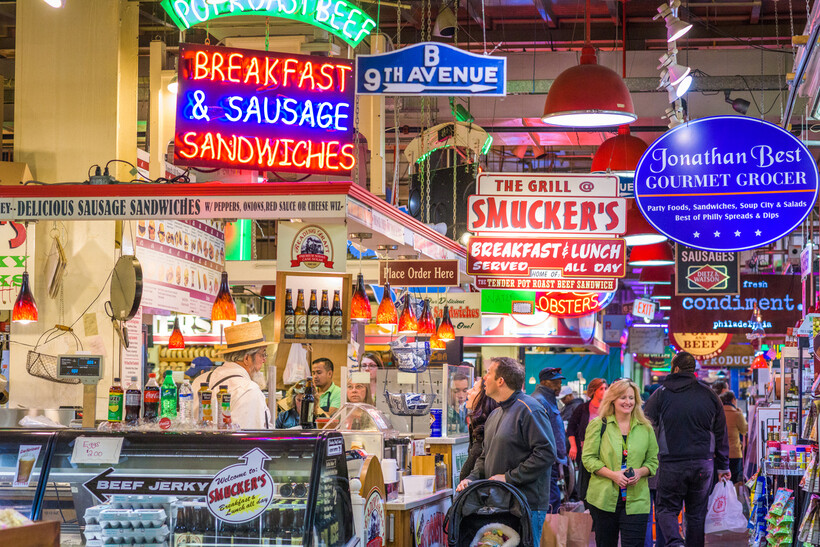 Vibrant food scene at Reading Terminal Market (Source: iStock)
One of the greatest joys of living in Philadelphia is realizing that the city doubles as your personal playground. For newcomers, diving into local experiences is the fastest way to feel connected and truly at home.
Visit cultural landmarks and attractions
Philadelphia wears its history proudly, and exploring its landmarks feels like stepping into pivotal moments of the past. Touring Independence Hall and seeing the Liberty Bell up close gives you instant bragging rights as a new local, while the grand steps of the Philadelphia Museum of Art invite you to channel your inner Rocky.
Places like the Museum of the American Revolution, Eastern State Penitentiary, and the National Constitution Center reveal fascinating, sometimes haunting stories that shaped the nation. Even a stroll down Elfreth’s Alley feels like traveling through time.
Enjoy the outdoors
When city life gets overwhelming, Philadelphia’s green spaces offer instant breathing room. Fairmount Park alone feels like an entire world of trails, picnic spots, and scenic views, while the Schuylkill River Trail is perfect for sunrise runs or sunset bike rides.
If you’re craving something wilder, Wissahickon Valley Park delivers forested paths that make you forget you’re in a major city. Meanwhile, Waterfront spots like Spruce Street Harbor Park and Penn’s Landing add a festive vibe with hammocks, food stalls, and seasonal events.
Check out the local market scene
Philadelphia’s markets are where the city’s personality truly comes alive through food, conversation, and community.
Reading Terminal Market: The aromas alone will pull you from stall to stall as you sample everything from Amish baked goods to international dishes.
Italian Market: The bustling scene offers a sensory overload of fresh produce, cheeses, and street food that feels like a slice of Europe in South Philly.
Rittenhouse Farmers’ Market: This turns grocery shopping into a social event, with local farmers and artisans showcasing the region’s best flavors.
Clark Park Farmers Market: A fantastic spot to pick up fresh produce and enjoy diverse food options, like the highly recommended Ethiopian cuisine found nearby.
Make the start of your Philly chapter stress-free
So, is Philadelphia worth moving to? For many people, the answer is a confident yes. After all, the city offers a mix of relative affordability, career opportunities, walkability, culture, and community that can be hard to find elsewhere.
And while relocating can feel overwhelming, moving to Philly doesn’t have to. With the right planning and support, the process can be far more manageable and a lot less stressful.
When you’re ready, having a reliable mover can make all the difference. From decluttering and move-in cleaning to heavy lifting and furniture assembly, Airtasker connects you with local professionals who can help simplify every step of your move.
Helpful resources for those moving to Philadelphia
Here are official, trusted resources to get your facts about Philadelphia. These will help you navigate everything from paperwork to weekend plans as you settle into living in Philly:
City of Philadelphia: Your go-to for permits, utilities, waste collection, and city services.
Philly311: Non-emergency city services, complaints, and general city information.
Pennsylvania Department of Revenue: State tax information for new residents moving to Pennsylvania.
Free Library of Philadelphia: Books, research tools, and free programs to support learning and everyday life.
Visit Philadelphia: Events, attractions, and insider tips for exploring your new city.
Learn more about our contributors
Written by Ma. Donna Dane B.
Contributor
Donna is an experienced writer and editor with expertise in web content, help guides, documentation, and academic research. She's written professionally for companies and nonprofit organizations in the elearning, agriculture, food, and beauty. Outside of work, Donna explores small business baking, AI governance research, and long-distance running, which influence her writing.
FAQs about moving to Philadelphia
Local moves often cost between $400 and $2,800, while interstate moves can cost more depending on distance, home size, and services needed. It’s also a good idea to have an emergency fund covering at least three months of expenses.
Moves from NYC to Philadelphia often cost around $80 to $200 per hour, with total costs depending on the size of the move and timing. Final pricing can also be affected by stairs, elevator access, and parking.
Renting is often the better option at first because it gives you time to explore neighborhoods before making a long-term decision. Buying can be more affordable than in nearby cities, but property taxes, maintenance, and location should all factor into your choice.
That depends on your lifestyle. The city center offers more walkability, transit access, and nightlife, while the suburbs usually offer more space and a quieter environment. Many residents choose suburbs in the Philadelphia area while commuting via regional rail.
Find movers, fast
Find a mover
Related price guides
How much do packers cost?
Read more



Related guides
How to move gym equipment safely
Read more
Where to get moving boxes for free
Read more
Moving to San Diego Guide
Read more

Tips for moving house with kids
Read more

How to pack kitchen items
Read more

How to pack artwork for moving
Read more

How to pack books for moving
Read more

How to move a pool table
Read more
How to move a shed
Read more
How to move a washing machine
Read more
How to move a vending machine
Read more
How to move a refrigerator
Read more

How to pack bedding for moving
Read more

How to move a pinball machine
Read more

What movers won’t move
Read more

How to wrap furniture for moving
Read more
Moving to Atlanta Guide
Read more

A guide to becoming a mover
Read more
How much do movers make?
Read more

Moving interstate checklist
Read more

Moving out of state checklist
Read more

The ultimate packing and moving list
Read more
Moving Checklist
Read more
Moving to Washington DC Guide
Read more