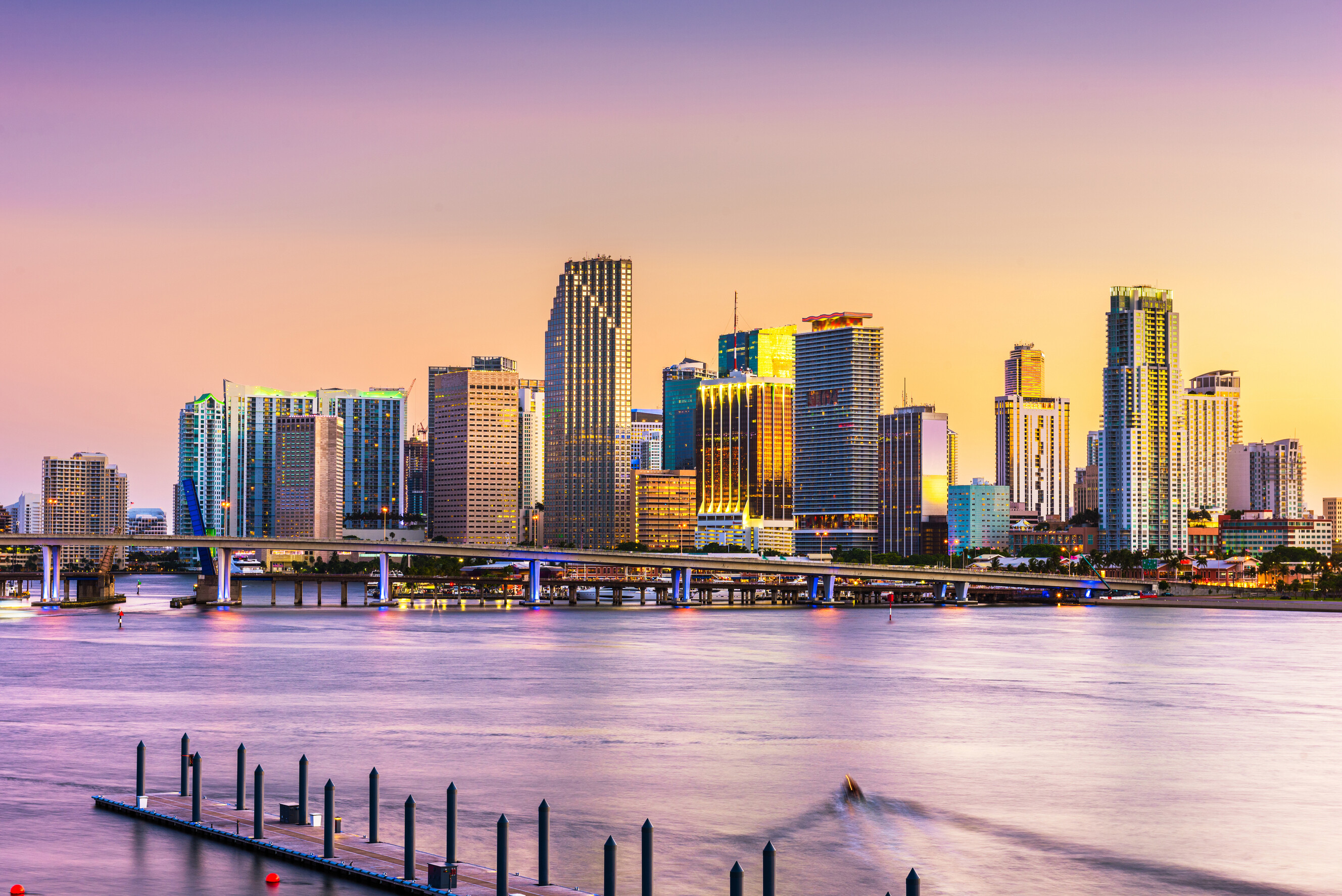
Welcome to the Magic City: How to move to Miami with ease
Navigate moving in Miami with expert advice on where to live, what to expect, and how to settle in quickly
Published on

Written by Cielo B.
Staff Writer
Read more about our contributor
Moving to Miami Highlights
Living in Miami is approximately 17–20% more expensive than the national average, with housing costs sitting 25–30% higher. A comfortable life for a single person typically requires an annual salary between $60,000 and $100,000.
August is the most budget-friendly month to move due to having 75% less competition than the peak month of December, though it falls during the high-heat and hurricane season (June to November).
To establish Florida residency and avoid dual taxation, new residents must file a Declaration of Domicile, register to vote, and secure a Florida driver’s license within 30 days of arriving.
With endless summer vibes, stunning Atlantic views, and vibrant nightlife, moving to Miami feels more like a vacation than a relocation. But before you can fully enjoy the “sunshine state,” you’ll need to tackle a few logistical hurdles.
This guide covers everything you need to know about how to move to Miami without the stress. We break down the real living costs, top neighborhoods, job opportunities, and exactly what to expect once you arrive so you can settle into coastal life with ease.
Why are people moving to Miami?
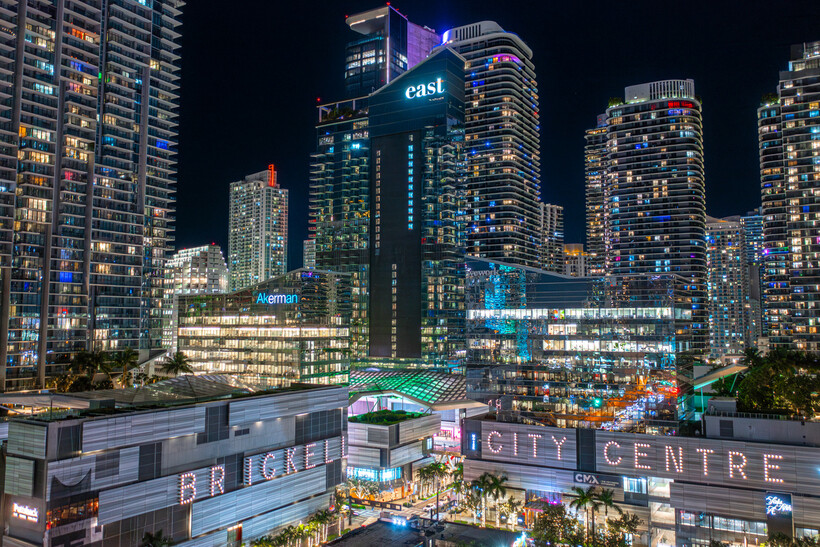 Nighttime in the Brickell City Centre (Source: iStock)
If you’re weighing up the pros and cons while asking yourself, “Should I move to Miami?” getting a clearer picture of day-to-day life can make that choice easier. Here’s a sneak peek of what it’s like living in the city.
Lifestyle and culture
Living in Miami offers a unique blend of professional advancement and immediate access to relaxation. After a day in downtown’s glass towers, you can step out to palm-lined beaches and sunsets, truly embracing a Miami lifestyle that makes you feel like you’re on vacation without ever leaving home. For many, this distinctive balance of work and play is a key reason why Miami is considered a good place to live.
Beyond enjoying year-round sunshine, Miami is also ideal for movers seeking a diverse cultural melting pot. With 55.3% of its residents being foreign-born (the highest in the US), Miami is an international city that operates as a cultural crossroads, where people from over 100 countries live and work together.
Because of its multicultural nature, the food is also diverse, where you can find incredible, unique flavors like Nikkei cuisine (a delicious fusion of Peruvian and Japanese ingredients).
Career and job opportunities
Miami is the second-largest banking hub in the US, earning its nickname as the “Wall Street South.” Notably, several major banks and investment firms, including Citadel, Blackstone, and JPMorgan Chase, have established satellite offices in Miami.
This presence offers residents and newcomers numerous job opportunities in the finance sector. The sector alone adds billions of dollars to the local economy, with the average annual salary for finance workers reaching $163,326.
Similarly, the tech industry is progressing fast in Miami, with particular strength in Artificial Intelligence (AI), financial technologies (fintech), climate tech, and health tech. Tech workers earn an average of $142,339 annually, and the sector is expected to continue growing.
Although finance and tech are booming, tourism remains the county’s largest employment sector, supporting over 209,000 jobs. This includes everything from Royal Caribbean Group’s cruise operations to the luxury hotels that welcome Miami’s record of 28 million annual visitors. However, while tourism creates numerous jobs, wages in the leisure and hospitality sector average lower, at $48,461 annually.
Industry |
Why It Matters in Miami |
Average Annual Salary |
|---|---|---|
Finance & Banking |
Major US banking hub (“Wall Street South”) with global firms operating local offices |
$115,000 |
Technology |
Fast-growing sector with strong VC activity in AI, fintech, climate tech, and health tech |
$142,339 |
Tourism & Hospitality |
Largest employment sector driven by cruises, hotels, and high visitor numbers |
$48,461 |
Weather and climate
In Miami, many enjoy sunny weather with clear skies and comfortable conditions. This is especially true during winter and spring, when other places would still feel cold.
However, once the wet season arrives, Miami’s weather becomes completely muggy. The air often feels thick, and intense afternoon thunderstorms can flood streets within minutes.
The weather worsens from June to November, which is the peak of hurricane season. Residents often experience power outages for days and flooding on streets, so you need to be extra cautious and prepared.
Check out this table to get an overview of the tropical monsoon climate of Miami:
Time of Year |
Climate Condition |
Risks & Impacts |
|---|---|---|
Dry Season (November to April) |
Warm, sunny weather with low humidity and little rain |
Minimal weather-related disruption |
Wet Season (May to October) |
Hot temperatures, very high humidity, and frequent afternoon storms |
Rapid street flooding after heavy rain |
Hurricane Season (June to November) |
Tropical storms, strong winds, and severe weather systems |
Extended power outages and major flooding; very high hurricane risk |
What should you research before moving to Miami?
 Trendy restaurant architecture in Wynwood (Source: iStock)
You’ll need to look beyond the beaches and explore more about the things to know before moving to Florida, such as everyday expenses, neighborhoods, and other relocation considerations. This will help you understand the pros and cons of living in Miami, setting you up for a smooth start in your new tropical home.
Cost of living
Is Miami expensive to live in? The short answer is yes. The cost of living in Miami is 17-20% higher than the national average, with the housing costs alone being roughly 25-30% above typical US rates. Think of it this way: if you’re paying $1,500 for a decent one-bedroom in most American cities, you’ll be looking at $2,000+ in Miami for similar space and amenities.
However, the good news is that residents of Florida enjoy zero state income tax. This means you keep more of what you earn. For instance, if you’re moving from a high-tax state like New York or California, you could save 5-13% of your income that would normally disappear to state taxes.
What about other expenses? When it comes to food and dining, if you don’t frequently go out and prefer grocery shopping, the cost can range from $400 to $600 per month for one person. However, you’ll have to shell out extra for the utilities since air conditioning isn’t optional in Miami’s heat.
As for transportation, Miami has transit-friendly areas, and you may spend $100 to $150 on public transportation and ride-sharing. But, if you own a car, you should budget at least $300 to $500 per month for payments, insurance, parking, and gas.
Here’s a breakdown of the expenses you should expect when moving to Miami:
Area of Expense |
Average Cost |
|---|---|
Rent |
$1,800 to $3,500 for a one-bedroom apartment |
Groceries |
$400 to $600 per person |
Utilities |
$150 to $200 monthly |
Transportation |
$100 to $500 monthly |
Dining Out |
$300 to $800 per person |
Given the expenses, what salary do you need to live comfortably in Miami? Ideally, an annual salary of $60,000 to 100,000 for a single person. It might sound steep, but you can still save money if you choose to live in a walkable neighborhood, which we’ll discuss next.
Neighborhood options
We’ve listed some of the best places to live in Miami to help you choose the right area for your lifestyle when moving to the city.
Brickell
Known as the “Manhattan of the South,” Brickell serves as Miami’s corporate hub, featuring luxurious towers and branded residences. Housing costs are at a premium, with one-bedroom apartments averaging $3,500 per month.
A key advantage of Brickell is its walkability, allowing residents to avoid daily commute stress. However, the concentration of towers and businesses leads to frequent traffic congestion.
Coconut Grove
Imagine living in a sophisticated village with a “bohemian-luxe” atmosphere, surrounded by greenery and historic buildings — this is what Coconut Grove offers. It’s perfect for newcomers looking to decompress.
It has a relaxed, secluded vibe that contrasts with the fast-paced urban life elsewhere. Coconut Grove also houses top-tier private schools, attracting affluent families looking to stay long-term.
Wynwood
Wynwood is the city’s creative capital. It’s filled with art galleries, design showrooms, and open-air museums, exuding an artsy, young, and constantly evolving vibe.
Moreover, the area is walkable and conveniently located near the Design District, renowned for its quick, high-end shopping and dining options. The “deeded office suites” are another selling point, offering residents private workspaces ideal for remote work.
Edgewater
Edgewater has a strategic central location, sandwiched between the artsy Wynwood and Downtown Miami. You can enjoy a convenient commute to work while getting easy access to urban conveniences like restaurants, shops, and entertainment.
Additionally, Edgewater features newer condo developments that offer panoramic waterfront views of Biscayne Bay. Condo units in this area have a more competitive price point than those in established luxury zones like Brickell or Miami Beach.
Little Havana
For those seeking affordability and a rich cultural heritage, Little Havana is an ideal location. The neighborhood is deeply rooted in culture, where you’ll find Cuban coffee shops on every corner and domino parks filled with longtime residents.
Housing costs are significantly lower than in luxury neighborhoods like Brickell and Coconut Grove. One-bedroom apartments average around $2,200 per month, and two-bedroom apartments reach approximately $2,800.
Best time to move
Florida has sunny weather all year, but some months are much busier for those looking to move to Miami or other coastal cities than others. Winter brings retirees and seasonal residents (known as “snowbirds”) fleeing cold northern states, while summer’s heat and hurricane season keep many people from relocating.
The table below shows when people are actually moving in Florida throughout the year, and how understanding the best and worst times to move can save you money and stress.
Moving Season |
Pros |
Cons |
|---|---|---|
Winter (December to February) |
Cooler temperatures make heavy lifting manageable, typically 60s to low 70s°F. January and February offer moderate demand. |
December is the busiest month in Florida, with demand 4x higher than August on Airtasker. Premium pricing and limited availability throughout December. |
Spring (March to May) |
May is the second-highest demand period on Airtasker, with experienced movers still available. Mild weather with manageable humidity. |
April and May see demand climb significantly. March shows moderate activity with some competition for top movers. |
Summer (June to August) |
August offers the lowest demand: 75% less competition than December, meaning better rates and maximum flexibility. June and July also remain relatively quiet. |
Peak heat and humidity, with temperatures regularly exceeding 90°F. Hurricane season runs June through November. |
Fall (September to November) |
October and November remain low-demand months with excellent value. Cooler temperatures return. |
Hurricane season risk continues through September and October. Demand begins climbing toward December peak in late November. |
Moving costs
We analyzed moving-related tasks posted on Airtasker in Miami to give you real-world pricing insights:
Furniture assembly: Averages around $130 to $181, making it the most affordable option for relocating individual pieces.
Packing and unpacking: Typically costs around $251.
Specialized packing: For fragile or valuable items, the average is $493.
However, moving prices can still vary widely depending on the volume of belongings, the complexity of the job, and accessibility factors. For instance, services often charge more for homes with multiple floors or when handling specialty items like antiques or large appliances. Be sure to check with your chosen moving service provider for detailed quotes.
Out-of-state or international considerations
Relocating to Miami can be extra challenging if you’re coming from another state or country. Many people rely on professional long-distance moving services to handle the heavy lifting. Beyond the physical move, you’ll have to deal with residency rules, visa requirements, and document deadlines.
Interstate moving
While most states require newcomers to stay just six months to establish residency, Miami enforces stricter rules. They’ll investigate your domicile, which is the place you truly intend to call your permanent home, before granting residency. This is why many joke that spending 183 days in Florida makes you a resident.
To ensure you can establish legitimate Florida residency and avoid dual taxation, here’s a quick checklist of what you need to do:
File a declaration of domicile: Submit a sworn document to the county clerk to legally declare Florida as your permanent home.
Apply for the Homestead Exemption: Take advantage of a property tax benefit available only for your permanent residence.
Update voter registration: Register with the Miami-Dade County Supervisor of Elections and close your voter registration in your previous state.
Obtain a driver’s license and register vehicles: Secure a Florida driver’s license within 30 days of establishing residency, and register and title your vehicles within 10 days.
International moving
Cross-country moves are even more challenging as employment visas now come with higher costs. If your employer brings you into the country, they must pay a $100,000 entry tax in addition to relocation expenses.
There’s also the predicament of making foreign documents legal in the US. Your birth certificate or marriage license from another country isn’t automatically valid in Florida.
You’ll need an international notary seal for the US to recognize your documents. For instance, if your country is a member of the Hague Convention, you need an Apostille, which is a special stamp from your home country’s designated authority.
What should you do before your Miami moving day?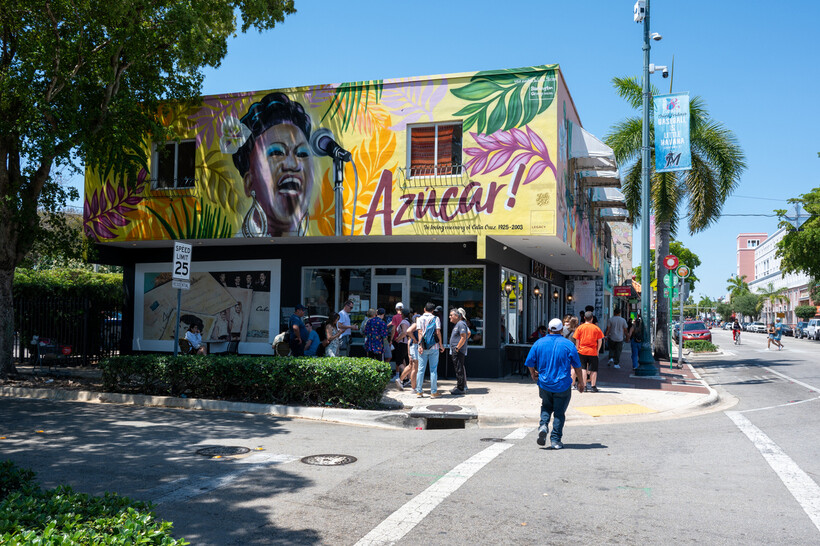 Exploring the colorful streets of Little Havana (Source: iStock)
A Miami relocation requires careful planning. As a bustling city filled with high-rises and condos that enforce strict rules, moving day can quickly become challenging. Follow these tips and tricks to ensure a smooth and stress-free move.
Arrange necessary moving permits
Prepare everything a month before your big day, especially if you’re moving to Miami. Condominiums and high-rises in the city often require a move-in packet. Request it 40 to 45 days in advance so management can identify your permitted move-in hours. If you wait, you risk after-hours fees.
Parking permits are the next thing you should take care of, especially if you’ll choose a high-traffic neighborhood. Always apply early, as temporary permits can take time to process and aren’t inexpensive. They typically cost around $25 to $100 and cover 24 to 72 hours.
Coordinate movers and services
Ensure your place is spotless on arrival by coordinating a move-in cleaning service ahead of time. Booking a furniture assembly service is another option to streamline the setup process.
Beyond the essential moving services, coordinate with the movers to get your insurance paperwork sorted. Most apartment buildings and condominiums require a Certificate of Insurance (COI) from your movers. This proves the moving company has liability coverage for damage to common areas, such as lobbies, elevators, and walls. Just make sure to understand what mover liability actually covers to get full protection of your goods.
Lighten your load and secure your belongings
Decluttering should be the first task on your to-do list. Bringing only the items you truly need and value makes it easier to settle into a new city. It also reduces the risk of damage during transport, as your boxes won’t be overloaded with unnecessary items.
Hiring professional furniture movers is another way to ensure the safety of your belongings during the move. They can assist with packing and transporting fragile or heavy items, such as furniture, electronics, instruments, and oversized art.
Double-check everything
Double-checking helps you avoid costly mistakes when moving. First, verify whether your high-value items were properly declared.
You should also confirm that you have moving insurance to ensure you receive the right compensation if they’re damaged during the move. This includes your jewelry, antiques, or anything worth more than $100 per pound.
How do you get settled in Miami after moving?
 Settling into family life in Miami (Source: iStock)
Moving in Miami is just the beginning. There are still a few tasks left on your to-do list to help you settle in and live comfortably in the city.
Connect your utilities
Power, water, gas, and internet connection are what make a house livable. You need to have them set up at least a month before moving, especially electricity, because Miami’s heat can be relentless.
Don’t forget to also gather the necessary documentation, such as proof of occupancy. Most water and waste services are particularly strict about this requirement.
Here are some of the relevant providers for all the utilities you’ll need for a Miami move:
Utilities |
Example Providers |
|---|---|
Electricity |
Florida Power & Light (FPL) |
Water and Sewer |
|
Natural Gas |
TECO Peoples Gas, Florida City Gas |
Internet and Telecommunications |
AT&T, Xfinity/Comcast, Hotwire Communications, Breezeline, Verizon |
Update your licenses and documents
Earlier, we highlighted the importance of obtaining your driver’s license, registering your vehicle, and updating your voter registration, especially if you’re relocating to Miami from another state or country.
Be sure to also update the following important documents:
Health insurance: Report your new address to your provider. This is particularly crucial if you’re covered through HealthCare.gov. Moving to a new state qualifies as a “life event,” triggering a Special Enrollment Period that allows you to change your coverage. You can’t keep your old plan, as it’s tied to your previous state’s insurance network and pricing.
Federal records: Submit a permanent Change of Address request through USPS online. Additionally, file Form 8822 (Change of Address) with the Internal Revenue Service (IRS) to ensure you receive tax refunds.
Financial institutions: Notify your banks and credit card companies of your new Miami address immediately. This is especially important since they often use your address to verify your identity, particularly for large transactions or when setting up new accounts or services.
Secure local permits
Parking is one of the local permits you’ll need to process if you own a car. The Miami Parking Authority (MPA) operates a Restricted Residential Parking Program, which costs $25 per year. Your vehicle must be registered to a non-commercial address within your specific residential zone. Therefore, work vans or commercial vehicles usually won’t qualify.
Ensure your family’s welfare
Moving to Miami with kids? You’ll have to consider several factors, including education, leisure, and healthcare.
Schools and childcare
Take advantage of the Voluntary Prekindergarten (VPK) in Florida. It’s a free preschool for four-year-olds available to every family regardless of income. Your child just needs to live in Florida and turn four by September 1st to qualify.
Consider also hunting for daycare or early education programs. The Early Learning Coalition (ELC) runs a free referral service that matches families with quality childcare options and can help you access financial assistance for programs through something called School Readiness.
Parks and playgrounds
Explore destination parks and outdoor spaces to keep your family active. In Miami, there’s the Grapeland Water Park, which is a favorite among locals. It features water slides and splash zones where kids can cool off without needing to drive to the beach.
For a change of pace from water parks and beaches, Tropical Park is another excellent choice. It’s a neighborhood hub for many Miami families, offering a range of activities from boxing classes to soccer clubs. It also has spacious areas perfect for birthday parties or letting kids run free.
Healthcare facilities
Take note of the children’s hospitals and urgent care options for emergencies. Among the medical infrastructures that cater to ER incidents are Baptist Health South Florida, Jackson Health System, and the University of Miami Health System (UHealth).
Sort out your pet essentials
Miami enforces strict ordinances to ensure the welfare of animals. Dogs aged four months or older are required to be licensed, and owners must renew the license annually. When walking outside, pet owners should always keep their dogs on a collar and leash.
Recreational activities
Since Miami is pet-friendly, you can find many dog-friendly beaches like Haulover Beach Park and North Beach Oceanside Park, where your furry friends can roam off-leash. A couple of “Bark Parks” can also be found in the City of Miami Beach, which are free to the public.
Pet services
Your pup’s health is just as important as their leisure time. That’s why you should ensure they receive vaccinations, spaying/neutering, and microchipping through the Miami-Dade Animal Services Department (ASD).
Other services are equally essential for their well-being, such as grooming, pet boarding, and reliable pet transport to get them to their appointments.
How do you get around in Miami?
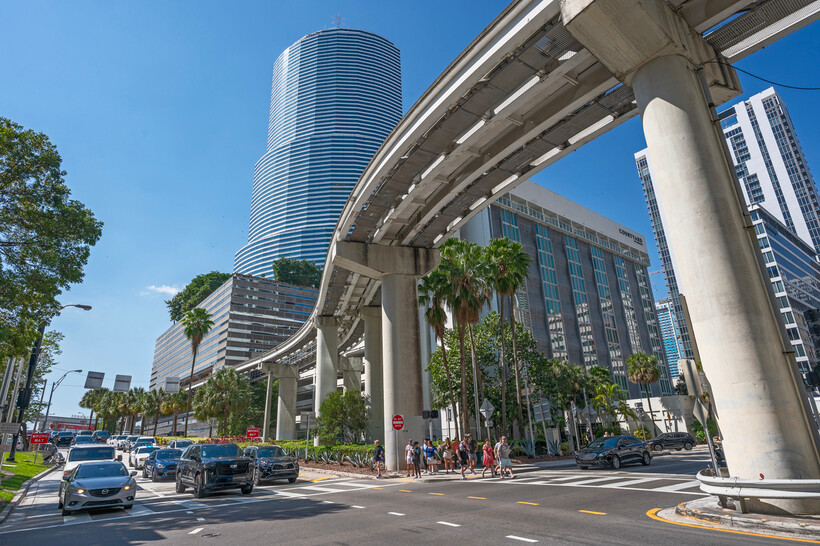 The elevated Metrorail in downtown Miami (Source: iStock)
When considering how Miami is to navigate on a daily basis, you’ll find that there are several convenient ways to get around.
By car
Cars remain the primary mode of transportation in Miami, as the city’s layout features an urban sprawl with homes and buildings spread out across the area. Walkable areas are often limited to tourist spots, such as South Beach or Coral Gables, so residents often need to drive to areas where buses and trains can’t connect.
Miami has a couple of major highways or expressways to help you navigate:
Dolphin Expressway (SR 836)
Don Shula Expressway (SR 874)
Snapper Creek Expressway (SR 878)
Florida Turnpike
I-95 Express Lanes
Although designed for fast traffic, these expressways often face congestion. Expect jams during morning rush hours (6:00 to 10:00 am) and afternoons(2:00 to 7:00 pm).
By train
Miami has two train systems that can take you from the airport to Downtown, through the financial district, and out to the suburbs:
Metrorail
The Metrorail connects Miami’s outer neighborhoods to the city center. It’s your best option for longer trips, like going from the airport to Downtown. It has two color-coded lines:
The Green Line is the main route, connecting residential suburbs to the city with 23 stations, including major hubs like Government Center and Brickell.
The Orange Line splits from the Green Line. It connects Miami International Airport (MIA) to Dadeland South, letting travelers bypass the notorious Miami traffic on the Dolphin Expressway.
A single Metrorail ride costs $2.25, or $1.10 for discounted fares (seniors, students, people with disabilities). You can also use a reloadable transit or EASY card at the fare gates, so there’s no need to visit a ticket window.
Metromover
Metromover is a free, automated people mover that operates like a horizontal elevator, looping around on tracks. It has three distinct loops that help shuttle people around the city center:
The Inner Loop circles through the Central Business District, hitting government buildings and office towers.
The Brickell Loop extends south into Miami’s financial district, where the banks and high-rises cluster.
The Omni Loop heads north to cover the Arts & Entertainment District, where you’ll find museums, the Adrienne Arsht Center, and the arena district.
By Metrobus
The Metrobus has a fleet of nearly 1,000 buses, helping connect the areas that trains can’t reach in Miami. Causeways or bridges that connect the mainland to the barrier islands (such as Miami Beach and Key Biscayne) across Biscayne Bay are perfect examples, since there are no rail lines here.
Suburban and rural communities in the South, such as Homestead and Florida City, also rely on Metrobus to connect to the urban areas.
Here’s a table of the typical operating hours and the routes covered for the Metrobus:
Service Type |
Routes Covered |
|---|---|
Daytime Routes (6:00 am to 10:00 pm) |
Most standard Metrobus routes |
24-Hour Routes |
Route 3 (Biscayne Boulevard), Route 11 (Flagler Street), Route 27 / 27A (NW 27th Avenue) |
Owl (Overnight) Routes |
Route 400 South Owl, Route 401 North Owl |
So, how much does it cost to ride the Metrobus? A single ride costs $2.25, regardless of distance. You can pay with cash directly on the bus or use a rechargeable EASY card.
By trolley
Let’s say you take the Metrorail to a station, but your actual destination is eight blocks away. It’s too far to walk comfortably in Miami heat, but too short for another transit fare to make sense. That’s where trolleys come in.
Trolleys are free public transit vehicles that connect neighborhoods and get you to major transit hubs. They’re not your typical buses, as they’re rubber-tired vehicles styled to look like old-school streetcars. Plus, they’re specifically designed for short trips rather than long-distance travel.
We’ve listed some of the major trolley systems you’ll likely use in Miami:
Trolley System |
Primary Coverage Area |
Key Connections or Destinations |
|---|---|---|
City of Miami Trolley |
Little Havana, Wynwood, Health District |
Brickell, Vizcaya, and Civic Center Metrorail stations |
Miami Beach Trolley |
South Beach, Middle Beach, North Beach |
Hotel districts and bike rack–equipped routes across the island |
Coral Gables Trolley |
Ponce de Leon Boulevard corridor, Downtown Coral Gables |
Miracle Mile, Douglas Road Metrorail station |
Other municipalities, such as Doral and North Miami, also have trolley systems, with specific routes and coverage that vary.
By bike or scooter
Miami features a network of protected bike lanes and scenic paths. This includes the oceanfront route at the Beachwalk. It’s a nine-mile paved path running from South Pointe Park to Bal Harbour that’s part of the Atlantic Greenway Network, which connects bike paths along the entire East Coast.
There’s also the Underline stretching from Brickell down to Dadeland. It’s designed as a linear park, so you’re riding through landscaped areas rather than dodging cars on regular streets.
Fortunately, you don’t need to own a bike to explore these routes. You can rent from Citibike stations scattered throughout the city, with convenient pickup spots at major transit hubs, such as the Brightline MiamiCentral Station.
By ride-share
If you prefer not to drive, you can opt for ride-sharing services like Uber and Lyft. They’re the most popular ones for commuting, errands, and entertainment.
MetroConnect is another option. It’s a “public” ride-share app that operates similarly to private apps: riders book a vehicle to meet them at a virtual bus stop nearby. The key difference? It connects you to the larger public transit network, allowing you to seamlessly transition from a MetroConnect ride to a bus or Metrorail.
What are the best things to do as a new Miamian?
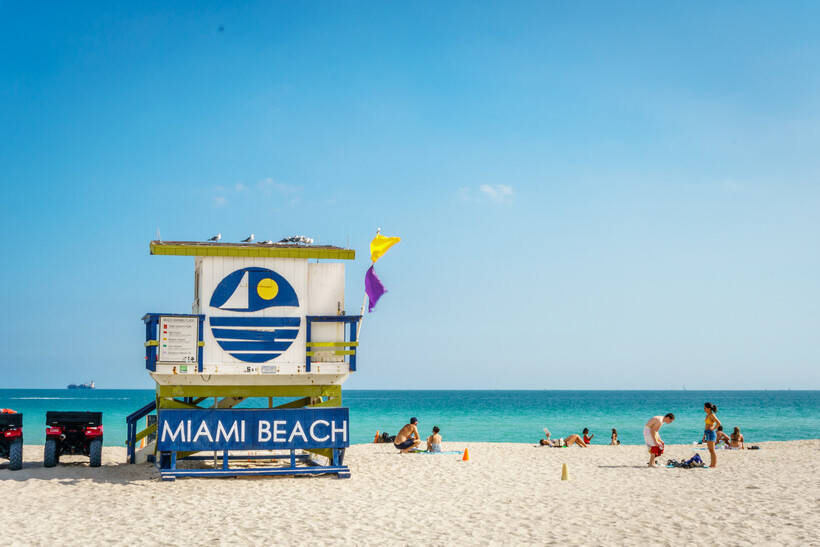 Iconic lifeguard tower on Miami Beach (Source: iStock)
Still reluctant and wonder why move to Miami? Check out what Miami is like with this list of fun activities you can do once you move in.
Visit cultural landmarks and attractions
Although Miami is known for its picture-perfect beaches, the city also features iconic landmarks that tell a rich story of how the place was shaped into what it is today. Most of these historic sites are found at the heart of Downtown Miami, but you can also find some of them in quieter suburban and rural areas.
Below are some of the most popular historic and cultural landmarks you should check out:
Vizcaya Museum & Gardens: Miami’s most visited historic estate, this 1916 Italian Renaissance-style villa is set amid 10 acres of formal gardens and stands as a National Historic Landmark.
Art Deco Historic District: South Beach’s vibrant neighborhood with the world’s largest collection of historic buildings with Art Deco Architecture (bold geometric shapes and bright colors define this iconic, walkable slice of Miami history).
The Freedom Tower: Dubbed the “Ellis Island of the South,” this 1925 landmark famously housed the Cuban Refugee Center and remains a lasting symbol of the Cuban-American journey.
Ancient Spanish Monastery: Originally built in 12th-century Spain, this remarkable monastery was dismantled and reconstructed in North Miami Beach, making it the oldest European-style building in the Western Hemisphere.
Coral Castle: An eccentric stone garden crafted over 28 years by a Latvian immigrant, featuring 1,100 tons of coral rock and showcasing Miami’s more mysterious side.
Enjoy the outdoors
Outdoor activities on Miami’s beaches and waterways can be enjoyed anytime, thanks to the city’s year-round subtropical weather.
Joggers, cyclists, and strollers will love Miami Beach’s nine-mile beachwalk, stretching from South Pointe Park to Bal Harbour. The path features volleyball courts, exercise areas, and serene spots with stunning ocean views.
For those seeking a more secluded experience, Bill Baggs Cape Florida State Park on Key Biscayne offers a historic lighthouse and quiet beaches. Oleta River State Park is another excellent option for a quick escape into nature from downtown. Here, you can kayak through mangrove forests, explore 15 miles of mountain biking trails, or camp overnight in primitive cabins.
Whether you’re exploring iconic destinations or hidden gems, Miami offers abundant outdoor experiences in every neighborhood. So, go out and participate in community activities to experience the best the city has to offer.
Check out the local market scene
Miami’s diverse culture shines at local markets. The Lincoln Road Farmers Market runs every Sunday on South Beach’s pedestrian mall. It features certified organic produce, fresh fruit cups, and local business products like hot sauces.
If you’re headed to Coconut Grove, the Vizcaya Village Farmers Market takes place every Sunday at the historic estate. It’s a great spot for fresh delicacies, hand-crafted goods, and vegan products. Plus, you can enjoy the beautiful farm grounds!
Robert Is Here Fruit Stand is another must-visit if you head south toward the Everglades National Park. It’s known for exotic tropical fruits and legendary fresh fruit milkshakes, and also features a petting zoo and a general store with local honey and artisanal breads.
Move to Miami with ease
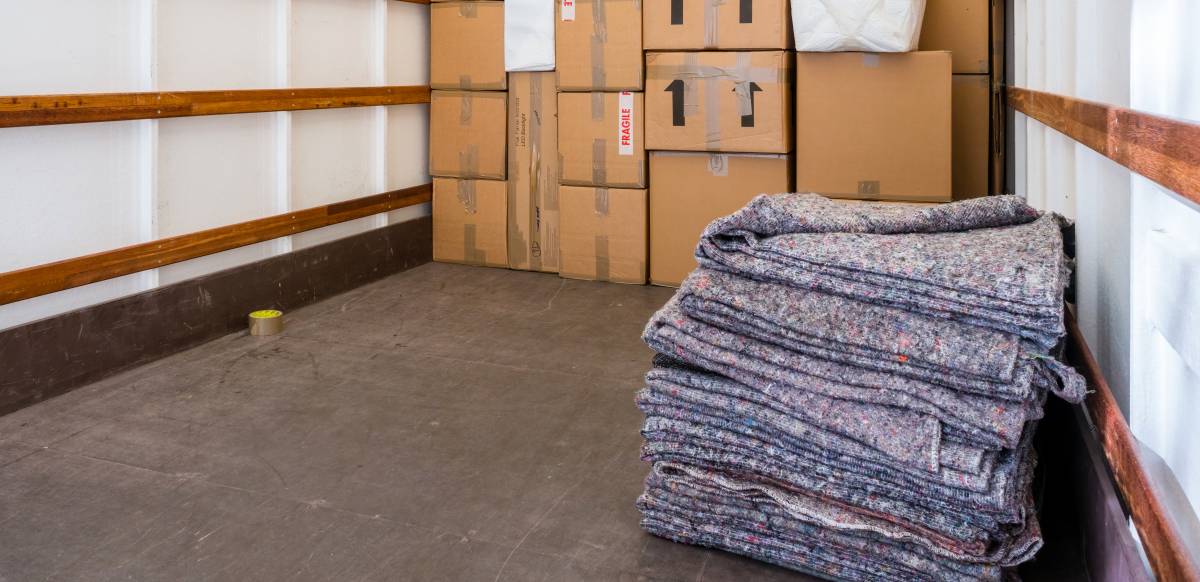
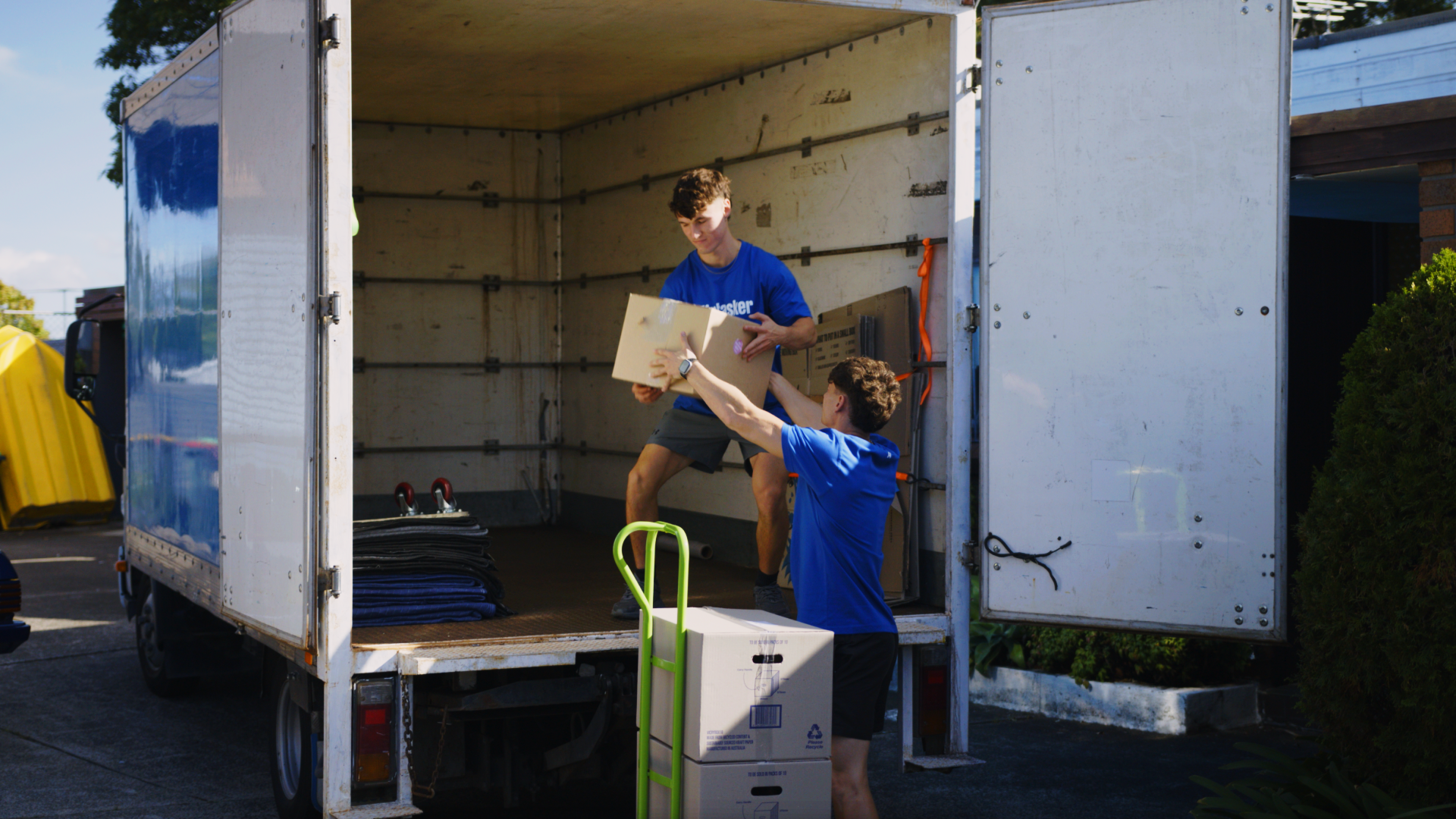
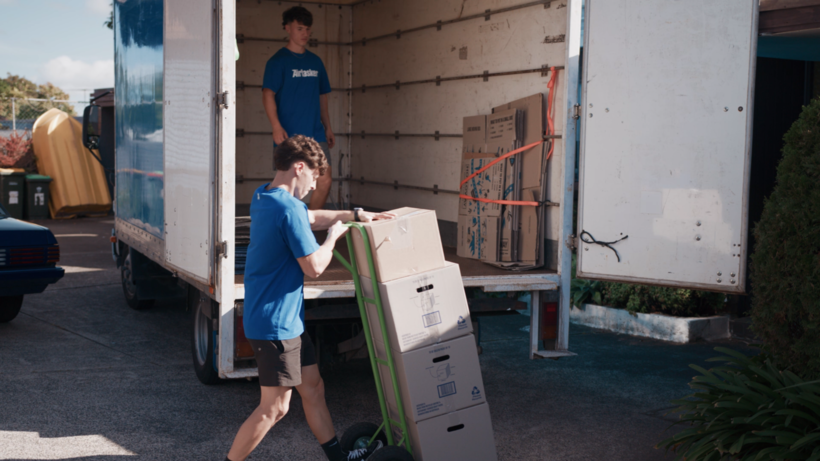 Airtasker movers loading belongings safely onto the truck
Miami is an exciting city to call home, with its sun-kissed beaches and warm weather year-round. However, relocating can be tricky, especially with the high humidity and strict moving rules in high-rise buildings.
That’s where Airtasker comes in. You can hire professional movers who can handle everything from transporting your belongings to assembling your furniture, making your move seamless. By leaving the heavy lifting to the experts, you’ll have more time to settle in and start exploring the city!
Helpful resources for those moving to Miami
Florida Department of State (Division of Corporations): Issues apostille and notarial certifications for Florida public documents like birth or marriage certificates needed internationally. Also coordinates election laws and voter registration at the state level.
US Citizenship and Immigration Services (USCIS): Vital for international movers. Administers employment-based visas, work authorisations (EAD), and permanent residency (Green Cards). Provides the SAVE system for verifying immigration status.
Greater Miami Convention & Visitors Bureau (GMCVB): The official destination marketing organisation offering neighbourhood profiles, event calendars, cultural guides, and the Miami MICHELIN restaurant list—invaluable for understanding local lifestyle and amenities.
Learn more about our contributors
Written by Cielo B.
Staff Writer
Cielo is an experienced content writer who has explored various industries throughout her career. Her expertise, founded on a degree in journalism, includes writing about automotive and home maintenance. Cielo also covers topics like dressmaking, tailoring, and photography since she is a passionate cosplayer who enjoys dressing up as her beloved anime characters.
FAQs about moving to Miami
Technically yes, but it’s not advisable given the visa requirements and the high cost of living. Most buildings also require income proof before you can rent or buy a home in Miami. To be safe, you’ll need at least three to six months’ expenses in savings, which is around $30,000 minimum, to cover deposits and living expenses until you’re employed.
Renting is generally better in the short term due to low upfront costs. However, if you plan to stay long-term, buying a home is a better option to build equity.
It depends on your preference. The city center offers easy access to urban amenities like nightlife and transit access, so it’s ideal for singles or young professionals. However, suburbs are better if you prefer a family-friendly atmosphere and more affordable rental costs.
Although most areas in Miami are considered safe, some urban pockets, such as Liberty City, Overtown, and Little Haiti, have higher reported crime rates. For those seeking a quieter and more consistently secure environment, suburban areas like Coral Gables, Coconut Grove, and Key Biscayne are often preferred.
Find movers, fast
Find a mover
Related price guides
How much do packers cost?
Read more





Related articles
Moving to San Diego Guide
Read more
Moving Checklist
Read more
A guide to becoming a mover
Read more

How much do movers make?
Read more

Tips for moving house with kids
Read more
How to move gym equipment safely
Read more

How to pack artwork for moving
Read more

How to pack books for moving
Read more

How to pack kitchen items
Read more
How to move a washing machine
Read more

How to move a shed
Read more

How to move a pool table
Read more
How to move a vending machine
Read more

How to pack bedding for moving
Read more
How to move a refrigerator
Read more

How to move a pinball machine
Read more
Where to get moving boxes for free
Read more

How to wrap furniture for moving
Read more

What movers won’t move
Read more

The ultimate packing and moving list
Read more

Moving interstate checklist
Read more

Moving out of state checklist
Read more