Moving to Boston: Everything you need to know about the Athens of America
How to plan your move, manage the high costs, and settle into Boston’s academic heart
Published on

Written by Cielo B.
Staff Writer
Read more about our contributor
Moving to Boston Highlights
Boston is a compact, walkable city with a strong academic and research-driven culture, anchored by 50+ universities and a global biotech hub.
Living costs are high, especially housing. One-bedroom rents typically range from $1,800 to $4,500, with overall expenses well above the national average.
Boston’s student lease cycle creates a major moving surge around September 1st. Moving in February or March can help reduce costs and improve mover availability.
Boston is among the most intellectually and culturally rich cities in the United States, with incredible healthcare, top-tier schools, and a thriving economy. It draws world-class researchers, ambitious students, and families seeking a community-focused lifestyle.
That said, the city’s high demand and fast-paced environment can feel overwhelming for newcomers. A solid plan is essential for a stress-free relocation. Start with this guide, where we explore key factors for a successful move to Boston, including an honest look at the cost of living, a breakdown of popular neighborhoods, and insights into the booming job sectors.
Why are people moving to Boston?
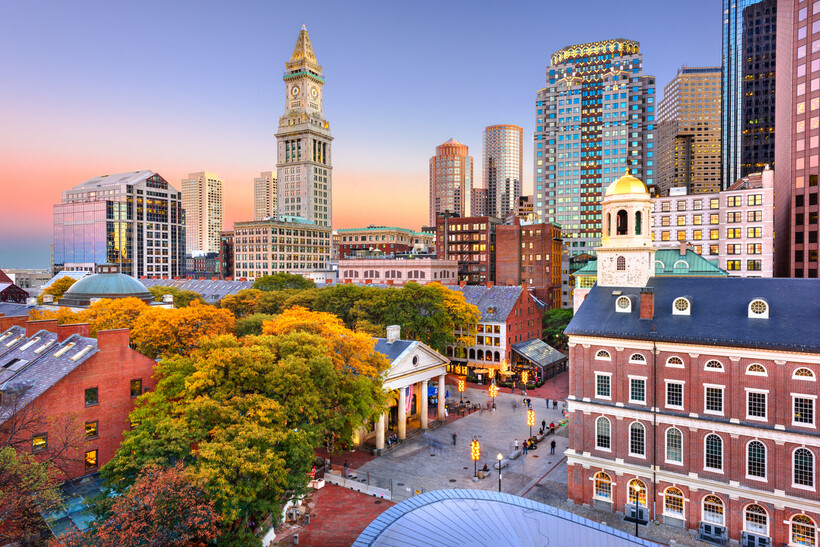 Boston’s thriving central business district (Source: iStock)
Here’s how Boston’s unique culture and professional landscape attract those seeking career growth in a walkable environment.
Lifestyle and culture
Known as America’s Walkable City, Boston feels like living in a European town right in the heart of New England. One of the top reasons to move to Boston is the lifestyle; many residents can be found strolling through the winding, narrow cobblestone streets downtown, as the neighborhoods are compact and easy to navigate.
The city also radiates intellectual energy, with top universities like Harvard and MIT located just across the Charles River in Cambridge. Even Kendall Square, renowned for its biotech and robotics industries, is here, making the city a hub for graduates and researchers.
While Boston is brimming with intellectuals, its residents also share a deep passion for sports. Ballparks are often packed with thousands of sports fans cheering on the Red Sox, the city’s beloved professional baseball team.
Career and job opportunities
Education and healthcare dominate Boston’s economy. You’ve got world-class hospital systems here, including Mass General Brigham (the state’s largest private employer), Boston Children’s Hospital, and Beth Israel Deaconess, which drive massive employment growth. Meanwhile, over 50 colleges and universities employ thousands directly.
Professional and scientific services are also among the city’s biggest moneymakers. This sector includes everything from law firms to engineering consultancies, but Boston-Cambridge shines in life sciences, ranking number one nationally for biotech and drug development.
Industries like finance and insurance also remain relatively strong, as giants like Fidelity Investments, State Street, and Liberty Mutual are headquartered here.
Here are potential salaries for major roles in these dominant sectors:
Role |
Industry |
Approximate Annual Earnings |
|---|---|---|
Anesthesiologist |
Healthcare |
$395,000 to $451,000 |
Chief Executive |
Business/Management |
~$441,300 |
Radiologist |
Healthcare |
$385,000 to $396,500 |
Surgeon |
Healthcare |
$348,000 to $355,000 |
Family Medicine Physician |
Healthcare |
$220,000 to $238,000 |
Engineering Manager |
Technology/Engineering |
$155,000 to $207,000 |
Machine Learning Engineer |
Technology |
~$157,000 |
Weather and climate
The weather in Boston can be unpredictable. Locals often joke, “If you don’t like the weather in Boston, just wait one moment.”
Here’s what each season brings and how to prepare for it:
Season |
Weather and Temperatures |
What to Wear or Prepare |
|---|---|---|
Winter (December to March) |
Very cold with lots of snow and winter storms; colder days are around 22°F and feel even colder with wind. |
Thick winter coat, waterproof boots, warm layers, scarf, gloves |
Spring (March to May) |
Rainy and changeable; can feel cold or warm in the same week, with late spring around 50°F–67°F. |
Light layers, rain jacket, umbrella |
Summer (June to August) |
Warm and humid; most days are in the low 80s, but some days go over 90°F with short heavy rainstorms. |
Light clothing, sunscreen; check if homes have air conditioning |
Fall (September to November) |
Mild and comfortable at first, then cooler; warm days and cool nights before colder weather in November. |
Light layers, sweaters or jackets, good walking shoes |
What should you research before moving to Boston?
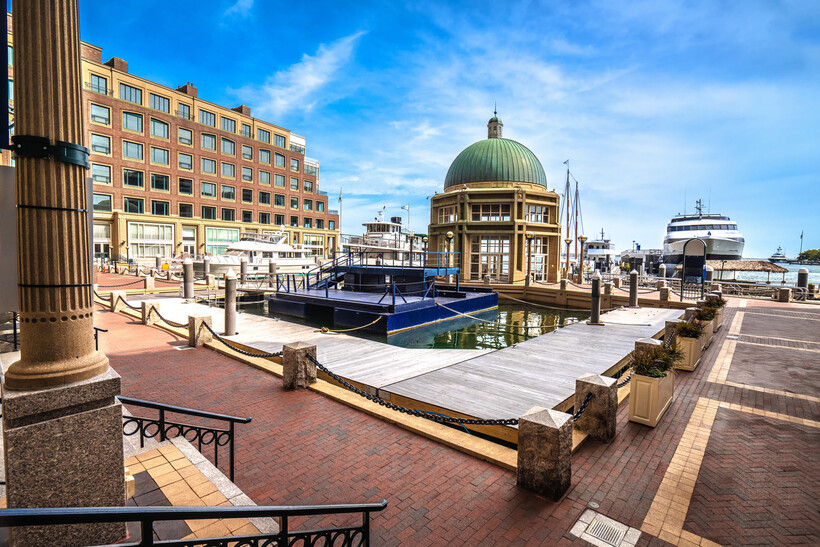 Boston’s downtown waterfront near the harbor (Source: iStock)
Understand the pros and cons of living in Boston by learning what your daily expenses might look like, which neighborhoods to choose from, and other moving considerations.
Cost of living
The cost of living in Boston, Massachusetts, is 47% higher than the national average, making it among the most expensive cities in the country. Housing is the biggest expense, with rents averaging around $3,200 to $4,000 per month.
Aside from housing, state taxes in Massachusetts include a 5.0% personal income tax. The state also applies a 6.25% sales and use tax to most goods and taxable services, including prepared meals and certain online or out-of-state purchases where sales tax isn’t collected.
Here’s a breakdown of what your monthly expenses might look like when living in Boston:
Area of Expense |
Average Cost |
|---|---|
Rent |
$3,200 to $4,000 |
Groceries |
$300 to $600 |
Utilities (Internet, Electric, Heat, and Water) |
$78 to $390 |
Transportation (Public transit) |
$90 |
Given the cost of living, a single person may need at least $100,000 a year to keep up with housing and everyday expenses. That can be challenging, especially when the average Boston salary is around $93,000, which leaves many residents carefully managing their budgets.
Here’s a tip: Before accepting a job offer in Boston, calculate whether the salary truly covers the cost difference.
Neighborhood options
Is Boston a good place to live? If you’re planning a move, that question often goes hand in hand with deciding where to live in Boston. With so many distinct neighborhoods, finding the right fit can make a big difference in how much you enjoy the city.
To make that choice easier, we’ve narrowed down some of the best Boston neighborhoods based on different lifestyles and needs.
Seaport District
Known as the “Innovation District”, the Seaport District is a waterfront tech hub surrounded by many glass high-rises, rooftop pools, and biotech startups. The area defines luxurious living, with rents costing around $4,500 a month for a one-bedroom.
Getting around the district is fairly easy, as homes and offices are within walking distance. However, buses and water taxis are also available at the South Station.
Beacon Hill
Beacon Hill is hailed as “historic Boston” for its brick sidewalks, row houses, and preserved buildings. There’s a historic preservation rule in this neighborhood that prevents residents from modernizing exteriors, so it feels like living in a time capsule.
This neighborhood often tops the list for those seeking a quiet and prestigious atmosphere, despite rents ranging from $2,800 to over $4,000 per month. While housing expenses are high, commuting is convenient as every subway line is within walking distance.
Jamaica Plain (JP)
JP captures Brooklyn’s artsy vibe, blending urban convenience with green spaces. The Arnold Arboretum (a massive 281-acre park) and Jamaica Pond (a scenic 68-acre freshwater oasis) are found here, giving residents a rare front-row seat to nature within the city.
Housing costs are more affordable than in many neighboring districts, with rents averaging at $2,049 to $2,900 for a one-bedroom. This affordability makes it a popular choice for students. If you’re planning a relocation to the area, professional college moving services can make the transition to your new apartment much smoother.
What’s also great about living in JP is its proximity to the MBTA Orange subway line, which allows residents to reach downtown within 20 minutes.
Dorchester
Often described as the “real Boston”, Dorchester gives off an authentic feel as the largest neighborhood where much of the working class resides. It offers a mix of sub-neighborhoods, from hidden gems like Savin Hill to the vibrant and diverse Fields Corner.
Rents here are among the most affordable, with one-bedrooms averaging around $2,500. The best part of living in Dorchester is that the neighborhood has direct access to both the subway lines and the commuter rail.
East Boston
East Boston offers stunning skyline views at a more affordable cost. Rent ranges from $1,800 to $2,700 per month for one-bedroom apartments. Beyond the affordability, the neighborhood also boasts an incredible Latin American food scene.
As for the commute, it’s situated near the Blue Line subway, which gets you downtown in only 10 minutes. Plus, it’s next to Logan Airport, which is convenient for frequent travelers.
Best time to move
Moving to Massachusetts requires careful timing, especially if you’re relocating to Boston, which has a massive student population. Moving demand typically surges during the traditional September 1st lease cycle, when most leases start and end, resulting in thousands of families and students moving on that day.
To help you better understand the market trends, here’s a breakdown of the best and worst times to move to Massachusetts:
Season |
Pros |
Cons |
|---|---|---|
Winter (December to February) |
Generally a more affordable season to move. February demand is about 36% below average on Airtasker, while January runs roughly 20% below average. Landlords may be more open to negotiations, which can improve apartment options and pricing. |
Cold temperatures can make loading and unloading less comfortable. Snow and ice may lead to delays, and shorter daylight hours reduce flexibility. Holiday schedules in December can limit availability. |
Spring (March to May) |
March sees very low demand (around 68% below average), often translating to lower prices and good availability. April and May offer a strong mix of milder weather, reasonable costs, and flexible scheduling. |
Early spring weather can be unpredictable, with lingering cold or occasional snow. Demand typically starts to rise by late May as the summer season approaches. |
Summer (June to August) |
Warm, stable weather makes moving conditions easier and more predictable. Early June may still offer slightly better availability before peak demand hits. |
August is the busiest month for moving, with demand around 76% above average on Airtasker, leading to higher prices and limited availability. June and July remain busy, so booking well in advance is often necessary. |
|
Fall (September to November) |
By November, demand often cools to about 12% below average, improving pricing and mover availability. Comfortable temperatures and reduced competition later in the season make fall a practical choice. |
September and October can stay busy due to student-season spillover. Popular dates fill quickly, and cooler weather and holidays in November can complicate scheduling. |
Moving costs
Here’s a look at the data from moving service offers posted on Airtasker to help you understand what to anticipate when relocating to Boston and throughout Massachusetts:
General moving services: These average around $150 to $600 for household moves across Massachusetts, with Boston-area services typically ranging from $150 to $300.
Small transport jobs: Lighter furniture moving and delivery tasks average about $50 to $300, which is notably lower due to the focused nature of these jobs.
Specialty moving: For heavy equipment, appliances, or unique items requiring specialized handling, expect costs between $500 to $1,650, depending on complexity.
With that in mind, moving costs can still vary significantly depending on factors such as the volume of belongings and accessibility. For example, Boston’s narrow streets, limited parking, and historic walk-up buildings often require additional coordination, parking permits, and extra labor, which can increase your final bill.
Out-of-state or international considerations
Moving from another state or country typically requires extra planning and preparation due to the additional documentation requirements.
Interstate moving
Establishing residency is the first thing you should consider when moving interstate. Let’s say you’re moving from Chicago to Boston. You’ll need to stay for half a year (around 183 days) before establishing a domicile.
The domicile is a legal status that designates the new city you moved into (in this case, Boston) as your fixed, permanent home. In addition to your lengthy stay in the city, you’ll need to buy property and register to vote to establish your domicile and secure your residency.
International moving
For international moves, visa authorization should be your priority, as processing times may vary and take months. Here are some of the visa types you’ll likely need when moving to Boston:
H-1B: For skilled workers with employer sponsorship, hired for specialized jobs.
F-1: For students pursuing education in the US
L-1: For employees transferring within the same company
Shipping requirements are next. You must complete a CBP Form 3299 for personal items and ensure your moving company files an ISF at least 24 hours before your vessel departs to avoid fines. Prepare a detailed inventory with HS codes (product classification numbers) for all shipped items.
Lastly, if you’re moving to Boston from a country that’s a member of the Hague Convention, you’ll need to get an apostille to have your documents officially recognized. This is typically issued by the Secretary of the Commonwealth in Massachusetts.
What should you do before your Boston moving day?
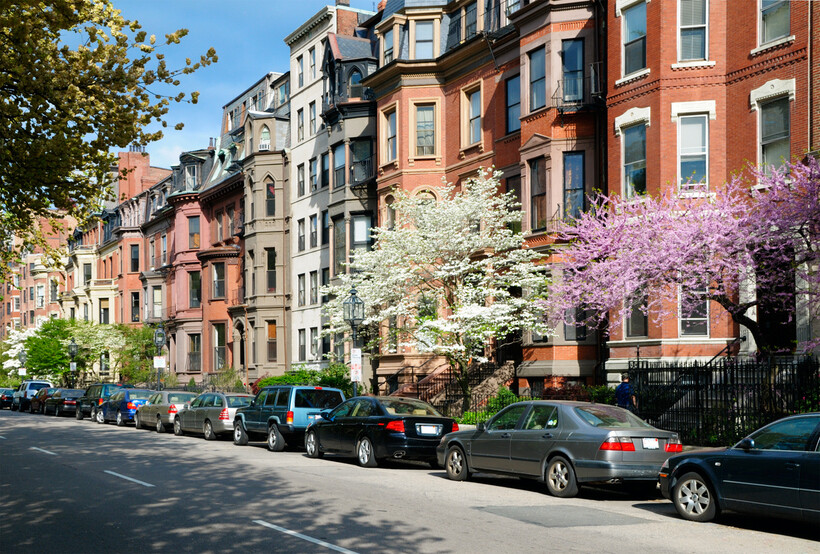 Classic brownstone houses in Back Bay (Source: iStock)
Make sure to prepare these moving essentials to avoid common mistakes when relocating to Boston.
Arrange necessary moving permits
A Boston moving permit is one of the most important things to obtain, especially if you’re moving into traffic-heavy neighborhoods like Beacon Hill or Charlestown. It lets you reserve two parking spots for your moving truck on a specific day. The permit costs $69 for one day, with an extra $20 to $40 per meter if your reserved space includes parking meters.
You’ll also need to buy official “No Parking” signs (about $4 each) and post them at your reserved spot at least 48 hours before your move. If you skip this or post them late, the police won’t enforce your spot even though you paid for it.
Coordinate movers and services
When hiring moving services in Boston, make sure to book several weeks in advance. This is critical for long-distance moves, which require advance planning since companies need to coordinate truck routes and schedules across state lines. It also helps avoid “storrowing”—the local term for moving trucks getting wedged under bridges with low clearance.
Aside from the moving services, consider scheduling a move-in cleaning service. You’ll want your new home sparkly clean before arriving, so ideally, book professional cleaners at least two to three weekends in advance.
Lighten your load and secure your belongings
Before you start packing your boxes, declutter first to lighten your load. Go through your stuff with the one-year rule: if you haven’t used it in a year and it’s not sentimental, donate or sell it online.
It also helps to disassemble furniture before packing it away. Boston’s older buildings often have narrow staircases and doorways that won’t fit your assembled furniture, so you’ll need to take pieces apart before moving day.
Finally, hire furniture movers ahead of time. They can help secure your bulky pieces using dollies and other lifting equipment to move them safely.
Connect your utilities
You’ll want everything in your home up and running before you move, so make sure to set up necessary utilities three to four weeks before your move-in date. Here’s a list of the utilities you’ll need and their respective providers in Boston:
Utility Type |
Example Providers |
|---|---|
Electricity |
Eversource |
Water and Wastewater |
|
Natural Gas |
National Grid |
Internet and Cable |
Xfinity/Comcast, Verizon/Fios, RCN (now Astound Broadband), NetBlazr, Earthlink |
How do you get settled in Boston after moving?
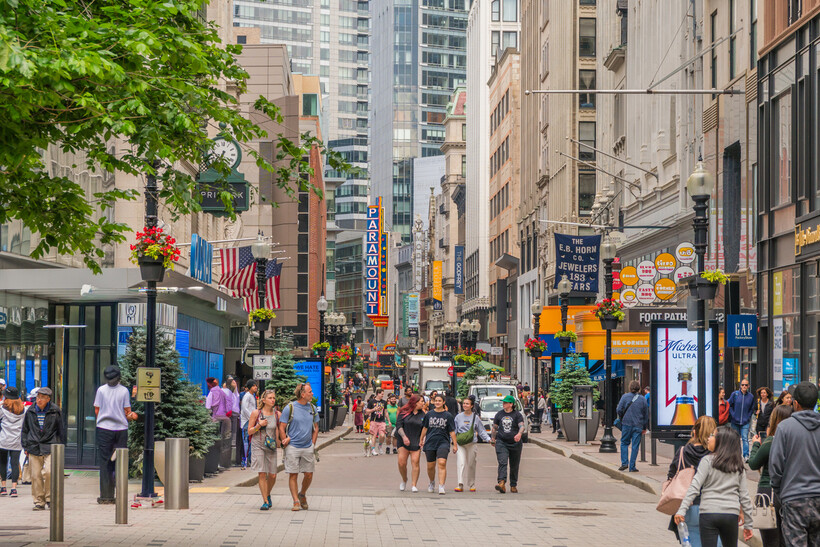 A lively pedestrian street in downtown Boston (Source: iStock)
Below are some tips for moving to Boston to help you settle in quickly and with minimal stress.
Update your licenses and documents
Your first few months as a new resident will be busy. You’ll likely need to process these documents to establish your residency:
Driver’s license application: Transfer your out-of-state driver’s license to a Massachusetts one within 30 days through the RMV Service Center. Choose between a Standard License or a Real ID for travel flexibility.
Vehicle registration: Register your vehicle at the RMV after obtaining your driver’s license. Before heading over to RMV, make sure to secure Massachusetts auto insurance and have your agent complete the RMV-1 form to prove coverage.
Resident parking permit: Apply for a permit at the city hall if your neighborhood has “Resident Parking Only” zones.
Mail redirection: Notify the US Postal Service (USPS), banks, and the Parking Clerk of your new address promptly to avoid delivery interruptions.
Voter registration: Register or update your address at least 10 days before an election, either online or in person at the Boston Election Department.
Ensure your family’s welfare
If you’re moving with kids, arranging their education should be a top priority. In Boston, affordable early childhood education is guaranteed through the Universal Pre-K program. Children who turn three or four by September 1st and reside in the city are eligible.
As your child progresses from kindergarten to high school, you can select schools based on the BPS home-based assignment plan. This plan uses your home address to determine which schools are available to your family.
Playgrounds and parks
While education is important, kids should also spend time outdoors. Fortunately, you can find numerous parks around Boston, from the historic Boston Common with its winter ice skating at Frog Pond to modern facilities like Martin’s Park in the Seaport, which features a massive wooden ship structure and inclusive equipment for kids of all abilities.
Healthcare facilities
Healthcare access after your Boston move is straightforward thanks to these three major healthcare networks and community health centers:
Boston HealthNet: Connects Boston Medical Center with 13 neighborhood health centers, offering primary and specialty care in areas like South Boston, Dorchester, Roxbury, and East Boston.
Mass General Brigham: Features nationally ranked hospitals such as Massachusetts General and Brigham and Women’s, along with specialized facilities like Mass Eye and Ear and Spaulding Rehabilitation.
Tufts Medicine: Operates as the flagship academic hospital, with locations like Lowell General and MelroseWakefield providing primary, specialty, and urgent care throughout the region.
Sort out your pet essentials
If you’re moving with pets, you’ll need to license your dog by April 1st each year. It costs $15 for spayed or neutered dogs and $30 if your dog isn’t fixed (fee waived for owners 70+).
As for leisure, Boston has numerous dog parks. Popular spots include Boston Common’s Deer Park in Back Bay, Peters Park in the South End, and Prince Street Park in the North End (which has water features your dog will love).
Pet care services
When you need dog boarding, grooming, or pet transport, you’ve got plenty of options throughout the city. For instance, Luxe Pet Resort in West Roxbury offers daycare, grooming, and dog hikes, while Pawmenities in the Seaport provides cage-free luxury boarding.
Here’s a tip: Keep records of your pet’s current vaccinations, as most facilities require them.
How do you get around in Boston?
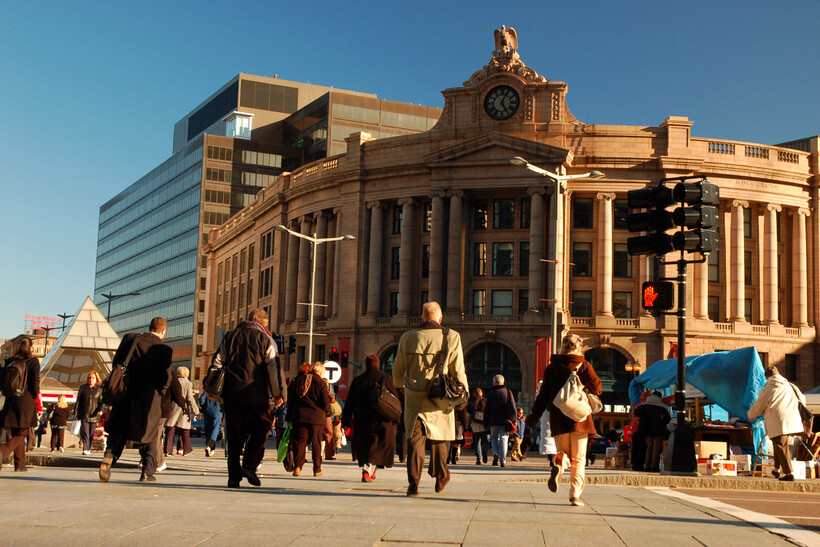 Commuters near South Station in Boston (Source: iStock)
Knowing how to commute and travel around Boston is one of the first things you should learn when moving to the city.
By subway
The Massachusetts Bay Transport Authority (MBTA) runs Boston’s subway (commonly known as the “T”). It connects downtown to surrounding neighborhoods. A single ride costs $2.40, but if you’re making multiple trips, an unlimited pass is more affordable.
The subway system uses color-coded lines that help make navigation straightforward once you already know the basics. Check out this table to understand the routes and the areas their trains cover.
Line |
Route Overview |
Key Areas Served |
|---|---|---|
Red Line |
Runs from Cambridge (Alewife) through Boston and South Boston, splitting into two southern branches to Braintree and Ashmont (Dorchester) |
Harvard University, MIT, Dorchester |
Orange Line |
Travels from Malden (Oak Grove) through downtown Boston to Jamaica Plain (Forest Hills) |
Downtown Boston, Jamaica Plain |
Blue Line |
Connects downtown Boston (Bowdoin) to Revere (Wonderland), passing under Boston Harbor |
Downtown Boston, North Shore |
Green Line |
Light rail system with four branches (B, C, D, and E) running partly underground and partly at street level |
Brookline, Newton, Longwood Medical Area |
By bus
The MBTA also manages Boston’s bus network. It runs 177 routes, allowing residents to travel crosstown and reach neighborhoods the “T” doesn’t touch. It has three main types:
Local buses: Designed for shorter neighborhood trips.
Express buses: Provide faster commutes with fewer stops.
Silver Line: Operates like a subway on certain routes, running through dedicated tunnels.
How much does a bus ride cost? It’s $1.70 for most buses, but some Silver Line routes cost more (around $2.40) because they typically run underground like trains.
By commuter rail
Boston’s commuter rail uses purple-branded trains to connect downtown with suburbs across eastern Massachusetts and Rhode Island. The system is split between two terminals: North Station (serving areas like Lowell and Newburyport) and South Station (serving areas like Providence and Worcester). There’s no direct train between them, so you’ll need to hop on the subway to transfer:
The commuter rail also uses a zone-based fare system, which means the farther you travel from Boston, the more you pay. One-way tickets range from $2.40 to $13.25.
By car
Usually, you won’t need a car to get around Boston, since the neighborhoods are mostly walkable and have convenient public transit. However, cars can be useful if you’re heading to the suburbs or hauling furniture when moving houses.
If you’re driving, take note of peak congestion hours:
Weekdays: Morning gridlock runs from 7:00 to 9:30 am, while evening congestion lasts from 3:30 to 6:30 pm.
Weekends: Saturday afternoons (12:00 to 4:00 pm) and Sunday evenings also bring heavy traffic as people run errands or return from weekend trips.
Tolls are another thing to keep in mind, especially if you’ll visit the suburbs. Massachusetts has an all-electronic toll system called EZDriveMA that uses cameras to photograph your license plate and automatically charge you as you drive through tolls.
By ferry
Want to avoid downtown traffic? Take a ferry and enjoy sweeping views of Boston’s harbor and skyline. Fares range only from $2.40 to $7.00, depending on your destination.
Boston’s ferry system is run by the MBTA and, in partnership with Boston Harbor City Cruises, operates several routes connecting the downtown area to neighborhoods like Charlestown and East Boston, as well as to outer areas like Hingham, Hull, and Lynn.
By bike or bike-share
Boston is incredibly bike-friendly, with over 100 miles of bike lanes throughout the city. Some of the popular routes include:
Charles River Bike Path: A scenic 24-mile loop along the Charles River, passing through Boston, Cambridge, and Watertown.
Southwest Corridor Park: A 4.7-mile commuting route linking Forest Hills and Jamaica Plain to Back Bay and Copley Square.
Minuteman Bikeway: A rail trail starting in Bedford and running through Lexington and Arlington to Alewife Station in Cambridge.
Neponset River Trail: A path following the Neponset River from Mattapan to Dorchester.
Northern Strand: A trail connecting communities north of Boston, such as Everett and Malden, to the coast.
If you don’t have a bike, you can unlock one from Bluebikes, Boston’s public bike-share system. It has over 5,300 bikes (including electric-assist options) spread across nearly 600 stations throughout the metro area.
By taxi or ride-share
Traveling by taxi or ride-share is another practical option in Boston, especially when you’re heading somewhere the “T” doesn’t serve, or you’re out late at night. You have three choices:
Ride-share apps: Options like Uber and Lyft, which dominate the city
Traditional metered taxis: Available to hail on the street or book in advance
Private car services: Offer guaranteed pickups for added convenience
What are the best things to do as a new Bostonian?
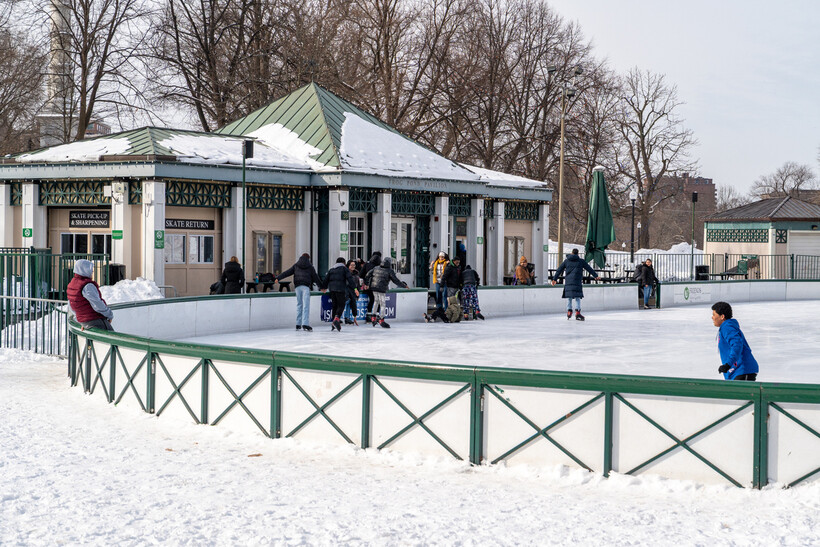 Ice skating at Boston Common in winter (Source: iStock)
Exploring what the city has to offer is one of the best ways to truly experience Boston living.
Visit cultural landmarks and attractions
Boston is hailed as the “Athens of America” because of its world-class museums, historic libraries, and cultural institutions that have shaped American intellectual life for centuries. Exploring these sites will help you understand the city’s rich history and unique character.
These are some of the popular cultural landmarks and historical sites in Boston:
Back Bay: Iconic for its Victorian brownstones and grand boulevards, built on reclaimed land and now a symbol of Boston’s 19th-century architectural ambition.
Boston Public Library: America’s first major free public library, designed as a Renaissance palace to embody the city’s commitment to accessible knowledge.
Isabella Stewart Gardner Museum: Modeled after a Venetian palazzo, this museum showcases the collector’s personal vision and a distinctive courtyard garden.
USS Constitution: World’s oldest commissioned warship still afloat, docked in Charlestown, celebrated for its resilience during the War of 1812.
Boston Tea Party Ships & Museum: An Interactive museum featuring replica ships and live reenactments of the 1773 protest that helped ignite the American Revolution.
Enjoy the outdoors
Life in Boston means getting to connect with nature every day. Parks are connected by the Emerald Necklace, a long stretch of green space designed like a string of jewels surrounding the city. This park system runs through various neighborhoods, allowing you to reach the suburbs from downtown.
Apart from that, Boston also boasts a stunning waterfront, the Charles River Esplanade. It runs three miles along the riverbank, where you can see people running, cycling, or renting kayaks and sailboats from the Community Boating Center.
Check out the local market scene
Boston’s markets offer one of the fastest ways to get to know your new city. You can find fresh regional ingredients, shop for unique furniture for your new home, and meet neighbors while browsing produce or vintage finds.
Among the local markets, Haymarket is a must-visit for newcomers. It’s America’s oldest open-air market, offering affordable fruit, vegetables, and seafood. The Boston Public Market is another great option for fresh dairy, local seafood, handmade chocolates, and seasonal produce.
If you’re interested in arts and vintage goods, check out the SoWa Open Market in the South End. It operates like a weekly street festival celebrating local makers, complete with artist studios, handmade jewelry, food trucks, and beer gardens.
Move to Boston with ease
Moving to a new city isn’t just about hauling boxes; it’s about keeping your furniture and valuables in good shape. In a city of historic buildings and tight stairwells like Boston, one wrong move can mean permanent damage to the things you own.
Hiring local Boston movers on Airtasker can help take that stress off your plate. They know the city’s quirks and how to handle tough spaces, so your belongings get moved with care. Post a task today to find reliable movers who can help everything arrive safely at your new place.
Helpful resources for those moving to Boston
Check out these sites that’ll help you navigate the city as a newcomer:
City of Boston: Access essential city services, including parking regulations, bike laws, and the BOS:311 system for reporting issues.
Meet Boston: Explore the city’s neighborhoods, dining, and cultural attractions, with travel advice and event information for newcomers.
Massport (Massachusetts Port Authority): Find information for navigating Logan Airport, including Logan Express bus service and shipping directories.
Department of Conservation and Recreation (DCR): Get critical alerts on height restrictions for river roads like Storrow Drive to avoid bridge collisions with moving trucks.
Learn more about our contributors
Written by Cielo B.
Staff Writer
Cielo is an experienced content writer who has explored various industries throughout her career. Her expertise, founded on a degree in journalism, includes writing about automotive and home maintenance. Cielo also covers topics like dressmaking, tailoring, and photography since she is a passionate cosplayer who enjoys dressing up as her beloved anime characters.
FAQs about moving to Boston
If you’re moving from New York City to Boston and wondering whether you’ll save money, the answer is generally yes. NYC’s cost of living is estimated to be 15-58% higher than Boston’s, depending on lifestyle. Housing, along with everyday expenses like groceries and transportation, is typically more affordable in Boston.
If you plan to stay long term (around five to ten years or more), buying a home may be worth considering despite Boston’s high housing prices. If you’re still exploring the city or unsure which neighborhood fits you best, renting first can be a more flexible option.
Each option comes with its own pros and cons, so it really depends on your priorities. City living can be a good fit if you work downtown or prefer an urban lifestyle, while the suburbs tend to appeal to families and people working remotely who want more space and quieter surroundings.
Find movers, fast
Find a mover
Related price guides

How much do packers cost?
Read more







Related guides
How to move gym equipment safely
Read more

Where to get moving boxes for free
Read more

Moving to San Diego Guide
Read more
Moving to Atlanta Guide
Read more
Moving Checklist
Read more

A guide to becoming a mover
Read more

How much do movers make?
Read more

Tips for moving house with kids
Read more

How to pack kitchen items
Read more

How to pack artwork for moving
Read more

How to pack books for moving
Read more

How to move a pool table
Read more
How to move a shed
Read more
How to move a washing machine
Read more
How to move a vending machine
Read more
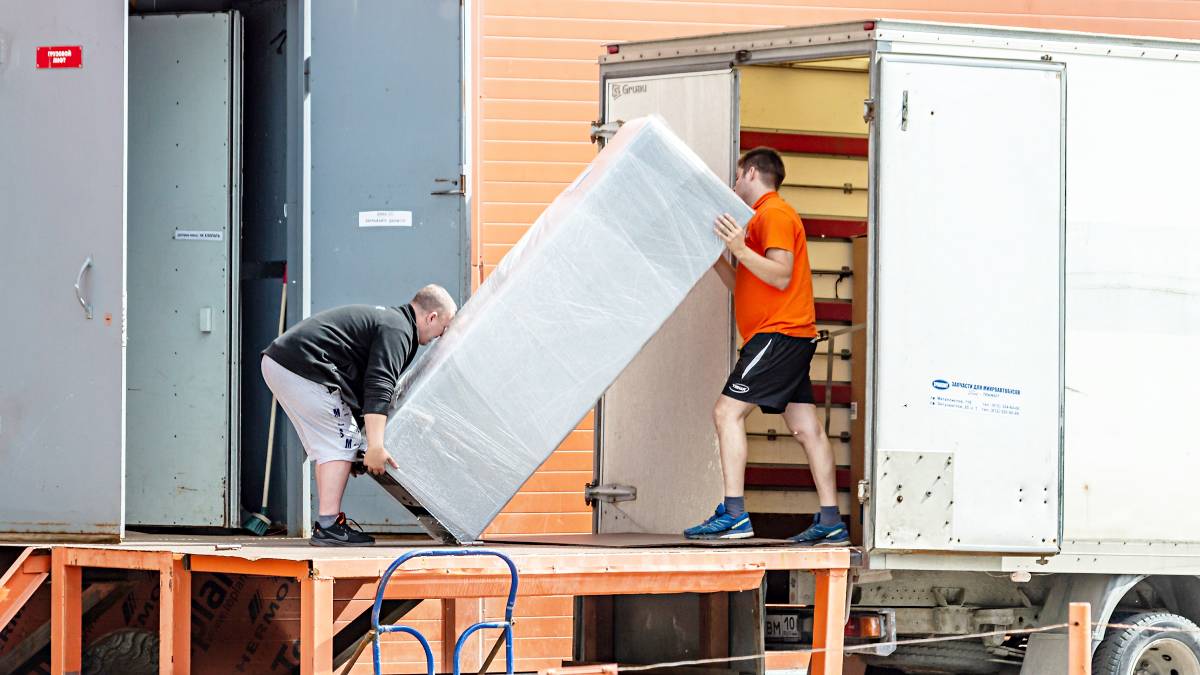
How to move a refrigerator
Read more

How to pack bedding for moving
Read more

How to move a pinball machine
Read more

What movers won’t move
Read more

The ultimate packing and moving list
Read more

Moving interstate checklist
Read more

Moving out of state checklist
Read more

How to wrap furniture for moving
Read more