Moving to Atlanta: Your guide to settling in the Peach State
From budgeting and permits to utilities and logistics, here’s how to relocate with less stress.
Published on

Written by Cielo B.
Staff Writer
Read more about our contributor
Moving to Atlanta Highlights
Demographics and economic growth: One of the fastest-growing US cities, Atlanta is a hub for tech, logistics, healthcare, and aviation, with job growth outpacing many major metros since 2020.
Cost of living requirements: A single adult typically needs about $112,700 to $125,000 per year to comfortably cover housing, taxes, everyday expenses, and savings.
Moving seasonality and timing: February is Georgia’s busiest moving month, with demand nearly doubling. If you have allergies, consider early February or October to avoid peak pollen season starting in March.
Moving to Atlanta is an attractive idea for many. It’s where numerous Hollywood movies and series are filmed, but more importantly, it’s a global leader in tech and logistics. With some of the largest US corporations headquartered here, your chances of finding a solid job are strong.
While relocating to such a progressive city is exciting, you need to prepare well to ensure a smooth relocation. This means understanding the diverse neighborhoods, the employment landscape, local transportation realities, and your potential everyday expenses.
Learn how to prepare for your Atlanta move as you read through this guide. We also provide practical moving tips to help make your relocation easier.
Why are people moving to Atlanta?
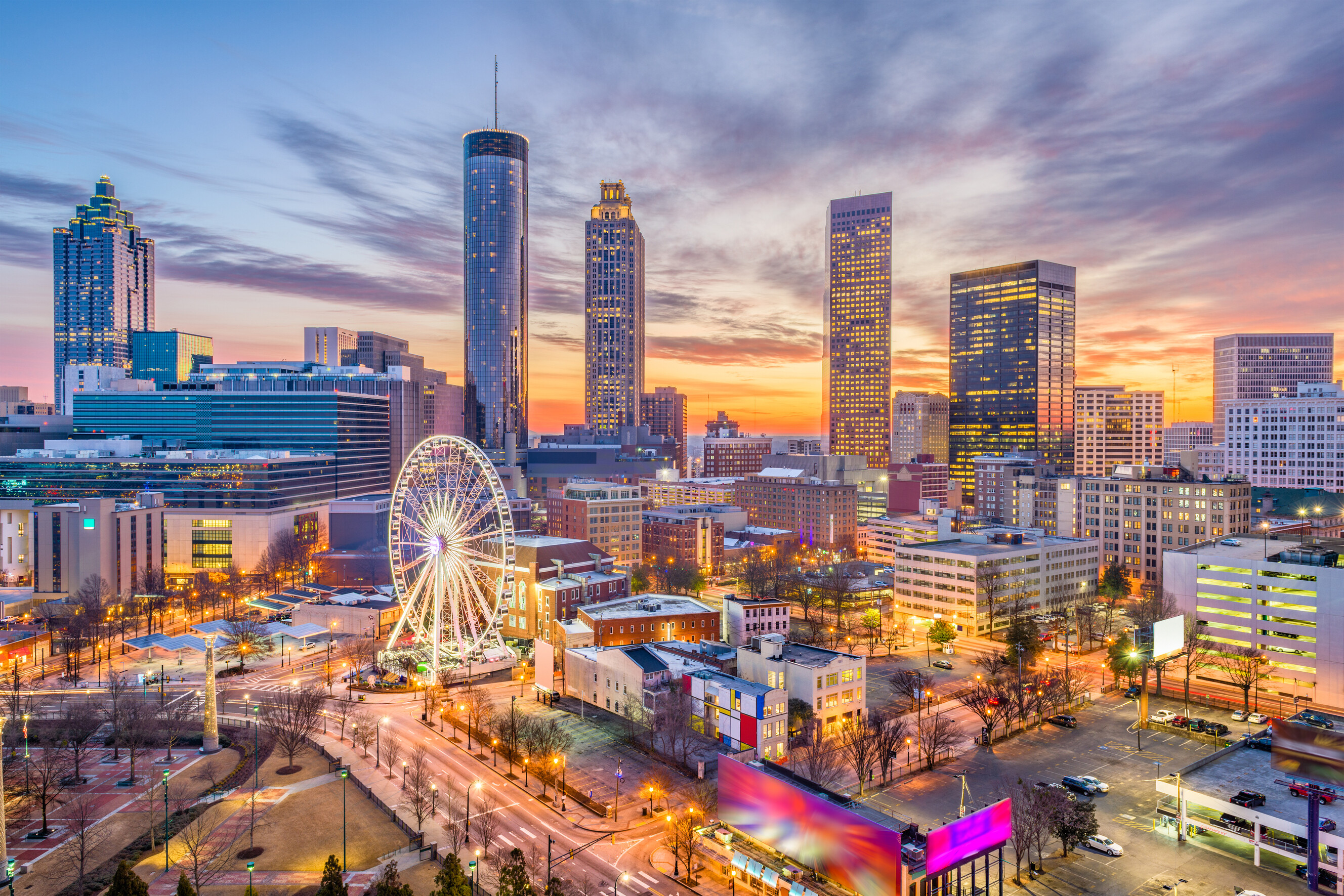
 Skyscrapers rising above the trees in Midtown (Source: iStock)
Atlanta is one of the fastest-growing cities in America, with thousands of new residents arriving every year. The job market is stable, and the city has developed a vibrant culture that keeps it continuously thriving. Discover more about why many choose to move here and believe Atlanta is a good place to live.
Lifestyle and culture
While most cities are surrounded by endless brick and concrete, Atlanta offers a unique urban vibe. You’ll often see tall skyscrapers rising behind massive oaks and pines, earning it the nickname “City in a Forest.”
Atlanta also features a long stretch of connected trails that function as a park, bike path, and street fair rolled into one. Residents jog, grab drinks at the city market, and spend weekends enjoying one continuous outdoor space.
Beyond its green landscape and outdoorsy lifestyle, Atlanta has had a significant cultural influence on music and film. The city helped shape modern hip-hop through legends like Outkast and continues to produce chart-toppers like Metro Boomin.
Numerous Marvel productions, as well as shows like Stranger Things and The Walking Dead, were filmed here, which is why Atlanta is often called the “Hollywood of the South.”
Career and job opportunities
If you’re still asking yourself, “Should I move to Atlanta?” the city’s employment landscape offers compelling reasons to say yes. Job growth has outpaced major US metros, with an 8% increase since 2020.
Healthcare and life sciences are currently leading Atlanta’s growth. The sector added 23,500 jobs in mid-2025 alone, largely because major hospitals like Piedmont Healthcare and Wellstar employ thousands. World-class research institutions such as the CDC and Emory University are also major employers.
The tech industry is booming as well, as Atlanta ranks among the top hubs for AI, fintech, and health IT. This is mostly due to Fortune 500 companies headquartered in the city, such as The Home Depot, Delta Air Lines, and The Coca-Cola Company.
Aside from health and tech, the airline industry also remains strong. Hartsfield-Jackson Atlanta International Airport is the world’s busiest airport and supports significant employment opportunities with a projected 49% growth through 2030.
These are some of the top jobs in Atlanta and their respective salaries:
Jobs |
Industry |
Approximate Salary |
|---|---|---|
Airline Pilot |
Aviation |
$211,790 |
Nurse Practitioner |
Healthcare |
$121,610 |
Data Scientist |
Technology |
$104,000 to $129,000 |
Cybersecurity Engineer |
Technology |
$101,000 |
Tech Roles |
Technology |
$95,788 (average) |
Weather and climate
Atlanta has a humid subtropical climate, meaning the city typically experiences all four seasons. Rainfall is spread throughout the year, and winters remain mostly mild. Here’s a breakdown of the weather for each season in Atlanta:
Season |
What It Actually Feels Like |
What to Watch For |
|---|---|---|
Spring (Late February to May) |
Warms up early, but swings between sunny days and rough weather |
Severe storms and potential tornadoes; heavy pollen coating from pine, oak, and birch (“pollening”) |
Summer (June to August) |
Hot, sticky, and frequently 90°F+; air feels “thick” |
Fast afternoon thunderstorms; humidity returns quickly |
Fall (September to November) |
Cooler, drier, and often the most pleasant |
Occasional tropical storms can bring unexpected rain |
Winter (December to February) |
Mostly mild, with occasional sharp cold snaps |
Snow is rare, but ice storms can cause major disruption |
What should you research before moving to Atlanta?
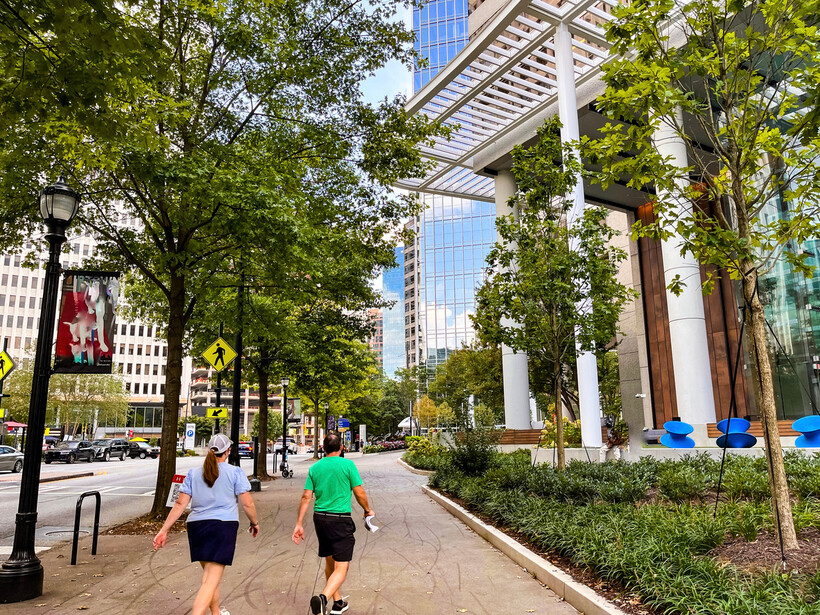 Atlanta’s unique “City in a Forest” landscape (Source: iStock)
There are a couple of things to consider when understanding the pros and cons of living in Atlanta.
Cost of living
The cost of living in Atlanta is approximately 9.1% above the national average, with housing as the largest expense. For instance, renting a one-bedroom apartment in popular neighborhoods like Midtown or Buckhead typically costs around $1,900 per month. Transportation is the next-highest expense because of Atlanta’s car culture, so budget for gas, which averages $3.10 per gallon.
Here’s what monthly expenses might look like for a single adult:
Area of Expense |
Approximate Cost |
|---|---|
Rent |
$1,600 to $1,900 per month |
Utilities |
$270 |
Transportation |
$100 to $150 |
Food & Dining |
$400 to $600 |
Given the expenses, what salary is needed to live comfortably in Atlanta? If you’re a single adult, you’ll need between $112,700 and $125,000 annually to live comfortably. This means you’re not only covering bills but also saving and enjoying life. This amount should also account for taxes:
5.19% state income tax
8.9% sales tax
1.08% property tax
Neighborhood options
Whether you’re moving for college or relocating to live in Atlanta permanently, finding the right neighborhood should be one of the first items on your moving checklist. Below are some of the best places to live in Atlanta to help you determine which area best fits your lifestyle.
Midtown
Midtown offers a city lifestyle packed with high-rises, the expansive green space of Piedmont Park, and cultural landmarks like the Fox Theatre.
Housing costs are relatively high, with one-bedroom units ranging from $1,500 to $2,500 per month. However, Midtown has walkable streets with a Walk Score of 94, so you’ll definitely save on transportation costs. Three MARTA rail stations are also nearby, allowing you to reach Downtown in about 15 minutes.
Buckhead
Often called the “Beverly Hills of the South,” Buckhead is known for its polished high-rises, upscale apartments, and fine dining restaurants. It’s also home to Lenox Square, one of Atlanta’s premier shopping destinations.
Due to the sophisticated lifestyle and luxury living, one-bedroom units here typically start around $1,600 and can reach $3,000 or more per month. Although Buckhead has rail access, the neighborhood is spread out, so you’ll likely need a car to navigate the area comfortably.
Old Fourth Ward (O4W)
Old Fourth Ward (O4W) has become a popular choice among new residents, largely due to the BeltLine’s Eastside Trail. This 22-mile urban trail network, converted from former rail lines, connects multiple neighborhoods across Atlanta.
O4W is also home to Atlanta’s historical roots. It’s the birthplace of Martin Luther King Jr., one of the most revered figures in American history. Ponce City Market is located here as well, a historic structure transformed into a cultural hub filled with food halls, shops, and open rooftop spaces.
Rents are comparable to Midtown, typically ranging from $1,500 to $2,600 per month. The neighborhood is about a 10-minute drive to Downtown and is especially bike-friendly thanks to BeltLine access.
West End
If you’re looking to live in a gorgeous home without the high price tag, West End is a strong choice. The area features classic Victorian-era homes, and one-bedroom apartments average around $1,150 per month.
West End also sits near the Westside Trail of the Atlanta BeltLine, giving you quick access to public green spaces. It has its own rail station and is located southwest of Downtown, which can make commuting less of a hassle.
Decatur
Decatur is technically its own city, located east of Atlanta. However, many people consider it part of the broader Atlanta living experience due to its close proximity and transit access.
It offers a “small-town vibe” with a walkable downtown square packed with local boutiques, restaurants, and seasonal festivals. Decatur also has its own independent school district, the City of Decatur Schools, which consistently earns high academic ratings.
Although it has a more suburban feel, rents remain relatively high, with one-bedroom units ranging from $1,200 to $1,600 per month. Residents can reach Downtown Atlanta in about 25 minutes via MARTA rail.
Best time to move
Timing is crucial when moving to Georgia. Based on moving tasks posted on Airtasker, February is typically the busiest month, with demand increasing significantly compared to other times of the year. Below are more insights on the best and worst times to move in Georgia:
Period |
What to Expect |
|---|---|
February (Peak) |
The busiest month on Airtasker, with 83% more tasks than the annual average. Book your movers well in advance. |
April to October |
Steady demand. April is the second-busiest month, while summer months like June and August see about 45% less demand than the February peak. |
November to January |
The quietest period. Task volume drops considerably, making this the best time to find last-minute availability and potentially lower rates. |
Moving costs
The average cost of moving services in the Atlanta metro area is around $69 to $110 per hour. This is the standard hourly rate for most movers, though final costs vary depending on the distance of the move, the number of movers needed, and the volume and weight of items.
Moreover, because some areas of Atlanta are too dense or crowded (like Buckhead, Midtown, and Downtown), logistics can be more complicated. Limited parking, loading dock requirements, and elevator reservations may increase overall costs.
Out-of-state or international considerations
If you’re coming from another country or state, relocating to Atlanta, Georgia involves extra planning steps:
Interstate moving
Let’s say you’re moving from NYC to Atlanta and bringing a car. Vehicle taxes are one of the things you should consider when moving interstate. Georgia uses a one-time Title Ad Valorem Tax (TAVT) instead of an annual vehicle tax. As a new resident, you’ll pay a reduced rate of 3% of the car’s fair market value.
International moving
For international moves, take note of the following:
Visa and work permits: Worker visas such as the H-1B (specialized occupations) or L-1 (intra-company transfers) typically take three to six months to process.
Shipping requirements: Most international shipments arrive through the Port of Savannah. Used household goods are generally duty-free if you’ve owned them for at least one year. Importing vehicles under 25 years old can be costly and complex, so many new residents choose to sell their car before relocating.
Official document recognition: Documents may require an Apostille from the Georgia Superior Court Clerks’ Cooperative Authority (for Hague Convention countries) or Great Seal certification from the Georgia Secretary of State (for non-Hague countries).
What should you do before your Atlanta moving day?
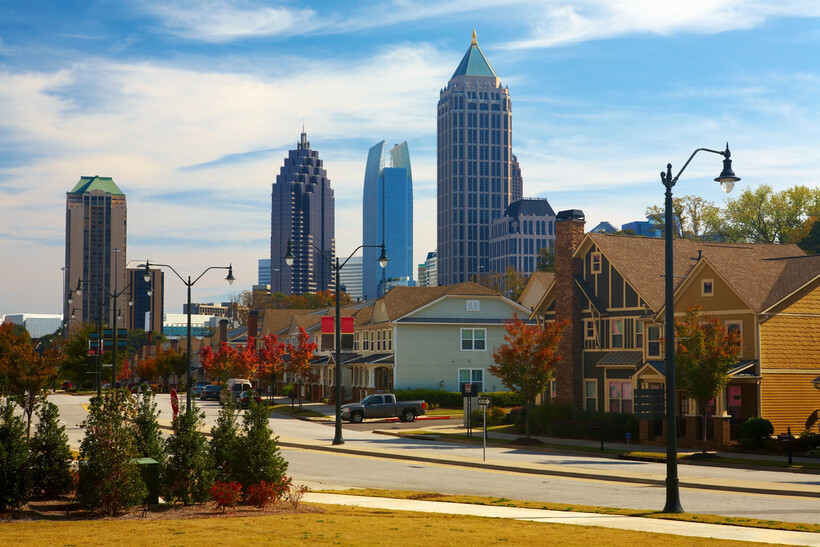 A quiet street in an Atlanta neighborhood (Source: iStock)
Aside from decluttering to minimize your load, there are several steps to take before your moving day to ensure a smooth transition.
Coordinate movers and services
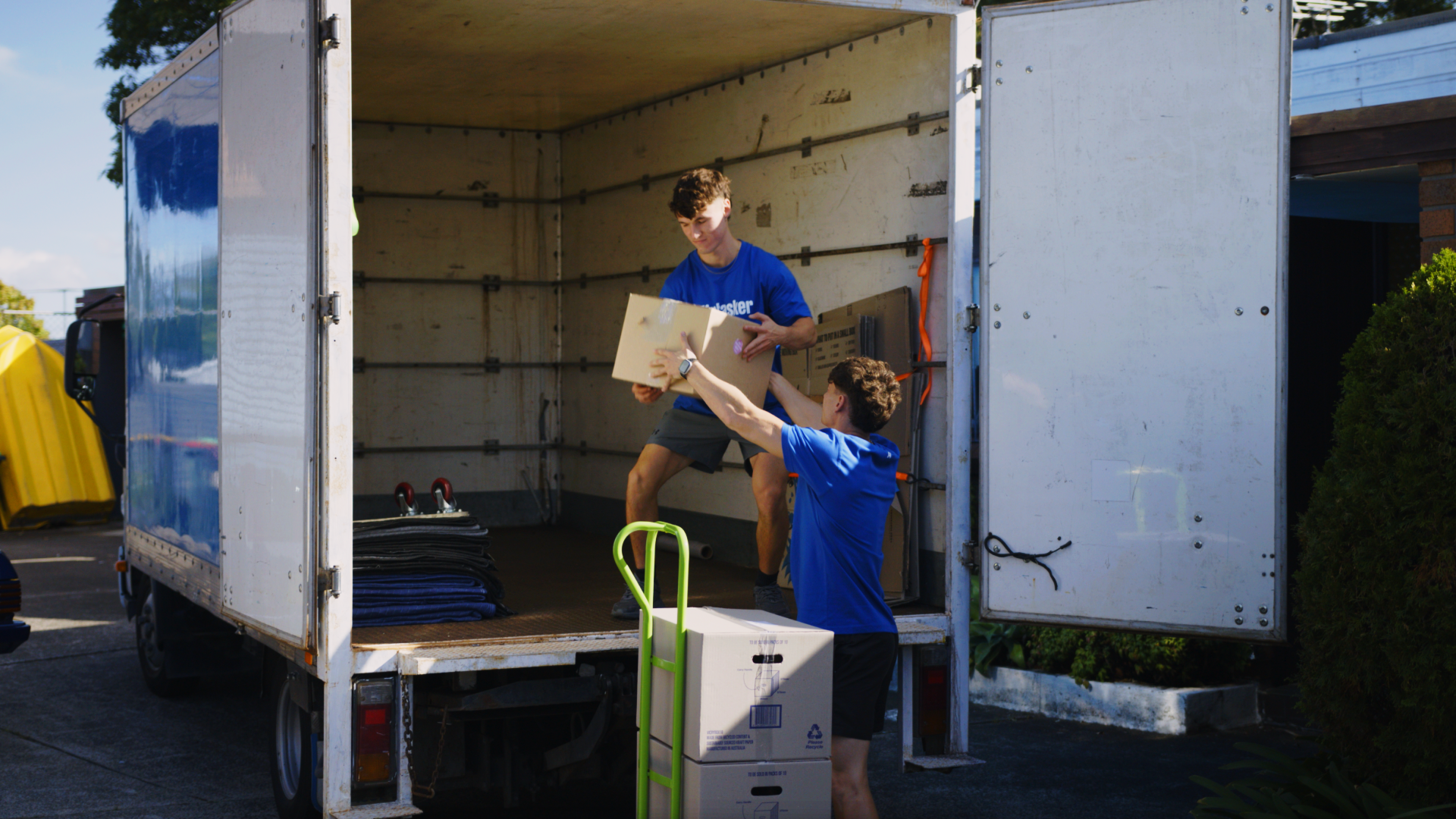
Book your movers at least six weeks in advance, especially if you’re relocating to Atlanta during peak season. Confirm your moving date and arrival window one to two weeks prior, then call again the day before to obtain the crew’s direct contact information.
If you’re moving into a high-rise or condo building, reserve the service elevator and loading dock at least two weeks in advance. Most managed buildings restrict moves to specific hours, often prohibiting moves after 5:00 pm.
Lastly, plan around Atlanta traffic patterns. The sweet spot for moving trucks on the road is typically between 10:00 am and 3:00 pm. This helps you avoid morning rush hour (6:30 to 9:30 am) and evening slowdown (4:00 to 7:00 pm).
Arrange necessary moving permits
If you’re hiring movers, ask whether their fleet is covered by a Commercial Loading and Unloading Permit. It’s a $300 annual city pass that allows trucks to park legally in loading zones without incurring hourly meter fees. Most professional companies have this covered, but it’s worth confirming upfront.
Meanwhile, if you need to reserve a specific metered street spot, you can arrange meter bagging through Atlanta Parking Services. This service temporarily blocks a metered space and typically costs between $4 and $20 per day, depending on the location.
For high-rise buildings in Midtown or Buckhead, your moving company may need to provide a Certificate of Insurance (COI). This will serve as proof that they have sufficient liability coverage to move your furniture and other belongings within the building.
Ensure safe transport
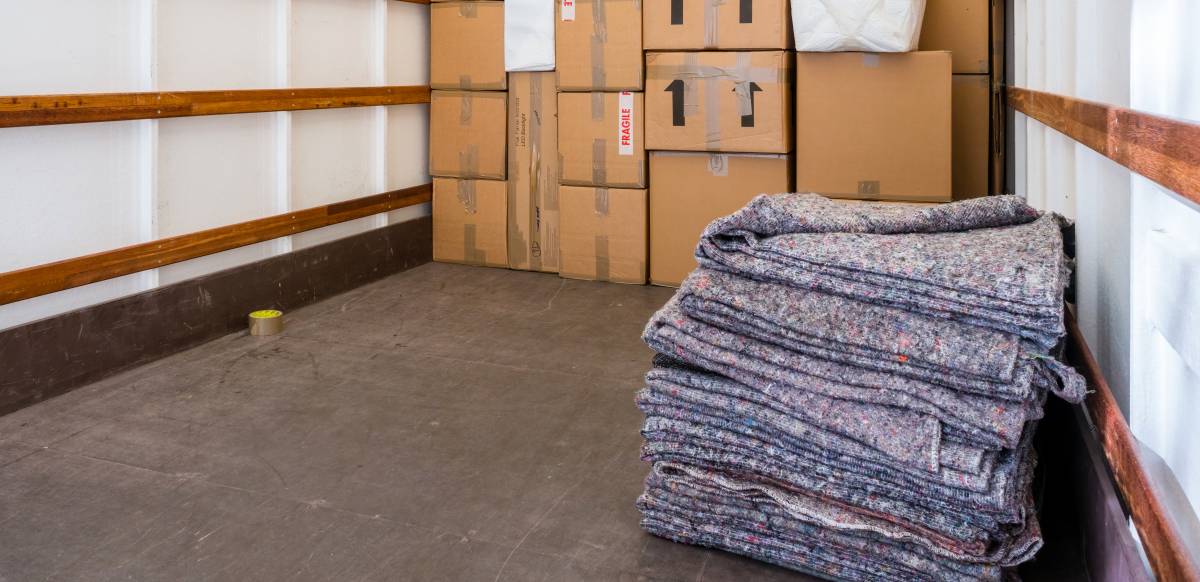
You must prepare for Atlanta’s subtropical climate, as summer heat can be intense and sudden thunderstorms can damage your belongings during the move. Although using breathable moving blankets to wrap wooden and leather furniture can provide extra protection, it’s best to leave fragile moving jobs to professionals.
Also, consider hiring movers who specialize in disassembling furniture. Not only do they know how to take apart large pieces to maneuver through Atlanta’s tight hallways and stairwells, but they can also reassemble everything properly without losing hardware. These services are especially crucial for long-distance moves.
Connect your utilities
Make sure all utilities in your new home are already connected and functioning before move-in day. In Atlanta, it’s easy to connect to electricity and water, since each has a designated primary provider serving residents. However, for utilities like natural gas and internet, you’ll have many options.
Below are key providers to consider:
Utility Type |
Example Providers |
|---|---|
Electricity |
Georgia Power |
Water and Wastewater |
City of Atlanta Department of Watershed Management |
Natural Gas |
Atlanta Gas Light (pipes) + private marketers (Gas South, Georgia Natural Gas, SCANA Energy, Infinite Energy, Xoom Energy) |
Waste Collection |
City of Atlanta Office of Solid Waste Services |
Internet and Cable |
AT&T Fiber, Google Fiber, Xfinity (availability varies) |
How do you get settled in Atlanta after moving?
 Enjoying the food scene in Old Fourth Ward (Source: iStock)
While thorough preparation is essential, there are still important tasks to handle once you’ve officially arrived. Here’s a simple Atlanta relocation guide to help you establish residency.
Update your licenses and documents
Obtaining licenses and updating official records involves strict deadlines, so make sure to settle these first upon moving in:
Mail redirection: Set up USPS mail forwarding and update your address with federal agencies like the Internal Revenue Service (IRS) and the Social Security Administration. A Georgia address is required before handling license transfers or school enrollment.
Driver’s license transfer: You have 30 days to obtain a Georgia driver’s license through the Department of Driver Services (DDS). Bring original ID, Social Security proof, and two Georgia residency documents. Once your license is issued, you’re automatically registered to vote.
Vehicle registration: Register your car within 30 days at your county’s Tax Commissioner’s office. You’ll need your Georgia license, payment for the one-time TAVT, and an emissions test if you reside in a participating metro county.
Ensure your family’s welfare
When relocating to another city, prioritizing education, leisure, and health is especially important if you’re moving with kids.
Schools and childcare
Atlanta’s public schools operate under district attendance zones. Confirm which district serves your address using the APS School Zone Locator before applying. Once confirmed, prepare the following documents:
Your child’s birth certificate
Proof of residency (usually a lease agreement plus a Georgia Power bill)
Two health forms covering immunizations and screenings
Georgia also offers free Pre-K for four-year-olds. However, placement isn’t guaranteed. Applications typically open in early spring through a lottery system, around February or March, for children who turn four by September 1.
Playgrounds and parks
Atlanta has numerous parks and recreational spaces for your family to enjoy. For instance, Piedmont Park in Midtown features two playgrounds (Mayor’s Grove and Noguchi) and a recreational splash pad. Centennial Olympic Park downtown is another popular option and includes the Fountain of Rings splash pad, which is popular during warmer months.
Healthcare facilities
Whether you need a private doctor or a simple checkup, Atlanta offers several highly regarded healthcare institutions:
Facilities |
Specialities/Amenities |
|---|---|
Children’s Healthcare of Atlanta - Arthur M. Blank Hospital |
Level 1 Trauma Center (highest level of emergency care); specialized cancer and heart units |
Scottish Rite Hospital (near the Perimeter) |
Emergency services; patient game rooms; outdoor gardens for families |
Grady Memorial Hospital |
Region’s leading trauma, burn, and stroke center |
Emory Healthcare (Winship Cancer Institute) |
Adult care; comprehensive cancer care |
Northside Hospital |
Leading maternity services; multiple primary care offices across the metro |
Sort out your pet essentials
Pet registration is a legal requirement in Atlanta. If you’re bringing pets, you must provide proof of a rabies vaccination and obtain a one-year license. This license costs $10 for spayed or neutered pets and $25 for unaltered ones. Be sure to register immediately online at PetData.com, by mail, or in person at your county’s animal services shelter to avoid late fees.
Pet care
After registration, look into veterinary and pet care services in your area. Atlanta has 24/7 emergency veterinary hospitals such as VVEG in Brookhaven and Alpharetta. For boarding, facilities like Bark & Board in Brookhaven offer suites equipped with webcams so you can check on your pet remotely.
Pet parks
You should also consider visiting pet parks where your furry friend can play. Piedmont Park includes a three-acre off-leash area with separate sections for large and small dogs. Fetch Park, with locations in Buckhead and O4W, combines a dog park with a social bar-style atmosphere for owners.
How do you get around in Atlanta?
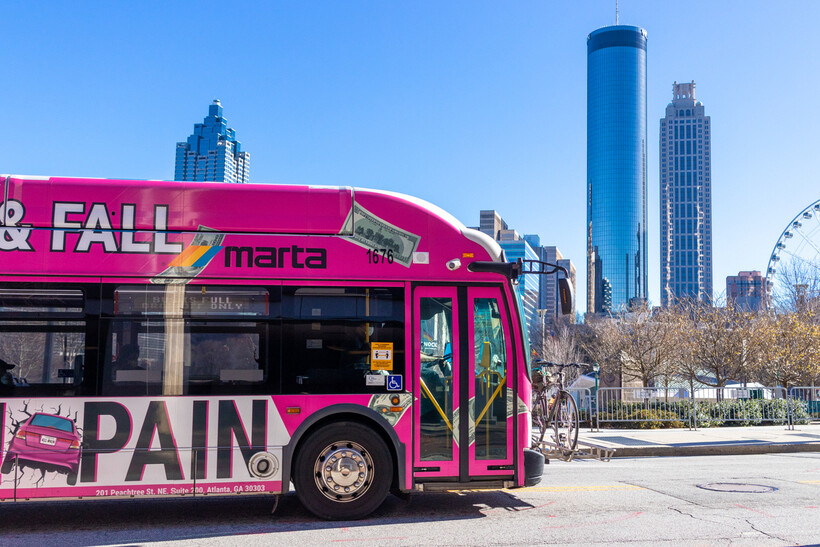 Atlanta public bus traveling downtown (Source: iStock)
Although many neighborhoods in Atlanta are walkable, it’s important to know which transportation options are available, especially if you plan to travel to the suburbs.
By car
Atlanta is one of the most car-dependent cities in America, so a vehicle is essential for most residents. When driving, keep in mind that Atlanta doesn’t use traditional toll booths. Instead, Express Lanes with electronic tolls are installed on major highways.
Take note of the typical rush hours to avoid getting stuck in traffic:
Morning rush hits hardest from 7:00 to 9:30 am (peaking around 8:15 am)
Evening rush runs 4:00 to 7:30 pm (peaking around 5:45 pm)
Interestingly, Fridays disrupt the usual pattern: morning rush tends to end earlier, but afternoon congestion can begin as early as 3:00 pm as people leave the city for the weekend.
By train
The Metropolitan Atlanta Rapid Transit Authority (MARTA) operates Atlanta’s public train system, and it’s often the fastest way to travel between major destinations like the airport, Downtown, Midtown, and Buckhead. A standard one-way trip costs $2.50.
MARTA runs four color-coded main lines:
Line |
Route |
|---|---|
Red Line |
North Springs → Airport |
Gold Line |
Doraville → Airport |
Blue Line |
Hamilton E. Holmes → Indian Creek |
Green Line |
Bankhead → Edgewood/Candler Park |
Remember that the rail network primarily covers North-South and East-West corridors through the city’s center. It doesn’t reach most outer suburbs without connecting to a bus.
By bus
MARTA buses complement the train lines and help residents reach Fulton, DeKalb, and Clayton counties, along with other areas that rail lines don’t serve. A one-way trip typically costs $2.50 and includes up to four free transfers between buses and trains within three hours.
Some commonly used MARTA bus routes include:
Route 39 (Buford Highway): Serves as the busiest line, running between Lindbergh and Doraville stations through Atlanta’s international food and shopping corridor.
High-Traffic Routes: Include Route 83 (Campbellton Road), Route 196 (Upper Riverdale), Route 5 (Piedmont Road), and Route 15 (Candler Road).
GRTA Xpress: Offers coach-style buses for longer suburban commutes into Downtown or Midtown, providing a more comfortable ride than standard buses.
By streetcar
The Atlanta Streetcar (also called the Downtown Loop) is a convenient way to get around Downtown and nearby Eastside landmarks. It runs every 15 minutes, seven days a week, and you’ll pay only $1 per ride or $3 for unlimited all-day access.
By bike or bike-share
Thanks to the Atlanta BeltLine, residents can ride along multi-use trails such as the Eastside Trail. This route takes you to major destinations like Ponce City Market and Krog Street Market while passing public art installations along the way.
If you want to venture further, the Southwest and Westside Trails wind through historic neighborhoods. You can also bring your bike onto MARTA trains or buses (bikes are allowed anytime, and every bus has a front-mounted rack).
Where to grab a bike:
Atlanta Bicycle Barn, located directly on the Eastside BeltLine, rents beach cruisers for about $10 per hour or e-bikes for approximately $25 per hour.
Relay Bike Share, the city’s official bike-share program, provides designated pickup and drop-off hubs throughout Atlanta.
By taxi or ride-share
Traveling by taxi or ride-share is another option if you want door-to-door convenience. While it costs more than MARTA, these services help you reach neighborhoods that rail lines don’t directly serve, such as the Westside or East Atlanta Village.
Uber and Lyft are the most commonly used ride-share services among locals. If you prefer traditional taxis, Atlanta Checker Cab operates 24/7 with phone or app dispatch (called “App A Cab”) and offers wheelchair-accessible vehicles for travelers with disabilities.
What are the best things to do as a new Atlantan?
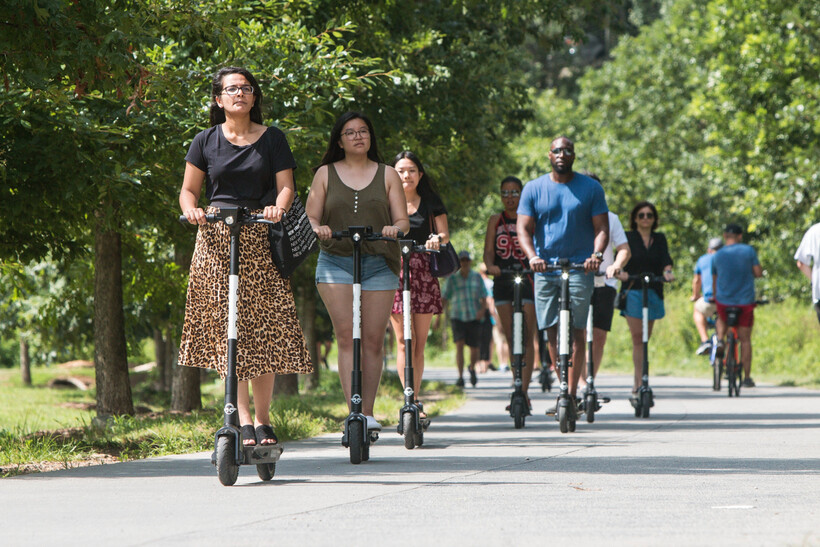 Riding motorized scooters on the Atlanta BeltLine (Source: iStock)
After settling in completely, explore these activities to kickstart and enjoy your life in Atlanta.
Visit cultural landmarks and attractions
One interesting fact about Atlanta is that it’s filled with historical landmarks representing Black excellence, civil rights leadership, and Southern transformation. Many of these are located in the Sweet Auburn District in O4W, previously mentioned as the birthplace of Martin Luther King Jr.
Other notable landmarks include:
Historic Ebenezer Baptist Church: The church where Dr. Martin Luther King Jr. preached alongside his father from 1960 to 1968. It’s also the site of his funeral following his assassination.
The King Center: A memorial dedicated to Dr. King, featuring his crypt, reflecting pools, and an eternal flame. The center includes exhibits highlighting how peaceful protest movements have shaped societies worldwide.
APEX Museum: A museum celebrating the achievements of Black individuals in science, technology, and business, housed in a building symbolizing Black economic success.
In Buckhead, the Atlanta History Center features the Cyclorama. It’s a massive 138-year-old hand-painted panoramic artwork that wraps 360 degrees around viewers, depicting the Battle of Atlanta with immersive multimedia effects.
Enjoy the outdoors
While the BeltLine remains Atlanta’s most popular outdoor destination, other neighborhoods offer recreational spaces as well. Midtown’s “Active Oval” includes paved running trails, spacious soccer fields, and volleyball courts. The abundance of these green spaces is often cited as one of the top reasons to move to Atlanta.
Exploring the Chattahoochee River is another great outdoor activity to enjoy in your free time. Designated as a National Recreation Area, it’s open to the public for water activities like kayaking, rafting, paddleboarding, and lazy tubing (locally known as “shooting the hooch”). The river also offers forested trails and picnic pavilions, which are perfect for hiking and picnicking.
Check out the local market scene
Atlanta’s markets are diverse, spanning from century-old public spaces to modern food halls that let you explore the city’s food scene and unique communities. Here are some of the must-visit local markets:
Your DeKalb Farmers Market: A massive Decatur market with international produce, fresh seafood, spices, and a bakery. Open daily, 9:00 am to 9:00 pm.
The Municipal Market (The Curb Market): Atlanta’s oldest market in Sweet Auburn, offering soul food, Afro-Caribbean dishes, and more. Open Monday to Saturday, 8:00 am to 6:00 pm.
Krog Street Market: A 1920s warehouse turned food hall on the BeltLine Eastside Trail, featuring Southern-grown restaurants and specialty foods.
Chattahoochee Food Works: Upper Westside food hall with 31 vendors curated by chef Andrew Zimmern, plus a communal indoor/outdoor bar. Open daily; hours vary.
Move to Atlanta with ease
Atlanta is an excellent choice if you’re looking for a city that balances a booming tech scene with a rich cultural soul. In addition, it offers a wealth of green spaces where you can unwind and enjoy yourself after work or on weekends.
While relocating to a busy metro can feel overwhelming, you don’t have to handle the heavy lifting on your own. With Airtasker, you can connect with experienced local movers who will help you avoid moving mistakes and settle smoothly into your new home in the Peach State. Simply post a task to find trusted local movers in Atlanta.
Helpful resources for those moving to Atlanta
Check out these additional resources to ensure a smooth Atlanta move:
Atlanta Regional Commission (ARC): Access deep data on population trends, housing, and economic development to understand growth across the 11-county metro area.
Discover Atlanta: Explore curated neighborhood guides, sports team details, restaurant recommendations, and calendars for major festivals like the Dogwood Festival.
Explore Georgia: Find detailed visitor guides for Atlanta, including historic sites and filming locations, plus ideas for weekend getaways throughout the state.
National Park Service (Chattahoochee River National Recreation Area): Get vital safety information, river flow rates, and trail maps for outdoor recreation along the Chattahoochee.
ATL311: Connect with the City of Atlanta’s primary hub to schedule bulk trash collections, establish water services, and request infrastructure repairs.
Learn more about our contributors
Written by Cielo B.
Staff Writer
Cielo is an experienced content writer who has explored various industries throughout her career. Her expertise, founded on a degree in journalism, includes writing about automotive and home maintenance. Cielo also covers topics like dressmaking, tailoring, and photography since she is a passionate cosplayer who enjoys dressing up as her beloved anime characters.
FAQs about moving to Atlanta
Atlanta is the city itself, home to about 500,000 people, while Metro Atlanta is the much larger surrounding area with over 6.4 million residents. The city includes neighborhoods like Downtown and Midtown, while Metro Atlanta covers many suburbs like Sandy Springs and Roswell. Atlanta has one city government, but Metro Atlanta is made up of many counties and cities working separately.
Atlanta is slightly cheaper overall than Charlotte, especially for non-housing costs like utilities and healthcare. This is due to Atlanta having a 7% lower cost of living than Charlotte.
It depends on your priorities. If you value walkability, nightlife, and short commutes, the city center is likely the better choice. However, if you want top-tier public schools, quiet streets, and spacious homes, the suburbs are the ideal place to settle down.
It depends on your financial goals and lifestyle. Buying offers long-term investment potential, while renting provides flexibility. Consider your budget, how long you plan to stay, and current housing market trends to make the best decision.
Find movers, fast
Find a mover
Related price guides

How much do packers cost?
Read more






Related guides

A guide to becoming a mover
Read more

How much do movers make?
Read more

Tips for moving house with kids
Read more
How to move gym equipment safely
Read more

How to pack artwork for moving
Read more

How to pack books for moving
Read more

How to pack kitchen items
Read more
How to move a washing machine
Read more

How to move a shed
Read more

How to move a pool table
Read more
How to move a vending machine
Read more

How to pack bedding for moving
Read more

How to move a refrigerator
Read more

How to move a pinball machine
Read more

Where to get moving boxes for free
Read more

How to wrap furniture for moving
Read more

What movers won’t move
Read more

The ultimate packing and moving list
Read more

Moving interstate checklist
Read more

Moving out of state checklist
Read more
Moving to San Diego Guide
Read more
Moving Checklist
Read more