- Home/
- Comparisons/
- Cleaning/
- Mould vs Mildew
Mould vs mildew: What are their key differences?
Comparing mould and mildew based on appearance, smell, and more
Last Updated on


Reviewed by Wilson L.
Mould removal specialist

Written by Milafel D.
Contributor
Read more about our contributors
Key Facts
Mould is a general type of fungus with a raised, fuzzy, patchy texture. Its colours can range from black to white and dark green, and it emits a musty, earthy odour. It is commonly found in damp, high-humidity environments, although some grow in dark, cold environments.
Mildew is a specific type of mould known for its flat growth. Its colour is usually white or grey, which sometimes turns brown. Its smell is similar to mould’s, only less intense. It thrives in high-moisture environments but cannot penetrate porous materials.
At first glance, it seems mould and mildew are the same. These microscopic fungi often lead to allergic reactions, such as sneezing or eye irritation. They also grow and produce new spores within hours, thrive in damp, humid places, and smell similarly.
However, when you look closely, you see telltale signs of the differences between mould and mildew. This mould vs mildew guide will spell out the differences for you and explain how to hire a mould removal expert for your safety and convenience.
What is mould?
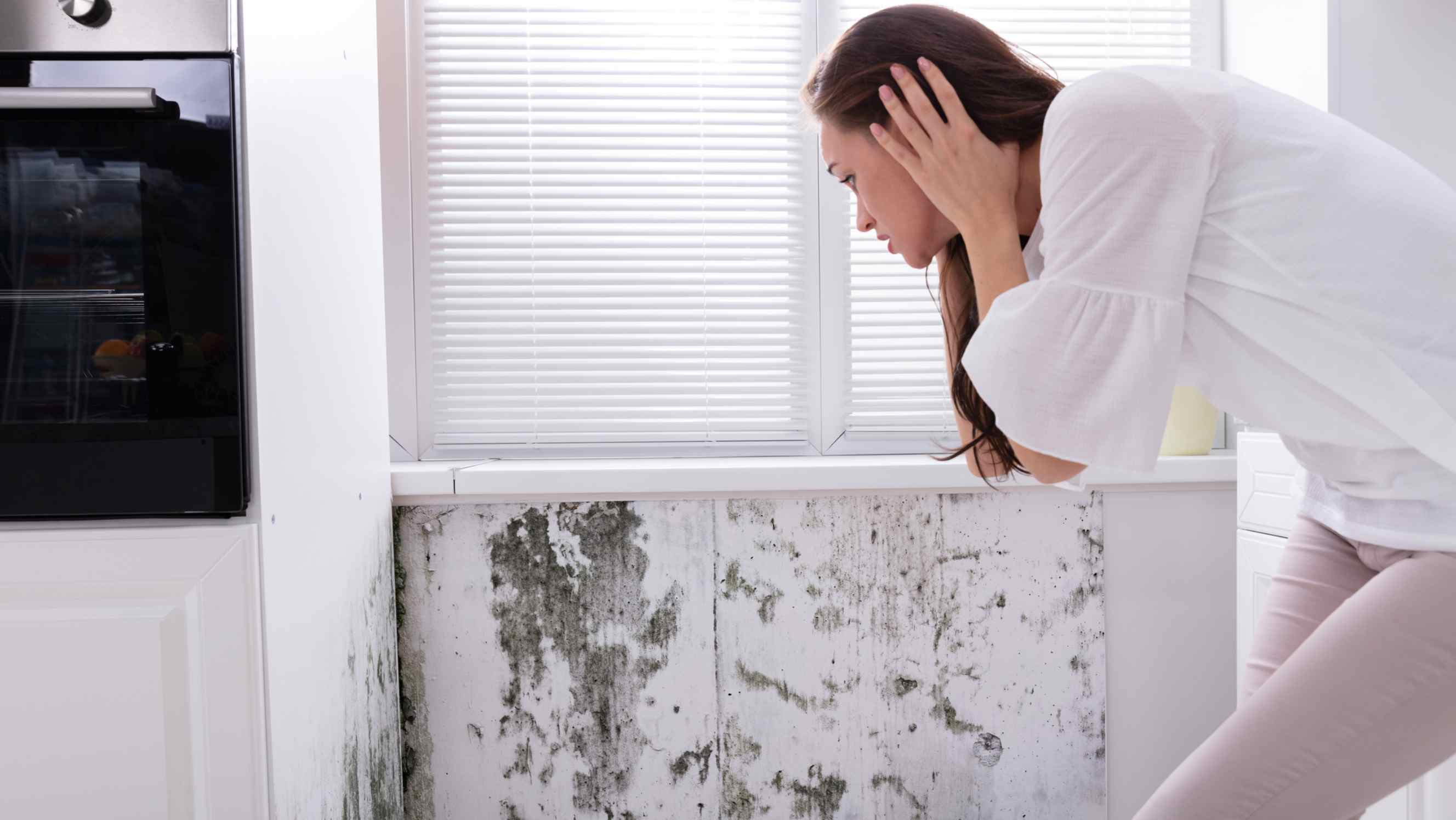
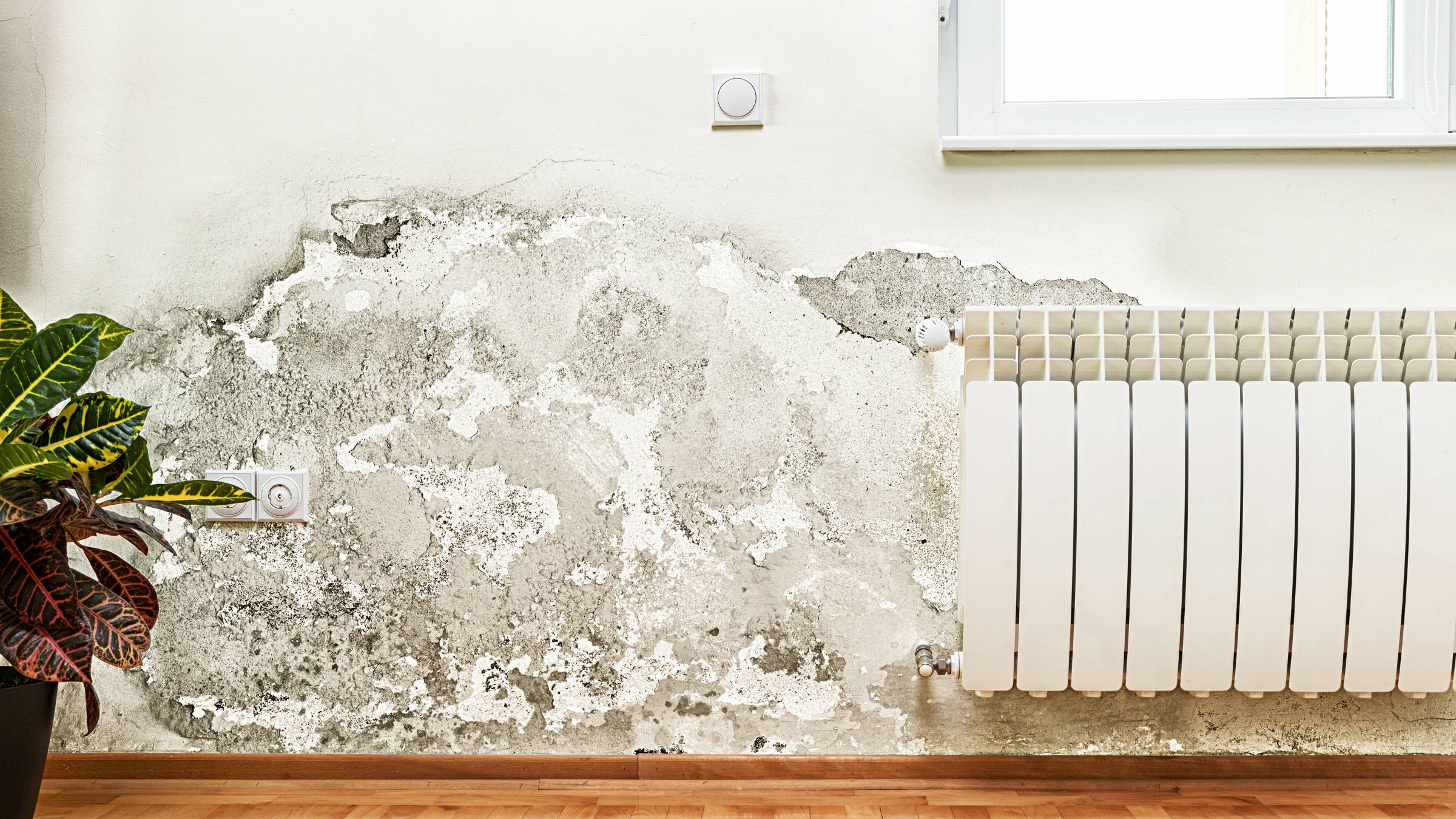
 Dark mould patches and discolouration on an interior wall near the floor (Source: iStock)
Mould is a type of fungus that develops multicellular filaments called hyphae. These fine threads develop at the tip and then divide repeatedly until they grow longer and branch out. By then, they create chains that can intertwine, forming a network called mycelium.
As organisms, these fungi need a food source, such as soil, and organic matter, like wood. This explains why you can find them in walls and ceilings, as well as in food such as bread. They also thrive in places with high humidity because of high water vapour and oxygen. With the right environmental conditions, mould spores can multiply within 24 to 48 hours. Within a week, they become visible.
The types of mould you can see in your home can also vary. These include Stachybotrys chartarum, which is also known as black mould. Other examples include Aspergillus, which can thrive indoors and outdoors, and Cladosporium, which prefers painted surfaces and cooler temperatures. A popular type of mould is Penicillium, which scientists use to make antibiotics.
Mould can return if moisture is left for more than 24 hours. Cleaning without proper drying almost guarantees regrowth.
After cleaning, run a dehumidifier (aim for ≤45% humidity) and an air mover or fan directed at the area for 24–48 hours. If any dampness or condensation appears, keep drying!
What is mildew?
 Visible mildew patches and moisture stains in a room corner beside a radiator and wooden flooring (Source: iStock)
Mildew refers to a type of fungus or mould, which means it can also develop hyphae and mycelium. Mildew also grows in damp environments, such as shower walls or window sills. In fact, they are so similar that some refer to mildew as early-growth mould.
What does mildew look like? It varies from its closely related cousin in appearance, especially the colour and texture. It is also easier to clean or remove than mould because of its depth of penetration, growth pattern, and visibility.
‘Mildew rebound’ occurs when humidity isn’t properly dealt with during cleaning. If this happens, avoid using bleach.
Bleach worsens mildew in the long term because it only kills the surface and leaves glycerin (a food source for mould) behind. That’s why mildew returns stronger days later! Use vinegar or hydrogen peroxide instead to break down mildew’s biofilm or protective layer to get rid of it entirely.
Mildew vs mould: How different are they?
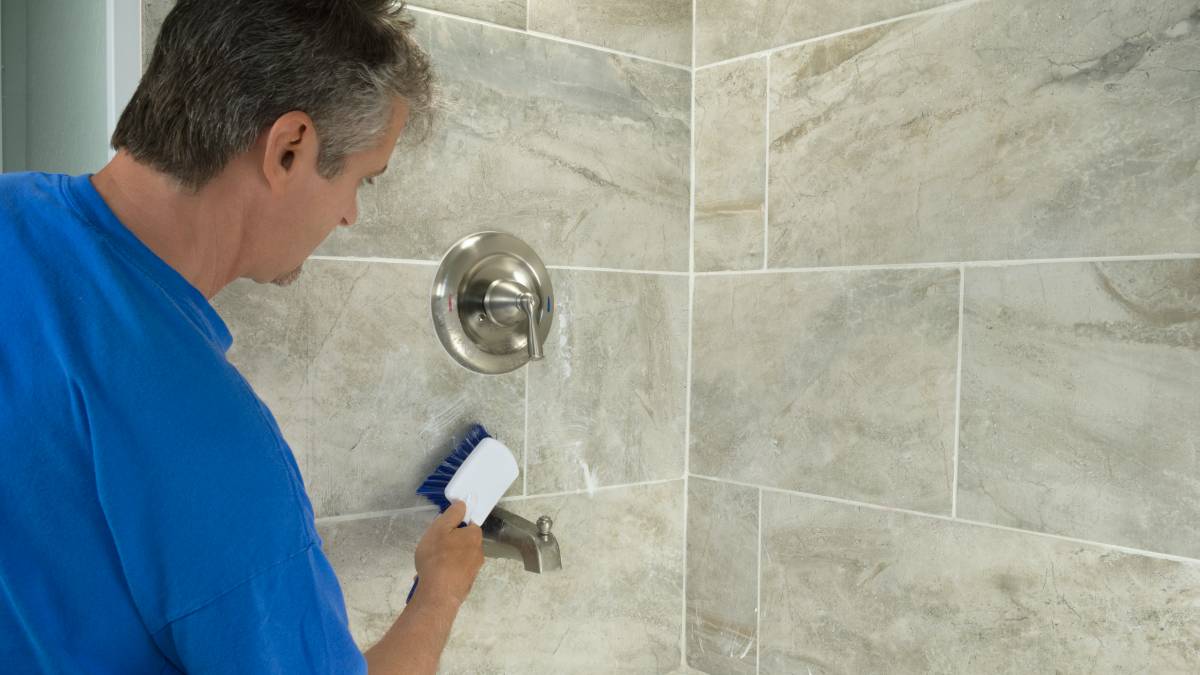
 Bathtub corner with mould and mildew growth along blue wall tiles and worn sealant (Source: iStock)
Both mould and mildew are disgusting and damaging to health and property, so if you have mould problems, get cleaners to deal with them. However, it still pays to know the difference between mould and mildew to better describe your problems and hire the right removal expert.
In terms of appearance
What does mould look like? Its physical characteristics vary according to the colony’s age and type.
The fungus’s colours usually range from black to deep green, yellow, and sometimes even blue and purple. It also appears fuzzy and slimy or even hairy, especially during its early stages when its hyphae are still growing and dividing. The colony can begin as a small spot, measuring only a few inches across, and grow to cover an entire surface. Mould also features a 3D or raised texture, such as when it develops in bread.
Mildew is better known for its flat growth habit. Its texture is powdery or fluffy, and they start flat and remains relatively surface-level. Its colour also appears white or light grey as they form, turning yellow, brown, or black over time.
In terms of smell
What does mould smell like? People often describe it as earthy or musty. It is similar to the odour of rotting wood, wet socks, damp areas, and unaired spaces, such as basements. Sometimes, the scent reminds you of old paper, such as that from books kept in a cabinet for decades.
What does mildew smell like? Because it is also a type of mould, the scent is similar, though less intense. You can compare it to improperly dried fabric or clothing.
Either way, the smell is often the first sign of mould growth. It happens because the organisms release microbial volatile organic compounds during metabolism. If any part of your home does not feel right, start investigating for mould and mildew infestation, even if you cannot see them yet.
In terms of texture
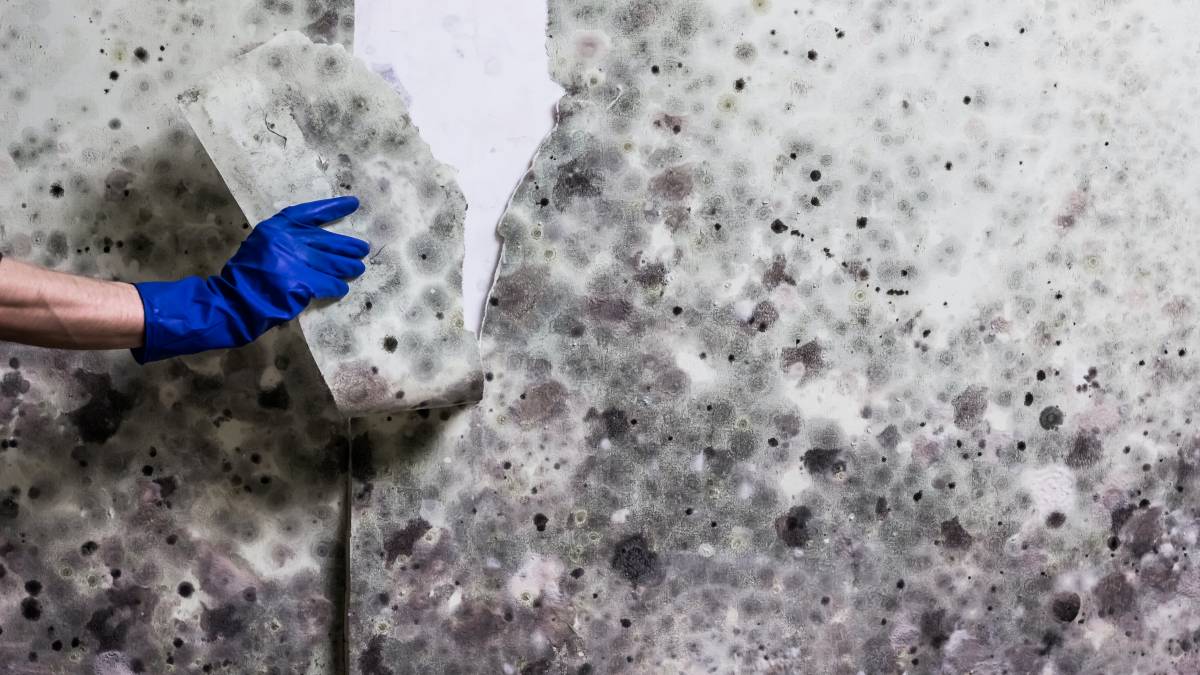
 Black mould growth along a white window frame and adjacent wall with a hand highlighting the affected area (Source: iStock)
Because there are different types of mould, their textures can also vary widely. As mentioned, they usually start off appearing fuzzy and patchy as they build their network or mycelium. As they reproduce more spores and create denser chains, they can look cottony.
Typical mould is also slimy, mainly because of the wet environment in which it grows. When it comes to patterns, mould often forms irregular spots that spread deeply.
How about mildew? It can be powdery (feels like fine powder to the touch) or fluffy. Its growth patterns are more uniform, with flat patches that spread outward.
In terms of location
As fungi, both mildew and mould require food sources to grow and reproduce. They thrive on wet surfaces and in moist, high-humidity environments. They also feed on organic materials. So expect them to be in bathrooms and kitchens, particularly around plumbing pipes prone to leaks. They can also likely appear after a flood.
However, some types of mould also prefer dark, warm places, such as basements and attics. (Note that humidity is also often high in these parts of the house due to poor ventilation.) Others like the cold, which is why you can see them in refrigerators. Mould growth can also be sneaky because it can penetrate deeper into more porous materials and spread in well-hidden areas.
On the other hand, you usually find mildew on flat, less-porous surfaces with better airflow, such as shower walls. It also occurs in areas with temporary or intermittent moisture, such as when dew forms on plants in the morning.
In terms of health impact
Can mould spores and mildew cause health concerns? Yes, but probably not as extreme as you think.
In general, many types of mould live harmoniously with humans and animals, which means they do not cause disease. In fact, a 2017 study in Clinical Reviews in Allergy & Immunology said that claims of ‘toxic black mould’ and ‘sick-building syndrome’ are more likely media hype than anything.
However, most studies note that they can trigger allergic reactions, such as itchy eyes, a sore throat, and sneezing. For people who are overly sensitive to spores, one health problem to watch out for is anaphylaxis. It is a life-threatening situation wherein the person suffers from breathing difficulty, low blood pressure, and an irregular heart rhythm.
Because mould and mildew are minuscule, they can easily enter the lungs, causing respiratory illnesses such as asthma attacks. In rare but severe cases, some types of mould release mycotoxins. These can be dangerous for people with compromised immune systems.
In terms of removal cost
 Treating mould on the wall. (Source: iStock)
In Australia, the average cost of removing mould and mildew starts at $100 per hour. However, if they need to clean mould throughout the house, the specialists can charge up to $6,000 for the whole job. The fee can already cover their protective gear and cleaning supplies.
However, since mildew is easier to clean, the removal price could be lower. You can request free quotes, proposals, or consultations to better understand the charges.
In terms of prevention measures
Unlike mould, whose spores can fill in the spaces of porous materials, mildew is often superficial. It is, therefore, easier to eliminate. Usually, you just need a scrub brush, regular mildew cleaner, and elbow grease.
Mould is more challenging because you cannot see it immediately. By the time it becomes visible, it has already built a colony. The good news is that it often dies with bleach or undiluted white vinegar.
But getting rid of these spores by yourself is not ideal. The job requires extensive knowledge of mould and mildew, the right equipment and cleaning supplies, and skills in handling spores.
Restore mouldy and mildewy surfaces with Airtasker
Whether you have mould, mildew, or both, hiring a removal expert is the best way to deal with the problem. Besides technical expertise, they can:
Perform a thorough inspection to identify the fungus in the house and accurately determine the best solution.
Measure and help you manage moisture levels to prevent fungal growth.
Provide related services, such as waterproofing your home or fixing your plumbing.
Airtasker connects you with mould and mildew removal specialists near you in three steps:
Open a free account.
Log in and post a task detailing the severity of the mould or mildew in your home.
Receive quotes from Taskers, narrow down your options, and pick the best one.
Overall, mould and mildew are slightly different, but their effects are the same: They harm you and your home. The sooner you can get them out of the house, the faster you obtain peace of mind. Sign up on Airtasker and find a nearby mould removal expert today.
Learn more about our contributors
Reviewed by Wilson L.
Mould removal specialist
Wilson is a mould removalist specialising in surface mildew and non-toxic fungal growth. With years of hands-on experience in household cleaning, he uses his practical know-how and steam-based methods to tackle everyday mould problems safely and effectively. His focus and training is strictly on domestic environments, making him a trusted go-to for non-invasive mould services that don’t require major construction or remediation work.
The Reviewer Badge is awarded to individuals who are experts in their respective fields and evaluate the content to ensure its accuracy and relevance to the task at hand.
Written by Milafel D.
Contributor
Milafel is an editor and writer with over 15 years of experience. As a contributor to Airtasker content, she brings clarity, creativity, and insight to every piece to help homeowners tackle everyday challenges and turn their living spaces into something truly special. When she’s not writing, Milafel is a devoted cat mama and a teacher’s wife who enjoys belting out tunes at karaoke, journalling her thoughts, and pursuing passion projects.
Mould vs mildew
Mould |
Mildew |
|
|---|---|---|
Appearance |
Often black or dark green; others are yellow, blue, or purple |
Grey or white that sometimes turns brown |
Smell |
Musty and earthy |
Similar to mould but less intense, damp and stale |
Texture |
Raised, fluffy, hairy, or cottony |
Powdery, fluffy or flat |
Location |
Hidden/in damp places with high humidity; cold, dark places like refrigerators; and areas with poor ventilation |
Environments with high levels of moisture but better airflow; visible damp surface, less-porous materials such as shower tiles |
Health Impact |
Can cause allergic reactions, asthma attacks, or, in rare but severe cases, anaphylaxis and complications from mycotoxins |
Milder irritation |
Removal Cost |
Starts at $100 an hour or around $6,000 for an entire home |
Charged along with mould removal but could be cheaper on its own |
Prevention Measures |
Sneakier than mildew because it takes a while to see the colony; can die with bleach or undiluted white vinegar |
Easier to see because it almost always does not grow on porous materials; can react to regular mildew cleaner |
FAQs on mould and mildew
One of the earliest signs of a mould problem is a musty or earthy smell. If you are sensitive to the fungi, you will also develop allergic reactions, such as a runny nose, watery eyes, and sneezing. Eventually, both mould and mildew will become visible, forming colonies that spread across surfaces.
No. While they are related as types of fungi, mould and mildew have distinct behaviours and effects, and one does not transform into the other.
Yes, these fungi can grow together as long as they have the right environment to thrive in. These include places with dampness, high moisture levels, or high relative humidity.
Yes, to minimise mould exposure and health risks. Professional mould and mildew experts have the proper gear, tools, and skills to remove these fungi as safely as possible from your home.
Find cleaners, fast
Post a task