- Home/
- Guides/
- Packers & Movers/
- How to Pack Bedding
Last Updated on

Written by Genine T.
Staff Writer


Reviewed by Daniel C.
Moving Expert
Read more about our contributors
Key Facts
Bedding should always be cleaned and fully dried before packing to avoid dust, odors, and mold during the move.
Using vacuum storage bags for pillows and comforters significantly reduces bulk and maximizes space in moving boxes.
Clear labeling and color coding of boxes can help ensure that bedding is easy to identify and unpack quickly in your new home.
So you’re getting ready for the big move. Whether you’re moving to a new home with your family or packing all your stuff for university, it’s important to make the right preparations. One essential thing that you will need is your bed linens or bedding. Pillows, blankets, and sheets need special care since they’re prone to getting dusty!
In this article, we’ll walk you through how to pack bedding for moving. Keep reading to learn tips for packing pillows, blankets, bed sheets, and comforters.
What are the proper packing materials for bedding?
A common mistake is leaving pillows loose instead of putting them in a box or bag. Not only does this make them harder to carry, but it also leaves them exposed to dirt and damage during the move.
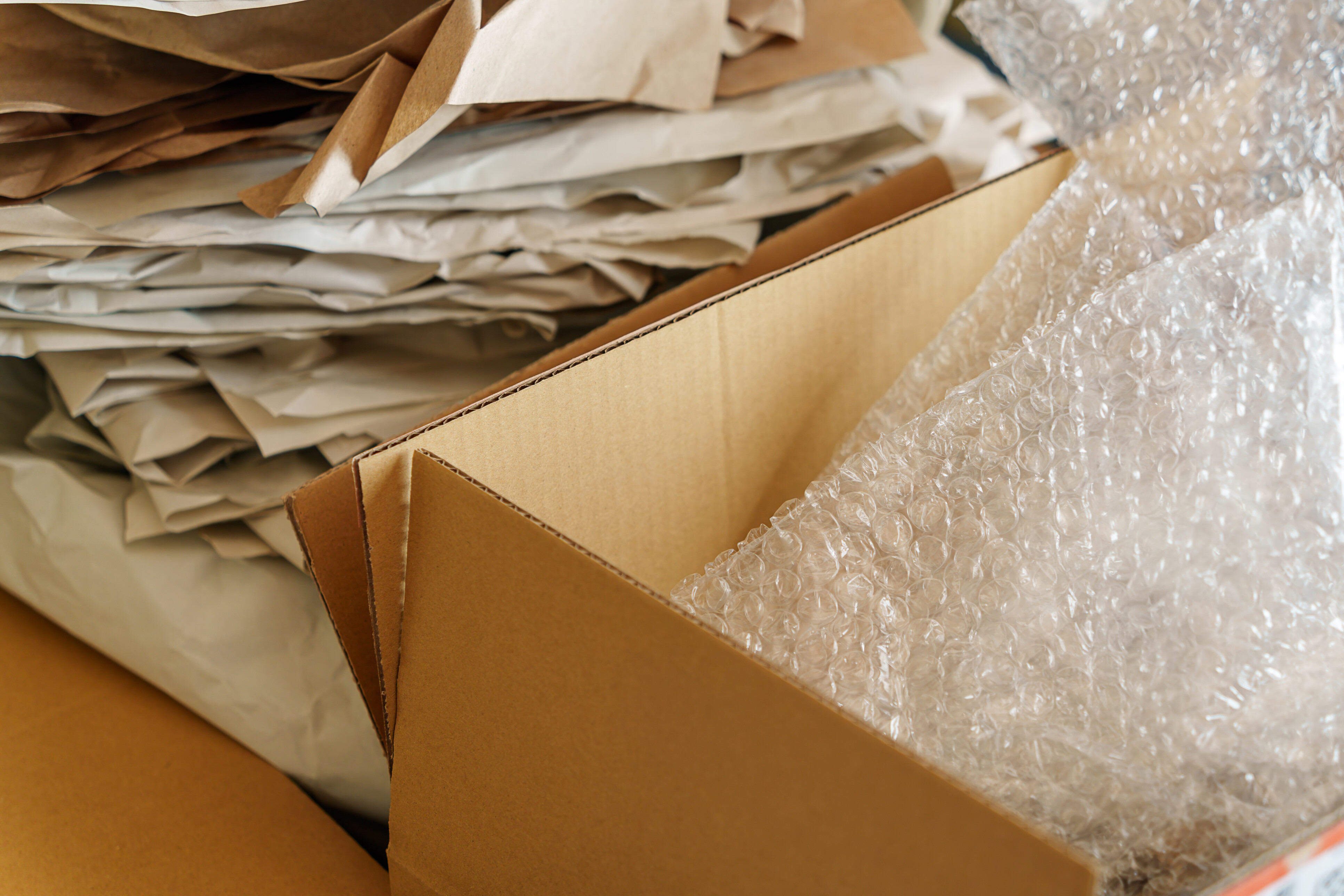
The good news is that linens like comforters and duvets aren’t fragile, so you won’t need any special padding. Before you start packing, create a checklist to make sure you have the following:
- Sturdy and large boxes
- Vacuum storage bags, large plastic bags, or trash bags
- Packing tape and a marker for labeling boxes
How to pack pillows for moving
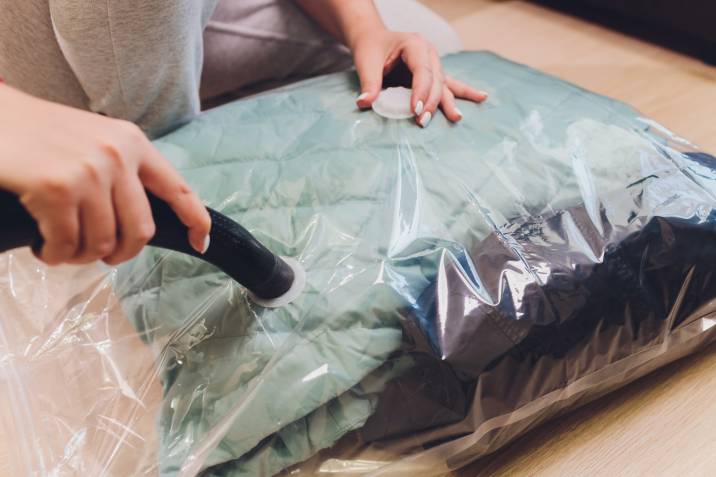
Pillows are soft and bulky, which makes them one of the trickiest bedding items to move. If you don’t pack them properly, they can take up unnecessary space or get dirty along the way. The key is to protect them while also shrinking them down for easier transport.
- Clean and cover: Start by making sure your pillows are fresh and clean. Place them inside pillowcases or large plastic bags to protect them from dirt and moisture during the move.
- Vacuum seal: Because pillows are bulky, vacuum storage bags are especially useful. They shrink the pillows down to a fraction of their size, which saves space and reduces the number of boxes you need.
Once the pillows are protected and compressed, think about how to pack them so they actually help your move instead of getting in the way. Smaller pillows can be used inside boxes to pad and protect fragile items. Larger pillows work well when wrapped or bagged and then placed in the moving truck to fill empty spaces, which keeps other items from shifting around.
How to pack blankets for moving
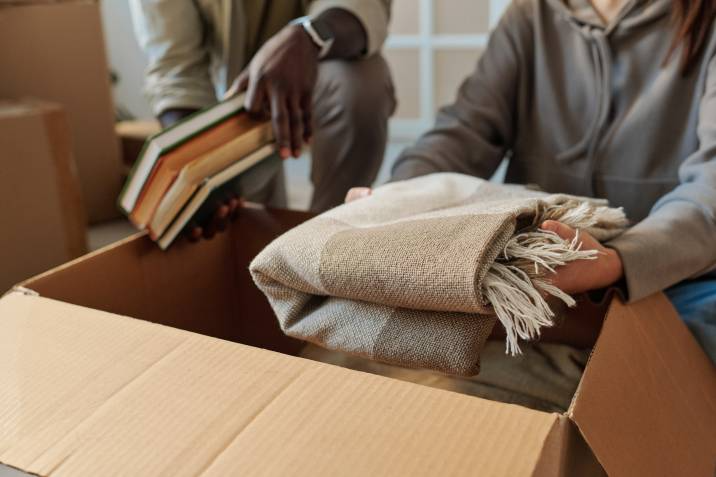 Blankets and bed sheets are lighter but can quickly eat up box space if not folded correctly. Since they’re prone to trapping moisture and odors, cleaning them beforehand and packing them neatly will make unpacking much easier.
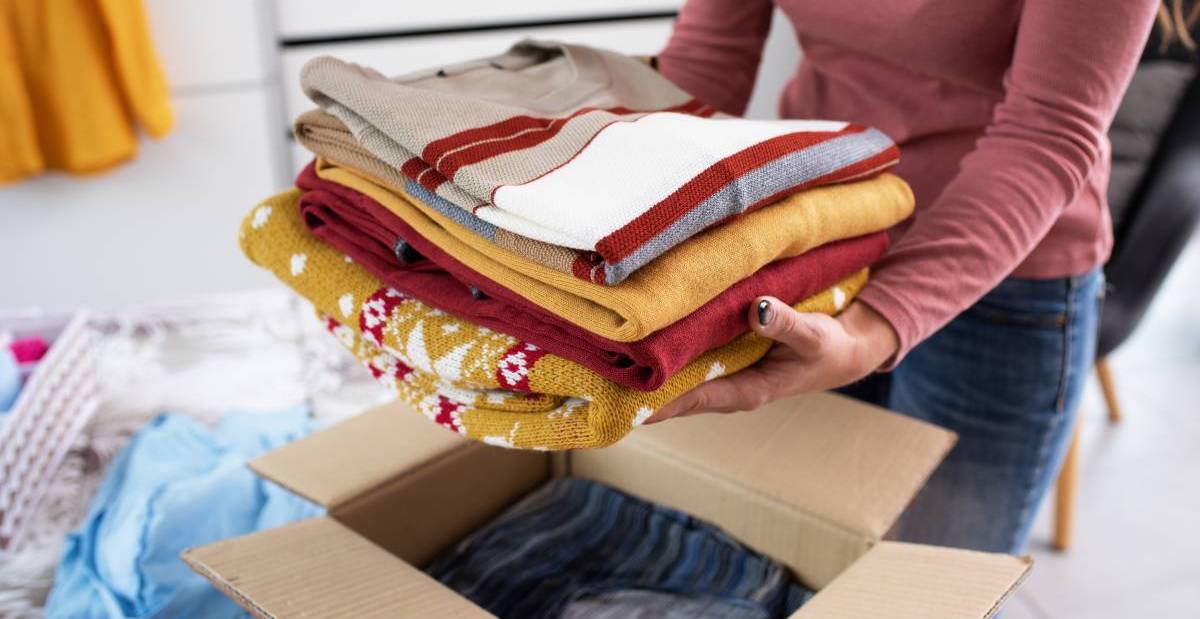
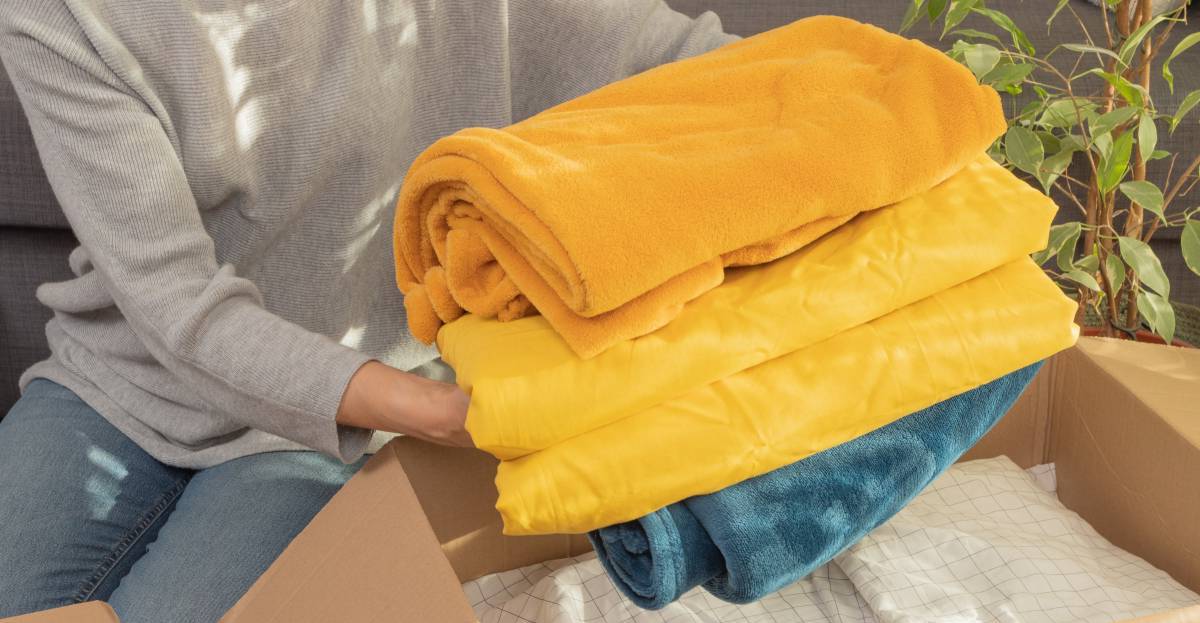
- Fold and flatten: The most efficient way to pack blankets and sheets is to fold them neatly so they lie flat. This helps maximize space and keeps the fabric from wrinkling too much.
- Stack tightly: Place folded blankets in a box, pressing them down firmly and adding more on top as you go. The tighter you stack them, the more you can fit inside one box without wasting space.
- Seal and label: Once packed, seal the boxes with sturdy tape and label them clearly. For even easier organization, consider color-coding each type of bedding, such as using blue for pillows and black for blankets.
How to pack comforters for moving
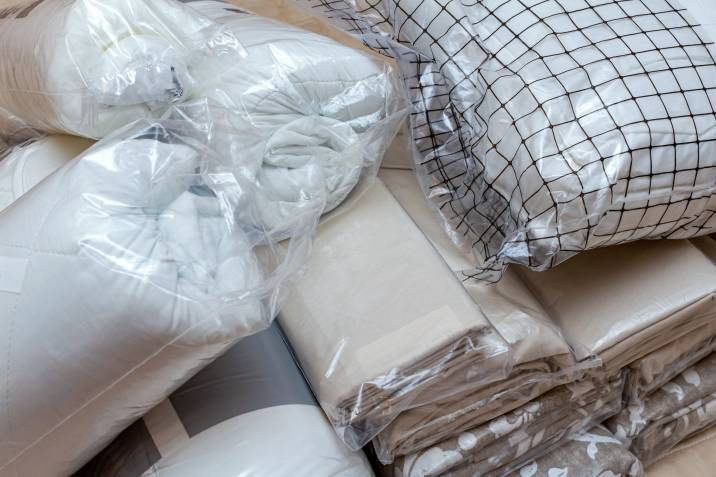
Comforters are bulky, and there isn’t just one right way to pack them. Depending on the materials you have on hand and the amount of space you want to save, you can choose from several options. Here are the most effective methods:
Option 1: Vacuum seal
After flattening and folding your comforters, placing them in vacuum storage bags can save a lot of space. This method is especially helpful if you are tight on room and want to fit more into each box or suitcase.
However, vacuum sealing takes extra time, requires special bags and equipment, and is not always cost-effective. Many professionals also point out that a simple box or bag can achieve nearly the same result with much less effort.
Option 2: Store in plastic bags or boxes
If you do not have vacuum bags, you can place comforters in large plastic bags to protect them from dust and moisture during the move. Cardboard boxes are also a good option because they are easier to stack and keep the comforters from being punctured.
One drawback to keep in mind is that plastic bags can snag on sharp edges in the moving truck, which may cause holes or tears.
Option 3: Roll the comforters
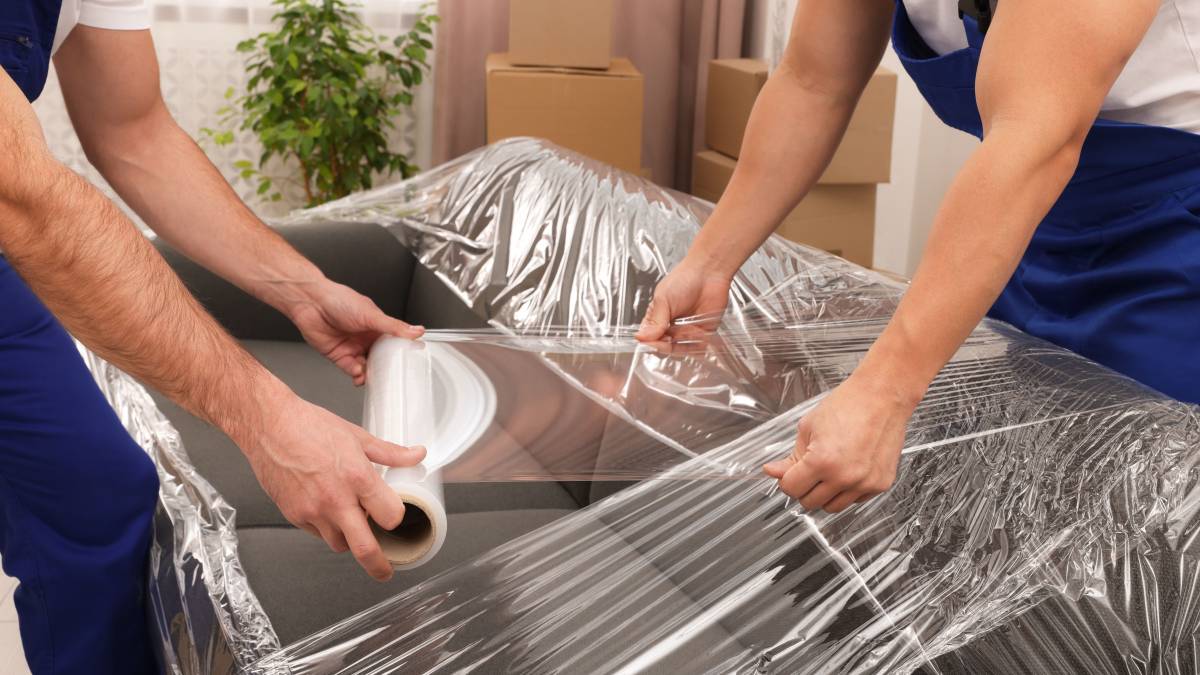
Instead of folding them, you can also roll the comforters the way you do sleeping bags. If possible shrink wrap or place in a bag to keep from getting dirty.
Compared to regular blankets, comforters will need large cardboard boxes. As usual. Seal, label, and set aside your boxes once all your comforters are safely packed.
Hire a packing service if you have limited time
The process should be easier now that you’ve learned how to pack bedding for moving. However, if you are short on time or planning a larger move, hiring professional packers through Airtasker is the best way to save time and effort.
While bedding itself is simple to pack, the real value of professional help comes when you have an entire household to prepare. Professional packers know how to handle everything from pillows and comforters to fragile and bulky items, ensuring that each piece is packed properly and arrives in good condition.
Post your task on Airtasker today and let trusted local packers make your move faster, easier, and completely stress-free.
Learn more about our contributors
Written by Genine T.
Staff Writer
Genine is a writer and educator with over seven years of experience. She has published peer-reviewed research papers, worked in academia, and created educational content for thousands of language learners. She discovered her passion for turning complex ideas into practical advice through writing about DIY topics like home improvement, furniture assembly, and household fixes. When she’s not writing, Genine enjoys curling up with her dogs and a good book.
Reviewed by Daniel C.
Moving Expert
Daniel is an experienced moving professional with over 8 years in the industry, including 6 as a foreman for a leading company. He has mastered every aspect of relocation, from packing fragile items and loading trucks to managing local, long-distance, office, and high-end moves. For the past 2 years, he has worked independently, earning a reputation for precision, reliability, and stress-free moves.
The Reviewer Badge is awarded to individuals who are experts in their respective fields and evaluate the content to ensure its accuracy and relevance to the task at hand.
FAQs on packing bedding for moving
Let’s say you’re preparing for a trip and can’t leave without your favorite pillow. You have several options for packing a pillow:
Use a vacuum storage bag.
Roll the pillow to help shrink its volume
Pack the pillow at the very bottom of your suitcase.
Make sure your comforters are completely dry before packing them! You don’t want to encourage mold with any leftover moisture. The steps for packing king-size comforters are similar to regular comforters, except that king-size comforters will be bulkier. To save space, fold the comforters and slip them into vacuum storage bags before packing them in boxes.
Vacuum storage bags work by removing the air from the bag to compress and flatten the contents, creating more space-efficient storage. These storage bags come in different sizes and are used to save space when packing clothes, pillows, and blankets.
You’ll need a vacuum (or a manual hand pump) to compress and seal the bag and its contents. Keep in mind that vacuum storage bags are not suitable for delicate items, such as silk or leather.
Find packers and movers, fast
Find a packer and mover
Related price guides
How much do packers cost?
Read more





Related articles
How to move gym equipment safely
Read more
Where to get moving boxes for free
Read more
Moving to San Diego Guide
Read more
Moving to Atlanta Guide
Read more

Moving interstate checklist
Read more

Moving out of state checklist
Read more
Moving Checklist
Read more
How to move a refrigerator
Read more

How to move a pinball machine
Read more

What movers won’t move
Read more

The ultimate packing and moving list
Read more
How to wrap furniture for moving
Read more
A guide to becoming a mover
Read more

How much do movers make?
Read more

Tips for moving house with kids
Read more
How to pack kitchen items
Read more
How to pack artwork for moving
Read more

How to pack books for moving
Read more

How to move a pool table
Read more

How to move a shed
Read more
How to move a washing machine
Read more
How to move a vending machine
Read more