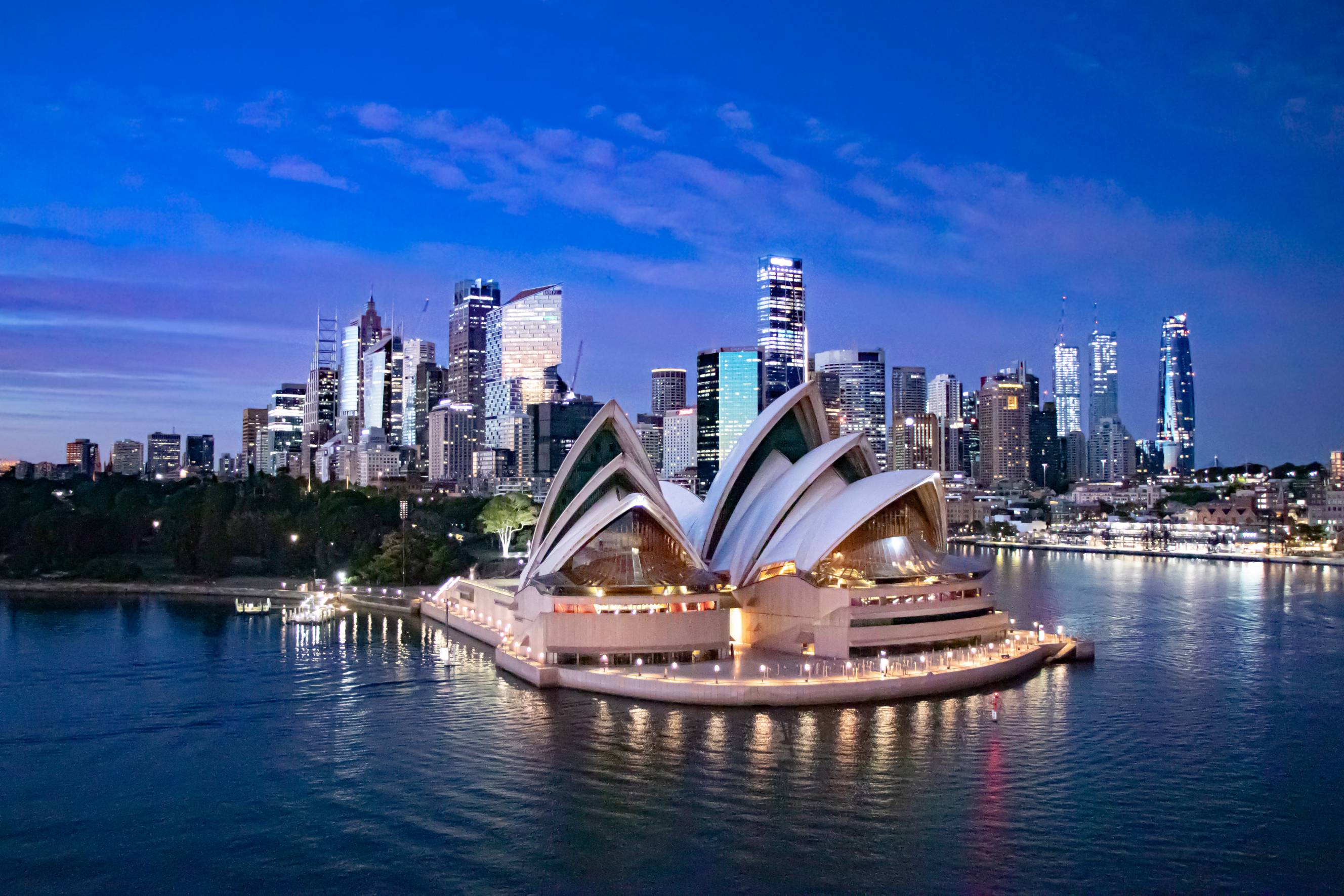
Moving to Sydney: Your complete guide to relocating
Everything you need to know about how to move and adjust to life in Sydney.
Last Updated on

Written by Genine T.
Staff Writer
Read more about our contributor
Moving to Sydney highlights:
Over half of recent migrants to Australia choose Sydney, making it the second-fastest-growing city in the country.
You’ll pay around $750 per week for an average unit, which puts Sydney housing costs among the highest globally.
Moving between April and September gives you better availability and rates compared to the busy December to March period.
What makes a city worth uprooting your entire life for? For thousands moving to Sydney right now, it’s the jobs, the expanding infrastructure, and a city that’s genuinely set up for newcomers. No wonder it has become Australia’s second-fastest-growing city with the second-highest overseas migration numbers.
While it sounds good on paper, the actual logistics can do your head in. To help you pull it off, this guide walks through how to move to Sydney, covering jobs, costs, neighbourhoods that fit your budget, and what happens once you arrive.
Why are people moving to Sydney?
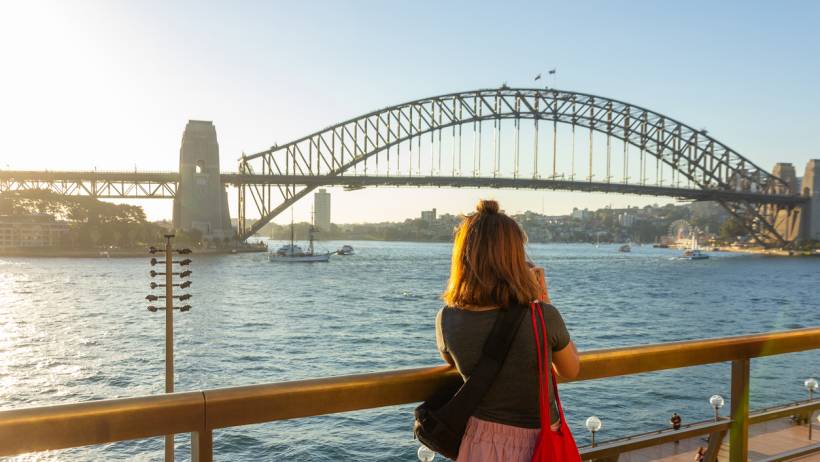 Overlooking Sydney Harbour Bridge. (Source: iStock)
Before you look up removalists’ costs and start packing, here’s what you need to know about Sydney living. The city’s appeal comes down to three key factors: a beach-and-business lifestyle, ample job opportunities, and a year-round manageable climate.
Lifestyle and culture
Often called the Harbour City, Sydney’s where serious business happens right next to world-class beaches. Finance, tech, and creative industries are booming here, but you can still hit Manly Beach (ranked in the global top 25) or any of the 100+ other beaches in your free time. National parks like the Royal and Blue Mountains are also close enough for weekend escapes, giving you a taste of life in Sydney that balances work and play.
In terms of cultural diversity, Sydney is home to communities from Lebanon, Vietnam, Greece, China, and heaps of other countries that have built suburbs around their cultures. In fact, over half of recent migrants choose to settle here, which tells you how welcoming the city actually is. This diversity means authentic food from everywhere, cultural festivals year-round, and markets packed with goods you won’t find anywhere else in Australia.
Career and job opportunities
Is Sydney a good place to live for career progress? Absolutely. The New South Wales portal alone lists over a thousand positions across Sydney in various industries, and that’s just the public sector. When you look at the industry profiles across East Metro, Greater West, North & West, and South West regions, the top five employing industries consistently are:
- Health Care and Social Assistance
- Construction
- Professional, Scientific and Technical Services
- Education and Training
- Retail Trade
Finance and Insurance, Transport and Warehousing, and Manufacturing also have a strong presence in specific regions, so there’s depth beyond the big five if your expertise sits elsewhere. With all that considered, relocating to Sydney gets you into a job market with real options. Just make sure to polish your resume or CV before relocating.
Weather and climate
Sydney has a temperate climate with four distinct seasons, but nothing too extreme. Summers are warm without being unbearable, winters stay mild enough that you won’t need serious cold-weather gear, and most of the rain falls between summer and autumn. The weather’s pleasant most days, with just a few scorchers in summer and heavier rainfall between February and June.
| Season | Average Temperature |
What to Expect |
|---|---|---|
Summer (December to February) |
19°C to 26°C |
Warm and humid, perfect beach weather |
Autumn (March to May) |
15°C to 22°C |
Mildest season, ideal for coastal walks |
Winter (June to August) |
9°C to 17°C |
Cool mornings, most rain in June |
Spring (September to November) |
11°C to 23°C |
Warming up, lower humidity |
Moving from interstate or overseas? It’s highly recommended to pack light and skip the heavy winter gear. Bring too much, and you’ll be scrambling for storage units or booking a removalist to handle your extra items.
What should you research before moving to Sydney?
Before you make the move, you need to get real about the average cost of living in Sydney, Australia. This section covers everything from rent and daily expenses to choosing the right suburb, timing your move to avoid peak season costs, and sorting visas if you’re coming from overseas.
Cost of living
The average base salary sits at $86,000 a year (roughly $7,166 monthly before tax), well above Newcastle’s $74,000 and Gosford’s $65,000. That pay bump sounds great until you factor in the cost to live in Sydney, Australia, which ranks among the steepest globally. Rent drives most of the pain, with the average unit hitting $750 weekly as of 2025.
Here’s what you’re realistically looking at each month:
| Type of Expense | Average Monthly Amount |
|---|---|
Rent |
$2,606 to $7,415 |
Basic utilities (electricity, gas, water, internet) |
$300 to $400 |
Groceries |
$500 to $900 |
Transportation |
$200 to $386 |
Beyond the big-ticket items, Sydney’s day-to-day costs may catch people off guard. For instance, eating out runs $20 to $100 per meal, babysitters charge $25 to $35 hourly, and gym memberships cost around $60 to $86 monthly. If you prefer personal training, that could set you back around $15 to $130 per session.
Neighbourhood options
Looking for the best suburbs to live in Sydney? Families weighing the best areas to live in Sydney often settle on Randwick, Lane Cove, and Mosman for good reason, although they can expect mid to premium rents across these areas. These family-friendly suburbs also offer excellent public and preparatory schools, low crime, and highly walkable streets. Essential amenities like hospitals, libraries, and shopping centres are easily accessible.
On the other hand, young professionals moving to Sydney typically gravitate toward areas such as Newtown, Surry Hills, and North Sydney. The good news is that these locations sit 5 to 15 minutes from the central business district (CBD) via train, bus, or ferry. All three offer excellent public transport links, specialty cafe and bar scenes, and that energetic urban lifestyle most young adults seek out.
Best time to move
One of the most important things to know when moving to Sydney is that rental competition and moving help costs fluctuate dramatically throughout the year.
The peak season runs from December through March, aligning with school holidays, the start of the work year, and the typical 12-month lease cycle. While the weather is warm and dry during this time, expect higher rents, fewer available properties, and premium rates for house removal services as demand spikes across the city.
| Season | Months | Pros | Cons |
|---|---|---|---|
Peak moving season |
October- March |
Warm, dry weather; less chance of rain disrupting moves |
Higher rental competition, premium moving costs, fewer properties available |
Off-peak (Best value) |
April - September |
Milder weather, more rental options, lower house removal rates, easier to negotiate lease terms |
Cooler temperatures; occasional rain |
If you’re flexible on timing and wondering “should I move to Sydney” during the quieter months, it’s highly recommended to move from April through September.
Seasonality also plays a key part in moving prices. Moving companies tend to have more competitive pricing during peak periods and lower their rates during off-peak seasons. When the weather is warm and dry, expect premium rates for house removal services as demand spikes across the city.
In case you need help planning your move, below shows Airtasker’s pricing trends for removalist jobs in Sydney by season:
| Season | Months | Demand | Pros and Cons |
|---|---|---|---|
Peak moving season |
September–November |
Highest demand months |
Pros: Good weather for moving and plenty of options Cons: Highest rates; less flexible scheduling |
Off-peak (Winter; best value) |
July–August |
Lower demand period with more favourable pricing |
Pros: Lower prices and better flexibility on scheduling Cons: Coldest weather and shorter daylight hours for moving |
Off-peak (Autumn) |
February–May |
Moderate demand period |
Pros: Pleasant weather with a good balance of pricing and service availability Cons: Prices are slightly higher than Winter Off-peak; less flexible scheduling |
Transition period |
December–January |
Moderate demand and varied pricing |
Pros: Good weather; service is manageable Cons: Increased booking is expected around holidays; prices can increase unexpectedly |
Moving costs
The cost of your move to Sydney depends largely on how far you’re going and how much stuff you’ve got. If you’re doing a local move within 50 km or staying within the same city, removalist hourly rates run about $80 to $160 per hour. Interstate moves cost more, often anywhere from $2,500 to $9,500+, depending on distance and volume.
Just note that a few things may bump up the total costs beyond just distance. For instance, larger properties mean more items to move, tricky access like narrow staircases or tight driveways can slow things down, and add labour costs. If you need help with packing or temporary storage, that’ll cost extra too.
Out-of-state or international considerations
Whether you’re coming from Melbourne or somewhere abroad, there are some extra steps to sort out before you can properly settle in Sydney. Here’s what you need to know about moving interstate or internationally.
Interstate moving
If you’re moving to Sydney from another state, you’ll need to transfer your driver’s licence to NSW within three months and update your vehicle rego. You can also set up a MyServiceNSW account before you move to make this easier. If you have kids, arrange their school documents early so they can enrol without delays. Everything else works much like a standard change-of-address move.
International moving
If you’re from overseas looking to move to Australia permanently, you’ll need a job offer or a valid visa. With your visa secured, you should obtain certified copies of your passport, licenses, proof of employment, and bank statements, as you’ll need these to organise accommodation in Sydney. Once you’ve found a place, you can start the following:
- Booking international shipping: Contact removalists or shipping companies at least three months in advance, as freight typically takes four to twelve weeks.
- Authenticating documents: Get birth certificates, marriage certificates, and educational qualifications authenticated through an Apostille or consular legalisation, which can take several weeks.
What should you do on your Sydney moving day?
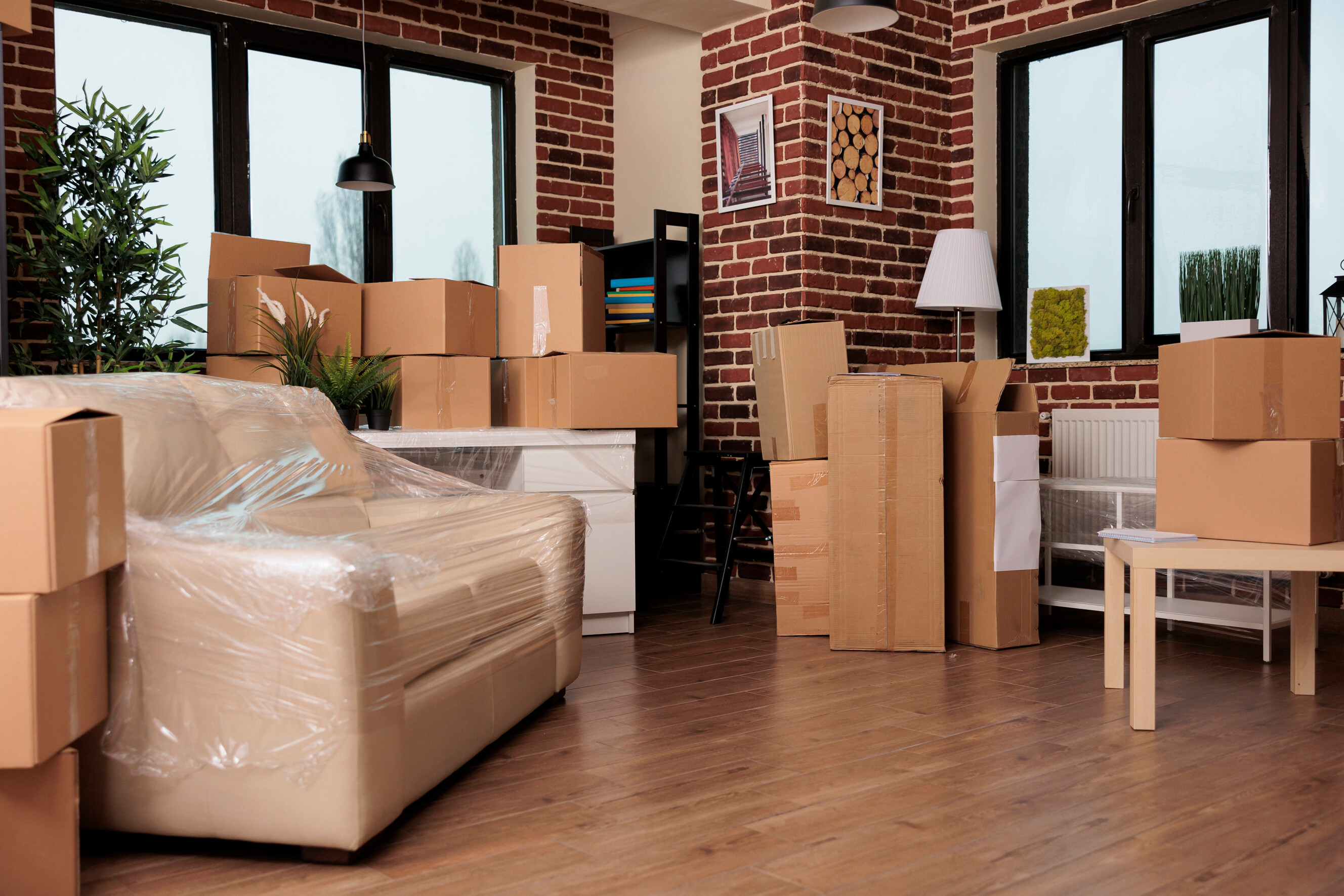
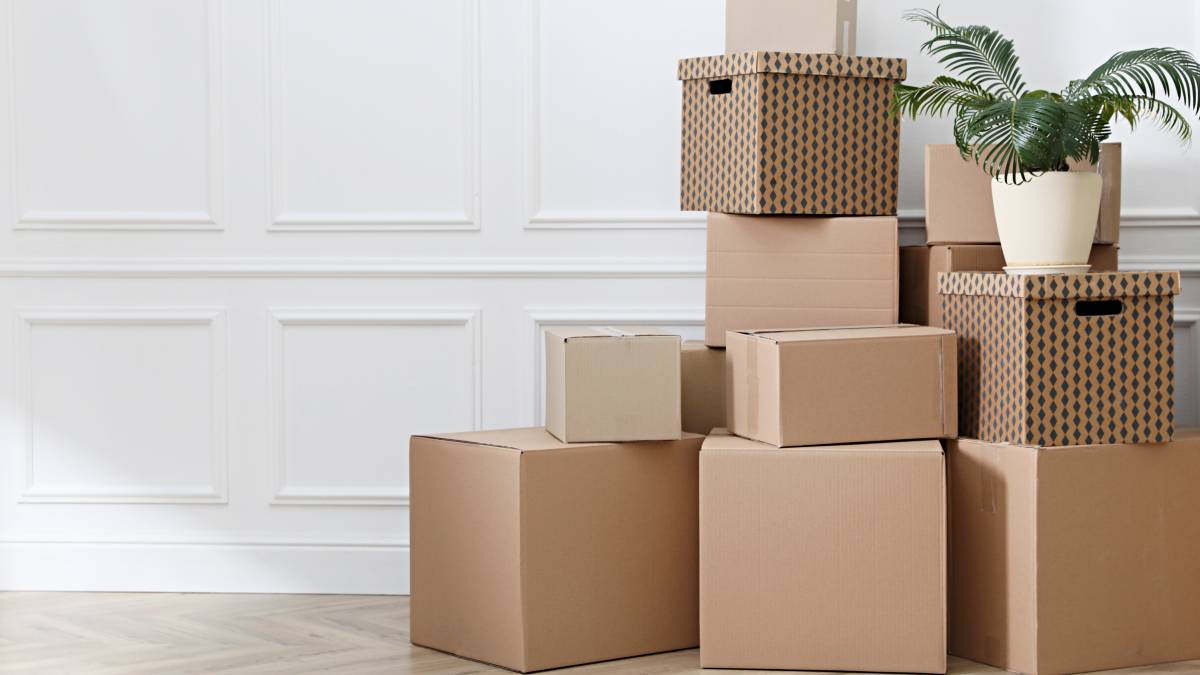
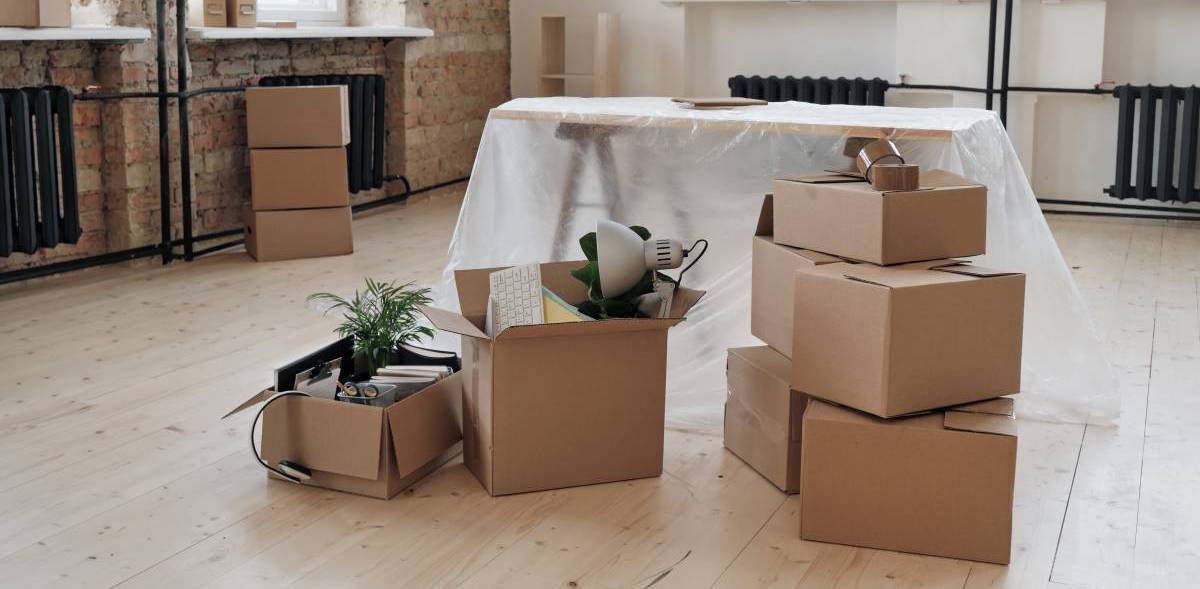
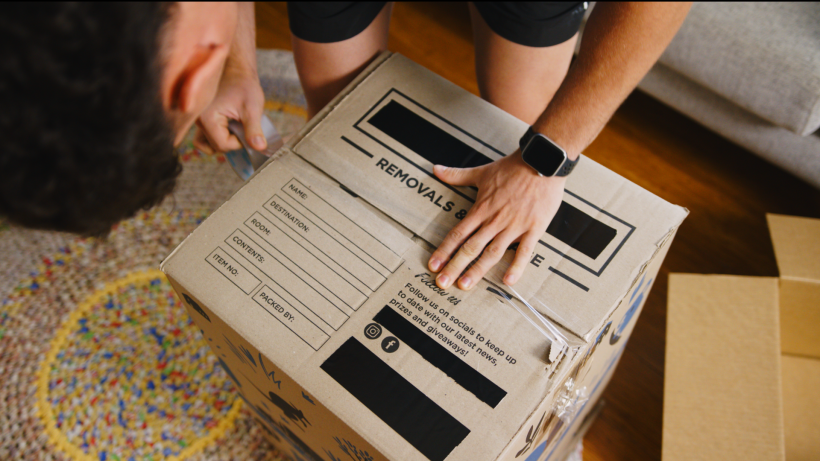 Packing and decluttering before moving.
Moving day is when things can go sideways fast if you're not prepared. Here’s how to coordinate removalists, keep your belongings safe during transport, and make sure nothing gets missed before you hand over the keys.
Strategically coordinate movers and services
Whether you’re moving from Brisbane to Sydney or just relocating within the city, keeping your service providers in sync makes the entire process smoother. Do contact your removalists as well, the day before, to confirm arrival times and arrange any necessary parking permits or loading-dock access at both locations.
More importantly, book move-in cleaning for your old place before you hand over the keys so your bond refund isn’t held up over dusty skirting boards or a dirty oven. Any solid moving guide will tell you that professional cleaners get it sparkling quickly and know exactly what property managers look for.
If you’ll need help mounting TVs, assembling furniture, or general handyman jobs at the new place, organise those services ahead of time rather than scrambling once the boxes are open.
Carefully transport your belongings
One of the smartest tips for moving to Sydney is downsizing before the truck arrives. Donate usable furniture to Vinnies or list items on Facebook Marketplace the week before you move. Also check your council for their free hard rubbish collection and prepare to haul your items to designated kerbside spots on specific collection days.
For getting old couches downstairs, clearing garage clutter, or lugging heavy items to the kerb, hire heavy lifting help to get it done efficiently.
Once you have your items sorted, take the time to carefully wrap furniture, fragile items, and bulky appliances with blankets or bubble wrap to protect them. Pay special attention to vulnerable spots, such as table corners, chair legs, glass surfaces, and appliance edges. If you’re short on time or unsure how to protect delicate pieces, book professional packing services at least 4 weeks before your move.
Critically double-check everything
Before leaving your old place, check every room, cupboard, wardrobe, and the garage for anything left behind. Take photos of the property’s condition and record final utility meter readings for electricity, gas, and water to avoid disputes later. You should also check that everything’s unplugged, taps are off, and windows are locked.
After your short- or long-distance move, count boxes as they come off the truck and inspect them for any damage while the movers are still on site. Direct them to the correct rooms during unloading so you’re not hauling furniture up stairs later.
If you’re moving to Sydney with pets and you’re renting, a simple pet profile with a photo can surprisingly boost your chances of getting approved by landlords.
How do you get settled in Sydney after moving?
You can’t properly settle in Sydney until you’ve knocked out the boring but essential admin. This section covers what you need sorted early so you’re not caught out with no power or mail going to your old address.
Connect your utilities
Arrange your utility connections at least a week before move-in day to avoid arriving without power or internet. If you’re moving utilities into an established apartment or house, contact suppliers at least a week before move-in to arrange disconnection and reconnection. For new properties requiring meter installation, allow 10 to 20 days to ensure everything’s ready on time.
| Utility Type | Example Providers |
|---|---|
Gas and electricity |
1st Energy, AGL, Globird Energy, iGENO |
Water and waste collection |
Sydney Water (only provider) |
Internet |
Superloop, Aussie Broadband, Exetel |
For your internet setup, it’s recommended to sign up at least a week before your move-in date since most providers need to ship you a modem, which typically arrives within 5 to 7 business days.
Update your licences and documents
Moving to Sydney means updating your government-issued licenses and accounts to reflect your new address. The easiest way to handle most NSW-specific updates is through a MyServiceNSW account, which you can create online before your move. Once you’ve set up your account, link your services, so your address automatically updates across:
- Driver’s license and vehicle registration
- Boat license and vessel registrations
- Seniors/Senior Saver Card
For uninterrupted services, you should also update the following accounts with your new Sydney address:
- AEC (Australian Electoral Commission)
- MyGov (which will update linked services like Medicare, Centrelink, and ATO)
- Insurance policies (home, contents, car)
- Bank accounts
- Subscriptions and online shopping accounts
In many cases, you can easily change your registered address by logging into a service’s online portal. However, some service providers require a physical visit or proof of address change.
Secure council-related permits
One of your first tasks after moving to Sydney should be locating your local council. Sydney is divided into several local government areas, each with its own application processes and requirements. Use the NSW Government’s council finder tool to identify your council, then visit their website to register your address and access services and permits, including:
- Rates and property taxes
- Resident parking permits
- Bin collection schedules
- Construction and renovation approvals
Planning home improvements? Apply for construction or renovation permits early, as the approval process typically takes several weeks, depending on your local council.
Ensure your family’s welfare
Once you’ve settled into your new Sydney home, your next priority is connecting your family with local schools, parks, and healthcare services.
Schools and childcare
Sydney offers a choice between government schools and non-government schools (including private, independent, and religious institutions). Browse the complete list of registered non-government schools to compare options in your area.
For NSW Government schools, you can complete online enrolment directly through the Department of Education portal, making the process straightforward and convenient.
For younger children, research local childcare centres and early learning programs through the Starting Blocks portal. Simply add “Sydney” to find available childcare centres in your area.
Playgrounds and parks
Family-friendly playgrounds and parks are one of the many reasons to move to Sydney with children. They feature equipment for toddlers to older kids, with many offering fenced areas for added safety. Popular options include:
- Sydney Park Playground in Alexandria
- Wulaba Park Playground in Waterloo
- Pirrama Park Playground in Pyrmont
Healthcare facilities
The Sydney Local Health District operates four public hospitals serving the area:
- Balmain Hospital
- Canterbury Hospital
- Concord Hospital
- Royal Prince Alfred Hospital
For remote healthcare needs, Sydney’s Virtual Hospital operates 24/7, providing care to patients who require virtual consultations, home-based nursing, and support for chronic care.
Also think of your pet
If you’re bringing a pet to Sydney, be aware that NSW has strict animal welfare requirements you must follow. All cats and dogs over 12 weeks old must be microchipped with your current contact details, registered with the local council, and desexed by the age of 6 months.
Other important pet rules to know:
- Dogs are not allowed in playgrounds and risk a $330 fine
- Dogs must be kept on a leash in all public places, except designated off-leash parks
- All pets must wear a collar with your contact details
- Always pick up after your dog or face fines of up to $275
How do you get around in Sydney?
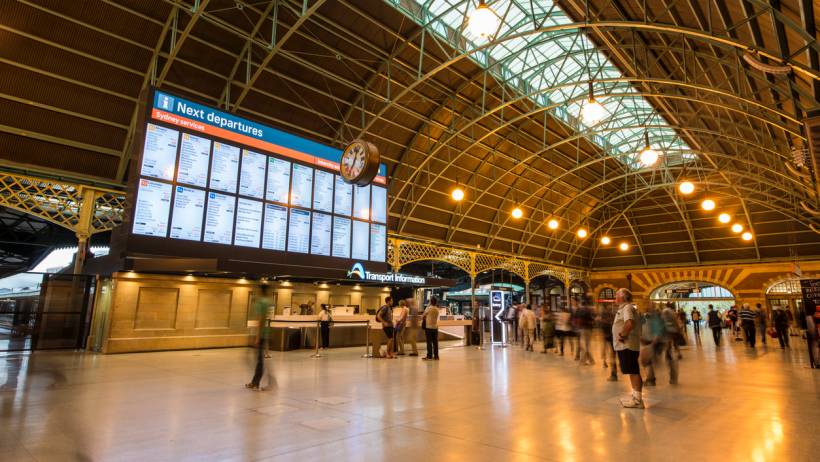 Grand hall inside the historic Central Station in Sydney. (Source: iStock)
Sydney’s inner suburbs and transport hubs are pretty walkable, and most train stations have ramps, lifts, and tactile paving for accessibility. That said, it’s worth checking your route ahead of time since not all stations are fully accessible yet.
One important thing to consider before moving is that it’s fairly car-dependent, especially in the outer suburbs, where public transport can be patchy. The good news is that the city offers multiple transport options to suit different needs, so you can find a combination that works for your lifestyle and location.
What is Sydney’s Opal Card?
The Opal card is Sydney’s rechargeable smart card for public transport, offering the most cost-effective way to get around. The card itself is free to order online, but you need to top up at least $10 at transport hub machines, Opal retailers, or via the Opal Travel app or website to make it work.
Here are four card types based on your eligibility. The rates below are based on Transport NSW’s listed fares as of December 2025:
| Card Type | Who Can Use It | Daily Cap | Weekly Cap |
|---|---|---|---|
Adult |
Ages 16+ paying full fare |
$19.30 (Mon-Thu) $9.65 (Fri-Sun & holidays) |
$50 |
Child/Youth |
Ages 4-15, or full-time students aged 16+ |
$9.65 (Mon-Thu) $4.80 (Fri-Sun & holidays) |
$25 |
Senior/Pensioner |
Eligible seniors, pensioners, asylum seekers |
$2.50 |
$17.50 |
Concession |
Tertiary students, apprentices, job seekers |
$9.65 (Mon-Thu) $4.80 (Fri-Sun & holidays) |
$25 |
Once you hit your daily or weekly cap, all additional travel is free. Opal also offers a $2 transfer discount for adults ($1 for children and concessions) when you switch between transport modes, plus 30% off for off-peak travel.
By car
If you’re living in Sydney’s outer suburbs, you’ll likely need a car for daily commutes. Just be ready for peak hour traffic between 7:00 am and 9:00 am and 4:30 pm and 6:00 pm on weekdays. For parking, you’ll need residential permits in most suburbs, while CBD metered spots run $6.40 to $8.50 per hour.
You’ll also need to budget for tolls, which add up fast on daily commutes. The most commonly used roads include:
- Sydney Harbour Bridge/Tunnel: $2.76 to $4.41 (varies by time of day)
- M2 Hills Motorway: $3.04 to $10.25, depending on entry/exit points
- WestConnex (M4, M8, M4-M8 Link): Distance-based tolling, typically $6 to $12 for most trips
By train
The train network in Sydney gets you pretty much anywhere you need to go, with nine main lines connecting the CBD to the suburbs. You’ll also need to use your Opal card here, and the fares work the same way, with peak hours during weekday mornings and evenings, as well as the same daily and weekly caps. Some notable stations that lead to main attractions:
- Circular Quay: Gets you straight to the Opera House, Harbour Bridge, and the ferries
- Central Station: Sydney’s main hub where all the lines meet, close to Chinatown
- Bondi Junction: Hop on a bus from here to reach Bondi Beach and the eastern suburbs
By bus
Buses in Sydney are your best bet for local travel and reaching areas like the Northern Beaches, Port Stephens, and Coogee Beach. They run on fixed routes throughout the city and suburbs, making them handy for getting around neighbourhoods or areas where trains don’t go. You can use your Opal card here too, so fares work the same way with the same peak hours and daily and weekly caps.
To figure out which bus to catch, check out the government’s official Trip Planner, where you can see all the routes available based on where you are and where you’re going. It’ll also show you the estimated time of arrival, so you can plan your trip without any hassle.
By ferry
Another way to get around and enjoy cracking harbour views is to hop on a ferry. Sydney Ferries operates nine routes departing from multiple wharves, with Circular Quay serving as the central hub where most routes connect. Most services start around 6:00 am on weekdays and run until late evening. You can tap on and off with your Opal card just like you would on buses, trains, and light rail.
Beyond the main network, there are also a range of private ferry services for commuters, school kids, and leisure activities, which operate on their own fare systems:
| Operator | Maximum Fare |
|---|---|
Central Coast Ferries |
$10.20 |
Captain Cook Cruises |
$11.90 |
Palm Beach Ferries |
$9.70 to $14.70 |
By light rail
Another way to get around with your Opal card is by Sydney’s light rail. There are four main lines connecting key areas across the city, and most services run from 5:00 am to 1:00 am daily. However, it’s worth double-checking the real-time departure timetable on TransportNSW to ensure accuracy. Here’s a breakdown of the main lines:
| Line | Route |
|---|---|
L1 Dulwich Hill |
Central Grand Concourse to Dulwich Hill |
L2 Randwick |
Circular Quay to Randwick via Central Chalmers Street |
L3 Kingsford |
Circular Quay to Juniors Kingsford via Central Chalmers Street |
L4 Westmead & Carlingford |
Carlingford to Westmead, with stops in Parramatta CBD and Westmead Health Precinct |
What are fun things to do as a new resident in Sydney?
 The view across the open lawns of Centennial Park. (Source: iStock)
If you’re wondering “why should I move to Sydney?”, the answer is simple: there’s heaps to explore. In this section, let’s go through everything you can try once you’re settled in!
Explore your new neighbourhoods
Not sure where you want to actually spend your time yet? It's wise to spend your first few weekends hopping between different parts of Sydney to get a feel for what's what. Here are some areas worth a visit:
- Newtown & Marrickville: Best for artsy, local vibes with vintage shops, street art, and plenty of indie cafés.
- Paddington & Surry Hills: Best for picture-perfect, Hallmark-style streets with charming terraces and boutique shops.
- Bondi, Coogee, Manly & Cronulla: Best for classic coastal living, year-round beach days and a laid-back Sydney feel.
Visit historical and heritage sites
Sydney’s packed with iconic spots worth seeing in person. You’ve got the Opera House, the Harbour Bridge, the Queen Victoria Building, and all the classics. From there, you can hop on a ferry to Cockatoo Island, where you can explore its shipbuilding and old convict history while taking in stunning harbour views.
If you’re into art, the Museum of Contemporary Art sits right on the water and always has new exhibitions from both Australian and international artists. And speaking of creative spaces, the Chinese Garden of Friendship in Darling Harbour is another spot that delivers plenty of Insta-worthy corners to explore.
Enjoy the outdoors
For adrenaline junkies and outdoor lovers, hit up Penrith for white-water rafting, Manly for surf and coastal walks, or Darling Harbour for waterfront activities and harbour events.
Got a furry friend? Dog owners can take their pets to dog-friendly beaches like Rose Bay and Sirius Cove, or walk the popular coastal track from Bondi to Coogee for ocean views.
The city also has plenty of green spaces for unwinding or staying active. One example is the Royal Botanic Garden, located near the Opera House, which is ideal for leisurely strolls. There’s also Centennial Park, which offers larger areas for cycling, jogging, and picnics.
Check out the local market scene
If you want to get a feel for Sydney’s local community and culture, head to one of the city’s markets on the weekend. You’ll find everything from fresh produce and handmade goods to vintage finds and cheap electronics, all while soaking up the local vibe. Here are a few worth checking out:
- The Rocks Markets: Pick up handmade jewellery, one-of-a-kind clothing, homewares, and local art every Saturday and Sunday.
- Kirribilli Markets: Hunt for secondhand treasures and vintage gear on Sundays from 8:30 am to 3:00 pm.
- Paddy’s Markets: Grab fresh produce, cheap electronics, and just about anything else Wednesday to Sunday, 10:00 am to 6:00 pm.
Move to Sydney with ease
If you’re ready to start your new life in Sydney, you don’t have to sort through every little detail on your own. Just sign up at Airtasker, post your task, and share what you need. From there, the right taskers come to you.
Need local removalists on short notice? Furniture that needs assembling? A safe ride for your pet? Whatever’s on your list, Airtasker brings together the people who can get it done.
Helpful resources for those moving to Sydney
If you’re looking for extra guidance on moving or getting settled, here are some resources to check out:
Trip Planner
Use the Trip Planner to map out your trips across Sydney’s public transport network. It also shows walking, cycling, taxi, and rideshare options, so you can figure out the best way to get around Sydney.
Visit NSW
The VisitNSW website has government-backed travel recommendations across the state, complete with printable itineraries. This can come in handy if you want to explore beyond Sydney once you’ve settled in.
Sydney Public Libraries
Sydney has 9 library branches where you can access free wifi and computers, or browse and borrow from their collection. Registration is free, so you can start using these resources right away.
NSW Emergency
Stay informed with the NSW Emergency website, the official source for the latest news, updates, and warnings about fires, floods, storms, and other emergencies across the state. You'll also find information on emergency accommodation and housing support if you ever need it during a crisis.
Learn more about our contributors
Written by Genine T.
Staff Writer
Genine is a writer and educator with over seven years of experience. She has published peer-reviewed research papers, worked in academia, and created educational content for thousands of language learners. She discovered her passion for turning complex ideas into practical advice through writing about DIY topics like home improvement, furniture assembly, and household fixes. When she’s not writing, Genine enjoys curling up with her dogs and a good book.
FAQs about moving to Sydney
The average cost of living in Sydney, Australia, is among the highest in the country, with rental prices leading the charge. Housing takes up a large portion of most people’s budgets, so it’s important to plan your finances and explore different suburbs to find something that fits your lifestyle and financial capabilities.
Based on thousands of moving tasks we’ve seen on Airtasker, April tends to be an ideal month for relocating. Fewer people are moving during this time, so you’ll have better access to removalists and may even snag more competitive pricing.
It depends on your budget and priorities. The city centre offers convenience with everything within reach, but rent is expensive, and space is limited. The suburbs give you more room and better value for money, though you’ll trade that for longer commutes and less immediate access to the action.
Sydney offers higher average salaries and a stronger job market, which helps balance out the higher cost of living. The public transportation system is more efficient, and the city’s infrastructure development and economic growth provide better long-term career prospects.
The average salary in Sydney is around $86,000, which is generally enough to cover the basics like rent, groceries, transport, and utilities, though it doesn’t leave much room for savings or lifestyle spending. To live more comfortably with some financial breathing room, you’d want to aim for at least $100,000 as a single person.
Find removalists, fast
Find a removalist
Related price guides

How much does it cost to move house?
Read more

How much do packers cost?
Read more





Related articles
How to move a shed
Read more

How to move a pool table
Read more

How to pack bedding for moving
Read more

How to pack books for moving
Read more
How to move a washing machine
Read more
How to move gym equipment safely
Read more

What removalists won’t move
Read more

How to wrap furniture for moving
Read more
How much do removalists make?
Read more

A guide to becoming a removalist
Read more

Moving interstate checklist
Read more

How to pack kitchen items
Read more

How to pack artwork for moving
Read more
Moving a fridge: How to do it right
Read more
How to move a vending machine
Read more

How to move a pinball machine
Read more

Tips for moving house with kids
Read more