- Home/
- Comparisons/
- Painting/
- Sherwin-Williams Pure White vs. Extra White
Sherwin-Williams Pure White vs. Extra White
Comparing Sherwin-Williams Pure White and Extra White based on cost, appearance, and more
Published on

Written by Milafel D.
Contributor
Read more about our contributor
Key Facts
Pure White is a versatile, “soft” white with hints of gray and gold, creating a warm, welcoming atmosphere in any room under different lighting conditions.
Extra White is crisp, highly reflective white with cool undertones, providing a sharp contrast for contemporary materials, trims, and doors.
Thinking of upgrading your home’s paint for a fresh and pristine look? You can never go wrong with white–unless you’re choosing between Sherwin-Williams Extra White and Pure White.
While these swatches look identical under store lights, they diverge sharply on the wall. One works best as a whole-house white, while the other functions better as a color accent. Buying the wrong gallon can instantly transform your sanctuary into a sterile clinic or a dingy cave.
Read on to learn how to choose the white that fits your budget and your home.
What color is Sherwin-Williams Pure White?
 Sample of Sherwin-Williams Pure White (Source: sherwin-williams.com)
Sherwin-Williams Pure White is a versatile off-white paint color with warm undertones. A subtle yellow brightens the room, while gray pigments soften the color. This balance of warmth and coolness makes it perform well as a neutral or subdued white across a range of lighting conditions.
What color is Sherwin-Williams Extra White?
 Sample of Sherwin-Williams Extra White: (Source: sherwin-williams.com)
Sherwin-Williams Extra White is a clean, crisp white with blue and gray undertones that can make the paint appear dingy and cold in shaded or dark rooms. When used on its own, the space can feel stark and sterile, but it can reflect and complement pops of color in its surroundings.
Sherwin-Williams Extra White vs. Pure White: Which is better for your needs?
Choosing between these two top-selling whites comes down to a few key factors:
In terms of cost
Sherwin-Williams Extra White and Pure White cost the same per gallon because the manufacturer charges by product line, not by color or tint. Prices vary by paint line.
At $92 to $104 per gallon, Emerald and Duration are the most expensive because of their durability and superior coverage. SuperPaint and Cashmere are midrange, priced at $80+ per gallon. Captivate is budget-friendly, priced at $60 per unit.
The number of coats needed also affects the price. Generally, Sherwin-Williams white paint colors require two to three coats, especially when repainting a dark or vibrant wall.
However, Pure White has a slight edge over Extra White because of its warm undertones, which can mask imperfections and dark tones more quickly. Choosing this can help you save on labor (if hiring an interior painter) and materials when renovating large rooms.
In terms of appearance
Pure White feels like a warm hug. Its velvety, lived-in quality softens hard angles, making a space feel approachable and relaxed.
Extra White, a high-reflectance true white, presents a greater design challenge. In darker rooms, its blue-gray undertones can feel clinical or icy, while in ultra-bright spaces, its high reflectivity can create a distracting glare rather than a soft glow.
In terms of versatility
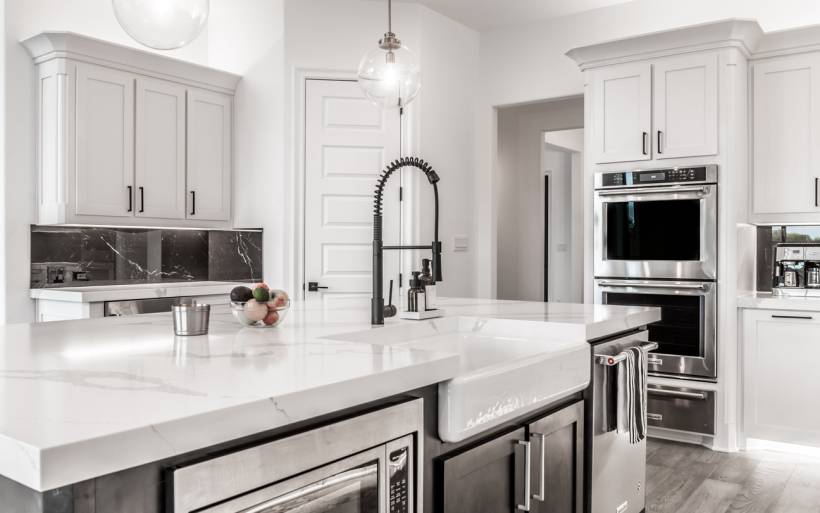 Kitchen with white cabinetry and island in Sherwin-Williams Pure White or Extra White tones (Source: iStock)
The best way to compare Extra White and Pure White is to determine their impact on your space. Which is the best Sherwin-Williams white for the whole house? What white should you choose as a ceiling paint?
Use as a whole-house white
Pure White is the clear winner in this category. Touted as the standard for whole-house white, it contains a hint of gray to soften it and gold or yellow to warm it. It transitions beautifully from a dark hallway to a sunny living room. In an open-concept home, spaces flow naturally and gracefully due to visual continuity.
Outside, Pure White behaves differently. Like any white paint, it appears more intense in direct sunlight, but it doesn’t produce a blinding glare, thanks to its undertones.
Painting walls Extra White is a bold move often used to achieve a curated “gallery look.” But this ultra-crisp style works best in homes with ample natural light and modern deco.
Performance in bright vs. low-light rooms
Lighting conditions can quickly shift the look and mood of interiors when used to paint them:
North-facing rooms: Extra White can make these spaces feel icy or clinical because its blue-gray undertones amplify the cool, weak light from the north. Pure White’s subtle gold and yellow pigments counteract the chilly blue light, injecting just enough warmth to make the room feel neutral and cozy rather than cold and gray.
South-facing rooms: With enough sunlight, Extra White paint can glow, balancing the cool base. Interior walls painted Pure White will feel warmer and appear golden due to the paint color’s yellow and gray undertones.
Artificial light: Because it’s brighter white, Extra White can make the room feel modern and clean under 4000K LEDs and harsh under older bulbs. Meanwhile, as one of the warm whites, Pure White feels cozy and inviting.
Pairing with trim, doors, and ceilings
Pure White creates a cohesive, layered look. Pure White trim appears clean without being stark, providing subtle contrast against walls in the same color or slightly deeper neutrals. On ceilings, it avoids glare and prevents the “boxed-in” feeling that can occur with brighter whites, especially in rooms with lower ceilings or warm lighting.
An SW Extra White trim sharpens architectural details. Its high reflectivity separates the trim and the wall color, even when the wall is white. In the process, the edges are cleaner and the lines crisper.
While Extra White stands out as a trim color, it can be less forgiving when painted on ceilings. The same reflective quality magnifies light sources, increasing glare and revealing imperfections.
As an exterior trim color, Pure White offers a classic, adaptable look across varying light conditions. It holds its color during dusk and under overcast skies. Extra White is glaring, but it may be what you need if you want to showcase sharp edges and architectural details.
Compatibility with warm and cool color palettes
For color coordination, Extra White complements dark paints such as Smoky Azurite and Charcoal Blue. For a moodier fireplace, use Tricorn Black and Urbane Bronze on the walls, and this Sherwin-Williams white paint on the bricks.
Pure White pairs well with more neutral colors, such as deep-purple Perle Noir or gray March Wind. The high-reflectance white allows these darker shades to pop without clashing. To prevent it from looking “creamy” or “off-white,” avoid pairing it with cooler, starker whites, such as Highly Reflective White and Icy White, in the same line of sight.
Suitability for modern and transitional interiors
Extra White can appear bland or lifeless, but when paired with the right materials, it can quickly transform a room with excellent contrast.
For example, its inherent coolness balances the warmth of exposed wood beams and floors, provided they don’t have orange, yellow, or red undertones. Extra White also suits modern, minimalist homes with black metal and polished chrome accents, kitchen cabinets with Carrara marble, and concrete walls due to its crisp, clean appearance.
Meanwhile, Pure White and warmer wood colors, such as tans and reds, echo each other rather than clash. They can look more integrated than with Extra White.
In terms of durability
 Clean white bedroom interior with soft textures and natural decorative elements (Source: iStock)
Like other white paints, Extra White and Pure White can reveal problems on your walls, trims, and ceilings. However, the latter is slightly better at concealing minor scuffs, fingerprint smudges, and light dust due to its undertones.
If you want to use Extra White, consider buying it in Eggshell or Satin finishes for kitchens, children’s bedrooms, and dining rooms. These finishes provide a protective barrier against spills and dirt without damaging the paint. An SW Extra White trim in Semi-Gloss contains enough resin to resist the oils from hands and foot traffic on baseboards.
Both are easy to maintain since Sherwin-Williams manufactures high-quality, durable paints. But Extra White might be quicker to touch up. As a base or factory-standard color, a gallon purchased five years from now is likely to match perfectly. Tinted paints require more precise formulation.
Emerald and Duration also simplify maintenance. These high-performance lines ensure Extra White stays crisp and bright, preventing the “graying” that can occur when dust accumulates.
In terms of eco-friendliness
Both are available in the Harmony and Emerald paint lines, which release virtually no volatile organic compounds (VOCs) or toxic gases.
Sherwin-Williams also commits to reducing greenhouse gas emissions by 30% in 2030, including increasing production of low- to zero-VOC paints. As of 2024, the PaintCare program has diverted more than 70 million gallons of latex- and oil-based paint from residential waste streams.
The light reflectance values (LRVs) of these whites also provide a passive-energy win. Extra White (LRV 86) can amplify natural light, delaying the need for artificial lighting until later in the evening. It also reflects more heat in summer, potentially reducing cooling costs.
Take the guesswork out of house painting with Airtasker
Choosing between the “warm hug” of Pure White and the “architectural crispness” of Extra White is a high-stakes decision for any homeowner. While Pure White is the ultimate all-rounder for a cozy, versatile interior, Extra White remains the gold standard for high-definition trim and modern, gallery-style spaces.
However, the final look depends on your specific lighting, architecture, and flooring. These variables make a DIY project feel overwhelming and risky.
To avoid the costly mistake of painting an entire house the wrong color, consider hiring a professional house painter through Airtasker. In addition to ensuring a durable, flawless finish, this expert can advise on whether to use wallpaper or paint, the best color choice, and the ideal product type for the space.
“Is Sherwin-Williams Pure White or cool?”—skip the stress of painting your house white. Delegate labor and technical decisions to a specialist, and go straight to enjoying your newly remodeled cozy or high-end sanctuary. Find an expert on Airtasker today.
Learn more about our contributors
Written by Milafel D.
Contributor
Milafel is an editor and writer with over 15 years of experience. As a contributor to Airtasker content, she brings clarity, creativity, and insight to every piece to help homeowners tackle everyday challenges and turn their living spaces into something truly special. When she’s not writing, Milafel is a devoted cat mama and a teacher’s wife who enjoys belting out tunes at karaoke, journalling her thoughts, and pursuing passion projects.
Sherwin-Williams Pure White vs. Extra White
Sherwin-Williams Pure White |
Sherwin-Williams Extra White |
|
|---|---|---|
Cost |
Costs the same per gallon |
Costs the same per gallon |
Appearance |
Velvety, soft white with gray and yellow undertones |
Bright, crisp white with cooler undertones |
Versatility |
Ideal as a whole-house interior paint and for rooms with different lighting conditions |
Great for trims, modern and industrial spaces, or a high-end gallery look |
Durability |
Hides minor imperfections better |
Might be quicker to maintain as a factory color |
Eco-friendliness |
Both available as low to zero-VOC paint; offers passive-energy win |
Both available as low to zero-VOC paint; can potentially cool the house during summer |
FAQs on Sherwin-Williams Pure White and Extra White
Yes, especially when the rooms have large windows and plenty of sunlight. However, it can make dark colors pop.
Yes, both are subdued and warm, though Benjamin Moore’s White Dove is creamier and less reflective.
Yes, especially if the cabinets have wooden elements. They effectively highlight the wood grain while concealing minor dirt and stains.
Yes, it can, but use caution. Extra White’s cool blue base can clash with wood that has strong yellow, orange, or red undertones (such as honey oak or cherry).
Find painters, fast
Post a task
Related price guides
How much does deck painting cost?
Read more
How much does fence painting cost?
Read more





Related articles
How to estimate a paint job
Read more
How much do painters make?
Read more