- Home/
- Comparisons/
- Soil & Sand Delivery/
- Potting Mix vs Garden Soil
Potting mix vs garden soil: What’s the difference?
Comparing potting mix and garden soil based on ingredients, texture, and more
Last Updated on

Written by Paul M.
Contributor
Read more about our contributor
Key Facts
Potting mix is ideal for indoor and outdoor container plants and starting seeds.
Garden soil is nutrient-rich, best for outdoor gardening, and provides great support for roots and plant growth.
Gardening is a popular pastime for people of all ages. It can easily become an addictive hobby, as it is both rewarding and enjoyable. Whether you are growing flowers for beauty or herbs for sustenance, good soil is essential for success. If you are considering potting mix vs garden soil, both can result in a lush garden because they are specially formulated to provide the necessary nutrients and drainage for plants to thrive.
Knowing when to use them helps to create a healthy environment for the roots to absorb water and nutrients optimally. Essentially, understanding the importance of soil and selecting the right one for your needs is a crucial step in growing a beautiful garden.
What is potting mix?
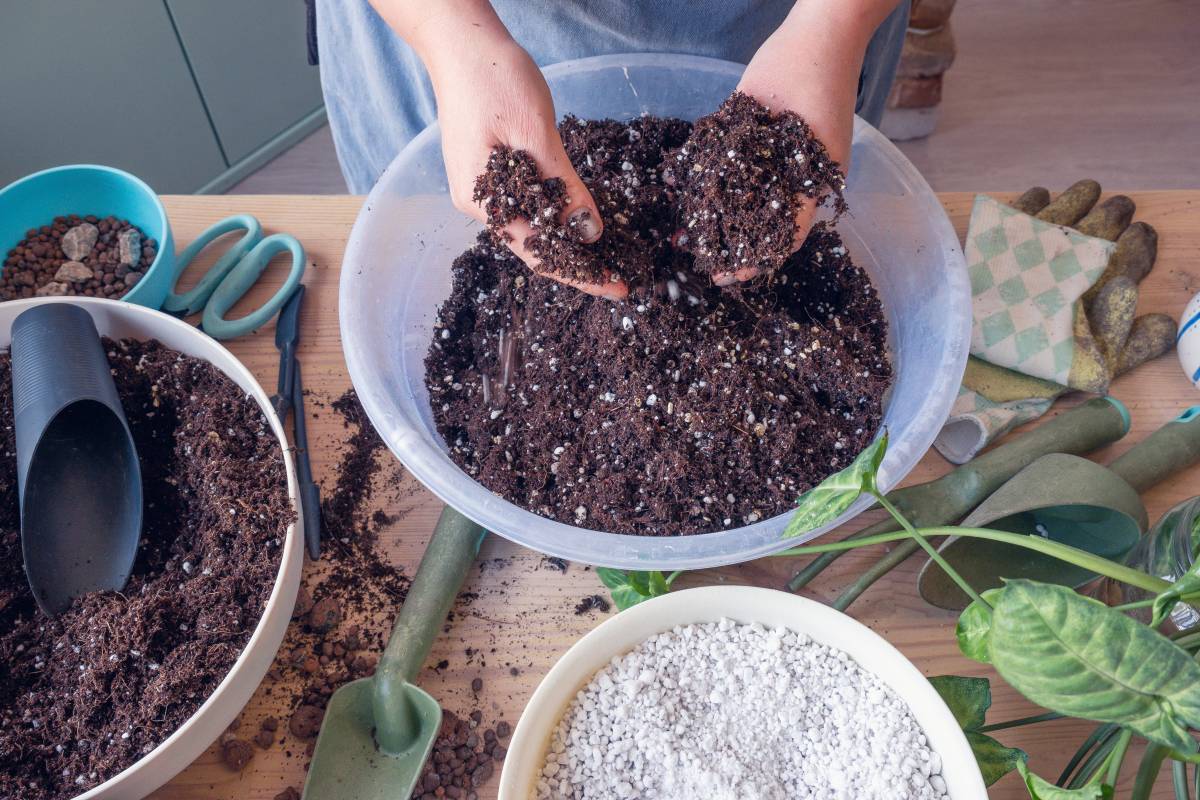 Hands preparing a lightweight potting mix with perlite for container planting (Source: iStock)
Potting mix, also known as potting soil, is specifically designed for container gardening. It is a mixture of several ingredients, including peat moss, perlite, vermiculite, and sometimes sand or coconut coir. Potting mix is designed to provide a light, well-draining medium that allows for optimal root growth and aeration.
It is also often supplemented with nutrients to promote plant growth, as container plants can quickly deplete the available nutrients in the soil. Potting mix can be used for a wide range of plants, from indoor houseplants to outdoor container gardens, and is an important factor in the success of container gardening.
What is garden soil?
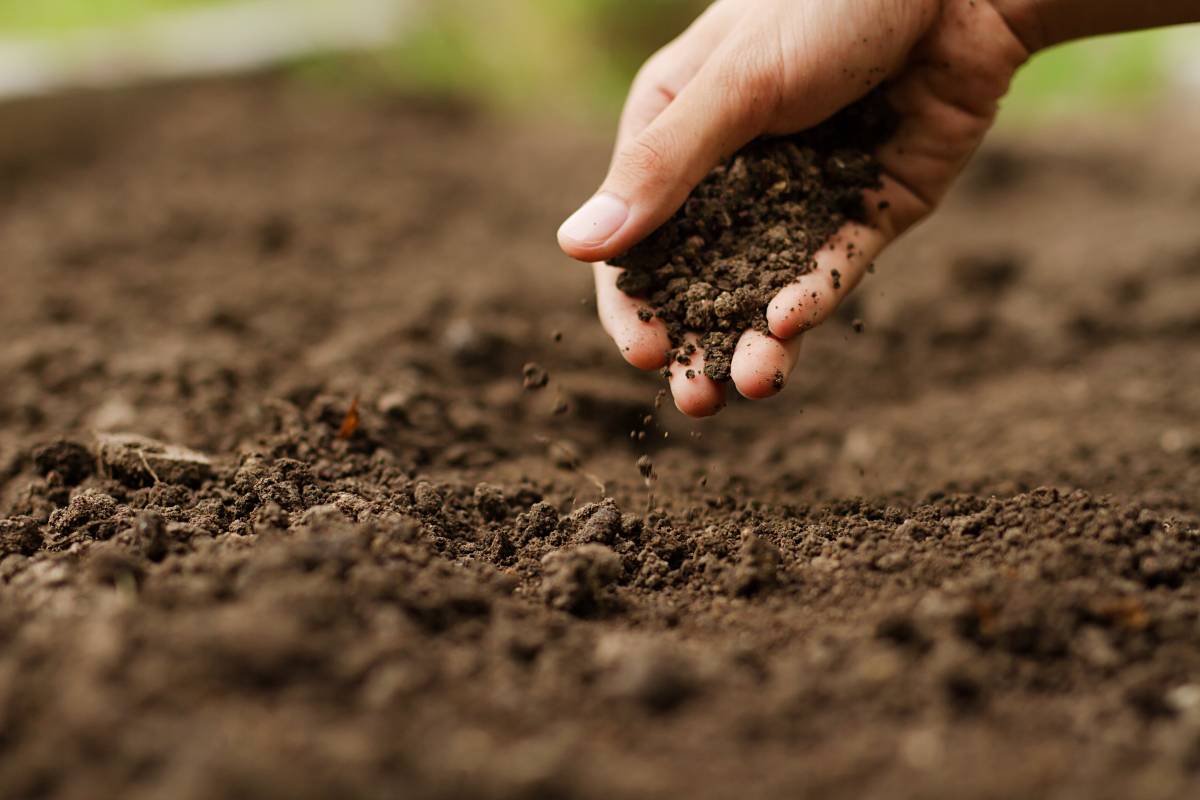 Garden soil examined by hand before planting and cultivation (Source: iStock)
Garden soil is best for outdoor plants. Aside from natural topsoil, it can include a mixture of sand, silt, clay, and other organic matter. It also has nutrients such as nitrogen, phosphorus, and potassium to promote plant growth. Garden soil provides a good balance of drainage, water retention, and aeration so that plant roots grow properly. Note that some plants might require different soil types to thrive.
Garden soil vs potting mix: Which is better?
No type of soil is a one-size-fits-all solution for your gardening needs. The choice between pot mix vs garden soil depends on the species of your plants and the conditions in which they will grow. Here are other things to consider when comparing garden soil and potting mix.
In terms of ingredients and nutrients
Potting mix is typically made from a combination of organic and inorganic materials. It is sterile and great for seed starting but provides little nourishment without slow-release fertilisers. On top of that, potting mix does not hold nutrients well.
Garden soil can also vary in its ingredients, and its characteristics generally depend on the topsoil used to make it. Garden soil is rich in organic matter, such as compost, manure, and peat moss. It also contains macro- and micronutrients, as well as beneficial microorganisms that plants need to flourish.
In terms of texture and weight
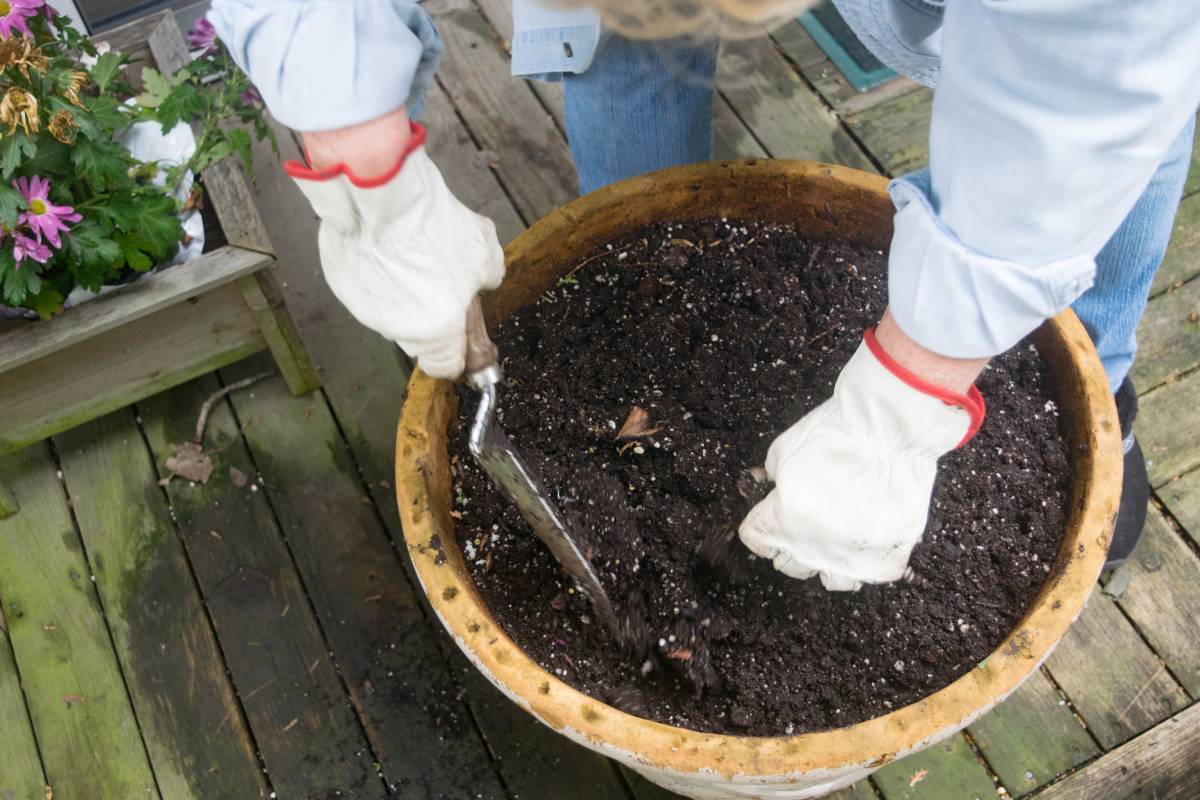 Potting mix preparation in a container on a wooden garden deck (Source: iStock)
Garden soil is typically heavier than potting mix. Textures depend on soil type and the amount of sand, silt, and clay it contains. Heavy soils can be dense and difficult to work with, while sandy soil can be loose and light. Garden soil can be more challenging to work with in containers due to its varying weight, texture, and density.
On the other hand, potting mix is lighter and has a finer texture than garden soil because it is designed to be porous and well-draining. This makes it easier to work with in containers, especially when filling and moving pots.
In terms of aeration/drainage
In terms of aeration and drainage, potting mix generally provides better conditions for seed growth than garden soil, especially in container gardening. However, garden soil can provide the right nutrients and a stable base for plants to thrive and take root.
As mentioned earlier, potting mix is, by design, lightweight and porous, which promotes good aeration and drainage in container plants. The sterile materials it’s made from provide good air circulation around the plant roots, which prevents waterlogging and reduces the risk of root rot.
Depending on its composition, garden soil can also vary in aeration and drainage. Heavy soil can become compacted, restricting air and water movement, while sandy soil can drain too quickly, leading to dryness and nutrient leaching.
In terms of versatility
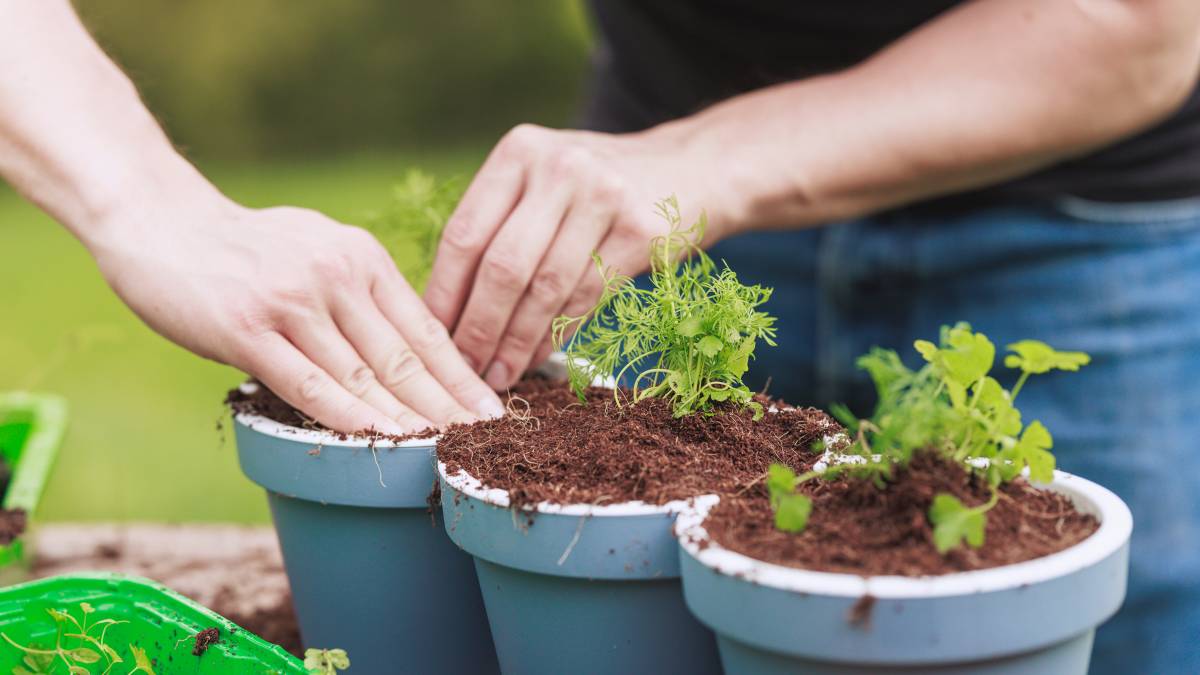
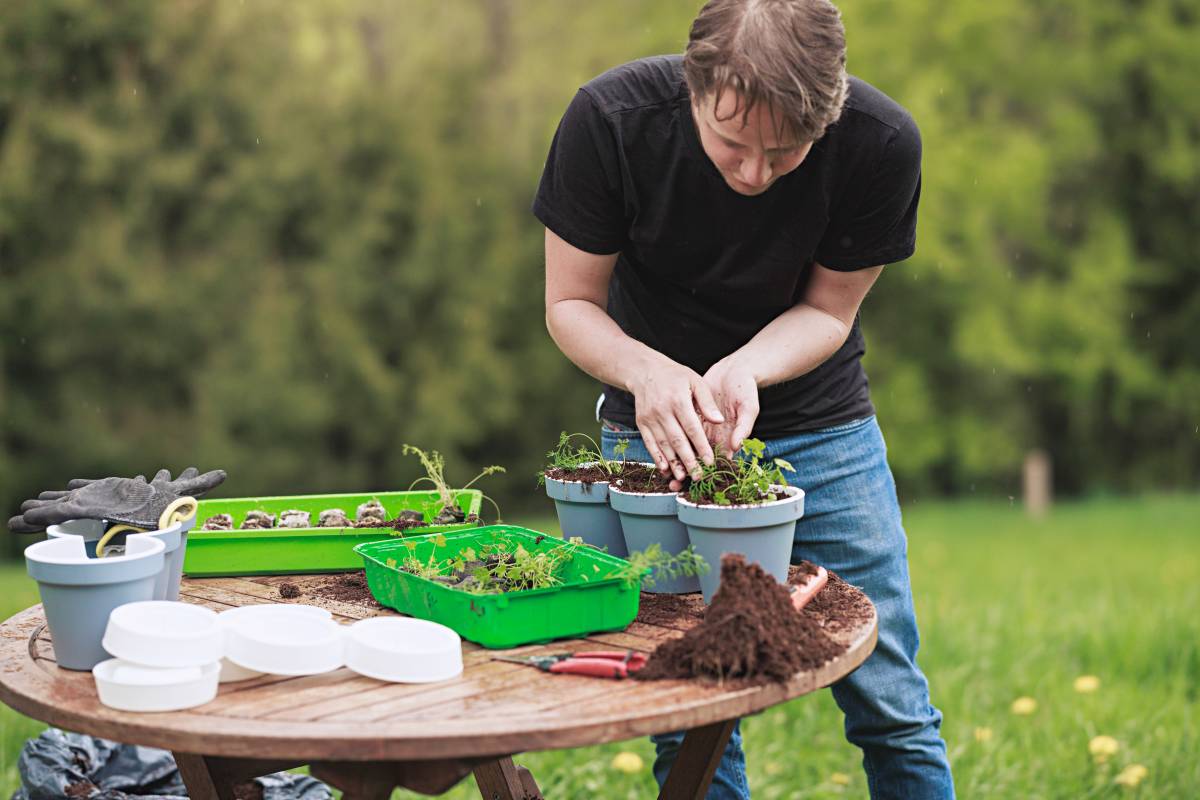 Young plants being potted at an outdoor garden table (Source: iStock)
Since potting mix is lightweight and easy to work with, it is suitable for a variety of container plants. It can be used for annuals, perennials, vegetables, and herbs, as well as for plants with specific growing requirements, such as succulents, cacti, and orchids. Potting mix can also be customised by adding fertiliser or even a little garden soil to meet the specific needs of different plants.
Though you can use a little bit of garden soil in pots, it’s better for outdoor gardening, especially if you wish to plant your own garden. Garden soil can be used for flower beds, vegetable gardens, shrubs, trees, and other outdoor plants. It can be amended with organic matter, such as compost or manure, to improve its nutrient content and water-holding capacity. Garden soil can also be used to restore or enhance the quality of depleted earth.
In terms of cost
If you are looking for an affordable option, garden soil will likely be a better choice. However, if you are doing container gardening or have specific soil requirements, such as improved drainage or water retention, potting mix might be worth the extra cost.
Grow a beautiful garden with Airtasker
If you wish to grow a garden but are unsure where to start, Airtasker can help. You can hire garden planting specialists, book soil and sand delivery services, or find other gardening professionals on the platform. It will connect you to professionals who can address all your gardening needs.
If you’re still on the fence between potting mix and garden soil, feel free to revisit the table below and post a task when you’re ready.
Learn more about our contributors
Written by Paul M.
Contributor
Paul is a mass communication graduate with varied interests, including watching car and football shows, assembling home furniture, and baking treats for his wife and their baby daughter. His experience as a bank employee helps him tackle financial topics with ease, as well as make all kinds of jargon accessible to everyday audiences. While he is passionate about educating Airtasker readers and learning new things along the way, he hopes to have enough time to take a hike (literally) one day.
Potting mix vs garden soil
Potting Mix |
Garden Soil |
|
|---|---|---|
Ingredients |
Peat moss, sphagnum moss, aged bark, coconut coir, pumice, or perlite |
Minerals, organic matter, topsoil, silt, clay, and sand |
Texture/Weight |
Lightweight and fluffy |
Varies from heavy and coarse to loose and light |
Aeration/Drainage |
Porous, promoting good aeration and drainage in container plants |
Can sometimes become compacted or drain too quickly |
Versatility |
Best for container plants |
Best for outdoor gardening |
Cost |
Can be expensive due to processing and added ingredients |
Generally very affordable |
FAQs on potting mix and garden soil
Potted plants require a soil change every 12 to 18 months, although certain circumstances can alter this schedule. For instance, a soil change is necessary if your plant has outgrown its current container or the soil has become excessively compact.
Potting soil can be mixed with garden soil for particular cases, such as raised beds, but it’s not a good mix for containers. Consult your garden specialist to help you find the right blend for your plants.
Find soil & sand delivery experts, fast
Post a task