- Home/
- Comparisons/
- Cat Care/
- British Blue vs Russian Blue
British Blue vs Russian Blue: What are their key differences?
Comparing British Blues and Russian Blues based on appearance, personality, and more
Published on

Written by Ana K.
Contributor
Read more about our contributor
Key Facts
- A British Blue is a type of British Shorthair cat with a blue (grey) coat. It has a round head, round eyes, and a medium- to large-sized build, as well as a calm demeanour.
- A Russian Blue is a feline breed with blue fur and green eyes upon adulthood. It has a medium-sized body and a reserved personality.
In the UK, 29% of households have cats. If you are also thinking of having a feline friend in your own home, determining the right breed for you is probably one of the most crucial steps you have to take. However, it can be confusing to tell cat types apart, like in the case of British Blue vs Russian Blue. But with the help of this guide, you can explore how these cats are distinct from one another.
What is a British Blue?
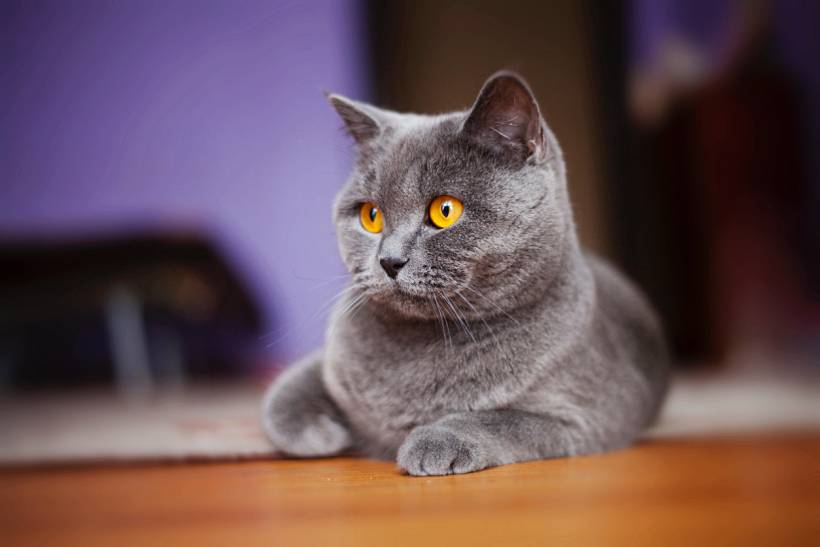 British Blue cat relaxing on a hardwood floor, showcasing its signature plush grey coat (Source: iStock)
British Blues refer to a type of British Shorthair cats that are blue in colour. Also known as an English or Domestic Shorthair, this breed usually lives for 12 to 17 years. It has a chunky build and a quiet yet playful disposition.
What is a Russian Blue?
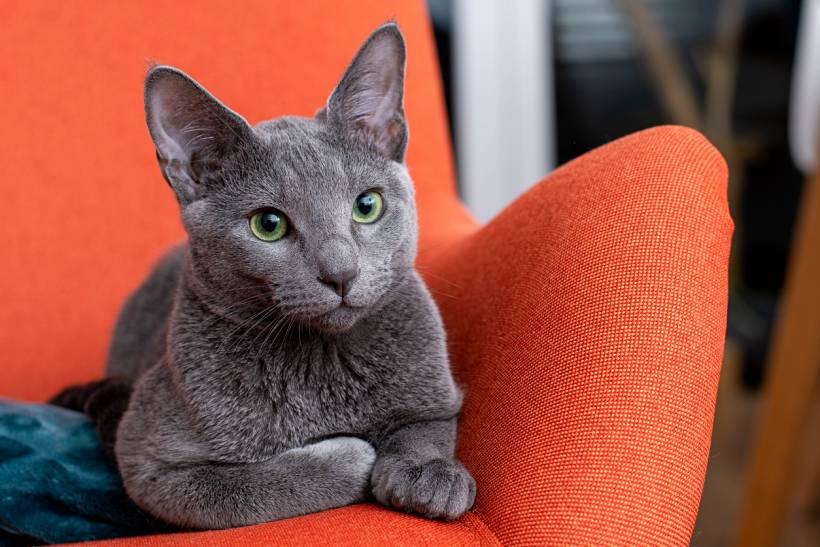 Russian Blue cat with emerald green eyes resting on a vibrant orange chair (Source: iStock)
Russian Blue cats—also known by the names Foreign Blue, Archangel Blue, and Maltese—are also felines with blue fur. These mid-sized cats typically live for 15 to 20 years and are independent yet affectionate.
Russian Blue vs British Blue: How are they different?
Find out the difference between Russian Blue and British Blue cats in terms of the following aspects:
In terms of history
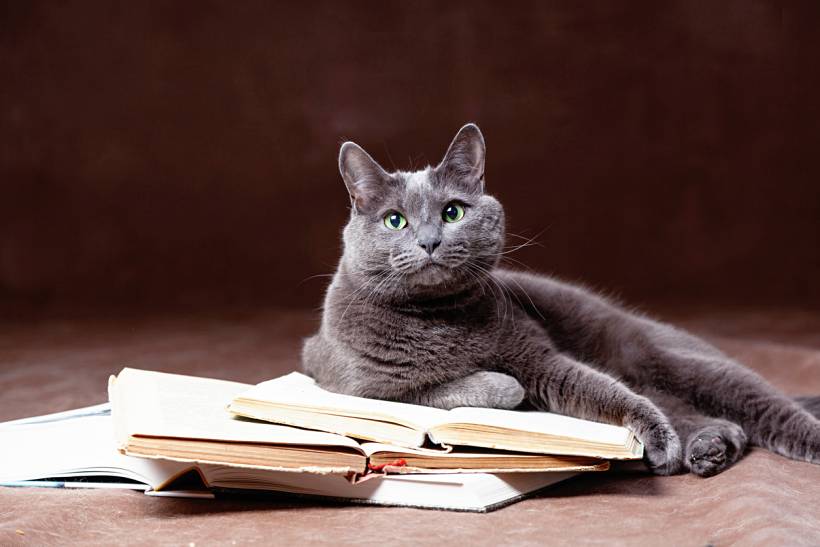 Russian Blue cat lying on open history books (Source: iStock)
British Shorthairs—where the British Blue is classified under—are theorised to be felines originally from Rome that intermingled with the UK’s street cats. One of the oldest breeds in the country, they became part of the first local cat show in 1871. However, after World War II, their numbers dwindled. Fortunately, thanks to the efforts of certain cat breeders, their population has recovered.
On the other hand, Russian Blue cat breeds, as evident in the name, are said to be from Northern Russia, specifically Archangel Island. Their spread across the European continent was documented in the 19th century. In 1912, they were officially classified under the Russian Blue breed in English cat shows.
In terms of appearance
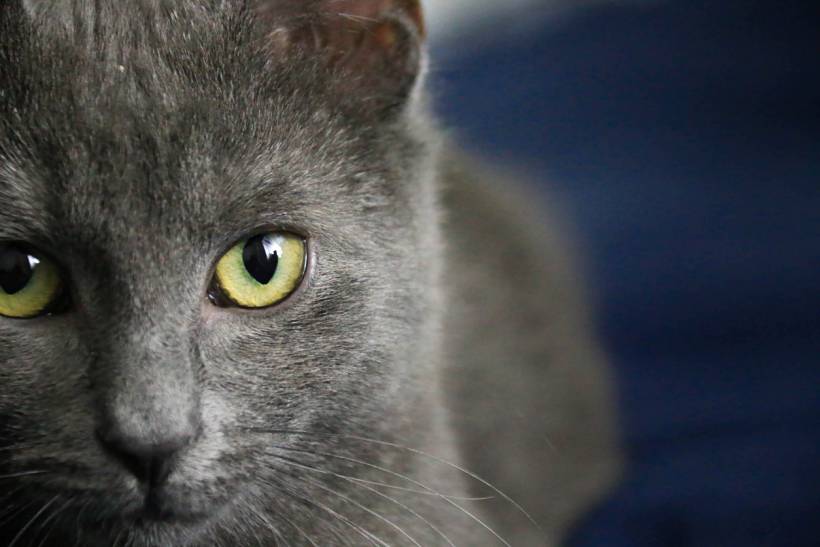 Detailed look at a Russian Blue cat's striking facial features (Source: iStock)
When pertaining to cat fur, blue is considered a type of grey with blue undertones and silver tips. Both British and Russian Blues are known for this trait.
A British Shorthair’s coat is dense and short, and both its head and golden eyes are round and large. A British Blue can have a medium- to large-sized build, with males typically bigger.
A Russian Blue also has dense and short fur; however, it has a soft double coat instead of a single coat. Adult cats of this breed have strikingly bright green eyes and medium-sized bodies.
In terms of personality
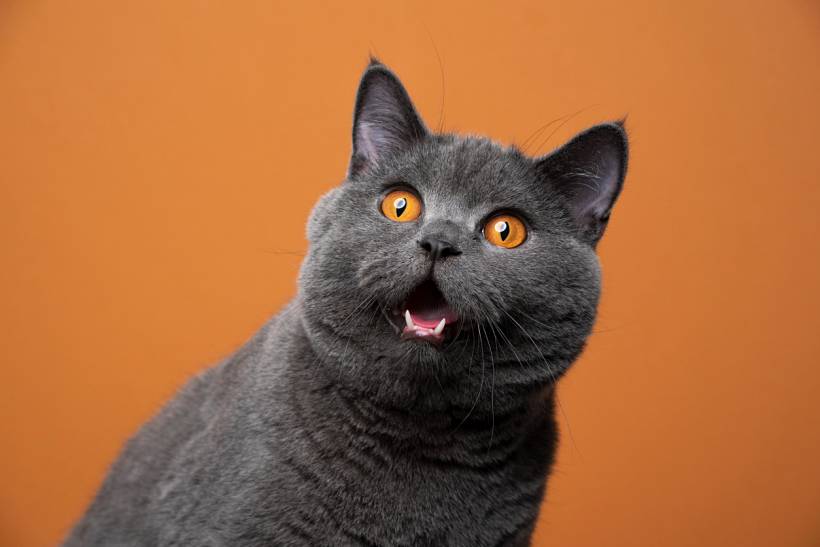 British Blue cat with an expressive face and dense fur (Source: iStock)
One of the main Russian Blue characteristics is being timid. But once this type of cat gets comfortable with you, it can be sweet and affectionate. Russian Blues are also known for being easygoing and independent; you can leave them alone for a day, and they can entertain themselves by climbing and perching in high places.
Being affectionate, independent, and easygoing are also British Blue cat characteristics. They are kid- and pet-friendly, intelligent, and somewhat playful.
In terms of care difficulty
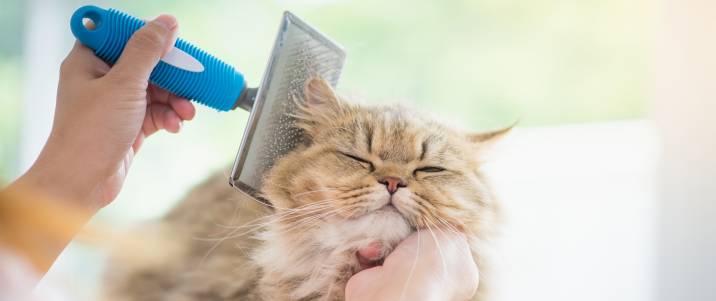
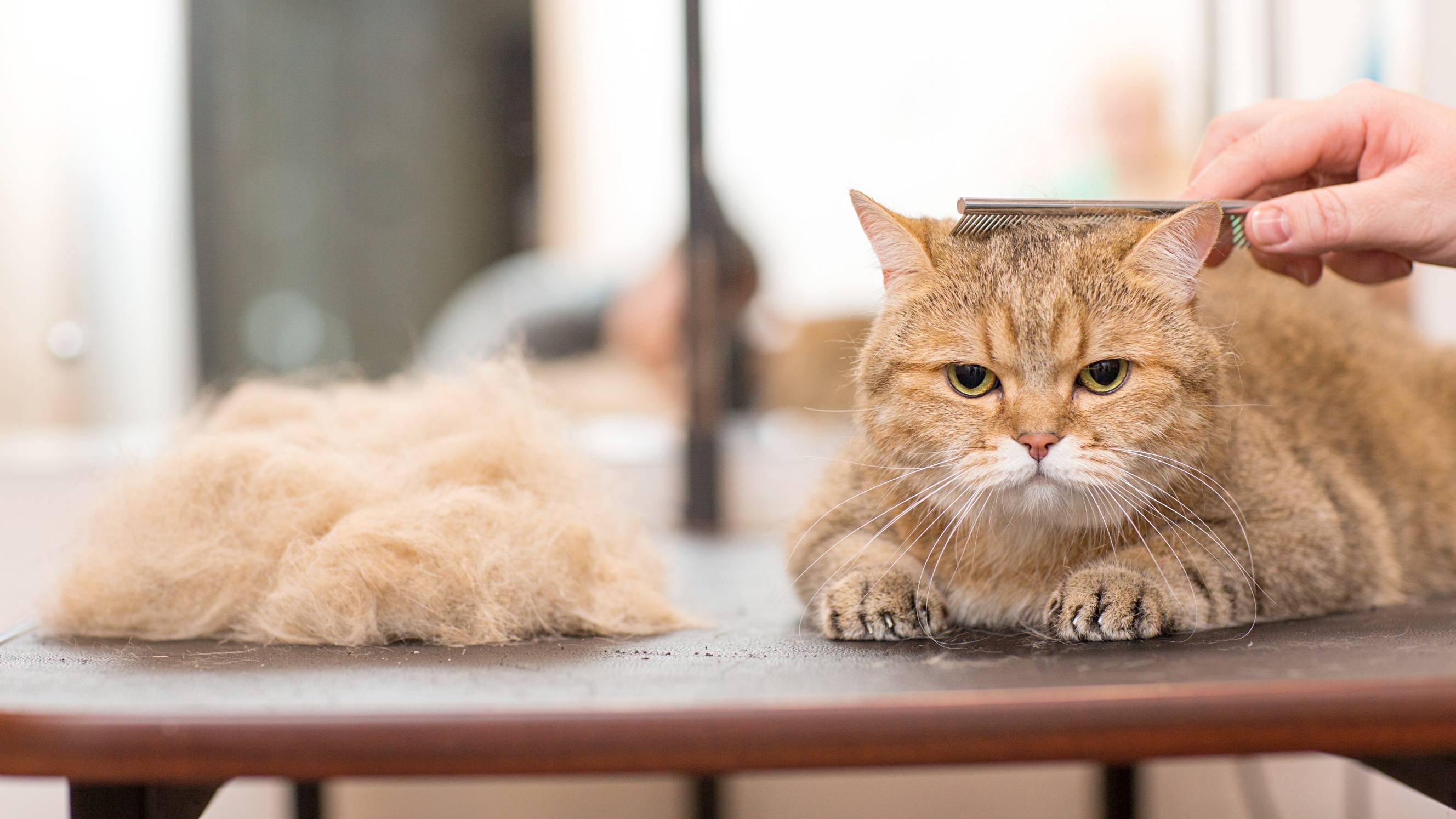
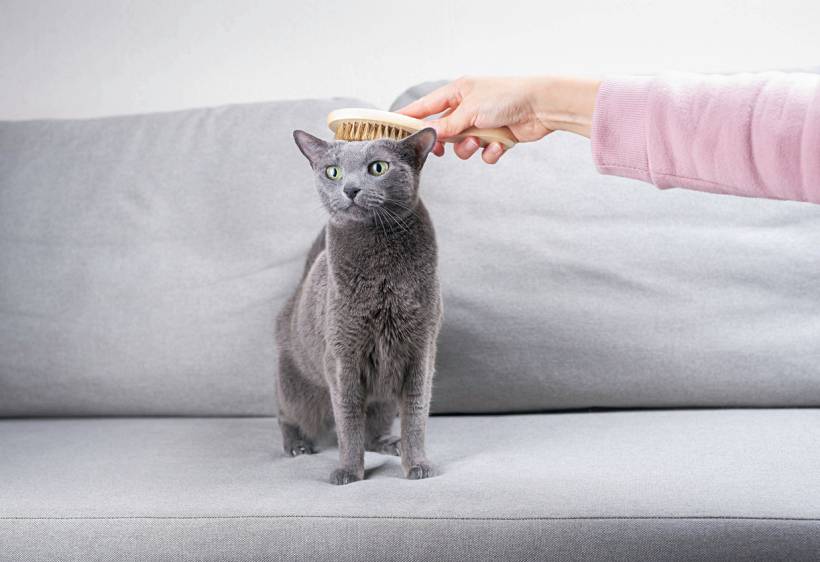 Grooming a Russian Blue cat, showing contrast to the British Blue’s thicker build and fur (Source: iStock)
It is not difficult to take care of Russian and British Blue cats compared to other breeds. For instance, both are intelligent and very trainable.
While the former does not require regular grooming because they seldom shed, the latter may need to be brushed at least once a week. For both breeds, weekly ear cleaning and regular nail trimming are recommended.
It is also beneficial for them to be active even indoors; a Russian Blue can be left on its own, while a British Blue may want to play with its owner.
These two breeds are generally healthy, but British Blues can be prone to certain heart diseases.
In terms of cost
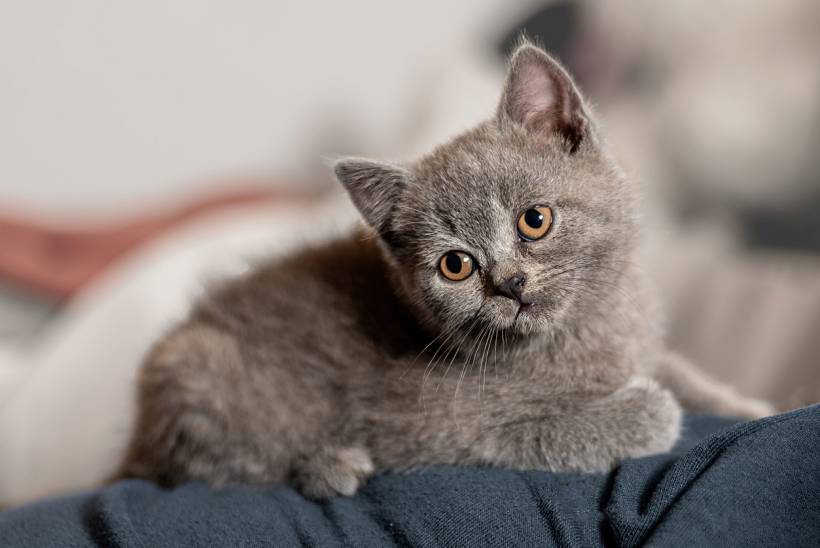 British Blue kitten displaying traits—stocky frame and copper eyes—that set it apart from the Russian Blue (Source: iStock)
Both kinds of blue cat breeds are pricey due to how rare they are in the UK. Buying Russian Blues from reputable cat breeders can set you back by £900 to £1,700. Meanwhile, the typical price range for an English Blue cat is £1,200 to £2,000.
You can definitely have these cats for a lower cost when you go to non-registered breeders; however, it may be difficult to determine the general health of and the quality of care received by kittens from these backyard breeders.
Care for your British Blue or Russian Blue with Airtasker
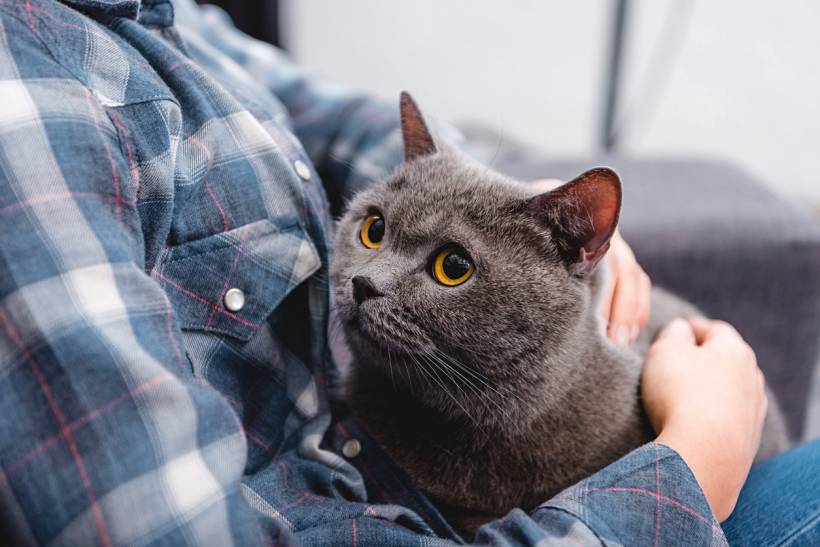 Close-up of a British Blue cat cuddling (Source: iStock)
Need someone to take care of your pet for a short while? You can entrust your feline friend—whether it’s a blue fluffy cat, a Birman or Ragdoll, or a calico or tortie—to Airtasker’s pet carers and cat sitters.
Simply go to the Airtasker website and create a post with all the details relevant to the task. Wait for offers to come in and choose the best carer or sitter based on your communication with them and on customer reviews.
Learn more about our contributors
Written by Ana K.
Contributor
Ana always puts a premium on accuracy, clarity, and style when writing—a practice that her English degree has instilled in her. She excels at covering topics related to pet care, home and interior design, and food, which count among her varied interests. She also enjoys nature and street photography, as well as travelling. Overall, Ana uses her love for research to engage Airtasker readers with fun, practical content.
British Blue vs Russian Blue
| British Blue |
Russian Blue |
|
|---|---|---|
History |
One of the oldest cat breeds in the UK |
Originally from Archangel Island in Northern Russia |
Appearance |
Has blue fur, golden eyes, and medium- to large-sized build |
Has blue fur, green eyes upon adulthood, and medium-sized build |
Personality |
Easygoing and affectionate, can be playful at times |
Shy but sweet, easygoing, and independent |
Care Difficulty |
Requires low maintenance, including weekly brushing |
Also a very low-maintenance breed, seldomly requires grooming |
Cost |
£1,200 to £2,000 |
£900 to £1,700 |
FAQs on British Blues and Russian Blues
No cat is truly hypoallergenic. This means British Blue cats should be avoided by individuals with allergies to cat hair and dander.
Russian Blues can be very vocal, emitting meows that are almost similar to a chirp. Meanwhile, British Blue cats rarely let out a meow, and if they do so, expect a low voice to come from them.
Because they do not require a vast space for playtime and exercise, both cat breeds are very suited to life in a flat.
Alice in Wonderland’s Cheshire Cat, probably one of the most well-known literary felines, is said to be based on a British Shorthair. Meanwhile, one famous Russian Blue is the mouse-chasing Tom from Tom & Jerry.
Find cat care services, fast
Post a task
Related price guides
Related articles
How to groom a cat at home
Read more