- Home/
- Comparisons/
- Dog Care/
- Alaskan Malamute vs Siberian Husky
Alaskan Malamute vs Siberian Husky: How are they different?
Comparing Alaskan Malamutes and Siberian Huskies based on appearance, personality, and more
Last Updated on

Written by Ana K.
Contributor
Read more about our contributor
Key Facts
- An Alaskan Malamute is a large spitz-type dog with a gentle and playful disposition. This sociable breed comes in nine colour combinations, such as black and white, red and white, and pure white.
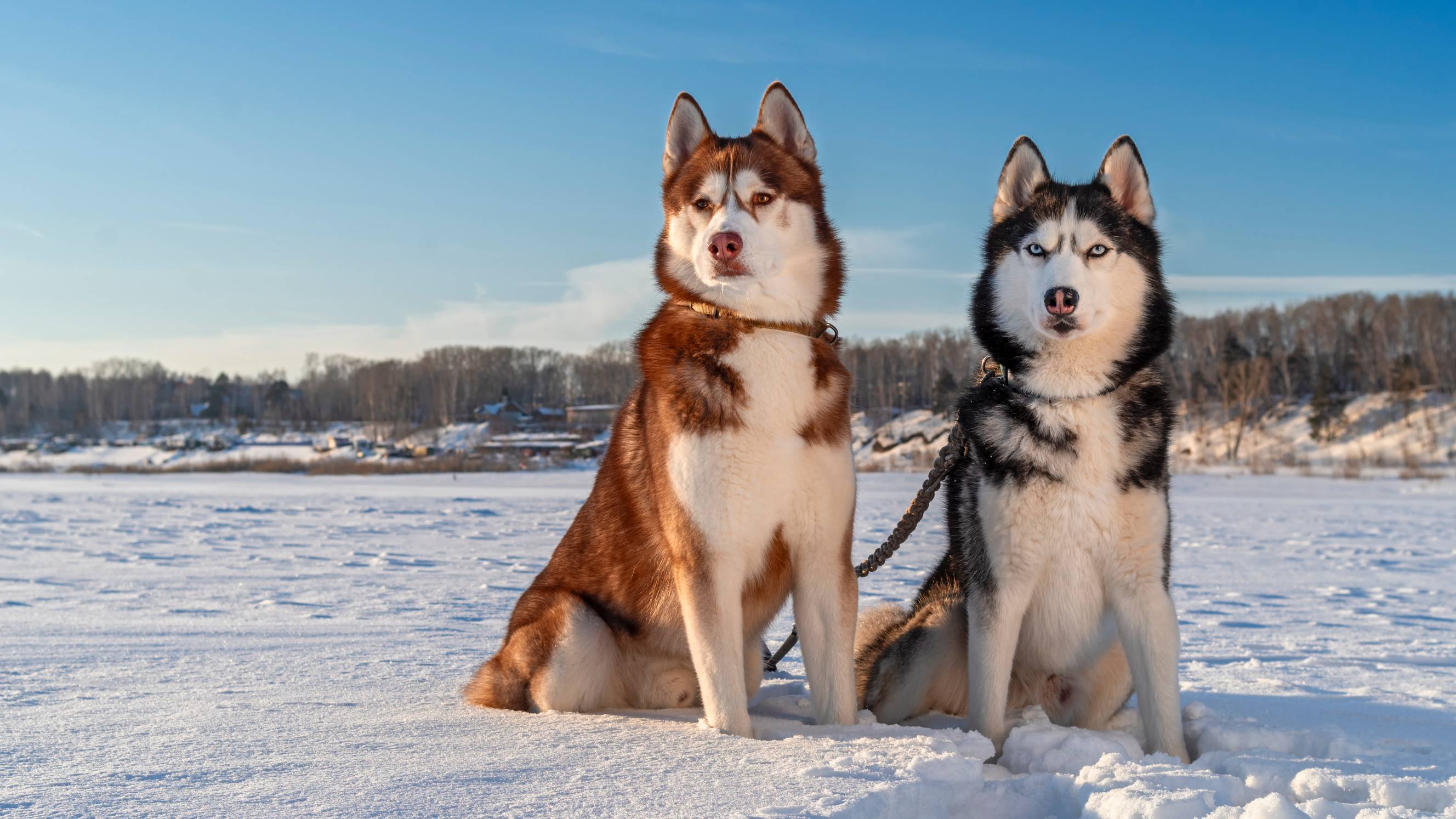
- A Siberian Husky is a medium-sized dog with a wolf-like appearance and a friendly personality. This canine also has nine standard colour patterns, including grey and white, brown and white, and black.
Deciding between an Alaskan Malamute vs Siberian Husky as your new pet can be quite challenging; these breeds share a lot of similar characteristics, including their appearance, friendly personality, and tolerance for the cold.
But with this guide, you’ll find it easy to tell them apart and determine a suitable companion based on your lifestyle and preferences.
What is an Alaskan Malamute?
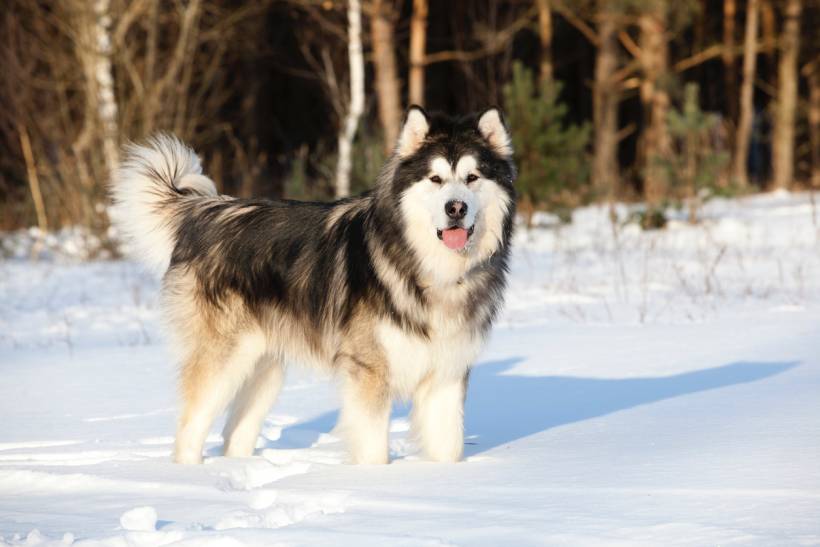 Fluffy Alaskan Malamute outdoors in winter with trees in the background (Source: iStock)
The Alaskan Malamute is a dog breed named after the Malemiut, an Inuit group in northern Alaska. Also called Mals, these dignified working dogs have a wolf- or spitz-like appearance, a thick coat, a heavy-set build, and a tendency to be affectionate and loyal.
What is a Siberian Husky?
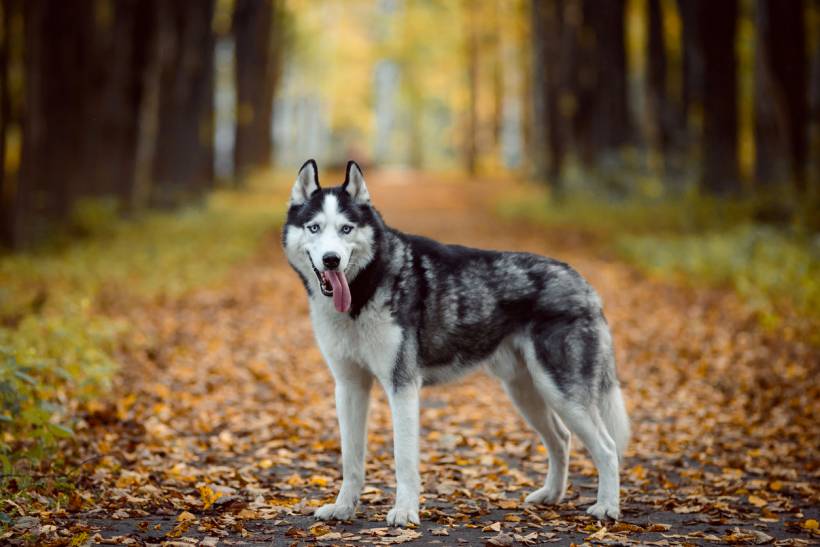 Siberian Husky standing on a leaf-covered path in an autumn forest (Source: iStock)
The Siberian Husky, another working breed with wolf-like qualities, got its name from the Siberian region of Russia and an old term for the Inuit people of the Arctic. Huskies are double-coated, medium-sized canines with high energy levels, graceful movements, and an outgoing personality.
Siberian Husky vs Alaskan Malamute: How are they different?
This Alaskan Malamute and Siberian Husky comparison section details the similarities and differences between these two distinct breeds.
In terms of history
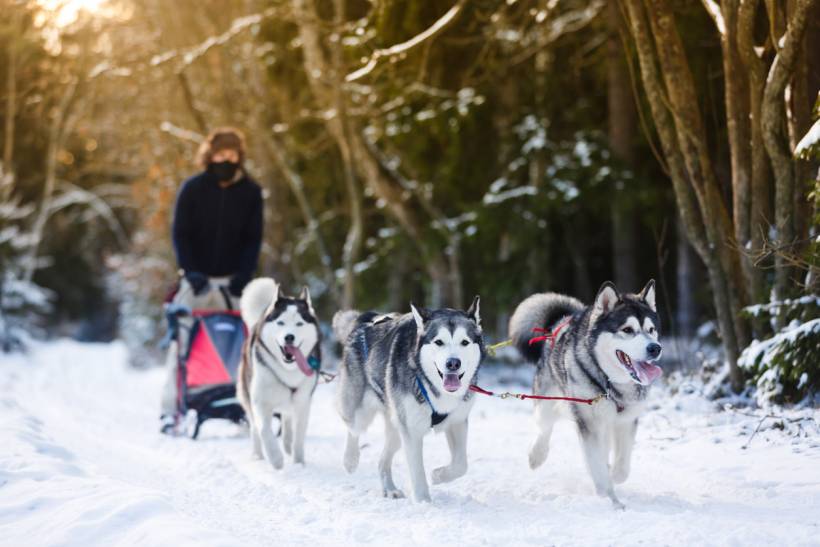 Three huskies harnessed and pulling a sledge on a winter path (Source: iStock)
Both Huskies and Mals have adapted well to cold temperatures due to their Arctic origins. Raised by the Chukchi people of Siberia and the Malemiut people of Alaska, respectively, these pack animals were mostly utilised as sledge dogs and served as human companions.
As an ancient breed, the Alaskan Malamute has a long and varied history. Mals were used as rescue dogs during World War II and carried loads for miners during the 1800s Gold Rush.
On the other hand, Siberian Huskies were imported from Russia to North America in 1908 to serve as working dogs. They also excelled in sledge dog racing, winning several competitions through the years.
In terms of appearance
There are a few breeds of dogs that look like Huskies and Mals. However, Siberian Huskies and Alaskan Malamutes have several defining traits in appearance that set them apart from other breeds. These can be spotted through their respective builds, facial characteristics, coat patterns, and tails.
Build
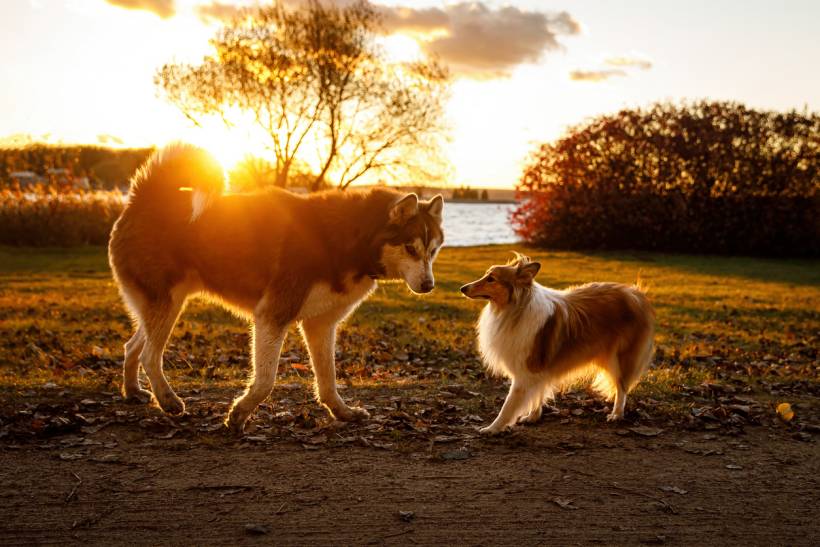 Husky and Sheltie facing each other outdoors at sunset (Source: iStock)
There is a significant difference between an Alaskan Malamute and a Siberian Husky when it comes to build.
Typically weighing 34 to 38.5 kg, the Alaskan Malamute is considerably bulkier than the Siberian Husky, whose average weight ranges from 15.8 to 27 kg. Mals (58.4 to 63.5 cm) are also usually taller compared to Huskies (50.8 to 59.7 cm).
For both breeds, female dogs are generally smaller in contrast to male ones.
Face
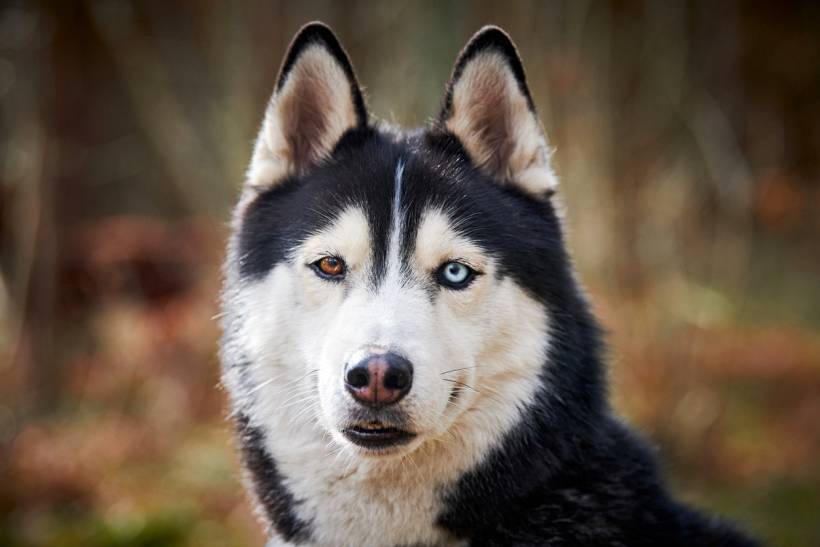 Close-up of a Siberian Husky with one blue and one brown eye (Source: iStock)
Mals have facial markings that can be described as a black or grey mask. They have a large head, brown eyes, and triangular ears with rounded tips.
Meanwhile, Huskies usually have blue or brown eyes, although they are also likely to have heterochromia, which typically manifests as two different eye colours. They have upright triangular ears and a mask-like facial pattern.
Coat
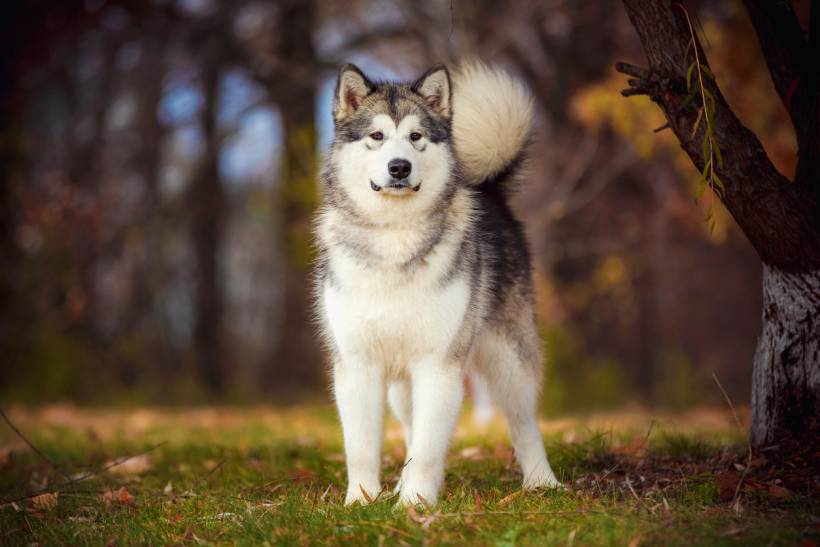 Alaskan Malamute with a thick coat standing alert in a forest clearing (Source: iStock)
One similarity among these Arctic breeds is their medium-length, double-coated fur, which helps them tolerate cold temperatures. However, Mals have denser coats, and their colour combinations differ from those of Huskies:
| Trait | Alaskan Malamute | Siberian Husky |
|---|---|---|
| Coat colour range | Usually grey, black, sable, or red with white | Much wider colour range |
| Common colours | Gray & white, black & white, red & white, sable & white | Black & white, gray & white, copper & white |
| Less common colours | Seal & white | Silver & white, brown & white, blue & white |
Tail
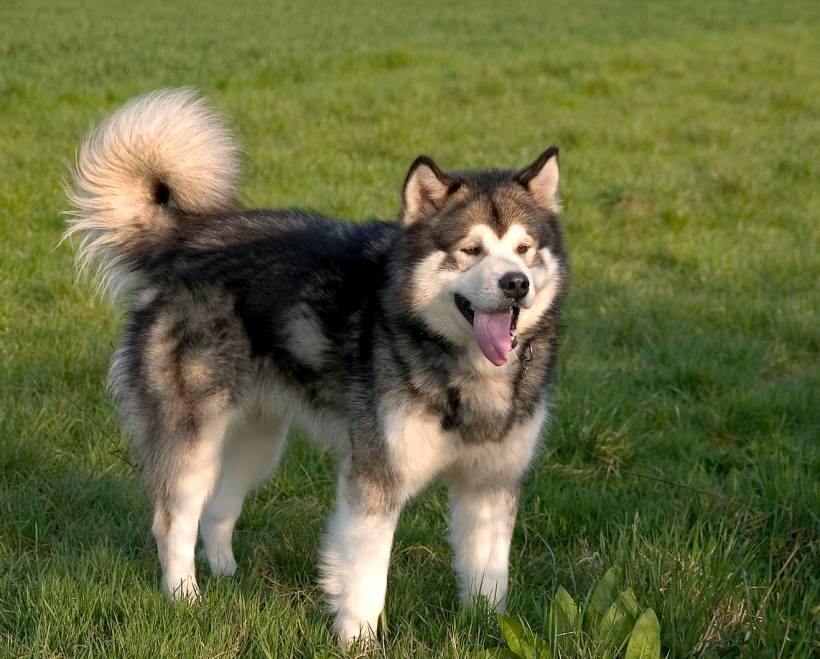 Alaskan Malamute displaying its signature fluffy tail while outdoors (Source: iStock)
Siberian Huskies have furry tails in the shape of a sickle, while Alaskan Malamutes have plumed tails that curl to one side of their bodies. These tail shapes are not just aesthetic but also functional; they help both breeds maintain balance while moving and provide extra warmth when curled over their faces in cold conditions.
In terms of personality
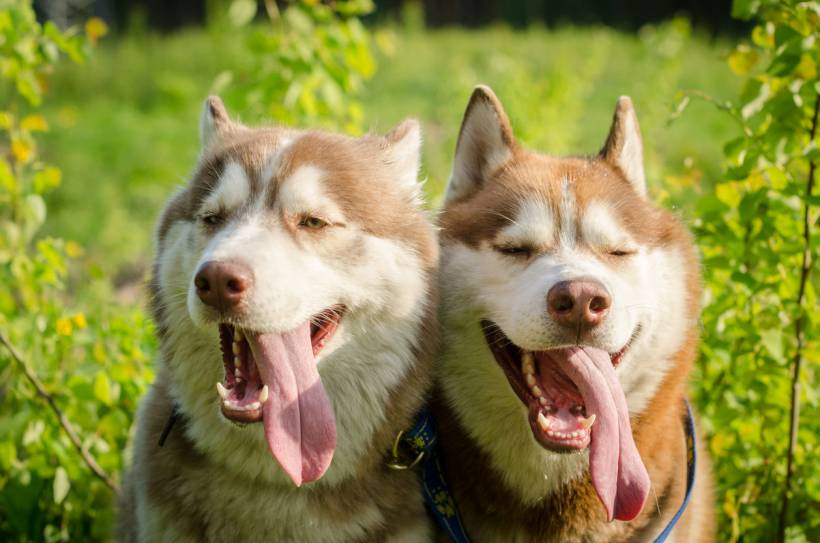 Happy Siberian Huskies side by side with tongues out in the sun (Source: iStock)
Do Alaskan Malamutes and Siberian Huskies make good family pets? Alaskan Malamutes are wonderful companions for families since they are very sociable and loyal. However, these intelligent dogs can be difficult to train due to their strong-willed personality.
What is the temperament of a Siberian Husky? Huskies are playful and friendly dogs with streaks of mischief and energy. Similar to Mals, they’re intelligent yet stubborn, which means they’re not the easiest dogs to train.
In terms of vocalisation
Compared to other dogs, Huskies are chatty canines that howl, whine, and scream when the situation calls for it. They are also known for being able to ‘talk’ by imitating the sounds they hear from their pet parents.
Mals, likewise, are vocal dogs that ‘talk,’ howl, and even sing. However, one thing they rarely do is bark.
In terms of care difficulty
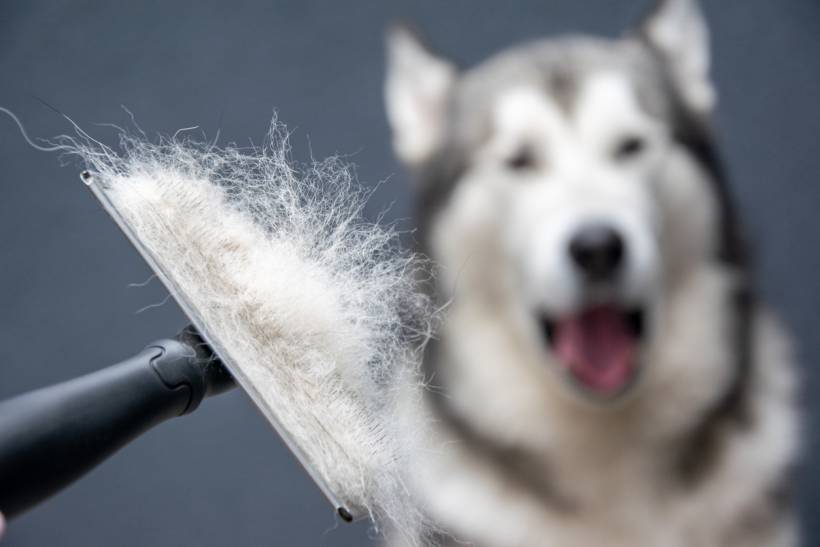 Siberian Husky grooming session showing a brush with collected fur (Source: iStock)
Getting an Alaskan Malamute or Siberian Husky is only recommended for people who have abundant time to take care of dogs.
This is because both breeds require lots of mental stimulation and physical exercise to keep them from getting bored. Moreover, their thick double coats need maintenance in the form of regular brushing, especially during shedding season.
Nutrition-wise, Mals and Huskies will greatly benefit from a diet high in meat-based proteins.
In terms of lifespan
What is the lifespan of an Alaskan Malamute? The life expectancy of Mals ranges from 10 to 14 years, while that of Huskies is 12 to 14 years. This difference is partly influenced by size (larger breeds like Alaskan Malamutes tend to have slightly shorter lifespans), as well as by genetics, diet, exercise, and the overall quality of care.
In terms of cost
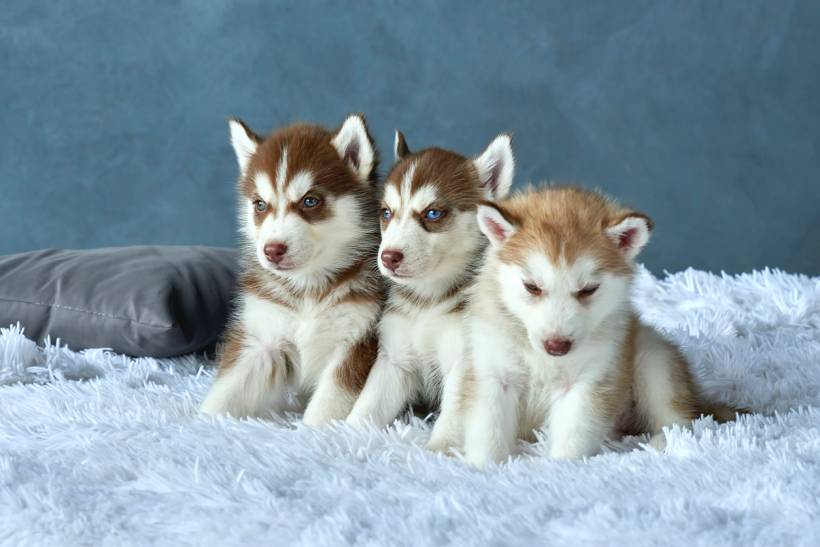 Adorable Siberian Husky puppies resting together on a soft blanket (Source: iStock)
In general, you won’t shell out as much cash if you’re acquiring young puppies of Siberian Huskies vs Alaskan Malamutes. Depending on various factors, such as a dog’s pedigree and a breeder’s reputation, Husky prices usually range from £800 to £3,000. Meanwhile, Mals typically cost between £1,200 and £2,500.
Care for your Alaskan Malamute or Siberian Husky with Airtasker
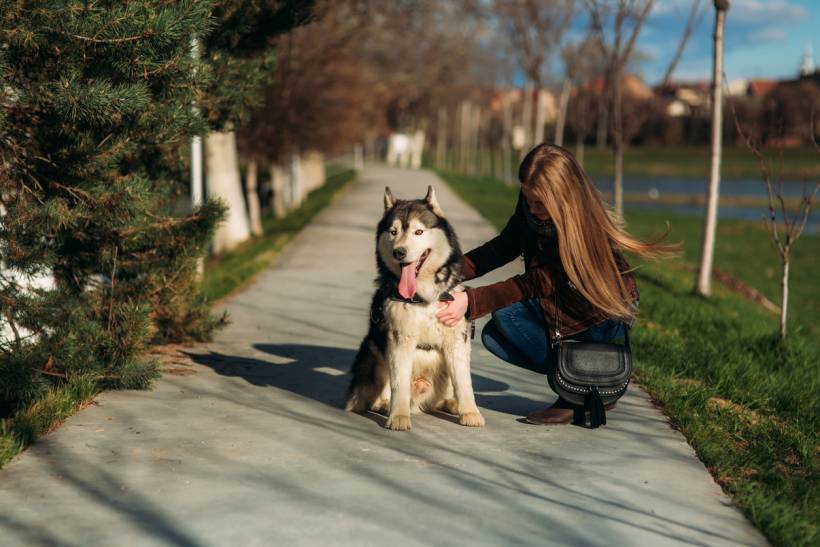 Siberian Husky sitting calmly beside a walker on a bright afternoon (Source: iStock)
If your busy lifestyle is preventing you from fulfilling your pet duties, Airtasker is here to lighten your load.
The process of finding a pet carer is as simple as doing the following steps:
Post a task on the platform.
Write down all the details relevant to what you need done, including your budget and location.
Wait for Taskers to reach out to you, and choose the most suitable person for the job.
Airtasker’s roster of professionals, which includes dog walkers and pet sitters, can level up how you care for your beloved pet.
Learn more about our contributors
Written by Ana K.
Contributor
Ana always puts a premium on accuracy, clarity, and style when writing—a practice that her English degree has instilled in her. She excels at covering topics related to pet care, home and interior design, and food, which count among her varied interests. She also enjoys nature and street photography, as well as travelling. Overall, Ana uses her love for research to engage Airtasker readers with fun, practical content.
Alaskan Malamute vs Siberian Husky
| Alaskan Malamute |
Siberian Husky |
|
|---|---|---|
History |
Raised by the Malemiut tribe of Alaska; one of the most ancient breeds of dogs |
From the Siberian region of Russia; imported to Alaska in the 1900s |
Appearance |
Has a large body and head, mask-like facial markings, spitz-like traits, and a curled tail; comes in nine colour combinations |
Has a medium-sized build, mask-like facial patterns, wolf-like qualities, and a sickle-shaped tail; comes in nine colour patterns |
Personality |
Playful, sociable, intelligent, and stubborn |
Friendly, energetic, intelligent, and strong-willed |
Vocalisation |
Vocal in many ways but not prone to barking |
Fond of ‘talking’ like their humans |
Care Difficulty |
Needs regular mental and physical stimulation, as well as daily brushing |
Also requires regular exercise, mental stimulation, and fur brushing |
Lifespan |
10 to 14 years |
12 to 14 years |
Cost |
£1,200 to £2,500 |
£800 to £3,000 |
FAQs on Alaskan Malamutes and Siberian Huskies
Designed for cold climates, Mals and Huskies may be susceptible to overheating during summer and in the warmer regions of the UK.
Huskies shed heavily twice a year. Meanwhile, Mals do so throughout the year due to their denser and longer double coat.
Not really. As working dogs, Alaskan Malamutes and Siberian Huskies have similarly high prey drives.
One study on arctic dogs found that Huskies can thrive even at temperatures as low as -22°C.
At 400 to 500 pounds per square inch, the bite force of Alaskan Malamutes can be quite powerful.
Find dog care, fast
Post a task
Related price guides
How much does dog day care cost?
Read more
Related articles
How to groom a long-haired dog
Read more
How to groom a dog at home
Read more
How to bathe your dog like a groomer
Read more
How often should you wash your dog
Read more
How to become a dog trainer
Read more
4 Steps to crate training a rescue dog
Read more
Dog training 101: How to train your dog
Read more
Tips for training an older dog
Read more

Your ultimate guide to dog care
Read more
Reactive dog training tips
Read more
3 Effective ways to house train a dog
Read more