- Home/
- Comparisons/
- Gutter Repair/
- Square vs Round Gutters
Square vs round gutters: Which is right for your home?
Weigh up looks, drainage, and upkeep before calling in the experts
Published on
Key Facts
Square gutters are angular, straight-sided channels with a flat base and defined corners, giving them a more structured appearance along the roofline.
Round gutters are curved channels with a semicircular profile, commonly known as half-round gutters.
If you’re standing outside comparing gutter samples, your choice might seem pretty straightforward at first: do you go for sharp, modern lines or a softer, rounded profile? But appearance is only the beginning. When it comes to square vs round gutters, a few practical details can quickly make one option a better fit for your home.
From how much heavy rainwater the system can handle to how easy it’ll be for you to keep clean, there’s plenty to think about beyond curb appeal. Let’s take a closer look at these two profiles to help you make the right call for your home.
What are square gutters?
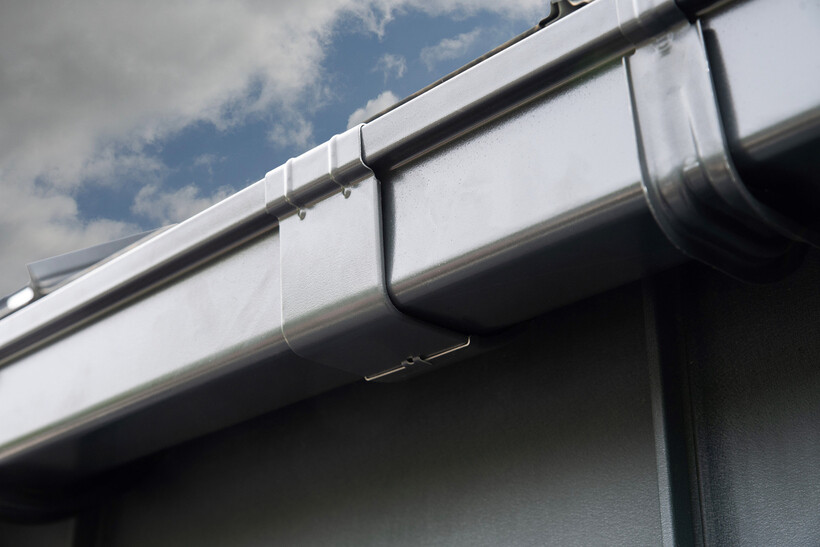
Square gutters are a drainage option with straight sides and defined angles, creating a neat, structured profile along the edge of your roof. Their simple shape gives them a clean, practical appearance and makes them a common choice if you prefer a more streamlined guttering style.
Like other guttering systems, square gutters collect rainwater from your roof and channel it towards downpipes, helping direct water away from your walls and foundations. They’re available in different sizes, materials, and finishes, so the most suitable option will depend on your roof design and drainage requirements.
What are round gutters?
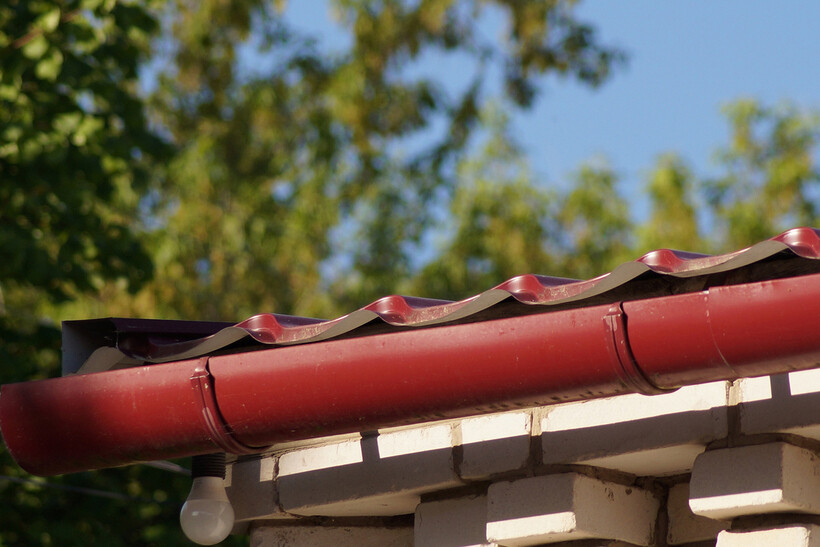
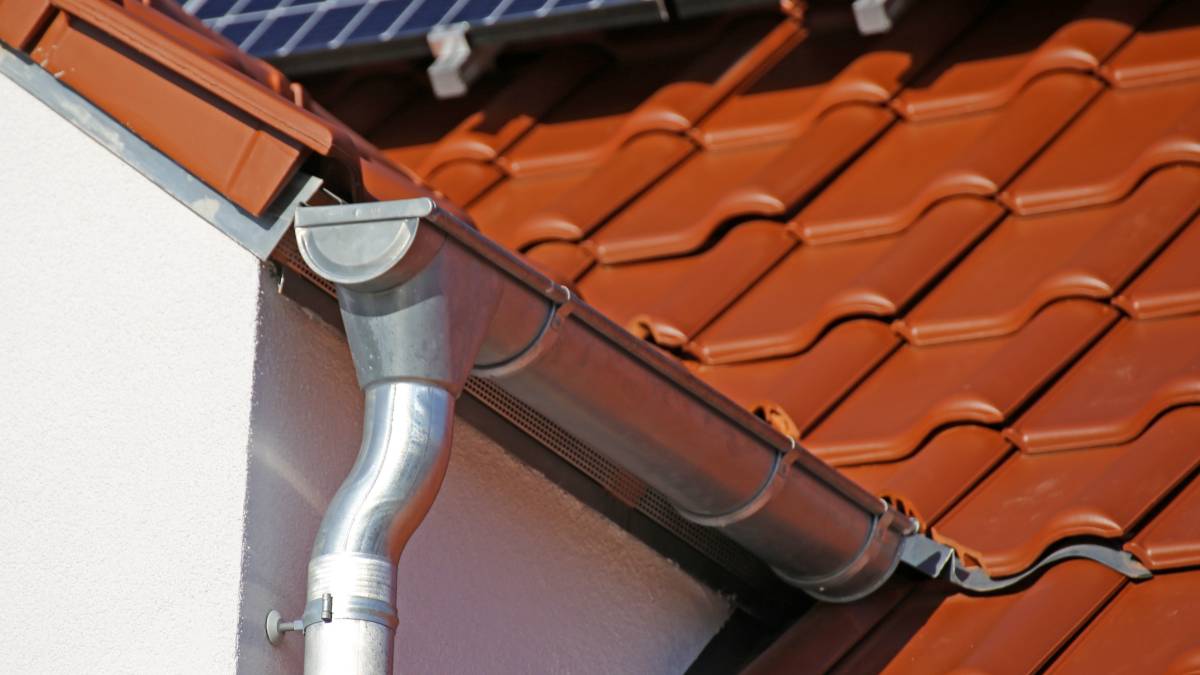
Round gutters, also referred to as half-round gutters, have a curved, semicircular channel designed to collect and carry rainwater from your roof. They can come in variations such as a straight-backed profile or a more complete semicircular shape, giving you some flexibility when matching the guttering to your property.
With their softer lines and smoother internal surface, round gutters can match Spanish, Tuscan, traditional, and other character-style houses particularly well. As with any guttering system, you’ll want to make sure the size and configuration are suited to your roof and drainage setup so rainwater flows smoothly.
Round gutters vs square gutters: What are their key differences?
When comparing square gutters vs round gutters, both can provide effective roof drainage when correctly sized and installed. But their shape can influence how they fit your home, how leaves and dirt move through the system, and the range of materials and fittings available.
In terms of appearance and architectural fit
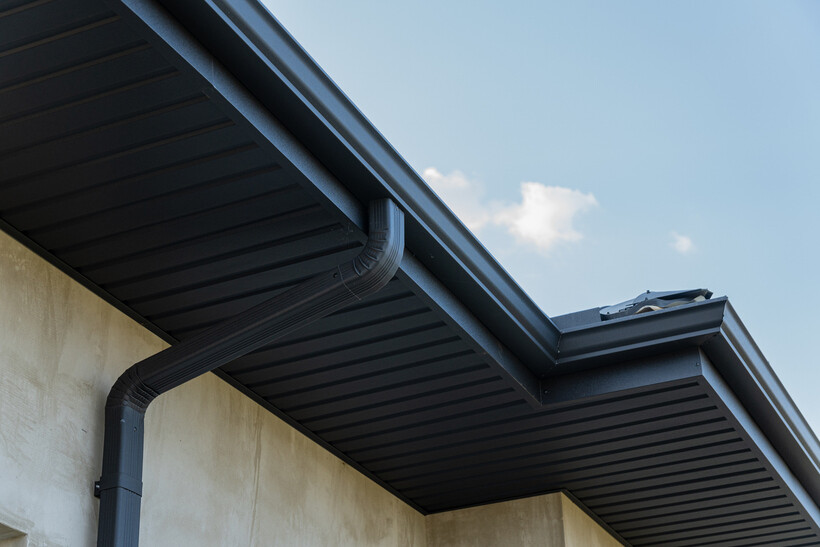
The two gutter shapes can have a noticeable impact on your home’s exterior. Square gutters create a sharper, more defined finish, making them a popular match for modern homes. Their clean lines can complement angular roof designs, boxy façades, and streamlined window trim, giving the home’s exterior a cohesive look.
Round or half-round gutters, meanwhile, have a softer profile that’s commonly associated with heritage, period, cottage, and other character-style properties. If you want to preserve a more traditional look, their curved shape can work well without appearing overly angular or contemporary.
Some homeowners may also run into products marketed as squareline gutters, while others may compare half-round systems with more specialised designs, such as box gutters. These guttering profiles can differ not just in appearance, but also in capacity and installation requirements. So it’s important to compare the specifications of each system rather than relying on the profile name alone.
Either square or round gutters can be a great architectural fit, as long as your choice feels like a natural extension of your home rather than an afterthought.
In terms of water capacity and drainage performance
When deciding between these two common types of gutters in Australia, shape alone doesn’t decide which system handles rain better, since both can offer substantial water capacity when correctly sized and installed. Overall performance depends on gutter size, catchment area, slope, outlet placement, and downpipe capacity.
Under the Australian National Construction Code, eaves gutter selection considers factors including local rainfall intensity and roof catchment area, with gutter and downpipe sizes selected accordingly.
Square or round gutters can both work well in areas with heavy rain, as long as your system has the right capacity and drainage setup. A larger profile isn’t automatically better, and neither shape should be picked on rainfall alone. Installing downpipes at the same time can help make sure the gutters and pipes work cohesively together.
In terms of maintenance and clog resistance
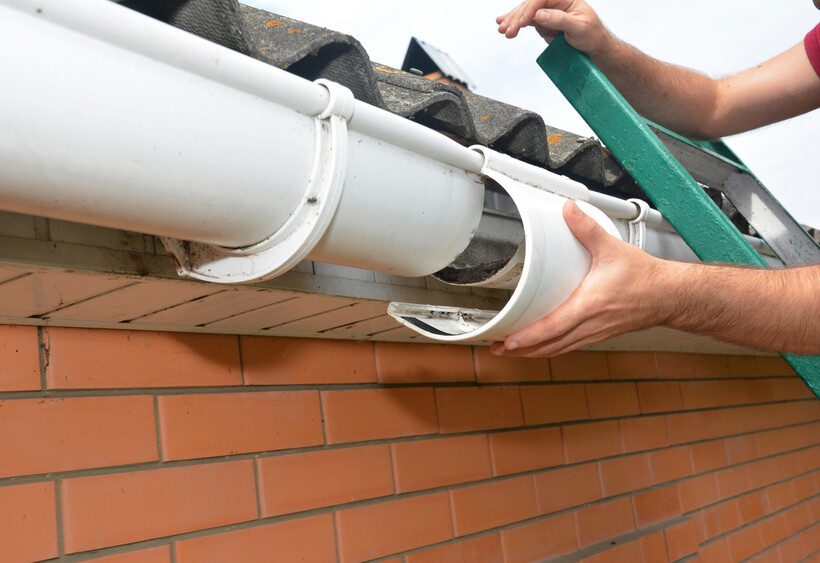
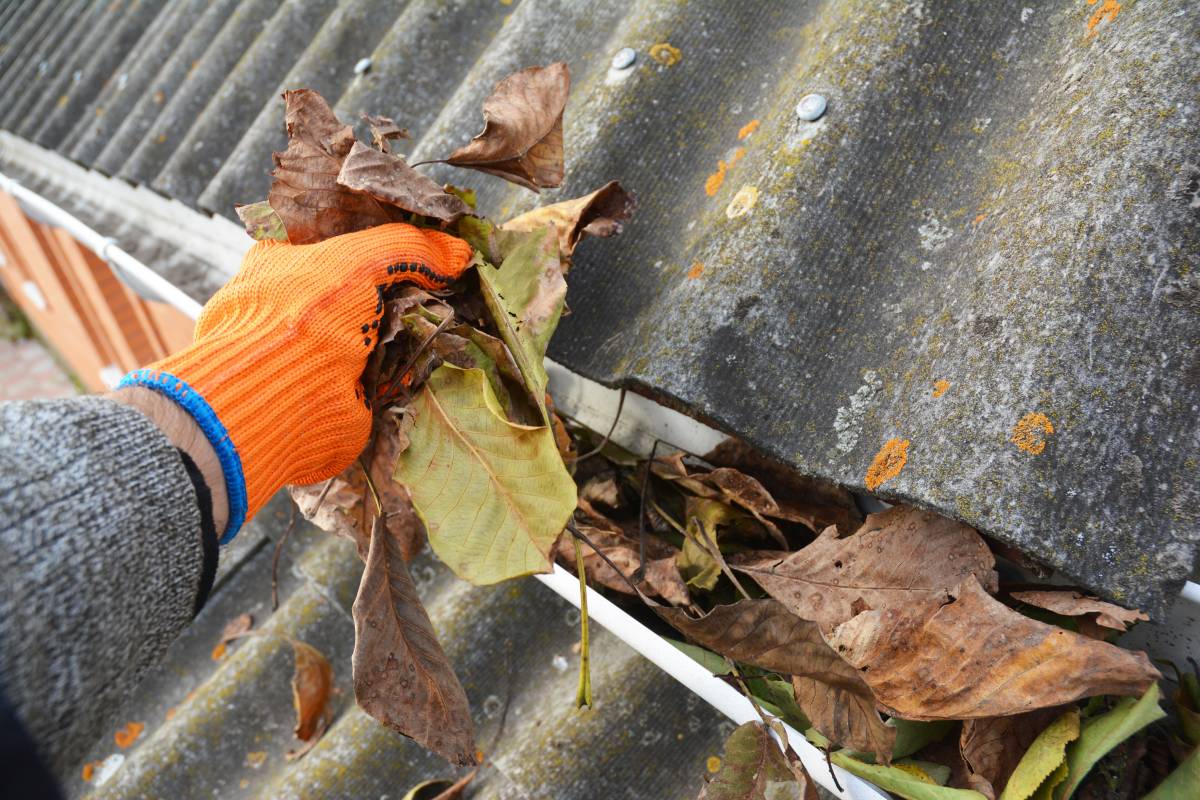
Maintenance is one area where the internal profile can make some difference. Half-round gutters have a smooth, curved channel with fewer sharp inner corners where leaves, dirt, and mud can settle. This shape can help wash debris away, though no gutter profile removes the need for cleaning entirely.
Square gutters, with their flatter bases and sharper internal angles, can provide more surfaces and corners where fine sediment or organic matter may accumulate. However, shape is only part of the story when it comes to upkeep. Proper slope, correct sizing, routine cleaning, and leaf guards all affect how well your system handles leaves and other material.
That doesn’t mean square gutters are difficult to maintain. A well-designed system with suitable fall and regular gutter cleaning can perform reliably. Houses near large trees can also benefit from installing gutter guards to reduce trapped leaves, though regular checks are still needed.
In terms of materials and durability
Both styles come in different materials and finishes, although the options available will depend on the manufacturer and gutter system.
Steel gutter systems are available in pre-painted and metallic-coated steel, while other gutter systems may use materials such as aluminium, PVC, zinc, or copper, depending on the application. Regardless of choice, the material must fit the rest of your roof to prevent damage from mixing incompatible metals or materials.
A properly installed gutter system can withstand years of Australian weather, but poor drainage, inadequate fall, blocked sections, and persistent ponding can contribute to deterioration. Durability depends much more on your gutter material and coating, installation quality, environmental exposure, drainage design, and maintenance than on whether the gutter is curved or angular.
Whichever shape you choose, inspecting it periodically and addressing damage or drainage problems early can help prevent minor issues (such as clogged gutters) from developing into leaks that require more extensive roof repairs. To reduce how often you need to clean and unclog your gutters, you can also install gutter guards.
In terms of cost
The cost difference between square and round gutters isn’t always as clear-cut as it might seem. In Australia, you can expect to pay between $2,000 and $3,500 for a gutter installation and replacement, while round and square guttering can cost approximately $20 and $45 per metre, respectively.
These are general estimates, though. Final costs can still vary based on material, roof accessibility, overall length, number of corners and outlets, removal of old guttering, and local labour rates.
Get your guttering ready for the next downpour
If your existing system shows signs of damage, such as rust patches or sagging sections, it’s best to address them before they become more difficult to manage.
Leave complicated gutter work to an experienced professional. Find a gutter repair expert through Airtasker who can inspect the system, complete repairs, and keep it functioning properly, whatever you decide on square vs round gutters.
Square vs Round Gutters
Square Gutters |
Round Gutters |
|
|---|---|---|
Appearance and Architectural Fit |
Clean, angular profile; suits modern and contemporary homes |
Softer, curved profile; complements traditional, heritage and character homes |
Water Capacity and Drainage Performance |
Effective drainage when correctly sized for roof catchment and rainfall intensity |
Effective drainage when correctly sized; curved profile can help water and smaller debris move through the channel |
Maintenance and Clog Resistance |
Flatter base and sharper internal angles may allow some sediment and debris to settle |
Smooth, curved channel with fewer sharp corners may help reduce areas where debris settles |
Materials and Durability |
Available in various materials and finishes; durability depends on material, installation, and maintenance |
Available in various materials and finishes; durability depends on material, installation, and maintenance rather than profile alone |
Cost |
Around $35 per metre as an indicative rate; final installation cost varies by project |
Around $20 per metre as an indicative rate; final installation cost varies by project |
FAQs on square and round gutters
Neither round nor square guttering is universally better; the right choice depends on your home’s style, roof catchment, rainfall, drainage capacity, and maintenance needs. Round gutters can offer a smooth internal profile, while modern square gutters may better suit contemporary Australian homes.
Half-round gutters have a semicircular profile, while quarter-round gutters have a quarter-circle shape and typically sit closer to the roof edge. The two profiles differ mainly in their shape, appearance, and available fittings, so compatibility with your existing roofline is important when choosing between the two.
Half-round guttering in Australia commonly comes in the following sizes, though they can vary by gutter system and application:
100 mm diameters
125 mm diameters
150 mm diameters
200 mm diameters
250 mm diameters
300 mm diameters
350 mm diameters
400 mm diameters
450 mm diameters
Choose the appropriate half-round gutter size based on factors such as roof catchment area and local rainfall intensity, as Australian requirements specify that gutter sizing must account for these conditions.
Common gutter installation mistakes include choosing an undersized profile, using insufficient fall, spacing downpipes too closely, and failing to account for the roof’s catchment area and local rainfall intensity. Incorrectly connected sections, inadequate overflow provisions, and poor installation can also lead to leaks, ponding, or overflowing gutters.
Find gutter repair experts, fast
Post a task