- Home/
- Comparisons/
- Electricians/
- Fan vs Air Conditioner
Fan vs air conditioner: Which should you get for your home?
Comparing fans and air conditioners based on installation ease, air quality control, and more
Published on

Written by Paul M.
Contributor
Read more about our contributor
Key Facts
- A fan circulates air to create a cooling effect by increasing the evaporation of sweat from your skin, making you feel cooler without actually lowering the room temperature.
- An air conditioner cools a space by removing heat and humidity from the air, effectively lowering the room’s temperature and providing more substantial and controlled cooling.
When warm weather hits, keeping your home comfortable becomes a priority. If you’re deciding how to stay cool, the choice often comes down to a fan or an air conditioner. Both options have pros and cons, depending on your budget, home layout, and how much cooling you actually need.
In this guide, we compare fans vs air conditioners to help you decide which option is right for your space and lifestyle.
How does a fan work?
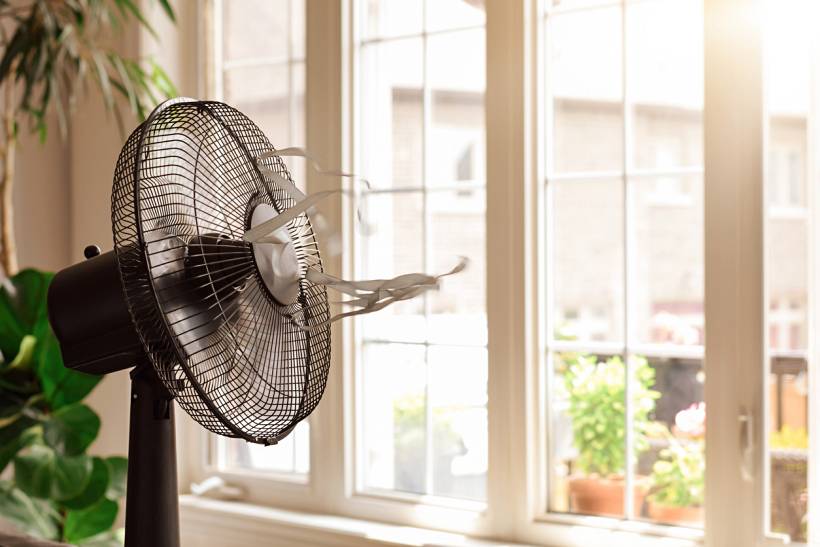 Black electric fan blowing air near a sunny window in a home interior (Source: iStock)
Fans use an electric motor to spin blades, creating airflow that moves air across your skin. This airflow doesn’t lower the room temperature, but it helps you feel cooler by speeding up sweat evaporation, which draws heat away from your body.
Fans also improve air circulation by circulating warm, stale air throughout a room and making fresher air flow in from other areas or outside.
How does an air conditioner work?
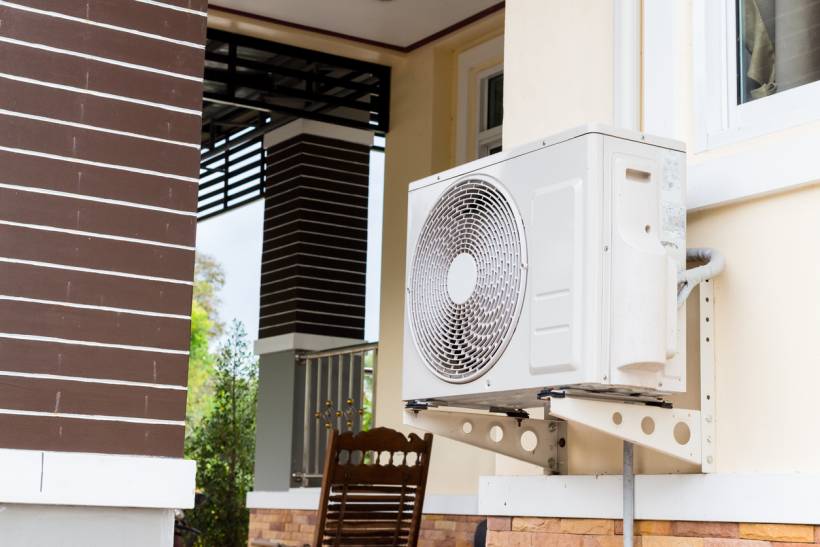 Outdoor unit of a split air conditioner installed on a home’s exterior for efficient cooling (Source: iStock)
An air conditioner cools a space by removing heat from indoor air and releasing it outside, thereby lowering the room temperature. It does this using a closed refrigerant cycle that absorbs heat indoors and expels it outdoors.
Warm air passes over the evaporator coil, where the refrigerant absorbs heat and turns into a gas. This gas is compressed and then sent to the condenser coil outside. The heat is released and the refrigerant returns to a liquid state, allowing the cycle to repeat.
In the process, air conditioners also reduce humidity, as moisture condenses on the evaporator coil. A thermostat controls the system to maintain a set temperature.
Air conditioner vs fan: Which is better for your needs?
While each cooling solution has its pros and cons, choosing between ACs and fans will depend on your specific needs or preferences.
In terms of variety
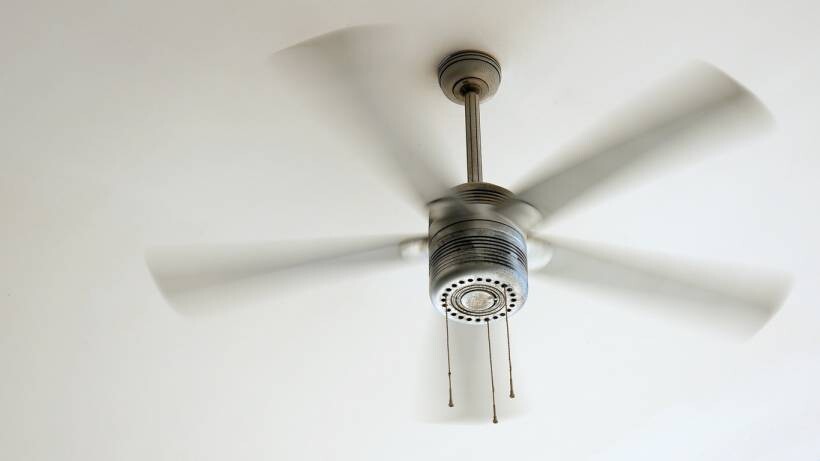 Spinning ceiling fan with metal finish and pull chains for speed control (Source: iStock)
Fans are available in a range of styles designed for different spaces and use cases, from small desk fans to ceiling and pedestal fans for larger rooms.
Air conditioners also come in multiple types, offering various levels of cooling power and coverage. Options include window and portable units for single rooms, split systems for fixed room cooling, and ducted or ductless systems designed to cool larger areas or entire homes.
In terms of cost
Fans have a low upfront cost, with prices varying by size, type, and features. They’re generally inexpensive to run, and repairs—such as for pedestal or ceiling fans—are usually affordable.
Air conditioners are more expensive, particularly split and ducted systems. They also use much more electricity than fans, which leads to higher ongoing energy costs, especially during warmer months.
In terms of installation ease
Most fans are quick and easy to set up. Desk, table, pedestal, and tower fans may require minimal assembly and can be used straight away. Ceiling and wall-mounted fans involve more work and may require electrical wiring, but installation is relatively simple for basic DIY jobs.
AC installation varies by system type. Window and portable units are straightforward to install, though they need proper window fitting or venting. Split and ducted air conditioning systems are more complex and typically require professional installation.
In terms of cooling effectiveness
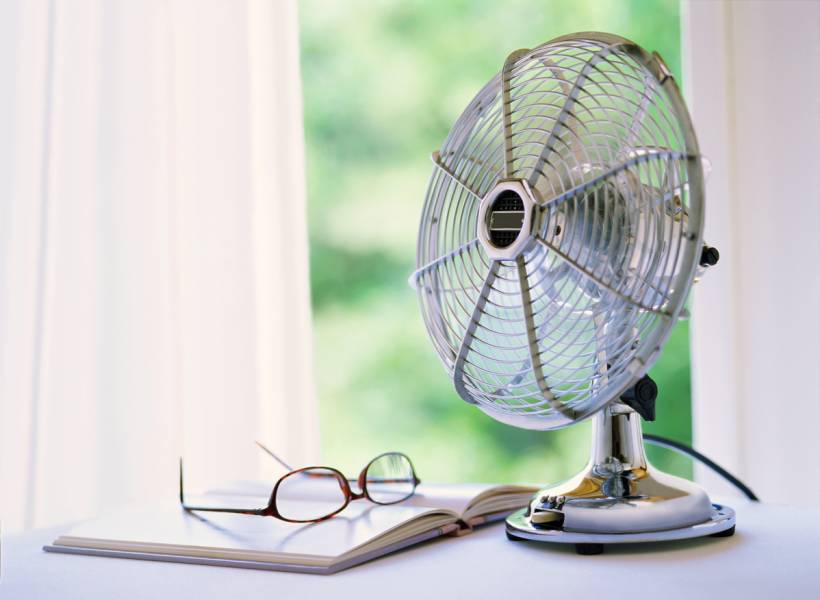 Classic table fan providing a cool breeze next to a cosy reading setup (Source: iStock)
Air conditioners actively cool a space by removing heat and humidity from the air, which lowers the actual room temperature. This makes them effective in very hot or humid conditions and suitable for cooling single rooms or entire homes, depending on the system. They also allow precise temperature control.
Unfortunately, fans don’t reduce room temperature. Instead, they create airflow that helps you feel cooler by speeding up sweat evaporation. This works well in mild to moderate heat but becomes less effective in very hot conditions, as fans only move existing air rather than cooling it.
In terms of air quality control
Most fans, such as ceiling fans, desk fans, and stand fans, generally do not provide air quality control. They simply circulate air but do not filter or purify it. However, some modern tower fans may include features that improve air quality.
On the other hand, air conditioning systems often include air filters that can help remove dust, allergens, and other particles, improving indoor air quality.
In terms of noise level
Most fans, such as stand fans and ceiling fans, operate with minimal noise. This makes fans suitable for environments where low noise levels are important, such as bedrooms or offices. However, the noise level can vary depending on your fan’s speed and type, with some larger or high-powered fans producing more noticeable sound.
Meanwhile, air conditioners, particularly window units and portable models, tend to be noisier. They produce a noticeable hum due to the compressor and other moving parts. Central air systems and split systems are typically quieter inside the home since the noisy components are located outside, but they still generate background noise when in use.
In terms of maintenance
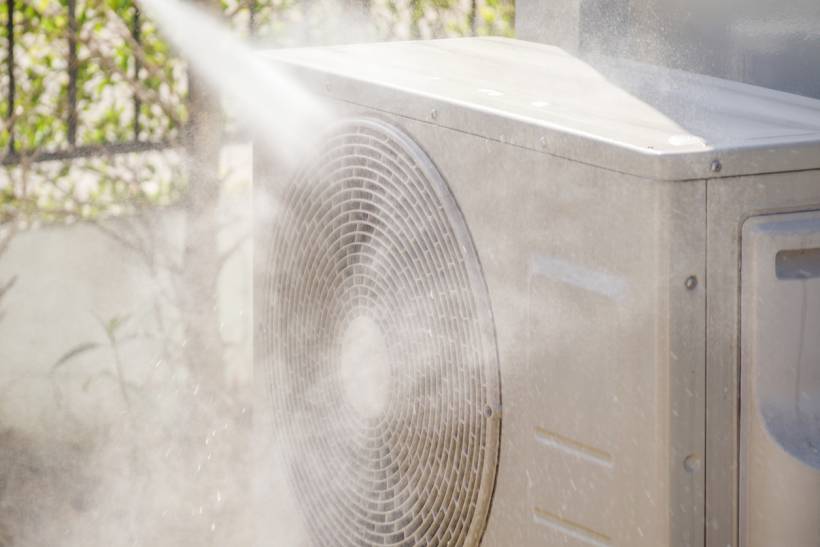 AC cleaning in progress with water spray removing dust from the unit (Source: iStock)
Fans require only regular dusting, and occasional cleaning is usually sufficient. Some components may need lubrication from time to time, but overall, maintenance is minimal.
Conversely, air conditioners require regular filter cleaning or changes, coil cleaning, occasional refrigerant top-ups, and even draining system cleaning. This makes air conditioner maintenance and cleaning more time-consuming. The same goes for AC repair services, should anything break or need fixing.
Request electrician services on Airtasker
Whether you need wiring for a new ceiling fan, help installing a split system, or general electrical work, Airtasker makes it easy to find qualified electricians near you.
Post a task in minutes and receive offers from local electricians. You can compare prices, read customer reviews, and check ratings before choosing the right person for the job.
Once you’ve booked, agree on a time that suits you and let a trusted Tasker handle the rest.
Learn more about our contributors
Written by Paul M.
Contributor
Paul is a mass communication graduate with varied interests, including watching car and football shows, assembling home furniture, and baking treats for his wife and their baby daughter. His experience as a bank employee helps him tackle financial topics with ease, as well as make all kinds of jargon accessible to everyday audiences. While he is passionate about educating Airtasker readers and learning new things along the way, he hopes to have enough time to take a hike (literally) one day.
Fan vs air conditioner
| Fan |
Air Conditioner |
|
|---|---|---|
Variety |
• Ceiling fans • Desk or table fans • Pedestal (stand) fans • Tower fans |
• Window units • Portable units • Split systems • Ducted (central) systems |
Cost |
• Low upfront cost • Cheap to run • Minimal repair and maintenance costs |
• Higher purchase and installation costs • Higher running costs due to energy use |
Installation Ease |
• Quick and simple setup for most models • Plug-and-play for portable fans |
• Window and portable units are moderately easy • Split and ducted systems usually require professional installation |
Cooling Effectiveness |
• Does not lower room temperature • Creates airflow to help you feel cooler • Best for mild to moderate heat |
• Actively lowers room temperature • Effective in extreme heat and high humidity |
Air Quality Control |
• No air filtration • Circulates existing air only |
• Filters dust and airborne particles • Helps reduce humidity and improve indoor air quality |
Noise Level |
• Generally quiet • Noise varies by size and speed |
• Typically louder due to compressors and fans • Window units are usually the noisiest |
Maintenance |
• Very low maintenance • Occasional cleaning or dusting |
• Regular maintenance required • Filter cleaning or replacement and periodic servicing |
FAQs on fans vs air conditioners
Yes, you can use a fan with the air conditioner. The fan can circulate the air around the room, making you feel a few degrees cooler. You can set the thermostat higher to save energy when using both appliances.
This can be ideal in cooler climates or seasons, as it allows for cooler air to circulate throughout a room or home. But in hotter months and during high humidity, using a single air conditioning unit to cool a room may be your best bet.
Fans usually last longer than air conditioning units since they have fewer components that can malfunction. As mentioned, air conditioning systems need regular maintenance to extend their longevity.
Some fans now feature smart home integration, energy-efficient DC motors, and bladeless designs. ACs offer inverter technology, eco-friendly refrigerants, and advanced filtration systems. Both devices are becoming quieter, more sustainable, and easier to control remotely.
Find electricians, fast
Post a task
Related price guides





Related articles