- Home/
- Comparisons/
- Sauna installation/
- Infrared vs. Traditional Sauna
Infrared vs. traditional sauna: Which one is actually better?
From health benefits to installation, here’s how they compare
Published on

Written by Andrea H.
Staff Writer
Read more about our contributor
Key Facts
An infrared sauna uses light panels to heat the body directly rather than the surrounding air. They typically run in the 104°F to 149°F range, with monthly electricity costs of $5 to $16. Some units come pre-assembled for convenience.
A traditional sauna heats the entire room using hot air and steam, creating a hotter, more immersive sauna experience. Installation starts at around $4,500, while operating costs range from $12 to $25 per month, depending on unit size and the length of each session.
At-home wellness trends are driving more Americans to invest in home saunas. As demand rises, the US sauna market is projected to grow by $161 million by 2030, with more households weighing the pros and cons of infrared vs. traditional sauna models.
While infrared saunas are valued for their convenience, traditional units remain a preferred choice for a more authentic experience. This traditional vs. infrared sauna guide compares the two across comfort, health benefits, costs, and installation requirements to help you choose the best option for your lifestyle and budget.
What is a traditional sauna?
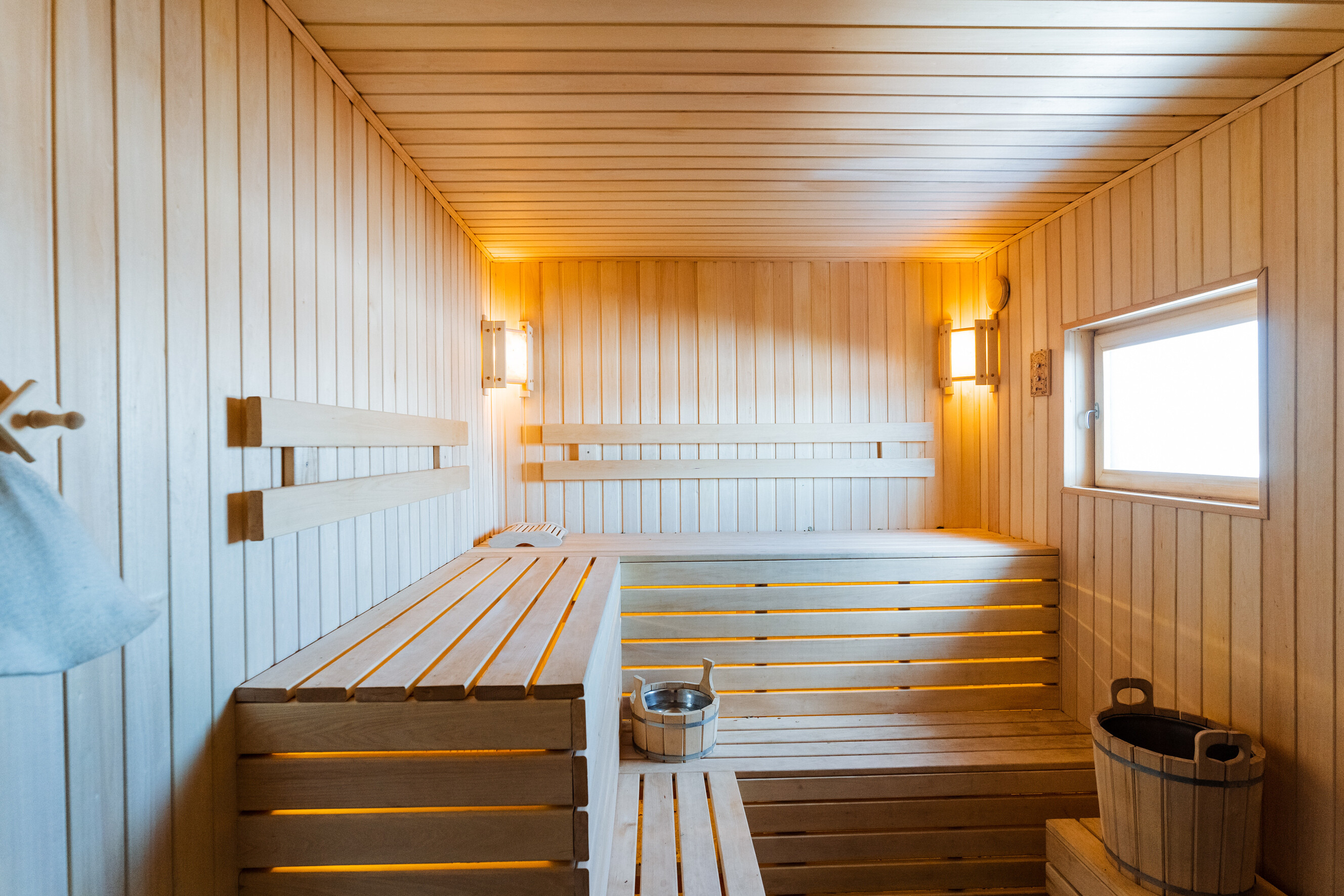
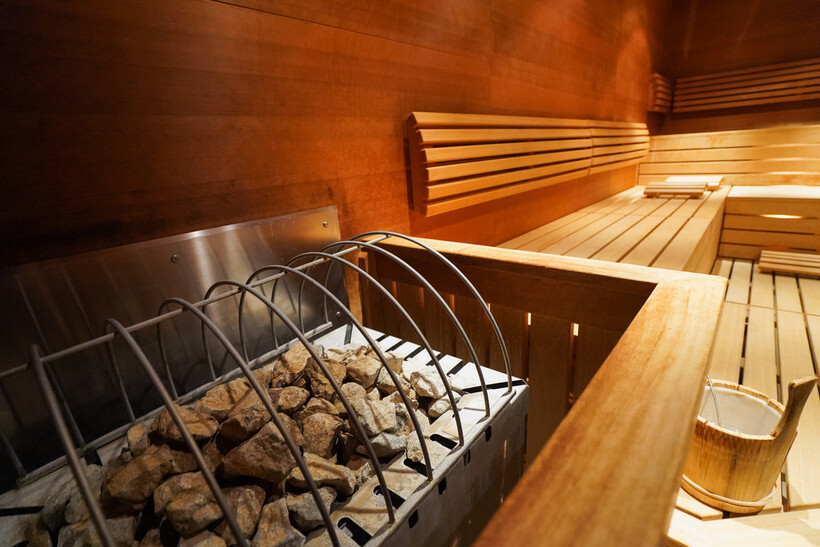 Inside a warm traditional sauna room (Source: iStock)
A traditional sauna in the US primarily uses electric or wood-burning heaters to warm an enclosed room to around 158°F to 194°F. As the air heats up, your body responds with deep sweating that helps muscles relax.
The heater is often filled with stones that retain heat. When water is poured over them, it creates bursts of steam—a ritual known as löyly in Finnish sauna culture, recognized by UNESCO as “the soul of the experience.”
At its core, a traditional sauna works by heating the entire room first. The air, benches, and walls all absorb and radiate warmth back to you, creating a layered, immersive heat experience.
What is an infrared sauna?
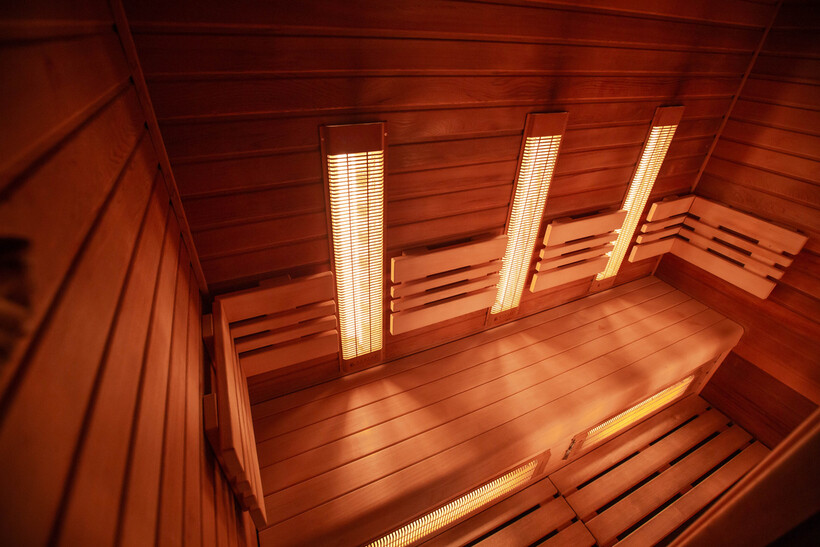 Warm timber infrared sauna with active heaters (Source: iStock)
An infrared sauna is a modern alternative that uses light waves to heat your body directly, instead of warming the air. It typically uses three types of infrared light:
Near-Infrared (NIR): Targets skin level, linked to skin repair and rejuvenation.
Mid-Infrared (MIR): Reaches deeper tissues and is helpful for muscle pain and stiffness.
Far-Infrared (FIR): Most common for home use, gently warming the body at 104°F to 149°F.
For more flexibility, full-spectrum infrared saunas combine all three wavelengths, offering a wider range of infrared sauna benefits, from surface-level skin support to deeper muscle recovery.
Traditional vs. infrared sauna: Which should you choose?
To make the right choice, it helps to look beyond the surface. Each sauna type differs in how it heats your body, how it’s installed, and how it fits into your lifestyle.
In terms of heat type and temperature
Traditional saunas rely on convection heat, warming the air first, which then heats your body. Because hot air naturally rises, upper benches are often the hottest spots, while lower benches are slightly cooler.
Infrared saunas work differently as they use built-in infrared panels that warm the body from the inside out. The heat is more targeted and the air stays milder, which is why many people comfortably stay for around 20 to 45 minutes per session.
In terms of health benefits
 A traditional wooden sauna bucket and ladle (Source: iStock)
One key difference between infrared sauna vs. traditional sauna is research depth. Traditional saunas are well studied because they’ve been used for centuries, especially in Finland.
A 2015 study that followed over 2,000 Finnish men showed that sauna bathing four to seven times a week was linked to up to 60% lower risk of cardiovascular disease and death. A recent study also suggests that regular sauna use may support overall health by helping reduce inflammation and improving how cells respond to stress.
Meanwhile, the benefits of infrared sauna therapy have a smaller but growing body of research. Early studies suggest that it helps with post-exercise recovery, chronic pain, and blood pressure support.
Near-infrared wavelengths in particular may penetrate up to 1.5 inches into the body, which is why some infrared sauna users pursue NIR or full-spectrum models for deeper muscle and joint recovery.
In terms of running costs and energy use
Traditional saunas generally cost more to run because they heat both the air and the sauna stones. In the US, traditional saunas typically consume 4 to 9 kWh per session, including the 30- to 60-minute warm-up period. At average electricity rates (around 17.30¢ per kWh), using a sauna four times per week would add around $12 to $25 to your monthly electricity bill.
A home infrared sauna is more energy-efficient, operating at around 1 to 3 kWh with shorter 10- to 15-minute pre-heating times. Using an infrared sauna for 30 minutes daily may cost around $5 to $16 per month.
In terms of installation requirements
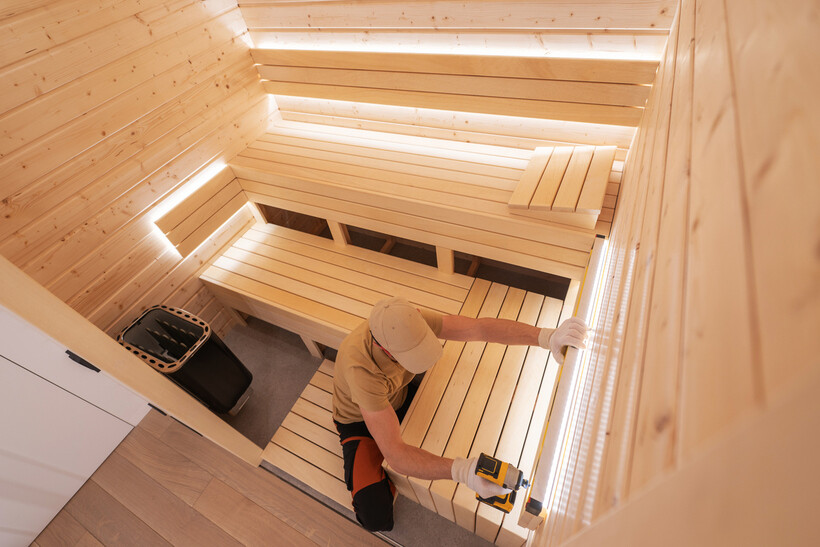 Professional sauna installation in a residential setting (Source: iStock)
Traditional saunas demand a more involved installation, and often permits, if they’re large or custom-built. Most units generally require a dedicated 240V circuit installed by a licensed electrician, so they don’t share power with other household appliances. Power needs also vary depending on the sauna’s size and the heater’s kilowatt output. For instance, a 4.5 to 6 kW heater requires a 30-amp breaker with 10/2 wire.
Infrared saunas are much simpler to install. Most models plug into a standard 110V/120V outlet, but it’s still important to check the manufacturer’s electrical requirements, as some larger models require a dedicated 20-amp circuit. Many units also come as modular kits that you can assemble yourself or with the help of a handyman.
In terms of upfront cost
When comparing an infrared and a traditional sauna, upfront costs can vary significantly. Traditional saunas are more expensive because you’re not just paying for the unit itself. You also need to consider sauna installation costs, ventilation setup, and related handyman work.
Indoor traditional sauna kits cost around $4,500 to $10,000, with the assembly process sometimes manageable as a DIY project. However, for fully-custom builds that require a skilled carpenter, the cost can range from $15,000 to $50,000+.
Infrared saunas are more affordable. Options range from infrared sauna blankets to cabin-style sauna kits, with pricing depending on size and features. Even larger outdoor infrared saunas typically cost less, roughly $4,500 for a four-person unit. In some cases, the setup may be as simple as booking an assembler near you.
In terms of maintenance
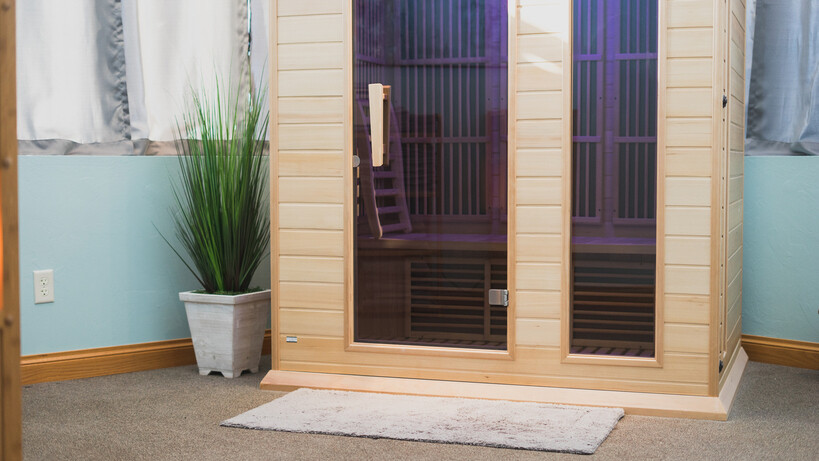 Compact timber infrared sauna with glass door (Source: iStock)
Running a traditional sauna can add to your home maintenance checklist as it requires ongoing wood care, electrical inspections, and occasional replacement of sauna stones. In cold and snowy areas like the Midwest or Northwest, the sauna also needs an elevated foundation with proper drainage, so the melting snow won’t rot the base.
An infrared model is lower maintenance by comparison. Upkeep involves simply wiping down the wood interior and infrared panels after use. The best infrared sauna for maintenance efficiency is an indoor model, as it avoids exposure to harsh weather and requires no exterior upkeep.
In terms of overall experience
Traditional saunas deliver what many enthusiasts call the classic sauna ritual, complete with the löyly steam experience. Sessions feel more immersive, especially when paired with cold showers or plunges. Some people are incorporating contrast therapy setups at home, often with the help of heating and cooling professionals to manage power loads and temperature control.
Outdoor infrared saunas offer a more modern, streamlined experience. The heat tends to feel gentler, drier, and more consistent, with shorter warm-up times and less preparation involved. Sessions are designed around convenience, making them easier to fit into busy lifestyles.
Set up your home sauna in just a few steps
So, is an infrared sauna better than a traditional sauna? For US homeowners, it comes down to space, setup, and routine. Infrared models are easy to install in a spare room or home gym and require minimal maintenance. Traditional saunas need more space, often outdoors in a backyard, but deliver the classic, steam-heavy experience many enthusiasts prefer.
Once you’ve chosen the right sauna for your home, Airtasker can help you find the right person for the project. Just post your task, set your budget, and connect with local sauna installers to start your new wellness routine sooner.
Learn more about our contributors
Written by Andrea H.
Staff Writer
Andrea is a writer with nearly a decade of experience, including five years covering real estate, construction, and neighborhood trends. She’s deeply curious about people, society, and culture, finding stories in the details and helping others navigate big decisions. Off the page, Andrea is drawn to analog routines: running outdoors, taking long walks, and picking up hands-on projects. When she’s not overthinking a paragraph, she’s probably overthinking her next read.
Infrared vs. Traditional Sauna
Infrared Sauna |
Traditional Sauna |
|
|---|---|---|
Heat Type and Temperature |
Radiant heat warms the body while the air stays comfortable. |
Convection heat warms the room first, then the body; steam increases intensity. |
Health Benefits |
Early studies suggest support for pain relief and blood pressure. |
Long-term research backs benefits on cardiovascular health and mental well-being. |
Running Costs and Energy Use |
Lower energy use; $5 to $16 monthly with daily use. |
Higher energy use; $12 to $25 per month (four sessions weekly). |
Installation Requirements |
Plugs into a standard power outlet; easy modular assembly. |
Requires hardwiring and may add to home renovation costs. |
Upfront Cost |
More affordable, with options ranging from portable blankets to full-cabin kits. |
Requires a higher budget for the unit, installation, ventilation, and carpentry. |
Maintenance |
Simple wipe-down; minimal upkeep overall. |
Regular wood care, rock replacement, and ventilation checks needed. |
Overall Experience |
Consistent, dry heat; quick sessions can fit into daily routines. |
Full steam ritual with löyly; pairs well with cold plunge. |
FAQs on traditional and infrared saunas
For relaxation and convenience, yes. But for cardiovascular and long-term health research, traditional saunas still hold the edge.
Because infrared saunas operate at lower ambient temperatures, they can feel more like a heated therapy room than a true sauna. There’s also no humidity variation from sauna rocks.
This guideline is used in traditional saunas to balance heat and humidity. It suggests that temperature (°F) multiplied by humidity (%) should be around 200 for a comfortable feel, although it’s not a strict rule.
Yes. Saunas can help your body relax after short-term heat stress. The heat briefly raises stress hormones, then the cooling-down period activates the “rest-and-digest” system, helping reduce overall stress levels.
Find sauna installation specialists, fast
Post a task