
- Home/
- Comparisons/
- Accounting/
- Bookkeeper vs Accountant
Bookkeeper vs accountant: What’s the difference?
Comparing bookkeepers and accountants based on work scope, service cost, and more
Published on

Written by Ana K.
Contributor
Read more about our contributor
Key Facts
- A bookkeeper is a professional responsible for collecting and recording a business’s day-to-day financial transactions. They can also perform other basic tasks, such as handling payroll and assisting with tax preparation.
- An accountant is a professional who manages, analyses, and reports financial records. They can also conduct audits, prepare and file taxes, and provide financial advice.
As a business owner, you likely have a variety of responsibilities, including leading a team and building business relationships. But when it comes to tax planning, financial management, and related duties, it’s best to leave matters to an expert, whether that’s a bookkeeper vs an accountant.
And to help you figure out which professional can adequately handle your financial data and tax returns, this article discusses at length what each role entails.
What is a bookkeeper?
 Bookkeeper calculating figures while reviewing financial records in an office setting (Source: iStock)
A bookkeeper is in charge of gathering a company’s financial transactions, including sales, purchases, receipts, and payments. They are also responsible for recording these exchanges through journal entries and general ledgers.
What is an accountant?
 Accountant reviewing financial reports while using a smartphone and tablet at a desk (Source: iStock)
An accountant analyses a company’s financial data and generates financial reports, including the balance sheet and cash flow statements. Some accountants specialise in specific areas, such as preparing and filing tax returns, conducting financial audits, or providing financial planning.
Accountant vs bookkeeper: Which is better for your needs?
Bookkeeping and accounting are two closely related professions. However, they differ in terms of scope of work, required training, service costs, and other attributes.
In terms of work scope
 Professionals reviewing a printed report with charts and graphs during a financial data analysis meeting (Source: iStock)
In general, accountants have broader work responsibilities and areas of competence than bookkeepers.
Financial reporting
Both bookkeepers and accountants can prepare financial reports. However, the former can only work on basic ones, including expense receipts. Meanwhile, the latter can prepare detailed financial statements, such as balance sheets and income statements.
Accountants also analyse these reports to provide financial planning advice and other business-related insights to their clients.
Tax preparation
Another difference between accounting vs bookkeeping professionals is in terms of their tax-related duties. While bookkeepers help organise data and documents relevant to tax preparation, accountants are qualified to prepare and file personal and business tax returns themselves. In fact, many accountants specialise in this particular field.
Decision-making
An accountant can be commissioned to assist a business in making the right financial decisions and strategies. They can also help interpret financial statements and other information, forecast business performance, and evaluate growth opportunities and risks.
A bookkeeper, meanwhile, may be hired to perform administrative tasks, like managing a company’s financial records and handling basic payroll.
Regulatory compliance
Both accountants and bookkeepers are expected to follow ethical conduct and general rules, such as International Financial Reporting Standards and UK Accounting Standards.
Bookkeepers must adhere to these guidelines by accurately recording financial transactions. The role of accountants in regulatory compliance, meanwhile, is broader; they should also ensure the timely submission of financial reports, establish in-house rules and procedures to prevent errors, and provide regular regulatory training for their accounting staff.
In terms of software options
 Account auditing process involving review of financial data and analytical reports (Source: iStock)
When it comes to basic tasks like document management and data entry, both accountants and bookkeepers can use the same types of accounting software, such as Xero and QuickBooks.
However, accountants may need more advanced tools to help them with the accounting process, conduct audits, make accurate business forecasts, and interpret reports.
In terms of training and skill level
The pathways to becoming a bookkeeping vs accounting professional in the UK involve different sets of education and certification requirements.
For bookkeepers
A bachelor’s degree, although an advantage, is also not a requirement to be a bookkeeper in the UK. In fact, one can pursue this profession in other ways:
Complete a college certificate or programme in bookkeeping: This pathway—which typically requires one to have at least two GCSEs with a 9 to 3 (or A* to D) grade—can be done in a shorter amount of time compared to finishing a bachelor’s degree.
Doing an internship or apprenticeship: Usually lasting 6 to 12 months, an internship or apprenticeship in a finance or accounts role is a viable step toward becoming a bookkeeper.
Working in a related position: Starting in an entry-level role, like an office administrative assistant, is a good way to gain first-hand knowledge and experience relevant to being a bookkeeper.
For accountants
In the UK, A-levels and a bachelor’s degree are actually not a requirement to be qualified for accounting jobs. At the very least, one will only need to have maths and English competency, as well as qualifications from the Association of Accounting Technicians. Nevertheless, many still opt to take the education route by completing a degree in accounting or a related programme.
Meanwhile, those who want to climb the ladder or obtain a specialisation must apply to be part of a professional accounting body, such as the Association of Chartered Accountants or the Certified Institute of Management Accountants.
In terms of service cost
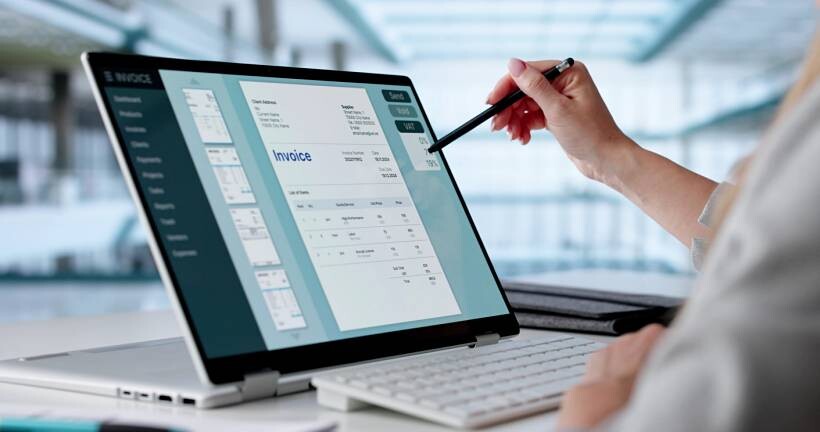 Close-up of digital billing document related to accountant or bookkeeper fees (Source: iStock)
The difference between bookkeeper and accountant fees is due to factors like education, job complexity, and experience.
While bookkeepers typically charge £20 to £50 per hour or £200 to £600 for a monthly retainer, an accountant’s services usually have the following rates:
| Accounting Service |
Average Accountant Rate |
|---|---|
Tax advisory |
£100 to £300 per hour |
Tax return preparation (personal tax) |
£50 to £300 per return |
Tax return preparation (business tax) |
£100 to £600 per return |
Payroll processing |
£50 to £500 per month |
Auditing services |
£1,000 to £10,000 per audit |
In terms of availability
 Professional managing appointments in an accountant or bookkeeper schedule (Source: iStock)
Bookkeepers are usually within easy reach because they are hired to handle a business’s day-to-day transactions. Meanwhile, accountants are not as readily available, as they typically engage with big-picture, complex matters on a per-project basis, such as financial health evaluations and tax filings.
Nevertheless, during tax season and other busy periods, expect the person handling your business’s financial affairs to be occupied with several tasks, whether they’re a bookkeeping or accounting professional.
In terms of client interaction
Bookkeepers generally focus on non-client-facing tasks, such as recordkeeping and creating basic transaction reports. Meanwhile, accountants usually have direct interaction with their clients, especially when recruited to provide financial advice, analyse business growth, and review a business’s financial operations.
Optimise your financial records with Airtasker
Looking for an accountant or bookkeeper for your business? With Airtasker, the search for an expert has never been easier.
Once you post a task indicating the services you need and your budget, you’ll receive offers from Taskers who can handle your venture’s financial affairs. Picking the right person for the job is simple as well since you can view each Tasker’s qualifications, reviews, and ratings on their profile.
Learn more about our contributors
Written by Ana K.
Contributor
Ana always puts a premium on accuracy, clarity, and style when writing—a practice that her English degree has instilled in her. She excels at covering topics related to pet care, home and interior design, and food, which count among her varied interests. She also enjoys nature and street photography, as well as travelling. Overall, Ana uses her love for research to engage Airtasker readers with fun, practical content.
Bookkeeper vs accountant
| Bookkeeper |
Accountant |
|
|---|---|---|
Work Scope |
Handles keeps records of financial transactions and produces basic financial reports |
Analyses reports, provides financial planning advice, files taxes, conducts audits, and ensures compliance with regulations and laws |
Software Options |
Uses document management and data entry software |
Also utilises software to manage data, as well as digital tools to accurately forecast business performance and run audits |
Training and Skill Level |
Should either complete a relevant degree or college certificate, do an internship or apprenticeship, or start working in a related position |
Should have an Association of Accounting Technicians qualification at the very least; must apply to be part of a relevant professional body to obtain specialisation |
Service Cost |
Typical rates are on a per hour (£20 to £50) or per month (£200 to £600) basis |
Per-project fees vary depending on complexity, from £50 to up to £10,000 |
Availability |
Typically more available since they handle a business’s day-to-day financial affairs |
Less available, especially if they are working on a per-project basis |
Client Interaction |
Works on tasks that do not necessarily require client interaction |
Directly works and communicates with their clients |
FAQs on bookkeepers and accountants
It depends. A bookkeeper may be all you need if your venture is just starting out. But through time, your business may require the services of an accountant to keep its financial affairs in line.
Having a bookkeeper and an accountant allows both financial professionals to focus on their expertise; an accountant can focus on the bigger picture while a bookkeeper handles everyday financial matters.
Through bookkeeping and accounting, the entire financial cycle of a business can be monitored from beginning to end. Having an accountant or bookkeeper ensures that every transaction is recorded, all worksheets are consistent, and errors in journal entries are corrected.
You can verify a bookkeeper’s or accountant’s credentials by checking their qualifications and membership status with the appropriate professional bodies, such as the Institute of Chartered Accountants in England and Wales, the Institute of Accountants and Bookkeepers, and the Association of Accounting Technicians.
Find accountants, fast
Post a task
Related price guides