- Home/
- Costs/
- Brick Fencing/
- Brick Fencing Cost Guide
How much does brick fencing cost in Australia?
Post to find a price. It's free and only takes a minute.
Typical costs
$150 - $750
low
$150
median
$450
high
$750

Last Updated on
Key Takeaways
Brick fencing in Australia typically costs between $150 and $750 per linear metre.
Choose standard clay bricks or a brick-and-panel hybrid design to reduce other fencing materials and labour costs.
Location, fence height, and site access can all affect the final quote.
Wondering how much a brick fence costs? In Australia, brick fencing costs typically range from $150 to $750 per linear metre, depending on the fence style, materials, site conditions, and labour. Understanding what influences the price can help you budget more accurately and avoid unexpected costs.
Most brick fences are durable, low-maintenance additions that improve privacy, security, and street appeal for your home. Whether you’re building a new brick fence or replacing an existing one, this guide breaks down the costs, the factors that affect pricing, and what you can expect before hiring a brick fencing contractor.
What’s the average cost of brick fencing by city?
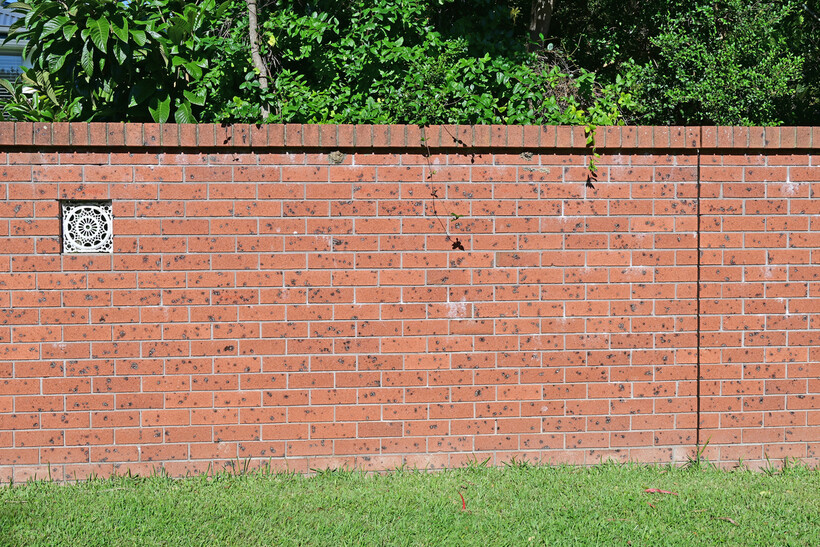 Textured brick fence beside a garden (Source: iStock)
The brick fence cost can vary depending on where you live, with labour rates, material costs, and local demand all playing a part. Use the table below as a guide to compare average brick fencing costs across major Australian cities:
City |
Average Cost per m² (AUD) |
|---|---|
Adelaide, SA |
$38 to $80 |
Brisbane, QLD |
$56 to $89 |
Canberra, ACT |
$55 to $90 |
Gold Coast, QLD |
$60 to $95 |
Melbourne, VIC |
$70 to $90 |
Perth, WA |
$150 to $250 |
Sydney, NSW |
$50 to $80 |
How much does each type of brick fence cost?
The cost of a brick fence also depends on the design and materials you choose. Features such as brick piers, rendered finishes, or hybrid designs can increase the price, so use the table below to compare the average costs of different brick fencing types.
Type |
Average Cost per Linear Metre (AUD) |
|---|---|
Brick and Iron |
$230 to $380 |
Brick and Metal |
$230 to $380 |
Brick and Wood |
$180 to $320 |
Brick and Render |
$320 to $550 |
Brick Pillars |
$550 to $800+ |
What factors affect the cost of brick fencing?
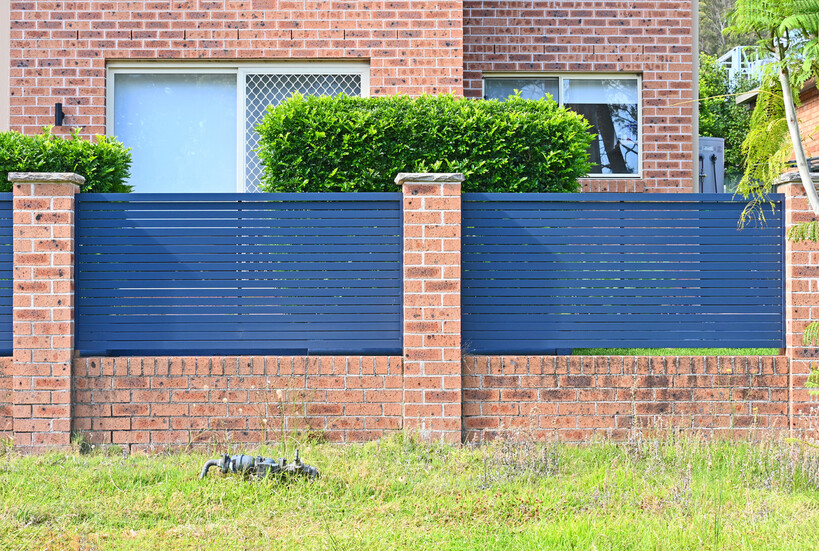 Modern brick and aluminium slat fence design (Source: iStock)
The fencing cost per metre is a good starting point, but it’s rarely the final price. The size of your fence, the materials you choose, and the complexity of the job can all affect how much you’ll pay.
Fence length and height
The bigger the fence, the more bricks, mortar, concrete, and labour are required. Taller fences also need stronger foundations to support the extra weight. If you’re building boundary fences that exceed your local council’s height limit, you may need approval before construction begins, which can add time to your project.
Brick type and finish
Not all fencing materials cost the same. For brick fences, standard clay bricks are generally the most affordable, while face bricks, heritage bricks, and reclaimed bricks are more expensive due to their appearance and availability.
If you’re planning a modern brick fence, adding a rendered finish or decorative features will also increase material and labour costs.
Site conditions and footings
A flat, accessible block is usually quicker and cheaper to work on. Sloping land, rocky ground, or limited access can make excavation more difficult, require more labour, and extend the build time.
Depending on the soil conditions and fence height, deeper concrete footings may also be needed to keep the fence stable over time.
Demolition of the existing fence
Replacing existing fencing usually costs more than building on a clear site. Before construction can begin, the existing fence must be demolished and removed, incurring additional labour, equipment, and waste disposal fees.
Gates and openings
Gates are typically quoted separately because they require additional materials and installation. Larger gates, custom designs, or steel and aluminium options generally cost more than standard pedestrian gates. Automated gate systems can also increase the total cost of your project.
Location and labour rates
Labour costs and material prices vary across Australia, so the same fence may cost more in one city than another. Getting quotes from local brick fence builders gives you a clearer idea of pricing in your area. If you’re only arranging brick fence repair, the final cost will depend on the extent of the damage and whether matching bricks are readily available.
How does brick fencing compare to other fencing types?
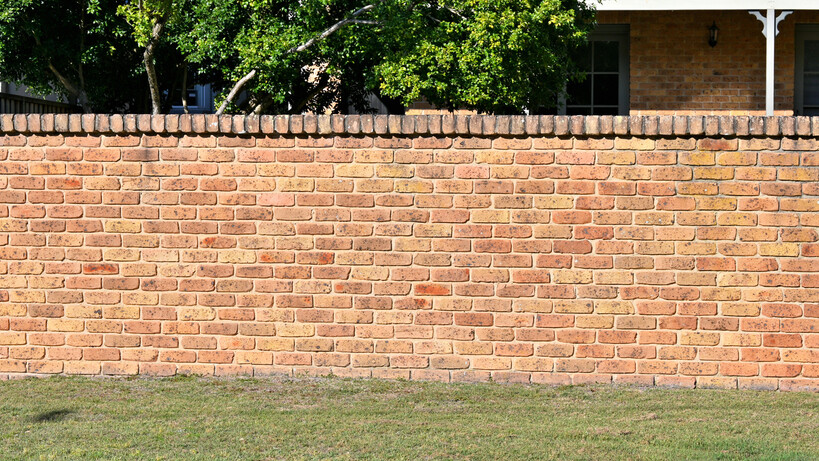 Tan brick fence with a capped top (Source: iStock)
Brick fencing is one of the more durable fencing options, but it’s not always the most affordable. The table below compares costs for brick fencing with other popular options, including picket fence styles, to help you choose the right solution before hiring a fence installer.
Fencing Type |
Average Cost of Service (AUD) |
|---|---|
Brick |
$150 to $750 |
$125 to $500 |
|
$142 to $600 |
|
$70 to $480 |
|
$115 to $498 |
|
$199 to $1,000 |
|
$100 to $620 |
|
$105 to $593 |
*Based on tasks posted on Airtasker
How can you save money on brick fencing?
A brick fence is a long-term investment, but there are a few ways to keep costs under control without sacrificing quality. If you’re researching how to build a brick fence, these tips can also help you plan a more cost-effective project:
Choose standard clay bricks. They’re usually more affordable than face, heritage, or reclaimed bricks while still providing a durable finish.
Consider a hybrid design. Combining brick pillars with timber, aluminium, or metal panels reduces the amount of brickwork needed, lowering material and labour costs.
Keep the design simple. Straight fence lines and standard heights are generally quicker and cheaper to build than curved walls or custom designs.
Only render where needed. A rendered finish creates a modern look but also increases labour and material costs.
Repair instead of replacing. If only part of your fence is damaged, repairing the affected section may be more cost-effective than rebuilding the entire fence. Brick fences also require less ongoing maintenance than many timber fences, which often need regular fence painting to maintain their appearance.
What to look for in a brick fencing contractor
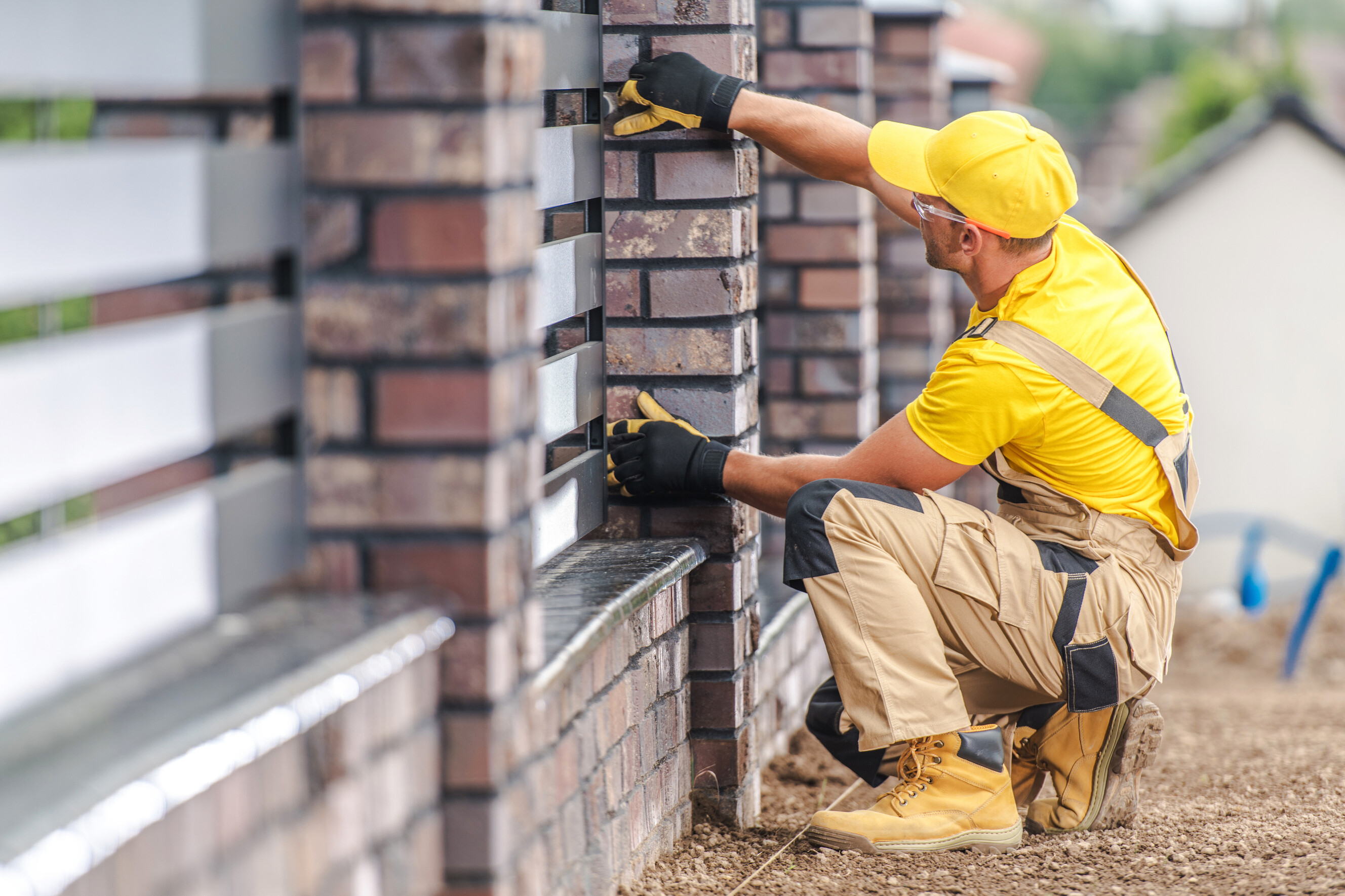
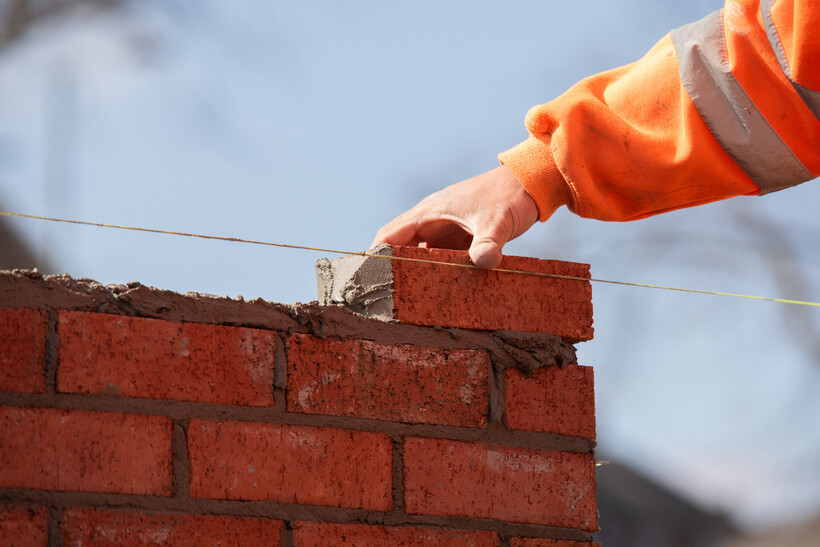 Tradesperson laying bricks using a guide line (Source: iStock)
Choosing the right contractor is just as important as understanding the brick fencing cost. An experienced professional can help you avoid costly mistakes, complete the job to a high standard, and ensure your fence meets local requirements.
Licensing, qualifications, and experience
Licensing requirements can vary between Australian states and territories, and some brick fencing projects may require a licensed builder or bricklayer, particularly for higher-value work.
Before hiring, ask whether your contractor holds the right licence for your state, carries public liability insurance, and has experience building brick fences. You can also ask to see photos of previous work and read customer reviews to assess the quality of their workmanship.
Questions to ask before hiring
Before accepting a quote, ask these questions to avoid unexpected costs and delays:
What’s included in the quote? Check whether materials, labour, demolition, site preparation, and waste removal are included.
How long will the project take? Ask for an estimated start date and completion timeline.
Will you organise any required council approvals? Confirm who is responsible if permits are needed.
What materials will you use? Find out the type of bricks, mortar, and other materials included in the quote.
Are there any additional costs I should know about? This helps you avoid surprises if issues arise during construction.
Get quotes from local brick fencing contractors on Airtasker
The cost of a brick fence depends on several factors, including the fence size, materials, site conditions, and labour rates in your area. Understanding these costs upfront can help you set a realistic budget, compare quotes confidently, and choose a fencing solution that suits your home.
When you’re ready to get started, post a task on Airtasker to connect with trusted brick fence experts. Simply describe your job, compare quotes from local Taskers, and choose the right person for the job.
FAQs on brick fencing
No. Brick fences generally cost more to build than timber fences because they require concrete footings, masonry materials, and specialised labour. However, they’re often more durable and require less maintenance over time, making them a worthwhile long-term investment.
A well-built brick fence can last 50 years or more with proper maintenance. Its lifespan depends on the quality of the materials and workmanship, and on how well the footings withstand ground movement and weather conditions.
The cost depends on the extent of the damage and the type of repair required. Minor repointing (refilling worn mortar between bricks) or replacing a few damaged bricks is generally much more affordable than rebuilding a collapsed section, so it’s best to get a quote based on your specific repair needs.
It depends. Council requirements vary across Australia, and approval may be needed if your fence exceeds your local height limits or is built on a boundary or corner block. Check with your local council before construction begins to avoid delays or additional costs.
Find brick fence experts, fast
Post a task