- Home/
- Costs/
- Air Conditioning Installation/
- Air Conditioning Installation Cost Guide
How much does air conditioner installation cost in the US?
Post to find a price. It's free and only takes a minute.
Average price (unit + installation)
$3,500 - $15,000
low
$3,500
median
$7,500
high
$15,000

Last Updated on

Written by Cielo B.
Staff Writer
Read more about our contributor
Key Facts
Central air conditioner installation typically costs around $3,500 to $9,000 when a home already has usable ductwork. Installing new ductwork can increase the total to approximately $8,000 to $15,000 or more.
Some ways to reduce installation costs include optimizing home energy efficiency, taking advantage of off-season discounts, and opting for zoned cooling.
Heating and cooling technicians need an EPA 608 Technician Certification to handle refrigerants, along with state-specific licenses demonstrating formal training and practical knowledge in air conditioning.
Air conditioners help keep indoors cool and comfortable, which is why many would invest in such appliances despite their high price tag. However, there could be many other costs involved in owning an air conditioner, and a large part of that is the installation process.
In this guide, we’ll discuss the key factors that affect air conditioner installation costs, including the type of unit, installation complexity, and labor rates by city.
What are the average costs to install air conditioning in the US?
The average cost to install to an AC unit in the US is around $3,500 to $9,000. However, prices can vary widely by city because each area has a different cost of living. Here is a breakdown of the average AC installation costs by city:
City |
Cost of Central AC Installation* |
|---|---|
New York City (NY) |
$6,000–$12,000 |
Los Angeles (CA) |
$5,500–$11,000 |
Chicago (IL) |
$5,000–$10,000 |
Houston (TX) |
$4,500–$9,000 |
Phoenix (AZ) |
$4,500–$9,500 |
Philadelphia (PA) |
$5,000–$10,000 |
Atlanta (GA) |
$4,500–$9,000 |
Denver (CO) |
$5,000–$10,000 |
Boston (MA) |
$5,500–$11,500 |
Seattle (WA) |
$5,500–$11,000 |
Miami (FL) |
$4,500–$9,500 |
Dallas (TX) |
$4,500–$9,000 |
*Includes the unit and standard installation using existing ductwork.
What factors affect the costs of air conditioner installation?
Various factors can affect the total cost of installing an AC unit, and we’ll break them down in this section. This will help you stick to your budget while still meeting your cooling needs.
Air conditioner brand
Like other appliances, air conditioners come from different brands with varying features and designs. Premium brands such as Carrier, Trane, Lennox, and American Standard offer advanced features that require specialized installation, so the labor costs more.
Moreover, most premium brands come with extended warranties. For the warranties to be valid, you’ll have to ask the technician to use branded parts, driving up the cost.
For instance, Carrier air conditioners are equipped with smart connectivity systems that require the installer to use additional wiring to integrate into a home’s automation system. They will have to work with precision and use brand-specific parts to ensure proper installation, which can lead to higher prices.
Value-oriented brands such as Goodman, Amana, and Heil may have lower equipment prices, but they do not necessarily require simpler installation.
Below are some of the popular air conditioner brands in the US and their average cost per unit and installation:
Brand |
Indicative Cost of Central AC Unit + Installation |
|---|---|
Carrier |
$5,000–$12,000 |
Trane |
$5,000–$12,000 |
Lennox |
$5,500–$13,000 |
American Standard |
$5,000–$11,500 |
Goodman |
$4,000–$9,000 |
Amana |
$4,500–$10,000 |
Heil |
$4,500–$9,500 |
Rheem |
$4,500–$10,500 |
York |
$4,500–$10,500 |
Ruud |
$4,500–$10,000 |
Air conditioning type
Your choice of air conditioning type may also affect installation costs. Let’s start with the most common one—central air conditioning. It distributes cool air evenly throughout the house via a series of ducts. Central air conditioning typically costs around $3,500 to $9,000 when existing ductwork is usable. A new installation requiring ductwork may cost approximately $8,000 to $15,000 or more.
Ductless mini-split systems typically cost around $3,200 to $14,500. A single-zone system usually sits near the lower end, while whole-home multi-zone installations may exceed the cost of a basic central air system.
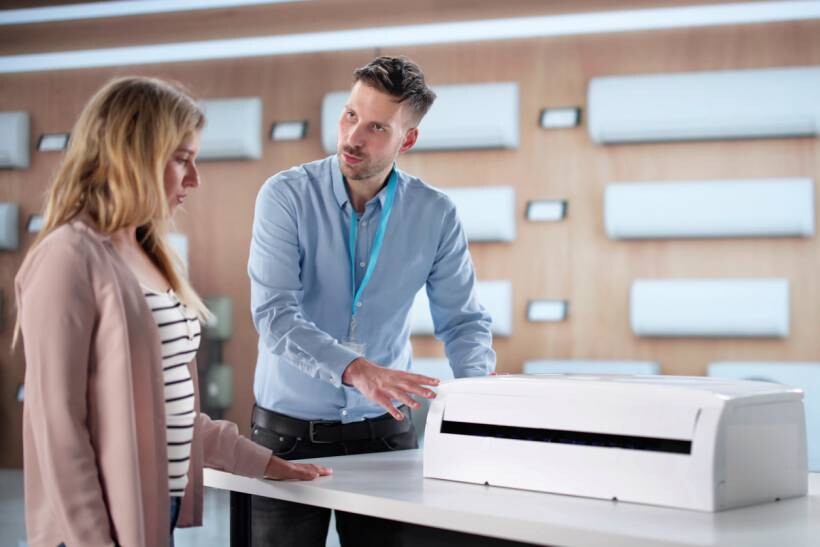 Knowing the features of an AC unit before purchasing. (Source: iStock)
Geothermal and dual-fuel systems generally have higher installation costs because they combine more complex heating and cooling equipment. Geothermal projects can also require excavation or drilling, while dual-fuel systems combine a heat pump with a furnace or another backup heat source.
Below is a breakdown of prices for installing an AC unit based on type:
Type of Air Conditioning |
Indicative Cost of Unit + Installation |
|---|---|
Central AC with existing ductwork |
$3,500–$9,000 |
Central AC with new ductwork |
$8,000–$15,000+ |
Single-zone ductless mini-split |
$3,200–$6,500 |
Multi-zone ductless mini-split |
$6,500–$14,500+ |
Heat pump system |
$4,000–$12,000+ |
Dual-fuel HVAC system |
$8,000–$18,000+ |
Geothermal system |
$15,000–$36,000+ |
Fortunately, you can still find inexpensive ones like evaporative coolers and window or wall units. Evaporative coolers cost more than window or wall units but are more affordable than other types of air conditioning. Like central air conditioners, they require additional ductwork, but because evaporator coolers have fewer components, their installation is less labor-intensive.
Meanwhile, window or wall air conditioners are simpler and more affordable to install. You only need to install one in an open window or through the wall. Portable air conditioners are the next most affordable option. However, they aren’t as efficient as the others and are only suitable for small rooms.
Here’s a price guide for budget-friendly air conditioning systems in the US:
Type of Air Conditioning |
Typical Equipment + Setup Cost |
|---|---|
Window air conditioner |
$200–$900 |
Through-the-wall air conditioner |
$500–$1,500 |
Portable air conditioner |
$300–$900 |
Evaporative cooler |
$1,500–$4,000 |
Area size
The cost to install a new air conditioner also depends on the size of the area to be cooled. For example, extra-large rooms with an area of more than 550 f² require air conditioning units with a large capacity, ideally around 12,000 BTUs, to ensure optimal cooling. Installation costs are higher because high-capacity air conditioners often require more components to operate.
Here’s a rough guide on the ideal air conditioning system capacity based on the room size and estimated installation costs:
Home Size |
Typical Central AC Capacity |
Indicative Cost With Existing Ductwork |
|---|---|---|
Up to 1,200 sq. ft. |
1.5–2.5 tons |
$3,500–$7,000 |
1,200–1,800 sq. ft. |
2.5–3.5 tons |
$4,500–$8,500 |
1,800–2,500 sq. ft. |
3–4 tons |
$5,500–$10,000 |
More than 2,500 sq. ft. |
4–5+ tons |
$7,000–$14,000+ |
*These figures are broad estimates only. HVAC capacity should be based on a professional load calculation rather than floor area alone.
Installation complexity
Labor is often correlated with the time spent to complete a job. So, the more advanced an air conditioner is, the higher the installation cost. Take ductless mini-split air conditioners, for example. Even though they usually don’t need ductwork, some structural modifications and preparation are required before installation.
You’ll have to ask a carpenter or engineer to create wall openings for the refrigerant lines and drainage. AC installations also involve some electrical work, especially if your house is old and needs new electrical panels or circuits to handle the load of modern air conditioning units.
Moreover, additional tools required to complete the job can increase air-conditioning installation costs. This often applies to a split-system air conditioner, in which installers use vacuum pumps to remove excess moisture from the refrigerant lines, as moisture can damage internal components.
Installation Requirement |
Potential Additional Cost |
|---|---|
Reuse serviceable existing ductwork |
Baseline |
Minor duct repairs or sealing |
$500–$2,000 |
Complete new ductwork |
$2,000–$8,000+ |
Electrical circuit or disconnect upgrade |
$300–$1,500+ |
Condensate drainage modifications |
$200–$800 |
New thermostat or controls |
$150–$600 |
Zoning system |
$1,500–$4,000+ |
Permit, inspection, or crane access |
Varies by location |
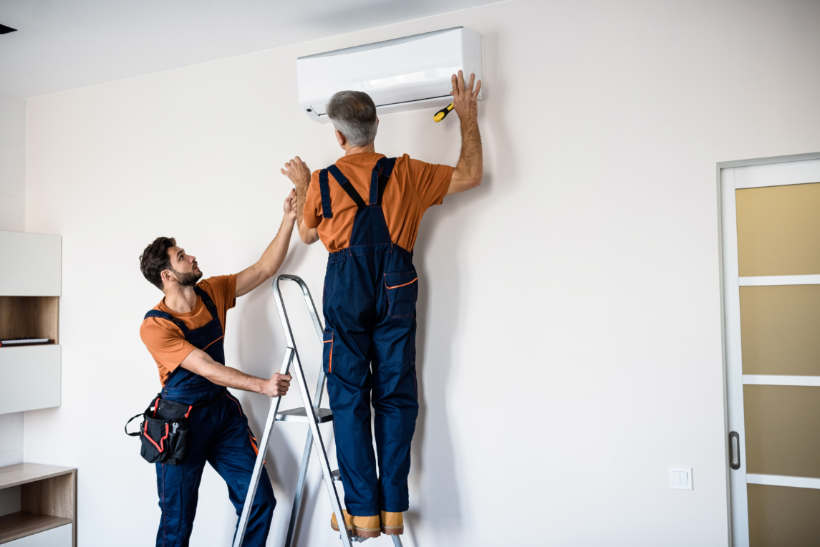 Installing a split air conditioner for efficient cooling. (Source: iStock)
Location
Your location can also dictate AC installation costs. Prices are higher for hiring HVAC technicians in New York City and Los Angeles because these areas have a high cost of living compared to others.
HVAC installation labor may cost approximately $75 to $250 per hour, depending on the technician’s qualifications, location, project complexity, and whether multiple crew members are required. However, full central-air installations are commonly quoted as fixed projects, with total labor often around $1,500 or more.
Moreover, cities with urbanization are packed with high-rise towers and apartments. These high-density housing types often require ductless mini-split air conditioners, which are more expensive to install.
Special features or upgrades
Although special features and upgrades can increase the total cost of air conditioner installations, they can help you save in the long term by improving energy efficiency. Here are some of the most popular features or upgrades for air conditioners:
Smart thermostat
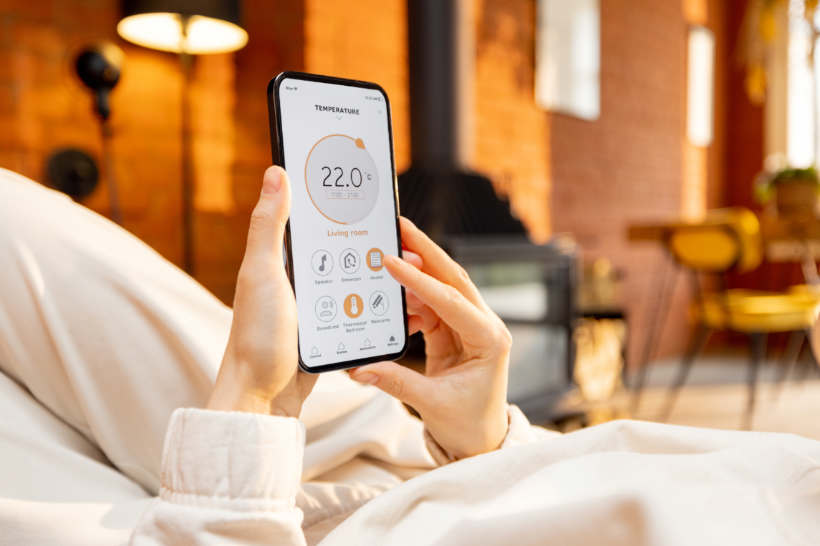 Enjoy effortless climate control with a smart thermostat. (Source: iStock)
Adjusting air conditioner temperature settings is easier with smart thermostats. These devices allow you to control and program air conditioners using your smartphone or tablet over Wi-Fi. Some smart thermostats also have AI-integrated systems that can learn your habits and automatically adjust to your desired temperature settings.
Smart thermostats typically cost around $100 to $300 for the device, with professional installation and setup potentially adding $100 to $250. Some HVAC systems include proprietary smart controls, so confirm compatibility before purchasing a separate thermostat.
Air purifier
Air purifiers with built-in HEPA filters can be integrated with your air conditioning system to improve indoor air. Since this is an added feature, it requires more labor and configuration on the installer’s part, so expect higher costs.
A whole-house air cleaner or filtration upgrade may cost approximately $500 to $2,500 installed, depending on the filtration technology, duct modifications, controls, and system compatibility. Higher-grade media filters, electronic air cleaners, and integrated purification systems may cost more.
Additionally, you’ll have to factor in future maintenance costs. Once it’s time for your periodic air conditioning cleaning, you’ll need to have the filters and other essential purifying components replaced.
UV light
UV light is a good way to level up your air purifying systems. It sterilizes air and eliminates bacteria, mold, viruses, and other harmful microorganisms, preventing microbial growth. This makes it easier to maintain your air conditioners by keeping the ducts and components clean, improving efficiency and longevity.
An HVAC UV light system may cost $300 to $1,000 to install. A basic coil-mounted lamp typically sits near the lower end, while systems with multiple lamps or that treat both the coil and ductwork may cost more.
Variable speed compressor
Energy efficiency is a vital feature in modern air conditioners, as it helps lower electricity consumption. Units with variable-speed compressors are prime examples of environmentally friendly appliances, as they dynamically adjust their speed to maintain a consistent indoor temperature.
For instance, if it’s too hot, the compressor might run faster to cool the room faster. On the other hand, if the weather is mild, it runs at a lower speed, using less energy while maintaining a steady temperature.
A central air conditioner with a variable-speed compressor may cost approximately $7,000 to $14,000 installed. The final price depends on capacity, efficiency, compatible controls, ductwork, brand, and whether the air handler or furnace also needs replacement.
Noise reduction tech
 Relax undisturbed with a silent air conditioning system. (Source: iStock)
Most premium air conditioning units have noise reduction technology, such as quiet mode settings, integrated into their systems. This includes insulated compressors, vibration dampers, and specially designed fan blades that help minimize noise. One of the benefits of upgrading to an air conditioner with noise reduction technology is that it enhances user comfort while sleeping or working in a home office.
Date and time
Your timing of availing of the service can also affect AC installation prices. Expect costs to be higher during summer (which often starts around June), when demand for such services surges. You’ll also have to wait longer since installers are often busier during this peak season.
Overtime charges should also be considered when installing air conditioners. A straightforward central AC replacement using existing ductwork may take around one working day. New ductwork, multiple zones, electrical upgrades, or full HVAC replacement can extend the project to several days.
What are some ways to save on air conditioner installation?
 Cut costs with smart air conditioner installation choices. (Source: iStock)
Optimize home energy efficiency
Before the scheduled installation, you may need to improve your home’s energy efficiency. Hire someone to seal gaps around doors, windows, and openings. This helps prevent the air conditioner from working too hard, helping lower your energy bills.
Also, consult an electrician to check if the existing wiring and circuits are compatible with the new air conditioner. Doing all these extra steps helps prevent incurring additional charges during installation.
Take advantage of off-season discounts
Earlier, we mentioned how demand spikes during summer, so plan AC installation as much as possible during the cooler months, around June to August. HVAC contractors often experience lower demand, so discounts and promotions are common during these periods. Also, since installers aren’t too busy, you can hire a preferred installer right on the schedule.
Upgrade to zoned cooling
Zoned cooling means dividing the indoor spaces into sections or zones, each with its own thermostat and control. This helps you identify which specific areas require the most cooling. You’ll save on installation costs because this eliminates the need to build and install more complex ductwork.
What should you look for in a professional aircon installer?
 Ensuring peak performance with professional AC installation. (Source: iStock)
Finding a reliable and professional air conditioner installer can take some time and effort. Below is a quick guide about the important things to evaluate when hiring an air conditioner installer:
Licenses and certifications
Heating and cooling technicians should hold an EPA 608 Technician Certification, as it indicates they are authorized to handle refrigerants, which can have environmental and health impacts. State-specific licenses are also important, as they demonstrate that the technician has gained practical knowledge and completed formal training in handling various air conditioners.
Knowledge of energy efficiency and compliance
Skilled installers should be knowledgeable about EnergyGuide labels to help you quickly decide which models can reduce your daily energy consumption costs. Most importantly, they should provide guidance on environmentally friendly refrigerants like R-32 or R-410A in air conditioners. These substances can significantly harm the environment when used too much.
Ability to conduct thorough assessments
It is crucial to find a hands-on installer who performs a thorough assessment, checking everything from room size and ceiling height to insulation. This will help you choose an air conditioner with the right size and capacity to cool your home effectively. Additionally, they should consider zoning needs, especially if you have a large home.
Aside from the initial assessment, the installer should consider future expansions or upgrades. For instance, if you eventually plan to build a smart home once your budget is sorted, they should be able to recommend compatible units.
Partnerships with reputable brands
Quickly research online to check whether the installer has partnerships with reputable brands. These brands uphold high standards regarding products and services, so you can rest assured that the air conditioner installer affiliated with them will deliver quality work. Affiliated installers also provide warranty-backed labor and parts, so choosing them helps ensure your warranty remains valid after installation.
Beat the heat at home with Airtasker
Now that you know how much it costs to install an air conditioner, the next step is to find a reliable installer. Posting a task on Airtasker can help you easily connect with experts in your area. Simply describe your specific needs and budget, and you’ll receive offers from various air conditioning installers, allowing you to compare and choose which services best fit your needs.
Having a reliable Tasker handle the tedious work can help you avoid the stress of installing an air conditioner. So, post a task today and enjoy lounging in your cool, comfortable home.
Learn more about our contributors
Written by Cielo B.
Staff Writer
Cielo is an experienced content writer who has explored various industries throughout her career. Her expertise, founded on a degree in journalism, includes writing about automotive and home maintenance. Cielo also covers topics like dressmaking, tailoring, and photography since she is a passionate cosplayer who enjoys dressing up as her beloved anime characters.
FAQs on air conditioner installation
Not necessarily, but professional installers are trained to ensure your air conditioning systems are installed correctly and safely, keeping your warranty valid. This is why it is highly recommended that a professional handle the installation.
First, you’ll need a professional to thoroughly assess your old AC system to see whether it’s more expensive to upgrade or buy a new one. If the system is nearing the end of its life, buying and installing a new one is more cost-effective. However, upgrading is better if it’s still relatively efficient and requires minor aircon repairs.
Yes, the initial installation costs are higher for energy-efficient air conditioners because they often feature systems that require more time and money. While this might be true, you’ll still garner significant long-term savings, as these AC systems conserve energy.
Yes, older homes typically have higher air conditioner installation costs because their electrical systems are often outdated and require a significant upgrade. Not to mention, many older homes lack ductwork, so if you decide to invest in a central air conditioning system, you’ll still have to pay extra for installing new ducts.
Find air conditioning installers, fast
Post a task
Related price guides
Related articles