How much do dress alterations cost in 2026?
Post to find a price. It's free and only takes a minute.
Price guide (labor only)
$75 - $297
low
$75
median
$110
high
$297

Last Updated on

Written by Cielo B.
Staff Writer
Read more about our contributor
Key Takeaways
Dress alterations typically cost $25 to $315, but complex work on formal or embellished dresses can cost over $500.
Simple adjustments like hemming and straps cost around $25 to $110, while more complex alterations can run from $50 to $315.
Budget 20% above your alteration quote to leave some wiggle room for extra fittings or unexpected adjustments.
Some dresses are love at first sight...until the first zip. Luckily, dress alteration costs in the US typically run around $75 to $110, though more extensive work can push the bill closer to $300. With clothing spending up 5.1% from a year ago, getting an almost-perfect piece into regular rotation can be well worth the tailoring bill.
Of course, not every fix comes with the same price tag. How much to alter a dress depends on what needs changing, the fabric, construction, and complexity of the job. In this post, we’ll unpack typical prices for common alterations, what can bump up the bill, and a few smart ways to keep your tab in check.
What are the average costs of dress alterations in the US?
So, how much does tailoring a dress cost in the US? On average, expect to pay around $110, though rates tend to be higher in major cities. If you’re comparing dress alterations in NYC prices with those in a smaller market, you may notice a sizable difference. Here’s how the cost of common dress alterations compares across the US:
City |
Typical cost range |
|---|---|
$155 to $280 |
|
$243 to $679 |
|
Jersey City, NJ |
$150 to $295 |
Chicago, IL |
$65 to $250 |
Houston, TX |
$145 to $130 |
Denver, CO |
$125 to $208 |
Orlando, FL |
$62 to $145 |
Philadelphia, PA |
$59 to $113 |
Lake Worth, FL |
$87 to $147 |
Westchester County, NY |
$80 to $135 |
As a rule of thumb, set aside around 10% to 20% of your dress price for alterations, wherever you’re based. So, if your dress costs $1,000, plan another $100 to $200 for tailoring. Keep a little more room in your budget for delicate fabrics, embellishments, or major changes.
What is the average cost of dress alterations by retailer?
Many major retailers offer in-store tailoring, but you may be wondering how much are dress alterations at these stores. Retailers such as HUGO BOSS, Saks Fifth Avenue, J.Crew, and Lululemon offer complimentary basic services on certain qualifying purchases, though what’s included varies by brand.
For anything beyond those perks, prices may vary considerably. Here’s what some popular US retailers charge for common dress fixes:
Retailer |
Alteration pricing |
|---|---|
Brooklyn Denim Co. |
$15 to $45 |
Community |
$15 to $35 |
Neiman Marcus |
$48 to $58/hour* |
Nordstrom |
$10 to $25 |
Jos. A. Bank |
$35 to $40 |
NB Formal Wear |
$15 to $45 |
Need something more ambitious than a quick hem or nip at the waist? An independent seamstress may be worth the upgrade, with rates typically ranging from $75 to $250. Working with one gives you more freedom to fine-tune the fit, fuss over the details, and make several tweaks without being limited to a retailer’s standard services.
What factors affect the costs of dress alterations?
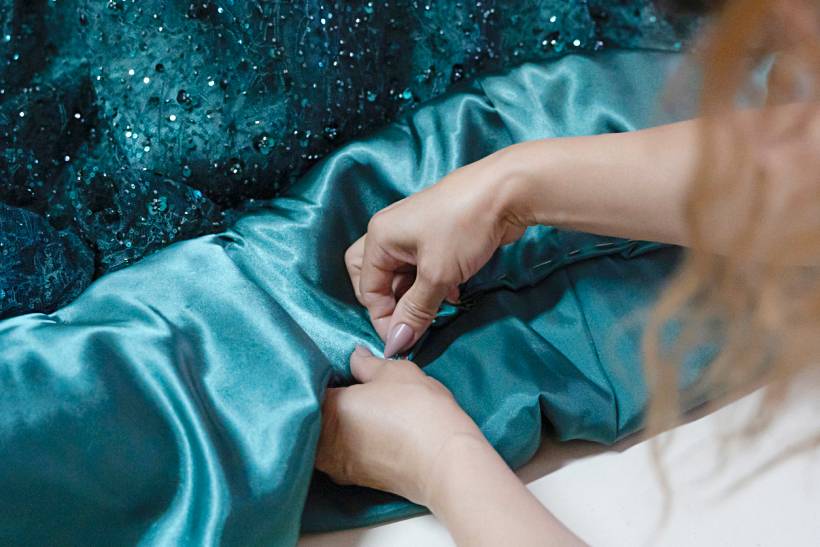 Seamstress adjusting the hem of a teal satin gown during dress alterations (Source: iStock)
Once you start thinking about those tweaks, the next question is usually: how much does tailoring a dress cost? Common dress alterations cost between $25 and $315, though several key factors affect the final price tag.
Alteration type
Before booking a tailor, put a name to the alteration your dress actually needs. Some of the simplest fixes are inexpensive and may even be complimentary at the place where you bought the piece. On the other hand, more involved work, such as resizing the bodice or changing the silhouette, usually requires more time and skill and therefore costs more.
Simple alterations
Simple alterations are small, easy changes that improve the fit or finish without significantly changing how the dress is constructed. They typically involve working with one to two layers of fabric, removing rather than adding material, and leaving intricate details like lining, lace, or embellishments untouched. Minor clothing repairs, like replacing buttons or fixing seams, can also fall into this category.
Below are some of the most common simple alterations and their average costs:
Simple alteration |
Average cost |
|---|---|
Basic dress hemming |
$50 to $75 |
Strap adjustment |
$25 to $50 |
Taking in sides |
$70 to $110 |
Sleeve adjustment |
$60 to $95 |
Adding bra cups |
$30 to $35 |
Darts |
$55 to $60 |
$45 to $60 |
So, how much does it cost to hem a dress? Based on the prices above, a basic hem on a casual dress costs around $50 to $75. However, some tailors may charge differently for rolled, blind, curved, or multi-layer hems. If your dress needs more specialized work, hiring a women’s tailor can bring the overall alteration cost closer to $75 to $250.
Mid to complex alterations
Mid-to-complex alterations usually deal with designer dresses, evening gowns, and structured styles, where changes to fit or shape may also require lining, boning, lace, sequins, beading, or multiple layers. This level of work can also raise the cost of dress hemming, especially when details need to be removed, adjusted, or sewn back. Here are some mid-to-complex dress alterations and their typical costs:
Mid-to-complex alteration |
Average cost |
|---|---|
Corset installation |
$140 to $215 |
Comprehensive hemming |
$95 to $210 |
Boning replacement/adjustment |
$85 to $215 |
Neckline reshaping |
$60 to $140 |
Bodice resizing |
$95 to $175 |
Lining modification |
$50 to $130 |
Sleeve adjustments |
$130 to $315 |
Side adjustments |
$75 to $125 |
Don’t want to piece together several alterations? You can also book a dressmaker to create a custom dress, bridal gown, or even a full-blown wedding dress around your measurements, preferred fit, and design choices from the start. So, how much does a dressmaker cost? Dressmakers usually charge between $75 and $300, with the final price depending on the style, fabric, and embellishments.
Fabric type
Now that you know how much to hem a dress and what other alterations can cost, take a look at the fabric. Everyday materials like cotton and polyester are generally easier to handle and can often be stitched on a sewing machine, helping keep labor costs lower.
If your favorite flowy dress is made of silk, chiffon, velvet, or lace, expect a little more work. These fabrics require careful handling to avoid damage, while beading and other embellishments may need to be removed and sewn back on by hand. This kind of detailed work is more labor-intensive and can raise the final cost, especially for wedding dress alterations.
Fabric type |
Example |
Average labor cost |
|---|---|---|
Standard |
Cotton, Rayon, Polyester |
$35 to $40 |
Delicate |
Silk, Chiffon, Lace, Tulle |
$30 to $120+ |
Heavy or special |
Satin, Velvet, Leather, Fur, Shearling, Horsehair |
$20 to $400+ |
Dress design
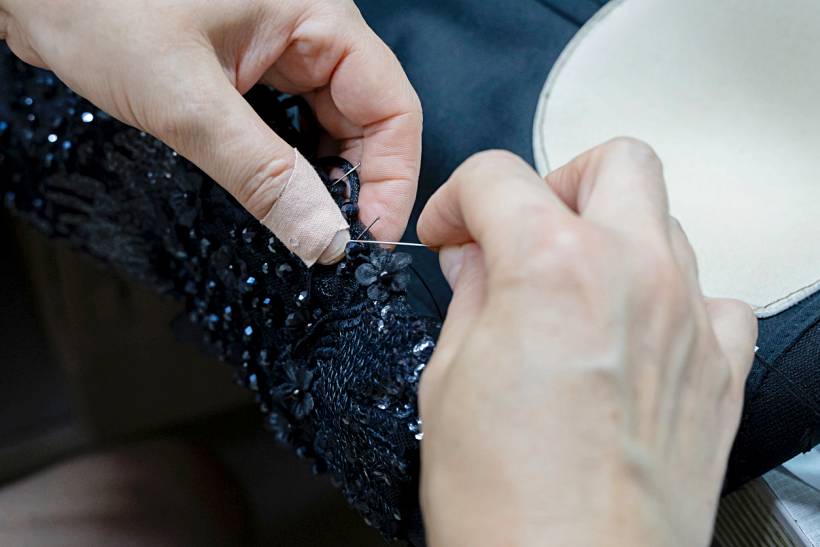 Seamstress hand-stitching black beaded lace during dress alterations (Source: iStock)
The more design details to preserve, the more work usually goes into the job. For instance, checks, pleats, draping, corsetry, and intricate seams all need to stay properly aligned, even during seemingly simple fixes like hemming, taking in the sides, or shortening sleeves. That extra precision can bump up the price and affect how long dress alterations take. Here’s how dress designs compare in cost.
Low-cost
Simple casual dresses made from lightweight fabrics are the most affordable, priced $15 to $60. They only need minor tweaks and adjustments, such as basic hemming, strap adjustments, and zipper replacements. Below are some dress designs that fall into the lower price point of alterations:
Dress type |
Common features |
|---|---|
Casual |
Simple designs, lightweight fabrics (cotton, jersey) |
Wrap |
Overlapping front, tie, or belt |
Shift |
Straight, loose-fitting design |
Maxi |
Long, flowing design, lightweight fabrics |
Empire waist |
High waistline below bust, flowing skirt |
Mid-cost
Semi-formal dresses like cocktail, sheath, and A-line styles are considered mid-priced, with prices ranging from $60 to $150. They’re slightly higher because dresses like these tend to be more fitted or layered, making them more difficult to alter. Some of the semi-formal dresses with a mid-range alteration cost:
Dress type |
Common features |
|---|---|
Cocktail |
Fitted silhouettes, satin, chiffon, lace |
A-Line |
Fitted bodice with flared skirt |
Sheath |
Straight, slim-fitting design |
Bodycon |
Tight-fitting, stretchy fabrics (e.g., spandex, jersey) |
High-low |
Asymmetrical hemline, shorter in the front and longer in the back |
High-cost
Altering wedding dresses, bridesmaid dresses, and ball gowns is the most expensive due to their intricate designs. Some are adorned with sequins, beads, and other embellishments, while others feature boned corsets to give the dress more structure and a flattering shape. Since these require careful, precise work, expect costs of $150 to $1,000 (or more).
Dress Type |
Common features |
|---|---|
Wedding dress |
Layers of tulle, lace, boning, corsets, long trains |
Ball gown |
Full skirts, multiple layers, heavy fabrics |
Mermaid or trumpet dress |
Fitted through the bodice and hips, flaring out at the knees |
Evening gown |
Floor-length, structured bodices, embellishments (sequins, beads) |
Tailor or seamstress experience
Not every tailor or seamstress brings the same skills. Some focus on everyday fixes, while others specialize in bespoke alterations, formalwear, and delicate fabrics prone to stretching or shrinking. Experienced sewing professionals typically charge around $75 to $140, with specialized services reaching $250.
This is also why it pays to compare quotes when figuring out how much you should pay to hem a dress. One local tailor may charge as little as $30 for a basic hem, while another may start closer to $70 for the same service.
Turnaround time
For simple alterations, the standard turnaround is a few days to about two weeks, often with just one fitting. During quieter periods, some dress retailers and local tailors may even offer same-day service for basic fixes. On the other hand, formal dresses and more complex alterations can take several weeks and typically require two to three fittings to get the length, fit, and details right.
Dress type |
When to start |
Typical fittings |
|---|---|---|
Casual/everyday dresses |
1–2 weeks out |
1 fitting |
Formal/cocktail dresses |
3–4 weeks out |
1–2 fittings |
Bridal/bridesmaid/embellished gowns |
8–12 weeks |
2–3 fittings |
The month you book your alterations can also affect the price. Based on Airtasker data, summer tends to be busier, which can mean fewer appointment slots and pricier rush services. Simple to mid-level alterations can reach $300 at the higher end during summer, compared with around $171 in autumn.
Rush service
Need your dress back ASAP? For an express turnaround of around 48 to 72 hours, rush fees can add roughly 30% to 50% to the standard alteration price. The fee can climb even higher for same-day or 24-hour requests, so book early if you can.
For example, a $100 alteration could cost $130 to $150 with a rush fee. For a more involved $250 alteration, that could jump to $325 to $375.
To avoid rush fees, work backward from your event date and leave enough time for every fitting:
Initial consultation: 6 to 8 weeks out
First fitting: 4 to 6 weeks out
Second fitting: 2 to 3 weeks out
Final fitting: 1 week out
Additional services
Some clothing alteration pros offer additional services beyond your basic fit adjustments. This could range from simple services such as steaming or pressing to prepare the clothes to a more hands-on approach, such as on-site tailoring during an event.
Although these add-ons come at an extra cost, some alteration shops offer them as part of a comprehensive service package, helping to reduce the total cost of dress alterations.
Extra service |
Average cost |
|---|---|
Steaming/pressing |
$100 to $200 |
Formalwear cleaning |
$249 to $550 |
Casual dress cleaning |
$10 to $35 |
Storage services (monthly) |
$5 to $50 |
Fitting sessions |
$188 to $360 |
Dress preservation |
$10 to $50 |
Day-of dressing assistance |
$400 to $1,500 |
How much should I tip my tailor/seamstress?
 Dress alterations showcasing delicate button stitching on dark fabric (Source: iStock)
Tipping isn’t required, but 10% to 20% of the alteration cost is a reasonable range if you’re happy with the work. So, if your total cost is $100, you may leave a $10-$20 tip. For smaller jobs, like quick hemming on a casual Sunday dress, simply rounding up the bill or leaving a few extra dollars works, too.
What are some ways to save on dress alterations?
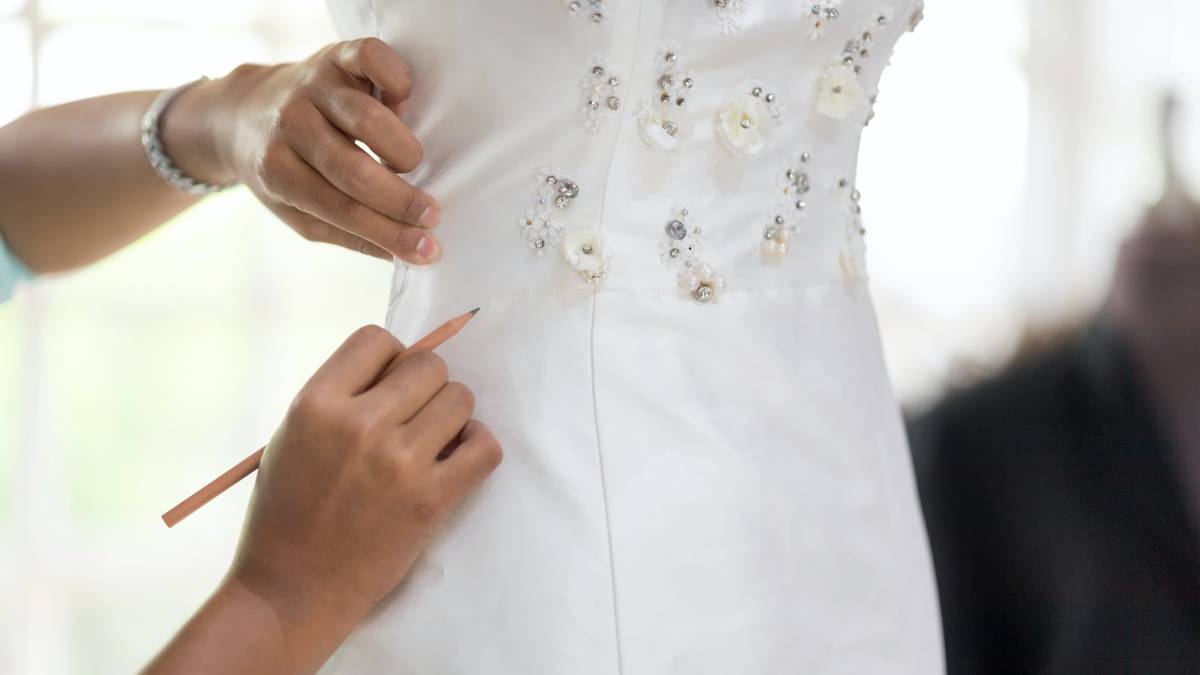
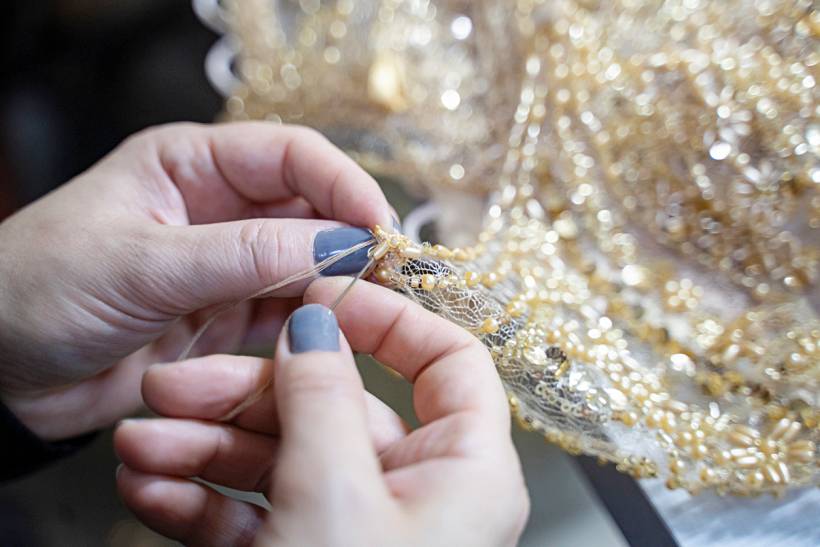 Dress alterations in progress featuring detailed work on pearl-embellished lace (Source: iStock)
Although simple fixes don’t cost much, things can add up and inflate the total price of dress alterations. Avoid falling into this trap by following these simple tips and tricks:
Know exactly what you need
Before your fitting, get specific about what you actually want changed. A little alteration know-how can help you avoid paying for more work than necessary, especially when a smaller fix can solve the same problem.
Neckline too straight? A small “pinch” may create a sweetheart shape without a full neckline alteration.
Dress slightly loose at the waist? Taking in the side seams may be enough instead of resizing the entire bodice.
Straps keep slipping? Shortening or repositioning them may fix the fit without altering the neckline or bust.
Don’t be shy about asking your tailor about the simplest way to achieve the fit you want before committing to more extensive work.
Book early
Timing your alterations right can help keep costs down. Based on Airtasker data on posted tasks, Autumn and winter tend to be more budget-friendly, with upper-end prices around $171 and $200, respectively. Try to avoid spring and summer as prices tend to be higher due to weddings, proms, and graduations. In fact, prices can climb to around $250 in spring and $300 in summer.
If you’re booking during these busier months, get ahead of the rush. Allow around one to two weeks for simple alterations and four to eight weeks for formalwear, leaving enough time for fittings without paying extra for a faster turnaround.
Buy your shoes after your first dress fitting
If you already have your heels ready, don’t forget to bring them to your first fitting. Your tailor can account for the exact heel height when pinning the hem, helping you get the length right the first time and avoid paying for additional tailoring later.
But if you have yet to get a pair, decide on your heel height before the fitting and bring a similar pair if you can. Just avoid making a big switch afterward, since going from flats to heels, for example, could leave your freshly hemmed dress too short.
Consider a dress with a corset or tie-up back
A corset or tie-up-back dress has lacing or ribbons at the back to let you tighten or loosen it. This flexibility helps you save money on alterations, since you no longer need the dress tapered on the sides to ensure a perfect fit.
What should you look for in a tailor or seamstress for dress alterations?
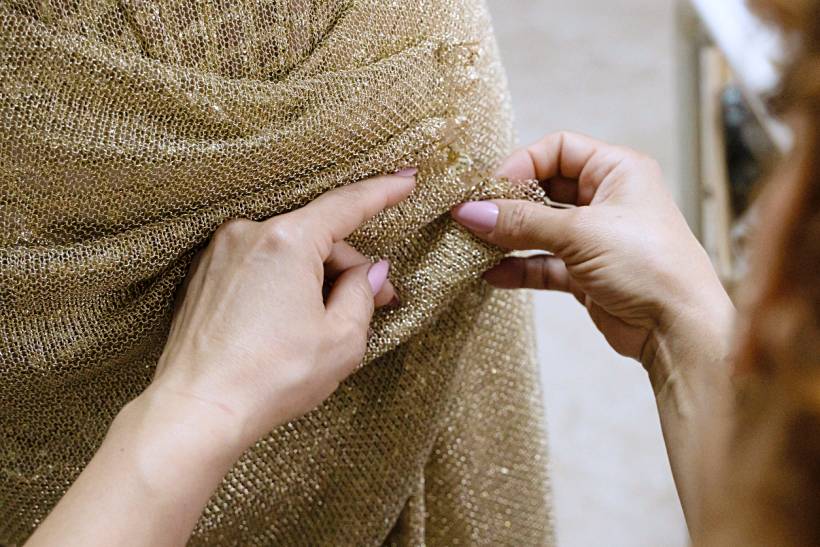 Seamstress working on the draping of a shimmering gold gown (Source: iStock)
It’s true that people are willing to spend for a flattering fit, but you should still choose your tailor or seamstress carefully.
Familiarity with your specific garment type
Check their portfolio. A tailor who mainly handles jacket alterations, for example, may be great at structured tailoring but might have less experience with flowy dresses, delicate fabrics, or embellished gowns. It’s also worth checking their work racks to see which dresses they handle most often.
If you’re booking through Airtasker, you can also browse local providers and check reviews from customers who hired them for similar jobs.
Ability to work without standard patterns
A good tailor should know how to fit the dress to your body, not force your body into standard measurements. For example, you might need more room at the hips but less at the waist, or have one shoulder that sits slightly higher than the other. Look for someone who can spot these differences during a fitting and adjust the dress accordingly.
Expertise in draping and cut suitability
A good tailor should understand how a dress’s cut and fabric work with your shape. They should be able to spot what’s throwing off the silhouette and suggest subtle fixes, such as:
Full skirts: Reducing excess volume around the hips.
Strapless bodices: Adding shaping or support for a more secure fit.
Bunching at the waist: Adjusting the seams so the fabric falls more smoothly.
The goal is to improve the fit without losing the design you loved in the first place.
Confidence with delicate or “difficult” fabrics
Most formal dresses are made from delicate fabrics such as silk and satin, so if you need them altered, make sure you choose someone who’s an expert in these fabrics. Inexperienced tailors might pucker seams or snag since these delicate fabrics can shift easily during sewing.
Be dressed to the nines with Airtasker
Found the dress, but not quite the fit? Don’t let a too-long hem, loose waist, or awkward strap situation keep you from wearing it. Book a reliable alterations Tasker and get those fixes sorted, especially if you have an event coming up and need a faster turnaround.
While you’re giving your wardrobe some attention, why stop at one dress? You can also book help with coat repairs, trouser alterations, or suit tailoring, and finally get those almost-perfect pieces to fit the way they should.
Learn more about our contributors
Written by Cielo B.
Staff Writer
Cielo is an experienced content writer who has explored various industries throughout her career. Her expertise, founded on a degree in journalism, includes writing about automotive and home maintenance. Cielo also covers topics like dressmaking, tailoring, and photography since she is a passionate cosplayer who enjoys dressing up as her beloved anime characters.
FAQs on dress alterations
Usually, yes, especially for standard alterations like hemming or adjusting straps. However, costs vary depending on the dress, with complex changes involving sleeves, delicate fabrics, or extra fabric sometimes making replacement the cheaper option.
Yes. The right tailor can make an inexpensive dress look more polished by improving the fit first. Some of the most common alterations, including adding darts, reshaping the waist, and refining the hem, can noticeably improve the overall silhouette.
No. The prices for dress alterations depend on the complexity and type of alteration work, not on whether the dress is new or used. If, for example, you have a new dress that’s cheap, low-quality, and made of fragile fabrics, it is likely to be harder to alter, so it will cost more.
Some tailors and experienced seamstresses offer discounts when you bring in several dresses, but package pricing isn’t guaranteed. Ask for a combined quote and compare it with the average price of altering each dress separately.
They can if the changes permanently alter the dress or make it fit very specific measurements. If resale matters, ask about reversible alterations or preserving the original hem, especially before having a designer or wedding dress altered.
Dress length alterations typically cost around $50 to $75 for a basic hem, but prices can rise for floor-length dresses, multiple layers, delicate fabrics, or more complicated hemlines.
Find dress alterations, fast
Post a task