- Home/
- Comparisons/
- Flooring/
- Laminate vs. Vinyl Flooring
Laminate vs. vinyl flooring: Which is better for your home?
Comparing laminate and vinyl flooring based on cost, appearance, and more
Last Updated on

Written by Milafel D.
Contributor
Read more about our contributor
Key Facts
Laminate flooring is an affordable and sustainable option resembling natural materials like wood. It prevents scratches and comes in different styles but is not moisture-resistant.
Vinyl flooring is moisture-resistant and is best used in high-traffic areas, such as living rooms and kitchens. However, it is more expensive and less eco-friendly than laminate.
When renovating the floors of your home, deciding between laminate vs. vinyl flooring can be tough. Both offer a range of colors and textures that can mimic the look of natural stone at a relatively affordable price.
This guide outlines the key differences that make each unique, including cost, durability, and more. When you are done reading this article, you can confidently pick between the two. Even better, you will know how to find the best person for the installation or repair job.
What is laminate flooring?
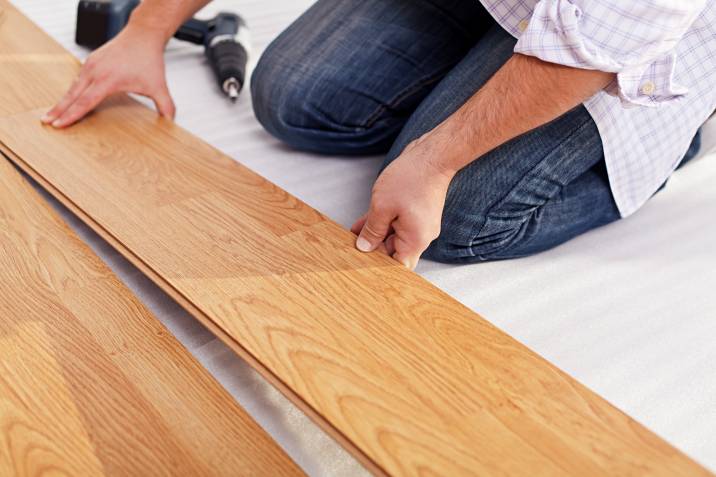 Wood-look flooring planks being fitted over floor underlay (Source: iStock)
Laminate floors comprise several layers that work together to create a durable and moisture-resistant flooring option:
The bottom layer provides stability.
The decorative layer is where the flooring’s design and pattern come in.
The top layer protects the flooring from scratches, fading, and stains.
These are fused through a process called lamination, hence the name. It works by pressing and heating the layers with a strong adhesive to form one piece. The result is a beautiful, cost-effective flooring option that’s easy to clean and install.
In terms of thickness, laminate flooring can vary from 6 mm to 12 mm. The thicker the flooring, the more durable it is.
What is vinyl flooring?
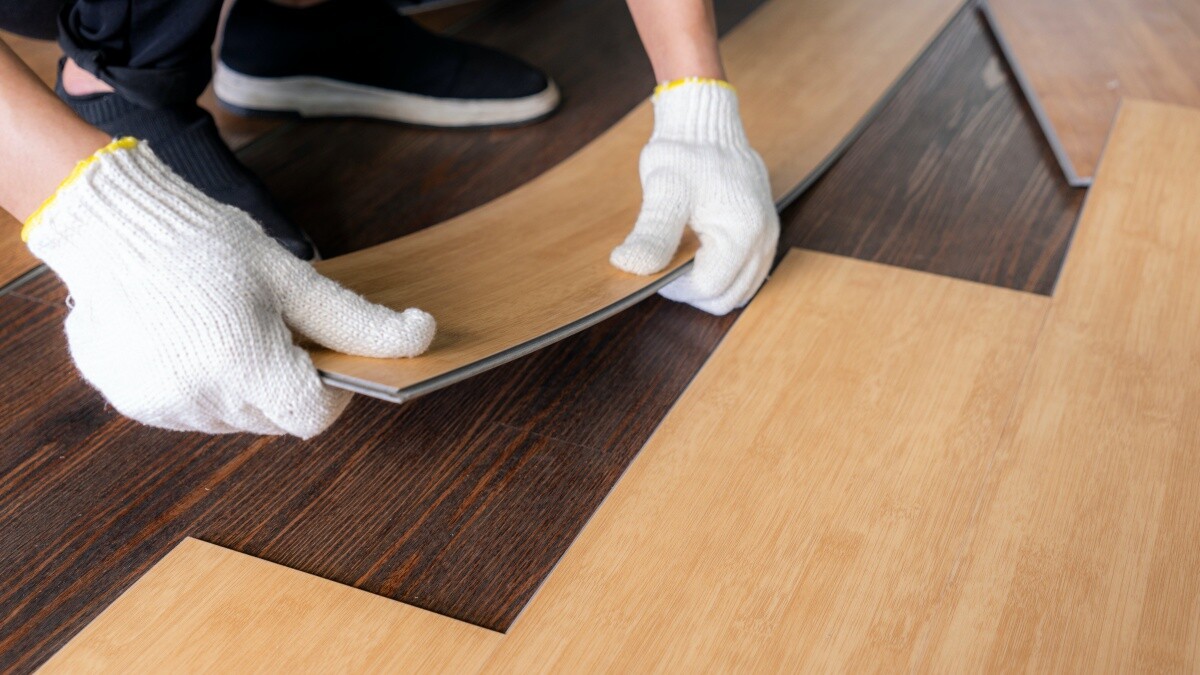
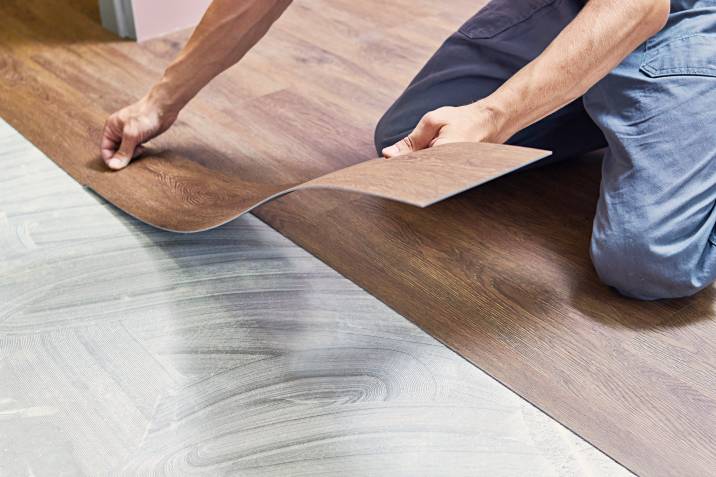 Close-up of flooring installation with flexible plank material and adhesive base (Source: iStock)
Vinyl floors are popular for homeowners seeking an affordable and stylish option. Like laminates, these have several layers:
Backing layer, which gives the flooring stability
Inner core layer, which provides moisture resistance
Design layer, which holds the pattern or design of your choice
Top wear layer, which protects against scratches, fading, and stains
Vinyl flooring also has at least two types:
Sheet vinyl is sold in large rolls.
Tile and plank vinyl is available in smaller squares and rectangles.
Vinyl floors are typically made from thin sheets of polyvinyl chloride (PVC), vinyl plastisol, and plasticizers. These materials are heated and treated to form a single flexible sheet, which is then cooled in molds to create the desired shape.
The final product is cut into planks and then installed as is or with additional glue or adhesive, depending on the type of flooring selected. As for thickness, vinyl flooring typically ranges from 2 mm to 8 mm, making it thinner than laminate.
Vinyl vs. laminate: Which is better for your flooring?
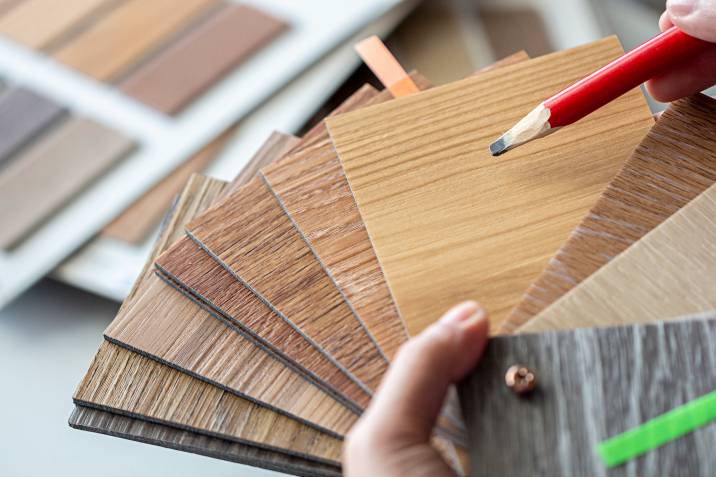 Selection of light and dark wood-grain flooring samples for material comparison (Source: iStock)
Vinyl and laminate have different manufacturing processes and thicknesses. But you might still struggle to determine which is which when walking inside a home improvement store. For example, their decorative layer can mimic natural materials like wood or stone. So how else can you decide? Let’s discuss their major differences further.
In terms of cost
Generally, vinyl is more expensive than laminate flooring. The cost per square foot of vinyl ranges from $4 to $8. Laminates can cost anywhere from less than a dollar to $6 per square foot, depending on the quality. This difference in cost mainly comes down to the material composition between the two types of flooring. So do their installation difficulty, durability, and maintenance (which will be discussed later).
In terms of appearance
Laminate tends to have a more realistic wood or stone look, with textured finishes that mimic natural materials.
Vinyl, on the other hand, can have a more uniform, smooth look. It has come a long way in recent years and now mimics the look of natural flooring materials with stunning accuracy. Most vinyl floors also have embossed textures that make them appear slightly raised.
In terms of installation complexity
In the vinyl vs. laminate flooring battle, the race is tight when it comes to installation. However, between the two, vinyl seems easier to install for the following reasons:
Options: You can glue down vinyl planks and sheets, making them more durable and suitable in high-traffic areas such as living rooms. You can also make them float through the click-and-lock system. With laminate, the ideal installation process is floating it because it needs to warp naturally.
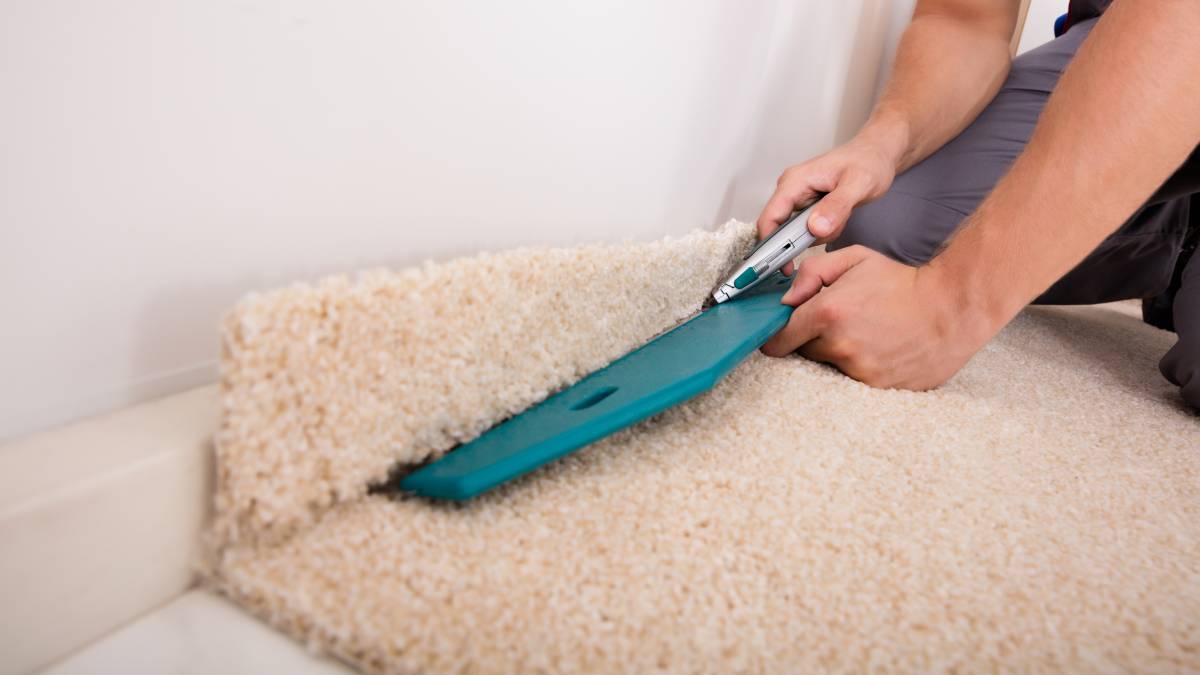
Tools needed: You can usually cut vinyl planks and sheets with a utility knife because they are thin. Laminate might require a miter or a circular saw.
Because of this, the labor cost for vinyl flooring installation is between $5 and $6 per square foot, while it can reach $8 per square foot for laminate.
In terms of durability/maintenance
Both are low-maintenance, and if you have kids who love to drag along things on the floor, you might find laminate and vinyl flooring a godsend because they are scratch-resistant. They are also easy to vacuum, which is great if you have pets.
However, vinyl is superior to laminate in high-moisture areas, such as bathrooms and kitchens, where spills are common. This is because of its extremely high water resistance. If water gets into the laminate, the flooring can warp and buckle.
Vinyl, though, is more sensitive to heat. For example, its color can fade over time when exposed to sunlight.
In terms of eco-friendliness
The award goes to laminate. Many manufacturers now use sustainable materials to make high-density fibreboards, such as those made from renewable wood plantations. Vinyl flooring is more difficult to recycle because it cannot be combined with plastic.
Install or replace your home’s flooring with Airtasker
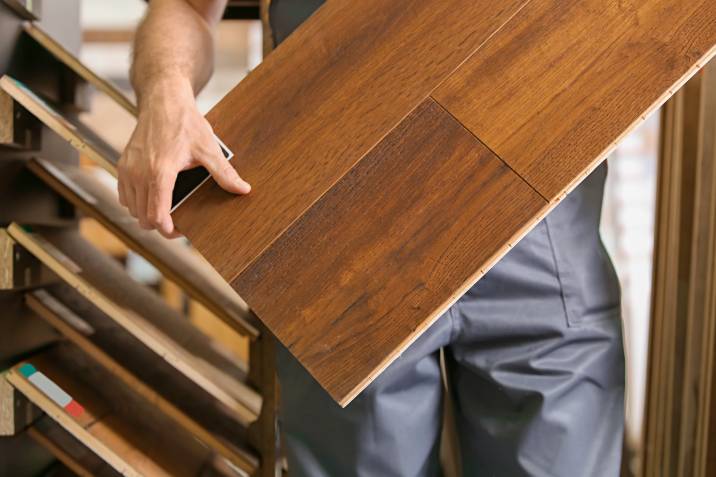 Brown timber-style flooring boards held for comparison in a flooring showroom (Source: iStock)
This guide on vinyl flooring vs. laminate flooring helps clear out the confusion. Now that you know the pros and cons of vinyl and laminate flooring, you are prepared to pick the ideal product for your home. But regardless of which you choose, it is better to skip the DIY process and work with a flooring expert.
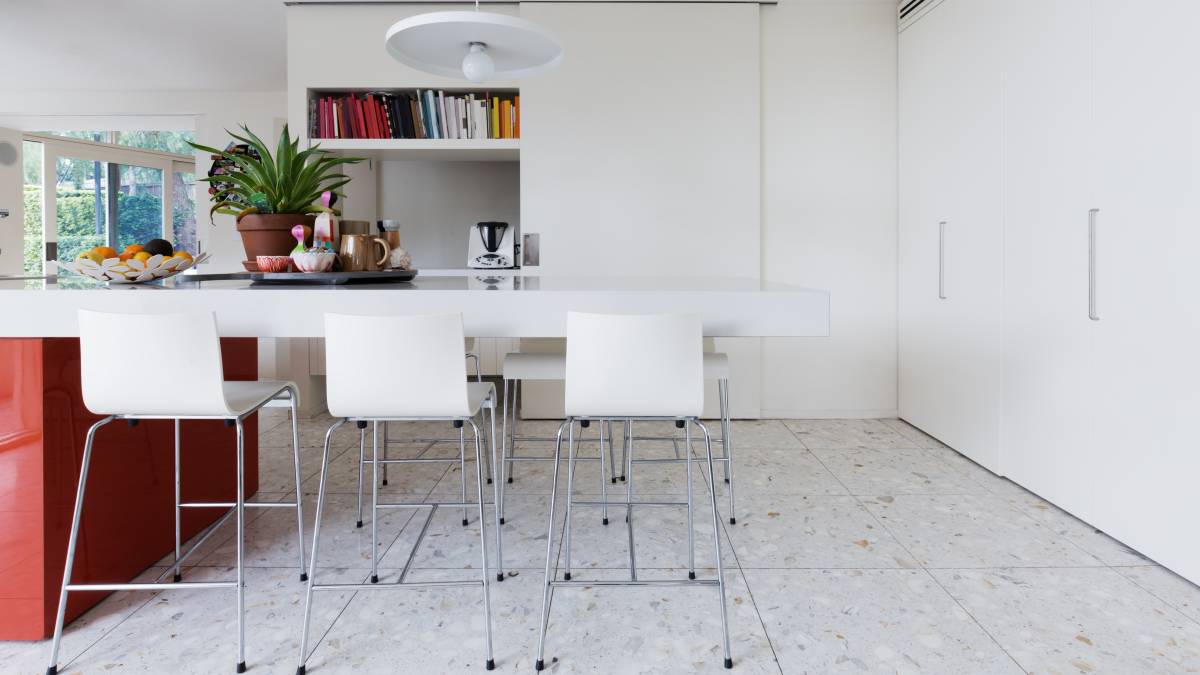
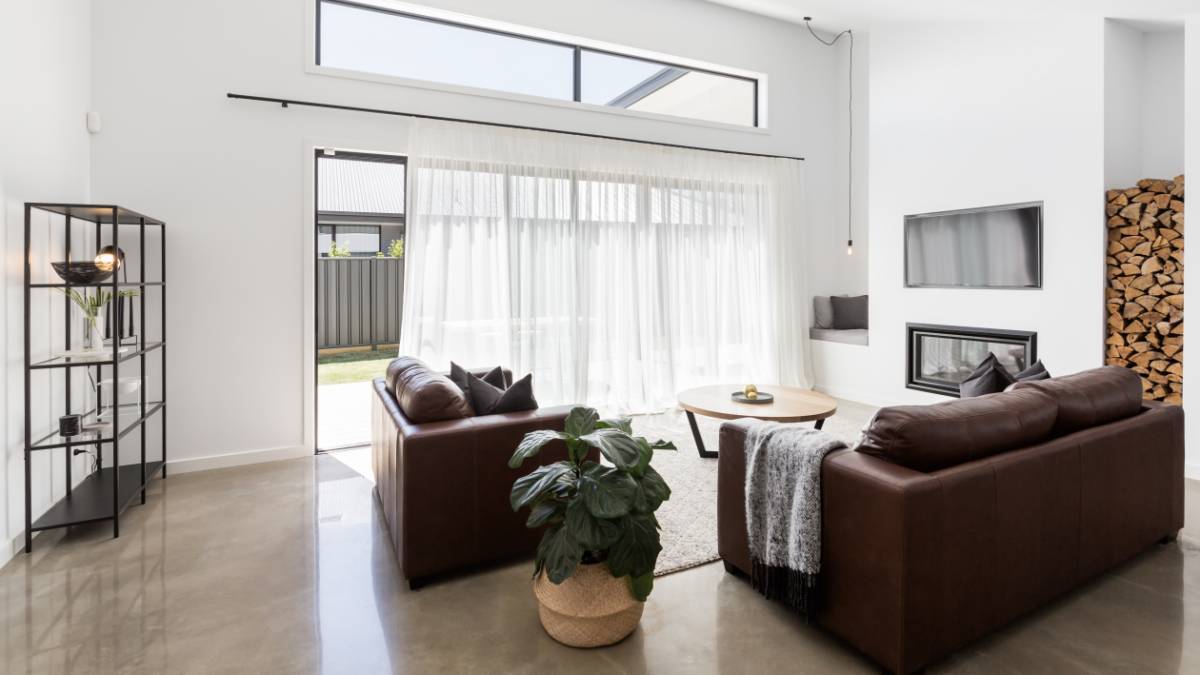
Airtasker connects you with nearby pros specializing in flooring installation and repair. If you’re still exploring alternatives beyond laminate and vinyl, polished concrete is another sleek, durable flooring option—especially popular in industrial or minimalist-style spaces. You can book a concrete floor polishing expert to give your floors a long-lasting, glossy finish. After registering for free, you can post a task detailing the following:
Your room size
Flooring materials you want to install or replace
Your budget
Afterward, Taskers will send their quotes with their credentials. This makes it easier for you to decide which one to hire. Plus, with ratings and comments from previous clients, you can be sure that the Tasker has the skills and experience needed for the job.
Learn more about our contributors
Written by Milafel D.
Contributor
Milafel is an editor and writer with over 15 years of experience. As a contributor to Airtasker content, she brings clarity, creativity, and insight to every piece to help homeowners tackle everyday challenges and turn their living spaces into something truly special. When she’s not writing, Milafel is a devoted cat mama and a teacher’s wife who enjoys belting out tunes at karaoke, journalling her thoughts, and pursuing passion projects.
Laminate vs. vinyl flooring
Laminate Flooring |
Vinyl Flooring |
|
|---|---|---|
Cost |
Up to $6 per square foot |
Up to $8 per square foot |
Appearance |
More realistic appearance to wood and stone |
Has a smoother and embossed texture |
Installation |
Best installed as a floating floor |
Offers more installation flexibility |
Durability |
Vulnerable to moisture but is scratch-resistant |
Sensitive to heat but is moisture-resistant |
Eco-friendliness |
Materials can come from renewable plantations |
Can be recycled but not combined with other plastics |
FAQs on laminate and vinyl flooring
Yes, with some considerations. While laminate flooring is durable, avoid saturating it with water, as this can cause damage to the planks over time. Instead, use a lightly damp mop or cloth to clean the surface.
Also, use a cleaning solution designed for laminate floors to prevent stains or color fading.
Yes, but the concrete subfloor must be level, dry, and free of any dust, debris, or contaminants. Also, check for excess moisture, which can damage the flooring over time.
The installation process typically involves laying down a moisture barrier, followed by a foam underlayment, and then the laminate planks. With proper installation and maintenance, laminate flooring is a practical option for your concrete subfloor.
Yes, vinyl flooring is a great option for bedrooms. It is available in various styles and colours to match your decor. With easy maintenance and a comfortable feel underfoot, vinyl flooring remains a popular choice for homeowners.
Yes, vinyl flooring is generally quieter than laminate. It is thicker and more flexible than laminate, which helps reduce noise. Additionally, many vinyl products come with a sound-dampening layer.
On the other hand, laminate is harder and less cushiony than vinyl, making it noisier when walked on. However, consider the product and installation method when determining how noisy a flooring option is.
Find local flooring contractors, fast
Post a task