- Home/
- Costs/
- Ear Piercing/
- Ear Piercing Cost Guide
How much does it cost to get your ears pierced in U.S.? [2026 Prices]
Post to find a price. It's free and only takes a minute.
Average costs of ear piercing
$35 - $125
low
$35
median
$80
high
$125

Last Updated on

Written by Angela A.
Staff Writer
Read more about our contributor
Key Facts
The average ear piercing cost runs from $35 to $115 or more, depending on placement complexity and studio location.
The safest ear piercing is one done with a hollow needle by a trained professional, especially for cartilage and complex placements.
Some signs of an infected ear piercing to watch out for are redness, swelling, or unusual discharge.
Did you know that over 80% of Americans get their ears pierced, making it one of the most common body modifications in the U.S.? But even if it’s popular, there’s still much to consider before getting yours done, particularly the cost. So, how much does it cost to get your ears pierced? On average, expect to pay between $35 and $125 or more.
If you search online for how much ear piercings cost, you might also notice that prices can vary depending on the type of piercing, jewelry choice, and the studio you visit. To help you budget with confidence, this guide explains the key factors that affect ear piercing prices and where to find the best value for your money.
What are the average costs of ear piercings in the U.S.?
The piercing price you’ll pay usually comes down to where you want the piercing and how complex it is. For example, a standard lobe piercing is often cheaper because soft tissue is easier to pierce. On the other hand, cartilage and multi-point placements often cost more because they involve firmer, less flexible parts of the ear.
Here’s what you can expect to pay for different types of piercings, including standard surgical steel jewelry.
Piercing type |
Placement examples |
Average price |
|---|---|---|
Earlobe |
Single lobe |
$35 to $50 |
Second/third lobes |
$75 to $120 |
|
Standard cartilage |
Helix |
$40 to $95 |
Forward helix |
$45 to $95 |
|
Flat |
$55 to $125 |
|
Complex cartilage |
Daith |
$50 to $95 |
Rook |
$50 to $95 |
|
Conch |
$50 to $95 |
|
Tragus |
$45 to $95 |
|
Advanced/Multi-hole |
Industrial |
$75 to $115 |
Orbitals |
$65 to $110 |
Tempted by the lower price of piercings at the mall? Many retail stores still use piercing guns, which can’t be fully sterilized and may cause more tissue trauma than a needle. The Association of Professional Piercers (APP) recommends needle piercing instead, as it creates a cleaner opening and allows for more precise placement.
How much is the average ear piercing service fee?
High-end studios typically charge a flat service fee that covers the piercing procedure, sterile equipment, and your piercer’s expertise. It may also include an anatomy assessment to determine whether a particular piercing is suitable for your ear or body shape, as not every placement works for everyone.
While this can increase body piercing prices, it also gives you complete control over your final spend. For instance, you can keep costs down with a simple no-gem piece or go all in on implant-grade titanium, niobium, or 14K gold.
Piercing type |
Flat piercing service fee |
|---|---|
Earlobe (Single) |
$25 to $90 |
Earlobe (Pair) |
$55 to $180 |
Standard cartilage |
$45 to $90 |
Complex cartilage |
$50 to $90 |
Industrial (Complex) |
$60 to $100 |
If keeping costs down is your priority, an all-inclusive package can be the most affordable option. But if you have eczema, nickel allergies, or a particular look in mind, paying separately for the piercing and jewelry gives you more control over quality, style, and price.
What types of ear piercings are available?
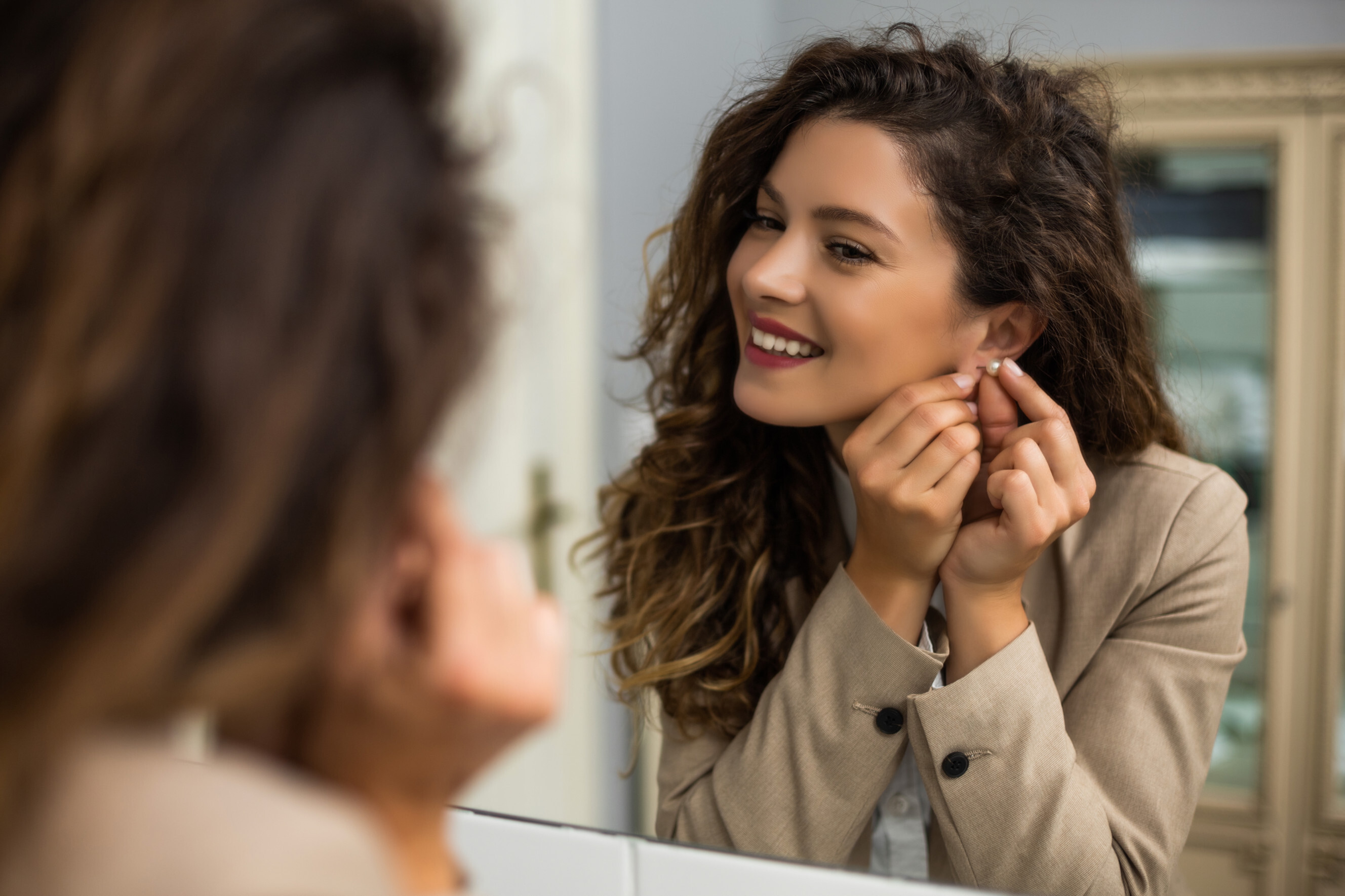
 A woman putting on earlobe earrings (Source: iStock)
The cost of getting ears pierced is mostly attributed to the procedure. Here’s a quick guide to the most popular options and the average cost for each type.
Earlobe piercing (Single or pair)
If you’re looking for the least intimidating place to start, it’s hard to beat the earlobe piercing. Done through the soft, fleshy lower part of the ear, this area tends to be less sensitive than many cartilage placements. In fact, most people rate the pain at around 2 out of 10, and healing usually takes just 5 to 7 weeks.
A simple implant-grade titanium stud is usually the best choice for a first earlobe piercing. It’s comfortable to wear, easy to clean, and suitable for most skin types. Once you’re ready to build on the look, many piercing shops also offer upper and stacked lobe placements for a more curated ear style.
Cartilage piercing
Cartilage piercings are performed through the firmer tissue found in the upper ear. Because cartilage has a more limited blood supply, healing can be slower and more prone to irritation. You may also feel more pressure during the piercing and some throbbing afterward. A qualified body piercing expert will typically recommend a flat-back stud or a properly fitted barbell, as these jewelry styles provide the stability needed for smoother healing.
Healing can take several months, depending on the placement and your body’s response. During this time, avoid switching to heavy jewelry or low-quality hoops, as they can place pressure on the piercing and increase the risk of irritation bumps. It’s also best to avoid sleeping on the pierced ear until the area has had time to settle.
Helix piercing
Placed along the outer upper rim of the ear, the helix is often the first cartilage piercing people get after their lobe. Its versatile placement makes it suitable for everything from a single stud to a curated stack of multiple piercings. Pain is typically manageable for this type and healing can take 6 months to a year.
Forward helix piercing
Tucked into the upper front cartilage of the ear, the forward helix is proof that a tiny piercing can still bring a lot of personality. With this piercing, you'll be looking at a healing time of three to nine months. Because the space is pretty tight, getting the placement spot-on is important for both comfort and the final look.
The best thing about this piercing is that its position gives it a little extra spotlight compared to a standard helix. Rock it with a tiny gemstone or minimalist stud for a clean look, or stack two or three together for a more curated-ear look.
Conch piercing
Can’t decide between a subtle piercing and a statement piece? The conch piercing sits in the center of the ear’s cartilage and gets its name from its resemblance to a conch shell. Given its position, expect a deep, dull ache around 4 out of 10 pain during and after the piercing. Give it 3 to 9 months, and you can style it with anything from a minimalist stud to a charm barbell.
Industrial piercing
The industrial consists of two cartilage piercings connected by a single straight barbell, making it one of the boldest ear piercings you can get. Not every ear is suited to this style, though. A reputable piercer will assess your anatomy first to make sure there’s enough space and the correct angle for the barbell to sit comfortably and heal properly.
The procedure demands accurate placement and proper jewelry sizing, which is why piercing shops’ prices for industrials often vary more than they do for other ear piercings. That added complexity also makes the experience more intense than many single-point piercings. Most people rate the pain around 6 to 7 out of 10, while healing can take anywhere from six months to a year.
Daith piercing
If you like the individuality of a face piercing but want something less conspicuous, the daith offers a similar sense of self-expression without drawing immediate attention. It sits in the innermost fold of your ear cartilage, right above the ear canal, creating a subtle look that’s largely hidden from view.
Because this type passes through one of the thicker sections of ear cartilage, your piercer will first check whether your daith ridge is pronounced enough to support the jewelry. Unfortunately, not every ear is built for it. The healing typically takes 7 months to a year with consistent aftercare.
Orbital piercing
The orbital piercing is two separate holes pierced close together, connected by a single circular ring, like a captive bead or seam ring that wraps around the tissue. Because both holes need to heal together while supporting a single piece of jewelry, placement must be to the point. The most popular spots are the earlobe, helix, and conch, and each comes with its own healing timeline.
Rook piercing
The rook piercing sits in the fold of cartilage just above the daith, tucked between the inner conch and the forward helix. It’s one of the more unusual inner-ear placements, and because it cuts through a thick fold of cartilage, not every ear shape can pull it off.
At a 6 out of 10 on the pain scale, expect a sharp initial sting that settles into a dull throb. Healing takes anywhere from 3 to 10 months, and while a hoop is the dream end goal, a 16-gauge curved barbell is the right starter piece.
Tragus piercing
The tragus piercing goes through the small, thick flap of cartilage sitting directly in front of your ear canal. It’s subtle, a little unexpected, and surprisingly versatile for stacking. Much like a second piercing cost, pricing is generally reasonable, ranging from $45 to $95, depending on your studio and jewelry choice.
As for the pain, most people rate it at around a 4 out of 10. Healing takes 6 to 12 months, and because of its position near the ear canal, you’ll want to be extra careful with earphones and hair products during that window.
What factors affect the cost of ear piercing?
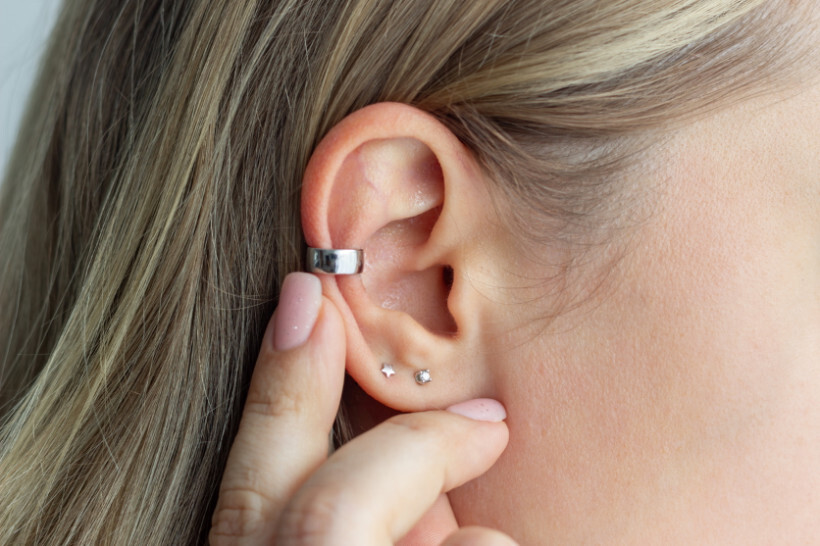 A woman touching her cartilage ear piercing (Source: iStock)
What makes one ear piercing pricier than another? Here are a few factors that influence ear piercing cost, so you can budget accordingly.
Piercing technique
The method used for piercing plays a big role in the price of ear piercing. Piercing guns are often cheaper since they’re commonly used at mall kiosks and require basic training. However, they’re less precise and can’t be fully sterilized, which could increase the risk of infection.
On the other hand, piercing needles are more expensive but are considered the safest and most professional choice. They offer a cleaner puncture, which reduces tissue damage and potential complications. The higher cost is mainly due to the need for a trained piercer to use them and the strict hygiene standards.
So, if you’re deciding between the two, remember that needles are generally safer, especially for cartilage and more intricate piercings. Paying more for the right technique is worth it if it means getting a safer experience and procedure.
Piercer’s experience
The skill level of your piercer also affects the average price of an ear piercing. A highly trained professional, often found in tattoo or piercing studios, typically charges more due to their expertise and training. Their experience means a safer procedure and personalized advice on placement and aftercare.
Plus, many piercers are trained in body modifications beyond the ear, like facial or belly piercings. Some are even tattoo artists. That’s why it’s worth researching to find a well-reviewed piercer who performs piercings. You might pay more, but the quality of work and lower risk of complications are guaranteed.
Extra or upgraded jewelry
Extra jewelry |
Estimated prices |
|---|---|
Basic surgical steel jewelry |
$15 to $35 |
Titanium jewelry |
$45 to $80 |
Gold jewelry (14k or higher) |
$75 to $160 |
Platinum jewelry |
$120 to $300 |
Custom or designer jewelry (with gems or precious stones) |
$100 to $350+ |
Planned or not, it’s worth bringing extra cash in case you decide to buy a quality pair of earrings to wear once your new piercing has healed.
Basic jewelry, like surgical steel studs, is usually included in the base cost to get ears pierced. Separately, they tend to be priced between $15 to $35 per pair. However, if you upgrade to titanium, gold, or even platinum, the price can jump from $45 to $300.
Titanium and gold are popular upgrades, especially for those with metal allergies or sensitive skin. These materials are hypoallergenic and safer for healing but come at a higher cost—typically between $45 and $160.
Custom or designer pieces, particularly those with gemstones, can add an extra luxurious touch but can also increase the final cost, sometimes up to $350 or more.
Aftercare products
When figuring out how much it costs to get your ears pierced, remember to factor in aftercare products into your budget. They’re essential for preventing infections and complications.
Sterile saline sprays usually cost between $5 and $15, and antimicrobial cleaning solutions range from $10 to $20. Both of these products help keep your piercing free from harmful bacteria and promote faster healing.
Some studios also offer complete aftercare kits with saline solution, wipes, and other accessories for $15 to $30. Piercing ointments or balms might also be recommended to soothe the area and keep it moisturized, costing around $8 to $20.
Mall retail kiosk/jewelry shop vs. piercing/tattoo studio
Knowing the average ear or body piercing cost is only half the battle. Where you get it done is the part most people don’t think about until something goes wrong. Here’s how your options actually compare:
Factor |
Piercing/Tattoo studio |
Mall/Retail kiosk |
|---|---|---|
Tool Used |
Piercing gun |
Single-use hollow needle |
Jewelry Materials |
Standard earrings, which may contain nickel |
Implant-grade titanium, niobium, or solid gold |
Sterilization |
Piercing guns cannot be fully sterilized |
Sterile, single-use needles and equipment |
Tissue Impact |
Greater tissue trauma from blunt-force piercing |
Cleaner, more precise puncture with less tissue damage |
Piercer Training |
Basic training |
Professionally trained and experienced piercers |
Hygiene Standards |
Varies by location |
Strict sanitation and infection-control protocols |
Piercing Options |
Usually limited to lobe piercings |
Full range of ear and body piercings, including cartilage |
Best For |
Budget-friendly basic lobe piercings |
All piercing types, sensitive skin, and complex placements |
For simple lobe piercings on a tight budget, a mall kiosk can get the job done. But for cartilage, complex placements, or anyone with sensitive skin, a professional studio is always the safer and smarter choice.
Piercing studio location and popularity
The location and popularity of ear piercing places can greatly affect how much you pay. Studios in upscale areas and well-known shops with strong reputations typically charge more due to higher demand and operating costs. Celebrity clientele can also drive prices higher.
On the other hand, lesser-known or independent studios, especially in smaller towns, usually charge less without necessarily compromising on quality. In Arkansas, for example, a standard earlobe piercing set can cost as little as $50, compared to $80 for a pair in Washington.
Popular piercing studios/tattoo shops |
Average costs of ear piercing |
|---|---|
Cherry Bomb |
$80 to $125 |
Studs |
$40 to $70 |
Maria Tash |
$20 to $80 |
Infinite Body Piercing |
$45 to $70 |
Shaman Modifications |
$64 to $109 |
Before booking, take a few minutes to research local studios in your area. Check piercer credentials, browse their portfolio, and read through reviews. You might find a hidden gem that delivers a top-notch experience at a fraction of the price.
How do you choose a reputable piercing studio?
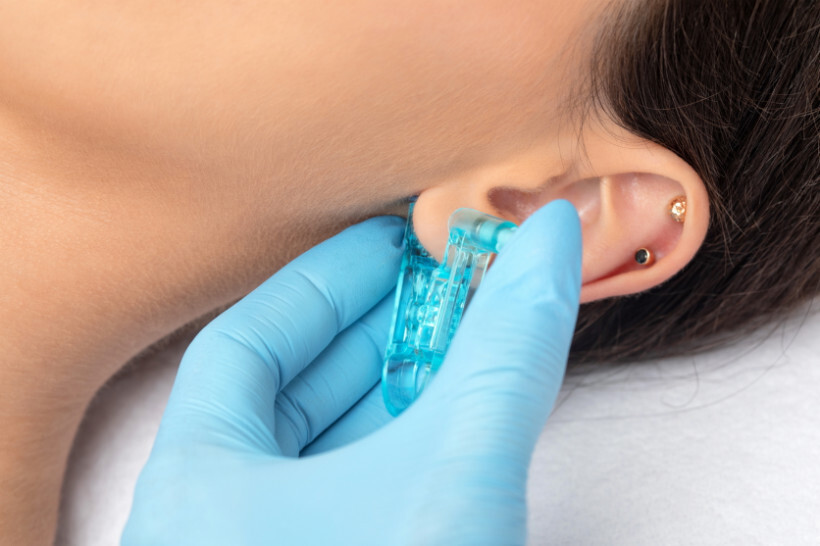 New helix ear piercing done professionally (Source: iStock)
Choosing the right piercing studio is crucial for your safety and also directly impacts how much an ear piercing costs. Unlike other services like getting your hair styled or polishing your nails, a piercing involves breaking the skin, so maintaining strict hygiene standards and professional expertise is essential.
Here’s a step-by-step guide to help you decide:
Look for cleanliness and hygiene standards. The studio should be spotless, with disposable gloves, sterile tools, and clean surfaces, and the piercer should wash their hands and change gloves between every client.
Check the piercer’s experience and qualifications. Look for certification from a body such as the Association of Professional Piercers, and don’t be shy about asking how long they’ve been piercing.
Read customer reviews and testimonials. Check Google, Yelp, and social media for consistent mentions of cleanliness, skill, and aftercare support.
Confirm they’re licensed. A legit studio displays a current business license and health department certification, and will happily answer questions about either.
Look at the jewelry on offer. Good studios use hypoallergenic materials like titanium, surgical steel, or 14k gold for fresh piercings, so steer clear of places that push cheap metals or nickel.
Avoid DIY or unprofessional piercing methods. Piercing safely takes sterile equipment and real anatomical knowledge, so a professional studio is always worth the spend over home kits or untrained “piercers.”
Tips for your ear piercing visit
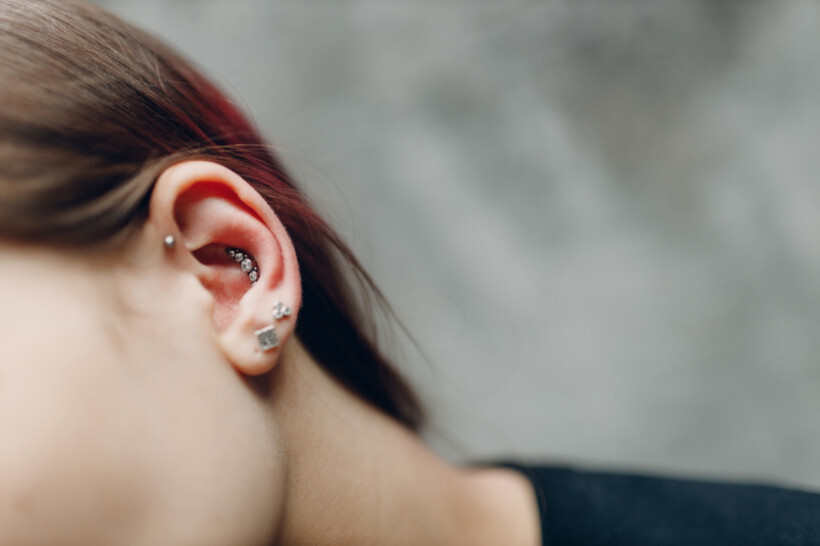 A woman with forward helix ear piercing (Source: iStock)
Ready to get that dream piercing? Before you book in, check out these tips to save some cash and make sure your visit goes smoothly
Check jewelry upgrade pricing first. Starter studs are usually basic, so confirm the cost difference upfront if you want gold or titanium.
Ask about second piercing discounts. Many studios knock off a percentage if you get two piercings done in the same session.
Bring up any metal allergies. Mentioning a nickel sensitivity early lets the piercer steer you toward safer jewelry from the start.
Tip your piercer 15-20%. Tipping is a standard etiquette in the U.S., the same as you’d tip a hairstylist or tattoo artist.
What should you know about ear piercing aftercare?
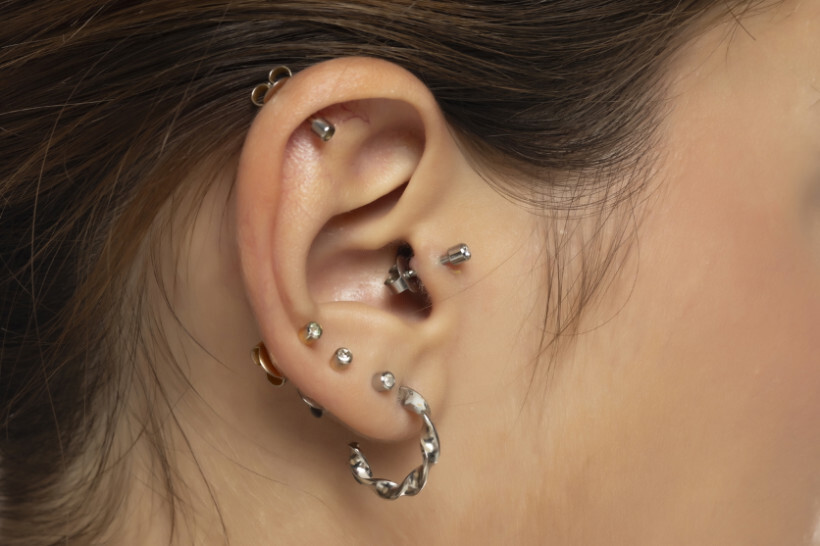 A woman with tragus ear piercings (Source: iStock)
Proper aftercare is important to avoid complications and additional medical costs. Here are some essential aftercare tips to keep in mind:
Clean your piercing twice daily. Use a sterile saline solution to reduce bacteria and promote healing.
Avoid touching or twisting the jewelry. Unwashed hands introduce germs, which can lead to infection and irritation.
Be cautious of water exposure. Avoid swimming in pools, lakes, or hot tubs until fully healed, as bacteria in water can cause infections.
Watch for signs of infection. Redness, swelling, or unusual discharge can indicate infection. Consult your piercer or a medical provider if you notice any of these symptoms.
Follow jewelry change timelines. Wait until your piercing is fully healed before changing your jewelry to avoid irritation or complications.
Use high-quality aftercare products. Invest in sterile saline sprays or antimicrobial solutions to keep your piercing clean without causing irritation.
Book a professional piercer on Airtasker
Now that you know what to expect, the only thing left to do is book. So if you’d rather skip the studio altogether, you can have a professional ear piercing specialist come straight to you. Book a local piercing professional on Airtasker and get it done safely and comfortably from your own home, on your schedule.
Learn more about our contributors
Written by Angela A.
Staff Writer
Angela Apolonio is an experienced writer with a Biology background. She writes about home tips, car upkeep, gardening hacks, and food facts, bringing a unique blend of science and practicality to her work. As a wife and a mother, she knows the value of iron-clad routines, so she's passionate about sharing what works for her with everyone else. She loves making everyday life simpler and helping readers find fresh ideas to bring more joy into their spaces.
FAQs on ear piercing
Yes, $60 is a fair price for a professional earlobe piercing, especially if it includes quality jewelry and a sterile needle procedure.
Mall kiosks are usually the cheapest and sometimes even offer free piercings with an earring purchase. Professional piercing studios typically charge $25 to $100 or more, depending on the piercing, but offer trained piercers, sterile needles, and safer, more precise procedures.
Most piercing fees include a basic surgical steel stud, which usually costs $15 to $35 on its own. Upgrading to titanium, gold, or platinum jewelry costs extra, anywhere from $45 to $300, depending on the material.
Once you know how much it is to get a piercing, set aside an extra 15–20% to tip your piercer. To be on the safe side, also bring cash since not every studio has a tipping option built into their card payment system.
The least painful ear piercing is typically the standard earlobe piercing. It goes through the soft tissue of the earlobe, which has fewer nerves, so it’s less sensitive.
Piercing with a needle is generally less painful and safer than using a piercing gun. Needles create a cleaner puncture with less tissue trauma compared to the blunt force of a piercing gun.
Not necessarily, mobile piercers often charge similarly to studio rates since they still need professional-grade tools and sterile equipment, sometimes with an added convenience fee for travel. The trade-off is comfort and flexibility, since you get pierced safely from home on your own schedule.
Generally yes. Studios in larger cities often charge more because of higher rent and demand, but service fees for the piercing itself are usually similar. Most price differences come from jewelry quality and the studio’s reputation.
Industrial piercings cost the most, ranging from $75 to $115, since the placement needs exact positioning and proper barbell sizing at two cartilage points.
Find ear piercing specialists, fast
Post a task
Related price guides
How much do tattoos cost in the US?
Read more
Related articles