7 Kitchen splashback ideas to make your kitchen pop
Fresh looks and clever design ideas to transform your kitchen wall
Last Updated on
Key Takeaways
Choose a splashback that complements your kitchen while standing up to heat, moisture, grease, and everyday mess.
Glass, porcelain, natural stone, stainless steel, painted panels, and patterned tiles can each create a distinct look while offering different levels of maintenance and durability.
Bring in an experienced tiler for accurate measurements, clean cuts, even grout lines, and a properly finished splashback, particularly when working around power points, corners, or other tricky areas.
The splashback might be one of the smallest parts of your kitchen, but it can have a surprisingly big impact on the finished space. From classic tiles to sleek glass and stone-look finishes, there are plenty of kitchen splashback ideas to make yours work with your style, cooking habits, and budget.
The best kitchen splashback ideas Australia has to offer aren’t necessarily the most expensive. With the right material, colour, pattern, and layout, you can create a polished look at almost any price point.
What does a great kitchen splashback look like?
A great kitchen splashback has two jobs, and neither should be treated as an afterthought:
It protects your kitchen from everyday mess
Behind a cooktop or sink, walls cop plenty of abuse: oil can spit, sauces can splatter, steam can settle, and water can find its way into places you’d rather keep dry. A splashback provides a moisture- and heat-resistant surface that’s easier to wipe clean than a painted wall. This helps protect the underlying surface from stains, grease, and general wear.
It makes a style statement
Once you’ve covered the practical side, a splashback also gives you a surprisingly generous canvas to express your kitchen’s personality. It can introduce colour to an otherwise neutral scheme, bring texture to flat cabinetry, or provide a pattern that becomes the room’s focal point.
How do I choose the right splashback for my kitchen?
With so many materials and finishes to choose from, it helps to see what’s actually out there before deciding. Below are a few of the popular kitchen splashback ideas:
1. Glass splashback
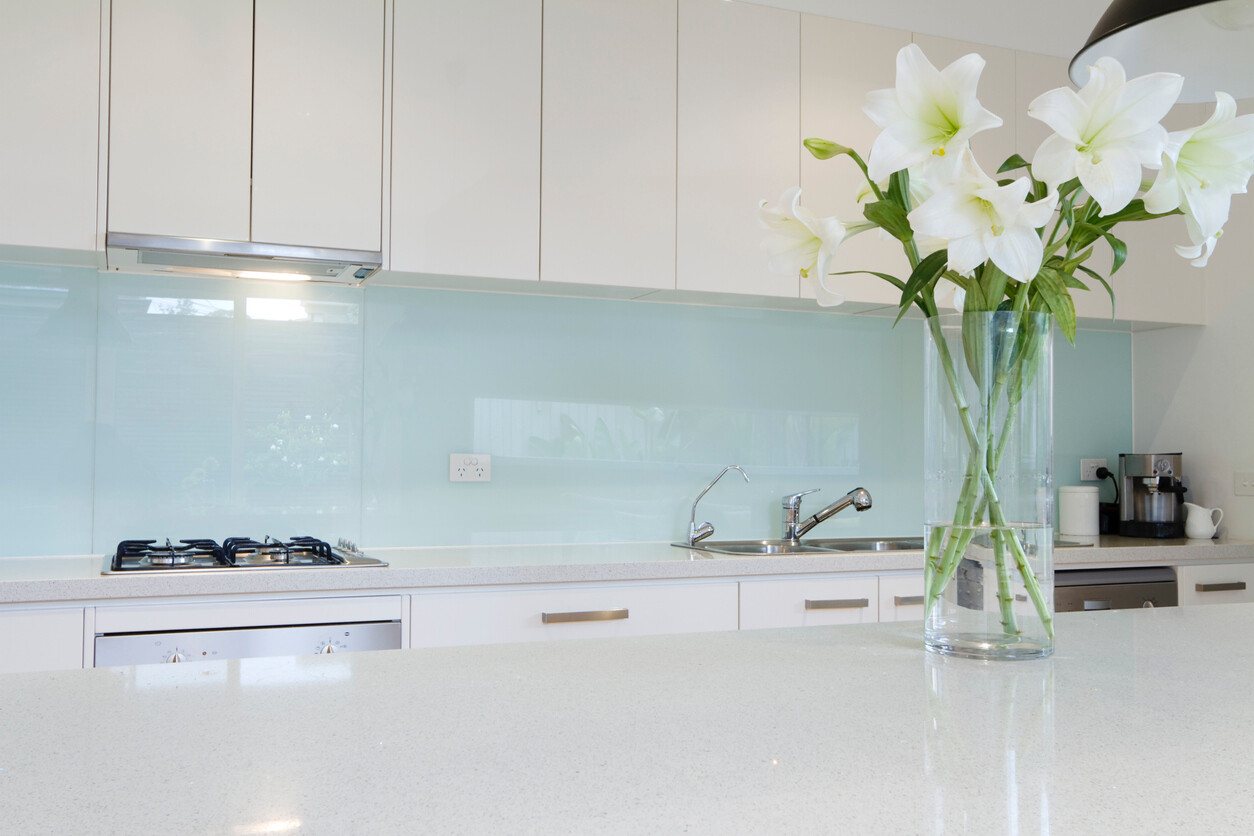 Pale blue glass panel spanning a white kitchen splashback (Source: iStock)
A glass splashback gives a kitchen a smooth, contemporary backdrop without the grout lines you get with a tiled splashback. It’s typically made from toughened glass and can be customised in a wide range of colours, making it particularly useful when you want to introduce a strong shade without covering the wall in a busy pattern. The uninterrupted surface also makes wiping away cooking splatters refreshingly straightforward.
One of the biggest advantages is how easily glass can visually open up a kitchen. A pale or reflective finish can bounce light around a smaller space, while a deeper colour can create a sophisticated contrast against light cabinetry.
2. Subway tile
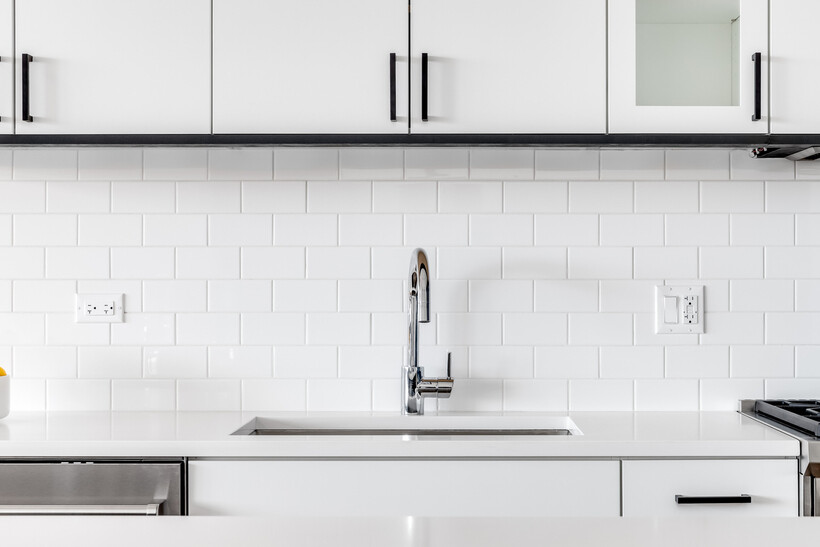 Monochrome kitchen featuring a white subway tile splashback (Source: iStock)
Subway tiles have earned their staying power because they can look different depending on how you lay and finish them. The familiar rectangular tile works beautifully as a classic Hampton kitchen splashback, but changing the laying pattern, tile size, or grout colour can give it an entirely different personality.
Splashback ideas for white kitchens often include white subway tiles with white grout, creating a clean, understated backdrop. On the other hand, contrasting grout makes the individual tiles much more noticeable.
They’re also a practical choice if you want plenty of flexibility without moving into premium materials. A vertical stack, brick bond, or herringbone pattern can each change the visual rhythm of the wall.
More tiles mean more grout lines, though, so consider how much cleaning you’re comfortable with before choosing a small format. For more inspiration, you can explore common kitchen tile ideas for ways to work tile shape and laying patterns into your broader kitchen design.
3. Mirrored splashback
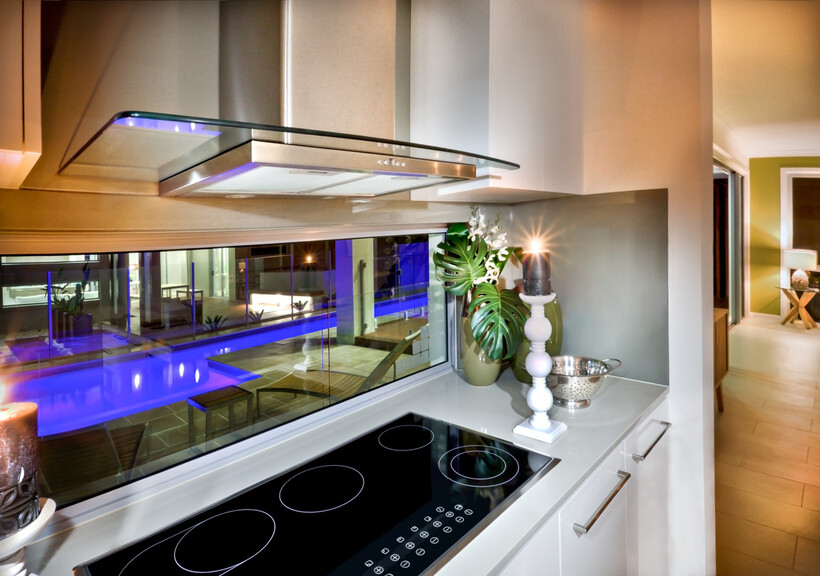 Mirrored kitchen splashback doubling the visual space (Source: iStock)
A mirrored splashback is a clever option when your main goal is to make the kitchen feel brighter and more spacious. Instead of simply reflecting light, it visually extends the room by reflecting cabinetry, windows, and other surfaces back into the space. That can be especially effective in compact kitchens, apartments, or rooms that don’t get much natural light.
There’s also a decorative advantage: a mirror can bring a touch of polish without relying on an elaborate tile pattern. Depending on the rest of the kitchen, you could use it to complement timber cabinetry, contemporary joinery, or a more luxurious scheme. Tinted and antique-style mirror finishes can also soften the effect if a crisp, highly reflective surface feels too stark.
Keep in mind that fingerprints, grease, and cooking splatters can be more noticeable on reflective surfaces. Professional glazing can help ensure the panel is accurately measured, cut, and installed around power points and fixtures.
4. Marble-look porcelain tile
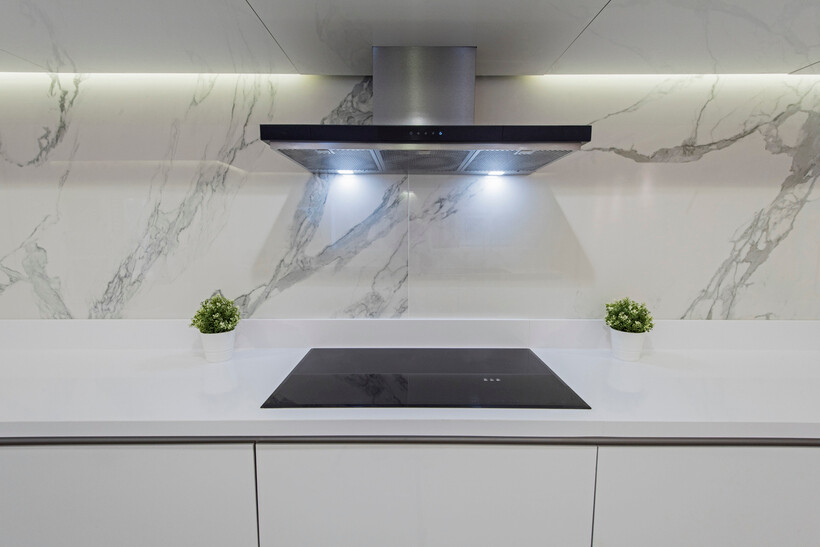 Dramatic veined marble-look splashback in a modern kitchen (Source: iStock)
If you love the veining of marble but want a more practical tile-based option, marble-look porcelain is worth putting on your shortlist. Modern porcelain tiles can reproduce the movement and tonal variation associated with natural stone, giving you an elevated finish without requiring genuine marble across the entire splashback.
This option works particularly well when you want the splashback to connect visually with a stone benchtop. Choose a tile whose veining complements the benchtop and cabinetry rather than introducing another competing pattern. Large-format tiles can also create a more continuous appearance because they use fewer grout lines.
It can help to understand the difference between ceramic and porcelain tiles when comparing products, and a professional tiler can advise on tile size, cuts, and the most suitable laying pattern for your wall.
5. Stainless steel splashback
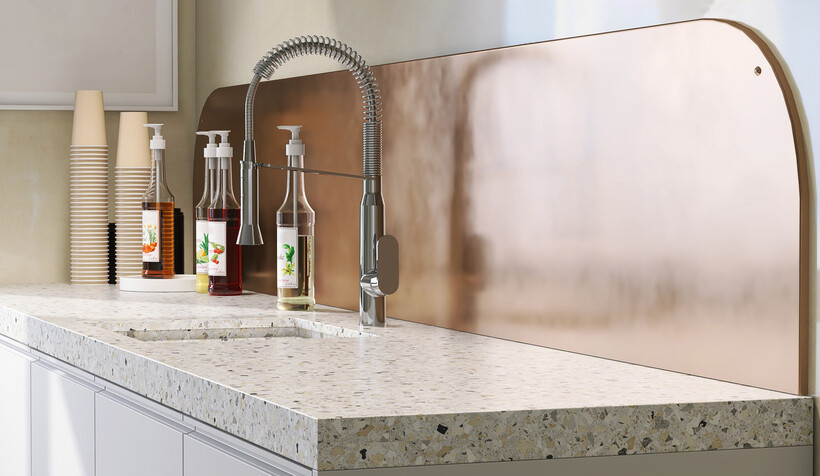 Copper-toned stainless steel panel behind a kitchen sink (Source: iStock)
Stainless steel brings a distinctly practical character to a kitchen splashback. Its hard-wearing, wipe-clean surface makes it a natural fit behind cooking areas, while its metallic appearance can give everything from a modern kitchen to an industrial-style space a professional edge.
Stainless steel doesn’t need to compete for attention; that’s why it works. Its subtle sheen can sit comfortably alongside timber, white cabinetry, dark joinery, or other metallic kitchen details. You can also use a stainless steel panel to create a deliberate connection between the splashback and appliances or tapware.
The finish does require a little thought. Fingerprints, water marks, and fine scratches can become visible depending on the surface finish and lighting, so consider how the panel will look under your kitchen’s particular conditions.
6. Mosaic and patterned tile
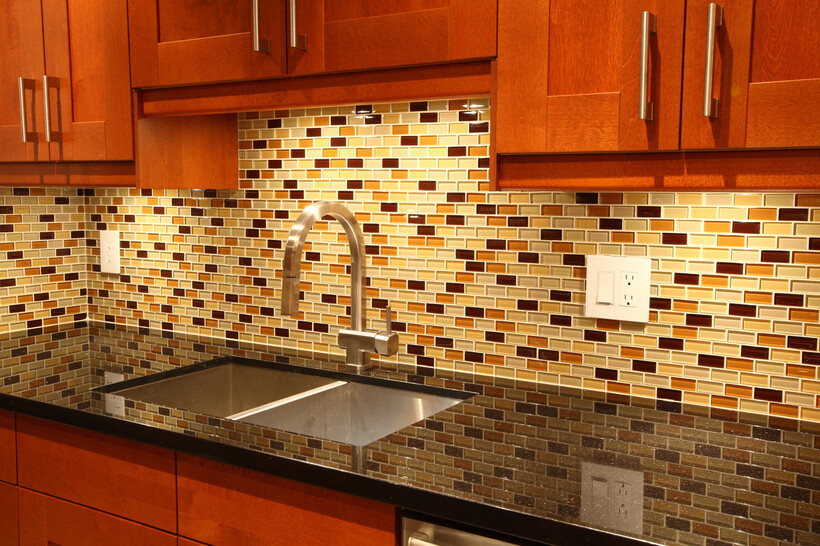 Warm-toned mosaic tile splashback in a timber kitchen (Source: iStock)
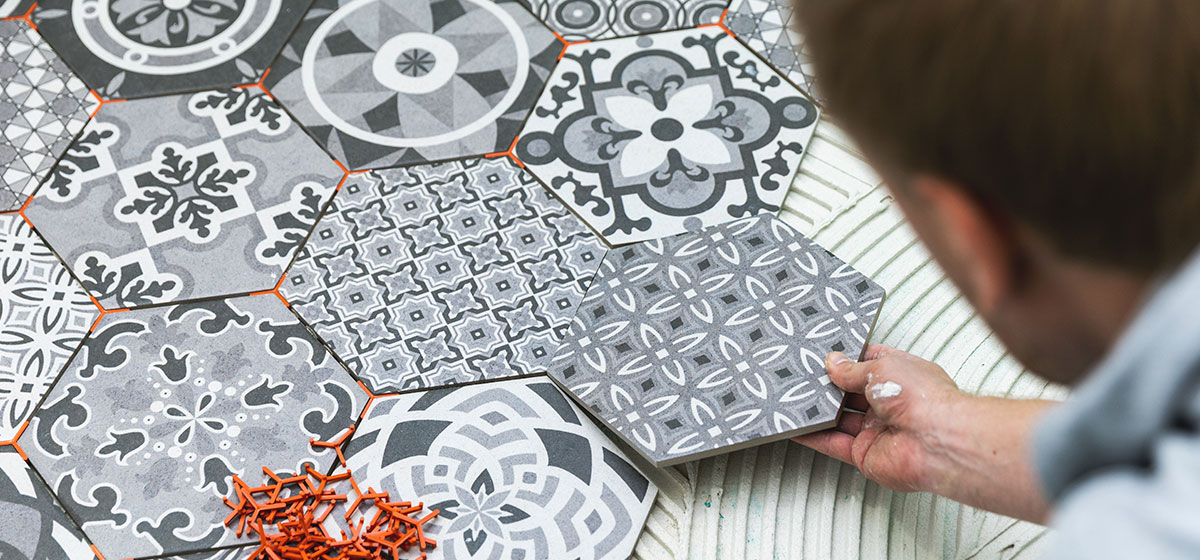
Mosaics, made from many smaller pieces, can introduce intricate shapes and tonal variation that larger tiles simply can’t replicate. Glass, ceramic, and porcelain can all be used to create different effects. Meanwhile, patterned encaustic-style tiles work a little differently, using decorative motifs to turn an otherwise ordinary wall into a focal point.
Both work best behind the cooktop, where a smaller area gives you room to be adventurous without overwhelming the rest of the kitchen. Both also call for restraint elsewhere in the room, so let the splashback do the talking and keep cabinetry, benchtops, and flooring relatively simple.
The trade-off with mosaics is more grout lines. More joints mean more areas where grease and cooking residue can accumulate, so cleaning requirements should influence your decision. Installation can also become more intricate when you’re working with tiny tiles, detailed borders, or unusual shapes.
7. Painted or colour-panelled splashback
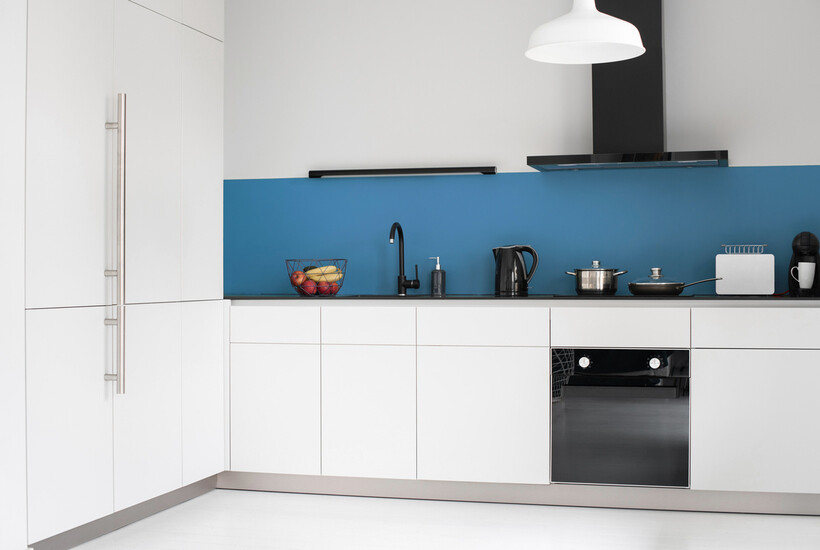 Bold blue colour panel behind white cabinetry (Source: iStock)
A painted or colour-panelled splashback can be one of the simplest ways to introduce colour without committing to a heavily tiled wall. Depending on the material and location, a suitable panel can create a smooth, uninterrupted surface that’s visually similar to glass. A carefully selected paint system may also work in areas where the product is specifically designed for the conditions.
The appeal is obvious if you’re refreshing rather than completely rebuilding the kitchen. A strong colour can give plain cabinetry new life, while a soft neutral can tie together timber, stone, and existing finishes. Before reaching for ordinary wall paint, however, check that the chosen product and substrate are appropriate for a kitchen splashback, particularly around heat, moisture, and cleaning.
If you’re already repainting the room, understand how different finishes can affect the look. A professional painter can help with preparation, accurate fitting, and finishing for custom panels or tricky walls.
Ready to update your splashback?
The right kitchen splashback should do more than fill the wall behind your benchtop. It needs to suit how you cook, how much cleaning you’re prepared to do, and the look you’re after, while making sense alongside your existing cabinetry and benchtops.
Whether your favourite kitchen splashback ideas involve classic tiles, a sleek glass panel, or something more decorative, choose a finish you’ll be happy to live with every day and one that holds up to the wear your kitchen actually puts it through.
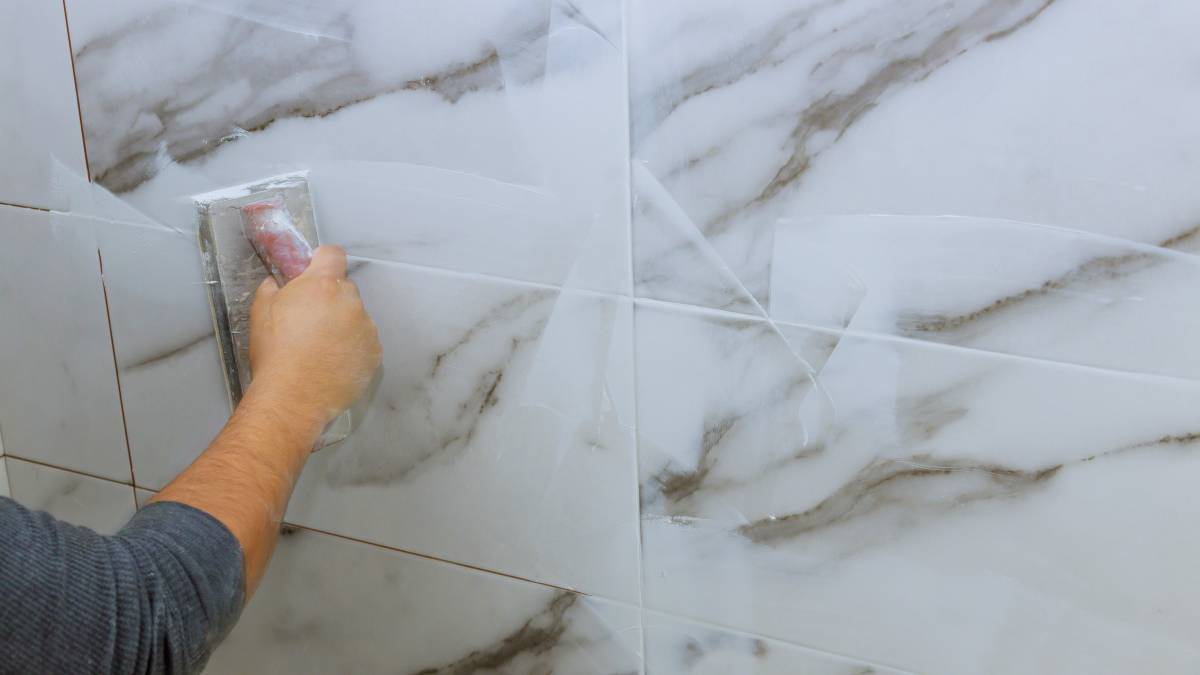
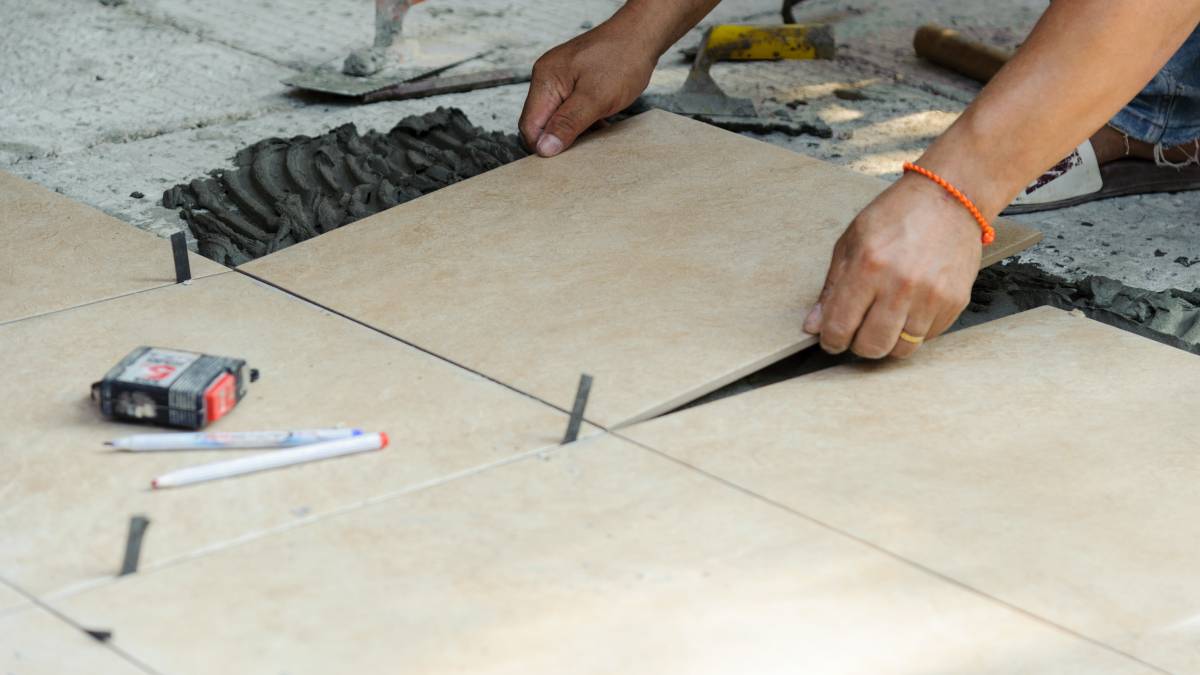
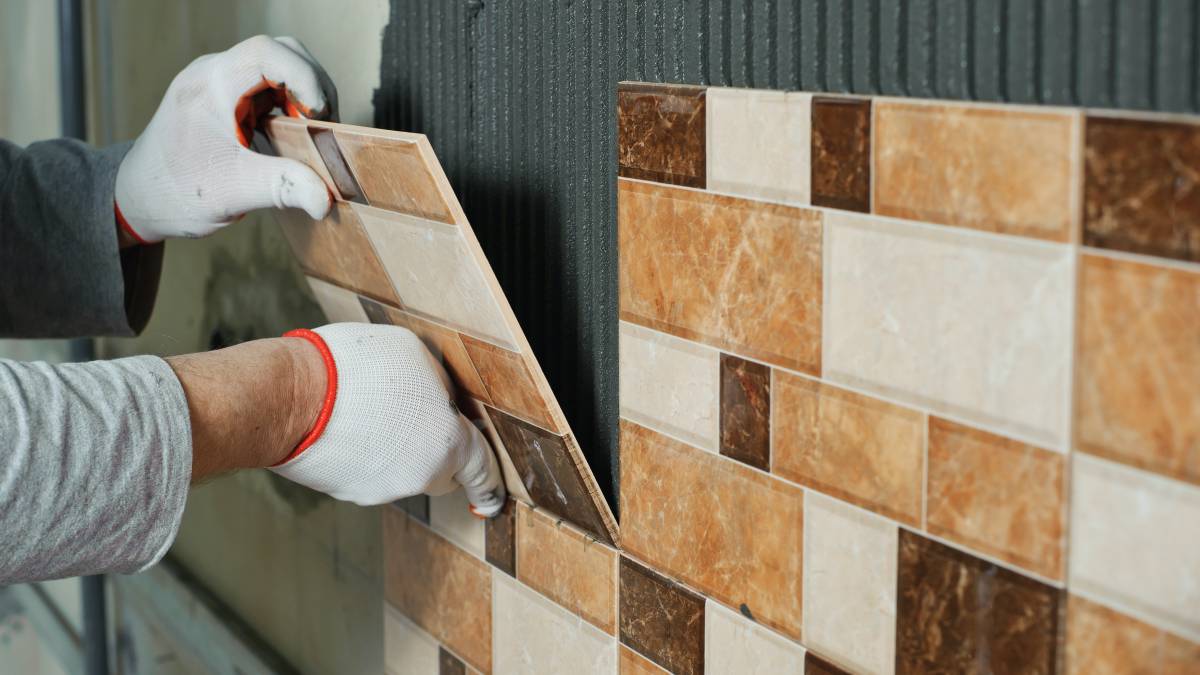
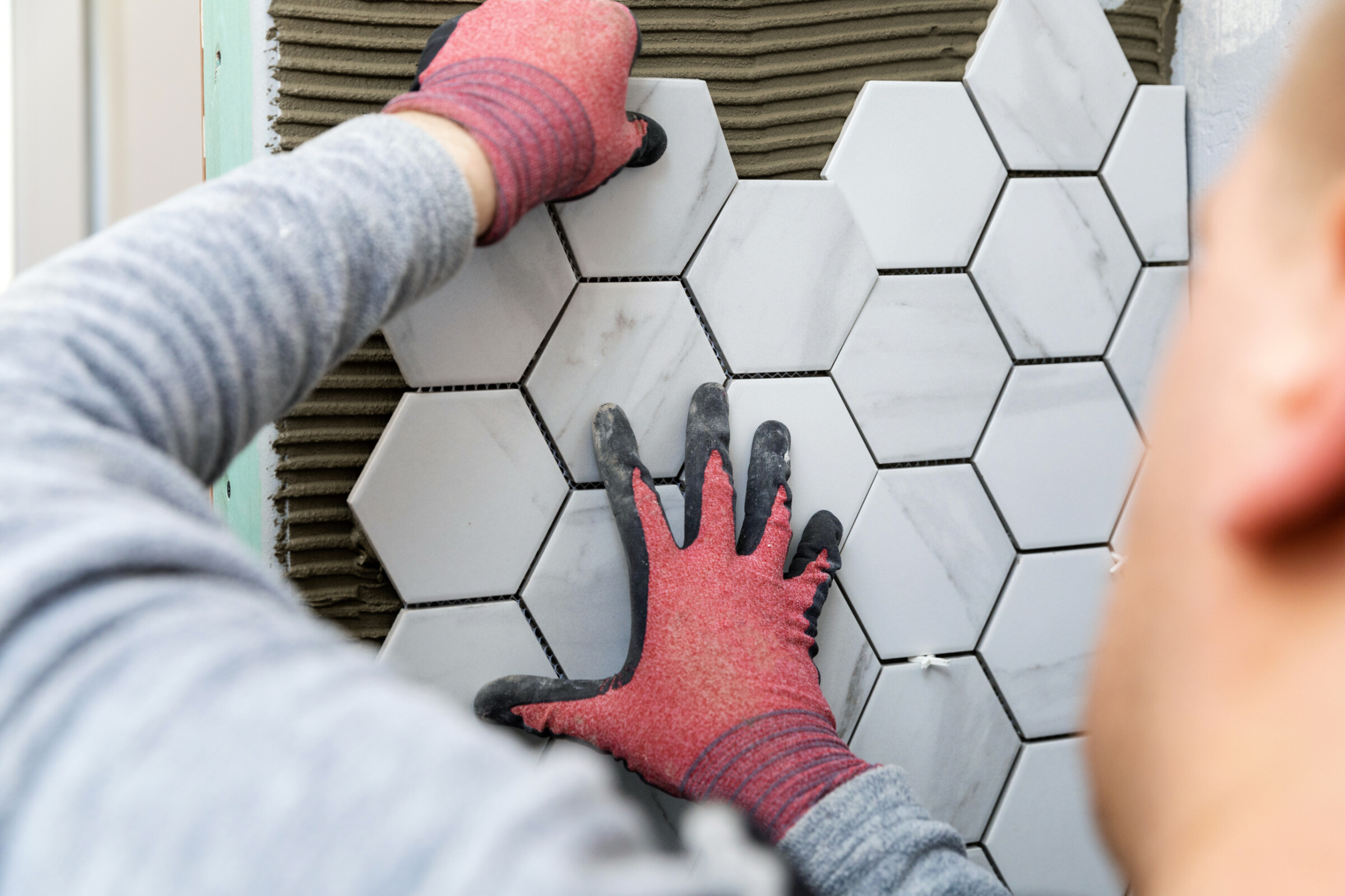
And if you’ve chosen to go with a tiled splashback, turn your kitchen splashback ideas into reality with an expert on Airtasker. Find a skilled tiler to install it, get the details right, and achieve a quality finish without having to tackle tricky cuts, uneven walls, or fiddly installations yourself.
FAQs on kitchen splashbacks
The best splashback is one that suits your cooking habits, budget, and overall kitchen design while providing reliable protection from heat, moisture, and spills. Therefore, the right choice depends on the balance you want between maintenance, appearance, and cost.
Glass is a popular choice for its smooth, easy-to-clean surface, while kitchen splashback tiles offer greater flexibility with colours, patterns, and laying styles. Stainless steel, porcelain, and stone-look surfaces are also practical alternatives. So consider the location, heat exposure, and maintenance requirements before deciding.
Porcelain is generally the more durable option, with lower water absorption and a hard-wearing surface that suits busy kitchens. Ceramic tiles can still make an excellent splashback and are often easier to cut and more budget-friendly, making either suitable depending on your priorities and the specific product.
White, soft neutrals, grey, and earthy tones remain versatile choices, while green, blue, black, and other bold colours can create a stronger focal point. Consider your cabinetry, benchtop, and natural light first so the colour complements the room rather than competing with it.
Yes, experienced DIYers can install some tiled splashbacks, particularly on a straightforward wall with limited cuts and no complicated fixtures. However, glass panels, waterproofing, power points, and areas around sinks or cooktops can require specialist skills, so a kitchen splashback tiler or professional handyman service may be the safer choice.
Find tilers, fast
Find a tiler