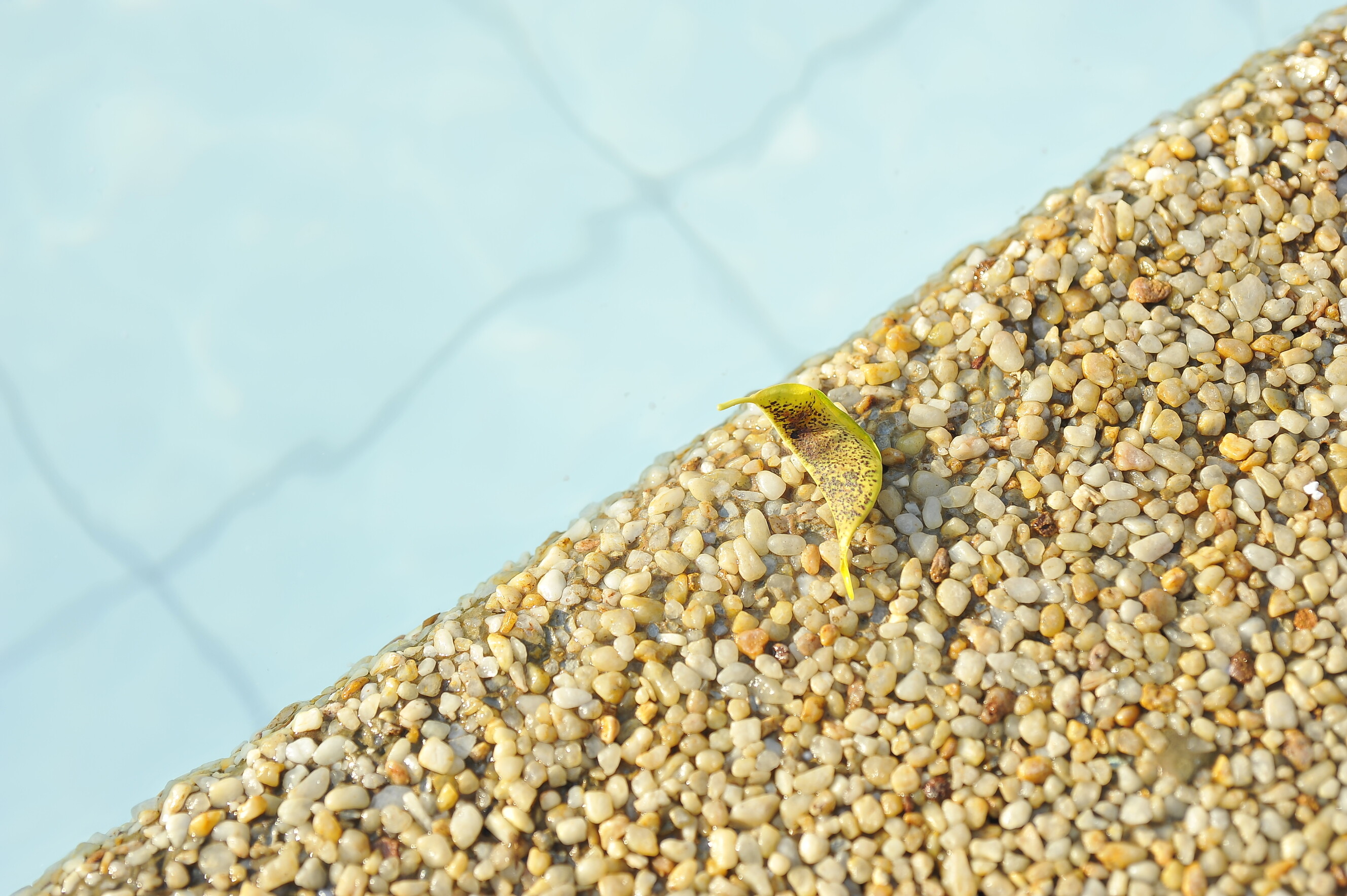
Can you tile over pebblecrete?
What to know before covering your pebblecrete pool surround or driveway
Last Updated on
Key Takeaways
Ensure the pebblecrete is sound, clean, stable, and suitably prepared before installing tiles.
Select tiles designed for the conditions, paying particular attention to slip resistance, water exposure, and durability in outdoor or pool areas.
Consider whether tiling or pebblecrete resurfacing better suits your existing surface, desired appearance, and renovation goals.
Get a qualified plumber to handle any plumbing, drainage, or water-service work affected by the renovation.
Can you tile over pebblecrete for your outdoor renovation? The answer is that it’s possible, and it’s often a good option when the surface starts to look tired or needs a refresh. However, it’s not always a straightforward task.
Before you decide, let’s weigh the pros and cons. Pebblecrete is a popular and durable outdoor surface, but tiling over it comes with some considerations. In this article, we’ll explore the advantages and disadvantages so that you can make a wise decision for your home.
Pros of tiling over pebblecrete
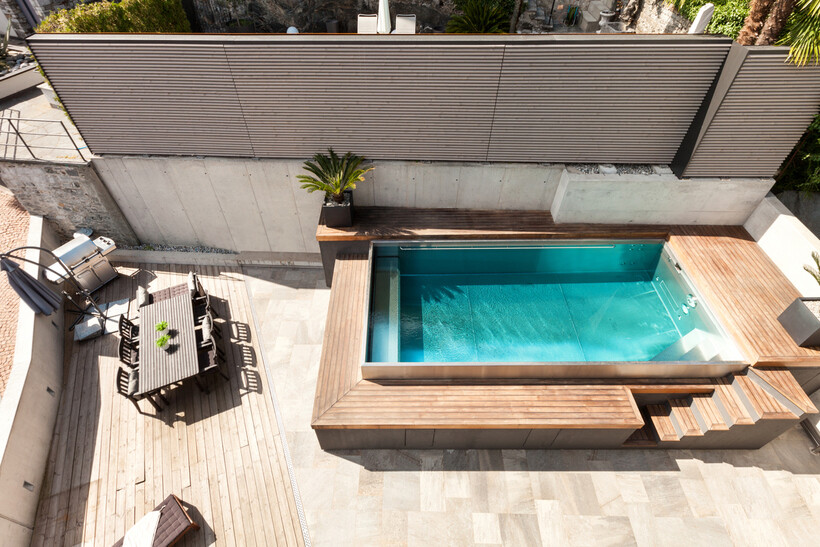 Tiled paving and timber decking around a pool (Source: iStock)
If your pebblecrete surface is looking dated but the underlying layer is still sound, tiling can give the area an entirely different feel without necessarily starting from scratch. It can be an appealing option for a broader pool renovation, but the finish you choose and the condition of the existing surface matter just as much as the look. Here are the pros:
1. Improved aesthetics
Tiling gives you considerably more choice over the finished appearance of your outdoor space. Depending on the setting, you can select from different colours, formats, textures, and patterns to create anything from a clean, contemporary look to one that complements an established garden. Porcelain tiles, for example, are known for their low water absorption and resistance to staining and scratching.
It’s also worth being realistic about cleaning: a tiled surface may be relatively straightforward to clean, but the grout lines still need care and can discolour or accumulate grime over time. So rather than assuming they’re maintenance-free, think of tiles as a different maintenance routine.
2. More durable surface
The right outdoor tile can provide a hard-wearing finished surface, particularly in areas exposed to regular foot traffic. Since porcelain is dense and has low water absorption, its resistance to stains and scratches can make it a practical choice for busy areas.
However, durability is not simply a matter of choosing the hardest-looking tile. For a pool surround or another area that regularly becomes wet, the tile also needs an appropriate slip-resistant rating and to be installed on a suitable, stable layer.
New South Wales (NSW) Government technical guidance, for example, specifies slip-resistance requirements for tiles used in wet areas and external locations.
3. Easier to maintain
Tiles can be relatively easy to clean, particularly when the surface is properly installed and the selected item is appropriate for the location. Routine care may involve sweeping, washing, and dealing with spills or stains before they become difficult to remove.
The catch is that the tiles themselves are only part of the finished surface. Grout joints, movement joints, and drainage still need attention. Tiling can simplify some aspects of upkeep, but it won’t eliminate maintenance altogether.
Cons of tiling over pebblecrete
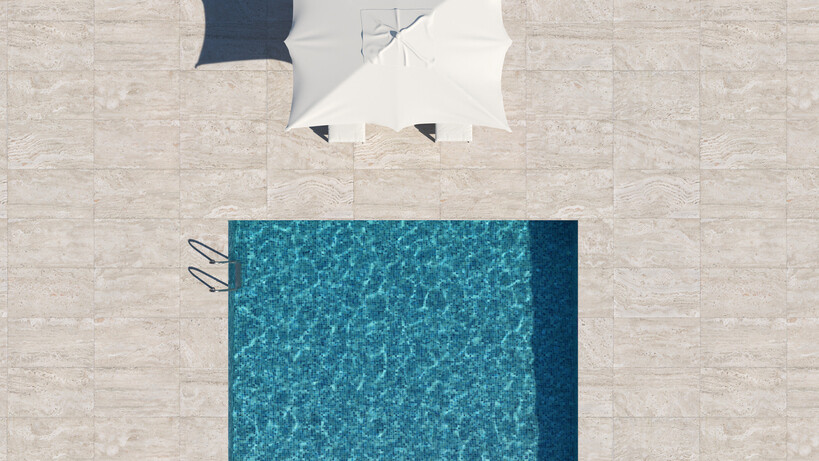 A tiled pool surround seen from above (Source: iStock)
The attraction of a fresh tiled finish is easy to understand, but there’s more to the decision than choosing a tile you love. Existing pebblecrete must provide a suitable foundation, and the installation must account for water, movement, levels, and site conditions. Here are a few things to consider:
1. Higher cost
Tiling over pebblecrete can cost more than simply repairing or retaining the existing finish because you’re paying for the tiles, preparation materials, adhesive, grout, and installation. The final price can vary substantially according to the area, tile selected, condition of the substrate, and the amount of preparation required.
Porcelain tiling cost averages at about $77 to $270 per square metre, although a pebblecrete project may involve additional preparation and therefore shouldn’t be treated as a straightforward tiling job. Pebblecrete installation, on the other hand, costs between $90 and $150.
2. Extra preparation
This is one of the biggest considerations when tiling over pebblecrete. A tiler cannot simply cover an uneven, loose, or contaminated surface and expect the finished tiles to remain stable.
The existing pebblecrete should first be assessed for soundness, cleanliness, cracks, loose material, surface irregularities, and moisture. Depending on its condition, preparation could involve cleaning, grinding, removing unstable sections, repairing defects, and creating a sufficiently even substrate before the tiling system is installed.
This is particularly important because tiling doesn’t correct an underlying structural problem. If the concrete base is moving or deteriorating, covering it with tiles can simply hide the problem until the new finish begins to fail.
3. Risk of moisture build-up
The original claim that tiling over pebblecrete will automatically cause moisture to build up is too broad. Pebblecrete is a concrete-based finish, and its moisture behaviour depends on the particular construction. Additionally, the suitability of a tiled system depends on the substrate, drainage, installation method, and location.
For pool surrounds, NSW guidance places importance on water-impervious, non-slip surfaces and grading water away from the pool, while the National Construction Code (NCC) also requires adequate swimming-pool drainage to prevent moisture-related damage and pooling.
That means you shouldn’t automatically add a waterproofing membrane simply because you’re tiling over pebblecrete. Instead, have professional waterproofing contractors assess whether waterproofing or another moisture-management system is required for your specific installation.
Where waterproofing is required, a professional should carry it out using an appropriate system and in line with the applicable Australian requirements.
Tiling vs resurfacing pebblecrete: Which is right for you?
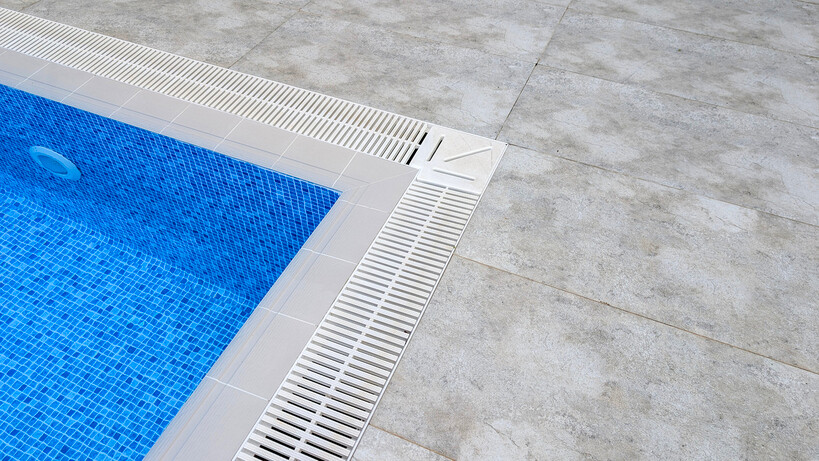 Large-format tiles with a linear drain at the pool edge (Source: iStock)
The simplest way to think about the choice is that pebblecrete resurfacing renews the existing style of finish, while tiling introduces a completely different surface over the prepared substrate.
Resurfacing can therefore make sense when you like the natural character of pebblecrete, but the existing finish has become worn, stained, rough or dated. A specialist can assess whether the underlying surface is suitable for resurfacing or whether damaged sections need to be repaired or removed first.
Tiling is more suited to homeowners who want a substantial visual change and prefer the appearance and characteristics of a tiled finish. It also introduces tile and grout joints and places greater emphasis on getting the substrate and installation right.
For either option, the condition of the existing concrete matters: resurfacing or tiling over a failing base is unlikely to solve the underlying problem.
If you’re comparing pebblecrete pool resurfacing cost with the cost of tiling, don’t compare the finishes alone. Ask what preparation, repairs, removal, waterproofing, or drainage work is included in each quote. And remember that resurfacing the inside of a pool is a different job from resurfacing a pebblecrete pool surround, so make sure you’re comparing like for like.
How to choose a professional to tile over your pebblecrete
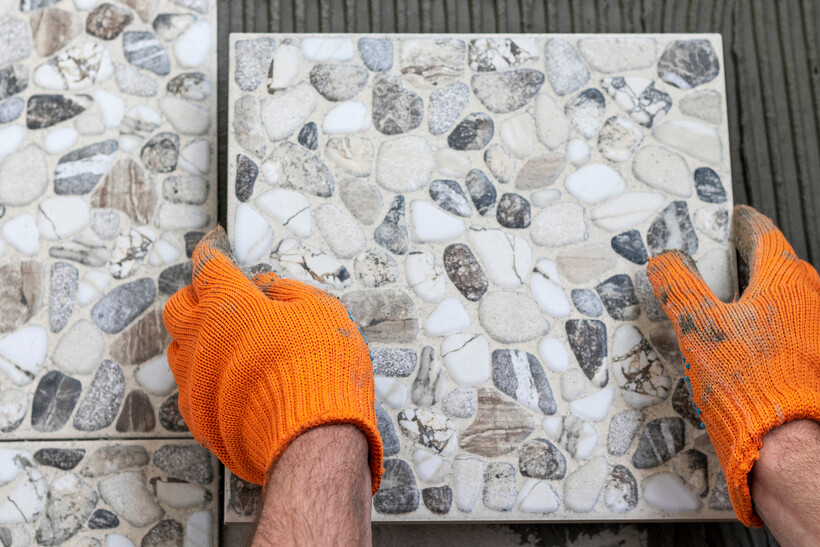 A tiler handling pebble-finish outdoor tiles (Source: iStock)
Before choosing someone, ask questions that reveal how they intend to approach the existing pebblecrete rather than focusing solely on the price per square metre. A good professional should be able to explain what they will do if they find cracks, loose areas, uneven sections, or moisture issues before the tiles go down.
Here’s what to look for when choosing a tiler for this job:
Experience with existing concrete surfaces: Ask whether they have tiled over pebblecrete, exposed aggregate, or similarly textured concrete before.
A proper site inspection: Be wary of anyone who quotes a final price without inspecting the existing surface and assessing its condition.
A clear preparation plan: Ask how they will clean, level, repair, or mechanically prepare the pebblecrete before applying the tile system.
Suitable outdoor or pool-area tiles: Confirm that the proposed tiles are appropriate for their intended location, rather than choosing them solely on appearance.
Slip resistance: For a pool surround or another area likely to become wet, ask what slip-resistance rating the proposed tile has and why it’s appropriate for the application.
Adhesive and grout compatibility: Ask which adhesive and grout system will be used and whether the manufacturer recommends it for the current conditions.
Movement and expansion: Ask how the installer will accommodate movement in the underlying concrete and where movement joints will be required.
Moisture management: Ask whether waterproofing is actually required for your particular area, and, if so, which system will be used and who is responsible for installing it.
Drainage: Make sure the finished surface retains proper falls and doesn’t create areas where water can pool.
Relevant licence and insurance: Check what licensing and insurance requirements apply to the work in your state or territory, and ask the contractor to provide evidence where applicable.
Skip the DIY trial and error
Give your pool area the makeover it deserves, but don’t rush into covering an existing pebblecrete surface without checking whether it’s ready for tiling. The right preparation can make all the difference, turning a potentially complicated project into a fresh finish that complements the rest of your outdoor space.
Skip the DIY trial and error and book a professional tiler in your area. Choose someone experienced in working with textured surfaces who has the tools to create a suitable, even base, giving your tile-over-pebblecrete project a better chance of delivering a lasting result.
Frequently asked questions
Yes, you can paint pebblecrete with a suitable coating system, provided the surface is sound, clean, and properly prepared. However, paint is a different finish from pebblecrete resurfacing or tiling, and the coating must be appropriate for the area’s exposure and intended use.
To tile over concrete, first make sure the slab is sound, clean, dry, and sufficiently level, then repair defects and prepare the surface according to the tile and adhesive manufacturer’s requirements. Lay the tiles with a compatible adhesive, then grout and install appropriate movement joints. Then meet the applicable waterproofing requirements under the NCC and AS 3740.
There’s no fixed equivalent cost for pebblecrete pool resurfacing to tiling, as the price depends on the area, tile, labour, and the extent of preparation the existing pebblecrete needs. As a result, tiling over pebblecrete can cost more than standard tiling on a prepared concrete surface, particularly if levelling, repairs, or removal of loose material is required.
Yes, pebblecrete generally costs more than a basic finished concrete surface because it adds a decorative aggregate finish and additional installation work. However, the actual price varies with the aggregate selected, surface area, site conditions, and installation method, so it’s best to compare quotes for the same specification rather than treating pebblecrete as having one standard price.
Find tilers, fast
Find a tiler