- Home/
- Guides/
- Electricians/
- How to Use Your Switchboard
The complete home switchboard guide
Learn to troubleshoot power cuts and reset tripped circuit breakers safely
Published on

Written by Andrea H.
Staff Writer
Read more about our contributor
Key Takeaways
Your switchboard distributes electricity to every light, power point, and appliance in your home. It houses circuit breakers that cut power during an overload and safety switches that protect against electric shock.
If a circuit breaker trips, switch it to fully OFF, then back ON. Test your safety switches regularly to make sure they’re working properly. If you notice a burning smell, buzzing sounds, or other signs of fault, contact a licensed electrician immediately.
Knowing how to use a switchboard is part of being a responsible homeowner. While electrical work should always be left to licensed professionals, every homeowner must know how to safely operate a switchboard during a power outage or when a circuit breaker trips.
This guide explains the basics of using a switchboard, from identifying its key components to handling common electrical issues.
What is a switchboard?
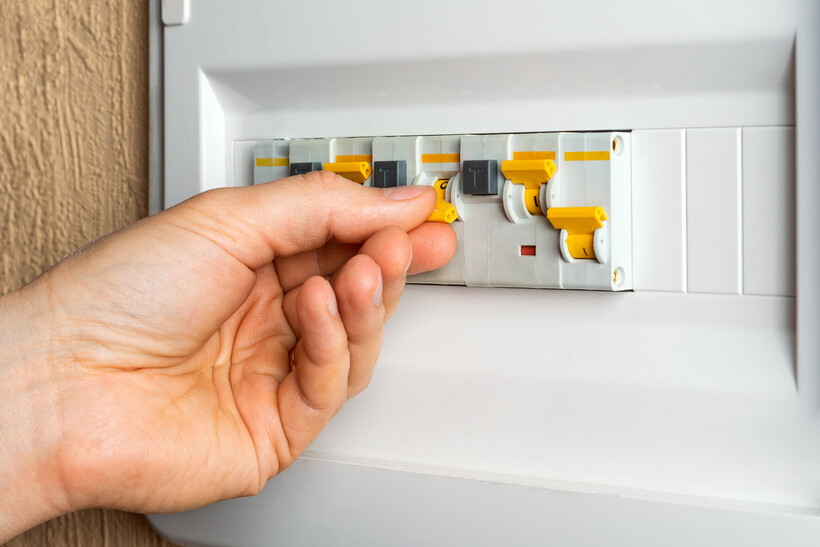 Switching on an RCD in a residential switchboard panel (Source: iStock)
An electrical switchboard is the central hub for controlling and distributing electricity throughout your home. It receives power from the electricity grid and distributes it into circuits that supply your lights, power points, and appliances.
Most Australian homes have a single main switchboard, although larger properties may also have one or more sub-boards. Any electrical installation or replacement work involving a switchboard must comply with the AS/NZS 3000 Wiring Rules.
What does a switchboard do?
A house switchboard divides the power supply into separate circuits for different rooms or appliances, helping balance electrical demand. That’s why installing a new appliance often involves switchboard work. For example, a new electric oven may need a dedicated circuit.
The switchboard also contains circuit breakers or fuses that help protect your home’s electrical system by automatically cutting power when a problem occurs. There’s also the main switch that lets you turn off electricity in the entire property during maintenance or emergencies.
How to safely operate your switchboard
You may occasionally need to operate your switchboard, such as when resetting a tripped circuit breaker or testing a safety switch. Here are a few guidelines to help you handle these situations safely.
Step 1: Identify the main switch
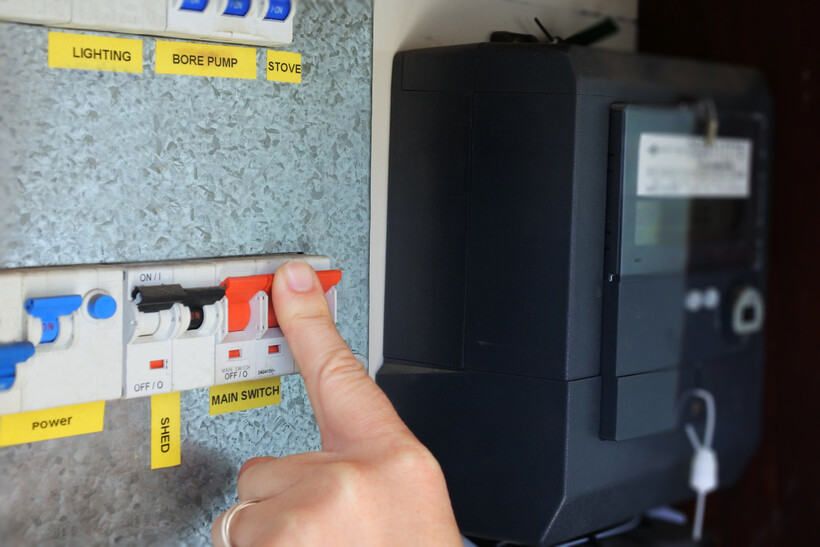 Operating the main electric switch on a switchboard (Source: iStock)
By Australian standards, the main switch must be clearly identified and easily accessible. Most switchboards use a ‘MAIN SWITCH’ label to meet this requirement, and it’s typically located at the top or left side of the board.
The main switch is usually turned off before a licensed electrician carries out work (like replacing a light fitting), or whenever they instruct you to do so for safety reasons.
Step 2: Locate your circuit breakers
Next, identify the circuit breakers controlling the different areas or appliances in your home. They’re often labelled to indicate which circuit they protect, such as ‘Bedroom Lights,' ‘Air Con,' or ‘Kitchen Power.'
Step 3: Reset a tripped circuit breaker
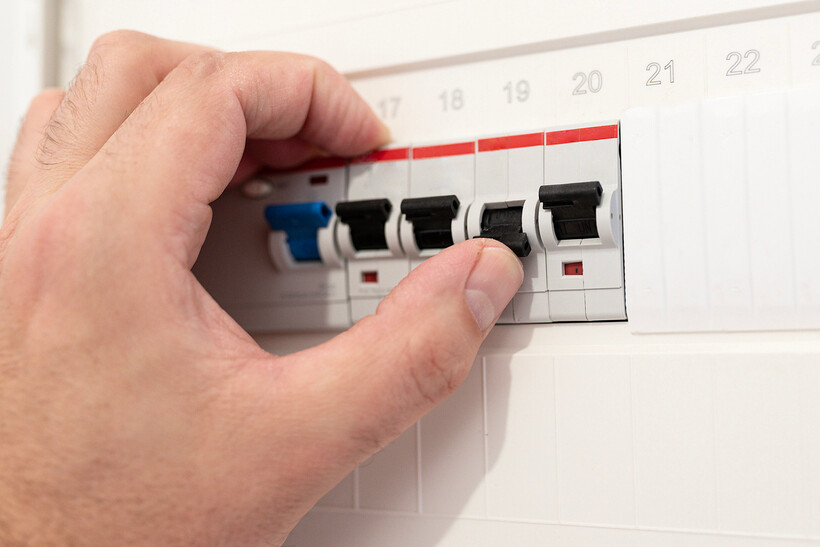 Resetting a tripped circuit breaker on an electrical panel (Source: iStock)
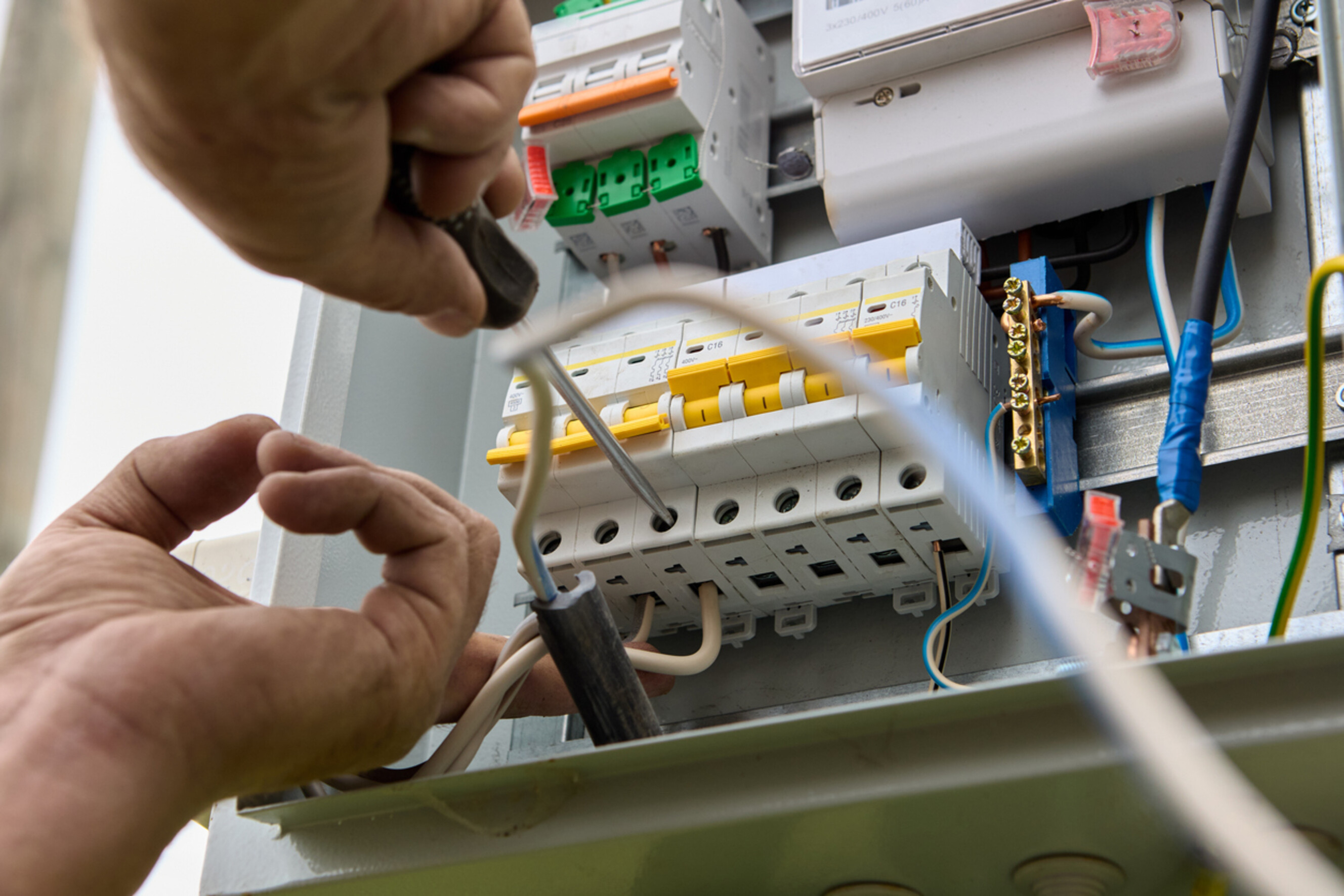
When a circuit breaker trips, unplug the appliances or turn off the lights in the room that lost power. Then, go to your switchboard and look for the switch that’s out of alignment. It will usually be stuck in the middle or ‘tripped’ position.
Move the breaker fully to the OFF position before switching it back ON to reset it.
Step 4: Test your safety switches
Safety switches can protect you from electric shock. To make sure they work properly, regularly test them using the ‘Test’ or ‘T’ button. Pressing it creates a safe, simulated fault, causing the safety switch to trip and turn off the power.
Safety switches are a standard in modern Australian switchboards. If you’re relying solely on ceramic fuses or don’t have safety switches, consider a switchboard upgrade to improve your home’s electrical safety.
Step 5: Know when to call an electrician
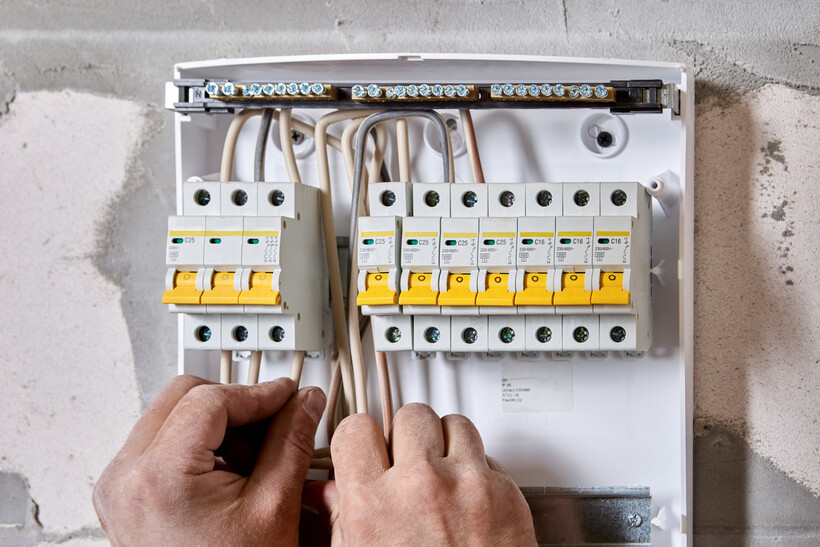 Installing a new switchboard consumer unit (Source: iStock)
Contact an electrician if your circuit breaker or safety switch keeps tripping. A switchboard showing signs of damage, accompanied by burning smells or buzzing sounds, also requires professional diagnosis.
A licensed electrician can also advise whether you need electrical rewiring, particularly if your wiring is ageing or you’re planning renovations.
Safety tips for your switchboard
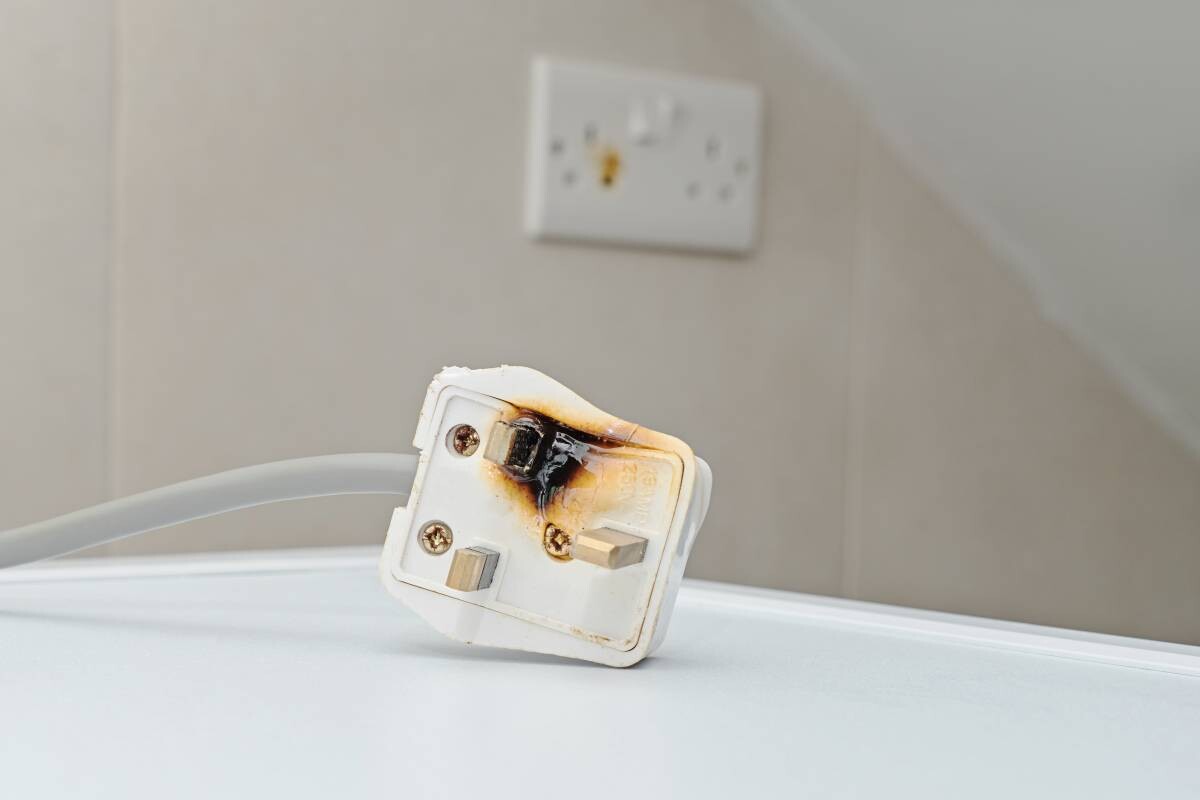
Your switchboard is designed to operate safely, but like any part of your home, it can wear out or develop faults over time. Warning signs like flickering lights, an unusually warm switchboard, or visible scorch marks shouldn’t be ignored.
The following tips can help keep your switchboard operating reliably and reduce the risk of electrical hazards around your home.
Never attempt to remove a switch to uncover a problem
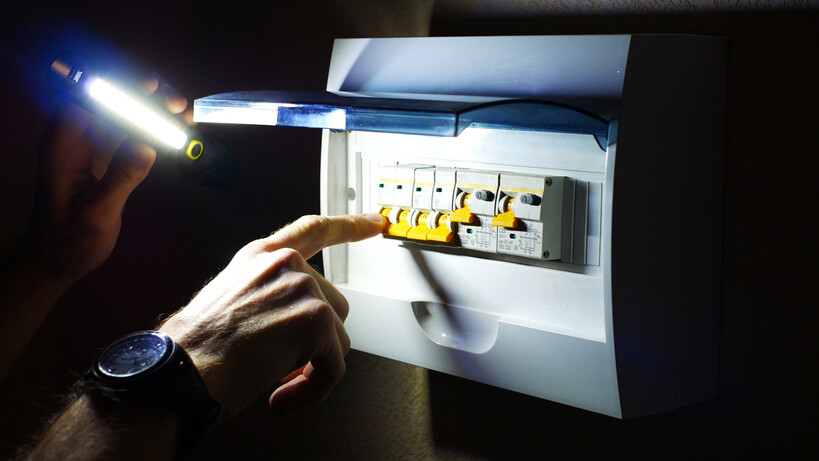 Deactivating lever switches on a home electrical panel (Source: iStock)
If you suspect a fault, don’t remove switches to investigate it yourself. Switchboards contain high-voltage components that can remain energised, posing a risk of electric shock. If you’re unsure who to call, this guide on electrical fitter vs electrician explains the difference between the two trades.
Avoid sparks or fire
Sparks, smoke, or signs of fire around your switchboard should be treated as an emergency. If it’s safe to do so, turn off the main power and keep everyone away from the switchboard until a professional assesses the issue.
Label all switches
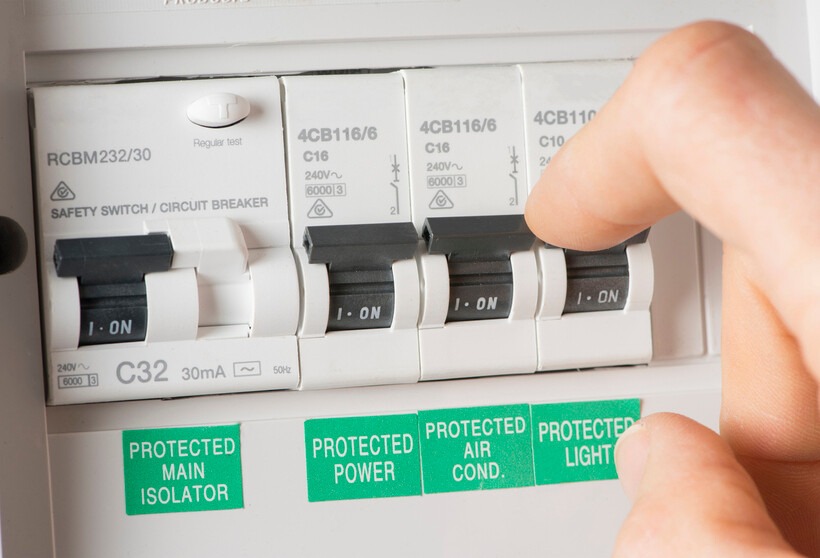 Circuit breakers organised and labelled on a home switchboard (Source: iStock)
Switchboard labels are most helpful when they’re updated. If you recently added appliances or had electrical work completed, check that each circuit is labelled correctly so your switchboard remains easy to navigate.
Upgrade to modern circuit protection
If your switchboard is due for an upgrade, ask about RCBOs (Residual Current Breakers with Overcurrent protection). These devices combine a circuit breaker and a safety switch into one unit, protecting against electrical overloads, short circuits, and electric shock.
Find an electrician for switchboard work
Knowing how to use your switchboard helps you respond safely to common electrical issues and recognise when a problem requires more than basic troubleshooting. When that happens, it’s time to bring in a professional.
Whether you need a switchboard repair, upgrade, or replacement, Airtasker makes it easy to find trusted electricians. Simply post your job, compare quotes and reviews from local Taskers, and hire the one that best suits your needs.
Learn more about our contributors
Written by Andrea H.
Staff Writer
Andrea is a writer with nearly a decade of experience, including five years covering real estate, construction, and neighborhood trends. She’s deeply curious about people, society, and culture, finding stories in the details and helping others navigate big decisions. Off the page, Andrea is drawn to analog routines: running outdoors, taking long walks, and picking up hands-on projects. When she’s not overthinking a paragraph, she’s probably overthinking her next read.
FAQs on switchboards
Yes, they perform the same function. Both refer to the central point that distributes electricity to your home’s circuit. Electrical panel is more commonly used in the US, while switchboard is the standard term in Australia.
Start by checking your switchboard to see if a safety switch or circuit breaker has tripped. If one has, unplug any connected appliances before resetting. If the breaker or safety switch trips again, stop using that circuit and call an electrician for help.
If only one power point or light fitting isn’t working while the rest of the circuit has power, the problem may be with the outlet, socket switch, or fitting itself. A repair or socket switch installation may be needed to fix the issue.
If your entire house has lost power, check whether nearby homes are affected as well. If they are, it’s likely a local outage. Wait for the power to be restored or check with your electricity distributor for updates.
If nearby homes have electricity, check if your main switch or main circuit breaker has tripped and reset it. If it trips again, there may be an electrical fault that an electrician needs to diagnose.
Upgrading a residential switchboard in Australia typically costs $1,800 to $3,500. Costs may be higher if additional work is needed, like electrical rewiring or installing extra circuits.
A standard upgrade generally includes circuit breaker replacement, safety switch installation, and switchboard testing.
Find electricians, fast
Find an electrician