- Home/
- Comparisons/
- Breakfast Take Out & Delivery/
- Irish Breakfast vs. English Breakfast
Irish breakfast vs English breakfast: See how they're served up differently
Comparing Irish and English breakfast based on origin, core ingredients, and more
Last Updated on

Written by Ana K.
Contributor
Read more about our contributor
Key Facts
An Irish breakfast is best known for its black and white pudding and soda bread, served with eggs, rashers, and sausages. It grew out of rural Ireland, where hearty meals were needed to keep workers going throughout the day.
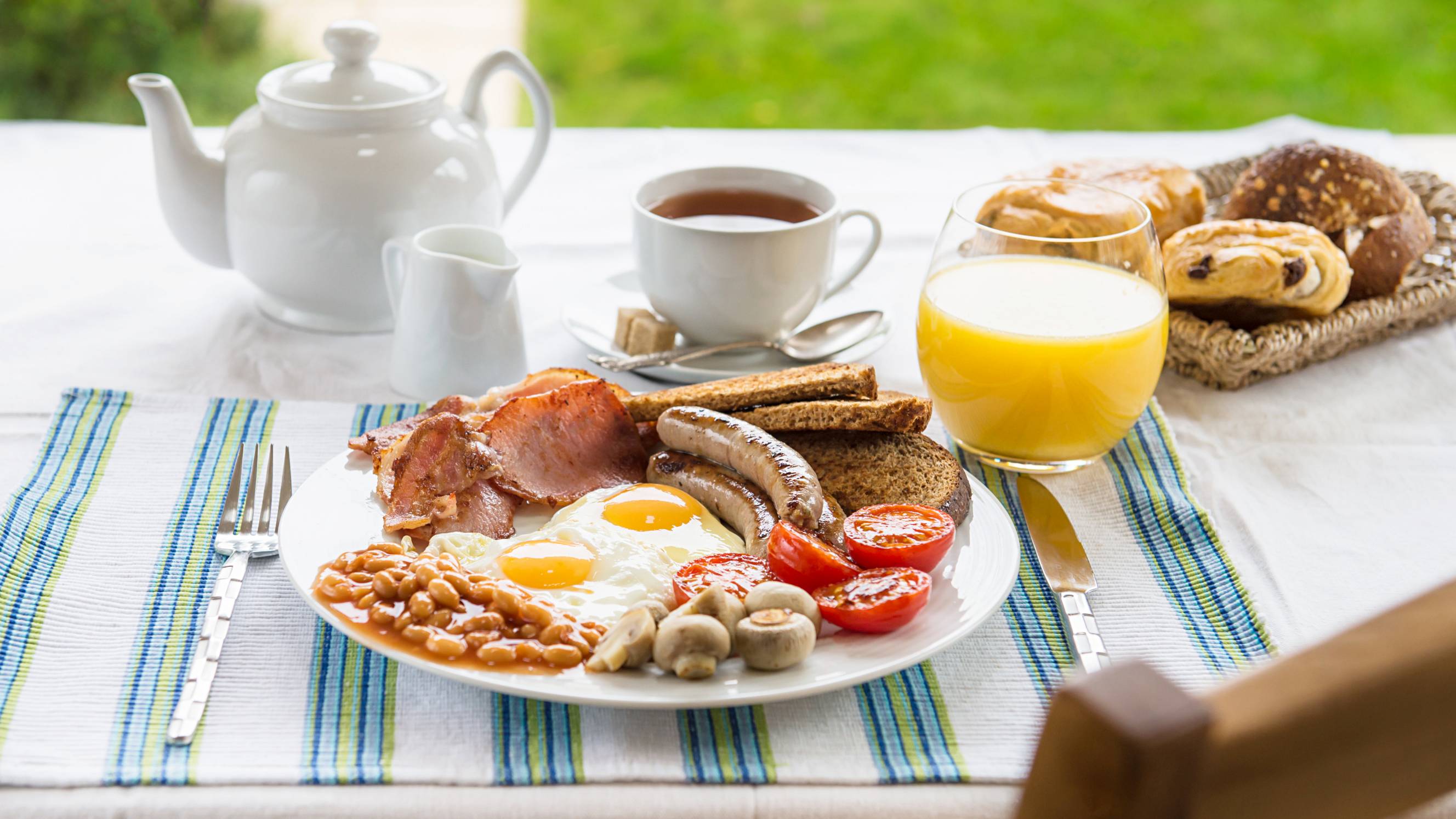
An English breakfast is best known for its baked beans and fried bread, with eggs, bacon, and sausages forming the core of the fry-up. It’s traditionally paired with English breakfast tea, although coffee and orange juice are common choices today.
Irish breakfast tea is stronger, darker, and more Assam-forward, while English breakfast tea is lighter, smoother, and more balanced.
What’s the difference between a full Irish and a full English? Both are iconic breakfasts, and they share the same fry-up foundation: eggs, sausages, bacon, and grilled tomatoes. But when you line up an English vs. Irish breakfast plate side by side, you’ll notice they’re not the same. The Irish version brings black and white pudding into the mix, along with potato farls or soda bread, giving it its own identity.
In this post, we’ll go over the full Irish breakfast vs English breakfast breakdown, including what’s served on each, where these traditions come from, and how each country treats breakfast. By the end, you’ll be ready to cook either one yourself or brief a home chef to whip it up for you.
What is a full Irish breakfast?
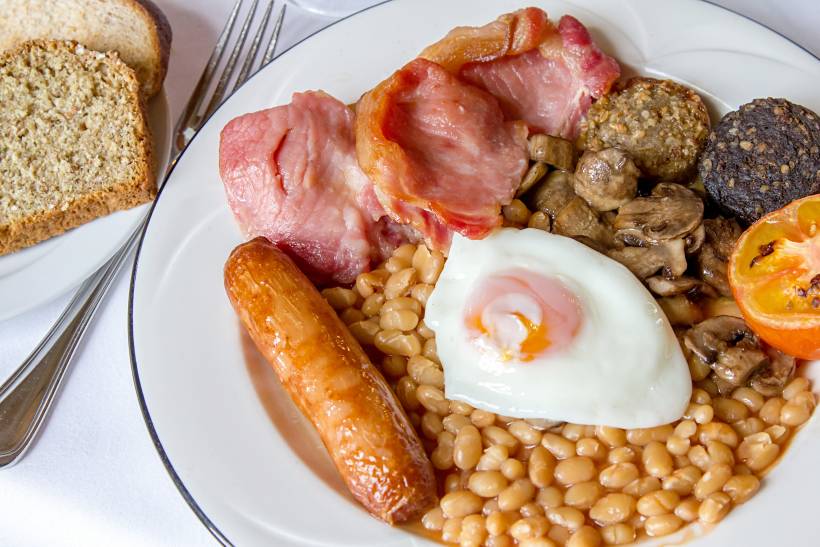 A full Irish breakfast, featuring fried egg, baked beans, crispy bacon, soda bread, grilled tomatoes, and both white and black pudding (Source: iStock)
A full Irish breakfast centers on eggs, rashers, pork sausages, grilled tomatoes, and usually button mushrooms, served with Irish soda bread or potato farls on the side. Another common addition is Irish breakfast beans, made of navy or haricot beans in tomato sauce. It also includes either a white pudding made with oatmeal or a black pudding made with oatmeal and blood.
In Cork, black pudding is often swapped for drisheen, a blood sausage made from cow or sheep’s blood, milk, and breadcrumbs. It’s tied to the city’s Shandon area, a working-class neighborhood long known for its butchering trade. It was historically an affordable option too, since blood was a cheap, readily available byproduct of butchering that otherwise went to waste.
The traditional Irish breakfast started as fuel for farmers working long days in the fields, which explains the protein and calories packed onto the plate. These days, it’s more of an occasion than a daily habit, saved for lazy weekends, heavy nights out, or at hotel buffets and B&Bs.
What is a full English breakfast?
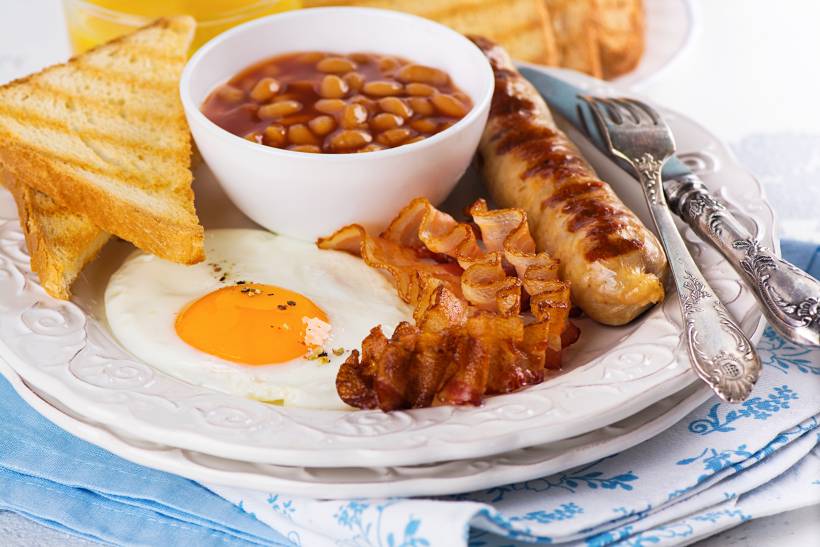 A hearty English breakfast of fried egg, crispy bacon, savory sausage, buttered toast, and baked beans (Source: iStock)
A full English breakfast is built around sausages, back bacon, sunny-side up eggs, tomatoes, mushrooms, and toast, served alongside a hot pot of English breakfast tea or coffee. What sets it apart from other hearty breakfasts in the same family is baked beans, which earned their spot on the plate because they were cheap, filling, and added a mild sweetness that balanced out all that salt and grease.
Beyond the traditional morning slot, a full English can be served any time of day at regular restaurants and late-night pubs. Most Brits swear by it as the go-to hangover fix, largely thanks to the protein in the eggs and bacon. Just watch the greasiness, since heavily fried food can sit hard on an already unsettled stomach. That said, a hot plate like this can feel pretty satisfying when you’re feeling rough.
English breakfast vs. Irish breakfast: How are they different?
Let’s look at a few things that show the delicious differences between Irish and English breakfasts:
In terms of origin
The full English is said to trace back to the Norman Conquest of 1066, when Anglo-Saxons held onto their own food traditions, including their morning meal, as a way of pushing back against Norman French influence. Centuries later, the landed gentry turned that meal into a lavish spread served on their estates, often before a day of hunting.
Meanwhile, the Irish breakfast has a more humble origin. While English food traditions influenced Ireland from the 14th century, the meal took on its own identity as rural communities relied on inexpensive, locally available ingredients. That resourcefulness is still reflected in a typical Irish breakfast today, including:
Soda bread: Made without yeast, making it easy and inexpensive to bake.
Black and white pudding: Created by using every part of the pig when meat was scarce.
In terms of core ingredients
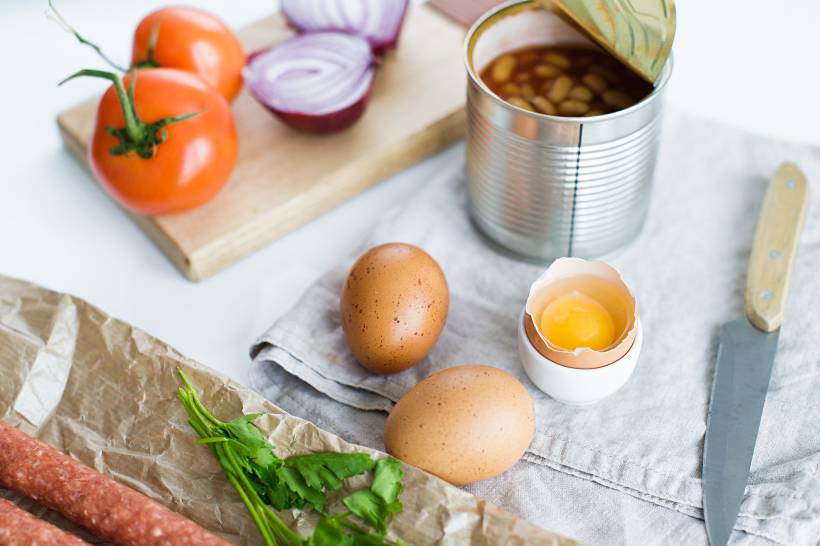 Fresh ingredients for a traditional English breakfast: tomatoes, eggs, beans, onions, and sausages (Source: iStock)
Both breakfasts are built around protein-rich eggs, bacon, and sausages, while grilled tomatoes and mushrooms add fiber, vitamins, and minerals to the plate. Beyond these, Irish breakfast food is known for its generous use of Irish butter, made from the milk of grass-fed cows, which gives it a richer flavor than standard butter.
The English breakfast starts with many of the same ingredients but is typically served with a thick-cut buttered toast. It also almost always includes beans, which add fiber and carbohydrates while balancing the meal’s richness.
Despite including a few vegetables, note that both breakfasts are high in calories, saturated fat, and sodium due to the fried meats, butter, and other rich ingredients. That’s part of what makes them so satisfying, but also why they’re better saved for special mornings than everyday meals.
In terms of cooking method
When it comes to English breakfast vs Irish breakfast, the cooking methods are surprisingly similar. Both are prepared with each ingredient cooked separately to preserve its texture and flavor. A large cast-iron or nonstick frying pan is typically used for the bacon, sausages, pudding, eggs, tomatoes, and mushrooms, while the bread is either toasted or lightly fried.
If you’re short on time in the mornings, you can prep a few ingredients the night before to make busy mornings much easier. Meal prepping over the weekend is another option if you eat this often. Or, if standing over a hot pan isn’t your idea of a good morning, you can always hire a home cook to handle it for you.
In terms of condiments
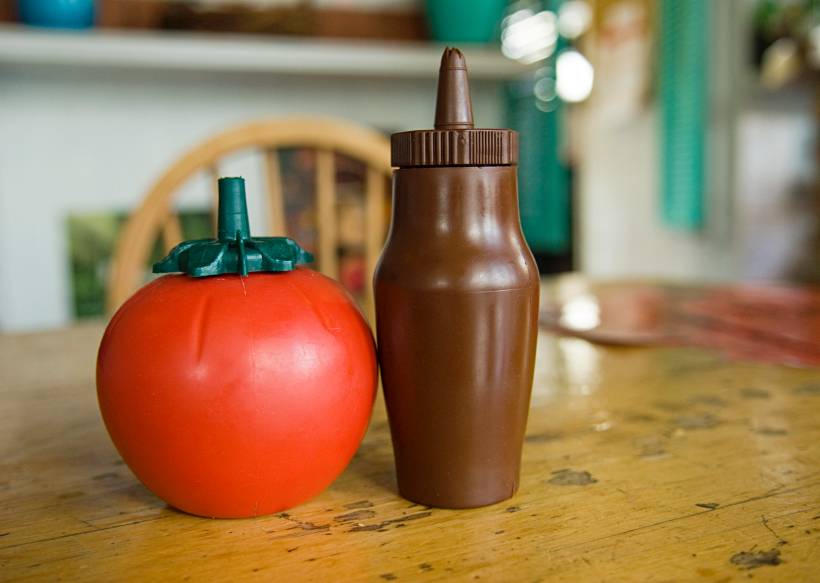 Ketchup and brown sauce ready for use (Source: iStock)
Many Irish breakfast dishes and English breakfast staples rely on one condiment in particular: brown sauce. This tangy, slightly sweet sauce pairs especially well with sausages, bacon, and pudding.
By comparison, the English breakfast takes a more flexible approach to condiments. Brown sauce remains a staple, but ketchup is just as common, especially alongside baked beans, eggs, and toast. Some cafés also serve mustard or steak sauce when larger breakfasts include extras such as ribeye or sirloin steak.
In terms of bread selection
Buttered toast is the standard bread choice in a full English breakfast, perfect for soaking up runny egg yolks, baked bean sauce, and any juices left on the plate. You might also come across crumpets or English muffins on weekend brunch menus.
On the other hand, breakfast in Ireland often includes soda bread and potato farls, served warm and heavily buttered alongside the fry-up. If making bread from scratch isn’t your thing, food delivery makes it easy to enjoy both styles without turning your kitchen into a breakfast café.
In terms of serving time
Both breakfasts show up well beyond breakfast hours, on café, pub, and hotel menus, especially on weekends and holidays. Some spots even serve them in the evening, since a hearty plate makes just as much sense after a long day as it does before one.
Not in the mood to cook? You can always hire a personal chef or order lunch delivery to bring the fry-up to you, whatever time of day it is.
In terms of tea pairing
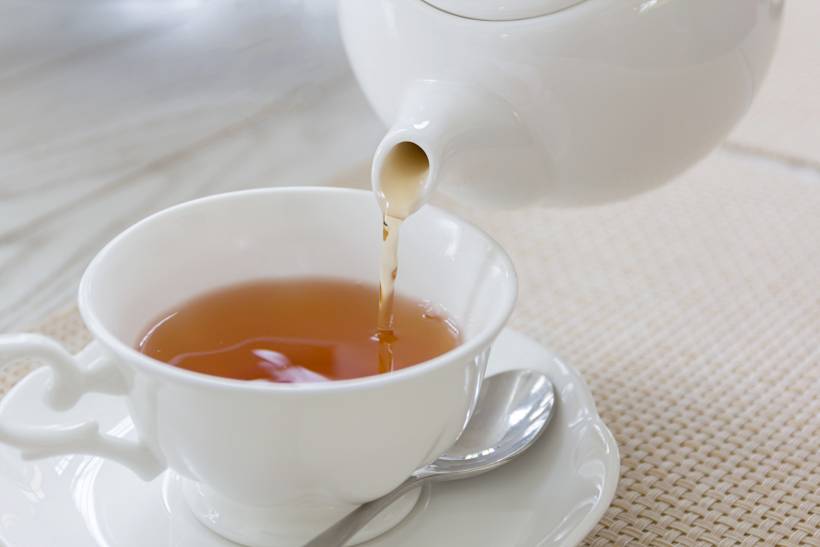 Comfortingly hot tea being poured into a cup (Source: iStock)
Does English breakfast tea have caffeine? Since it's made from black tea leaves, it naturally contains caffeine, along with polyphenols and other antioxidants that may support heart health and help reduce inflammation. It is commonly brewed for 3 to 5 minutes and served with milk and sugar.
Given Ireland’s reputation as one of the world’s biggest tea-drinking nations, it’s no surprise that breakfast tea is an essential part of their mornings.
Most of their tea blends start with a heavier Assam base, often softened with smaller amounts of Kenyan, Ceylon, or Chinese Keemun tea to create a darker, brisker, and more full-bodied cup. The result is a deep mahogany or reddish-brown brew that’s almost enjoyed with milk and sugar and often steeped a little longer for extra strength.
In terms of cultural impact
The Irish breakfast truly represents its nation. It’s treated as a comfort food, a hangover cure, and a go-to for Irishmen abroad who are craving something from home. The English breakfast, meanwhile, could now be found as a breakfast offering in hotels, restaurants, and other establishments across the globe.
Enjoy the Irish or English breakfast experience experience
At the end of the day, whether you’re team Irish or team English comes down to personal taste more than anything else. Both plates carry real history, real regional pride, and enough calories to carry you through the morning.
Craving one right now? You don’t have to fire up the stove to get it. Airtasker connects you with local Taskers who offer breakfast delivery, so a fry-up can show up at your door anytime you want. And if you’re after fresh food delivery more generally, whether that’s groceries for a weekend cook-up or Chinese delivery for a lazy Tuesday night, there’s a Tasker ready to pick it up and bring it to you.
Learn more about our contributors
Written by Ana K.
Contributor
Ana always puts a premium on accuracy, clarity, and style when writing—a practice that her English degree has instilled in her. She excels at covering topics related to pet care, home and interior design, and food, which count among her varied interests. She also enjoys nature and street photography, as well as travelling. Overall, Ana uses her love for research to engage Airtasker readers with fun, practical content.
Irish breakfast vs. English breakfast
Full Irish Breakfast |
Full English Breakfast |
|
|---|---|---|
Origin |
Can be traced back to the 14th century |
Dates back to the Norman Conquest of 1066 |
Core Ingredients |
White and black pudding, the staple ingredient, is added to eggs, bacon, sausages, tomatoes, and mushrooms |
Baked beans, the staple ingredient, is added to eggs, back bacon, sausages, potatoes, tomatoes, and mushrooms |
Cooking Method |
Either grilled or fried |
Mostly fried |
Condiments |
Brown sauce |
Ketchup and brown sauce, sometimes mustard or hot sauce |
Bread Selection |
Irish soda bread, particularly the brown bread variety |
Fried toast with butter |
Tea Pairing |
Irish breakfast tea |
English breakfast tea |
Serving Time |
In the morning |
Mostly in the morning but not uncommon to be served at other times of the day |
Cultural Impact |
Depicts the Irish people’s ties to their nation, even when they are abroad |
Reflects the influence of England on the rest of the world |
FAQs on Irish and English breakfasts
An Irish breakfast usually includes white/black pudding, potato farls, and soda bread, while an English breakfast is more likely to include baked beans, fried bread, and toast.
No. Black and white pudding are savory sausages traditionally made from oatmeal, spices, and pork products, with black pudding also containing blood. American pudding, on the other hand, is a sweet, custard-like dessert made from milk, sugar, and a thickening agent such as cornstarch and is typically served chilled.
A traditional full Irish breakfast is often considered slightly heavier because it typically includes thicker-cut Irish bacon, white pudding, soda bread, and potato farls alongside the usual eggs and sausages.
English breakfasts are easier to find in the U.S. and regularly appear on hotel, diner, and brunch menus. Irish breakfasts are less common but are still popular in cities with large Irish-American communities, such as Boston and New York, where many Irish pubs like The Black Rose and The Dubliner continue to serve them.
Yes. While specialty items such as black pudding, white pudding, Irish rashers, and potato farls may require a trip to an Irish grocery store, they’re widely available online. More common staples, including hash browns, baked beans, soda bread, and breakfast English tea, can also be found in many major supermarkets.
Yes. Many cities across the U.S. have British and Irish pubs, cafés, and tea rooms that serve traditional Irish or Full English breakfasts. Popular examples include An Beal Bocht Cafe, The Dead Rabbit, and The Kerryman for Irish breakfasts, as well as Tea & Sympathy, The Cat & Fiddle, and The George & Dragon for Full English breakfasts.
One element unique to a Scottish breakfast is the Lorne, or square sausage. Other Scottish favorites may also appear on the plate, including tattie scones, haggis, oatcakes, and fruit pudding.
A traditional Welsh breakfast, unlike the Irish and English ones, typically has cockles and laverbread. A cockle is a mollusk found on Wales’s sandy beaches. Meanwhile, laverbread (not a type of bread, surprisingly) is a food product made of seaweed.
Find breakfast take out & delivery services, fast
Post a task