- Home/
- Comparisons/
- Decking/
- Deck vs. Patio
Deck vs. patio: Which is better for your home?
Comparing decks and patios based on cost, appearance, and more
Last Updated on

Written by Paul M.
Contributor
Read more about our contributor
Key Facts
A deck is a freestanding or elevated platform that’s attached to a home or structure to extend the outdoor living space.
A patio is a paved outdoor area that’s also adjacent to a building or home. It is used for dining and relaxing, is built on a level surface, and is integrated into the landscape or greenery.
If you have a big front or backyard and you want to turn it into a livable extension of your home, you’ll need to consider choosing between a deck vs. patio. Doing this not only adds value to your property but transforms it into an area where you can relax with your friends and family.
If you’re not sure which to choose, you’ve come to the right place. This comparison guide will discuss the main differences between decks and patios, helping you make an informed decision for your home.
What is a deck?
 Covered outdoor deck with separate dining and lounge areas (Source: iStock)
What is decking? Decking is the installation of an elevated platform that’s either freestanding or attached to a house. A deck can be made from various materials, such as wood, timber, or composite. It provides an area for outdoor activities, like dining, lounging, and entertaining.
Decks can be accessed from the interior of your house through doors or via a short flight of stairs installed on their side. They also come in different designs, offering homeowners a customizable outdoor environment that complements their personal preferences and home architecture.
What is a patio?
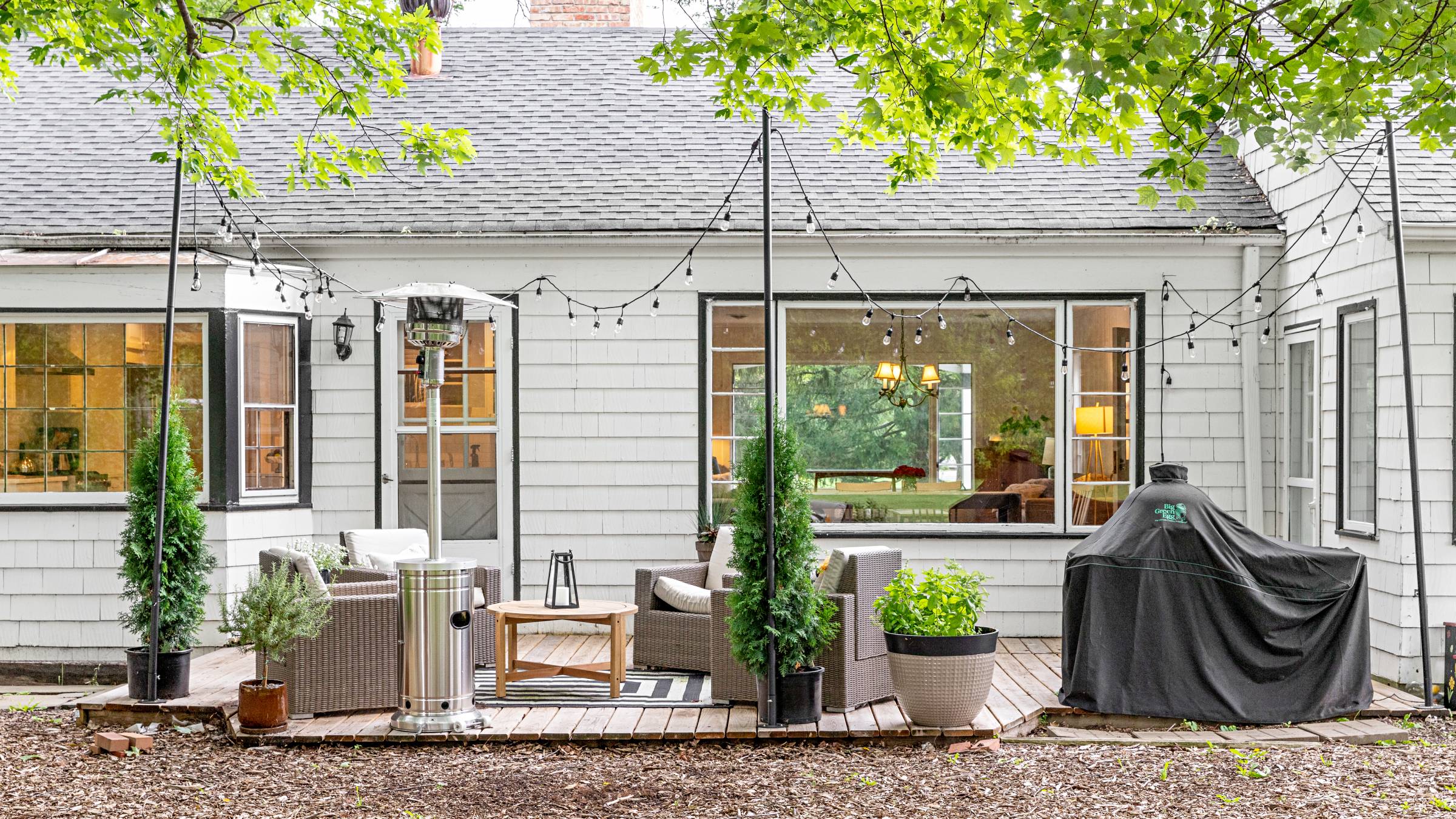
 Backyard patio with designated dining and relaxation areas (Source: iStock)
A patio is a paved outdoor area usually adjacent to a building or a house. Patios provide a designated space for outdoor activities like dining and socializing. They are constructed from concrete, stone, brick, or pavers and can be customized in shape, size, and layout. A raised patio is not uncommon. But unlike raised decks, most patios are usually built at ground level and are integrated into the existing landscape.
Decking vs. patio: Which is better for your needs?
The choice between a patio vs. deck depends on your budget, existing outdoor space, property type, garden style, and personal preference. Both options offer benefits that cater to different needs.
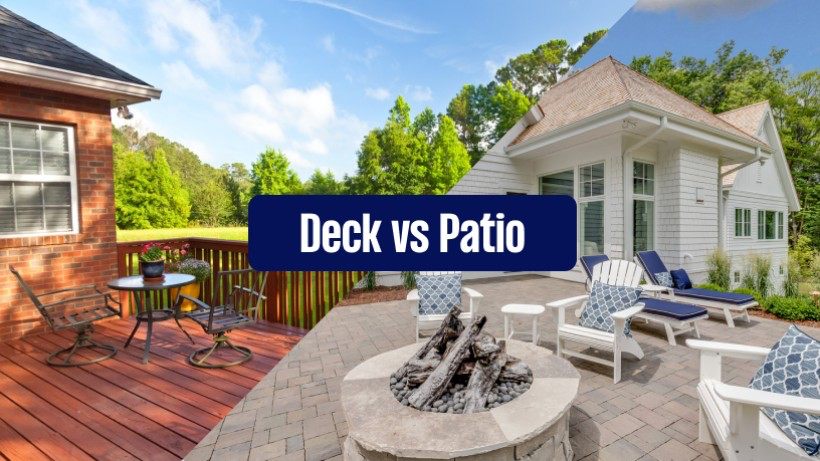 Wooden decking versus stone paving for outdoor living spaces (Source: iStock)
In terms of cost
If you’re mindful of your budget, it’s wise to compare the costs of decks and patios. The typical spend for decking is around $10,100. However, you can install a pine deck for $2,150 or build a mahogany one for $40 to $60 per square foot. Meanwhile, a patio costs $2,100 to $11,000 on average. Ultimately, your total expenses will depend on the size and material quality of your decking or patio. Either way, you’ll be increasing the resale value of your home.
In terms of appearance
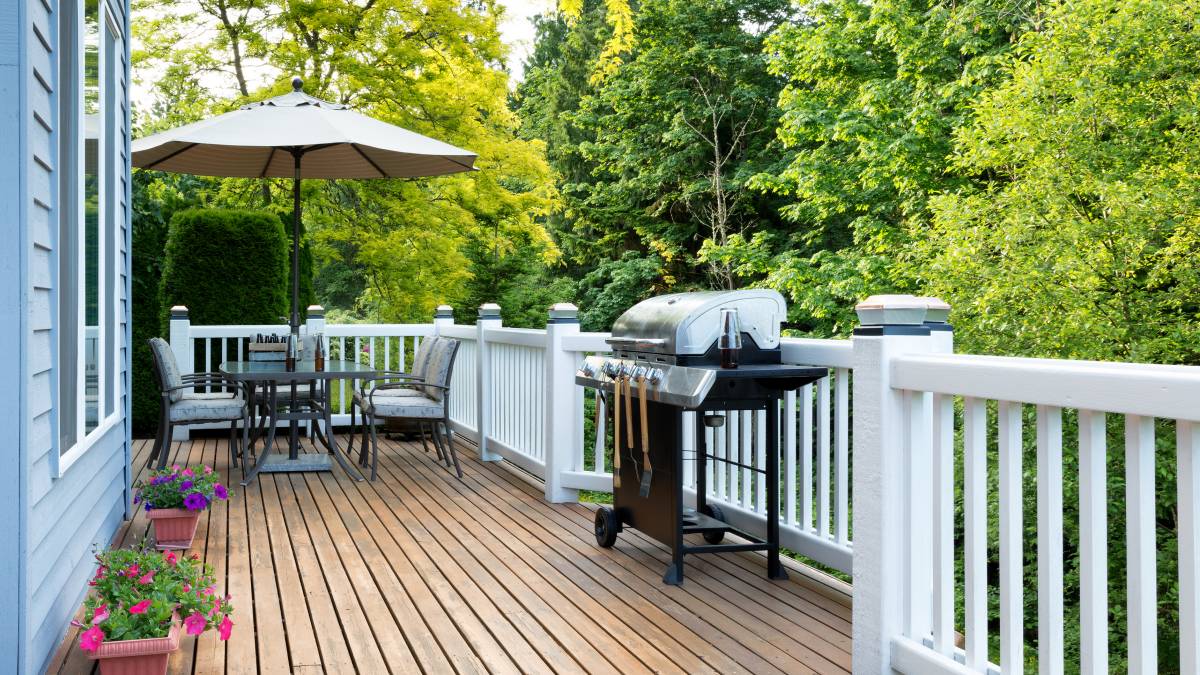
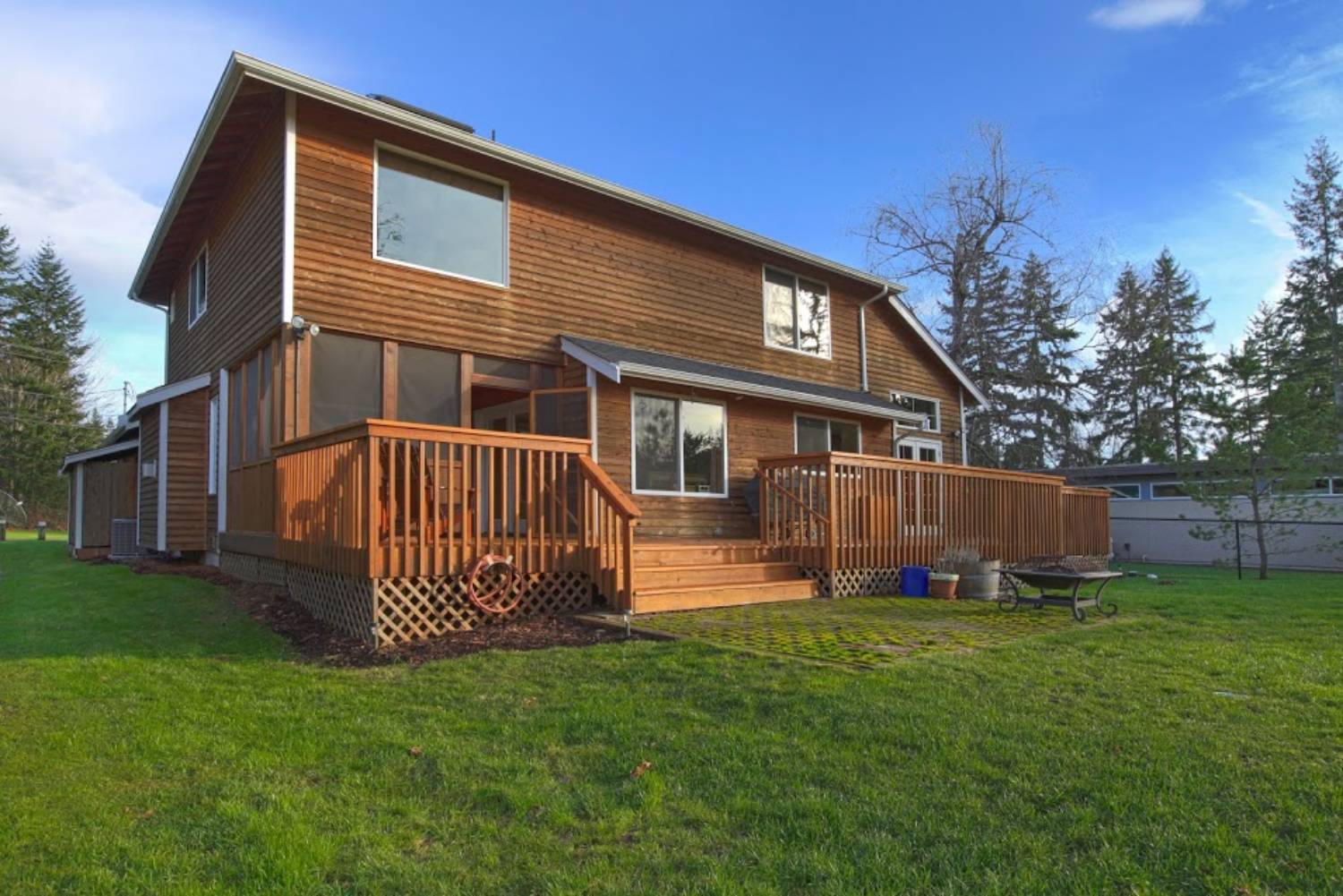
 Freestanding backyard deck with shaded outdoor dining areas (Source: iStock)
Decks can be constructed using wood and composite materials to offer a warm, simple appearance. Meanwhile, patios are made of concrete paving, brick, or natural stone, each producing unique results. For example, concrete patios provide a clean, modern look, while brick and natural stone patios offer a traditional, rustic aesthetic.
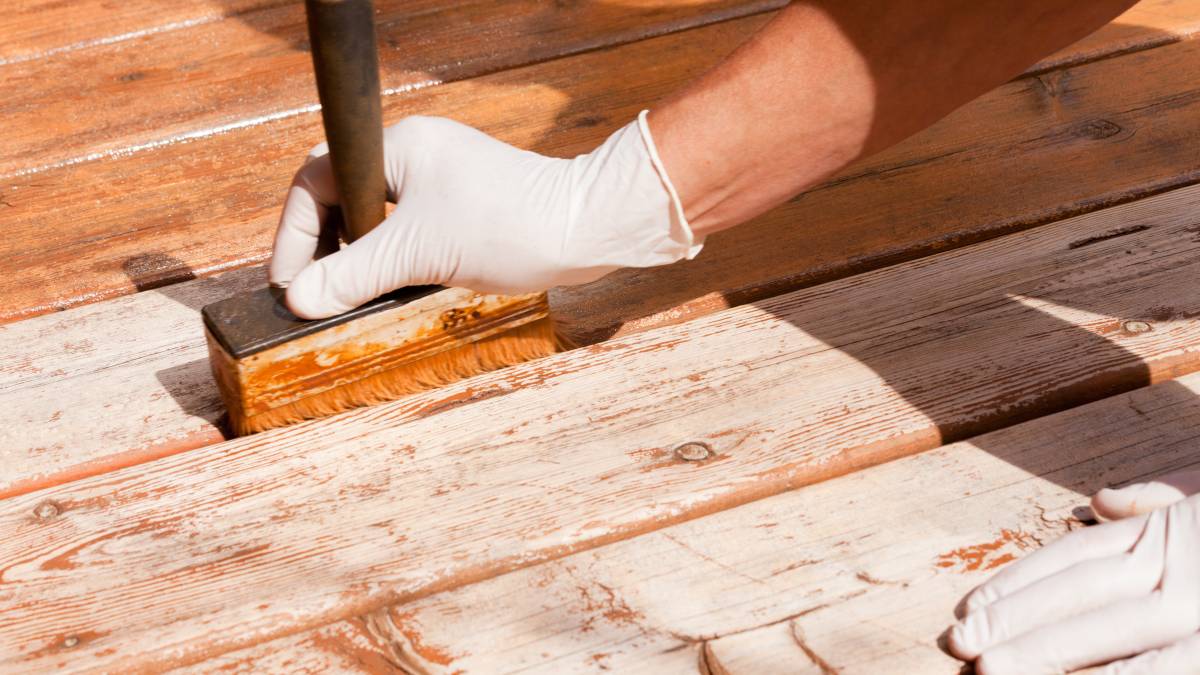
For decking, you have different options, like softwood, timber, and composite, and the planks can be stained or painted. Generally, decks incorporate a selection of railings and accessories, such as balusters, post caps, and lighting. As such, they can blend seamlessly with your house or create a contrasting focal point.
As for patios, they come in shades of grey, brown, and red based on the material used. Moreover, they include decorative borders and accents featuring contrasting shapes or colors to enhance visual appeal. Patios can be designed to integrate greenery, such as planted borders, flowers, or shrubbery, enriching the space with natural beauty.
In terms of construction complexity
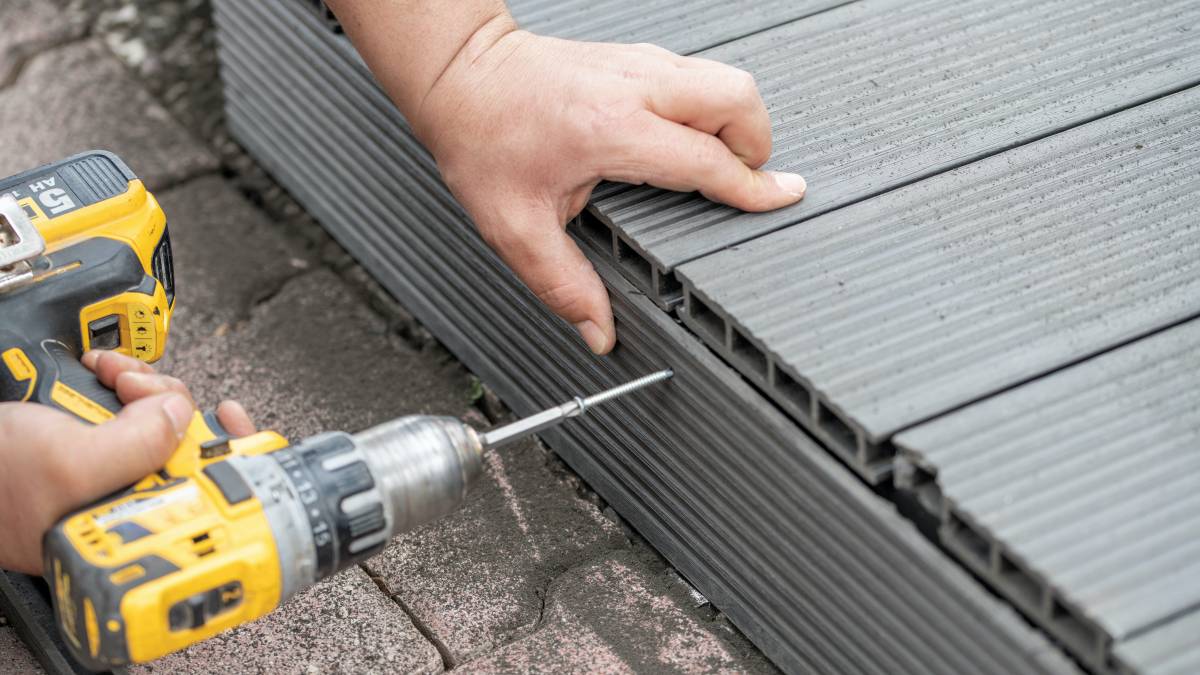
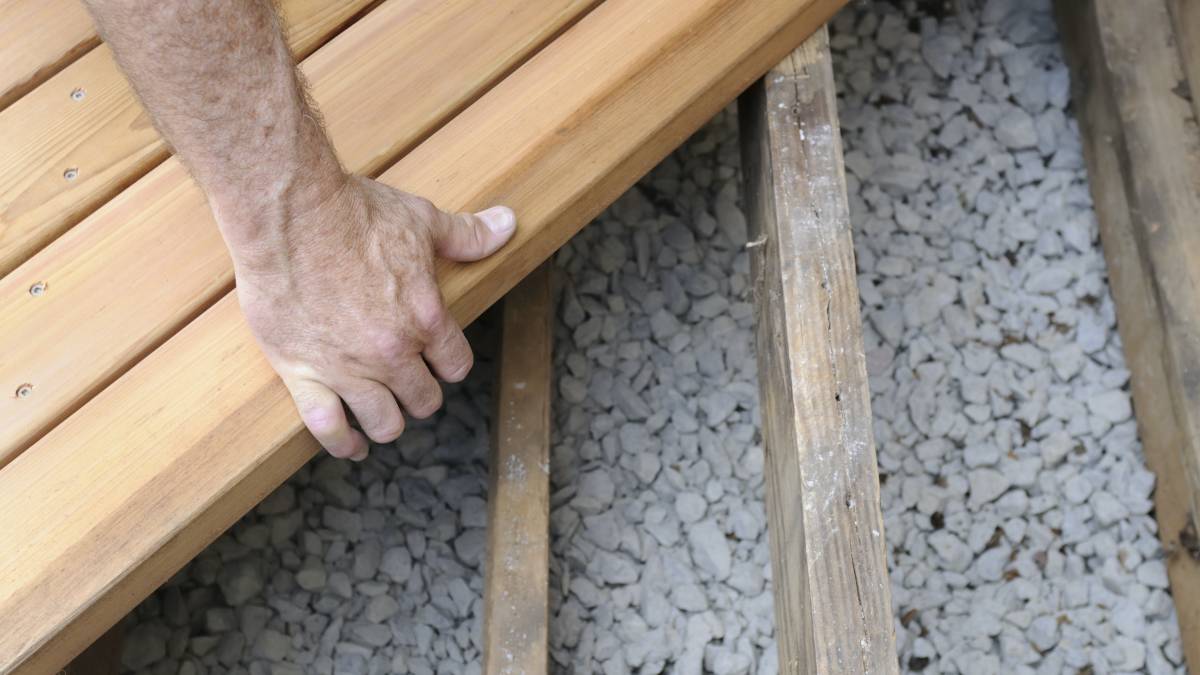
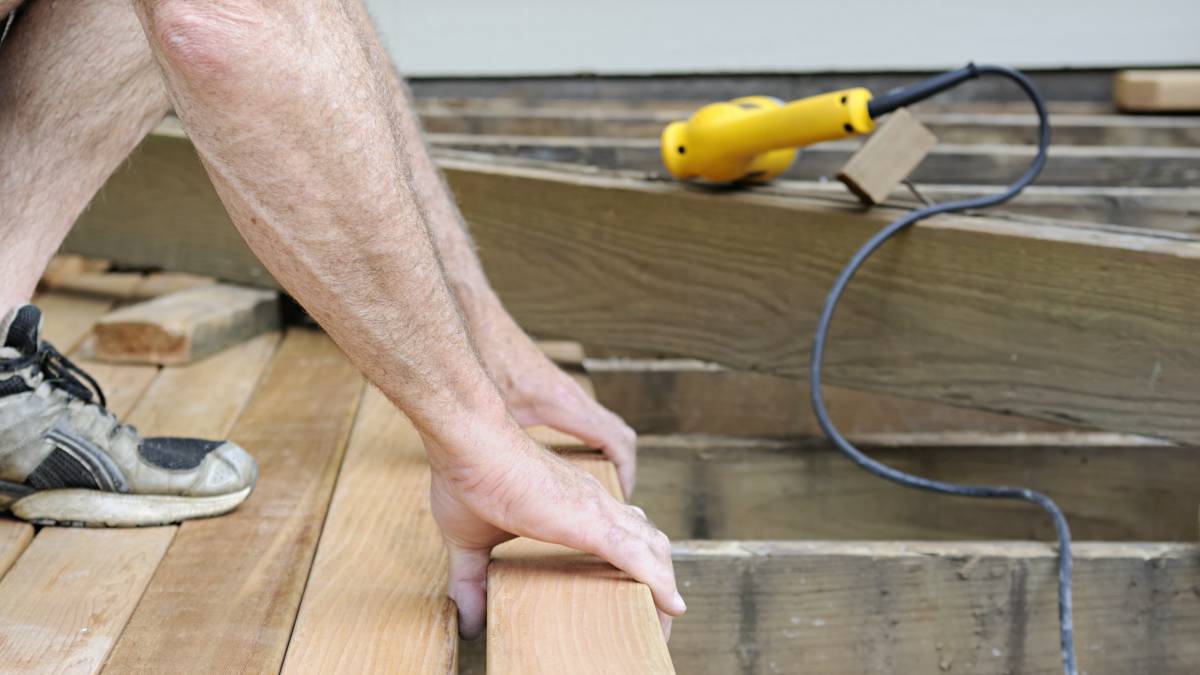
 Decking board installation using mechanical fasteners (Source: iStock)
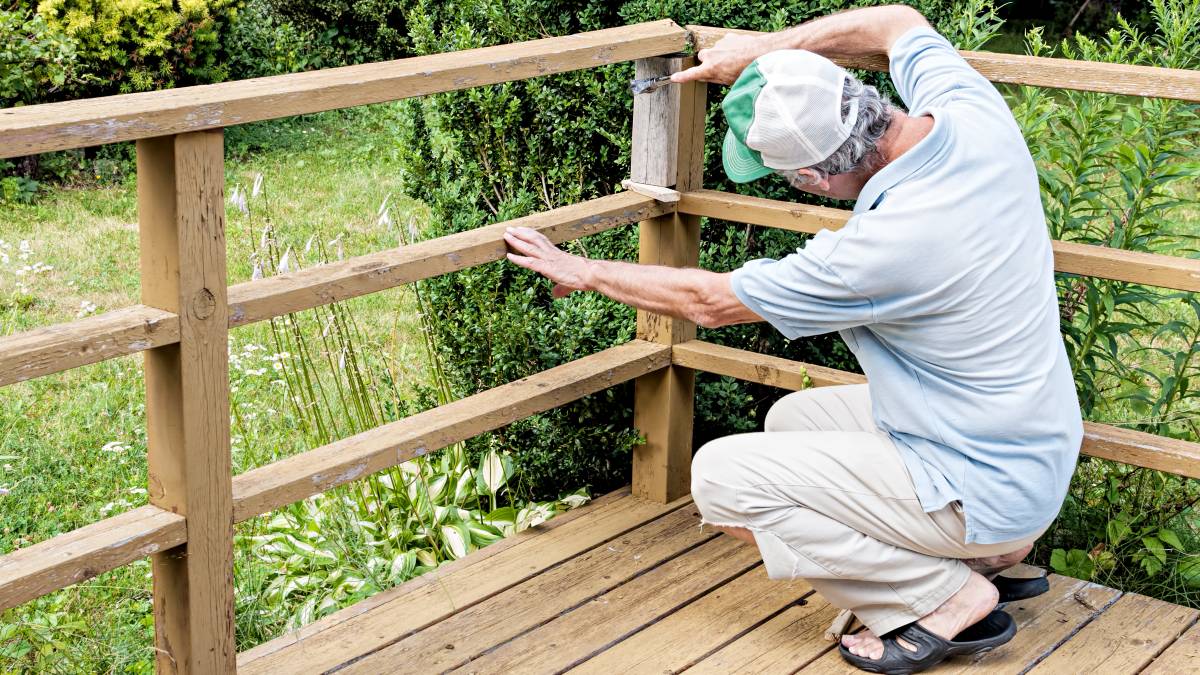
Wondering how the design process differs between a deck and a patio? Well, decks tend to be harder to build due to their elevated nature and the need for structural support. Construction can get even more complex if you incorporate multiple levels or custom features. Additionally, deck construction may require compliance with stricter building codes, especially for safety features like railings and stairs.
As mentioned earlier, paving a patio is usually at ground level or on a flat surface. This simplifies the foundation work. Its complexity largely depends on the chosen paving material. Patios can offer design flexibility and require less engineering than decks.
That said, both decks and patios can be constructed by homeowners with DIY skills. But for complex designs or structural elements, it’s better to consult a professional deck or patio contractor. This ensures your safety and compliance with local building regulations.
In terms of versatility/functionality
 Paved garden patio with integrated landscaping features (Source: iStock)
Patios come in a range of designs, making them versatile aesthetically. A concrete patio can integrate seamlessly with the ground, providing a natural transition between indoor and outdoor spaces. This makes it easy to add seating and other outdoor fixtures, such as a hot tub or a fire pit.
On the other hand, a timber or composite deck offers more options for creating multi-level spaces and accommodating features. Multiple levels allow you to create distinct zones. For instance, you can have a dining area on one level and a lounging area on another, providing flexibility for different activities. Your deck can easily include an outdoor kitchen!
In terms of durability/maintenance
The durability of decks and patios often comes down to the materials used. Preserving the quality of composite decking and certain patio materials, like pavers and natural stone, requires less effort. Conversely, pressure-treated wood decks and basic concrete patios might need frequent cleaning.
Usually, decks are subject to wear and tear over time, while patios can last longer with simple maintenance. Nonetheless, note that the service life of your deck or patio depends on the local climate and your outdoor space’s exposure to the elements.
In terms of eco-friendliness
The eco-friendliness of a deck and patio significantly depends on the materials used. For decking, a good alternative is sustainable wood, like cedar and redwood. These are better choices than pressure-treated wood, which uses chemicals during manufacturing. Natural stone and brick patios are more Earth-friendly than concrete patios because they are often quarried and processed with less environmental impact.
Incorporating green landscaping elements in your deck or patio project, such as native vegetation or rain gardens, can enhance its benefits. It’s advisable to research ecological practices for constructing and maintaining home features.
Achieve your dream deck or patio with Airtasker
 Garden patio with natural stone paving and outdoor seating (Source: iStock)
Overall, whether you wish to build a deck or a patio, Airtasker can turn your vision into reality. It can help you with a range of tasks, from design and construction to maintenance and repairs.
With Airtasker, achieving your dream deck or patio is just a click away. Take the first step toward a better outdoor living space and maximize your home’s potential. Log on and connect with nearby Taskers today!
Learn more about our contributors
Written by Paul M.
Contributor
Paul is a mass communication graduate with varied interests, including watching car and football shows, assembling home furniture, and baking treats for his wife and their baby daughter. His experience as a bank employee helps him tackle financial topics with ease, as well as make all kinds of jargon accessible to everyday audiences. While he is passionate about educating Airtasker readers and learning new things along the way, he hopes to have enough time to take a hike (literally) one day.
Deck vs. patio
Deck |
Patio |
|
|---|---|---|
Cost |
Low: $1,150 Median: $10,100 High: $19,100 |
Low: $2,100 Median: $11,000 High: $20,100 |
Appearance |
Freestanding or connected to a structure |
Raised or built on ground level |
Construction |
May require permits and compliance with building codes |
May only require simple foundation work |
Versatility/Functionality |
Can have zones for multiple functions |
Has less space for different activities |
Durability/Maintenance |
Vulnerable to weather conditions |
Low-maintenance |
Eco-friendliness |
Sustainable materials are available |
Sustainable materials are available |
FAQs on decks and patios
Decking and paving can positively impact your home’s value, but it’s important to do it right. A well-designed and maintained deck or patio can make your home more attractive to potential buyers and increase its curb appeal. It can also provide additional living space and make your home more enjoyable to live in.
Yes, you can have a deck and a patio simultaneously in your outdoor space as long as you have enough space. In fact, this combination enables you to make the most of each structure’s advantages and create designated areas for activities.
Find decking contractors, fast
Post a task