- Home/
- Costs/
- Land Surveyor/
- Land Surveyor Cost Guide
How much does a land survey cost in Australia?
Post to find a price. It's free and only takes a minute.
Price per completed task
$500 - $10,000
low
$500
median
$3,000
high
$10,000

Last Updated on

Written by Cielo B.
Staff Writer
Read more about our contributor
Key Takeaways
Land surveys typically cost $500 to $10,000 in Australia, depending on the survey type, property size, location, terrain, and boundary complexity.
Only a registered or licensed cadastral surveyor can legally define and mark property boundaries in Australia. Registration requirements and professional titles vary by state or territory.
You may be able to reduce survey costs by booking early, comparing itemised quotes, providing existing property records, and clearing access to boundary areas before the site visit.
Thinking about replacing an old fence, but not sure exactly where your property’s boundaries are? This can be a real dilemma if your fence has been up for decades and the original survey pegs have gone missing. A surveyor can identify your land’s boundaries, helping you avoid potential disputes with your neighbours when it’s time to build the new fence.
So, how much does a land survey cost? It depends on several factors, including your property’s size, shape, and terrain. We’ll explore these factors in this guide, along with tips for saving, so you can get started on your fence-building project.
What are the average property survey prices in Australia?
Property survey prices can vary widely by location. Metropolitan areas like Sydney, Melbourne, and Brisbane often charge higher rates than regional areas due to higher labour costs. That said, a regional survey won’t always cost less. If the surveyor has to travel a long way or stay overnight to finish the job, you may pay extra travel fees on top of the survey itself.
Here’s a breakdown of the average property survey prices by city:
City |
Average Cost of Land Surveys* |
|---|---|
Sydney |
$1,000–$3,000+ |
Melbourne |
$1,000–$3,000 |
Brisbane |
$1,200–$3,300+ |
Perth |
$1,000–$3,000 |
Adelaide |
$1,000–$3,000 |
Gold Coast |
$1,200–$3,300 |
Newcastle |
$1,000–$3,000 |
Canberra |
$1,000–$3,000 |
Hobart |
$1,000–$3,000 |
Geelong |
$1,000–$3,000 |
Wollongong |
$1,000–$3,000 |
Cairns |
$1,200–$3,300 |
*City prices are indicative estimates based on recent Airtasker data and current AU regional land surveyor benchmarks. Actual quotes vary.
What factors affect property boundary survey costs?
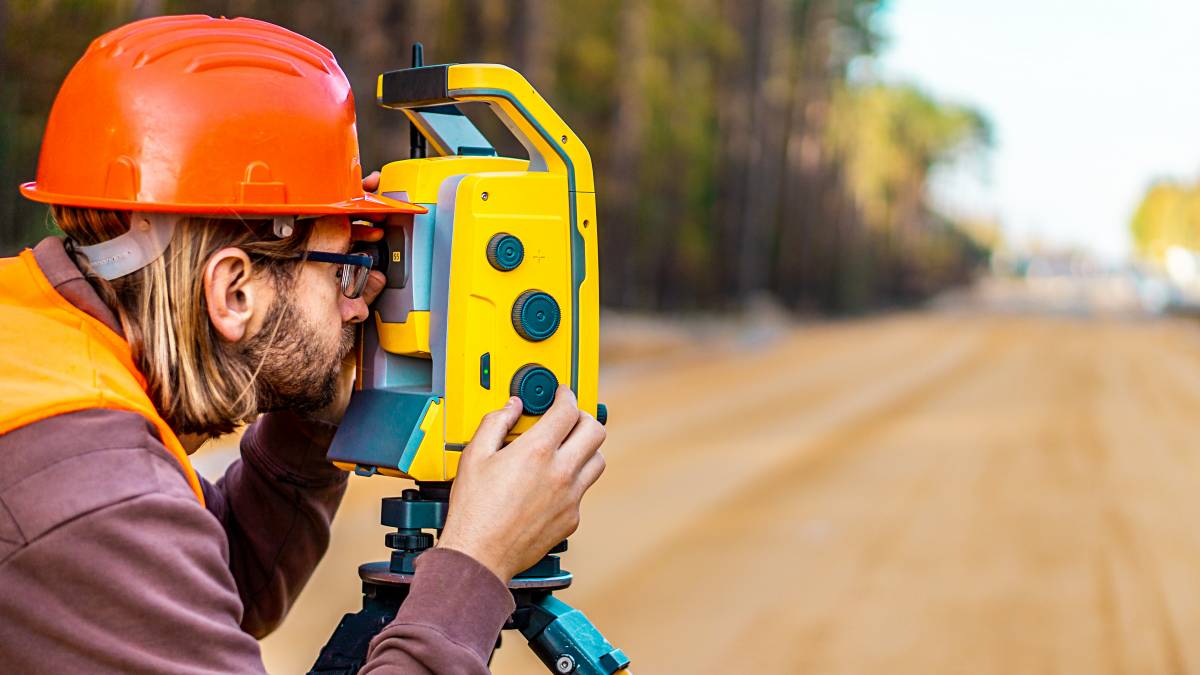
 Land surveyor using a total station at a construction site (Source: iStock)
Aside from location, here are several other factors that can affect survey of land costs:
Type of land survey
How much does a surveyor charge for a boundary survey? Basic jobs start at $1,000, since they only involve identifying existing corner marks before a fence goes up. If the survey requires a full re-establishment, in which the surveyor installs new pegs to replace missing originals, the price can rise to $3,000.
Title boundary surveys can cost even more, exceeding $4,000 for complex work. They require extra research, and the legal boundary must be certified by a registered surveyor. Contour surveys cost a little more because they need to capture features such as slope, vegetation, sheds, and other structures to map the land’s shape. This gives your architect the site details they need to design a home that suits your block.
Subdivision surveys are the most expensive, ranging from $5,000 to $10,000, because they involve both legal boundary work and coordinating with councils and the land registry.
Check out this table to see how much a property surveyor costs by land survey type:
Land Survey Type |
Typical Property Surveyor Cost |
|---|---|
Boundary/property survey |
$1,000–$3,000 |
Contour survey |
$1,200–$3,300 |
Subdivision survey |
$5,000–$10,000+ |
Identification/title boundary survey |
$1,000–$3,000; $4,000+ for complex work |
Specialist or highly detailed survey |
$3,000–$5,000+ |
Property size
Larger blocks usually cost more to survey because there’s more area to cover, more boundary points to locate, and more time required on-site. Rural properties can also attract higher boundary survey rates once travel costs are factored in.
Here’s a table showing how surveyor costs can vary by property size:
Property Size |
Typical Cost of Surveyors |
|---|---|
Small residential lot |
$1,000–$1,800 |
Standard suburban property |
$1,500–$3,000 |
Large residential property |
$2,500–$4,000+ |
Acreage or rural property |
$3,000–$5,000+ |
Large commercial or development site |
$4,000–$10,000+ |
Property shape, terrain, and accessibility
 Vacant land on the edge of a residential neighbourhood (Source: iStock)
Two blocks of the same size won’t always cost the same to survey. A flat, cleared rectangular block is easy to measure, so it usually sits at the lower end of the price range. Meanwhile, the following site conditions can make the job more time-consuming, increasing the cost to survey property boundaries:
Irregular or battle-axe blocks: More angles, corners, and longer boundaries mean more time on site and more calculations.
Steep or uneven land: Sloping blocks need extra setup time and careful measurement, while steep or rocky ground may require additional equipment.
Dense vegetation: Surveyors need a clear line of sight between their instrument and each boundary point, so thick trees, scrub, or bushland may need to be cleared first.
Waterways: Creeks and other waterways on or along the property can slow down the survey.
Buildings and structures: Retaining walls, fences, tight side passages, and neighbouring buildings can block the view between boundary corners.
Limited access: Poor vehicle access and locked gates can cause delays, and some jobs may require permission to enter a neighbouring property to reach certain boundary points.
Research and property records required
Research is the first step in a property boundary survey. The surveyor gathers records showing where your boundaries should be, such as your title, the Deposited Plan (DP), which is the official registered map of your lot, and any neighbouring plans. Each document may come with a search fee, and reviewing them adds time to the job.
Property line survey costs may be higher for older properties. The surveyor may need to retrace boundary marks from plans more than a century old. Some older titles were also recorded without a proper survey, so the surveyor has to dig deeper into historical records to confirm where your boundaries sit.
Easements can add more research. An easement is a registered right for someone to use part of land they don’t own. A common example is a shared driveway your neighbour owns, but you have a legal right to use. Easements don’t always appear on your lot’s current plan, so a separate search may be needed.
Survey accuracy and required deliverables
The more detail and certainty you need from a property survey, the higher the cost. A basic re-pegging job is the most affordable when the original marks are easy to find, as it only confirms and re-marks your boundary corners. On the other hand, a formal identification survey plan costs more because it’s the official record of the survey, which the surveyor lodges with the land titles office or the government office that keeps property records.
Some projects also need a separate contour or detail survey. This shows the slope and height of your land, along with trees, buildings, and drainage. Architects often ask for one before you start a new build or renovation, but it doesn’t legally confirm your boundary.
Requesting CAD files can also affect your total land survey cost. These editable digital drawings let architects and drafters build their designs directly on the survey. They usually come bundled with a detailed survey rather than as a separate add-on.
The table below shows how the cost of getting land surveyed can vary depending on the deliverables you need.
Survey Deliverable |
Typical Cost |
|---|---|
Basic boundary marking or re-pegging |
$500–$1,000 |
Formal boundary/identification survey plan |
$1,000–$3,000 |
Contour or elevation data |
$1,200–$3,300 |
CAD or digital files |
Usually included or quoted as an add-on; no reliable standalone benchmark |
Certified or signed documentation |
From around $880 for limited single-visit certification; varies by scope |
Detailed plans for planning, engineering, or legal use |
$2,000–$4,400+ |
Urgency
A property boundary survey usually takes one to two weeks from booking to receiving your plan. If you need it sooner, expect to pay extra. Surveyors may have to rearrange their schedules, push other clients back, or work on weekends to fit you in, and they charge for that disruption.
The higher price can still be worth it. For example, you’ve booked a fencing contractor for next Monday, but they can’t start until the boundary is confirmed. If the survey takes two weeks, you might have to rebook the fencer, delay the whole project, or cover their lost time. In that case, paying more for a faster survey can work out cheaper than dealing with the knock-on delays.
What are some ways to save on land surveys?
Land survey prices can add up quickly, but there are a few ways to lower your bill without compromising on accuracy:
Compare itemised quotes
Getting quotes from a few licensed surveyors gives you a benchmark for your project, so you’re less likely to overpay. Ask for an itemised quote that breaks costs down per task or per hour. This makes it easier to spot unnecessary charges and compare quotes fairly.
Book your survey early
If you’re planning a build or renovation, book the survey early in the planning process, around the same time you speak with a building consultant. Booking in advance lets the surveyor schedule your job at their standard rates. It’s also worth asking whether they offer discounts for booking ahead.
Share existing plans and records
Surveyors often research a property’s history before the site visit. Sharing past survey plans, title documents, or council records can cut that research time and lower your bill, especially if they charge by the hour. Just keep in mind that if your records are missing or outdated, the surveyor may still need to do a more detailed survey.
Prepare the site before the surveyor arrives
Before the visit, clear debris and trim overgrown plants along your boundaries, since surveyors need a clear line of sight between their instruments to measure accurately. Make sure the gates are unlocked and that the surveyor’s vehicle and equipment can access the site easily.
What should you look for in a professional land surveyor?
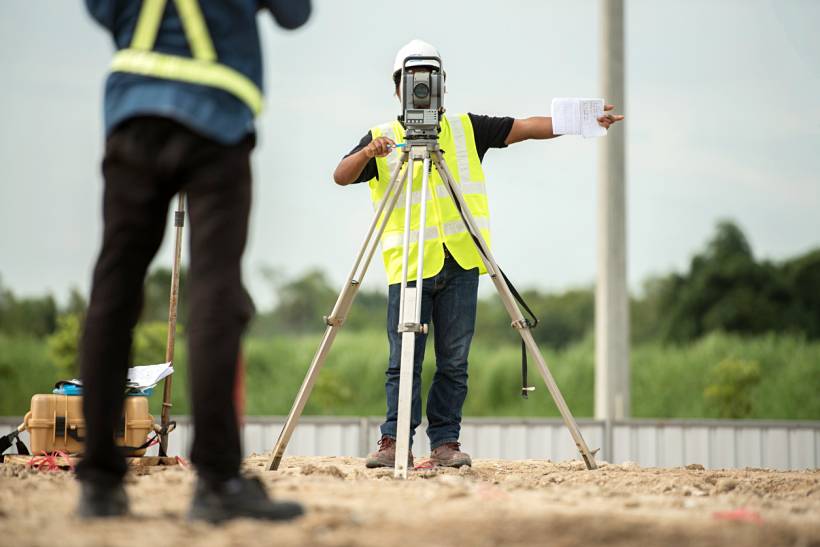 Land surveying crew conducting site measurements (Source: iStock)
Hiring a land surveyor can involve considerable costs, so you’ll want to find the right professional to get your money’s worth. Here are some of the most important things to look for when choosing a land surveyor:
Proper registration or licensing
Only a registered or licensed land surveyor, also known as a cadastral surveyor, can legally define and mark property boundaries in Australia. The title can vary depending on where you live.
In NSW, they’re called Registered Surveyors and are accredited by the Board of Surveying and Spatial Information (BOSSI), while in Victoria, they’re known as Licensed Surveyors. It’s worth checking a surveyor’s status on your state’s public register before you hire them.
For example, you can search the Surveyors Board of Queensland register by surname or postcode. Victoria’s Register of Licensed Surveyors also shows whether a surveyor is currently practising, non-practising, or suspended.
Professional indemnity insurance
Professional Indemnity (PI) insurance protects you if a surveyor’s mistake causes you financial loss. In Queensland, surveyors who offer their services directly to the public must hold PI insurance. The Australian Capital Territory (ACT) also recommends confirming that a private surveyor has this cover before you hire them.
Up-to-date skills and training
Surveying rules and technology change over time, so look for a surveyor who keeps their skills current. In NSW, registered surveyors must renew their registration annually and demonstrate they’ve met BOSSI’s continuing professional development (CPD) requirements.
Know and establish your property lines with Airtasker
An old fence line or a missing survey peg isn’t always a reliable way to determine your property’s boundaries. So, before you replace a fence, start a build, or settle a disagreement with a neighbour, consider having a professional conduct a land survey to give you a clear and accurate picture of where your boundaries sit.
Airtasker makes it easier to find land surveyors near you. Post a task with your property details, the type of survey you need, and your budget, then compare offers from Taskers. Once your boundaries are confirmed, you can get your new fence up.
Learn more about our contributors
Written by Cielo B.
Staff Writer
Cielo is an experienced content writer who has explored various industries throughout her career. Her expertise, founded on a degree in journalism, includes writing about automotive and home maintenance. Cielo also covers topics like dressmaking, tailoring, and photography since she is a passionate cosplayer who enjoys dressing up as her beloved anime characters.
FAQs
Yes, a land survey is worth it when you’re buying a property, building near a boundary, or replacing a fence. It gives you a definitive record of where your legal boundaries sit and can also reveal easements or structures that cross onto a neighbour’s land. This helps you avoid issues such as boundary disputes before you start a building project.
For building, usually yes. Most councils require a detailed survey that maps the site’s levels, structures and features to accompany your development application.
For fencing, a survey isn’t always legally required, but it’s strongly recommended if you’re unsure where the boundary is, or you and your neighbour disagree. Existing fences aren’t always on the true boundary, and only a registered surveyor can legally re-mark them.
A land survey focuses on the land itself. It shows where your property boundaries are and how buildings, fences and other structures sit in relation to them.
On the other hand, a building or home survey focuses on the property’s condition. It checks things like the roof, walls, structure and signs of damp or damage, so you know about any repairs needed before you buy.
Find land surveyors, fast
Post a task