How much does it cost to replace a catalytic converter in Australia?
Post to find a price. It's free and only takes a minute.
Price per completed task (part+labour)
$500 - $3,000
low
$500
median
$1,500
high
$3,000

Published on

Written by Cielo B.
Staff Writer
Read more about our contributor
Key Takeaways
Catalytic converter replacement can cost around $950 to $1,700 in major cities, depending on your location, vehicle, converter type, and installation complexity.
Converter type has a major impact on price: Universal aftermarket converters typically cost $400 to $900, while OEM converters can cost $1,800 to $4,000+.
You may save money by getting an accurate diagnosis first, choosing a direct-fit converter when suitable, and comparing quotes from independent mechanics instead of relying solely on dealership pricing.
A catalytic converter reduces emissions by converting harmful gases into less toxic ones before they leave your vehicle. Since it’s a critical part of your vehicle, replacing it can definitely be costly.
In this guide, we’ll break down the factors that affect the final price, plus tips on finding the right mechanic and saving money on catalytic converter replacement cost, so you know what to expect and how to plan.
What is the average cost of replacing a catalytic converter in Australia?
How much is a catalytic converter? Prices can vary widely, depending on the location. Urban areas like Sydney and Melbourne often have higher replacement costs due to a higher cost of living and shop overhead. While prices can be lower in regional and remote areas, these areas often face challenges sourcing parts, so expect extra charges for deliveries.
City |
Average Cost to Change Catalytic Converter* |
|---|---|
Sydney |
$1,100–$1,700 |
Melbourne |
$1,050–$1,650 |
Brisbane |
$950–$1,500 |
Perth |
$1,050–$1,650 |
Adelaide |
$900–$1,450 |
Gold Coast |
$950–$1,500 |
Newcastle |
$950–$1,500 |
Canberra |
$1,050–$1,650 |
Hobart |
$900–$1,450 |
Geelong |
$950–$1,500 |
Wollongong |
$1,000–$1,550 |
Cairns |
$950–$1,550 |
*City figures are indicative estimates based on recent Airtasker AU pricing signals combined with current national catalytic converter replacement benchmarks. Actual costs may vary considerably.
What factors affect the price to replace catalytic converters?
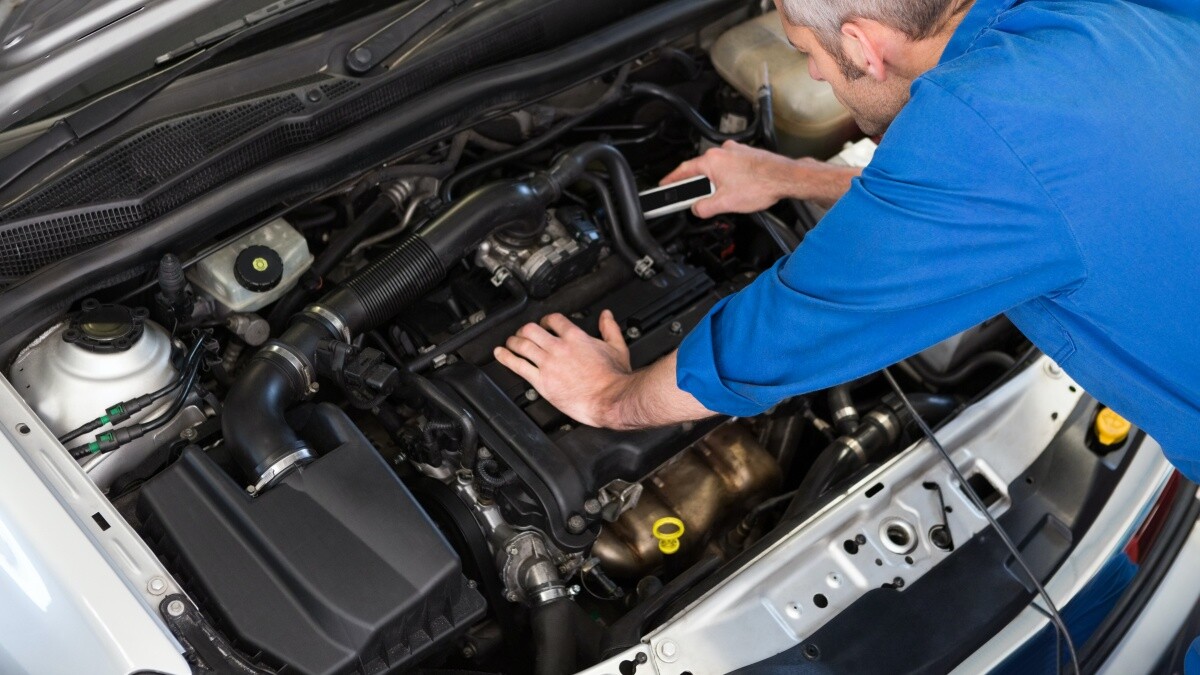
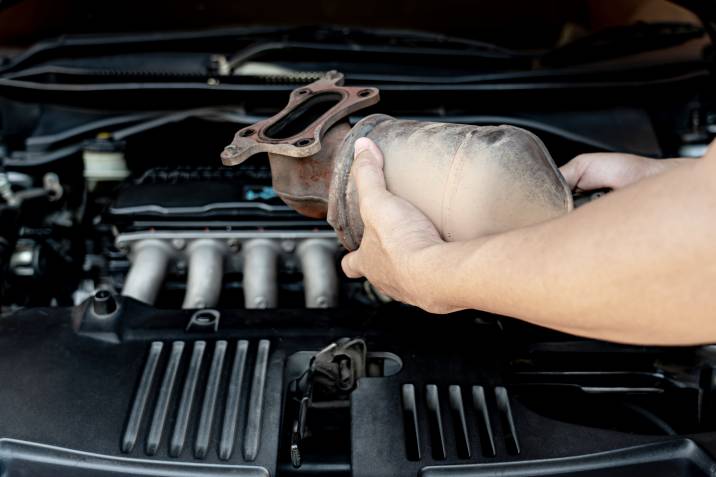 Mechanic handling a used catalytic converter in an open engine bay (Source: Shutterstock)
Aside from location, several other factors can affect the final price of replacing your catalytic converter:
Vehicle make and model
Your car’s make and model can affect the cost to install a catalytic converter. For instance, if you own a luxury vehicle (like a BMW or Range Rover), expect higher prices since these are often high-performance cars that use a more premium precious platinum group of metals (PGMs), which is 60–100% more than standard converters in small hatchbacks. These PGMs consist of platinum, palladium, and rhodium, and they work as metals to clean your exhaust and reduce emissions.
Type of catalytic converter
Different types of catalytic converters are available to fit a car owner’s needs and budget. Universal aftermarket converters are the most affordable choice (priced between $400 and $900), but the trade-off is installation. They require cutting and welding, which adds significant labour costs. More importantly, universal converters often don’t meet Australian Design Rules (ADR) standards, so they may not pass a roadworthy inspection.
A direct-fit aftermarket converter can be a great alternative because, although it costs more upfront, its bolt-on design makes installation easier, thereby lowering labour costs. However, if reliability is your priority, investing in an Original Equipment Manufacturer (OEM) converter is a wise choice. It’s the most expensive, ranging from $1,200 to $3,000, but you get guaranteed quality and a manufacturer’s warranty.
Check out this table that shows typical catalytic converter prices in Australia for different types:
Catalytic Converter Type |
Typical Replacement Cost |
|---|---|
Universal aftermarket converter |
$400–$900 |
Direct-fit aftermarket converter |
$600–$1,300 |
OEM catalytic converter |
$1,200–$3,000+ |
High-flow/performance converter |
$600–$1,500+ |
ADR-compliant / vehicle-approved converter |
$700–$1,800+ |
Number and location of catalytic converters
The price of a catalytic converter can also depend on the number and location of your catalytic converter. If it’s a single bolt-on converter located underneath the vehicle. If it’s built into the exhaust manifolds, installation can be more difficult because it requires the mechanic to work in tight engine bays. They might need to spend extra hours and provide additional services, such as exhaust repairs, which increases labour costs.
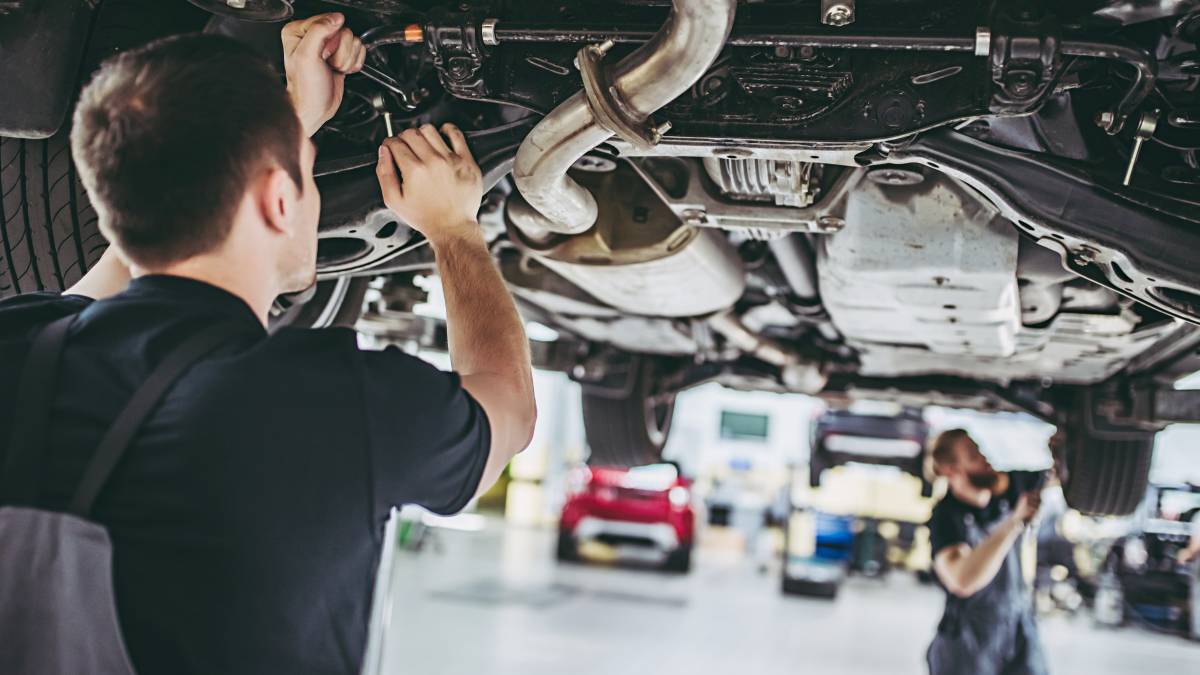
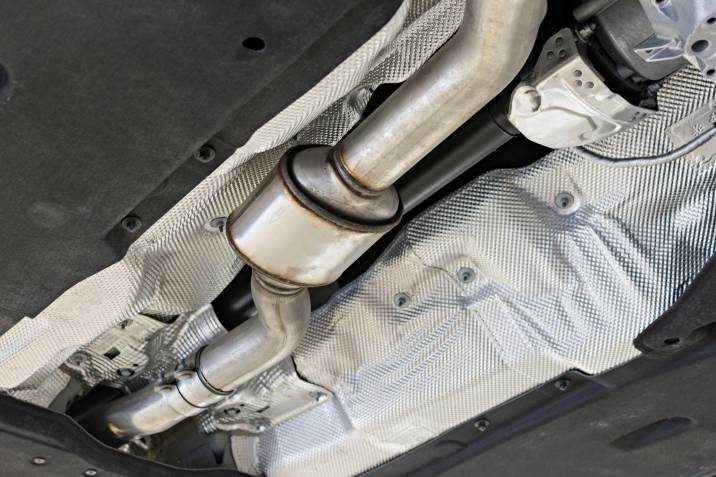 Installed catalytic converter connected to vehicle exhaust piping (Source: Shutterstock)
Prices can increase further if your car has more than one catalytic converter. This is common for vehicles with V6 and V8 engines because they’re typically built with dual exhaust systems to help the engine run more efficiently and produce more power. Trucks and high-performance vehicles are also great examples, as they typically have large engines that require 3 to 4 converters.
Meanwhile, integrated converter-manifold units in modern hybrids like the Toyota Camry Hybrid and Corolla Hybrid are the most expensive to install and replace. Their integrated design makes them more complex, since they’re built directly into your car’s exhaust manifold. This means that the technician can’t separate the converter from the manifold, so the entire manifold must be assembled and replaced if the converter fails.
The table below shows price ranges by the number and location of catalytic converters, so you can see the cost differences at a glance.
Cat Converter Setup |
Typical Replacement Cost |
|---|---|
Single, easily accessible converter |
$500–$1,000 |
Single converter in a difficult location |
$750–$1,400 |
Two catalytic converters |
$1,200–$2,400 |
Multiple converters |
$2,000–$3,500+ |
Converter integrated into exhaust manifold |
$1,200–$2,500+ |
Labour and installation complexity
As with any other service, the cost of replacing a catalytic converter rises as the job gets more complex. Simple bolt-on replacements are the most affordable, since they often take only 1 to 2 hours to complete, as shown in our table below.
Expect prices to increase further if additional labour is needed, such as removing and refitting parts, or if some welding is required, probably because they used a universal converter.
Labour costs can also push to $350 to $700 when corroded and seized components, such as rusted bolts, stuck oxygen sensors, and broken studs, extend the job by more than an hour. It’s even more expensive for catalytic converters that require a complex manifold-integrated replacement, since, as we said earlier, this means replacing both the manifold and the catalytic converter.
Cat Converter Installation Complexity |
Typical Labour Cost |
|---|---|
Simple bolt-on replacement |
$150–$300 |
Moderate removal and refitting |
$250–$450 |
Welding required |
$300–$600 |
Corroded or seized components |
$350–$700 |
Complex manifold-integrated replacement |
$500–$1,000+ |
Additional repairs or replacement parts
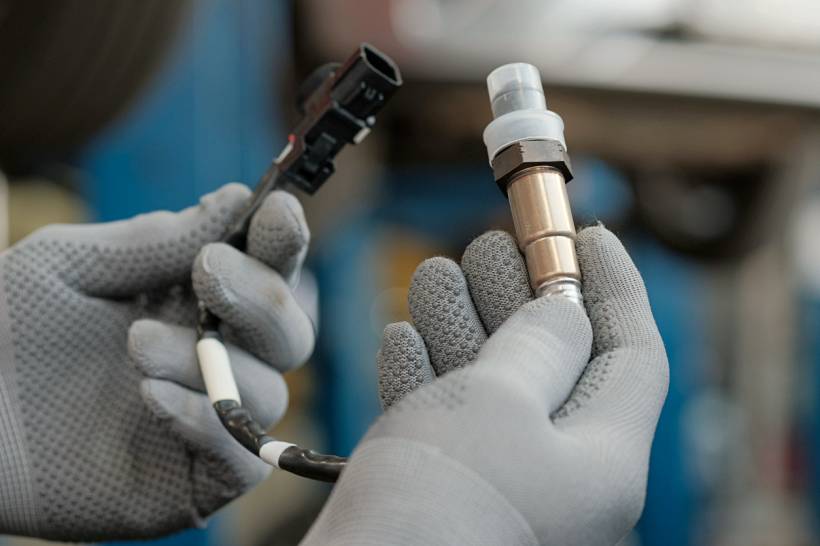 Mechanic inspecting an oxygen sensor and electrical connection (Source: iStock)
Often, when one part of the vehicle fails, other parts also malfunction, requiring extra labour and replacement. So, if the mechanic suspects it’s a catalytic converter issue, it’s also likely that it’s an oxygen sensor failure.
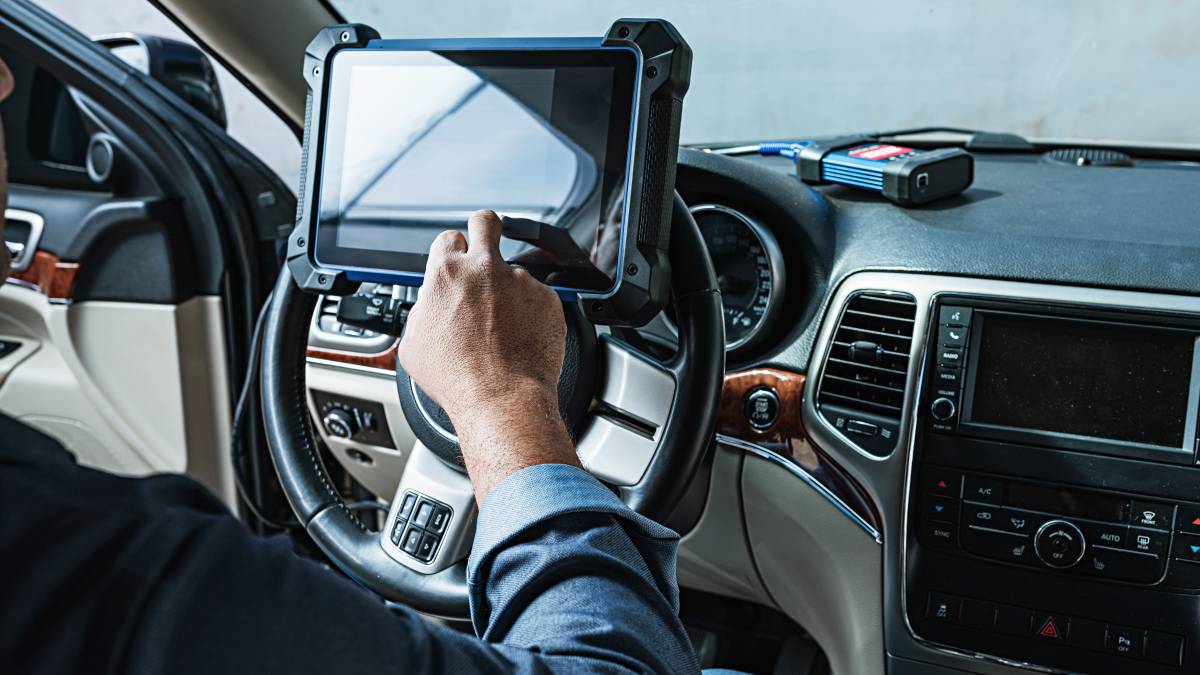
These sensors fail more frequently than converters and produce the same P0420 warning light, so they’re often mistaken for the same issue. This is why it’s always recommended to have a proper diagnostic test first, which may incur additional charges.
However, if the mechanic or technician confirms it’s a catalytic converter issue, expect to also cover engine problems such as a blown head gasket, worn piston rings (oil burning), or a spark plug/ignition coil issue. These are the main causes of damage and contamination of catalytic converters, so they must be resolved before replacing or installing a new converter.
Other repairs, like those in the exhaust system, such as the manifold and pipes, are equally important to consider, too, especially if they’ve become rusted or cracked. Leaving them unrepaired can put stress on the oxygen sensors, reduce converter efficiency, and ultimately cause engine failures.
This table shows how much the cost might be for each additional repair or replacement:
Extra Repair or Part |
Additional Cost |
|---|---|
$200–$500 |
|
Gaskets and clamps |
$40–$150 |
Exhaust pipe repair |
$200–$700 |
Exhaust manifold repair/replacement |
$600–$1,500+ |
$100–$200 |
|
Engine repair |
$400–$2,000+ |
What are some ways to save on catalytic converter replacement prices?
Replacing a catalytic converter is a major repair that can certainly break your budget, so we’ve laid out some tips to help you save money for this costly repair:
Address the check engine light immediately
Once you’ve noticed the check engine light on your car’s dashboard, don’t ignore it—act before it starts blinking. A flashing light indicates a severe problem, so seek immediate help from a mechanic.
Ideally, choose a shop that can provide a diagnostic scan to help pinpoint whether it’s an easy fix rather than escalating to a full replacement. This preventive measure can help you save significantly on major jobs like catalytic converter replacement.
Choose direct-fit over universal converters (when possible)
While direct-fit converters cost more upfront, you’ll save money overall by choosing them over universal converters. Direct-fit converters are engineered for a specific vehicle make, model, and year. They come with all the necessary parts and accessories, making installation faster and reducing labour costs.
Choose an independent mechanic instead of a dealership
Car services at dealerships often cost more because they must cover higher overheads (facility costs, brand reputation, warranty coverage). This is why independent mechanics are more cost-effective: they can install OEM parts at lower labour rates, reducing your total cost without sacrificing quality.
Specialised exhaust shops may also handle catalytic converter work at competitive rates and often offer welding services if a universal converter is used (which dealerships may not).
What should you look for in a professional mechanic?
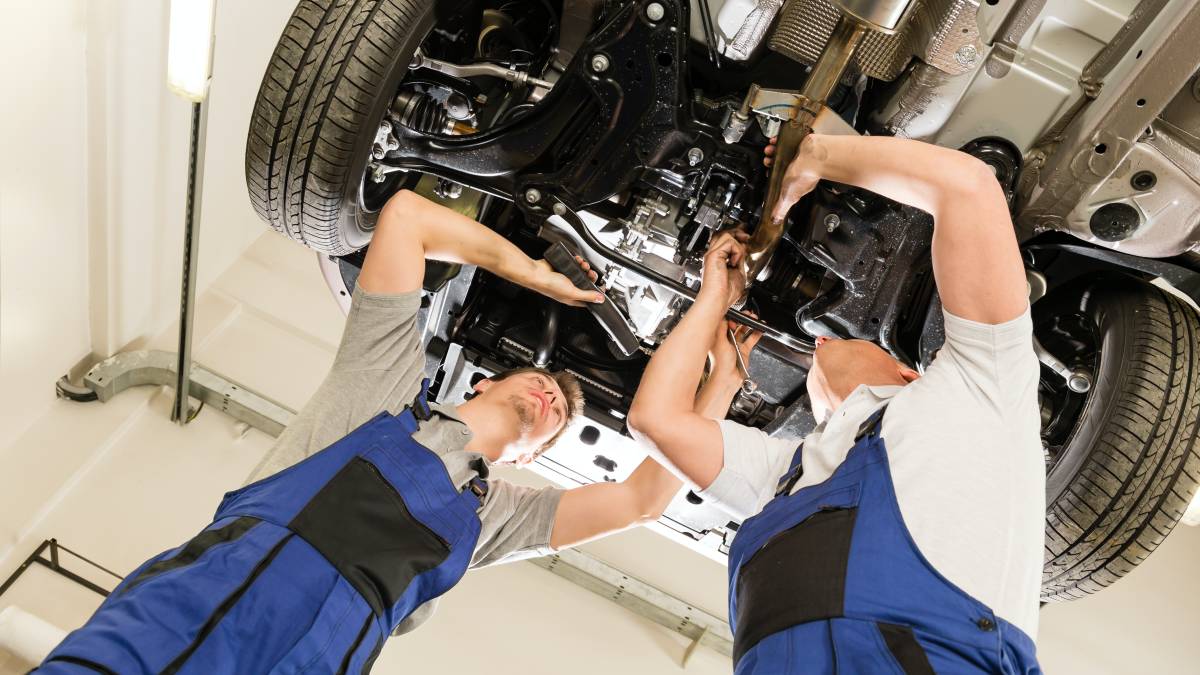
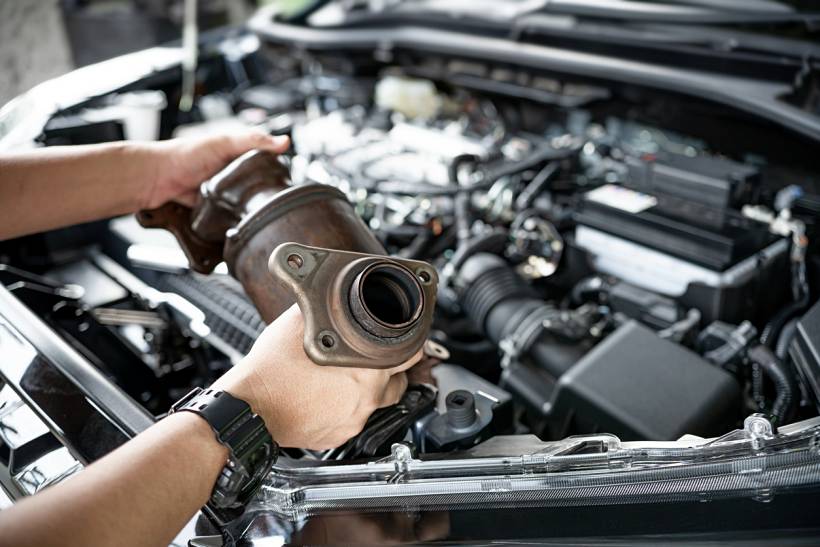 Catalytic converter removed during automotive exhaust system repair (Source: iStock)
Finding a reliable mechanic who can meet your specific needs and deliver quality work can be challenging. So, here’s a quick checklist of the things to look out for when choosing a mechanic.
Credentials and qualifications
While Australia doesn’t require licenses for auto technicians, it still helps to check if they have formal qualifications like a Certificate III or IV in Light Vehicle Mechanical Technology. This indicates they’ve passed rigorous standardised exams covering engine repair, brakes, electrical systems, and other automotive specialties.
Some mechanics also hold manufacturer-specific certifications from dealers, which show additional expertise with particular brands.
Specialisation and experience
Beyond certifications, a good mechanic should specialise in your vehicle. Some independent shops focus on just one or two makes, such as all Toyotas and Mazdas, which gives them deep expertise unavailable at generalist shops. Others develop extensive experience in specific areas, such as transmission rebuilds or electrical diagnostics.
Evaluating their expertise and past work is important, since different vehicles have different issues. A mechanic familiar with your car’s common failure points can diagnose problems more quickly and accurately than someone encountering your model for the first time, potentially saving you from costly, unnecessary repairs.
Transparent pricing
A professional mechanic always provides a written estimate before starting work. This should break down the parts (with brand and model numbers), labour (usually the hourly rate multiplied by the estimated hours), and any additional fees.
Warranty coverage
Ask the mechanic about warranty coverage. A reputable shop should cover both the parts installed and the technician’s workmanship. If the repair fails within the warranty period, the shop should fix it at no additional cost. Because this protection matters, always get the warranty in writing before work begins.
Cat converter issues making you grumpy? Get help on Airtasker
A catalytic converter replacement is a significant expense, but understanding what drives the cost can help you make a smart decision. The key is finding a trustworthy mechanic who can diagnose the problem correctly and provide transparent pricing.
At Airtasker, you can easily connect with reliable car mechanics by posting a task. Simply describe the issues you’re experiencing and mention your budget and timeline. After posting, you’ll receive quotes from qualified Taskers in your area.
Don’t let a failed catalytic converter add to your stress. Find a reliable mechanic today with Airtasker.
Learn more about our contributors
Written by Cielo B.
Staff Writer
Cielo is an experienced content writer who has explored various industries throughout her career. Her expertise, founded on a degree in journalism, includes writing about automotive and home maintenance. Cielo also covers topics like dressmaking, tailoring, and photography since she is a passionate cosplayer who enjoys dressing up as her beloved anime characters.
FAQs
Common warning signs include an illuminated check engine light (often accompanied by P0420 or P0430 codes), a rotten-egg or sulphur-like smell, power loss and sluggish acceleration, a rattling noise from under the vehicle, engine misfires, and dark exhaust smoke. You might also notice your vehicle shaking or stalling while driving.
Driving with a bad catalytic converter can be serious. A failing converter can restrict exhaust flow and, over time, cause serious engine damage by allowing unburned fuel to overheat and melt the internal ceramic structure. Fix the problem immediately to prevent damage from spreading throughout your engine.
Most catalytic converters last 12,650 to 160,930 km, or around 10 years, but OEM converters (made by your vehicle’s manufacturer) typically last longer. On the other hand, aftermarket replacements often fail sooner, between 64,374 and 96,561 km.
Common causes include engine misfires that send unburned fuel into the converter and cause overheating, burning oil that coats the catalyst with carbon soot, coolant leaks that contaminate the converter, and faulty oxygen sensors that create a too-rich fuel mixture.
Poor fuel quality, road damage, and aggressive driving can also trigger premature failure. This is why regular car maintenance, including fuel injection service and timely engine repairs, is important to prevent a failed catalytic converter and costly repairs.
Find mechanics, fast
Post a task