- Home/
- Costs/
- Dog Walking/
- Dog Walking Cost Guide
Dog walking costs: How much to hire a dog walker in Australia?
Post to find a price. It's free and only takes a minute.
Average cost of dog walking
$15 - $70
low
$15
median
$35
high
$70

Last Updated on

Written by Angela A.
Staff Writer
Read more about our contributor
Key Facts
Dog walking in Australia costs $15 to $70 per walk, depending on walk length, location, and whether it’s private or group-based.
Larger dogs, reactive dogs, off-site park walks, and peak-time bookings often come with additional surcharges.
Regular walks support a dog’s mental health by reducing stress, easing anxiety, and lowering destructive behaviours linked to boredom.
Hiring a dog walker has become a go‑to solution for many Australians juggling full schedules and energetic pets. Before choosing one, though, it’s important to understand the rates and the factors that influence it.
So, how much does dog walking cost across Australia? Our research says it ranges from $15 to $70. But this guide will further explain what affects pricing and outline what a typical service includes. By the end, you’ll know exactly what to expect—and what’s worth paying for.
How much does it cost to walk a dog? (Standard rates per hour or per walk)
Dog walking prices depend mostly on the length of the walk and whether you book a solo session or a small group. Because of that, the average cost for dog walking services can shift quite a bit, and the sections below break down what you can expect per walk or per hour.
Average dog walking cost by duration or per walk
Most walkers price their services based on how long they’re out with your dog, so the cost scales with each time tier. Here’s a quick breakdown of what you’ll usually see for standard walk durations and how much dog walking costs per hour.
Service |
Duration |
Average dog walker cost |
|---|---|---|
Quick potty break |
15 minutes |
$15 to $25 |
Regular walk |
30 minutes |
$20 to $35 |
Extended walk |
45 minutes |
$30 to $45 |
1-hour walk |
60 minutes |
$45 to $70 |
Average weekly or monthly dog walking rates
Weekly and monthly plans help dog owners lock in predictable costs, especially if they need consistent 30-minute walks during the workweek. Many walkers offer small discounts for booking multiple sessions in advance, so the cost for dog walking service often drops slightly when you commit to a set schedule. The table below shows what these recurring costs usually look like.
|
Frequency (30-minute walks) |
Average weekly cost |
Savings vs single bookings |
|---|---|---|
2 walks per week |
$50 to $70 |
Minimal or none |
3 walks per week |
$55 to $100 |
$5 to $10 savings with select packages |
5 walks per week |
$125 to $175 |
~5% to 10% savings depending on the provider |
What are the benefits of walking your dog?
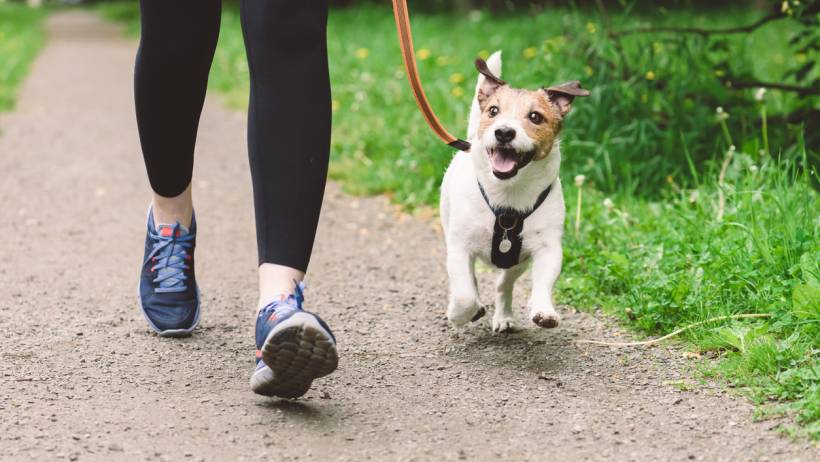 Close-up of a happy dog on a walk. (Source: iStock)
Walking your dog is not just basic dog care. It’s also one of the simplest ways to improve their health, behaviour, and overall quality of life. Here are just some of the benefits shown in studies worldwide.
Physical health benefits
Helps manage weight and prevents disease: Nearly 40% of pet dogs in Australia are overweight or obese, which increases the risk of diabetes, arthritis, heart disease, and shortened lifespan. Regular walks help burn calories and keep your dog within a healthier weight range.
Supports heart, muscle, and joint health: Daily movement strengthens the heart, keeps joints lubricated, and maintains muscle tone. This is critical for aging dogs or breeds prone to joint issues.
Improves digestion and urinary health: Consistent walks help regulate digestion, reduce constipation, and give dogs the chance to empty their bladder regularly, which can help lower UTI risk.
Mental and behavioural benefits
Reduces boredom and destructive behaviours: A well-walked dog is less likely to chew, dig, bark excessively, or act out due to pent-up energy.
Lowers stress and anxiety: Walking boosts feel-good chemicals, which help nervous or reactive dogs relax and settle more easily.
Improves socialisation and confidence: Exposure to different environments, people, and dogs builds social skills and helps reduce fear or reactivity outdoors.
Benefits for dog owners
Increases your physical activity: Studies show dog owners are more likely to meet exercise guidelines because daily walks add up fast.
Supports heart health and lowers disease risk: Research from groups like the UC Davis Health and Mayo Clinic links regular dog walking to lower blood pressure, cholesterol, and overall cardiovascular risk.
Improves mood and reduces stress: Walking with a dog releases endorphins, reduces cortisol, and offers the kind of routine companionship that supports better emotional well-being.
What factors affect dog walker rates in Australia?
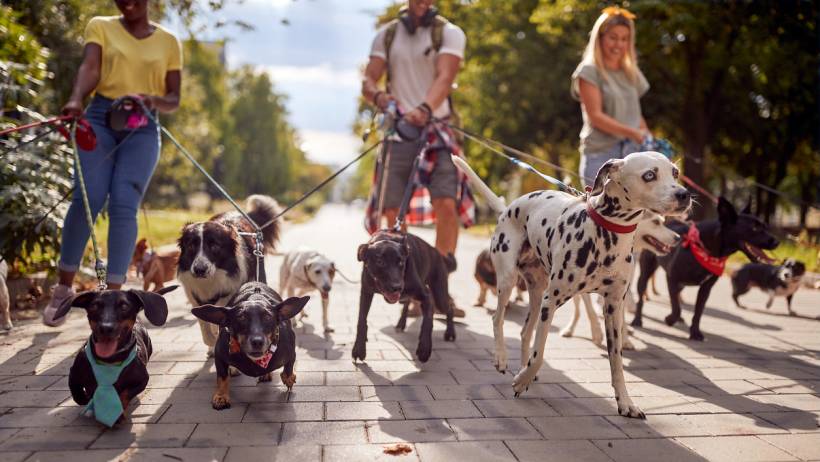 Several dogs on leashes being guided by dog walkers. (Source: iStock)
Figuring out how much should dog walking cost depends on several moving parts, and each one can push the price up or down. Location, service inclusions, and even your dog’s specific needs all play a role, so it’s worth knowing what actually drives those numbers before comparing rates.
Location and labour costs
Major cities charge more for dog walking because the cost of living, minimum wages, and business overhead push prices higher than the national average.
Walkers in these areas spend more time navigating traffic, parking, and tight schedules, all of which get built into the final rate. Suburban and rural markets sit lower because operating costs are lighter and competition is different.
Below are typical dog walker rates for a 30-minute walk in major metropolitan areas in Australia.
Metropolitan area |
Average dog walker cost for a 30-minute walk |
|---|---|
$25 to $45 |
|
$25 to $40 |
|
$20 to $35 |
|
$20 to $35 |
|
Adelaide |
$20 to $35 |
In comparison, most suburban areas fall around $15 to $25 for the same walk. Rural towns can sit as low as $10 to $20, especially when the walker operates independently rather than through a dog walking company.
Walker qualifications and training
Qualifications play a big role in the cost of dog walking services because training and safety credentials signal professionalism and reduce risk for the owner. Walkers with pet first aid or CPR training can handle emergencies, which matters if your dog is older, reactive, or prone to medical issues. Behaviour-training certifications also justify higher rates since these walkers can safely manage dogs that need more structure.
Insurance and bonding add another layer of security for clients who allow walkers into their homes. These protections cover accidents, property damage, or theft, which is why many professional walkers and pet care businesses include them as part of their service. Independent walkers who invest in insurance often price themselves on the higher end because their operating costs are higher.
Number of dogs
Solo and group walks are priced differently because the attention, pacing, and logistics aren’t the same. Solo sessions cost more since the walker focuses on one dog’s needs, which pushes the cost of dog walking per hour toward the higher end of the range. Group walks are cheaper per dog because the walker divides their time across several clients.
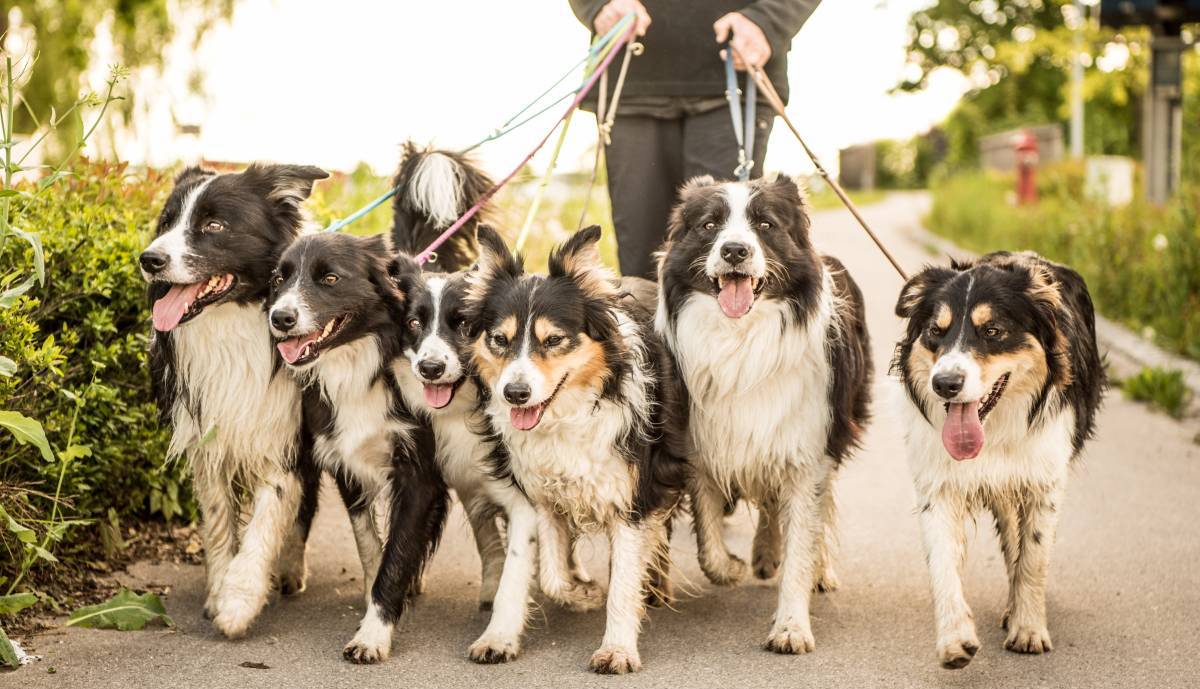
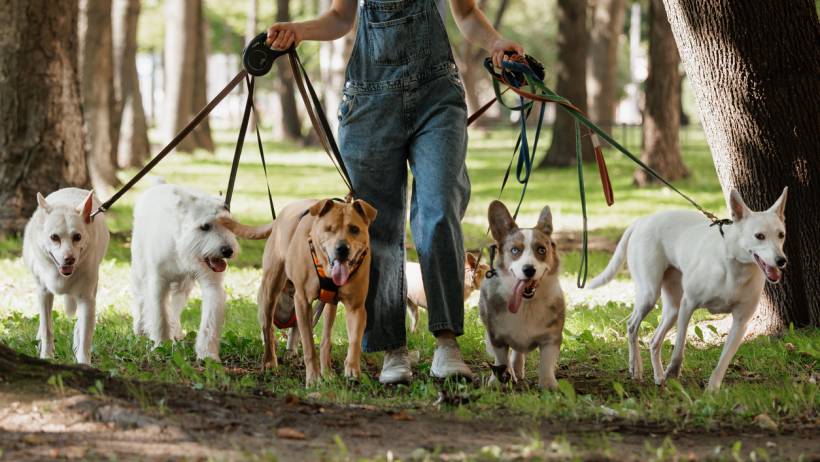 A group dog walk. (Source: iStock)
Solo walks work best for dogs that are anxious, reactive, elderly, or need medication or training support. Rates in Australia usually range from $35 to $50 for a 30-minute private walk and can reach $50 to $70 for an hour with an experienced dog walker. Reactive or special-needs dogs may require a trained handler, with some services charging $60 to $90 for a 45-minute to 1-hour session.
Group walks typically involve small groups of two to four dogs and are common in dense suburbs where walkers can build efficient routes. These walks often cost $25 to $35 per dog for a 30-minute session, with some weekly five-walk bundles dropping the price to around $29 per walk. They’re ideal for social dogs and budget-conscious owners, but they offer less personal attention and can be more stimulating or distracting.
Dog size and temperament
A dog’s size and behaviour can raise the dog walking services cost because some dogs simply require more control, experience, or safety measures.
Large breeds and reactive dogs often need solo walks, which pushes the rate higher than a standard group outing. Walkers also factor in the physical effort, risk, and special equipment needed for these cases.
Big dogs with high energy levels—such as Great Danes, Mastiffs, or working breeds—often sit at the upper end of the price range. It’s common for 30-minute walks for large dogs to cost $40 to $50, especially if the walker needs to manage pulling or use specific harnesses or no-pull leads. Some services won’t accept larger dogs unless the owner provides approved equipment or a suitable lead.
Reactive or aggressive dogs also usually fall into a premium bracket because they require a trained professional and must be walked alone. Special-handling sessions often range from $50 to $90 for a 45-minute walk, reflecting the added risk, behavioural management, and slower pace. Walkers may require a temperament assessment first or decline dogs with known bite histories for safety reasons.
Walk environment
Where the walk takes place can also affect the price, especially if the walker needs to travel. Neighbourhood walks are the default since they start at your front door and don’t require extra logistics. Park or trail outings cost more because they involve driving, added time, and higher responsibility for the walker.
Most standard neighbourhood walks stay within local streets or a nearby dog park. They’re the most budget-friendly option and work well for routine exercise or quick breaks.
Walks that require driving to a park, trail, or beach often come with travel surcharges. Fees typically range from $10 to $15 or $1 to $2 per kilometre, depending on distance and petrol costs. Some walkers include travel within a small radius and add $5 to $10 per visit for pickup, drop-off, or longer commutes, especially in high-traffic metro areas.
Add-on services
Add-ons matter for owners who need more than a simple walk, especially when their routine overlaps with ongoing dog training at home or when they can’t afford a separate dog day care. Walkers can also sometimes handle tasks that a dog sitter might cover, and some even assist with early potty training or older dog care, which naturally increases the total fee.
Add-ons |
Average costs |
|---|---|
Feeding |
$5 to $10 |
Basic obedience reinforcement |
$10 to $20 |
Puppy or dog training reinforcement |
$15 to $40 |
In-home dog day care |
$30 to $75 per day |
$20 to $45 |
|
Light dog grooming (brushing/bathing) |
$10 to $20 |
Accident cleanups |
$10 to $20 |
Administering medications |
$5 to $15 |
Key pickup/drop-off |
$10 to $20 |
Why should you hire a professional dog walker?
Professional walkers know how to read dog body language, avoid risky situations, and manage different temperaments confidently.
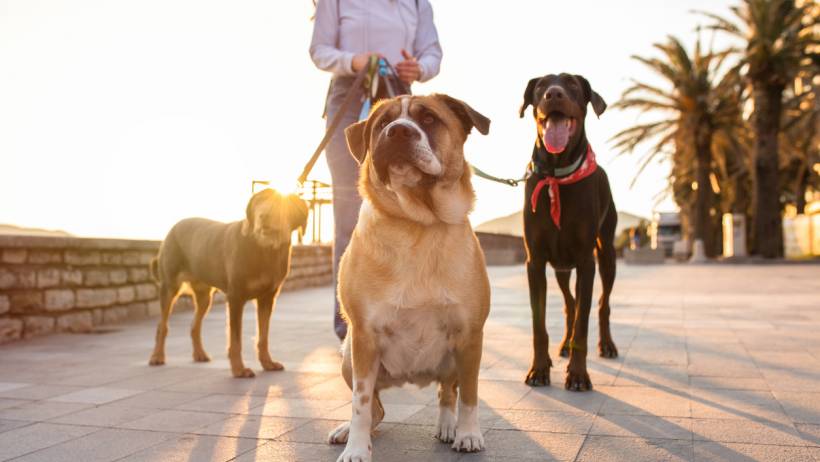 A professional dog walker at work. (Source: iStock)
Safe and proper handling
Many are pet first aid/CPR certified, so they can respond quickly to heat-related issues, minor injuries, or sudden distress. That level of preparedness isn’t standard with casual walkers.
Accountability
Pros treat dog walking like real work, not a hobby, so they follow routines, show up on time, and stick to agreed-upon instructions. If something needs adjusting, they communicate clearly and document changes. You’re working with someone who understands responsibility.
Verified experience
If you hire through reputable services, most conduct background checks and verify references before allowing anyone on the platform. This ensures that you get experienced walkers who have handled everything from energetic puppies to reactive rescues.
Clear communication
Most professional walkers use apps or messaging to send photos, videos, and GPS-tracked routes after each visit. You always know when the walk happened, how it went, and what your dog did.
Peace of mind
Finally, a vetted pro walker gives your dog consistent care even when your schedule changes. You know they’re getting safe exercise and attention from someone who understands what they’re doing. It’s one less thing to worry about during a long workday.
What are some ways to save on dog walker costs?
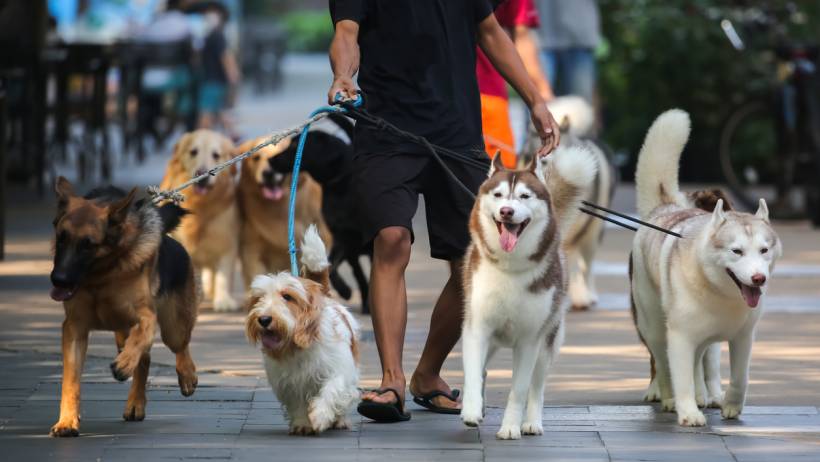 Managing a large dog walking group. (Source: iStock)
Now that we’re done figuring out how much do dog walkers charge, it’s time to consider how to lower the overall spend without affecting the care your dog receives. Here are some tips to save money on dog walking without cutting corners on safety or quality.
Opt for group walks
As mentioned above, group walks often cost less because the walker’s time is shared across multiple dogs. They’re a good fit for social, well-mannered dogs who don’t need one-on-one attention. Just make sure your dog is comfortable around others before choosing this option.
Book recurring packages
Many dog walkers offer weekly or monthly bundles that reduce the per-walk rate. Package pricing gives you predictable costs and usually saves you 5% to 10% over one-off bookings. It’s one of the easiest ways to cut expenses without changing the service.
Avoid peak times
Walkers often charge more during evenings, holidays, or last-minute requests. Scheduling walks during regular daytime hours can keep rates lower and availability higher. Planning ahead also reduces the chances of paying rush fees.
Ask friends or family for help
Having someone you know step in can reduce your weekly costs. Just remember this option doesn’t offer the training, accountability, or structure of a professional walker. It’s best used as a backup rather than a full replacement.
Keep your dog healthy and happy with Airtasker
Hiring a dog walker has become a go-to solution for many Australians balancing long work hours with their active pup’s needs. Once you understand the rates and what influences them, it becomes much easier to decide what kind of dog walking, sitting, or even boarding help fits your routine.
If you want reliable support without the hassle of endless searching, Airtasker makes the process simple. You can compare reviews, check experience, and choose someone who understands different breeds, temperaments, and exercise needs.
Whether your pooch needs regular walks, extra playtime, or attentive care while you’re away, Airtasker connects you with responsible Taskers who take the job seriously. Post a task today and connect with trusted dog walkers!
Learn more about our contributors
Written by Angela A.
Staff Writer
Angela Apolonio is an experienced writer with a Biology background. She writes about home tips, car upkeep, gardening hacks, and food facts, bringing a unique blend of science and practicality to her work. As a wife and a mother, she knows the value of iron-clad routines, so she's passionate about sharing what works for her with everyone else. She loves making everyday life simpler and helping readers find fresh ideas to bring more joy into their spaces.
FAQs on dog walking
Look for a dog walker who has experience with your dog’s breed and temperament. Ask for references, reviews, or certifications in pet care. If possible, arrange a trial walk to see how your dog interacts with them before committing to regular walks.
Yes, but only if you take precautions. Choose a verified and well-reviewed walker. If hiring through a platform, check if they have background checks or insurance. You can also set up meet-and-greet sessions and use GPS-tracking apps to monitor your dog’s walk.
If your dog seems uncomfortable, try a gradual introduction—start with short walks together before letting the walker take over. Some dogs may need time to adjust, while others might be better suited to a different handler. Always prioritise your pet’s comfort and well-being.
A 2-hour walk in Australia typically falls between $40 to $100, depending on the dog’s needs and whether it’s a private session. Rates go higher when handling large, high-energy, or special-needs dogs.
Most walkers charge $25 to $40 per hour, while premium or specialised services can reach $40 to $60+ per hour depending on location and what’s included.
Many walkers handle 2 to 4 dogs at once, especially in small group walks. Safety concerns often limit larger groups, and extra dogs from the same household usually cost $8 to 20 per additional dog.
Find dog walkers, fast
Post a task
Related price guides
How much does doggy day care cost?
Read more

Related articles
How to groom a long-haired dog
Read more
How to groom a dog at home
Read more

How often should you wash your dog?
Read more

How to become a dog trainer
Read more

How to become a dog groomer
Read more
Dog training 101: How to train your dog
Read more

Your ultimate guide to dog care
Read more
Tips for training an older dog
Read more
Reactive dog training tips
Read more

3 Effective ways to house train a dog
Read more