- Home/
- Costs/
- Concrete Resurfacing/
- Tennis Court Resurfacing Cost Guide
How much does tennis court resurfacing cost in Australia?
Post to find a price. It's free and only takes a minute.
Depending on factors such as surface type, court size, and location
$8,000 - $50,000
low
$8,000
median
$29,000
high
$50,000

Published on
Key Takeaways
Tennis court resurfacing costs anywhere from $8,000 for a basic acrylic hardcourt recoat up to $50,000 for a premium cushioned or synthetic grass system.
Aside from the surface type, the size, condition, and location of the tennis court also affect the final price.
Being strategic with how you book a tennis court resurfacing service, as well as knowing what to look for in a specialist, may help lower costs without compromising quality.
If your tennis court’s playing surface has started to crack or fade in colour, resurfacing is usually more sensible than jumping straight to a full-blown renovation. Tennis court resurfacing does more than give the facility a crisper, more vibrant look. It keeps ball bounce consistent and predictable, all while protecting players and prolonging the court’s lifespan.
But before booking a service, it helps to first know what to expect, starting with one major factor: how much does it cost to resurface a tennis court? The final price of your tennis court resurfacing may vary, depending on factors such as the court size and location. This guide looks into how these things play into tennis court resurfacing costs, so you can prepare accordingly.
How much does tennis court resurfacing cost by city?
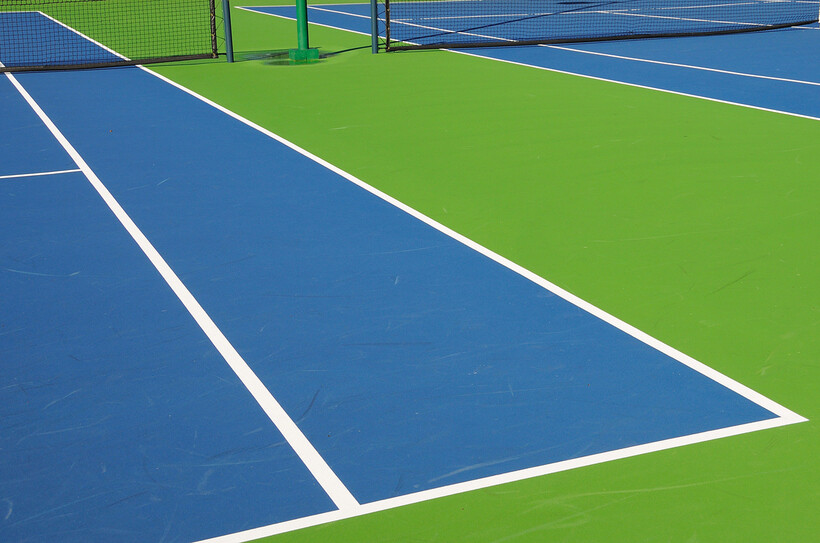 Two adjacent hard courts with blue and green acrylic surfaces (Source: iStock)
Since labour rates and demand for tradespeople vary from city to city, location can affect your final quote, and travel costs for the crew can add further to the bill.
Below is an overview of tennis court resurfacing cost estimates per major Australian city:
City |
Typical Cost (AUD) |
|---|---|
Adelaide, SA |
$15,000 to $35,000 |
Brisbane, QLD |
$16,000 to $38,000 |
Canberra, ACT |
$16,000 to $38,000 |
Gold Coast, QLD |
$16,000 to $38,000 |
Melbourne, VIC |
$16,000 to $38,000 |
Perth, WA |
$16,000 to $38,000 |
Sunshine Coast, QLD |
$16,000 to $38,000 |
Sydney, NSW |
$16,000 to $38,000 |
How much does tennis court resurfacing cost by surface type?
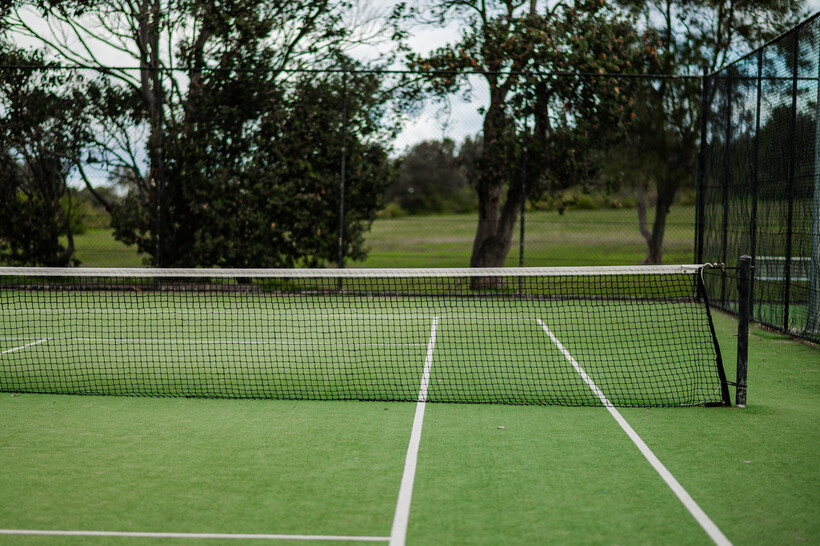 Synthetic grass tennis court with net and tree-lined surroundings (Source: iStock)
The final quote also hinges on which tennis court surface you choose. Some popular choices are:
Acrylic hard court
Resurfacing an acrylic court involves applying fresh layers of acrylic coating directly over the existing concrete or asphalt base. The most economical and straightforward option, it’s often favoured by tennis clubs, schools, amateur teams, and budget-conscious homeowners.
The cost of asphalt tennis court recoating ranges anywhere between $8,000 and $20,000.
Cushioned acrylic
If player comfort matters more to you than price, consider cushioned acrylic for your tennis court surface. Multiple layers, including a rubberised cushioning layer, can help absorb impact and minimise injuries. This makes cushioned acrylic best suited to courts with regular or extensive use, such as practice or competition venues.
Because of the extra materials involved, this option costs more to install, at around $25,000 to $50,000.
Synthetic grass
With synthetic grass courts, you enjoy benefits similar to cushioned acrylic, with the added perks of quick drainage after rain, a softer underfoot feel, and the look of a natural grass court.
Resurfacing tennis courts with synthetic grass involves laying artificial turf over the concrete base and costs $20,000 to $45,000. Synthetic grass can also be installed elsewhere on your property.
Surface Type |
Typical Cost (AUD) |
|---|---|
Acrylic hard court |
$8,000 to $20,000 |
Cushioned acrylic |
$25,000 to $50,000 |
Synthetic grass |
$20,000 to $45,000 |
What factors affect the cost of tennis court resurfacing?
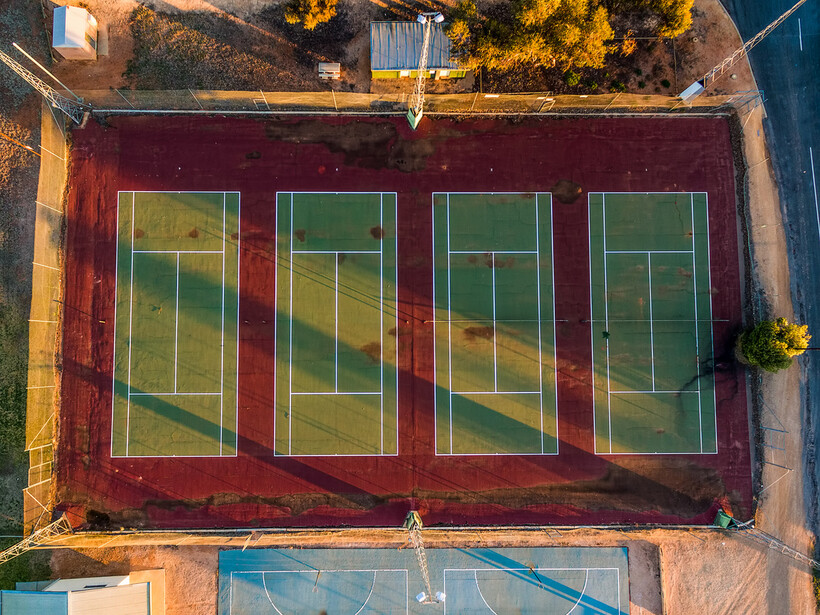 Multi-court facility showing surface wear and staining (Source: iStock)
Beyond the surface type and your location, several other variables factor into a tennis court resurfacing quote.
Court condition and necessary repairs
A court that just needs a recoat to address minor cracks and colour fade costs far less than one with major bulging or drainage issues underneath.
For more serious damage to the base or retaining walls, you may need to book separate concreting services for repairs before any coating is done. If the water drainage is faulty, reach out to tennis court builders to have it fixed. Proper drainage helps prevent any moisture issues during resurfacing.
Ultimately, engaging other specialists, depending on the court’s condition, may further increase the overall price for your tennis court refresh.
Court size and number of courts
According to the Department of Creative Industries, Tourism and Sport, a tennis court must be 23.77m long. Singles courts are 8.23m wide, while doubles courts are 10.97m wide. Sizes vary further depending on whether the court is used for recreational or professional play.
Larger or multiple courts naturally need more material and labour, though clubs and schools can secure a lower per-court rate if they already have a crew on site.
Line marking and colour coating
Single-colour courts with standard line marking are usually the most affordable. Those requiring multiple colours, custom branding, or extra line sets for different sports (for instance, if the court is also used for pickleball or basketball) command higher prices.
Access and location
Courts in regional or remote areas often rack up travel surcharges, especially when booking specialist resurfacing crews based in the metro.
If the court is inaccessible to vehicles and the crew has to bring their equipment on foot, labour time increases as well.
Additional work
Newly resurfaced tennis courts usually benefit from fences. Consider working with fencing contractors to help secure the perimeter.
How to save money on tennis court resurfacing
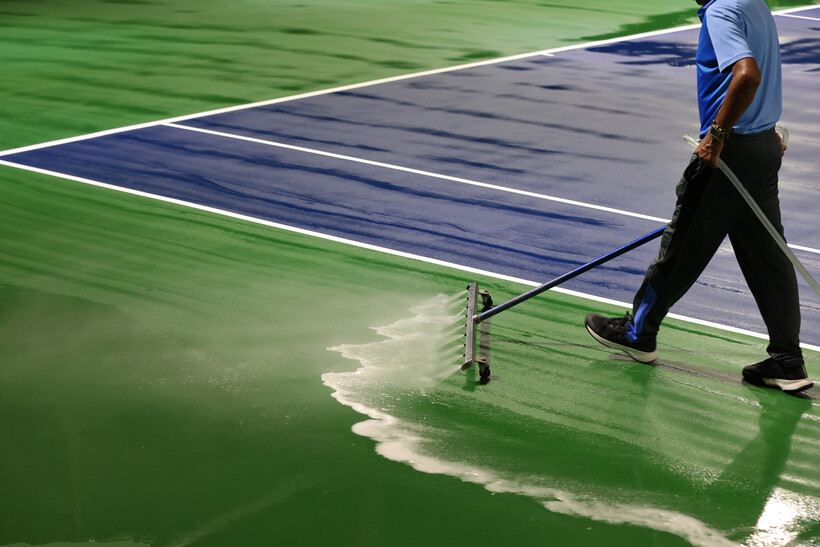 Worker washing down a green acrylic tennis court surface (Source: iStock)
Being strategic with your approach can help bring your final quote down without cutting corners on quality. Start with the following:
Get multiple quotes. Prices can vary noticeably between specialists, so compare at least three before finalising your pick.
Bundle jobs together. If your court also needs fencing repairs, new lighting, or drainage work, consider asking a general contractor to coordinate everything in one visit rather than booking each trade separately.
Keep up basic maintenance. Regular pressure washing between recoats removes grime and algae, which helps your existing surface last longer and delays the need for a full resurface.
Choose acrylic hardcourt when you can. If your base isn’t too worn and you’re working with a tight budget, a standard acrylic recoat may already do the job.
Time it outside peak season. Booking resurfacing work in the cooler months (June to August) can sometimes get you a better rate.
What to look for in a tennis court resurfacing professional
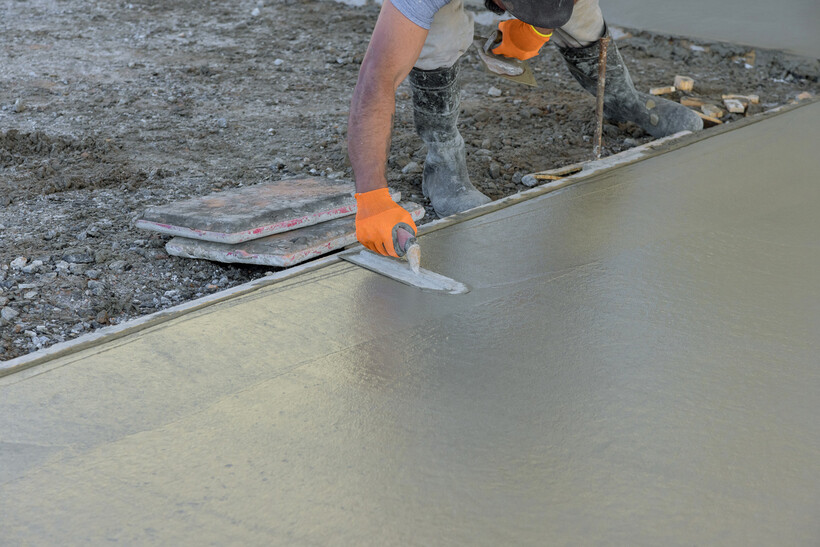 Concreter smoothing a freshly poured surface (Source: iStock)
Don’t just settle for anyone if you want to avoid a botched job or a blown-out budget. Here are some key factors to keep in mind when booking a service:
Licensing
In Australia, resurfacing generally falls under structural landscaping, even for residential tennis courts. Requirements can vary per state, so make sure to confirm requirements with your local council or state building authority before accepting an offer.
Consulting them may also help if you’re unsure which specialist to book for base or water drainage repairs.
Qualifications and experience
Experience in general concrete or painting jobs isn’t enough. Look for a specialist with a proven track record in resurfacing specifically. Feel free to ask for photos of previous work and, if at all possible, speak with a past client to get their feedback.
Questions to ask before hiring
What surface type do you recommend for my tennis court? Why?
What specific tasks are included in the quote? (e.g., priming, crack repair, line marking, colour coating)
How long will the job take?
How do you plan around possible rain?
What warranty or guarantee comes with the finished surface?
The best approach to hiring local tradespeople starts with browsing their profiles: check their credentials, previous experience, and reviews from actual clients. Then ask the right questions so you know exactly what to expect from the service.
Book a concrete resurfacing service through Airtasker
The cost of resurfacing tennis courts depends on various things: the surface type you choose, the size and condition of your court, and where you’re located. You can keep costs under control by being upfront about any existing damage to get accurate quotes from the get-go, bundling in extra jobs like fencing or water drainage repairs, and keeping up with regular maintenance.
Whenever you’re ready, simply post a task on Airtasker to start receiving quotes from local concrete resurfacing specialists to get your court back in shape.
FAQs on tennis court resurfacing
Resurfacing freshens up the existing playing surface of a tennis court without making major changes to the base underneath. On the other hand, rebuilding involves constructing an entirely new court.
Resurfacing is cheaper and faster, and it’s generally the better choice for courts that are still stable and free of major cracking.
Most tennis courts need resurfacing every four to eight years, while artificial turfs can last over 15 years if well-maintained. Courts in high-UV areas or with heavy use tend to need a recoat sooner.
Small touch-ups are possible with a DIY acrylic coating kit, but it’s best to leave a full resurface to professionals, who ensure even application, priming, line marking, and, for synthetic grass, proper installation. Making mistakes may lead to even higher costs, so engaging specialists upfront is far more practical.
Recoating takes three to five days, while a full resurface with crack repair or synthetic grass can run up to two weeks. For larger facilities with multiple courts, expect a longer timeline.
Find concrete resurfacing experts, fast
Post a task